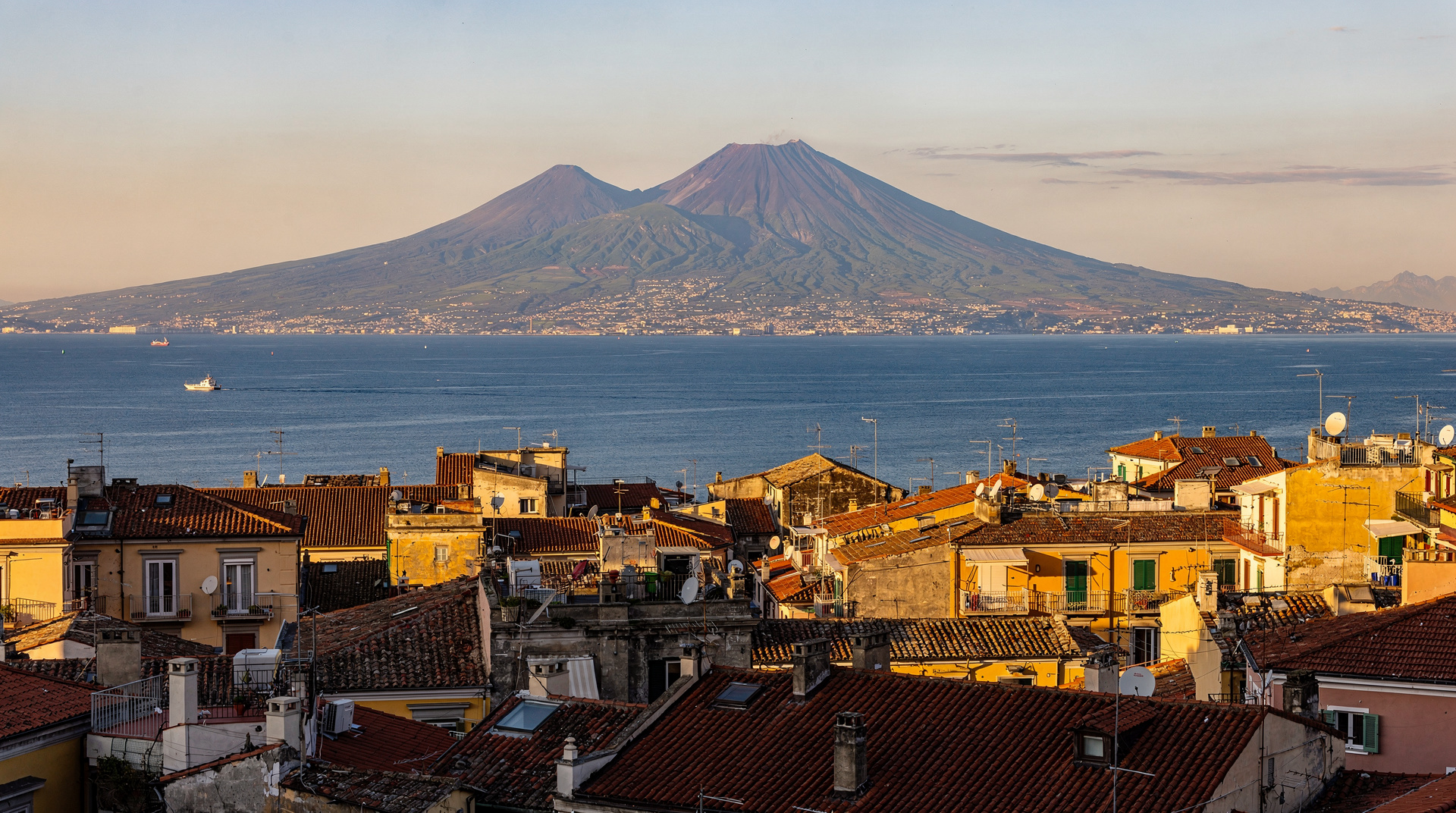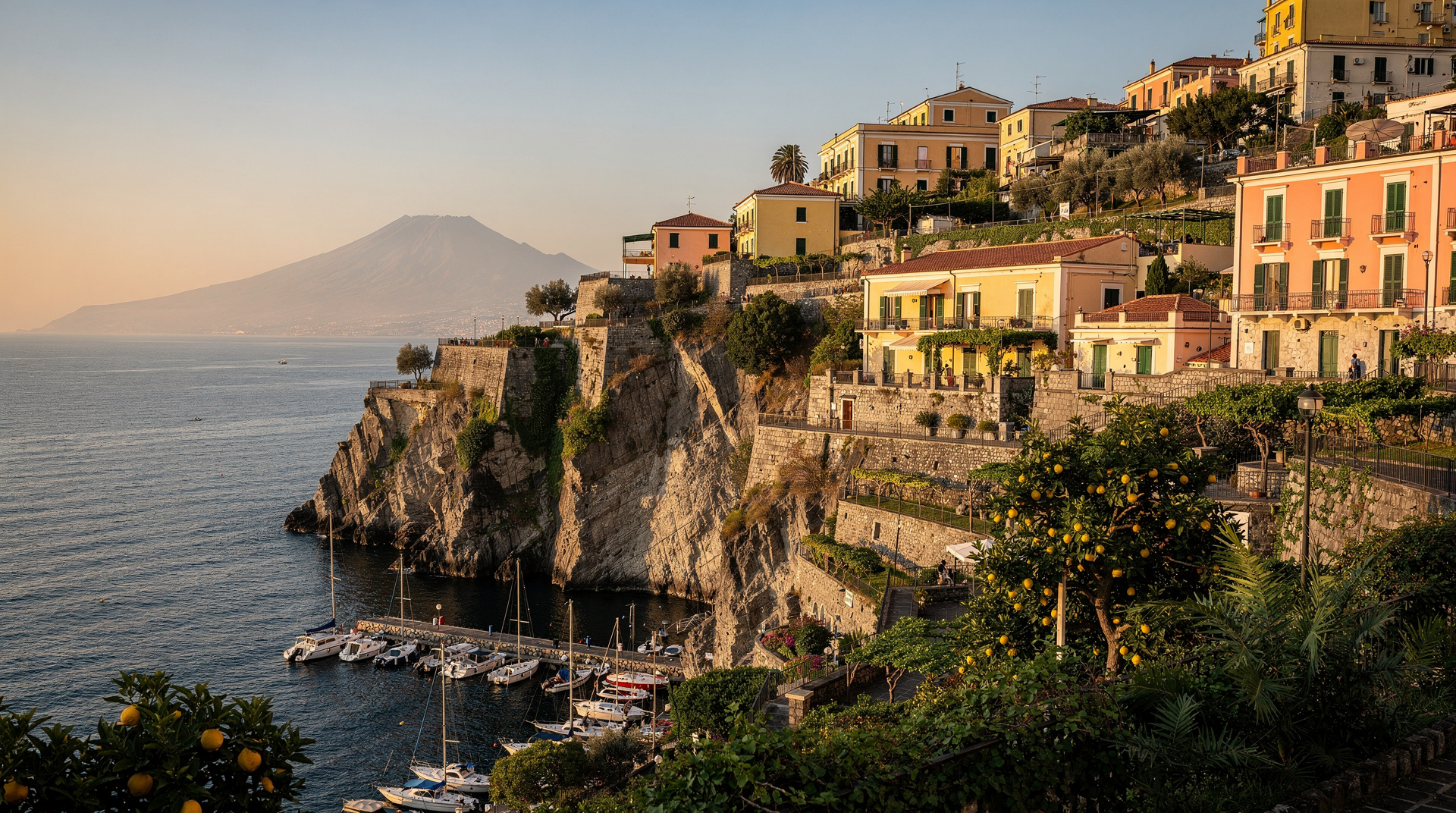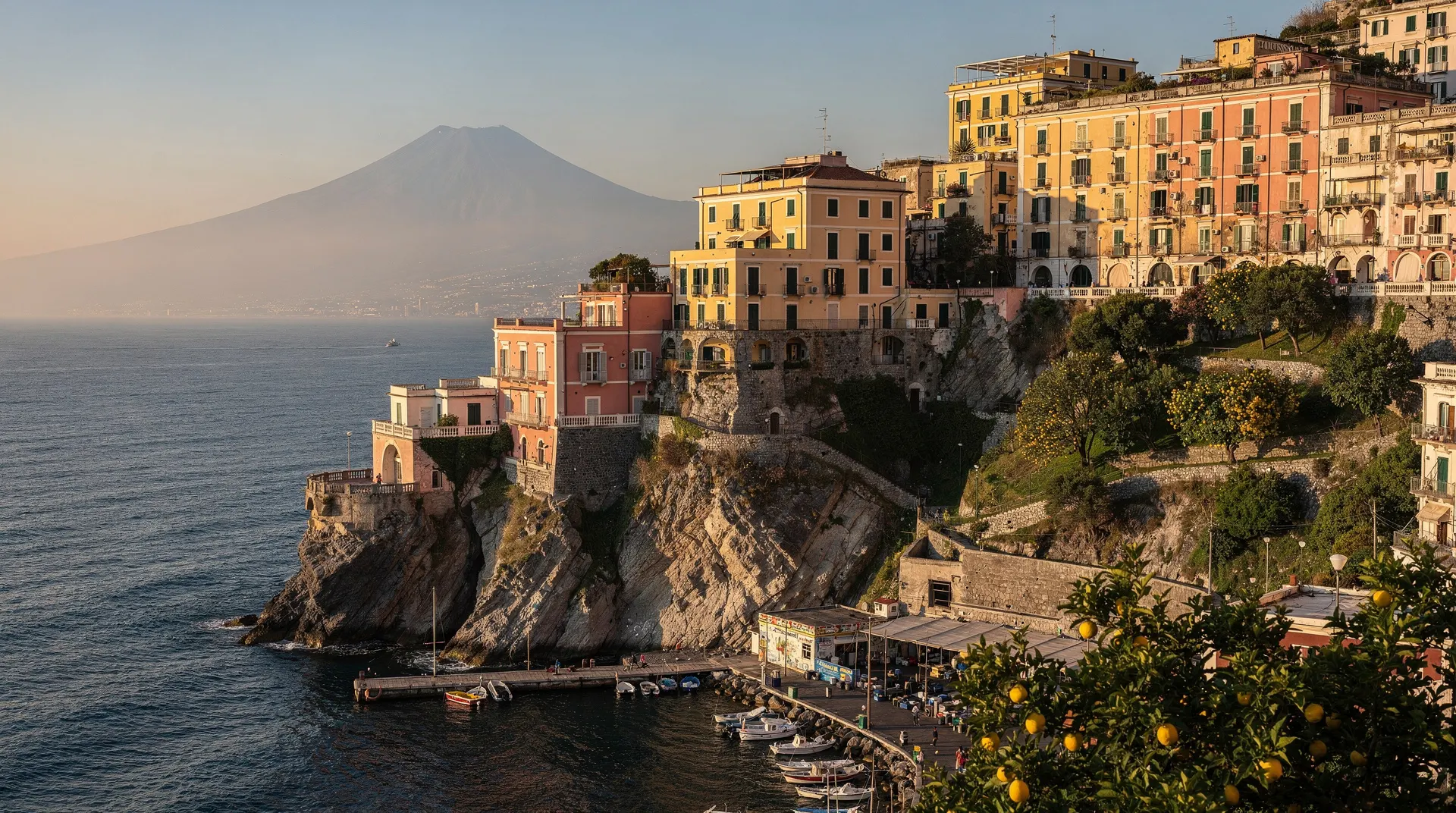
Sorrento vs Naples — where to stay for your Campania trip?
Sorrento: Pizza Lesson, Wine & Limoncello at a Local Farm
Is it better to stay in Naples or Sorrento?
Naples for the city itself, Pompeii, and budget accommodation. Sorrento for easier Capri and Amalfi Coast access, a calmer environment, and visitors who prefer a resort-feel base. Many experienced travellers split the stay — 2–3 nights in Naples then 2–3 nights in Sorrento — to use each place for its natural strength.
Naples or Sorrento? Naples is richer, cheaper, and better for the city and archaeological sites. Sorrento is calmer, more convenient for Capri and Amalfi, and easier to navigate. For 5+ days, split the stay. For 3–4 days, choose based on your priority.
| Naples | Sorrento | |
|---|---|---|
| Cost | €80–150/night double | €120–200/night double |
| Best for | City, archaeology, budget | Capri, Amalfi Coast, calm |
| Ideal trip length | Any length | 3+ days, ideally paired with Naples |
| Getting between them | 65–70 min by Circumvesuviana | Same, either direction |
The real difference between the two towns
Naples and Sorrento are 65–70 minutes apart by Circumvesuviana train. They are in many ways more different than this distance suggests.
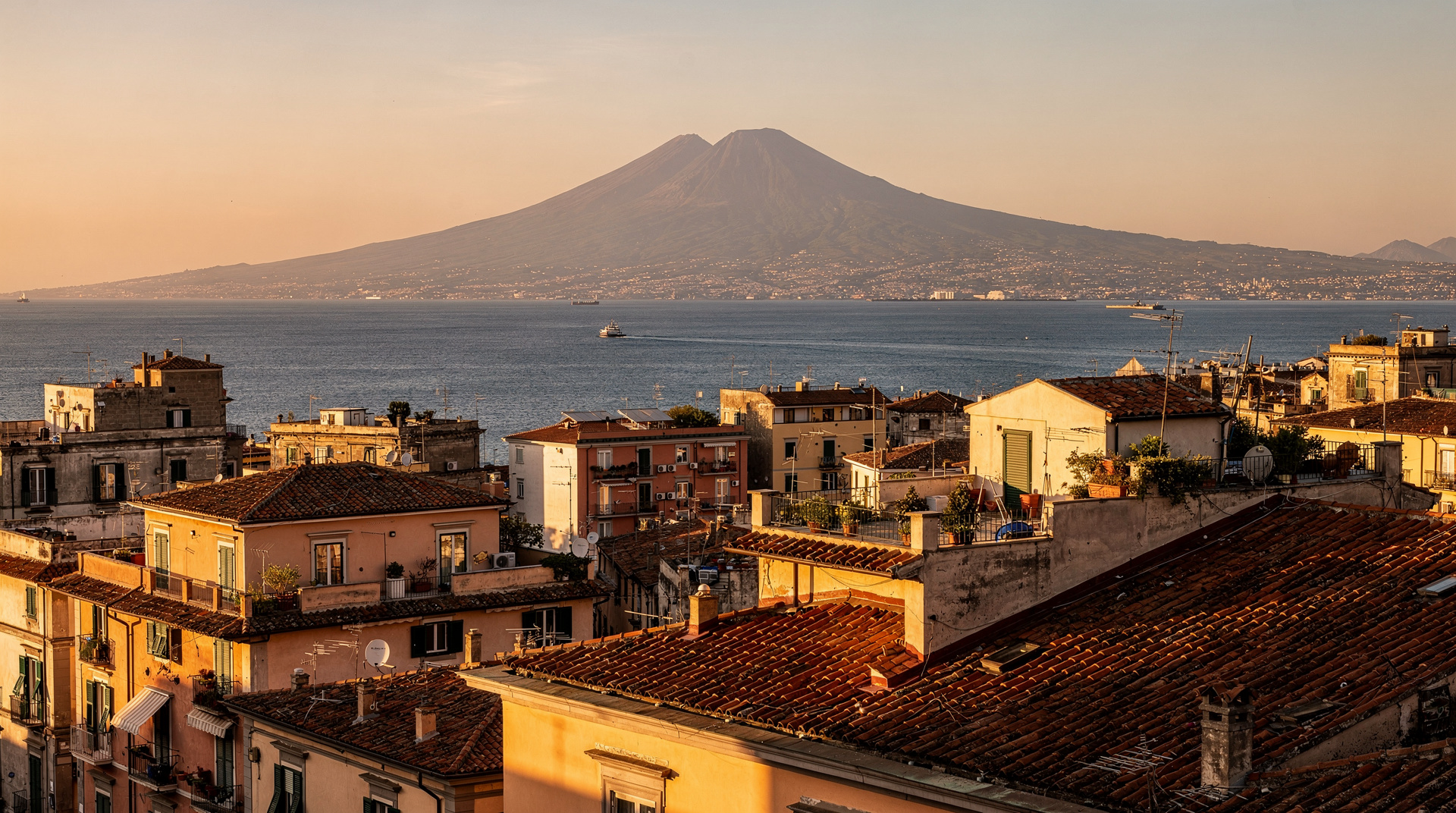
Naples is a large, complex, magnificent city of 1 million people with a chaotic street life, extraordinary museums, UNESCO-listed historic centre, world-class archaeology, the best street food in Italy, and a noise level and intensity that some visitors love and others find exhausting. It also carries a safety reputation that is, statistically, significantly worse than the reality — but which requires some orientation and awareness to navigate confidently.
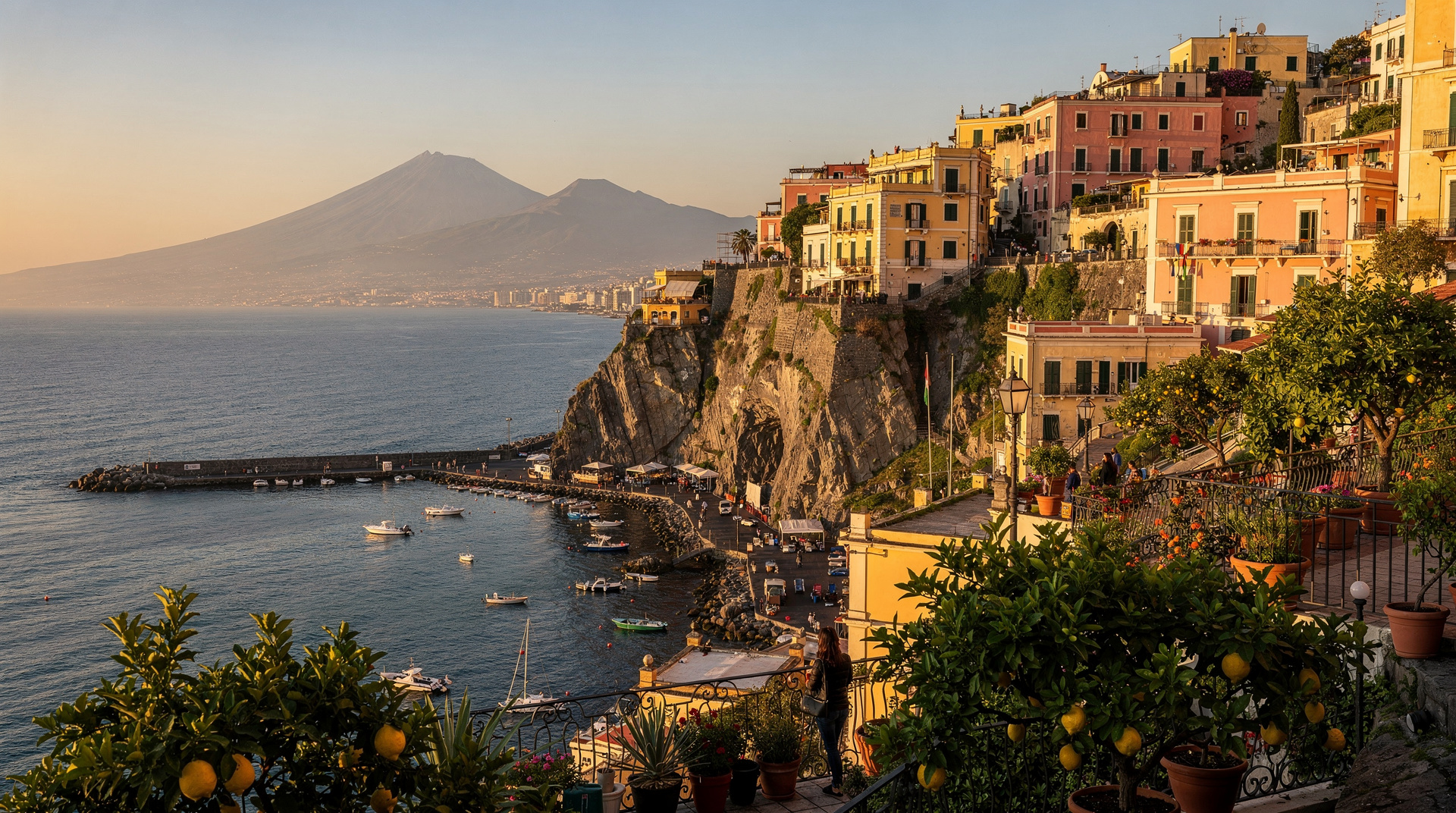
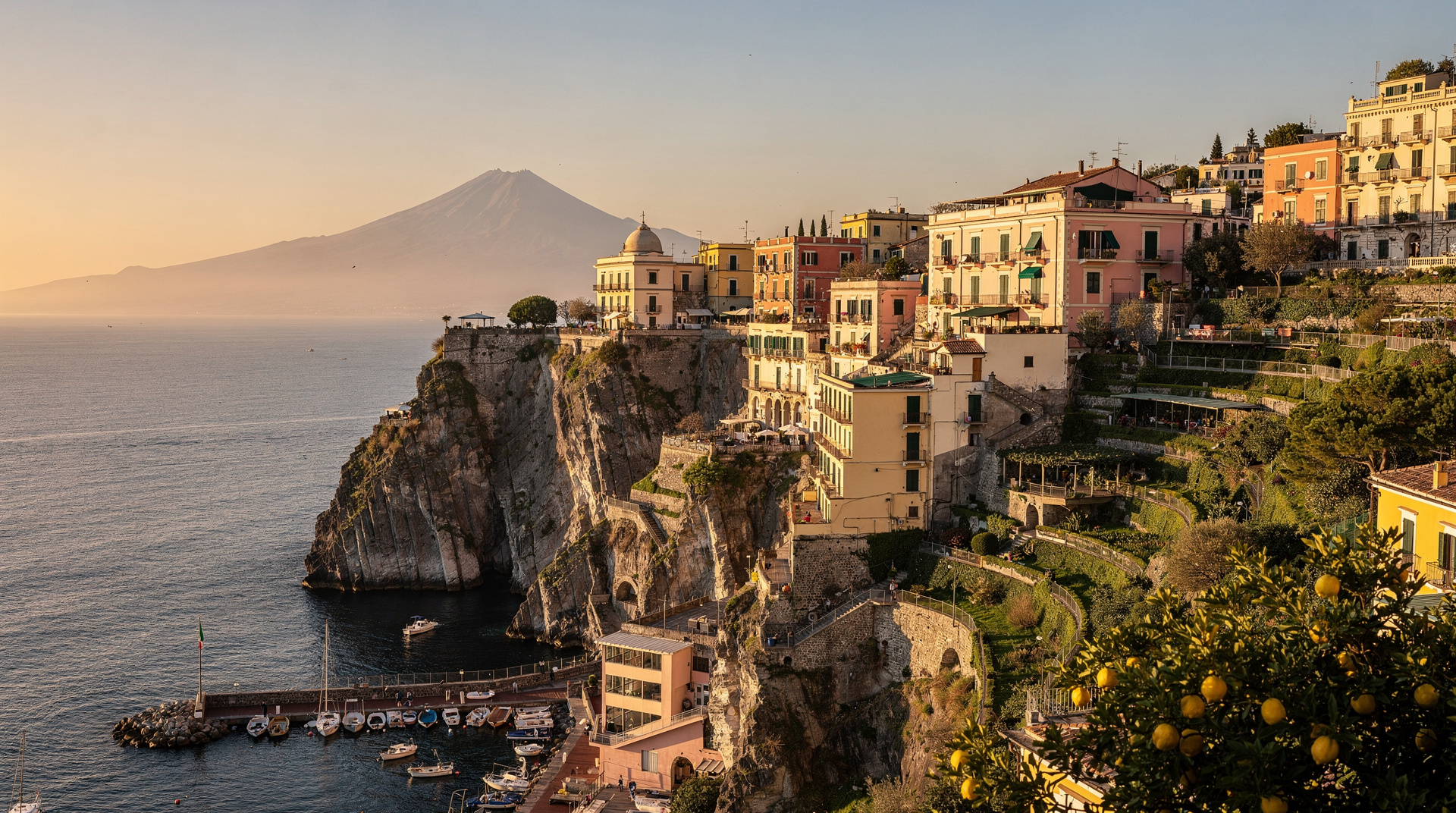
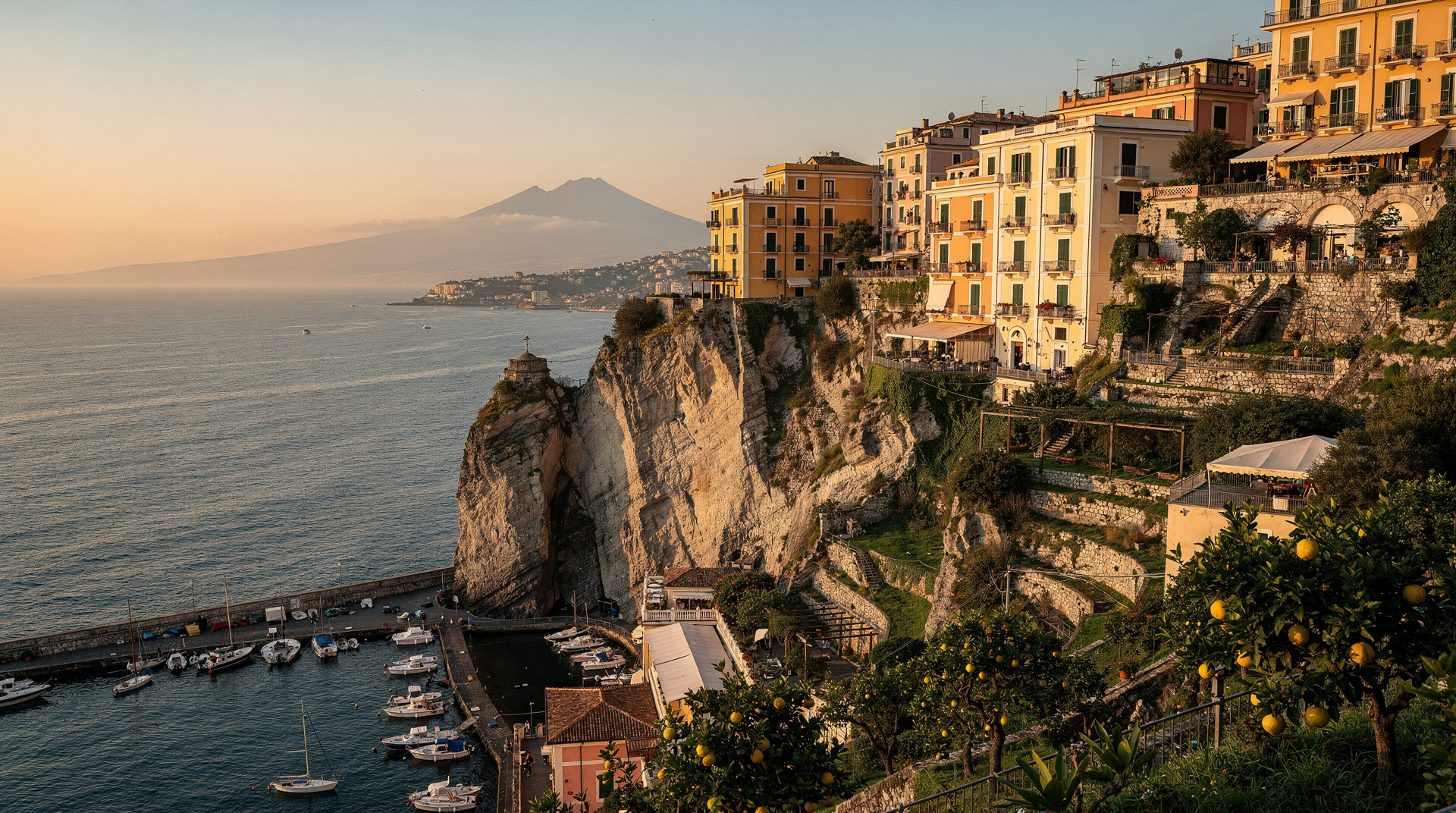
Sorrento is a small tourist resort of around 16,000 people built on a cliff above the Bay of Naples. It has a genuine historic centre, good restaurants, pleasant evening life, and a transport position that gives excellent access to Capri and the Amalfi Coast. It is also, in its tourist-facing areas, something of a designed experience — international visitors predominate on Corso Italia in summer, and the first few streets near the ferry terminal exist primarily to serve them.
Neither description is a criticism. They are simply different places serving different visitor needs.
Transport matrix: what you can reach from each
| Destination | From Naples | From Sorrento |
|---|---|---|
| Naples city sights | 0 min | 65–70 min (train) |
| Herculaneum | 10–15 min (train) | 45–50 min (train) |
| Pompeii | 30 min (train) | 30 min (train) |
| Vesuvius | 45 min | 45 min |
| Capri | 50 min (hydrofoil) | 20–25 min (hydrofoil) |
| Ischia | 50 min (hydrofoil) | ~60 min (hydrofoil) |
| Procida | 35–40 min | ~50 min |
| Positano | 2+ hours | 1 hour (bus) |
| Amalfi town | 2.5+ hours | 1.5 hours (bus) |
| Paestum | 1.5 hours | 2+ hours |
Sorrento wins on Capri, Positano, and Amalfi. Naples wins on the city itself, Herculaneum, and anything on the northern side of the bay. Pompeii and Vesuvius are roughly equivalent.
Cost comparison
Accommodation in Sorrento is genuinely more expensive than Naples across the board. The reasons are part structural (smaller inventory, more demand from international package tourists) and part reputational (Sorrento’s resort character commands a premium).
| Category | Naples | Sorrento |
|---|---|---|
| Budget hostel dorm | €20–35 | €30–50 |
| Budget private double | €60–100 | €90–140 |
| Mid-range double | €100–180 | €150–250 |
| Luxury / view double | €200–400 | €250–600 |
Restaurant prices are more comparable — Sorrento’s average menu prices are slightly higher than mid-range Naples restaurants, but the premium is modest for food of equivalent quality. The main trap in Sorrento is the tourist-strip restaurants near the ferry terminal, which are expensive relative to what you get.
Safety: the honest comparison
Naples has a significant safety reputation, some of which is justified and some of which is outdated or exaggerated. Campania as a region has pickpocketing rates above the Italian average but well below major tourist cities like Rome or Barcelona. The specific risks in Naples are:
- Circumvesuviana pickpockets — the most frequently reported tourist crime. Standard bag awareness prevents most incidents.
- Scampi in tourist areas — fake policemen, bracelet sellers, directed “look the other way” situations
- Motorbike theft in very specific areas — not relevant to tourists who are not leaving valuables in cars
The vast majority of Naples tourist neighbourhoods (Spaccanapoli, Piazza del Plebiscito, Chiaia, Vomero, Lungomare) are safe for routine tourist activity. Certain outer neighbourhoods (Scampia, Secondigliano) are irrelevant to tourists and easily avoided.
Sorrento has essentially no street crime in its main tourist area. It is a small resort town where visitors are the primary economic activity and local businesses have every incentive to maintain a safe environment.
If safety concern is the primary decision factor, Sorrento is the simpler choice. But choosing Naples also works fine with reasonable awareness.
Who should base in Naples
- Travellers whose primary interest is Naples itself (MANN museum, underground city, street food, nightlife)
- Budget-conscious visitors — substantially cheaper accommodation
- Multiple archaeological site visitors — Herculaneum particularly
- Travellers who enjoy the energy of a large Italian city
- Visitors comfortable navigating urban environments
Who should base in Sorrento
- Visitors primarily interested in Capri and the Amalfi Coast
- Families with younger children who want a calmer environment
- Visitors who prefer a resort-style base with good restaurant infrastructure
- Those who find Naples’ intensity or safety concerns deterring
- Travellers doing Capri multiple times (the shorter crossing matters)
- Anyone on a shorter trip (3–4 days) focused on the southern bay
The split stay: 3 nights in each
For a 6–7 day Campania trip, the split stay is the recommended approach because it eliminates the main tradeoff of choosing one base:
Sample week:
- Days 1–3: Naples — arrive, explore city, Pompeii or Herculaneum, MANN museum
- Days 4–7: Sorrento — move by Circumvesuviana, Capri, Amalfi Coast, Vesuvius, Procida or Ischia
The Circumvesuviana transfer with luggage requires some planning — the train is standing-room-only on busy summer mornings. Travel mid-morning (9–10am) or midday when it is slightly less crowded, and pack light. Most Sorrento hotels accept luggage storage before check-in.
Where to stay in each town
Naples best neighbourhood for tourists — Centro Storico (close to all major sights, neighbourhood restaurants) or Chiaia (calmer, more upscale, good access to the Lungomare). See best-areas-to-stay-naples for full neighbourhood guidance.
Sorrento best areas — the historic centre (within walking distance of Piazza Tasso, Marina Grande, and Marina Piccola) is the natural choice for most visitors. The cliff-view hotels above Marina Grande are the most atmospheric but come at significant premium. Hotels 200 metres back from the tourist strip offer better value without losing access.
Activities from each base
If staying in Sorrento, complement the island and coast day trips with some of Sorrento’s own activities:
Sorrento farm pizza, wine, and limoncello experience Sorrento pasta and tiramisu cooking class with wine Sorrento wine tasting with 4 wines in a gardenFrequently asked questions about Naples vs Sorrento accommodation
Can I book accommodation in Sorrento and still easily visit Naples for a full day?
Yes. The Circumvesuviana runs every 30 minutes and the 65-minute journey is manageable as a day trip in either direction. Leave Sorrento at 8am, arrive Naples by 9:15am, full day of sightseeing, return evening train. This works well for one or two Naples day trips from a Sorrento base.
Are the hotels in Sorrento worth the extra cost compared to Naples?
It depends on the hotel. Sorrento has some genuinely beautiful historic properties with cliff views that are worth a premium — places like the Grand Hotel Cocumella or the Maison Tofani are distinctive. Mid-range hotels in Sorrento are often functional but overpriced relative to Naples equivalents. Budget hotels in Sorrento are usually better maintained than the equivalent Naples budget properties but cost significantly more.
Is the Sorrento hotel strip near Corso Italia noisy?
Some hotels directly on Corso Italia experience evening and morning traffic noise. The old town lanes behind the main street, and the cliff-facing hotels on the southern side, are generally quieter. Ask about room location when booking.
Which town has better food — Naples or Sorrento?
Naples, overall and by a significant margin. The city’s food culture is one of the most distinctive in Italy — pizza, fried street food (cuoppo, frittatine, pizza fritta), coffee culture, pastry traditions. Sorrento has excellent seafood and lemon-based cuisine, and some very good restaurants, but it lacks the depth and variety of a major city. That said, the specific Sorrentine products — delizia al limone, fresh seafood, sfusato lemon dishes — are excellent and not easily replicated elsewhere.
Is there good nightlife in Sorrento?
Moderate. Sorrento has bars and restaurants open until midnight, a pleasant passeggiata scene, and a few venues with live music in summer. It is not a clubbing destination. If evening entertainment is important to your trip, Naples offers considerably more options across all genres. Sorrento is better suited to early-evening aperitivo culture and dinner rather than late nights.
Internet, phone reception, and remote work considerations
For travellers who need to stay connected — remote work, video calls, or simply reliable navigation apps — both towns perform reasonably well, but with different weak points. Naples has strong 4G/5G coverage throughout the tourist centre and most hotels offer functional wifi, though older buildings in Centro Storico occasionally have thick-wall dead zones.
Sorrento’s coverage is generally strong in the town centre but can weaken on the cliff-edge properties furthest from the main network towers, and hotel wifi quality varies more by property age than by price point — a budget hotel with recent renovations sometimes outperforms an older luxury property. If a stable connection matters for work, ask specifically about wifi speed rather than assuming a higher price guarantees better service, and in Sorrento in particular, request a room away from the cliff edge if connectivity is a genuine priority over the view.
What a typical evening looks like in each town
Understanding the rhythm of each town at the end of the day helps you decide which suits your travel style.
Evenings in Naples — the city has multiple overlapping evening cultures. The Lungomare seafront is ideal for a sunset walk (the view towards Vesuvius is spectacular from the Castel dell’Ovo area). Chiaia neighbourhood has upscale aperitivo bars. Spaccanapoli has neighbourhood tratttorie where a table without a reservation is usually available after 9pm. The San Carlo opera house runs performances September–June. Street food on Via Toledo and in the Spanish Quarter runs until 11pm. For late eating and drinking, the areas around Piazza Bellini and Piazza del Gesù are active until midnight.
Evenings in Sorrento — the passeggiata on Corso Italia peaks at 7–9pm. Bar Ercolano on Piazza Tasso is the standard aperitivo stop (Aperol spritz around €6, good snacks). Dinner service starts at 7:30–8pm; most restaurants close by 11pm. The cliff walk above Marina Grande is excellent in the last hour before sunset. A few bars on Via Accademia and Via Giuliani stay open past midnight, particularly in summer when returning ferry passengers need somewhere to wait.
Neither town is hostile to late-night visitors, but Naples has more depth across all genres and Sorrento has a more predictable, contained evening circuit.
A note on repeat visitors and second trips
Travellers returning to Campania for a second or third trip often make a different base choice than first-timers, having already covered the primary sights on an earlier visit. Repeat visitors frequently skip the debate entirely and base in Sorrento exclusively, using it as a jumping-off point for destinations they missed the first time — Ischia, Procida, a longer Amalfi Coast stay, or a deeper dive into the Sorrentine Peninsula’s smaller towns.
First-time visitors, by contrast, generally benefit more from the Naples-heavy or split-stay approaches described above, since Naples’ core sights (MANN, Cappella Sansevero, Spaccanapoli) are genuinely essential on a first visit and hard to justify skipping even at the cost of extra travel time to reach Sorrento’s advantages, whereas a returning visitor has already earned the right to prioritise relaxation over completism, and can safely let the coast and islands take precedence over the city this time around.
Making the final decision
If you are still uncertain after reading the above, here is a simplified decision framework:
Choose Naples if:
- Naples city is a primary reason for your trip
- You want maximum value for accommodation budget
- You are interested in multiple archaeological sites
- You enjoy urban energy and variety
- You are comfortable navigating a large Italian city
Choose Sorrento if:
- Capri and the Amalfi Coast are your primary interests
- You want a calmer, more contained base environment
- You are travelling with younger children
- You prefer a resort-town atmosphere to an urban one
- You are visiting in July–August and want to minimise stress
Do both if:
- Your trip is 6 days or more
- You want to cover the full range of Campania’s highlights
- You can manage the luggage transfer between the two towns
The Circumvesuviana between Sorrento and Naples runs throughout the day and evening, making the two towns functionally connected. Whichever you choose as a primary base, the other is easily accessible for a day trip. The decision affects where you sleep and the cost of doing so — it does not lock you out of anything in the region.
Specific questions answered for common visitor types
“I have 4 days and want to see Pompeii, Capri, and Naples briefly.” Base in Sorrento. Day 1: arrive, settle, evening Sorrento walk. Day 2: Capri (early ferry). Day 3: Pompeii (30 min by Circumvesuviana). Day 4: Naples half-day by Circumvesuviana (MANN museum or Cappella Sansevero) then Circumvesuviana back for evening flight.
“I have 4 days and want to focus on Naples — pizza, museums, street food, history.” Base in Naples. Stay in Centro Storico or Chiaia. Use days for city sightseeing, with one day for Pompeii and possibly a half-day for Procida from Beverello if you want an island.
“I have 7 days and want to see everything.” Split: 3 nights Naples, 4 nights Sorrento. Transfer mid-trip by Circumvesuviana. Naples days cover the city and Herculaneum; Sorrento days cover Capri, Amalfi Coast, and Pompeii.
“I have only 3 days.” Choose one base. If your priority is the bay (Capri, Amalfi): Sorrento. If your priority is the city and archaeology: Naples. Three days is not enough to do both properly.
Neighbourhood guide for each town
Best Naples neighbourhoods for visitors:
Centro Storico — the historical core, UNESCO listed, maximum proximity to major sights (Cappella Sansevero, MANN, Spaccanapoli, underground Naples). Busier and louder than other areas. Best for visitors who want total immersion in Naples life.
Chiaia — upscale residential neighbourhood along the seafront, near the Lungomare promenade and Castel dell’Ovo. Calmer than Centro Storico, excellent restaurants and bars, good proximity to the port for island ferries. Best for visitors who want comfort and easy bay access.
Vomero — hilltop neighbourhood above the city, connected by funicular. Good views, calmer environment, the Certosa di San Martino museum. Less convenient for sightseeing but pleasant for sleeping.
Best Sorrento areas for visitors:
Old town near Via San Cesareo — closest to the cultural sights and walking routes. Mid-range hotels on the lanes behind the main street. 15 minutes from Marina Piccola.
Via Luigi de Maio / cliff edge — best views, closest to Villa Comunale gardens. Some historic hotels with terrace views. Higher cost.
Near the station on Corso Italia — most practical for early Circumvesuviana departures. Noisier. Good for visitors making multiple day trips that require early train departures.
When to book and what to expect in 2026
Both Naples and Sorrento accommodation books out during the peak summer season (July–August) and Italian national holidays. For Sorrento particularly, rooms with sea views at mid-range hotels book 6–8 weeks in advance in July.
In Naples, the best value hotels (€80–120 for a clean central double) book 2–4 weeks in advance in summer. Last-minute availability exists but at higher prices and worse locations.
May, June, September, and October represent the sweet spot for both towns: availability is easier, prices are 15–25% lower than July–August peak, and the weather in both locations is excellent. If your dates are flexible, avoiding the July–August window saves money and reduces crowds throughout the entire Campania experience.
How solo travellers should weigh the decision
Solo travellers face a slightly different calculation than couples or families. Naples rewards solo confidence — the city’s energy, street food circuit, and dense sightseeing give a solo visitor plenty to do without needing company, and hostel/budget accommodation options are far more plentiful, which matters for the social aspect of solo travel (shared kitchens, common rooms, easy conversations with other travellers).
Sorrento is quieter and more couple- or family-oriented in its social atmosphere — pleasant to walk alone, but with less of the casual traveller-to-traveller interaction that budget Naples accommodation naturally creates. A solo traveller prioritising social contact and lower costs generally does better based in Naples with Sorrento as a day trip; a solo traveller who wants a calmer, slower pace and does not mind dining alone does well choosing Sorrento for a few nights either way. See solo-travel-naples for the fuller solo-specific picture.
What travellers regret about each choice
Reading enough traveller feedback on both bases turns up consistent patterns worth flagging honestly. Naples-based visitors who skip Sorrento entirely sometimes regret not seeing Capri or the Amalfi Coast at all, or doing so on a rushed single day trip from Beverello with the longer 50-minute crossing eating into their time on the island.
Sorrento-based visitors who skip Naples sometimes regret missing the MANN museum and the underground city — genuinely unique sights with no equivalent elsewhere in the region — because the 65-minute train each way felt like too much for a “day trip within a day trip.” The split-stay approach exists specifically to avoid both regrets, and it is why experienced repeat visitors to Campania rarely choose a single-base trip once they have done both.
Frequently asked questions about Sorrento vs Naples — where to stay for your Campania trip?
Is Sorrento safer than Naples for tourists?
Which is cheaper — Naples or Sorrento?
Is Sorrento better for families with children?
Can I see everything in Campania from a single base?
What is the Naples vs Sorrento transport comparison?
Where should I stay if I mainly want to visit Capri?
Where should I stay if I mainly want to visit Pompeii and Herculaneum?
Top experiences
Bookable activities with verified prices and instant confirmation on GetYourGuide.