Positano guide: what to see, where to eat, and how to get there
From Positano: Amalfi & Ravello Private Day Trip
Is Positano worth visiting and how do I get there?
Yes — the views are genuinely exceptional. Arrive early (before 10:00) by SITA bus from Sorrento or by ferry from Naples. The town is small enough to cover in 3–4 hours. Budget at least €30 for a sit-down lunch; eat up the hill from the waterfront to avoid the steepest prices.
| Where | Amalfi Coast, around 60–70 min by ferry from Naples |
| Cost | lunch around €30–50pp, deck chairs around €25–35/day |
| Time needed | 3–4 hrs for a day visit |
| Getting there | ferry (Apr–Oct) or SITA bus via Sorrento |
| Best time | May–June or September |
| Not for | anyone wanting flat, easy walking with luggage |
Arriving in Positano: the first thing to understand
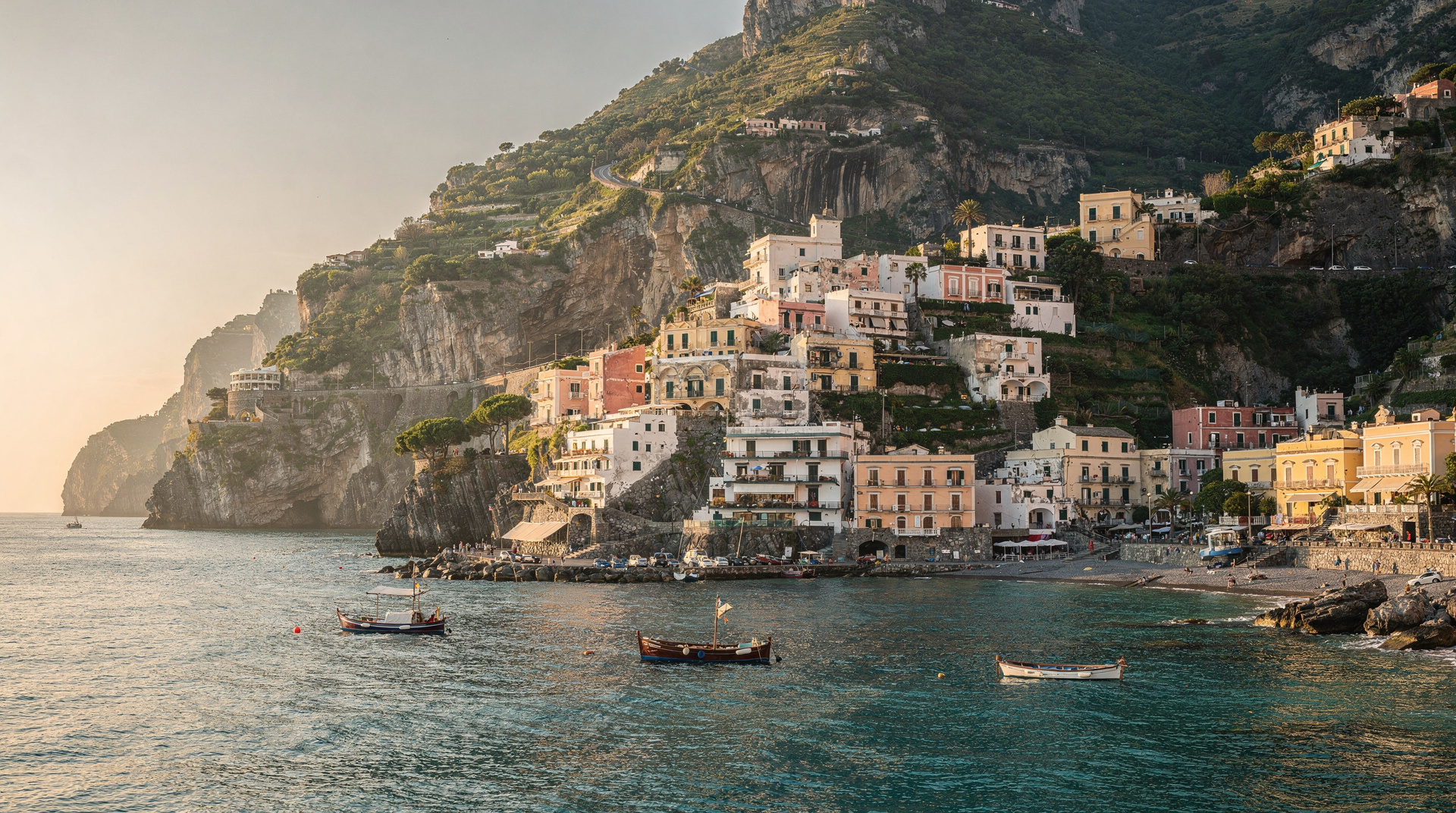
Positano is a vertical town. The SS163 coastal road passes through it at the top; the beach and waterfront are at the bottom. Between them is a dense network of stepped lanes, vaulted passages, and small piazze that can be confusing on arrival.
There are two points where buses and taxis stop on the SS163: the upper stop (near the Tre Viole bar, for the upper village) and the lower stop (nearest the beach, called Sponda). The ferry dock is at the base of the town, directly on the waterfront. Most accommodation in the town is somewhere on the vertical between these points, meaning you will carry bags down or up a significant number of steps. Hotels in Positano universally know this — call ahead and ask where precisely to be dropped and whether they have a porter service.
Getting to Positano
From Naples by ferry (April–October): Molo Beverello port, journey around 60–70 minutes, approximately €25 each way. NLG and MetrodelMare are the main operators. The ferry is the most comfortable arrival — you sail past the town before docking, which gives the best possible first view. Book in advance in summer.
From Sorrento by SITA bus: The standard budget option. SITA buses run from the stop directly outside Sorrento train station (Circumvesuviana). Fare approximately €2.20, journey time 45–60 minutes (longer in summer traffic). The bus is often crowded and hot in summer; don’t count on a seat from mid-morning. Tickets at tabacchi shops in Sorrento or from the driver (slightly more expensive). See Amalfi Coast bus guide.
From Naples by guided tour: Easiest for first-timers. Transport is included and you don’t have to navigate ferry schedules or bus queues with luggage. Most tours combine Positano with Amalfi and Ravello in a single day. See Amalfi Coast from Naples.
Small-group Amalfi Coast day trip from NaplesThe upper village
The upper part of Positano — around Via dei Mulini and Via Cristoforo Colombo — is where you find the town’s best boutiques, the Church of Santa Maria Assunta, and the quieter cafés used by people who actually live here.
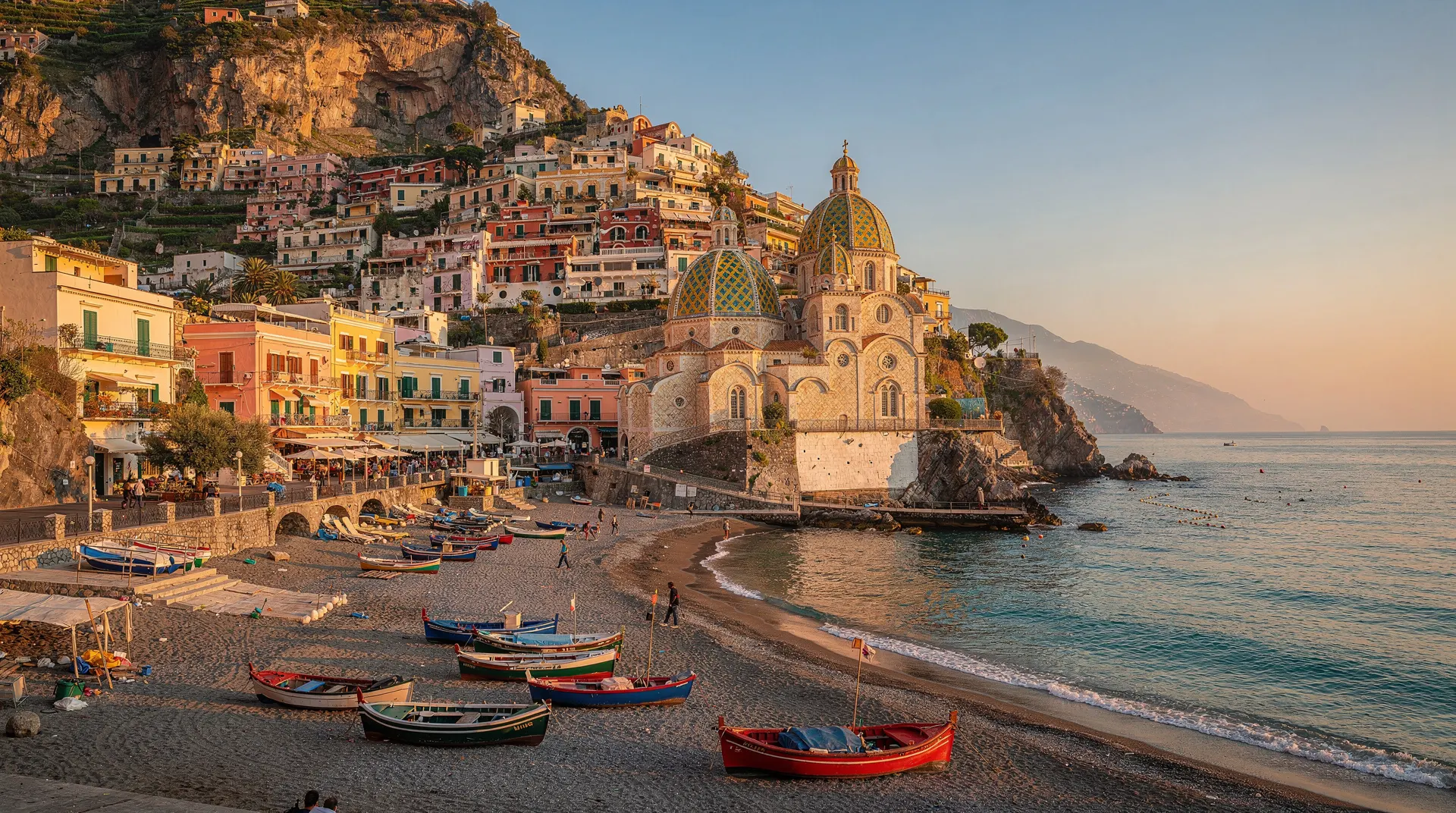
Santa Maria Assunta (also called the Church of Positano) has a majolica-tiled dome visible from the sea and a 13th-century Byzantine panel icon of the Black Madonna, believed to have been brought here by monks. The interior is small and cool — a genuine piece of history amid a lot of tourist commerce. Free entry, open daily until early afternoon.
The ceramics and linen boutiques are concentrated on Via dei Mulini. Prices reflect the clientele — a handmade ceramic plate is €25–60 depending on size and complexity. The craftsmanship is real; don’t assume these are mass imports.
The beach
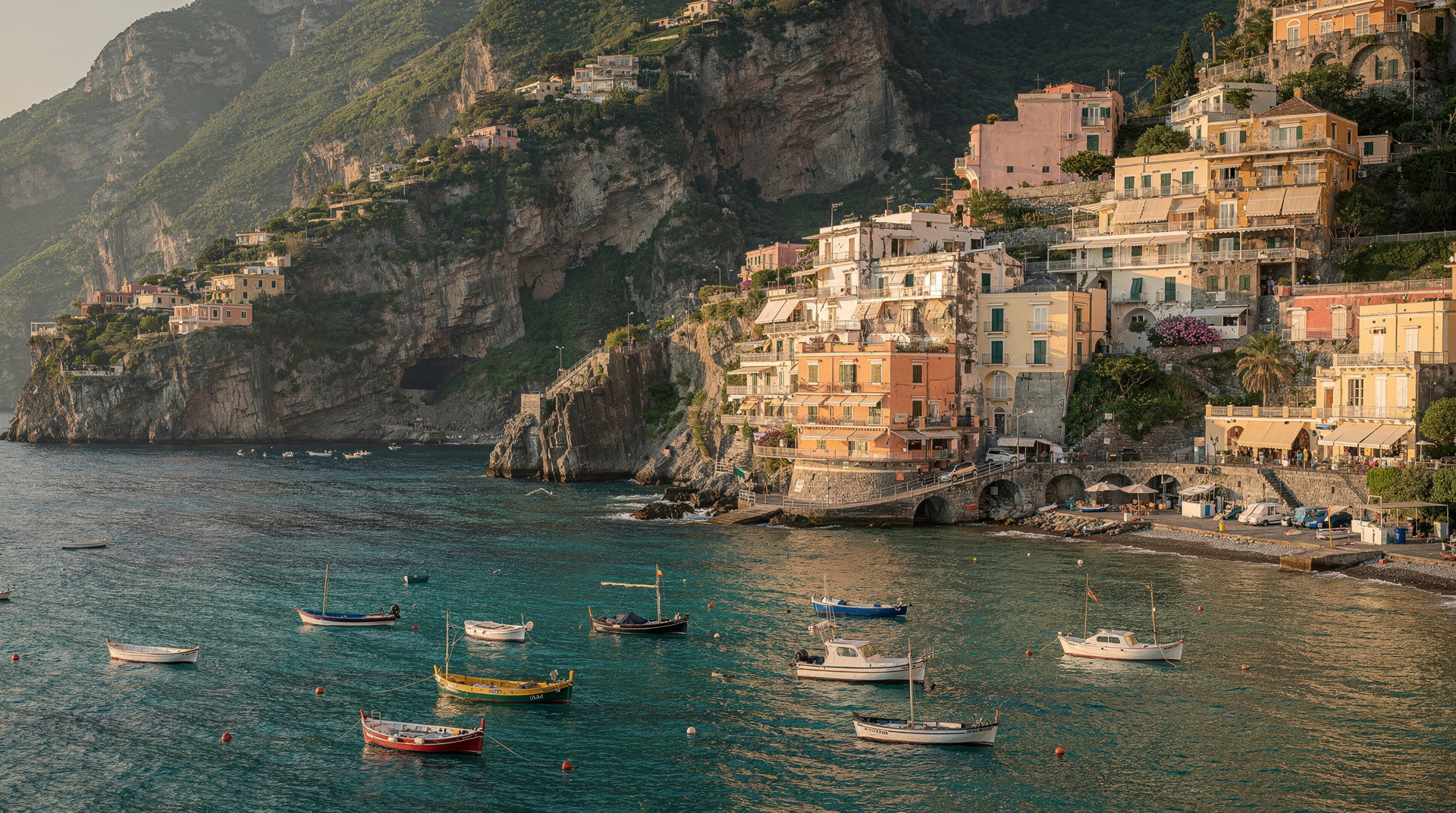
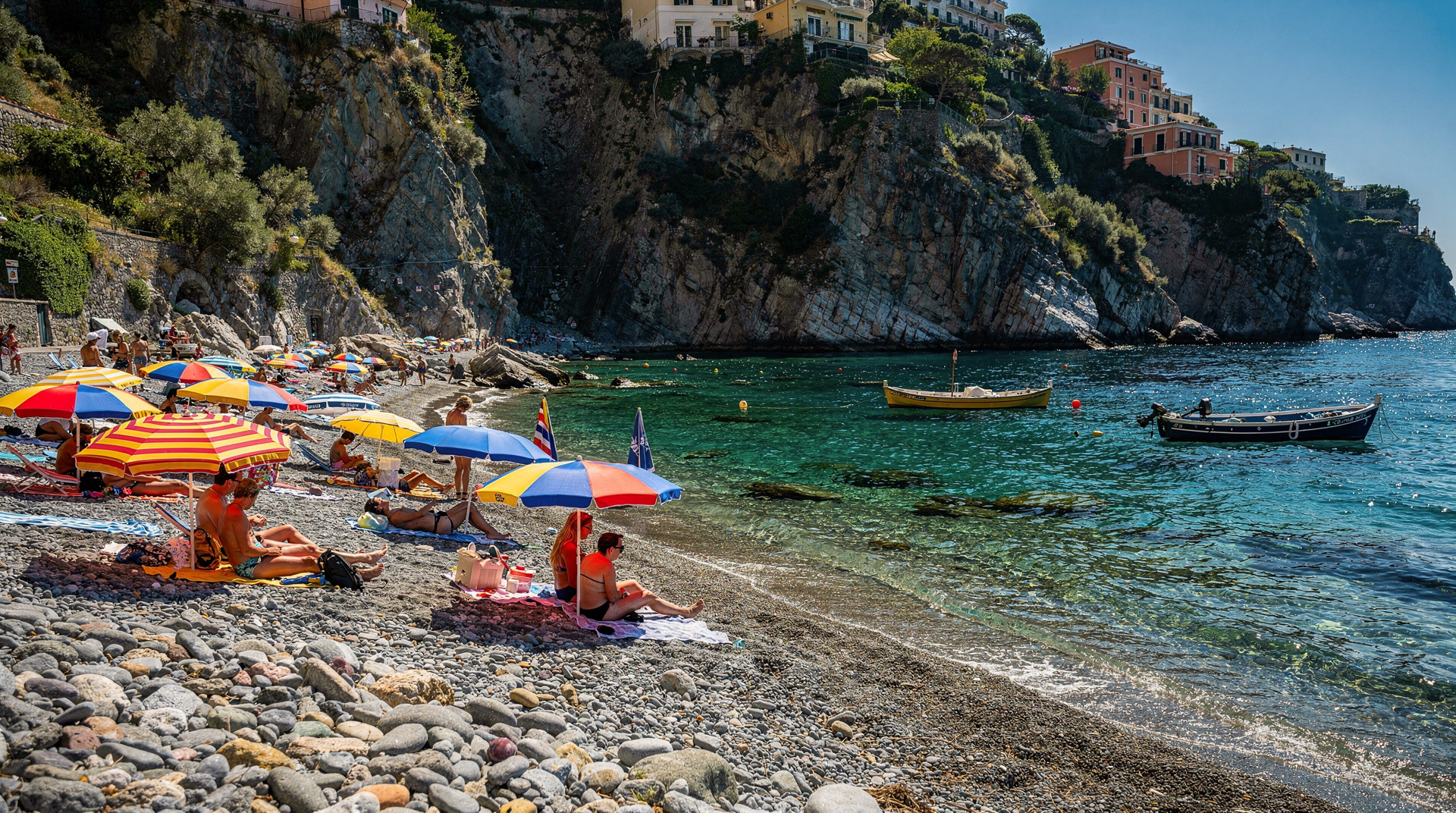
Spiaggia Grande is the main beach, about 300 metres wide. The visual is extraordinary — grey volcanic gravel backed by the stacked pastel buildings. In practice, the usable beach is quite narrow and fills quickly.
The free section (accesso libero) is at the eastern end near the ferry dock and at the western end past the beach chairs. Both sections require arriving before 9:30 in summer. The majority of the beach is occupied by private lido areas charging €25–35/day for two chairs and an umbrella.
The water is clean, sheltered, and relatively calm in the morning. From early afternoon, boat traffic in the bay increases and the water choppier.
Other beaches in Positano:
- Fornillo (10-minute walk west from Spiaggia Grande along the coastal path) is smaller, less crowded, and locally preferred.
- Arienzo (a further walk, partially by boat) has the best snorkelling water.
- La Porta and Laurito are accessible by water taxi from Spiaggia Grande (~€5–8 each way).
Where to eat without overpaying
Positano has a small number of genuinely good restaurants and a larger number of mediocre ones charging extraordinary prices for the view. The heuristic: if you can see the sea from your table on the main waterfront, add 30–50% to the price of the same meal one street back.
Better-value options:
- La Zagara on Via dei Mulini — established lemon grove café, local pastries and granita, not on the waterfront, prices significantly lower.
- Next 2 restaurant (Via Pasitea) — creative Campanian cooking without the waterfront premium.
- Bar Internazionale on the main square — espresso and sfogliatella at the counter for local prices.
The tourist trap to know: restaurants on Spiaggia Grande near the ferry dock charge €4–5 for a coffee and €25–35 for a pasta that costs €12–15 one street up. The view from the beach costs money; it’s your choice whether to pay for it.
Walking and hiking above Positano
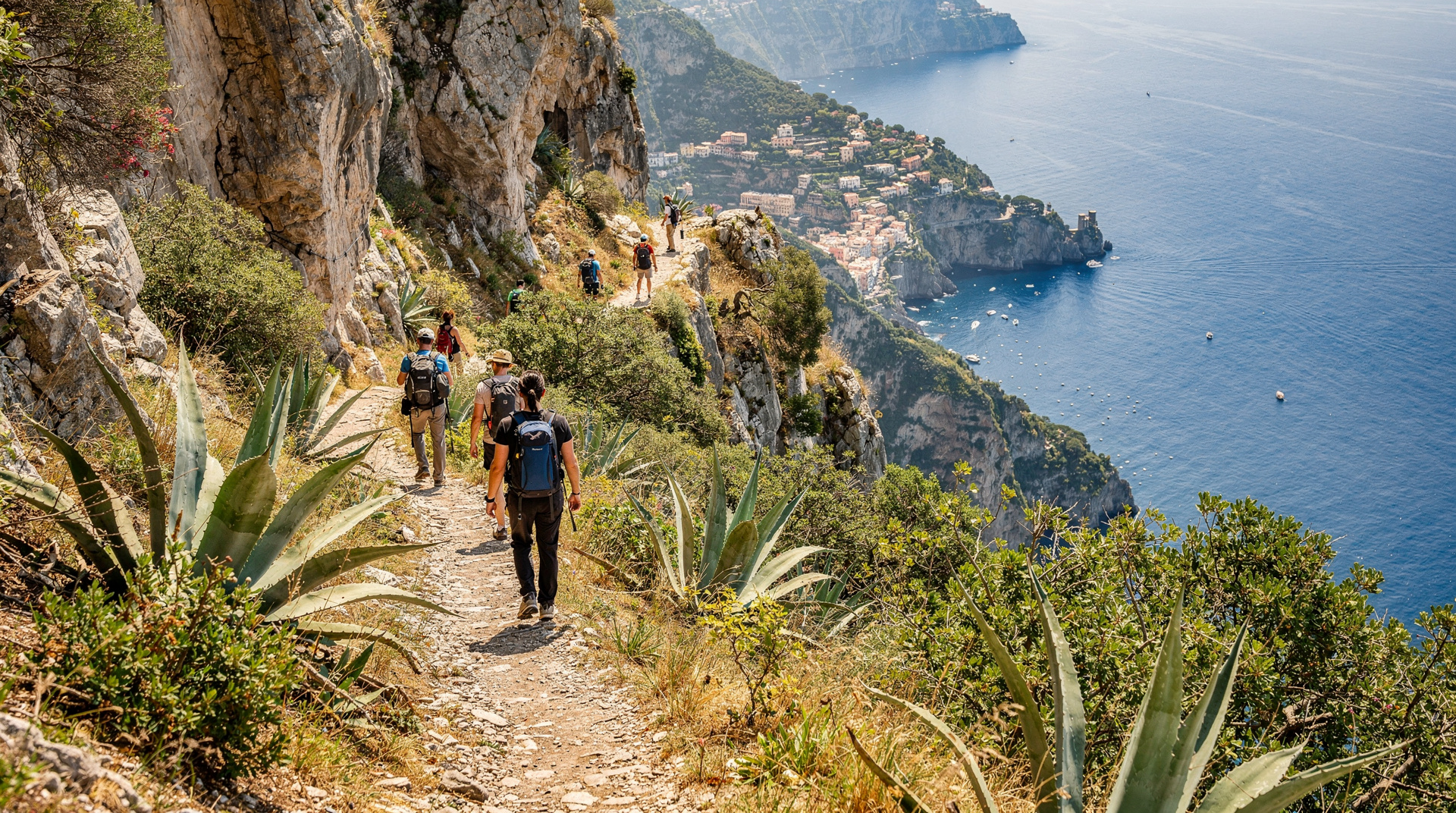
Positano is the western gateway to the Path of the Gods (Sentiero degli Dei), one of the best coastal walks in Italy. The trail runs east from the village of Nocelle (above Positano) to Bomerano in Agerola — about 7.5 km with spectacular views over the Amalfi Coast. From Positano, a local bus connects to Nocelle (or a 45-minute uphill walk from the town). See the full Path of the Gods guide for logistics.
The stepped path from Positano to Praiano (the Walkway of the Gods / Sentiero dei Limoni) is a quieter alternative through lemon groves and past abandoned fishing villages. Takes about 1.5 hours one way.
Boat trips from Positano
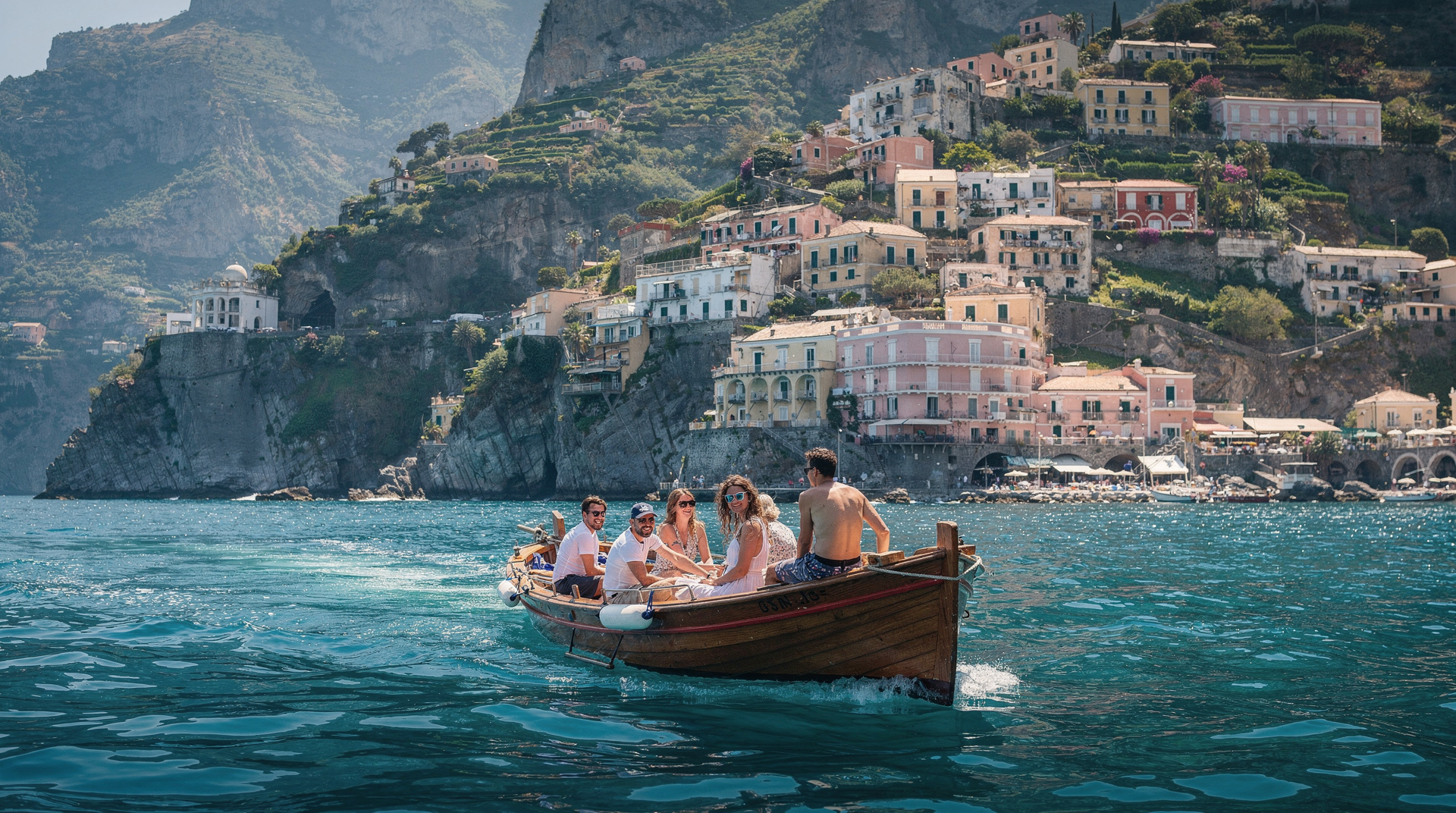
The town’s harbour is a departure point for boat trips in all directions — to Capri, to the sea caves, and along the coast. See Amalfi Coast by boat for details. Water taxis from the beach will take you to neighbouring coves for €30–50 per group.
Private day tour: Positano, Amalfi, and RavelloPractical logistics
Arriving by car: Positano is in a ZTL (limited traffic zone) — you need permission to drive into the town itself. Authorised parking areas include the Municipal Car Park (€3/hour in summer) near the Tre Viole stop. The car park fills by 9:30 in high season. Parking elsewhere in the town is controlled by the ZTL, with cameras.
Luggage storage: No official storage facility in the town itself. Most hotels will hold bags after checkout. If you’re visiting without accommodation, the most practical approach is to travel light.
Opening hours: Most boutiques open 9:30–13:00, 16:00–20:00. Restaurants open for lunch from 12:30 and dinner from 19:30. The beach clubs are in operation 8:30–sunset.
Getting back: the last SITA bus to Sorrento from Positano departs around 22:00 (check timetable seasonally). The last ferry to Naples is typically around 17:30–18:00 in season. If you miss the ferry, Sorrento is 45 minutes by bus and has Circumvesuviana services until approximately 22:30.
Positano vs the rest of the coast
Positano is the most photographed Amalfi Coast town, but it isn’t the only base worth considering, and it isn’t necessarily the best one for every kind of trip. If you’re deciding where to actually stay rather than just visit for the day, where to stay on the Amalfi Coast lays out how Positano compares to Amalfi town, Praiano, and Ravello on cost, walkability, and atmosphere.
For a broader sense of how the towns differ, Amalfi Coast towns compared is a useful companion to this page — Positano wins on drama and photographs, but Amalfi town is flatter and cheaper, and Ravello trades the beach for gardens and quiet.
Many visitors base themselves in Sorrento and day-trip to Positano rather than staying in the town itself — see Sorrento vs Positano as a base for the tradeoffs, which come down mostly to cost and whether you want to be car-free at the sea or in a larger town with more transport options.
Beach comparison if Positano’s isn’t quite right
Spiaggia Grande is spectacular to look at and crowded to use. If gravel and price put you off, it’s worth knowing what else is nearby before you commit a whole day here. Best beaches on the Amalfi Coast ranks the coast’s options including Fornillo and Arienzo mentioned above, alongside beaches further along toward Amalfi that see fewer day-trippers.
What a full day actually costs
Positano’s reputation for expense is earned, but the total depends heavily on choices you control. A no-frills version — SITA bus in, a slice of pizza and gelato, free-section beach access, walk around and leave — can be done for well under €50 per person including transport. Add a sit-down lunch with wine, a couple of hours on a private lido, and a boat trip to a nearby cove, and the same day easily runs €150–200 per person.
Neither is wrong; the town accommodates both, but it rewards knowing which version you’re planning before you arrive, since prices aren’t always displayed clearly on the waterfront. For a broader sense of how Positano fits into overall trip costs, the real cost of the Amalfi Coast breaks this down across a full multi-day visit.
Frequently asked questions about Positano
Is Positano overrated?
It is one of Italy’s most photographed locations for a reason — the view from the sea or from the hills is genuinely stunning. But the town itself, at beach level, is a tightly packed grid of souvenir shops and expensive restaurants. If your interest is the scenery and atmosphere rather than the beach, you might spend two hours in Positano, take the ferry east to Amalfi for substance, and return by bus. The comparison is worth making: see Amalfi Coast towns compared.
Can I visit Positano in just a few hours?
Comfortably. The main streets, the church, the beach, and lunch all fit within 3–4 hours. Most day-trip itineraries give visitors 2–3 hours in Positano before moving to Amalfi.
Is there nightlife in Positano?
By Amalfi Coast standards, yes. A few bars on the waterfront stay open until midnight in summer. The Music on the Rocks club (inside a cave below the Spiaggia Grande) is the most famous venue on the coast — excellent setting, reservation-only in summer. The atmosphere is generally sophisticated rather than rowdy.
How crowded is Positano in summer?
Very. The main street (Via Pasitea) and the area around the beach are genuinely packed from mid-morning to early evening in July–August. The town is at its quietest before 9:00 and after 19:00, when day-trippers leave. If you’re staying overnight, this is one of the genuine advantages over day-tripping — you experience the place before and after the crowds.
Is there a free public beach in Positano?
Yes, but small. The free section at the eastern end of Spiaggia Grande and the western end are publicly accessible without charge. Arrive before 9:30 in summer to find space. Fornillo beach (10 minutes walk west) has a proportionally larger free section.
Frequently asked questions about Positano guide: what to see, where to eat, and how to get there
How do I get to Positano from Naples?
Is Positano walkable with luggage?
When is the best time to visit Positano?
How much does it cost in Positano?
What can I do in Positano besides the beach?
Is the Spiaggia Grande beach any good?
Top experiences
Bookable activities with verified prices and instant confirmation on GetYourGuide.