Sorrento or Positano: Which Should Actually Be Your Amalfi Base?
Everyone who starts planning an Amalfi Coast trip hits the same wall eventually: Sorrento or Positano? Both towns appear in every article about the coast. Both have the pictures. Both have the hotels. And yet they are fundamentally different propositions that suit fundamentally different kinds of traveller, and choosing the wrong one can quietly undermine a trip you spent months planning.
The short version is this: Sorrento is the practical choice and Positano is the romantic one. But that framing flattens too much. Let me explain what it actually means on the ground. Our broader where to stay on the Amalfi Coast guide covers Ravello, Amalfi and Praiano too, if neither of these two turns out to be the right fit.
| Sorrento | Train hub, budget-friendlier, better for families/exploring |
| Positano | No train, pricier, best for romance and slow coast time |
| Train to Naples | Sorrento: 50 min (€3.90); Positano: none |
| Mid-range hotel | Sorrento €120–180; Positano €250–400 |
| Verdict | Choose by priority: logistics vs atmosphere |
What Sorrento Gets Right
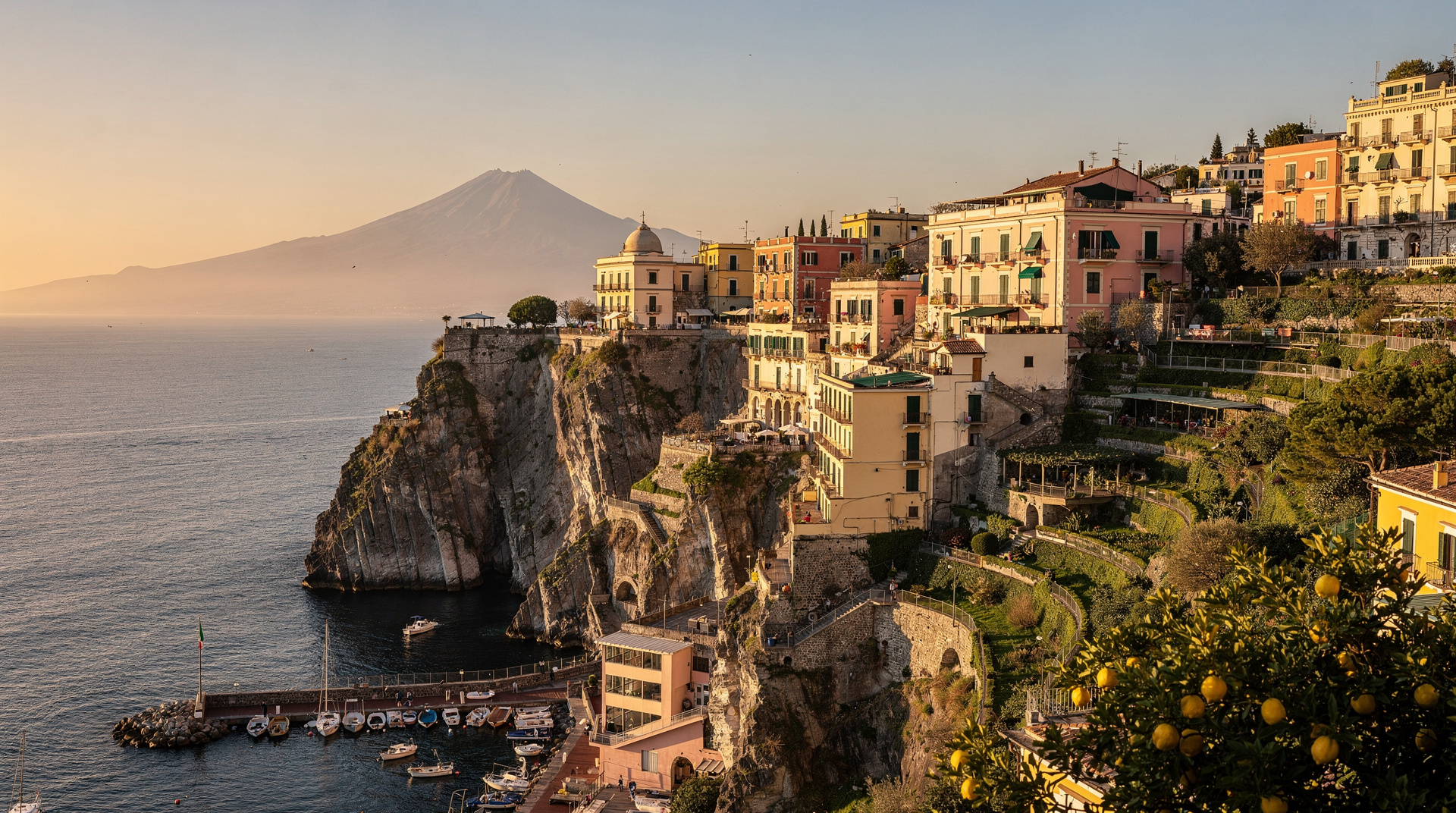
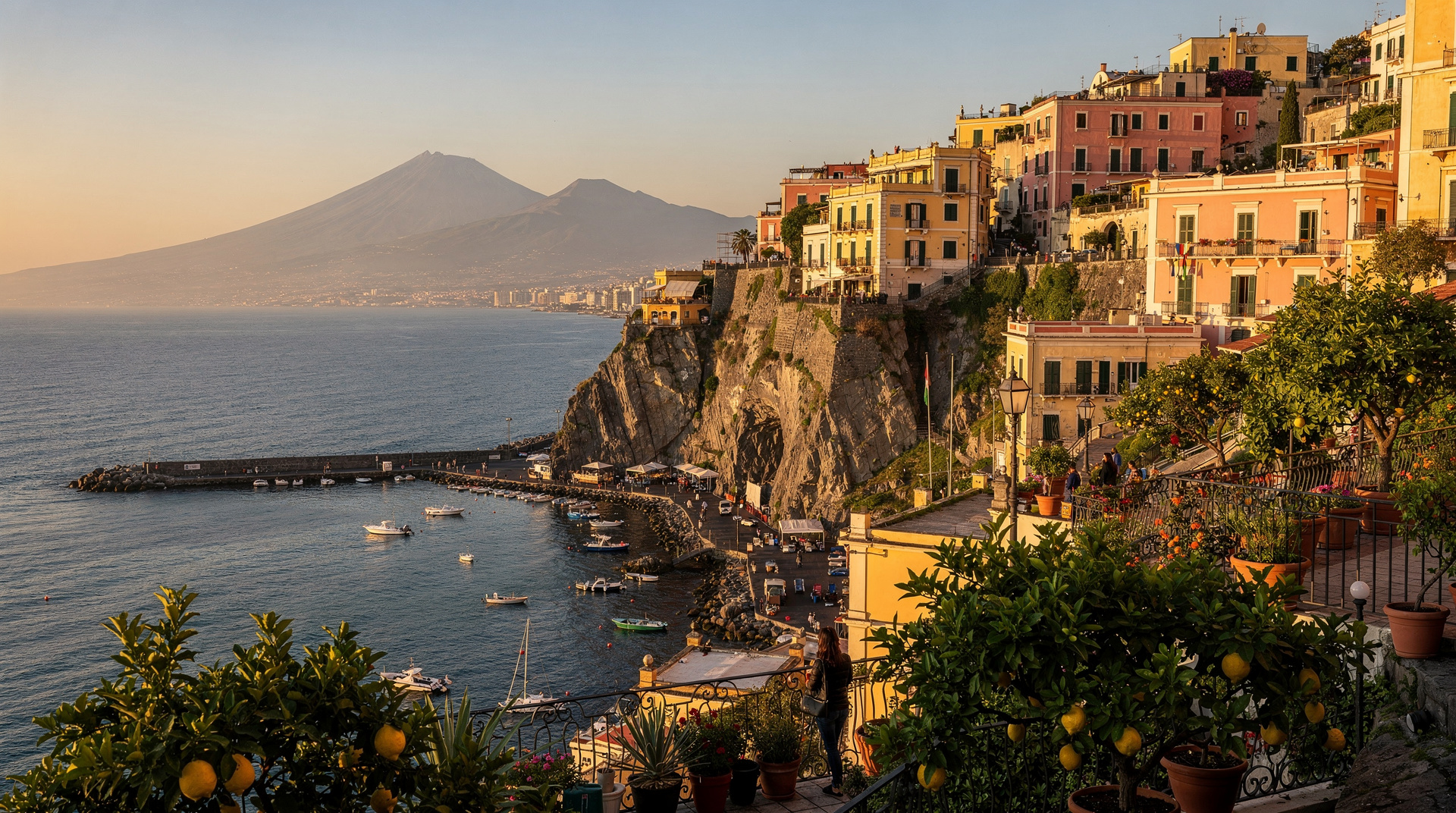
Sorrento sits at the top of a cliff above the sea on the northwestern tip of the Sorrentine Peninsula, connected to Naples by the Circumvesuviana train — a journey of about fifty minutes for €3.90. That train link is the most important fact about Sorrento as a base. It means you can reach Naples airport, Naples Centrale, Pompeii, Herculaneum and Ercolano without hiring a car or negotiating the coast road. You step off the train at Sorrento station and walk into town.
From Sorrento, ferries and hydrofoils run to Capri (twenty-five minutes, around €22 one way), Positano, Amalfi and, in season, Ischia and Naples. The town functions as a transport hub for the entire western coast in a way that nowhere on the Amalfi side matches.
Accommodation prices reflect this. A decent three-star hotel in Sorrento runs €120–180 per night in high season — not cheap, but significantly less than the equivalent on the cliff face at Positano. There are also more options at the budget end: B&Bs, smaller family-run pensioni, apartments that rent by the week. The tourist infrastructure is mature without being oppressive.
The town itself gets unfairly dismissed as a day-tripper destination. The old centre — the narrow streets around Piazza Tasso, the views from Villa Comunale — is genuinely pleasant in the evenings when the coach tours have left. The food is honest and good. The limoncello is, yes, sold everywhere, but the version made by the smaller family producers in the hinterland is worth seeking out.
A small-group tour that covers Sorrento, Positano and the Amalfi drive in a single day — like the Naples to Sorrento, Positano and Amalfi small-group tour — is actually a practical way to get a first read on all three towns before committing to a base, and some visitors use it as reconnaissance.
Our full Sorrento guide covers the town in more depth than fits here — neighbourhood by neighbourhood, best months, and which hotels are genuinely walkable from the train station versus which require a taxi.
What Positano Offers That Sorrento Cannot
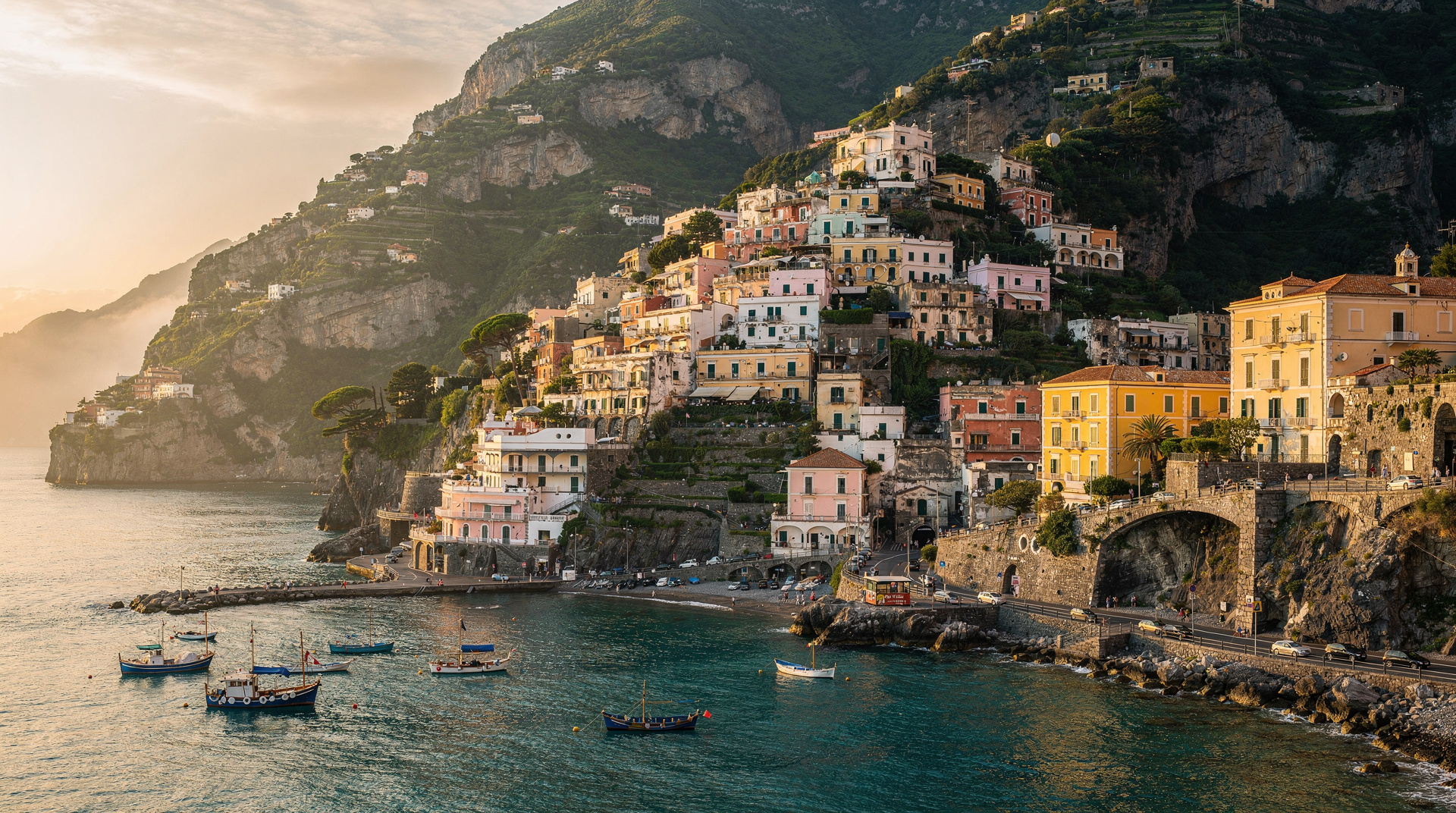
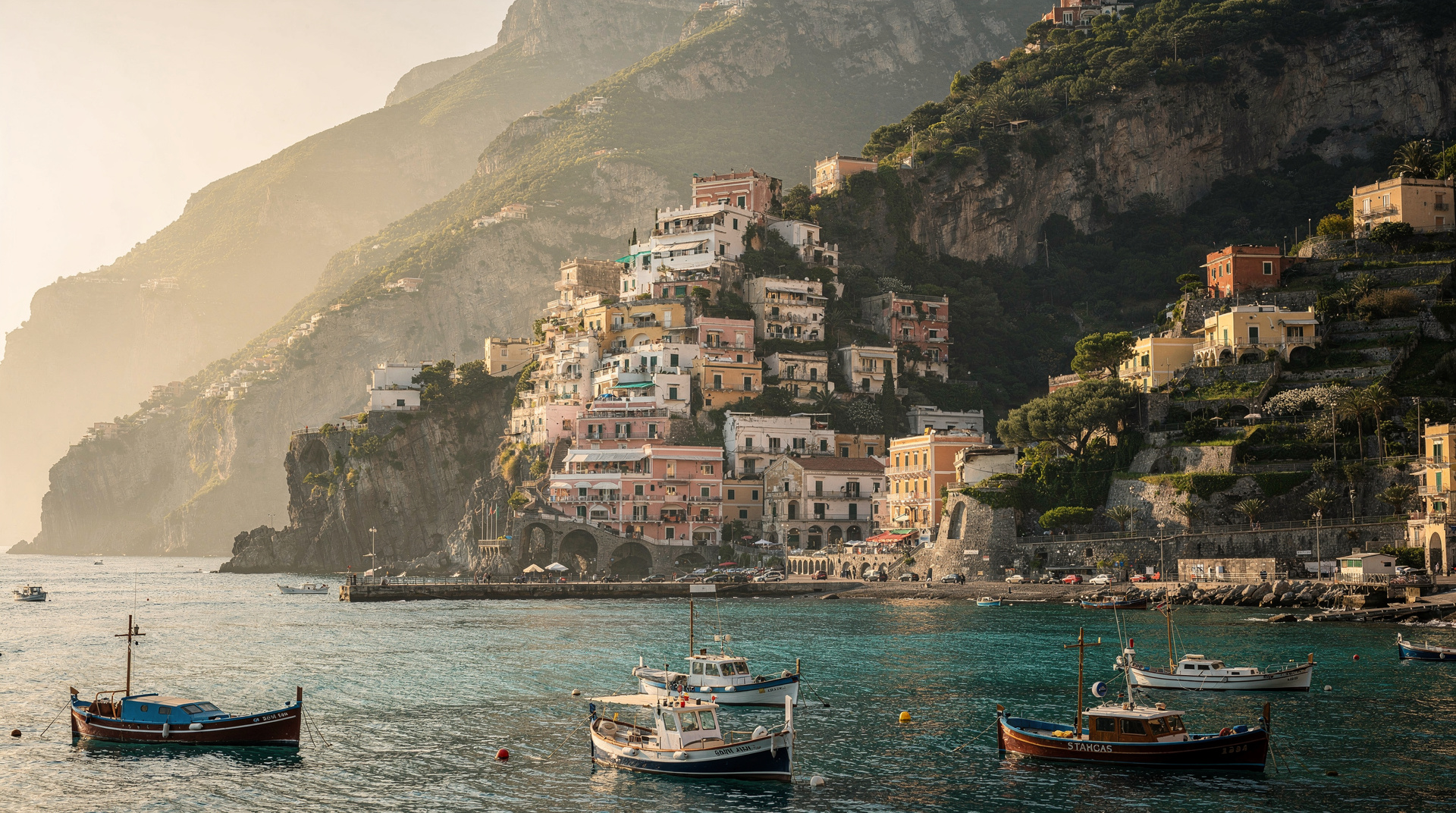
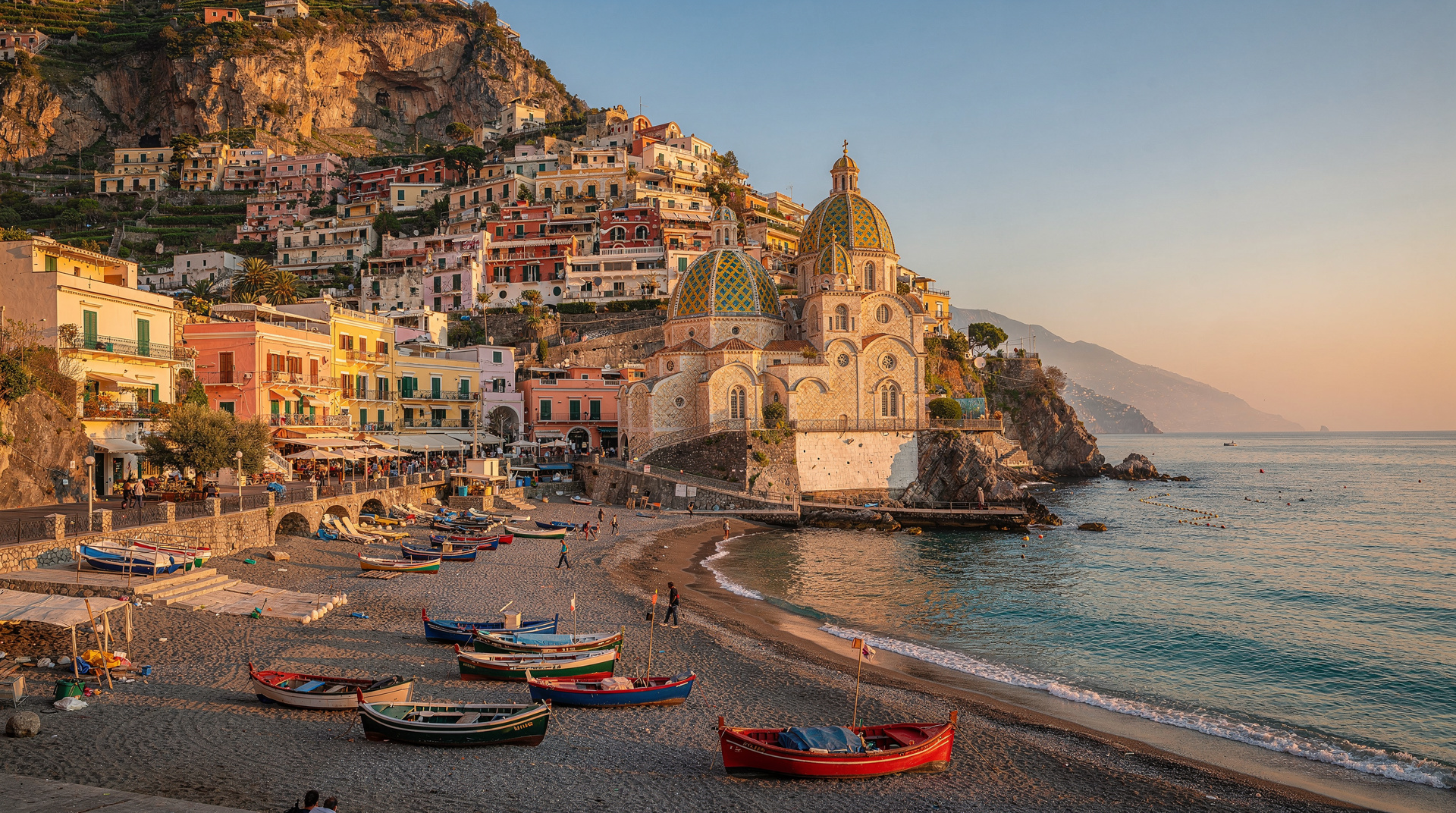
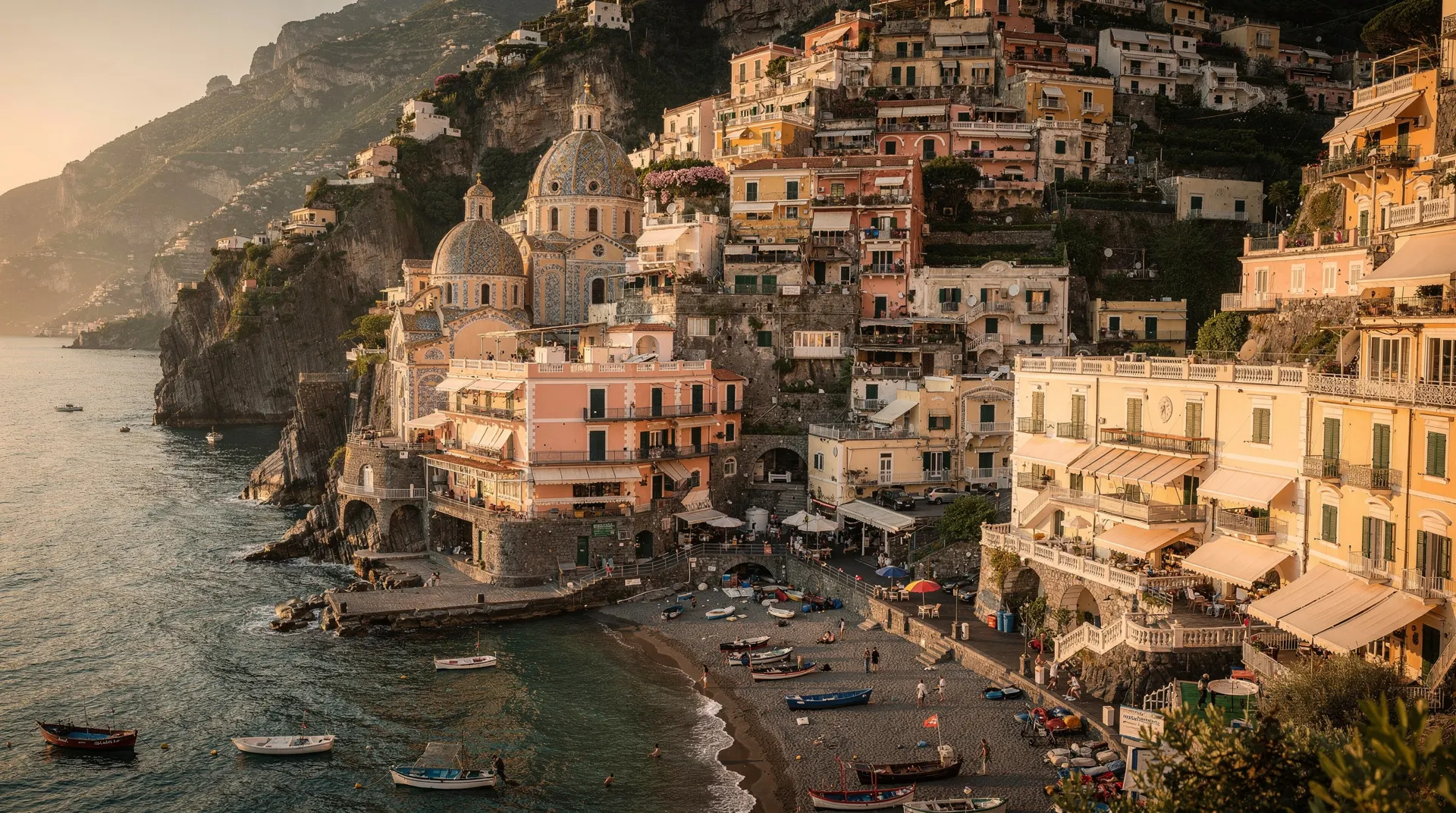
Positano is a different kind of experience and it knows it. The town cascades down a near-vertical cliff face to a small beach, the architecture is stacked in layers of terracotta and lemon yellow, and the light in the morning and late afternoon is genuinely extraordinary. If you are on a honeymoon, a significant anniversary, or a trip that is explicitly about beauty and romance and not logistics, Positano delivers what it promises.
The beach is small, the water is clear, and having your morning coffee looking at that hillside is one of those travel moments that earns the cost. Staying in Positano means you are inside the thing rather than visiting it — which is worth something.
The costs are real, though. A mid-range hotel in Positano in July runs €250–400 per night. Dinner at a clifftop restaurant is €60–80 per head without extravagance. The steps are everywhere — arriving at your hotel with luggage can involve a significant descent or ascent that becomes tedious on day four. And leaving Positano to go anywhere requires either the SITA bus on the coast road (subject to legendary delays in summer) or a ferry. There is no train. The nearest thing to a transport hub is Sorrento, an hour west.
Day trips from Positano are genuinely harder. Getting to Pompeii independently requires a ferry to Sorrento, then the Circumvesuviana — around two hours each way. Getting to Naples airport involves the same chain. It is manageable if you plan carefully; it becomes exhausting if you are trying to move around a lot.
The Middle Ground: What About Splitting the Trip?
A question that comes up often enough to deserve its own section: why not both? Splitting a week between Sorrento (three or four nights) and Positano (two or three nights) is a genuinely good strategy if your budget and patience for repacking allow it. It lets you do the logistics-heavy days — Pompeii, Capri, the airport transfer — from Sorrento, then finish the trip with a couple of unhurried Positano nights once the exploring is done and all you want is the view. The main cost is the transfer itself: a taxi or private transfer between the two runs roughly €80–120, or you can do it by ferry and a short walk for a fraction of that if you’re not carrying much luggage.
The case against splitting is simply that it adds a moving day to a short trip. If you have five nights or fewer, picking one base and committing usually beats losing half a day to repacking and transfers.
The Capri Question
Whichever town you base yourself in, Capri is a reasonable day trip from both. Ferries from Sorrento take twenty-five minutes; from Positano, around forty. The difference is small. What matters more is timing — the island becomes extremely crowded after 11am in summer, and both bases require you to be on a morning boat.
A guided boat trip to Capri from Sorrento makes a strong case for the Sorrento base specifically: departure times are better, the logistics are tighter, and you return in the evening having not had to think about transfers at all.
Who Should Choose Sorrento
Sorrento makes sense if you are travelling as a family, if you plan to move around a lot (Naples, Pompeii, the islands), if you are watching your budget without wanting to sacrifice quality, or if logistics matter more to you than ambience. It also suits anyone arriving by train from Naples who wants to avoid hiring a car entirely.
It suits the traveller who wants a good base from which to explore the region, rather than a destination that is itself the point. Our Sorrento as a base guide goes deeper on exactly this use case, with sample day-trip itineraries built around it.
Who Should Choose Positano
Positano makes sense if the coast itself is the primary reason you are here — if you have one week and the Amalfi towns, the sea, the light and the terraces are the whole purpose of the trip. It suits couples more than families. It suits people who can accept the steps, the prices and the transport limitations in exchange for waking up inside one of the most beautiful places in the Mediterranean.
It also suits anyone who has already done the practical touring — the ruins, the islands, the museums — on a previous trip and simply wants to be somewhere beautiful and still. See our Sorrento vs Amalfi comparison if Amalfi town itself, rather than Positano, is the other option on your shortlist.
The Practical Comparison
| Sorrento | Positano | |
|---|---|---|
| Train to Naples | Yes, 50 min (€3.90) | No |
| Ferry to Capri | 25 min (~€22) | 40 min (~€22) |
| Mid-range hotel | €120–180/night | €250–400/night |
| Steps/terrain | Manageable | Significant |
| Evening atmosphere | Good after day-trippers leave | Excellent |
| Best for | Logistics, families, exploration | Romance, couples, coast-first trips |
Neither choice is wrong. The mistake is choosing one while expecting it to behave like the other. If Amalfi town or Ravello are also on your shortlist, the Amalfi Coast guide puts all the towns side by side, not just these two.