Ravello
Ravello sits 350 m above the sea with the coast's best views. Honest guide to Villa Rufolo, the Terrazza dell'Infinito, and the Ravello Festival.
From Ravello: Amalfi Coast Private Day Trip
Quick facts
- Altitude
- 350 m above sea level
- Population
- ~2,400 residents
- From Amalfi by bus
- ~20 minutes (SITA)
- Key gardens
- Villa Rufolo & Villa Cimbrone
- Ravello Festival
- Late June – late September
- Entry to Villa Rufolo
- €7
Ravello sits on a cliff shelf 350 metres above the Amalfi Coast, accessible by a narrow road that winds 9 kilometres from the harbour at Amalfi. The town has attracted writers, composers, and artists since at least the 19th century — Greta Garbo, DH Lawrence, Gore Vidal, Richard Wagner, and Virginia Woolf all spent time here. The appeal is not hard to explain: the air is cooler than the coast, the crowds thinner (at least in relative terms), and the views of the sea from the garden terraces are among the most celebrated in Italy.
| Where | Amalfi Coast, 350 m above sea level, ~20 min bus from Amalfi |
| Cost | €7 each for Villa Rufolo/Villa Cimbrone; €14 for both |
| Time needed | 2–3 hours minimum; a night if you want the evening light |
| Getting there | SITA bus from Amalfi, taxi, or organised tour from Naples/Sorrento |
| Best time | May–June and September; festival season July–August is busier |
Villa Rufolo and the festival stage
Villa Rufolo was built in the 13th century for Nicola Rufolo, a wealthy Amalfitan merchant, and sits directly above the town centre on the site of the old town walls. Entry costs €7 (cash and card accepted at the gatehouse on Piazza del Vescovado). The complex includes the Moorish-influenced tower, a courtyard of interlaced arches in the same Norman-Arab style as the Amalfi Cloister of Paradise, and a series of terraced gardens descending toward the coast.
Richard Wagner visited in 1880 while composing Parsifal and reportedly found the garden’s tropical planting — palms, oleanders, cycads imported from the colonial-era botanical trade — resembling the “enchanted garden of Klingsor” from the opera. The terraced stage that now occupies the lower garden was built to commemorate this connection and is used for the summer concert series.
Opening hours are 09:00–20:00 in summer (last entry one hour before closing); check for seasonal variations. Morning visits avoid the worst of the tour groups.
Villa Cimbrone and the Terrazza dell’Infinito
Villa Cimbrone is a 10-minute walk from the main piazza, down Via Santa Chiara and through the medieval lanes of the town. The villa itself is now a luxury hotel (Belmond Hotel Villa Cimbrone), but the gardens are open to non-guests at €7 entry.
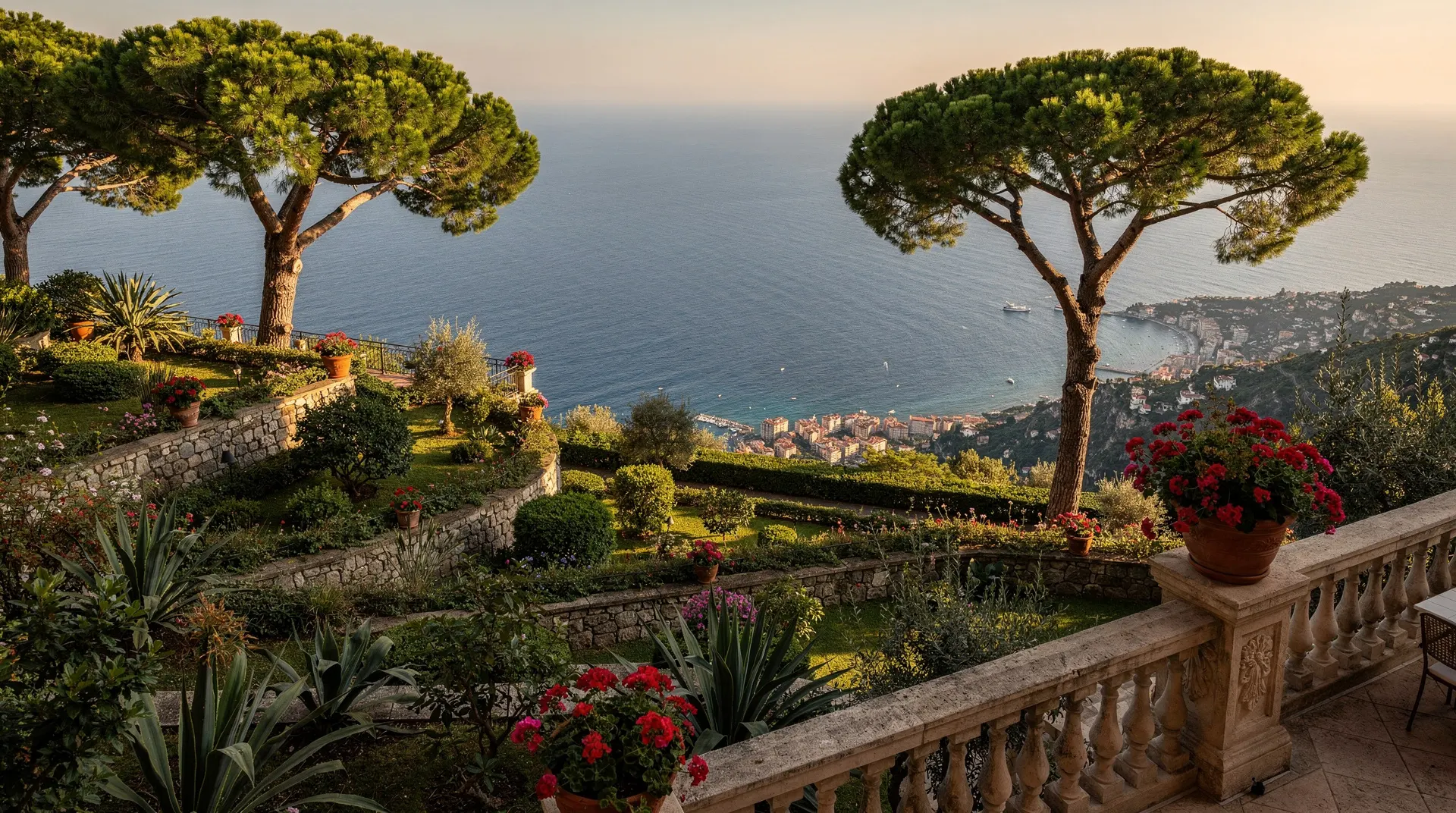
The centrepiece is the Terrazza dell’Infinito (“Terrace of the Infinity”), a balustrade terrace on the cliff edge at 280 metres elevation with a view that sweeps across the entire bay of Salerno. The terrace is lined with marble busts — reproductions of classical originals placed by Lord Grimthorpe, the English baron who restored the villa in 1904. On a clear day in May or early June, the view extends to the Cilento coast and sometimes to the mountains of Calabria.
The terrace is the single most photographed viewpoint on the Amalfi Coast and attracts a significant crowd by mid-morning. Arriving at 09:00 (garden opening time) or in the late afternoon (16:00–18:00, after tour groups leave) gives you the view with far fewer people.
Entry to Villa Cimbrone gardens is separate from Villa Rufolo; both cost €7 each. Budget €14 and 2–3 hours to see both properly.
Private 2-hour walking tour of Ravello including both villasThe Ravello Festival
The Ravello Festival is an annual classical and contemporary music festival that has run in various forms since 1953. The main stage is the open-air auditorium built into the lower garden of Villa Rufolo — a 900-seat space with the coast as the backdrop, designed by Brazillian architect Oscar Niemeyer and completed in 2010. Performances take place roughly weekly from late June through late August, with a smaller number of events in September.
The programme typically includes two or three major orchestral concerts by international ensembles (in recent years including the Berlin Philharmonic and Mahler Chamber Orchestra), chamber music, contemporary dance, and film screenings. Tickets for major concerts sell out months in advance; €30–€120 is the typical range. Check the official Ravello Festival website (ravellofestival.com) for the current year’s programme and booking.
Even if you are not attending a concert, visiting Ravello during festival season carries a livelier atmosphere than the off-season. The main piazza has temporary food stalls and the town is noticeably more animated.
The town centre: Piazza del Vescovado and the Duomo
The main square is small — a bench under a palm, a café, a ceramic shop, and the Duomo di Ravello (Cathedral of the Madonna Assunta). The 11th-century cathedral is free to enter and less dramatic than the Amalfi Duomo, but the interior has two notable items: the Pulpit of the Epistles (1130), with its Byzantine mosaics of Jonah and the whale, and the Pulpit of the Gospels (1272), supported by six columns and decorated with scenes from the life of the prophet Jonah. Both are excellent examples of southern Italian Romanesque craftsmanship.
Behind the cathedral, Via Richard Wagner runs toward a viewpoint terrace — free, not as famous as the Terrazza dell’Infinito, and usually deserted. From here you can see the Dragone valley below and the far coastline toward Maiori.
Getting to Ravello
By SITA bus from Amalfi (standard option)
SITA buses connect Amalfi harbour to Ravello roughly every 30–60 minutes from early morning to early evening. The ride takes 20 minutes and covers 350 metres of vertical gain in under 9 kilometres. Ticket price around €1.30. Buses stop at Piazza Fontana in Ravello (the lower square) with a short walk up to the main piazza.
Return buses can fill up in summer; in July–August it is worth queuing 10–15 minutes before the scheduled departure.
By taxi from Amalfi
Taxis charge €20–€30 for the trip (about 4–5 passengers). This makes sense in the evening after the last buses run or if you are carrying luggage.
By organised tour from Naples or Sorrento
Multiple operators run day tours from Naples that combine Positano, Amalfi, and Ravello. These tours typically spend 45–60 minutes in Ravello, which is enough for a view and a quick walk but not enough for both villas. If Ravello is a priority, book a tour or half-day that is Ravello-focused.
Full-day tour from Naples covering Positano, Amalfi, and RavelloWhere to eat and drink in Ravello
Cumpa’ Cosimo (Via Roma 44, five-minute walk from the main piazza): local institution since 1929. The kitchen produces Amalfitan ragu, pasta al forno, and grilled rabbit. Prix fixe at lunch from €22 covers three courses. No frills, no view, entirely genuine.
Ristorante Pizzeria Vittoria (Via dei Rufolo 3): simpler format, pizza and pasta, outdoor seating with a partial coast view. Around €35–45 for two. Not exceptional but honest for the price.
Bar Calce (Piazza del Vescovado): the café on the main square, espresso at the counter for €1.30. Good pastries in the morning, aperitivo with local olive oil bruschetta from 17:00.
Restaurants at the two major hotels — Palazzo Avino and the Belmond Villa Cimbrone — serve excellent food at prices appropriate to Michelin-star territory. A dinner at Palazzo Avino’s Pink Coconut costs upward of €120 per person and requires advance booking. This is a splurge option for a special occasion.
Ravello compared to the rest of the Amalfi Coast
Ravello is the most peaceful major destination on the coast, which is its defining virtue. The tour buses unload in the morning and leave by mid-afternoon; the town’s accommodation capacity is small (fewer than 2,000 beds); and the altitude means summer temperatures are 4–5 degrees cooler than at sea level. If you need a base for two or three nights on the coast and are not prioritising the beach, Ravello deserves consideration. The view from the Terrazza dell’Infinito at sunset, with the coast below turning golden and the sea darkening, is the kind of thing that justifies a long journey.
That said: there is almost no nightlife, the single supermarket closes at 20:00, and the town genuinely empties by 20:30 in non-festival months. Amalfi town, 20 minutes away by bus, is a better base for people who want evening animation. For a fuller side-by-side comparison of where to base yourself, see where to stay on the Amalfi Coast.
Practical information
Village access: Ravello receives no large tour coaches — the road is too narrow. All coach groups must park lower down and take smaller shuttle buses. This is why the town is more manageable than Positano or Amalfi at peak time.
Weather: the altitude means it can be noticeably cooler and cloudier than the coast. Bring a layer even in June. In December–February the town can be cold and some guesthouses close entirely.
Photography: early morning in the Villa Cimbrone gardens (09:00 opening) gives the Terrazza dell’Infinito in the best light. Sunset from the free viewpoint behind the Duomo is less crowded and equally well lit.
Shopping: the ceramics shops in Ravello tend to stock more refined, higher-price pieces than the coast-road shops. Prices start around €30 for small plates; hand-painted decorative pieces run €80–€250. Limoncello made with locally grown lemons (sfusato amalfitano cultivar) is worth buying here.
Staying in Ravello: the case for an overnight
Most visitors do Ravello as a 2–3 hour day trip from Amalfi or as an add-on to a full-day Amalfi Coast tour. The experience of Ravello as an overnight is genuinely different.
By 17:00 the organised tours have loaded back onto their buses and descended to Amalfi. By 18:00 the piazza has returned to its natural state: residents buying groceries, the bar filling up for aperitivo, the bells of the Duomo marking the hour. The quality of light on the sea far below changes from the flat white of noon to deep amber and then purple. If you are staying in one of the villa hotels with a garden terrace, this is when a trip to Ravello becomes exceptional rather than merely good.
The practical barrier to staying is cost: Ravello’s accommodation skews toward the luxury end. The Belmond Villa Cimbrone and Palazzo Avino are the anchors of the market at €500–€1,200+ per night. Mid-range B&Bs exist at €120–€250 but are fewer than in Amalfi town. Booking well in advance is necessary in festival season (July–August) and essential for the headline concert weekends.
Ravello with limited mobility
The town centre is largely flat once you reach the main piazza — a notable exception on the Amalfi Coast, where most villages are built on steps. The SITA bus drops passengers at Piazza Fontana with a short, moderate climb to the main square, and Villa Rufolo’s entrance area is accessible, though the terraced gardens below include steps that are not wheelchair-friendly throughout. Villa Cimbrone’s gardens have a mostly level main path to the Terrazza dell’Infinito, making it one of the more accessible major viewpoints on the coast. Travellers with mobility concerns should still contact venues ahead of a visit to confirm current conditions, since garden maintenance and seasonal changes can affect specific sections.
A half-day structure for a first visit
For visitors coming up from Amalfi for a few hours, a workable order is: arrive on the mid-morning SITA bus, walk straight to Villa Rufolo while the garden is still relatively calm (09:30–10:30), continue to the Duomo and a coffee on Piazza del Vescovado, then walk to Villa Cimbrone and the Terrazza dell’Infinito for the early-afternoon light. Lunch at Cumpa’ Cosimo or Ristorante Pizzeria Vittoria before catching a bus back down, or — if festival season and budget allow — staying for an evening concert and taking the last bus or a taxi back to Amalfi afterward. This order front-loads the two gardens before the tour-bus rush and leaves the free viewpoint behind the Duomo as an easy, uncrowded coda to the visit.
Anyone extending to an overnight should reverse the priority: do the villas at opening or in the late afternoon once day-trippers have left, and reserve the middle of the day for the quieter pursuits — a wine tasting in Tramonti, a slow lunch, or simply sitting on the piazza with a book while the coaches come and go below.
The Ceramics and wine of Ravello
Ravello’s ceramics tradition is distinct from Vietri sul Mare (30 km east), which mass-produces the bold-colour lemon-and-fish designs that fill every souvenir shop on the coast. Ravello’s artisan workshops produce more refined decorative pieces: thin-walled vases, decorative plates with botanical motifs, and tableware in the white-and-green palette associated with the hilltop gardens. The best of these pieces are genuinely hand-painted and command prices of €80–€300; replicas at lower prices exist but are distinguishable by consistency and glaze quality.
The local wine is produced in the Tramonti valley above Ravello — the inland agricultural zone that supplies the coast with grapes, vegetables, and dairy. The Tramonti DOC wines (primarily red blends using Tintore, Piedimonte, and other local cultivars) are rarely seen outside the area. A bottle of Tramonti rosso at a Ravello restaurant costs €20–€30; visiting the village of Tramonti directly for a cantina visit is possible with a car and requires no advance booking at most small producers.
Limoncello made from sfusato amalfitano lemons — the elongated, thick-skinned variety grown on the coastal terraces — is sold throughout Ravello. The artisan producers making small-batch limoncello with locally grown fruit (rather than blended imported lemons) label their bottles with the sfusato designation and charge €15–€25 per bottle. This is worth buying over the commercial versions sold in supermarkets.
Photography in Ravello
The Terrazza dell’Infinito at Villa Cimbrone photographs best in early morning (east-facing light, sea glimmering) and in the last 30 minutes before sunset. Mid-afternoon in summer produces flat, harsh light that washes out the view’s depth. The busts along the terrace create useful foreground elements; arrive at garden opening (09:00) for an empty terrace, which is otherwise never fully clear of other visitors after 10:00.
The lower garden of Villa Rufolo faces south-southwest and catches late-afternoon light best. The stage structure — Niemeyer’s cantilevered concrete platform — photographs interestingly from below the garden tier, looking up through the planting toward the sea.
The free viewpoint behind the Duomo (no fence, no fee, five minutes from the main square) photographs best mid-morning. Bring a 50mm or short telephoto lens — the viewpoint is set back and a wide angle loses the scale of the coast below.
Frequently asked questions about Ravello
Is Ravello worth the detour from Amalfi?
Yes, for almost all visitors. The 20-minute bus ride costs €1.30 and delivers an entirely different atmosphere — cooler, quieter, and with views that the sea-level towns cannot match. The Terrazza dell’Infinito alone is worth the trip.
Do you need to pre-book Villa Rufolo or Villa Cimbrone?
No advance booking is required for the gardens. Entry is pay at the gate. For festival concerts at Villa Rufolo, advance booking is essential and popular performances sell out months ahead.
How long should you spend in Ravello?
Two to three hours is the minimum for a genuine visit (both villas, the Duomo, a coffee). A half day gives you a more relaxed experience. An overnight stay is the best option if you want to experience the town after the day-trippers leave.
Can you hike from Ravello to Amalfi?
Yes. The trail descends through chestnut woodland and terraced gardens to the coast via Atrani. The walk takes 45–75 minutes depending on pace and the route. The path is not signposted at every junction — wear proper shoes and carry water. The trail is most pleasant in spring and autumn.
What is the Ravello Festival?
An annual outdoor performing arts festival (primarily classical music) held in the garden of Villa Rufolo from late June through early September. The stage faces the sea and the programmes typically include international orchestras and contemporary ensembles. Tickets from €30 at ravellofestival.com.
Is Ravello expensive to stay?
The very top-end properties (Palazzo Avino, Villa Cimbrone/Belmond) charge €500–€1,200+ per night. Mid-range B&Bs and smaller hotels run €120–€250 per night. This makes Ravello moderately more expensive than Amalfi town but significantly cheaper than central Positano for comparable quality.
What is the best viewpoint in Ravello?
The Terrazza dell’Infinito at Villa Cimbrone is the most famous. The lower garden of Villa Rufolo offers a different angle emphasising the bay of Salerno. The free terrace behind the Duomo (no entry fee) is the least crowded and overlooked by most visitors.
Top experiences
Bookable activities with verified prices and instant confirmation on GetYourGuide.