Positano
Cliffside Positano is the Amalfi Coast's most photogenic village. Honest guide: Spiaggia Grande, Fornillo, SS163, ferries, buses, Path of the Gods.
From Sorrento: Positano & Amalfi Boat Trip with Transfer
Quick facts
- Region
- Amalfi Coast, Campania
- Population
- ~3,500 residents
- Best beach
- Fornillo (fewer crowds)
- From Sorrento by bus
- ~1 hour (SITA)
- From Naples by ferry
- ~1h 45min (seasonal)
- Average hotel night (high season)
- €250–€500+
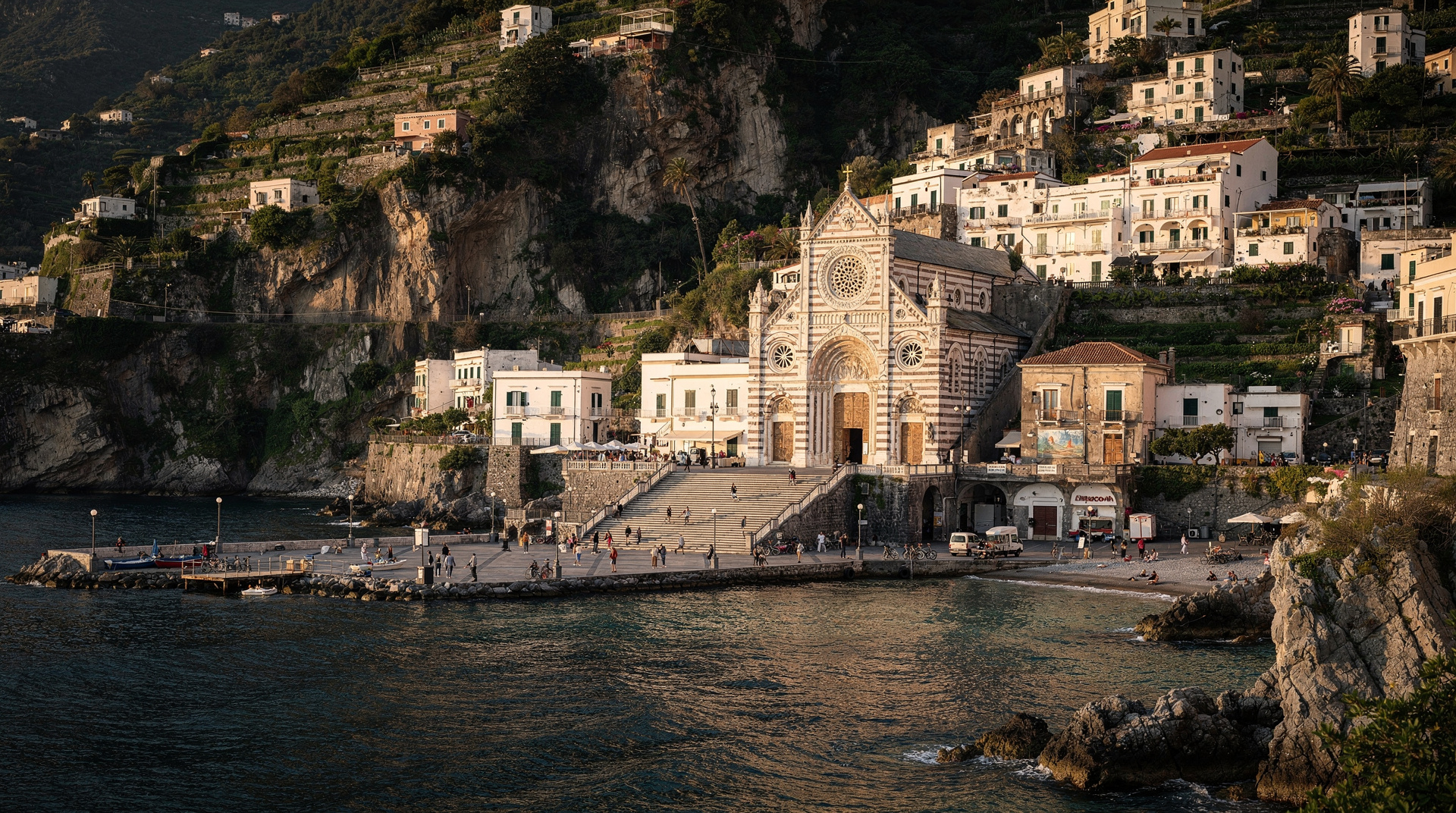
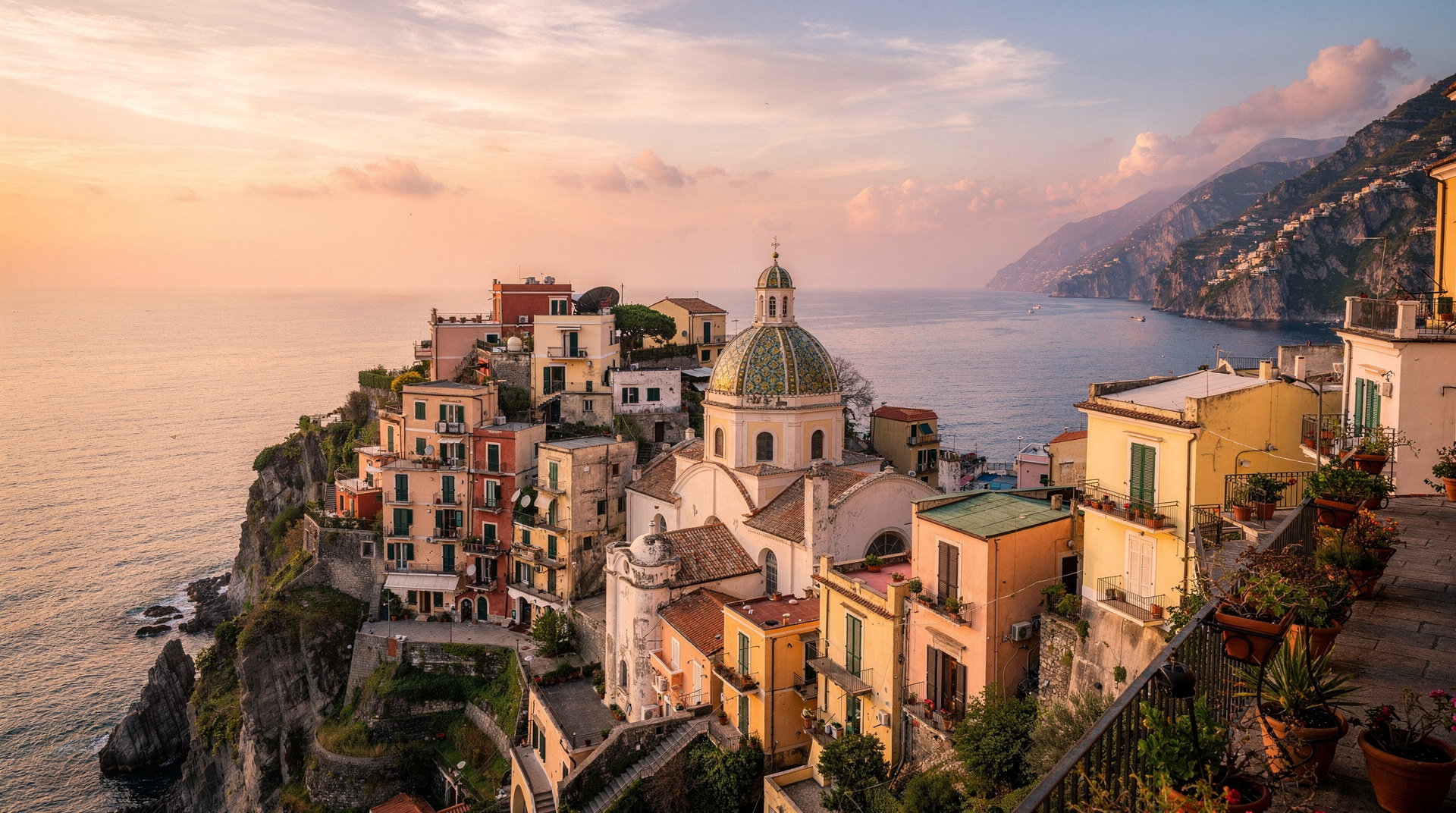
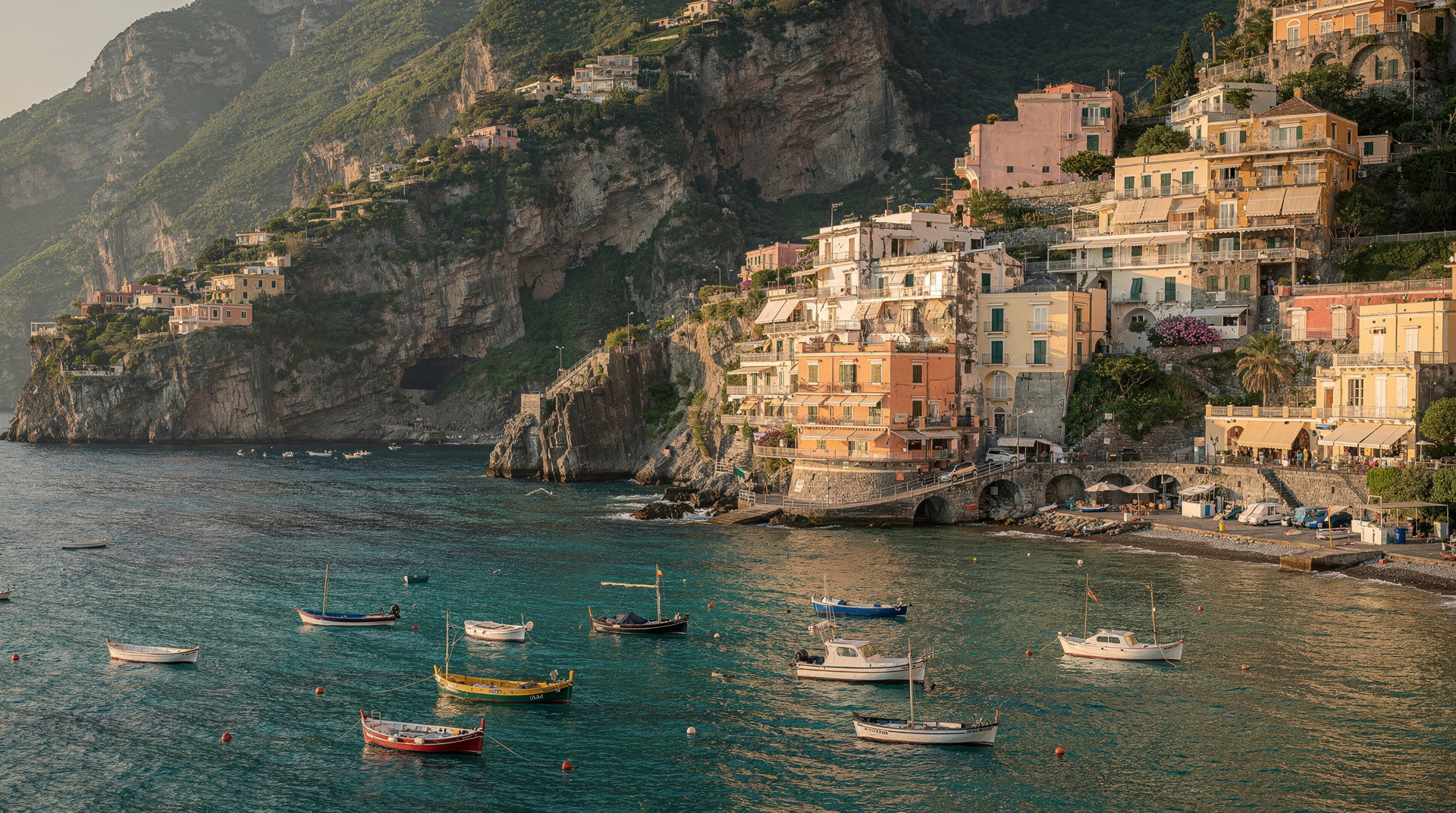
Positano sits draped across a near-vertical limestone cliff above the Tyrrhenian Sea — a cascade of pastel buildings, bougainvillea, and narrow stairways that ends at a narrow pebble beach. It’s the Amalfi Coast’s most replicated postcard image, and for good reason. It is also, in the same breath, one of southern Italy’s most overtouristed and overpriced spots. This guide tells you exactly what to expect, when to go, and how to get genuine value from the visit.
| Where | Amalfi Coast, ~1hr from Sorrento, ~1h 45min from Naples by ferry |
| Cost | Around €50–€70 for lunch for two; €180+ for a shoulder-season double room |
| Time needed | Half a day as a stop, 1–2 nights to see it properly |
| Getting there | SITA bus from Sorrento, seasonal ferry, or organised transfer |
| Best time | Late May–June and September–early October |
What to realistically expect in Positano
Positano is not a “hidden gem.” The village receives hundreds of thousands of visitors per year, concentrated between June and August. In July the single main road (Viale Pasitea) crawls with coach traffic, the SITA buses run far behind schedule, and the beaches charge €20–€30 per sunlounger in the morning before a single towel has dried.
That said, the visual impact is real. The stacked houses — many painted in terracotta, lemon yellow, and dusty pink — really do tumble into the sea. The water is genuinely clear. The seafood is good. And if you arrive in early May or mid-September, the crowds thin enough that the experience shifts from endurance test to genuine pleasure.
Budget check: Positano is one of the most expensive villages in Italy. A two-course lunch with wine at a mid-range terrace restaurant runs €50–€70 per person. A panino from a deli on Via Cristoforo Colombo costs €7–€9. A small double room in an average hotel starts at €180 in shoulder season, €300+ in August. Day-trip visitors escape most of these costs.
Getting to Positano: ferries, buses, and the SS163
By bus from Sorrento (cheapest option)
SITA Sud buses run from Piazza Tasso in Sorrento to Positano roughly every 30–60 minutes in high season (check current timetables — schedules shift seasonally). Journey time is about 45–60 minutes depending on traffic. Tickets cost around €2.50 and can be bought from tabacchi or via the Unico Campania app. This is the most economical way to arrive, but in July–August the bus is extremely crowded and frequently late. Board at Sorrento early in the morning to avoid the worst.
By ferry (most scenic)
Ferries and hydrofoils serve Positano from Naples (Molo Beverello), Sorrento, and Amalfi from roughly April to October. Journey times are approximately 1h 45min from Naples and 25–30 minutes from Sorrento. Tickets from Sorrento typically cost €15–€20. Ferry services do not run through winter. Check timetables at the port the day before, especially in spring and autumn, as rough seas can cancel services at short notice.
By car or scooter on the SS163
The Amalfi Coast road (SS163 “Nastro Azzurro”) is one of the most spectacular drives in Europe and one of the most stressful. The two-lane road is barely wide enough for two cars in many sections. Between June and September there is an alternating traffic scheme based on licence plate numbers: on even calendar days, vehicles with even-ending plates may transit the restricted section 10:00–18:00; odd-ending plates on odd days. Scooters and motorcycles are exempt. Satnav sometimes ignores this restriction. Coming from Sorrento the drive takes 45–60 minutes in normal traffic, up to 90 minutes in August.
If you are renting a car for the first time in Italy, do not start on the Amalfi Coast. Wait until you have a day or two of local driving under your belt. A small manual Fiat Panda is more practical than any large car here; an automatic gearbox saves stress on the hairpin climbs.
Parking is scarce and expensive. The main car parks in the village charge €5 per hour. Arriving after 10:00 in summer means you may spend 40 minutes queuing for a space.
By organised transfer or tour
An alternative to self-driving is booking a private driver or a small-group day trip from Naples or Sorrento. Private drivers with an 8-seater minivan typically charge €150–€250 for a full day covering Positano, Amalfi, and Ravello. This removes parking anxiety entirely.
Small-group day trip from Naples covering Sorrento, Positano, Amalfi, and RavelloThe beaches: Spiaggia Grande vs. Fornillo
Spiaggia Grande
The main beach is dark-grey volcanic pebbles, not sand. It is dominated by private beach clubs that rent sunbeds for €20–€35 each (two mandatory) through July and August. A free public strip occupies the left side of the beach near the ferry dock — arrive by 09:00 to claim a space in high season. The sea is warm (22–26 °C from late June) and calm when the coast is not affected by westerly swell.
Fornillo
Walk west from Spiaggia Grande along the cliff path (10 minutes) to reach Fornillo, a smaller, quieter alternative. Beach club prices are similar but the atmosphere is more local. There is a small bar-restaurant, La Tavolozza, that does decent food without the tourist price premium. Snorkelling around the rocks at the western end is decent.
Other options
A 15-minute walk further west on the cliff path from Fornillo reaches a handful of small rock platforms popular with snorkellers. The water here is cleaner and there are no sunbed operators.
The village: stairways, shops, and the Duomo
Positano is essentially one long shopping corridor (Via Cristoforo Colombo, Via dei Mulini) stitched together by hundreds of steps. The fashion boutiques selling Positano-style ceramic-patterned linen dresses are part of the visual identity of the place. Prices are high; €80 for a linen shirt is normal. Ceramics shops line every alley.
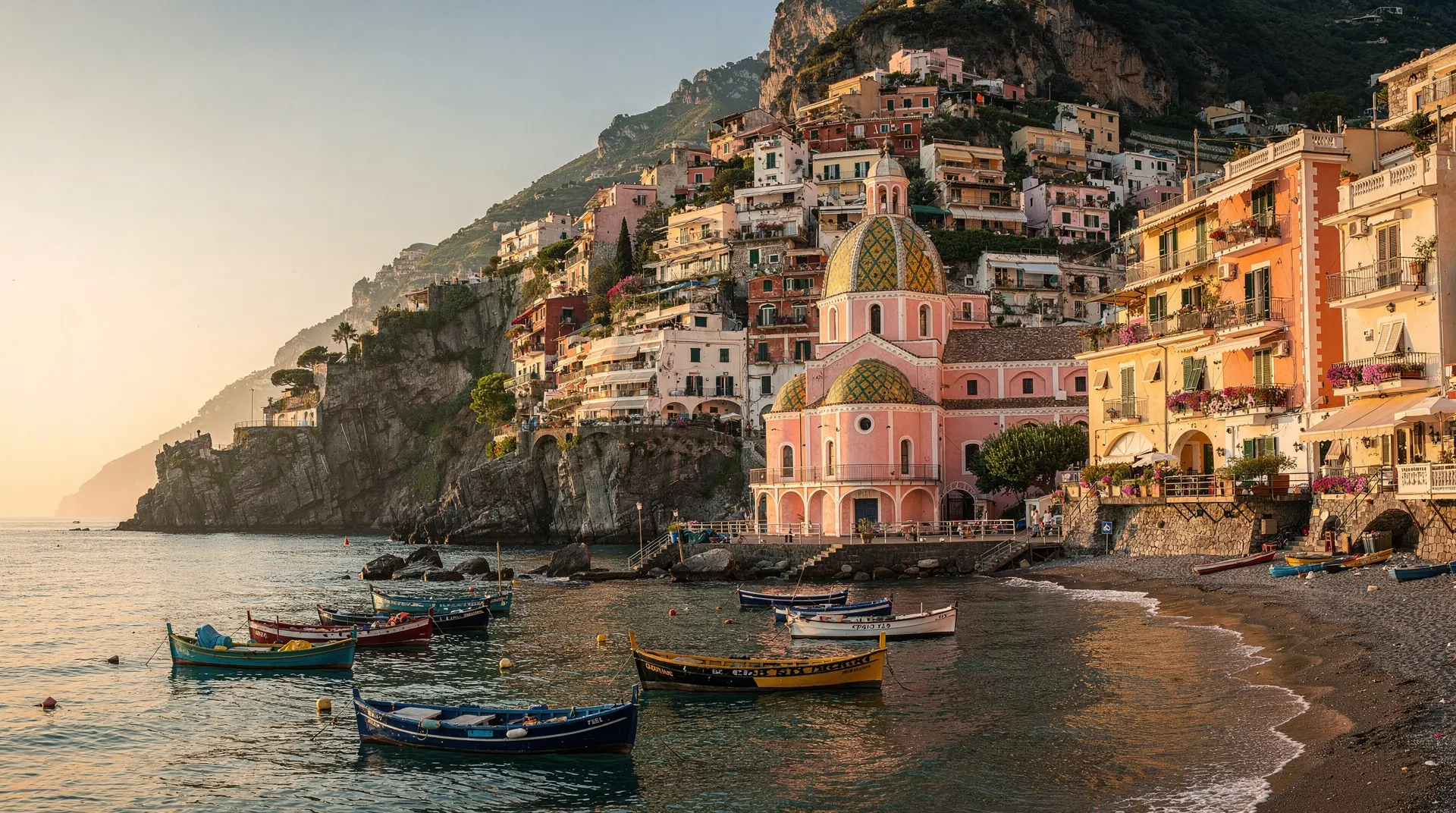
The Chiesa di Santa Maria Assunta on the seafront is worth five minutes. Its distinctive majolica-tiled dome (13th century) appears in most photographs of the beach. Inside there is a 13th-century Byzantine icon of the Black Madonna, venerated by local fishermen. Entry is free.
Sunrise from the upper village — reached by climbing the stepped alleys above Via Cristoforo Colombo — is dramatically better than the crowded beach at midday. The terrace in front of the church of Santa Croce at the top of the village gives a nearly unobstructed view of the whole bay before 08:00, when tour groups have not yet arrived.
Path of the Gods: the descent from Nocelle
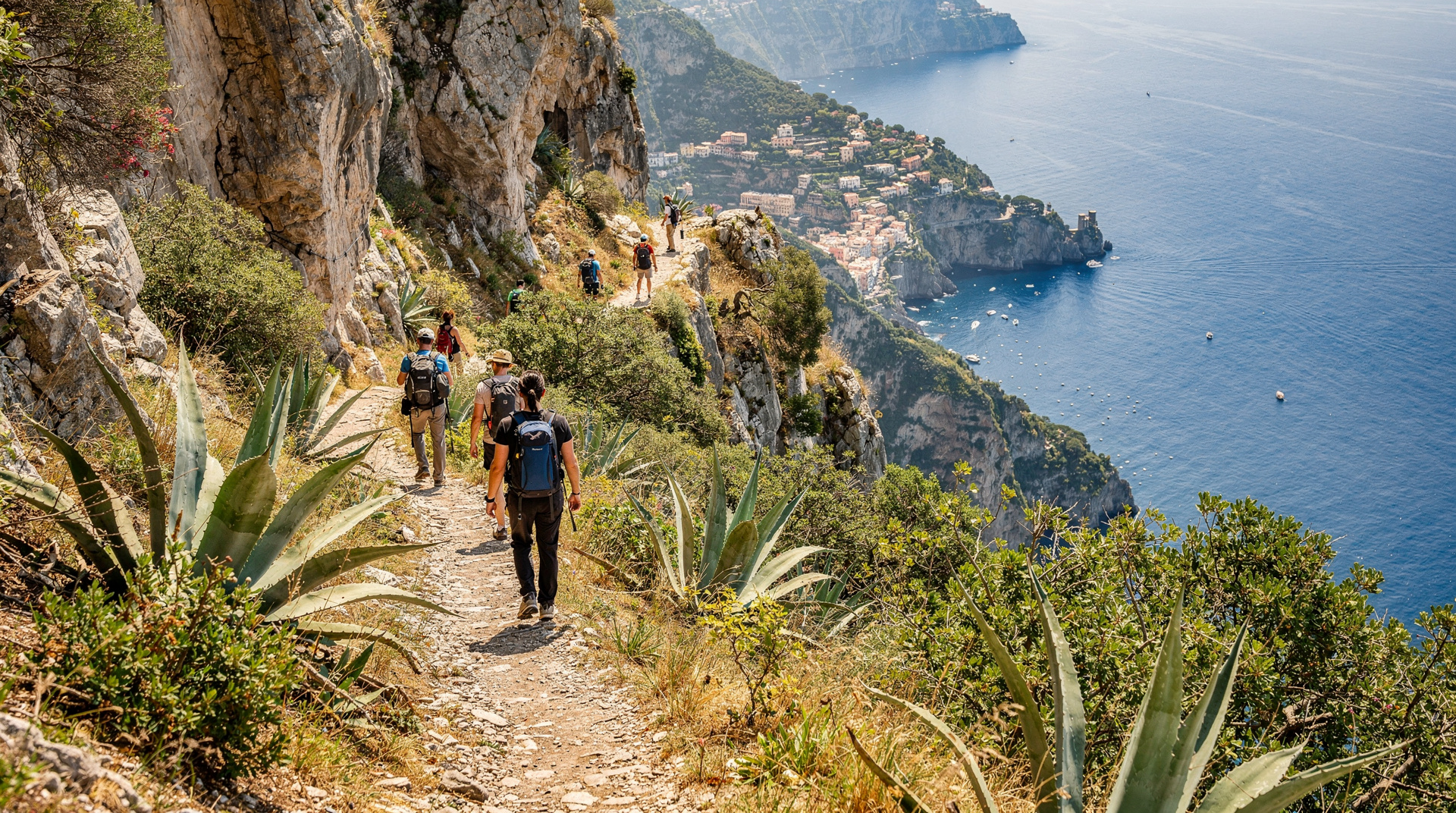
The most rewarding thing to do around Positano is not the beach but the Path of the Gods (Sentiero degli Dei). This 7 km trail runs along the ridge above the coast from Bomerano (in the Agerola commune) to Nocelle, a hamlet just above Positano, with 630 metres of net descent.
The standard direction is Bomerano → Nocelle, descending at the end. Trailhead access: take the SITA bus from Sorrento or Amalfi to Agerola/Bomerano (about 90 minutes from Sorrento). The trail itself is rocky with some exposed sections near Nocelle. Hiking poles help on the descent. Allow 3.5–4 hours including stops. From Nocelle, a steep 1,500-step path descends to Positano (45 minutes); most walkers take the bus from Nocelle down to the main road and then another SITA bus into Positano.
Best months: April–June and September–October. Summer heat combined with full exposure makes the trail genuinely unpleasant between July and August; start before 07:00 if you go in summer. The trail is unmarked in sections and some junctions have conflicting signage — a guided walk removes these navigation concerns.
Private guided Path of the Gods walk ending in PositanoBoat trips from Positano
A half-day or full-day boat trip is arguably the best way to see the coast. From Positano you can explore the Emerald Grotto (Grotta dello Smeraldo), the sea caves near Praiano, the Fiordo di Furore (a narrow inlet with a natural rock arch), and swimming stops in clear water that is inaccessible by land. Small-group and private options both leave from the small jetty adjacent to Spiaggia Grande.
Private boat hire (6–8 persons, 4–5 hours) costs roughly €350–€500 for the boat; shared group tours start around €50–€70 per person. Both options are dramatically better in May–June and September than August when the water is crowded with dozens of vessels at every stop.
Half-day snorkelling boat tour from Positano to Amalfi with drinksWhere to eat and drink (without being ripped off)
What to avoid
Restaurants on the waterfront terraces directly facing Spiaggia Grande charge premium prices for middling food aimed at people who want the view, not the meal. Expect €18–€22 for pasta, €28+ for a secondo. Wine is marked up 300–400% above retail.
Better options
Lo Guarracino (Via Positanesi d’America 12, above Fornillo): wood-fired pizza, grilled fish, prices 30–40% lower than waterfront restaurants. Reservations needed in high season.
Da Vincenzo (Viale Pasitea 172): family-run since 1958, more about substance than ambience; spaghetti alle vongole (€16–€18) and local cheese plates are the ones to order.
Da Ferdinando (Spiaggia Fornillo): beach-bar lunch with bruschetta, simple pasta, fresh catch — genuinely unpretentious in a way that most Positano restaurants are not.
Caffè Positano (Via dei Mulini): the espresso is good, the sfogliatella not a patch on Naples, but the €1.50 counter coffee is honest.
Day trip vs. overnight stay
As a day trip from Sorrento, Positano makes sense for most travellers: catch an early SITA bus, spend the morning on Fornillo or hiking, have lunch, and bus back by late afternoon. As a base for exploring the coast, staying overnight means you have the village to yourself in the early evening and morning after tour groups depart — that is when it is at its best.
If you are staying on the Amalfi Coast for more than two nights, consider basing yourself in Sorrento (better transport connections, lower prices) or Praiano (quieter, central location, cheaper) and visiting Positano as a day trip rather than paying Positano’s premium accommodation rates.
For context on how Positano compares to other towns along the coast, see Amalfi Coast towns compared.
Practical information
Sunscreen and hats: mandatory. The reflected glare off white buildings plus direct sun at the beach causes faster burning than most visitors anticipate.
Cash: bring some. A handful of stalls, boat operators, and smaller restaurants do not accept cards. The only ATM in the lower village has a €5 withdrawal fee — withdraw before arriving.
Mobile data: signal is patchy on the cliffside stairs and non-existent in some sea caves during boat tours.
Accessibility: Positano is almost entirely steps. There is no accessible route from the main road to the beach other than the single steep road used by the local minibus (“interno”). Travellers with mobility limitations will find the village very challenging.
High-season entry restrictions: As of 2025, Positano introduced peak-hour access limits for large tourist groups at the main beach. These are enforced sporadically; arriving outside the 10:00–16:00 window reduces congestion regardless.
Getting from Positano to other Amalfi Coast towns
- To Amalfi: SITA bus east, ~35 minutes, €2.50. Ferry in season, ~20 minutes.
- To Ravello: SITA bus to Amalfi, then another bus up the hill to Ravello. Total ~1h 15min.
- To Praiano: SITA bus west, ~15 minutes.
- To Sorrento: SITA bus west from Via Cristoforo Colombo, ~1 hour.
See the full SITA bus guide for current timetables and buying tips.
For a full itinerary combining Positano with the rest of the coast, see Amalfi Coast from Naples.
What a two-night itinerary looks like
For travellers who decide an overnight in Positano is worth the premium, a simple two-night structure gets the most from it without over-scheduling. Day one: arrive by early afternoon, drop bags, and walk down to Fornillo for a late swim while the beach clubs are winding down for the day — sunbeds are often cheaper or free to negotiate after 16:00. Have dinner away from the waterfront (Da Vincenzo or Lo Guarracino) and end the evening at the Santa Croce terrace for the lit-up bay.
Day two: an early climb to the upper village before the heat sets in, a full Path of the Gods excursion or a half-day boat trip depending on energy levels, and a final evening swim at Spiaggia Grande once the day-trip crowds have thinned. Checking out on the morning of day three before the tour buses arrive avoids the worst of the changeover crush on the main stairways.
This kind of pacing — one active day, one slower day, mornings and evenings prioritised over midday — is the difference between Positano as an endurance test and Positano as the trip highlight it is supposed to be.
Frequently asked questions about Positano
Is Positano worth visiting as a day trip from Naples?
Yes, but the logistics are long. Naples to Positano takes about 2 hours each way (Circumvesuviana to Sorrento, then SITA bus). You get 4–5 hours on the ground, which is enough for the beach and the village. The Amalfi Coast day trip from Naples guide covers the best ways to structure this.
What is the best beach in Positano?
Fornillo is less crowded, cheaper for sunbeds, and has better snorkelling than Spiaggia Grande. Spiaggia Grande has the iconic backdrop but fills up fast in summer. Both are grey pebble beaches, not sand.
How crowded is Positano in summer?
Very crowded. July–August sees the village receive multiple tour buses simultaneously during the day. The main shopping street becomes shoulder-to-shoulder after 10:00. If you must visit in summer, arrive by 08:00 or stay until 18:00 after the day-trippers leave.
Can you drive to Positano?
Yes, but it is complicated. The SS163 has alternating plate-number restrictions June–September (even plates on even dates, odd on odd, 10:00–18:00). Parking is scarce and expensive. Driving on the Amalfi Coast is stressful even for experienced Italian drivers. Read the full driving the Amalfi Coast guide before deciding.
Is the Path of the Gods difficult?
The technical difficulty is moderate — rocky terrain with some exposed sections, 630 m descent. The main challenges are heat in summer and navigation at a few junctions. In May or September a reasonably fit walker can complete it without a guide in 3.5–4 hours. In July–August, start before 07:00 or book a guided morning departure.
How many days do you need in Positano?
One full day is enough for first-time visitors to see the village, swim, and have a meal. A second night lets you experience it early in the morning and late in the evening, which is genuinely different from the midday rush. Staying longer than two nights makes sense only if you are using Positano as a hiking base or renting a boat for multi-day exploration.
When does ferry service from Naples to Positano run?
Ferry and hydrofoil services from Molo Beverello in Naples to Positano typically operate from April to October. The journey takes approximately 1 hour 45 minutes. In winter, there are no direct services; the alternative is to go by land via Sorrento. Check ferries from Naples for operators and current schedules.
Are there cheaper alternatives to Positano on the Amalfi Coast?
Yes. Maiori has the coast’s longest beach, lower accommodation prices, and a good bus connection. Atrani is a five-minute walk from Amalfi town with a small piazza, a free beach strip, and no tourist shops. Praiano is significantly quieter with good access to the Path of the Gods starting point and the Fiordo di Furore.
Top experiences
Bookable activities with verified prices and instant confirmation on GetYourGuide.