Praiano
Quieter than Positano, central on the Amalfi Coast, with stunning sunsets, the Path of the Gods starting point at Bomerano, and the Fiordo di Furore nearby.
Sentiero degli Dei: Guided Trekking on the Amalfi Coast
Quick facts
- Population
- ~1,800 residents
- Location
- Between Positano and Amalfi on SS163
- Best sunset point
- La Praia beach or Marina di Praia
- Path of the Gods trailhead
- Bomerano (Agerola), ~40 min by bus
- Fiordo di Furore
- 2 km east by car or bus
- From Sorrento by bus
- ~55 minutes (SITA)
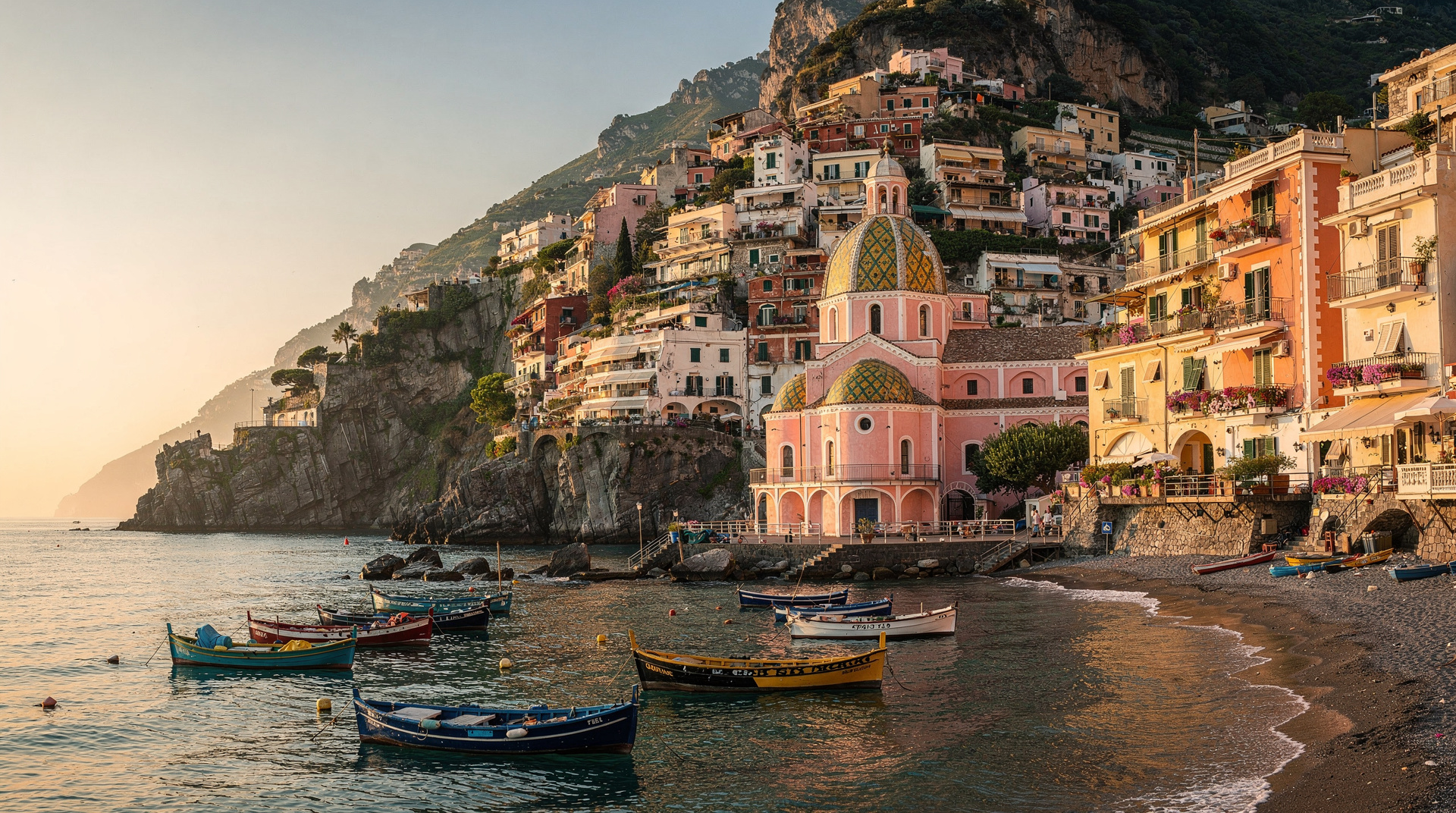
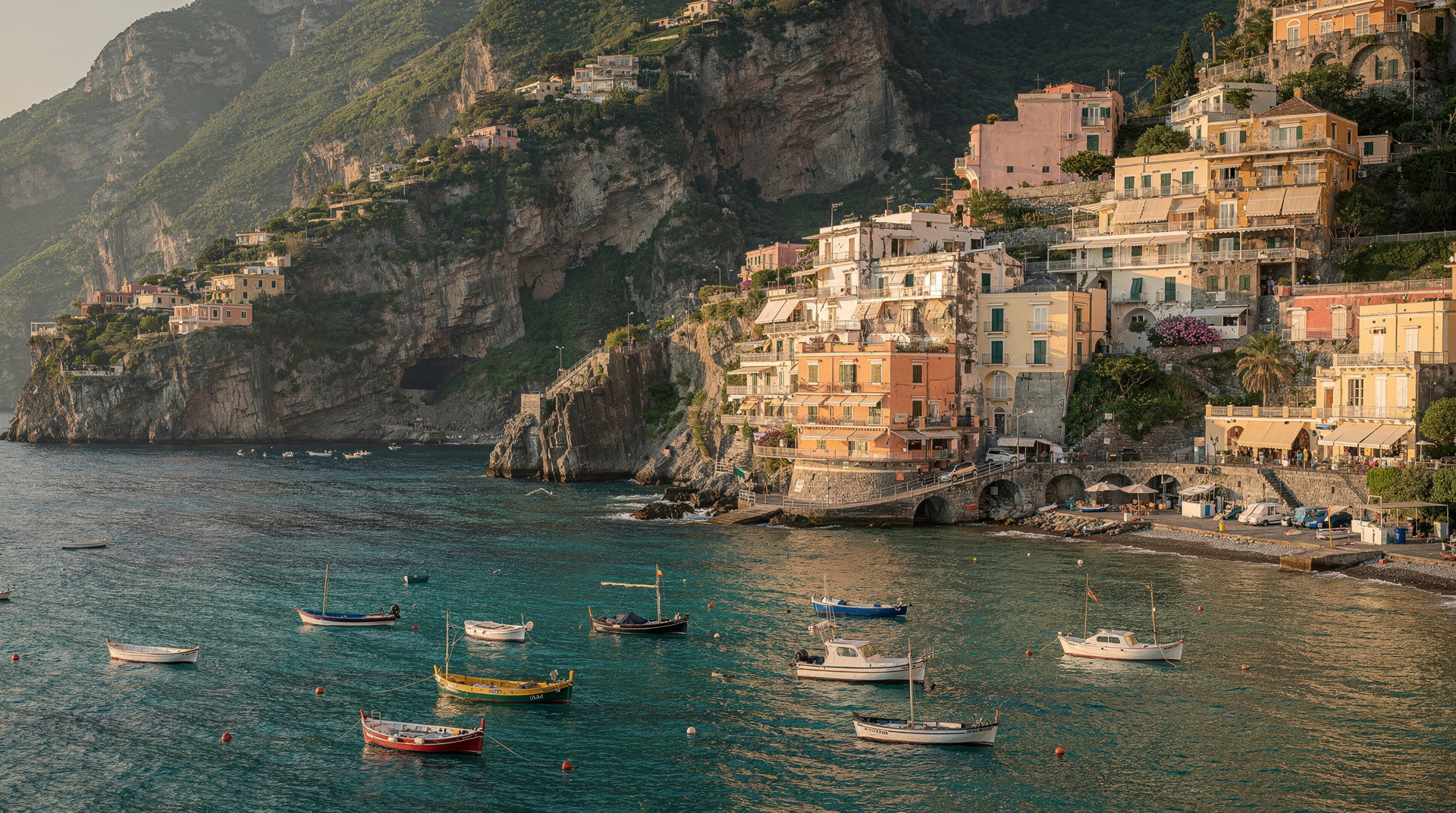
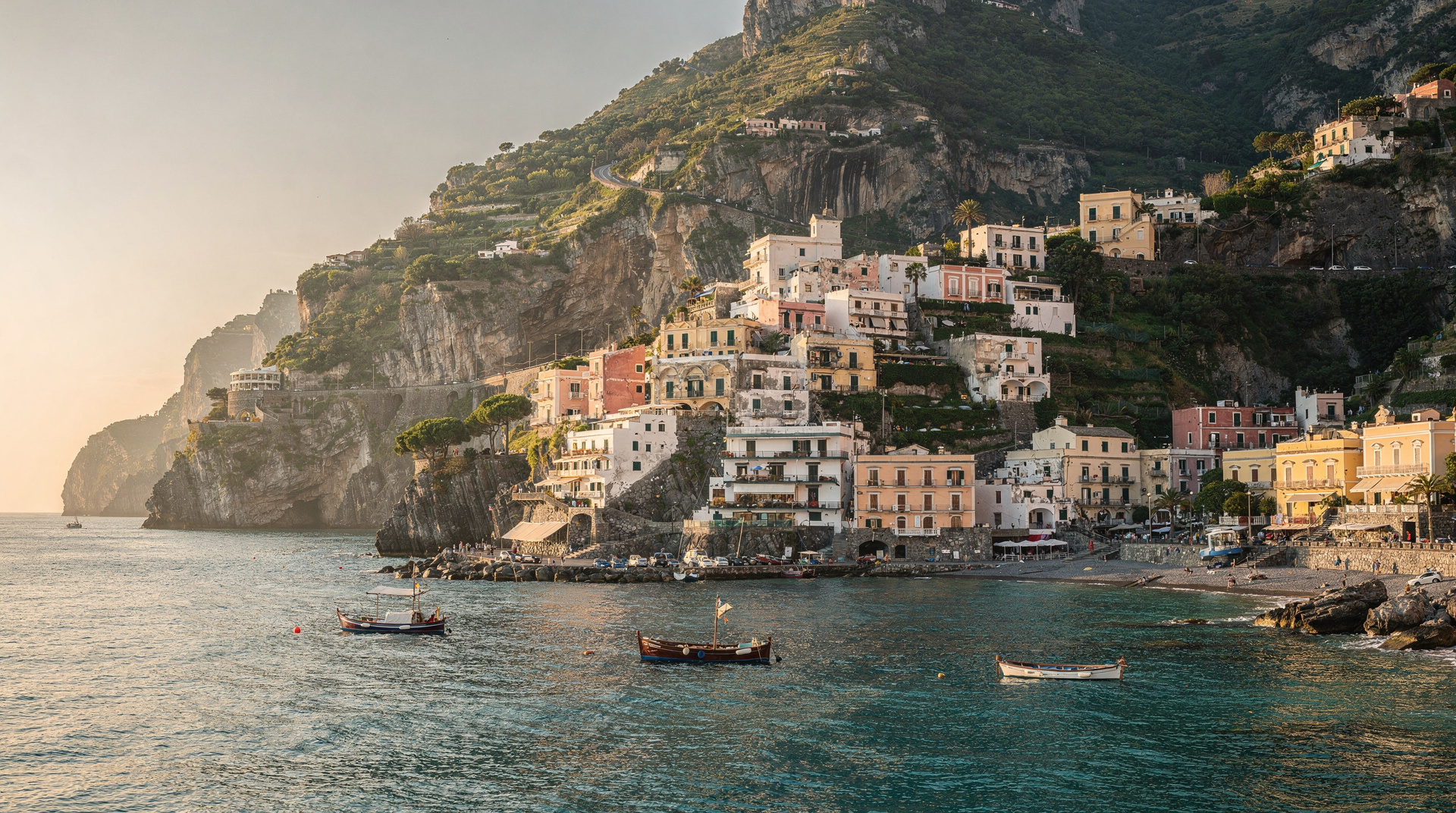
Praiano sits midway between Positano and Amalfi on the SS163, perched on the cliff with the sea 100 metres below. It has around 1,800 residents and a fraction of the tourist infrastructure of its more famous neighbours. That absence of infrastructure is precisely why travellers who have already done Positano tend to prefer it.
The village climbs steeply from the coast road to the church of San Luca Evangelista at the top. No large hotels, no organised coach tours, no queues for sunbeds. The tradeoff is limited amenities: one supermarket, three or four restaurants, and a beach accessible only by steps or boat.
| Where | Amalfi Coast, between Positano and Amalfi on the SS163 |
| Cost | Around €15–20 for a La Praia sunbed; 30–50% cheaper lodging than Positano |
| Time needed | 1–2 nights as a base for hiking and coast exploration |
| Getting there | SITA bus from Sorrento (~55 min) or Amalfi (~30 min) |
| Best time | May–June and September–October |
What Praiano actually offers
Sunsets on the west-facing coast
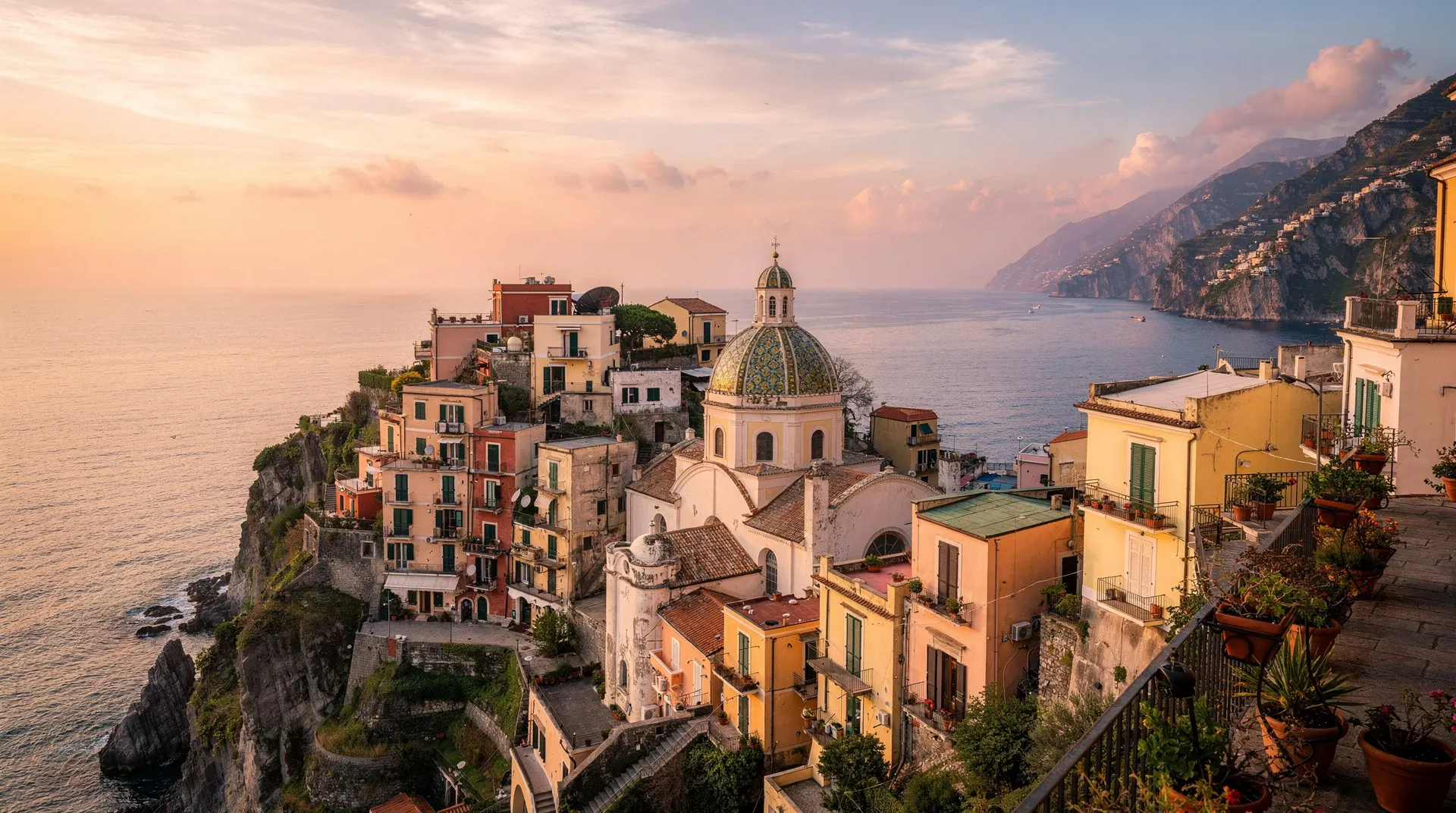
Praiano faces west-southwest, which means the sun sets directly over the water rather than behind the hillside. From the main church terrace or from any of the upper village viewpoints, the evening light turns the limestone cliffs orange-pink before dropping behind the horizon. This is one of the coast’s best sunset spots and receives a fraction of the crowds that gather at Positano for the same show.
The best free viewpoint is the terrace of the church of San Gennaro at the top of the village (walk up Via Capriglione from the coast road, about 20 minutes). Arrive an hour before sunset and stay until the light fades.
La Praia beach and Marina di Praia
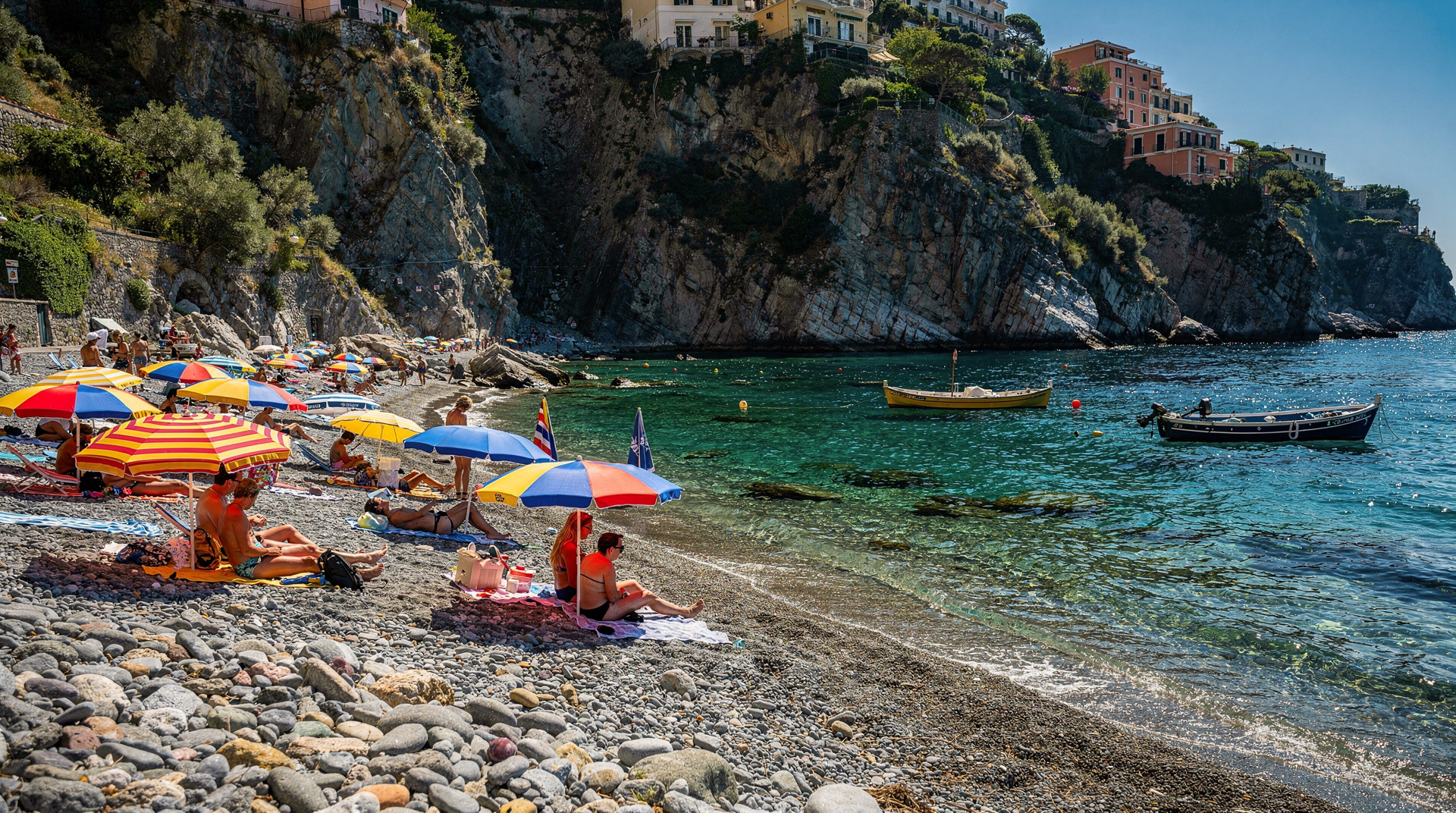
La Praia (also written La Praya) is a small cove at the foot of a narrow gorge, accessible by 150 steps from the coast road or by boat. It has a beach club with sunbeds (€15–€20 per day), a bar-restaurant, and good swimming. The approach by steps is steep but manageable; the boat approach (water taxis from the pier) is easier. The gorge walls create a natural acoustic chamber that makes the waves louder than expected — disconcerting the first time, atmospheric afterwards.
Marina di Praia is the small port at the bottom of the same gorge, used by local fishermen and small dive boats. A handful of restaurants here serve fresh fish in simple settings — less theatrical than Positano’s seafront but cheaper and better quality per euro. Ristorante Alfonso a Mare is the most established (spaghetti allo scoglio €16, grilled pesce spada €22).
The Path of the Gods: Praiano as access point
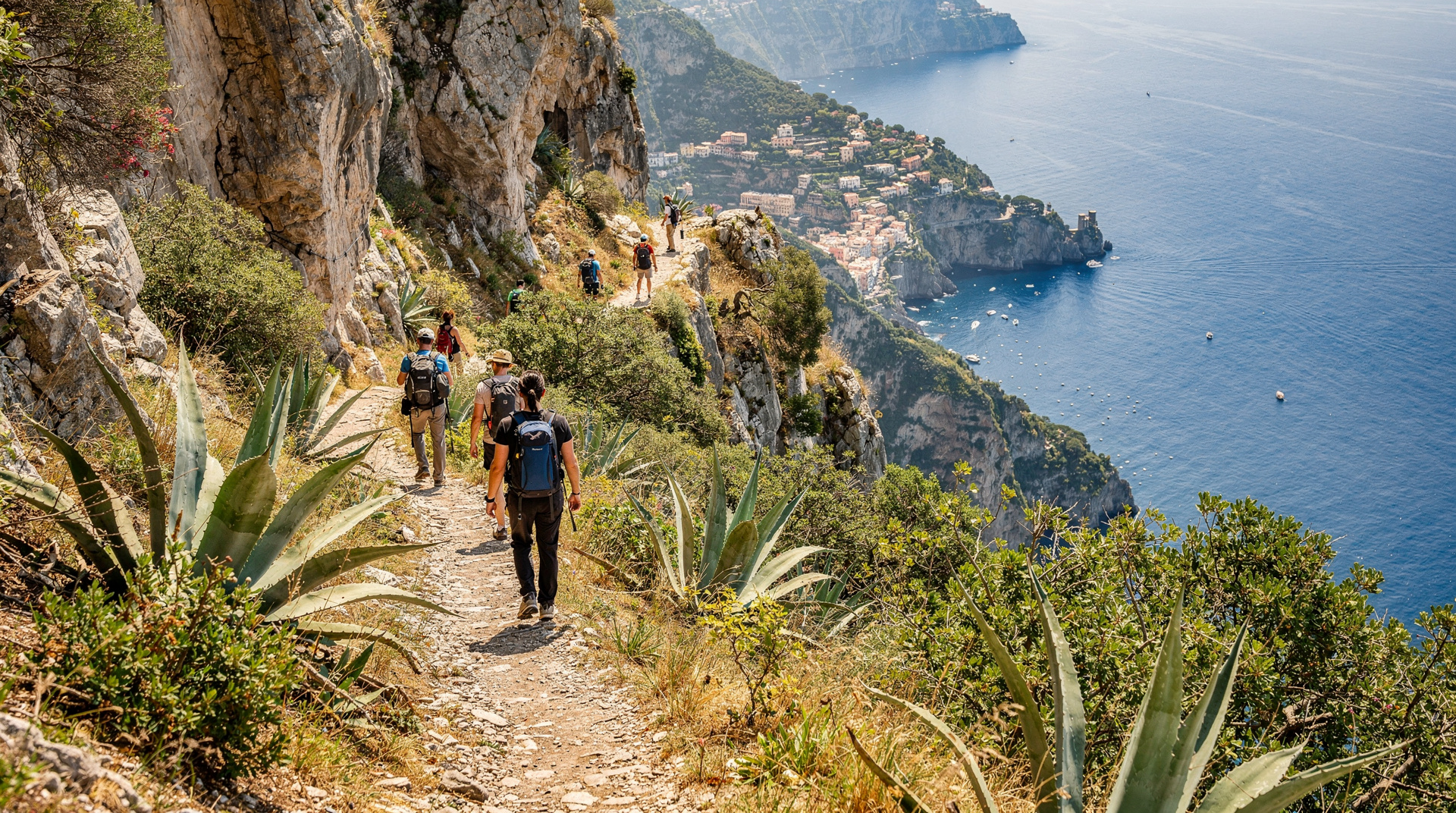
The Path of the Gods (Sentiero degli Dei) is conventionally described as starting at Bomerano in the Agerola commune — but Agerola is accessed by a bus that runs through Praiano. From Praiano, the bus to Agerola/Bomerano takes approximately 40 minutes. This makes Praiano a natural overnight base for anyone planning to do the trail.
The trail itself (Bomerano to Nocelle above Positano) covers 7 km with 630 m of descent and takes 3.5–4 hours including stops. Nocelle connects back to Positano by steps (45 minutes down) or bus. See the full Path of the Gods guide for detailed logistics.
A guided option is valuable for navigation at the few ambiguous junctions and for identifying the wildflowers and geological features that make the trail interesting beyond the views.
Guided Path of the Gods hike departing from PraianoFiordo di Furore: 2 km east
The Fiordo di Furore is a narrow fjord-like inlet cut through the limestone approximately 2 km east of Praiano on the SS163. The gorge is formed where the Torrente Schiato stream meets the sea through a rock cleft no more than 10 metres wide. An arched bridge visible from the coast road carries the main road over the gorge. Below, a small beach receives about 20 metres of direct sunlight per day in summer — the cliffs are nearly vertical on both sides.
Reaching the Fiordo from the coast road requires descending a steep flight of steps (closed at certain times — check locally). The inlet is famous among cliff divers (the annual High Diving World Series uses the gorge). For swimmers, it is a unique and memorable spot. For everyone else, the view from the bridge itself — glimpsing the narrow inlet far below — takes three minutes and no descent.
Private boat tour from Positano covering the Emerald Grotto and Fiordo di FuroreGetting to and around Praiano
SITA bus
SITA buses run along the SS163 past Praiano from Sorrento (about 55 minutes, €2.50) and from Amalfi (about 30 minutes). The bus stops are on the main road; the village itself is above and below the road, accessible by stairs. From the bus stop on the western side of the village (near the San Luca church access road) it is a short walk to most accommodation.
The SS163 plate-number alternating restriction (even plates on even dates, odd plates on odd dates, 10:00–18:00 June–September) applies to the section through Praiano. Buses and scooters are exempt.
By car
If driving from Sorrento, expect 40–55 minutes in normal traffic. There is a small car park near the coast road at the La Praia access point (pay and display, €4–€5/hour). Accommodation with a private parking space is a significant advantage in Praiano — few hotels have it.
By boat
Water taxis operate seasonally between Praiano, Positano, and Amalfi. A water taxi to Positano takes about 15–20 minutes and costs around €15–€20 per person. This is the most convenient way to connect Praiano to the rest of the coast without dealing with the SS163 traffic in high season.
Diving and snorkelling
Praiano has two established dive centres operating from Marina di Praia. The water visibility on the western Amalfi Coast is typically 10–20 metres, with wall dives along the limestone cliffs reaching 20–30 metres. Night dives are offered for experienced divers. Beginners can book a baptism dive starting at around €50. Snorkelling directly off La Praia beach in the gorge, around the rocky headland, produces decent encounters with sea bass, octopus, and moray eels in the kelp beds.
Where to stay
Praiano’s accommodation is small-scale: B&Bs, agriturismo, and a handful of small hotels, mostly carved into the cliff. Prices are 30–50% lower than central Positano for comparable quality. Rooms with sea views command a premium but are generally available.
A practical consideration: many properties have no lift and require carrying luggage up multiple flights of steps from the road (50–100 steps is normal). Check access with the property before booking if this is a concern.
Praiano for hikers beyond the Path of the Gods
Praiano’s position also makes it a reasonable base for shorter walks that don’t require the full Path of the Gods commitment. A gentler route runs from the village down toward Marina di Praia and along the coastal footpaths connecting to Vettica Maggiore, giving views of the terraced lemon groves and the coastline without the 630-metre descent of the main trail. For walkers who want a single morning outing rather than a half-day expedition, this local circuit takes 1.5–2 hours and starts directly from most accommodation without a bus connection.
A one-day itinerary based in Praiano
For visitors staying in Praiano who want to use it as a genuine base rather than just a sleeping spot, a simple day structure works well: morning swim and breakfast at La Praia before the day-trippers arrive from Positano; midday bus to Agerola/Bomerano for the Path of the Gods, timed to finish the descent to Nocelle by mid-afternoon; a bus or short walk down into Positano for a late-afternoon look at the busier village once you have already had your quieter morning; and a return to Praiano by water taxi or bus in time for dinner at Marina di Praia and the sunset from the San Gennaro church terrace.
This sequencing — quiet activities early, busier ones midday, Praiano’s own calm reclaimed by evening — makes the most of staying somewhere less crowded without missing what the more famous neighbours offer.
Comparing Praiano to Positano and Amalfi
Praiano is for people who want to be on the coast rather than observe it. There is less to “do” in the Instagram-photoshoot sense, and no major monuments. But the pace is slower, the prices are lower, the sunsets are better positioned, and the access to hiking and diving is excellent. For a coast itinerary of four or five nights, splitting time between Praiano (2 nights) and Ravello or Amalfi (1–2 nights) often produces a more satisfying experience than concentrating in Positano.
See Amalfi Coast towns compared for a side-by-side breakdown.
Practical information
Supermarket: one small Despar on the coast road. Limited fresh produce; stock up in Sorrento or Amalfi for self-catering.
ATM: one, on the main road. Bring cash as a backup; some smaller restaurants and boat operators are cash-only.
Medical: nearest hospital is in Amalfi or Sorrento. Praiano has a pharmacy.
Mosquitoes: a feature of summer evenings near the gorge. Bring repellent.
Eating in Praiano
Praiano’s dining scene is small by design. Beyond Ristorante Alfonso a Mare at Marina di Praia, the upper village has a handful of family-run options: La Brace (Via Gennaro Capriglione) does honest wood-fired pizza and simple seafood pasta at prices noticeably lower than Positano, and a couple of unnamed bar-trattorie near the San Gennaro church terrace serve panini and a limited pasta menu with the same sunset view that draws visitors up there in the first place.
Self-caterers should stock up in Sorrento or Amalfi first — Praiano’s one Despar supermarket has limited fresh produce and higher prices than a full-size supermarket. For a genuinely local coffee stop, the bars along the coast road charge €1–1.50 for an espresso, with no tourist markup.
If Praiano’s limited choices feel restrictive for a longer stay, both Positano (15 minutes by bus or water taxi) and Amalfi (30 minutes) are close enough for an evening out without changing accommodation.
Praiano’s history and the Saracen heritage
Like much of the Amalfi Coast, Praiano’s history is one of fishing and terraced agriculture punctuated by external threats. The village was part of the Republic of Amalfi and later under Bourbon Neapolitan rule. The Saracen tower at the western headland of Marina di Praia (Torre a Mare) was one of a chain of lookout towers built in the 16th century to warn against Ottoman and Barbary Coast raids — the towers at Praiano, Conca dei Marini, and Vettica Maggiore were all part of this coastal defence system.
The village itself is divided into two settlements on either side of a ridge: Vettica Maggiore (the western part, containing the church of San Gennaro) and Praiano proper (the eastern part, containing the church of San Luca Evangelista). The two settlements merged administratively but retain distinct characters: Vettica Maggiore is slightly higher and quieter; Praiano proper has the steps down to Marina di Praia and the main bus stops.
This history of small-scale fishing, terraced lemon farming, and defensive architecture is typical of Amalfi Coast towns. What makes Praiano different is that the tourist development that transformed Positano from a fishing village into a luxury destination never fully arrived here. The terraced lemon groves above the village are still worked by a handful of families. The fishing boats still go out at night from Marina di Praia.
The chiesa di San Gennaro and local ceramics
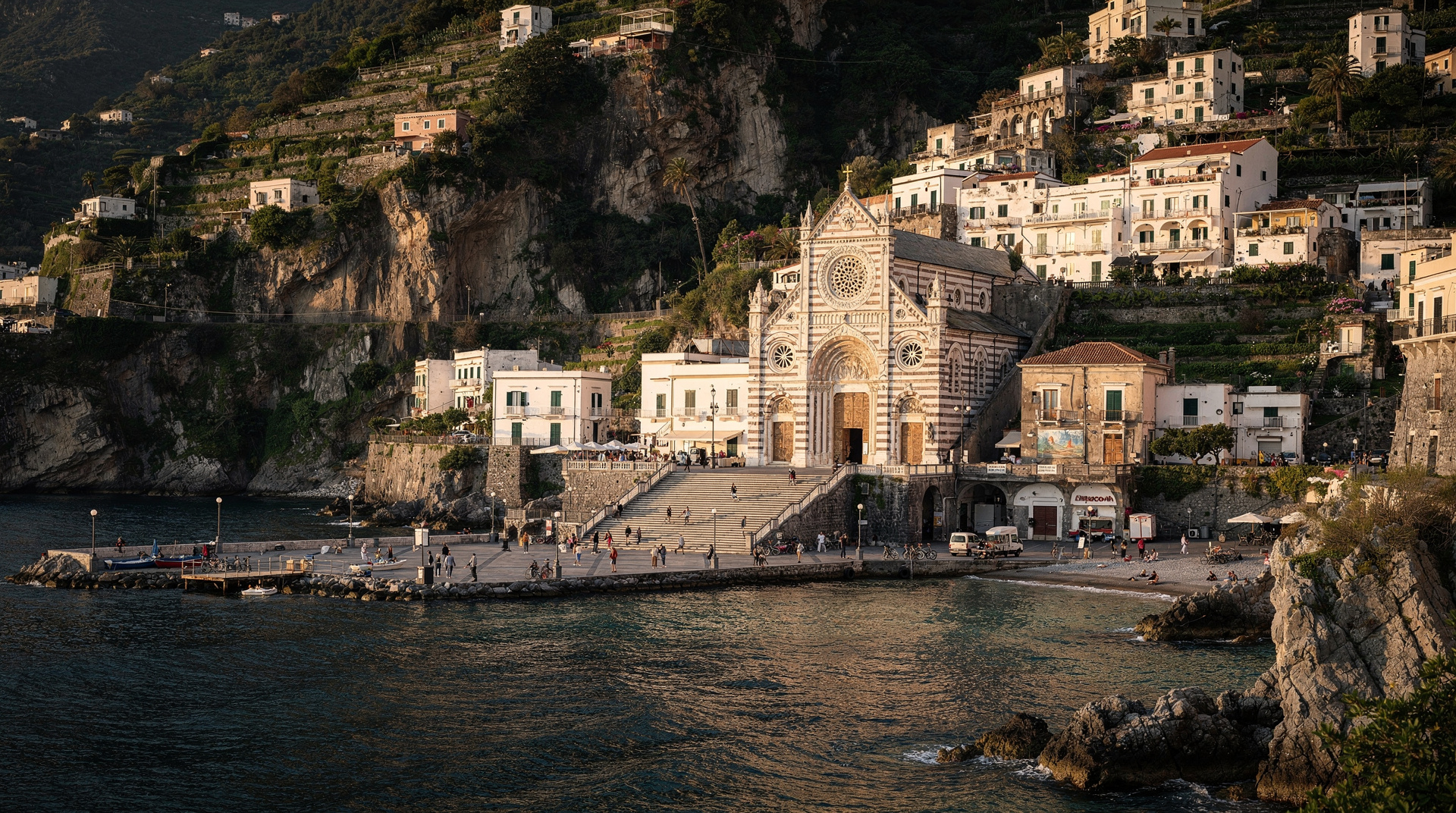
The 16th-century church of San Gennaro on the western side of Praiano is known for its majolica tile floor — a local tradition of geometric and floral ceramic decoration installed between the 17th and 18th centuries. The floor is not as famous as those in Ravello or Amalfi but is intact and well-preserved. Entry is free when the church is open (typically mornings and late afternoons); ask locally if the schedule has changed.
Adjacent to the church, a few ceramics artisans in Praiano produce hand-painted ware in the local tradition — different from the mass-market Vietri output. Prices are comparable to Ravello (€30–€150 for decorative pieces) and the provenance is genuine.
The church terrace has the best sunset view in the village — arguably the finest west-facing viewpoint between Positano and Amalfi. Local residents gather here at dusk with wine and conversation; visitors who arrive quietly are usually welcomed.
What to expect in summer versus shoulder season
In July and August, even Praiano feels the effects of the coast’s mass tourism: the SS163 is often gridlocked, the La Praia steps have a queue, and accommodation fills up. But the scale remains fundamentally different from Positano. There are no large hotels, no beach clubs with music systems, no queues for a café table. The village absorbs summer visitor pressure without losing its character.
In May, early June, September, and October, Praiano is at its best. The hiking trails are cool enough for a full-day walk. The boat tours have space. The restaurants are not booked two weeks ahead. The sea temperature in September (23–25 °C) is at its warmest of the year. For anyone with flexibility on timing, the September shoulder is the single best moment to visit the Amalfi Coast.
Frequently asked questions about Praiano
Is Praiano a good alternative to Positano?
For travellers who want the Amalfi Coast without the crowds or the price premium, yes. Praiano is quieter, cheaper to stay in, and centrally located on the coast. It lacks Positano’s visual drama and beach infrastructure, but gains in calm and authenticity.
How do you get from Praiano to the Path of the Gods?
Take the SITA bus from the Praiano stop on the SS163 to Agerola/Bomerano (approximately 40 minutes). The trail starts at Bomerano and follows the ridge 7 km west-southwest to Nocelle, above Positano, with 630 m of descent. See the Path of the Gods guide for the full logistics.
What is the Fiordo di Furore?
A narrow sea inlet formed where a stream cuts through the limestone cliff 2 km east of Praiano. It is accessible by steps from the SS163 (steep descent) and by boat from Positano or Praiano. The inlet is used for cliff diving competitions and has a small beach. The view from the road bridge above is free and takes minutes.
Is Praiano good for swimming?
Yes. La Praia beach (accessible by 150 steps) has clear water and a pleasant cove. The water around Marina di Praia and along the rocky base of the cliffs is good for snorkelling. Water quality is generally cleaner than the busier Sorrento beaches.
Does Praiano have ferry connections?
No regular scheduled ferry service stops at Praiano. The nearest ferry ports are Positano (15–20 min by water taxi) and Amalfi (30 min). Seasonal water taxis connect the Marina di Praia with neighbouring towns.
Where are the best sunset viewpoints in Praiano?
The terrace of the church of San Gennaro at the top of the village is the most accessible free viewpoint. The road bridge over the Fiordo di Furore (2 km east) offers an unusual angle. La Praia beach faces roughly west and catches the last light. The upper terrace of the church of San Luca Evangelista (10 minutes’ walk above the coast road) is used mainly by locals and usually empty at sunset.
Is Praiano good for families with children?
It is more suitable than Positano for families, but less convenient than Maiori. La Praia beach requires descending 150 steps, which eliminates easy pushchair access. The sea at La Praia is sheltered and calm, good for young swimmers. Accommodation in Praiano generally has more outdoor space than cliff-face Positano hotels. The village has a pharmacy and basic supermarket for supplies.
Does Praiano have a ferry?
No scheduled ferry service. Water taxis (seasonal) connect Marina di Praia with Positano and Amalfi at around €15–€20 per person per journey. For ferry connections to Naples or Sorrento, use Positano or Amalfi as the embarkation port. See ferries from Naples for seasonal timetables.
How do you get from Praiano to Naples?
The most practical route: SITA bus east to Amalfi (~30 min), ferry from Amalfi to Naples Molo Beverello in season (~1h 30min to 2h), or SITA bus west to Sorrento (~55 min) and Circumvesuviana train to Naples Centrale (~65 min). Total journey time from Praiano to central Naples: approximately 2.5–3 hours depending on connections. The Salerno approach (bus east to Salerno via Maiori and Vietri, then Frecciarossa to Naples) is an alternative: Praiano to Salerno by bus ~60 min, Salerno to Naples by train ~35 min, total ~2 hours with good connections.
Top experiences
Bookable activities with verified prices and instant confirmation on GetYourGuide.