Three Days in Naples Without Breaking the Bank
Naples has a reputation as one of southern Italy’s great affordable cities, and for once the reputation holds up. You can spend three full days here — museums, ruins, decent food, transport — and come out having spent less than you would on two mediocre meals in Milan. But it does take a small amount of planning, mainly around one question: does the Artecard make sense for your trip?
Here is a realistic day-by-day breakdown, with real prices as of early 2026. For the fuller theory behind this — including how the numbers change across seasons — see our dedicated Naples on a budget guide and the Naples trip cost breakdown.
| Daily average | €35–50/day including a museum or ruin entry |
| Best money-saver | Campania Artecard (3-day €21 or 7-day €32) |
| Cheapest meals | Street food counters, €2–7 per item |
| Getting around | Metro/funicular (€1.30) or Circumvesuviana train (~€2.60) |
| Best time to go | Shoulder season for lower everything except patience |
The Artecard Question
The Campania Artecard is a combined museum pass and transport card sold in several variants. The 3-day Naples card (€21) covers free entry to your first two museums and 50% off subsequent ones, plus unlimited metro, bus and funicular within Naples. The 7-day Campania card (€32) extends the same logic to the whole region, including Pompeii, Herculaneum and the Phlegraean Fields.
The maths works like this. The National Archaeological Museum alone costs €20. Capodimonte is €12. The two together already exceed the 3-day card at full price. If you add even one funicular ride a day (normally €1.30 single, but they add up), the card earns its keep on day one.
If you are also going to Pompeii, the 7-day regional card makes more sense. Pompeii entry is €18 on its own. Factoring in the Circumvesuviana train from Naples (around €2.60 each way) and any other Campania site, the €32 regional card becomes almost free money by day two.
The card is sold online, at the airport, and at major museum entrances. Buying in advance saves the queue.
Day One: The Historic Centre on Foot
Start at the National Archaeological Museum in the morning, when it is least crowded. This is one of the finest collections of Roman antiquities on earth — the Farnese Hercules, the Alexander mosaic from Pompeii, the Secret Cabinet. Allow three hours minimum. With the Artecard: €0 (first free museum).
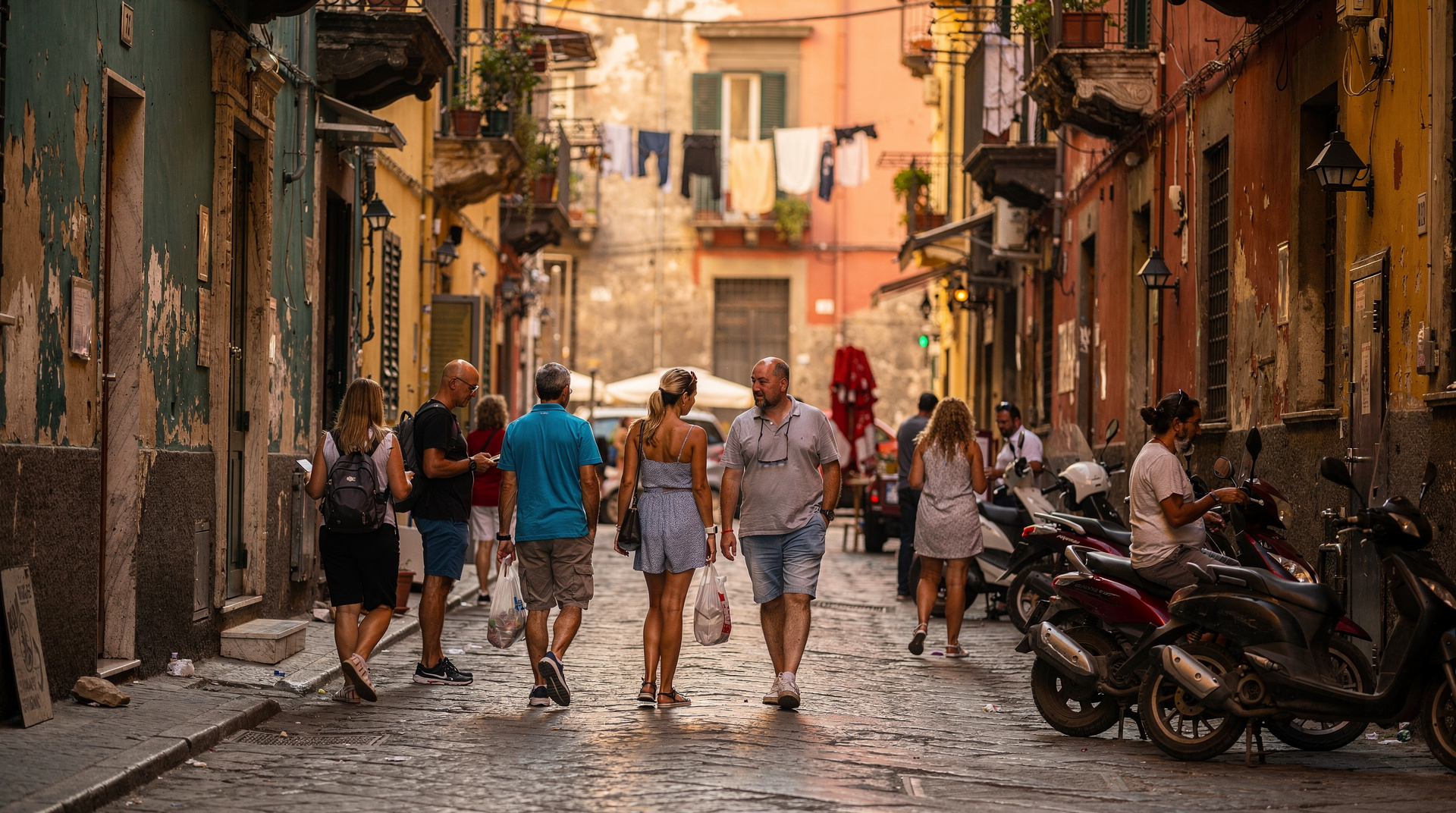
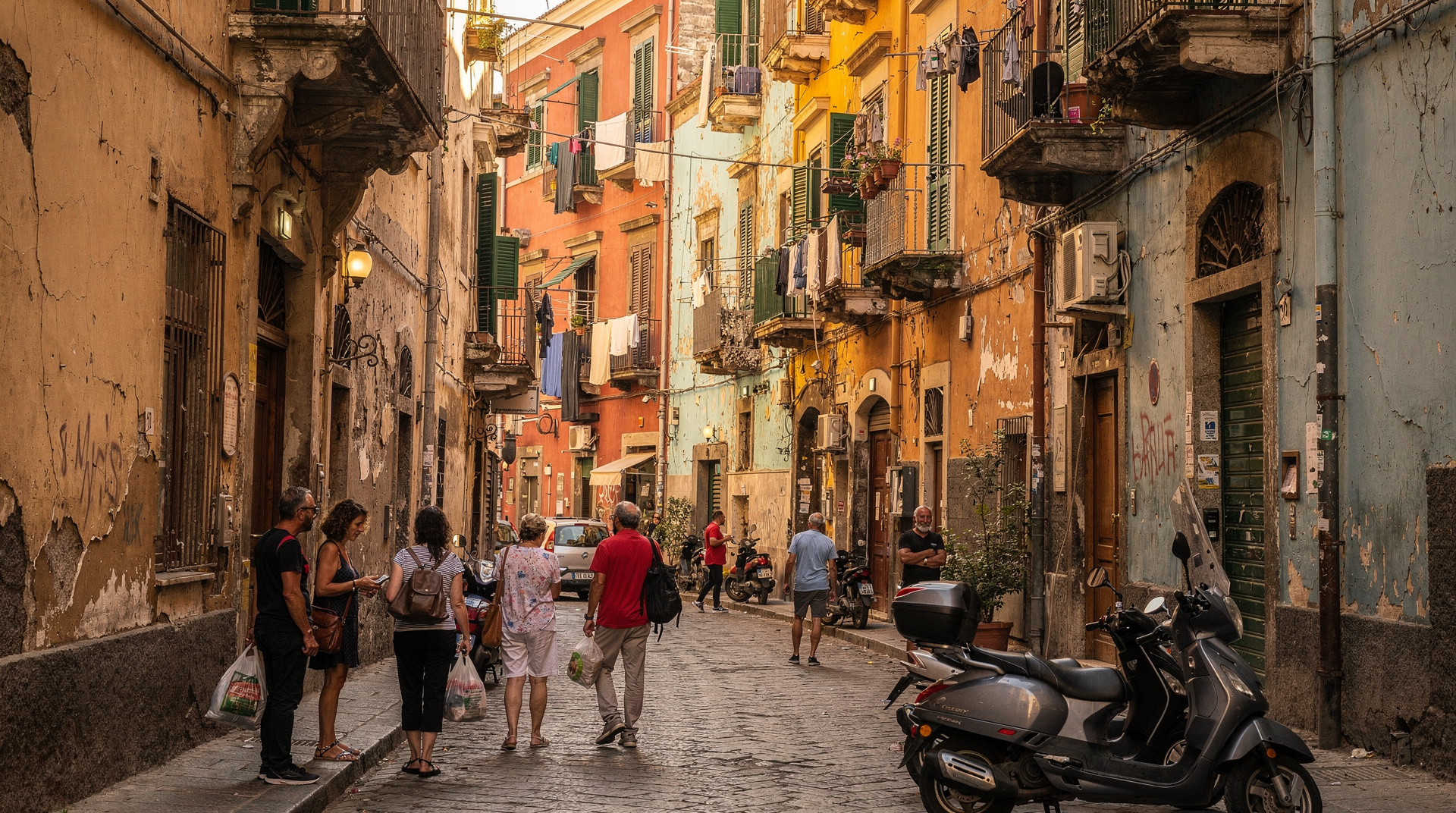
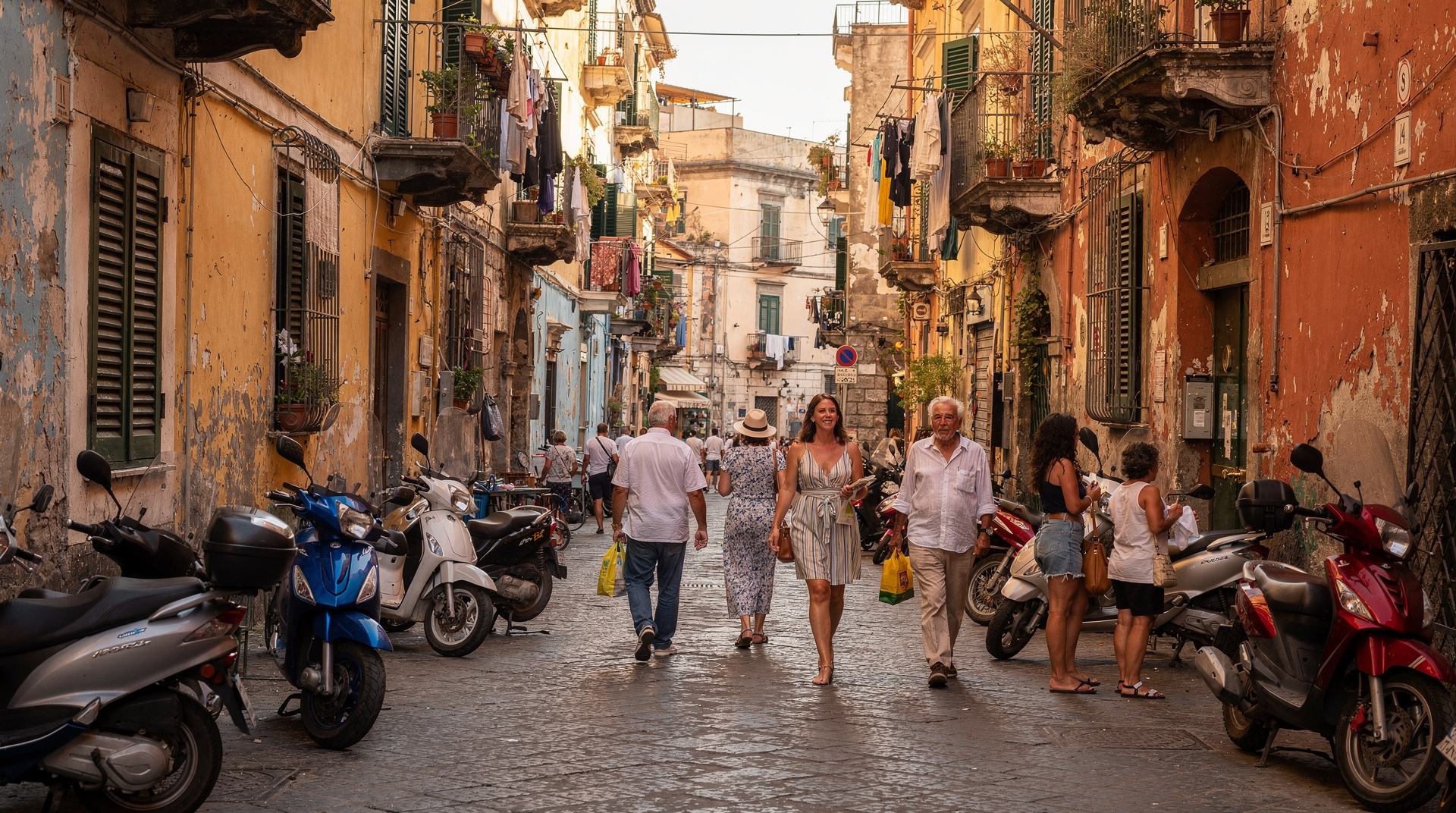
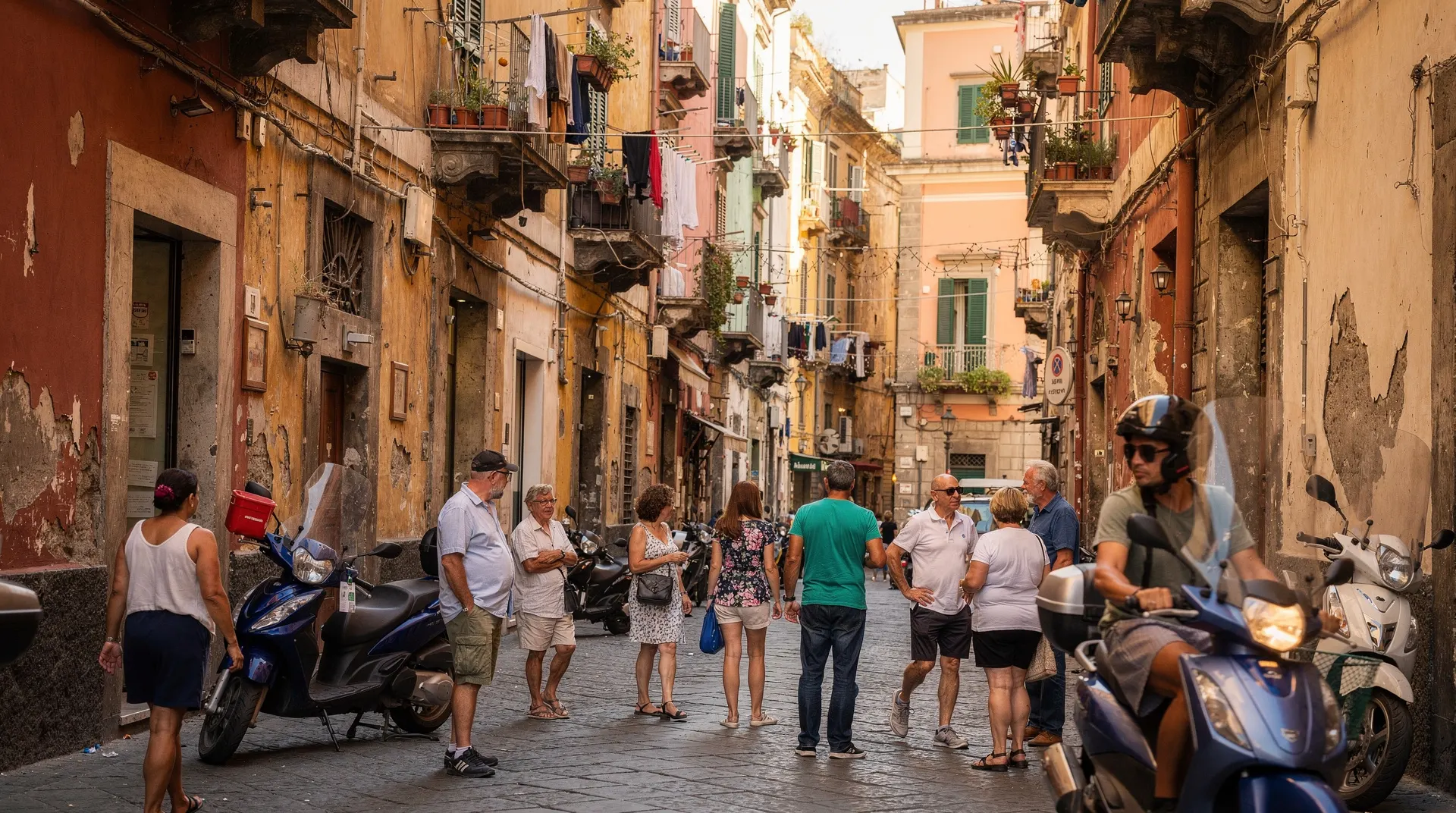
Walk south down Via Toledo and into Spaccanapoli — the long, straight street that bisects the old city. This costs nothing and takes you through the concentrated heart of Neapolitan street life: bookshops, pasticcerie, presepe workshops, street vendors, the occasional furious scooter.
The churches on this route are free and extraordinary. San Lorenzo Maggiore (free, though the archaeological excavations beneath cost €9), Santa Chiara (€6 for the cloister, free if you just enter the church), and Gesù Nuovo (free, and genuinely striking) are all within a few minutes of each other. You could spend an entire afternoon inside churches at no cost.
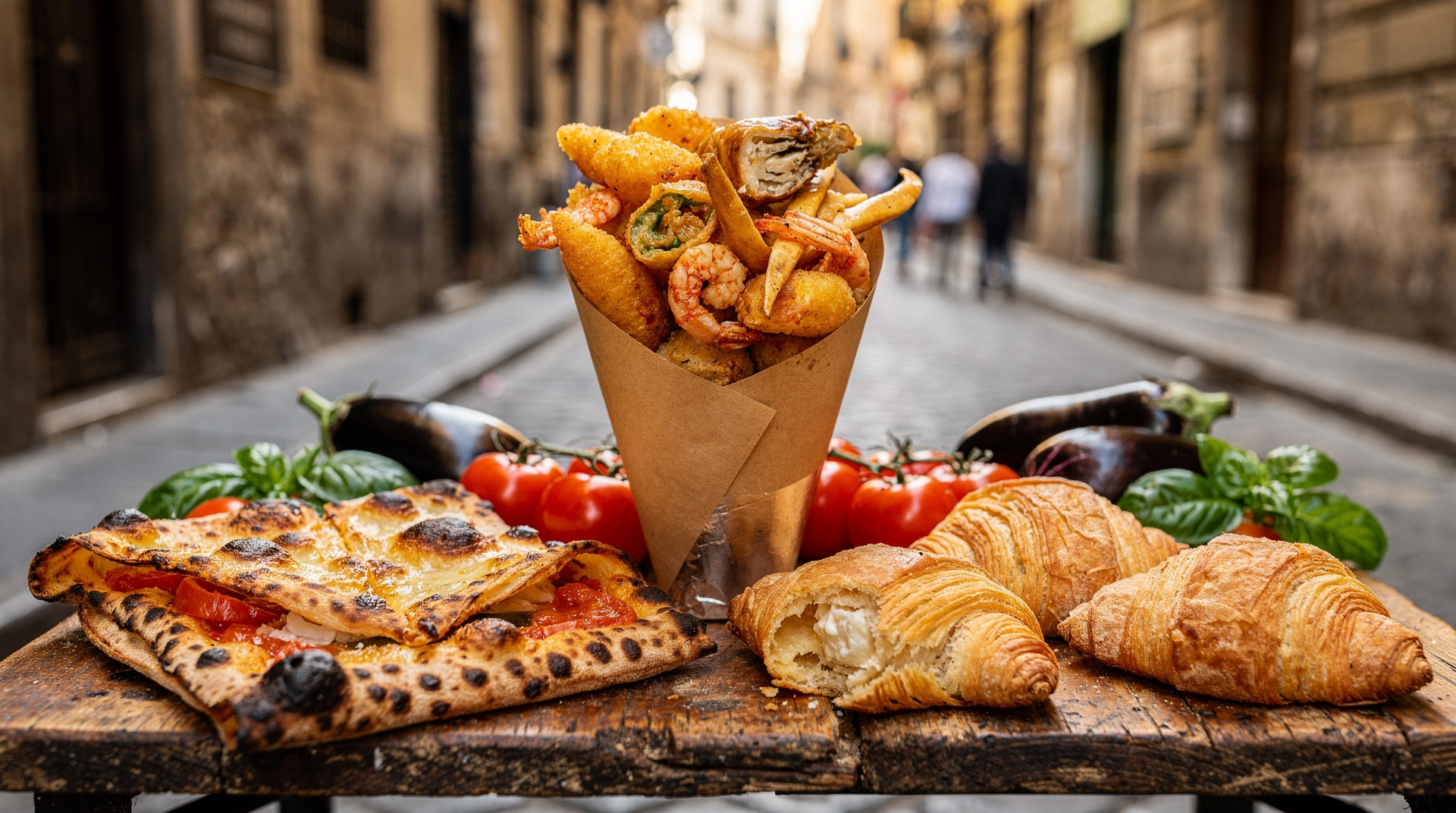
Lunch from a street vendor: a pizza fritta (fried pizza folded in paper) costs €2–3. A cuoppo of mixed fried things — frittatina di pasta, crocchè di patate, zeppoline — runs €3–4. Eat standing at the counter and you pay considerably less than the sit-down rate.
By evening you are in the Quartieri Spagnoli for an aperitivo. A Spritz at a bar without a tourist margin: €4–5.
Running total, day one: roughly €30–35 including the Artecard (if you bought the 3-day version).
Day Two: Capodimonte and the Viewpoints
Capodimonte sits on a hill north of the city in a royal park that is free to enter. The museum inside (€12 full price, 50% off with Artecard) holds Caravaggio’s Flagellation, Titian, Raphael, and one of the best Warhol portraits of Vesuvius you will see anywhere. Allow two hours.
The park itself is vast, undervisited, and costs nothing. On a clear morning the views over the bay are better than from most of the paid viewpoints below.
For a free panorama in the afternoon, take the Pedamentina steps from San Martino down to the historic centre — a long staircase descending through the Vomero neighbourhood with intermittent views across the city and the bay. The Certosa di San Martino at the top charges €6 entry (50% with Artecard), but the terrace outside is free.
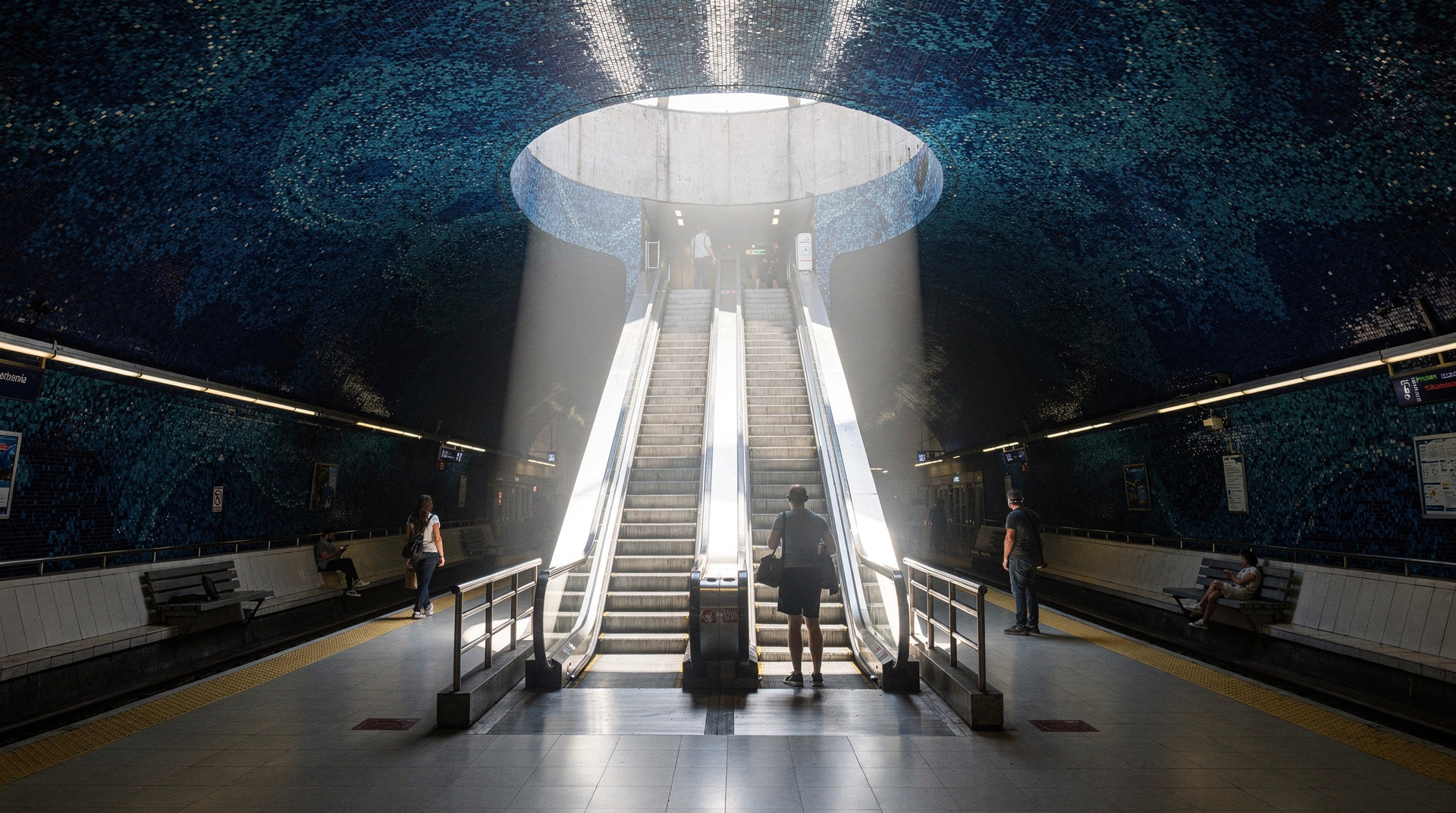
Transport: the funicular from Piazza Fuga to Vomero and back, then the metro line 1 across the city — both included with the Artecard.
Dinner in the evening: a sit-down trattoria in a non-tourist street near the centro storico. A full meal — primo, secondo, wine, water — runs €18–24 per person if you avoid the main tourist drag. Ask to see a handwritten menu (not a laminated one with photos). That is usually a reliable signal.
Running total, day two: roughly €20–28 (meals, incidentals, a coffee or two).
Day Three: Self-Guided Pompeii
Leave Naples early. The Circumvesuviana train from Napoli Porta Nolana or Napoli Garibaldi departs regularly from around 6:30 am. The fare to Pompei Scavi – Villa dei Misteri is roughly €2.60 each way.
Pompeii opens at 9 am. Entry is €18 (free with the 7-day regional Artecard; 50% off with the 3-day Naples version, though that discount still saves €9). The site is enormous — budget at least four hours, and ideally five.
A self-guided audio tour of Pompeii gives you the interpretive layer that the site itself does not always provide. The ruins without context are impressive; with the right commentary explaining what you are actually looking at — the social hierarchy of house sizes, the fast-food thermopolia, the electoral graffiti still legible on walls — they become something else entirely. The audio format means you set your own pace and linger where you want.
Bring water and a snack. The cafeteria inside the site is expensive (€5–7 for a sandwich). There are better options in the town of Pompei itself, a short walk from the exit, where a slice of pizza or a panino runs €2–3.
Back in Naples by late afternoon: €5 pasta at a local trattoria, a walk along the waterfront at Santa Lucia, and a coffee on Via Toledo to finish.
Running total, day three: roughly €25–35.
The Full Budget Picture
| Category | Realistic Cost |
|---|---|
| Campania Artecard (3-day) | €21 |
| Museum entries not covered | €0–12 |
| Pompeii entry | €0–18 |
| Transport (3 days, Naples + Pompeii) | ~€6 (covered by card + trains) |
| Meals (3 days, no splurging) | €60–80 |
| Coffee, gelato, incidentals | €15–20 |
| Total | ~€100–155 |
That is a three-day trip to one of Europe’s most culturally rich cities. The floor is achievable if you eat from the street, buy the Artecard, and walk. The ceiling stays low because Naples has never really tried to be expensive — it just forgot to bother.
Three Budget Tiers Compared
Not everyone wants the tightest possible number. Here is how the same three days scale at three different comfort levels, useful if you are deciding how much slack to build in.
| Tier | Accommodation | Meals | Extras | 3-day total |
|---|---|---|---|---|
| Backpacker | Hostel dorm, €20–25/night | Street food, €10–15/day | Artecard 3-day only | ~€100–140 |
| Mid-range | 3-star double, €70–100/night | Mix of trattoria + street food | Artecard 7-day + one paid tour | ~€350–450 |
| Comfortable | Boutique hotel, €140–200/night | Sit-down meals most nights | Artecard 7-day + guided Pompeii tour | ~€650–800 |
For a longer stay or a family group, the Naples with kids guide and the Naples packing essentials guide cover costs that don’t fit neatly into a per-day breakdown — buggies on cobblestones, extra transport, that kind of thing.
Free Things That Are Better Than the Paid Ones
Budget travel in Naples works partly because the free tier is unusually strong. Our free things to do in Naples guide rounds up the full list, but a few belong in any three-day plan regardless of budget: the view from the Certosa di San Martino terrace, an evening walk along the Lungomare from Santa Lucia to Mergellina, and simply sitting in Piazza Bellini after dark with a €1 espresso and watching the university crowd. None of these cost anything and none of them feel like a consolation prize for skipping the paid attractions.
If food is where you want to spend deliberately rather than just economise, the Naples on a food budget guide breaks down which splurges are worth it (a proper sit-down pizza at a historic pizzeria) and which aren’t (anything with a laminated multilingual menu near a major sight).
The Honest Caveats
Budget travel in Naples requires a small amount of vigilance. The historic centre is not dangerous, but pickpockets are real on the metro and in crowded markets. Keep a phone in a front pocket and a wallet without your entire budget in your back one.
Some churches and courtyard viewpoints that were free last year now charge a modest €1–2 “voluntary” donation that is quietly mandatory. It is not worth arguing about.
The best free things in Naples — the light off the bay at dusk, the noise of the Quartieri Spagnoli at 7 pm, the smell of a wood-fired pizza oven on a cold February evening — cost nothing and are better than most of what you pay for.