Blue Grotto Capri — honest guide to what it is, what it costs, and whether it is worth it
From Naples: Capri and Blue Grotto Day Tour
Duration: 9h
Is the Blue Grotto worth visiting?
When conditions are right, yes — the light effect is genuinely extraordinary. But the grotto closes on roughly 30–40% of summer days due to swell, and entry costs around €18–20 for just 5 minutes inside. Go with realistic expectations and a backup plan, not as your main reason to visit Capri.
Is the Blue Grotto worth it? When open and conditions are right, the light effect is genuinely extraordinary — electric blue water, an otherworldly glow. But the grotto closes on roughly 30–40% of days due to swell, entry costs around €18–20 for just 5 minutes, and visits are tightly controlled. Go with realistic expectations and a backup plan.
| Total cost | around €18–20/person (ticket + rowboat + tip) |
| Time inside | around 5 minutes |
| Closure rate, summer | roughly 30–40% of days |
| Best window | 10:00–12:00, calm sunny morning |
| Booking | no advance guarantee possible — decided on the day |
What the Blue Grotto actually is
The Grotta Azzurra is a sea cave on the northwest coast of Capri, roughly 60 metres long and 25 metres wide. During daylight hours, sunlight enters through a submerged opening about 1.5 metres below the waterline. This underwater light source illuminates the water inside from beneath, creating a saturated, iridescent blue effect that is — genuinely, not hyperbolically — unlike anything most visitors have seen in the natural world.
The effect is most intense between roughly 10am and noon on days with strong sun and calm water. The rest of the time it is still beautiful but less dramatic. At dusk, the effect largely disappears.
The cave has been known since Roman times — Emperor Tiberius built a nymphaeum here — but the modern tourist circuit began in the 1820s when two Germans rediscovered it and published accounts that triggered a wave of Romantic-era tourism. It has been commercially operated in one form or another ever since.
The fee structure: what you actually pay
The pricing is confusing by design. Here is what you pay:
Official entry ticket: €3.50 — this is the “state” fee paid to the municipality of Anacapri. You must purchase this ticket before boarding the rowboat. It is not negotiable and children are not discounted.
Rowboat fee: approximately €14 — this goes to the cooperative of local boatmen who have operated the grotto since the 19th century. This is mandatory. You cannot enter the grotto without the rowboat because the entrance arch is so low (about 90 cm at sea level) that passengers must lie flat to pass under it. The oarsmen, facing backwards, slip the boat in and out with a single oar stroke.
Tip: €1–2 per person — technically optional, practically expected. The boatmen are proud of their tradition and the trips are very brief, so a small tip is standard.
Total: approximately €18–20 per person
If you arrive by a large boat tour departing from Marina Grande (the most common route), your operator adds a supplement of around €10–15 on top of the above for the transfer boat — making the all-in cost from that route closer to €30–35 per person.
If you take the bus independently to Anacapri and then a small local taxi-boat down to the cave entrance (the cheaper approach), you pay only the entry ticket and rowboat fee directly — around €18–20 total.
The closure problem
This is what the glossy brochures elide. The grotto entrance is only about 90 cm high at mid-sea level. Even a small swell — 0.3–0.5 metres — can raise the water enough to submerge the arch entirely. When that happens, the grotto closes. Access is at the sole discretion of the boatmen; no official announcement is made until you arrive at the site.
In the summer months, closures happen on roughly 30–40% of days according to visitor accounts and local reports. In spring and autumn, when swell is more frequent, the closure rate is higher. In winter, the grotto is often closed for weeks at a time.
There is no way to check closure status in advance online with any reliability. The only thing you can do is ask your hotel reception or a local guide the morning of your visit. Even then, conditions can change between 8am and noon.
If your entire Capri trip is built around seeing the Blue Grotto, you are taking a meaningful risk of disappointment.
What 5 minutes inside feels like
When the grotto is open and you make it in, the experience has a particular quality worth describing accurately so you know what to expect.
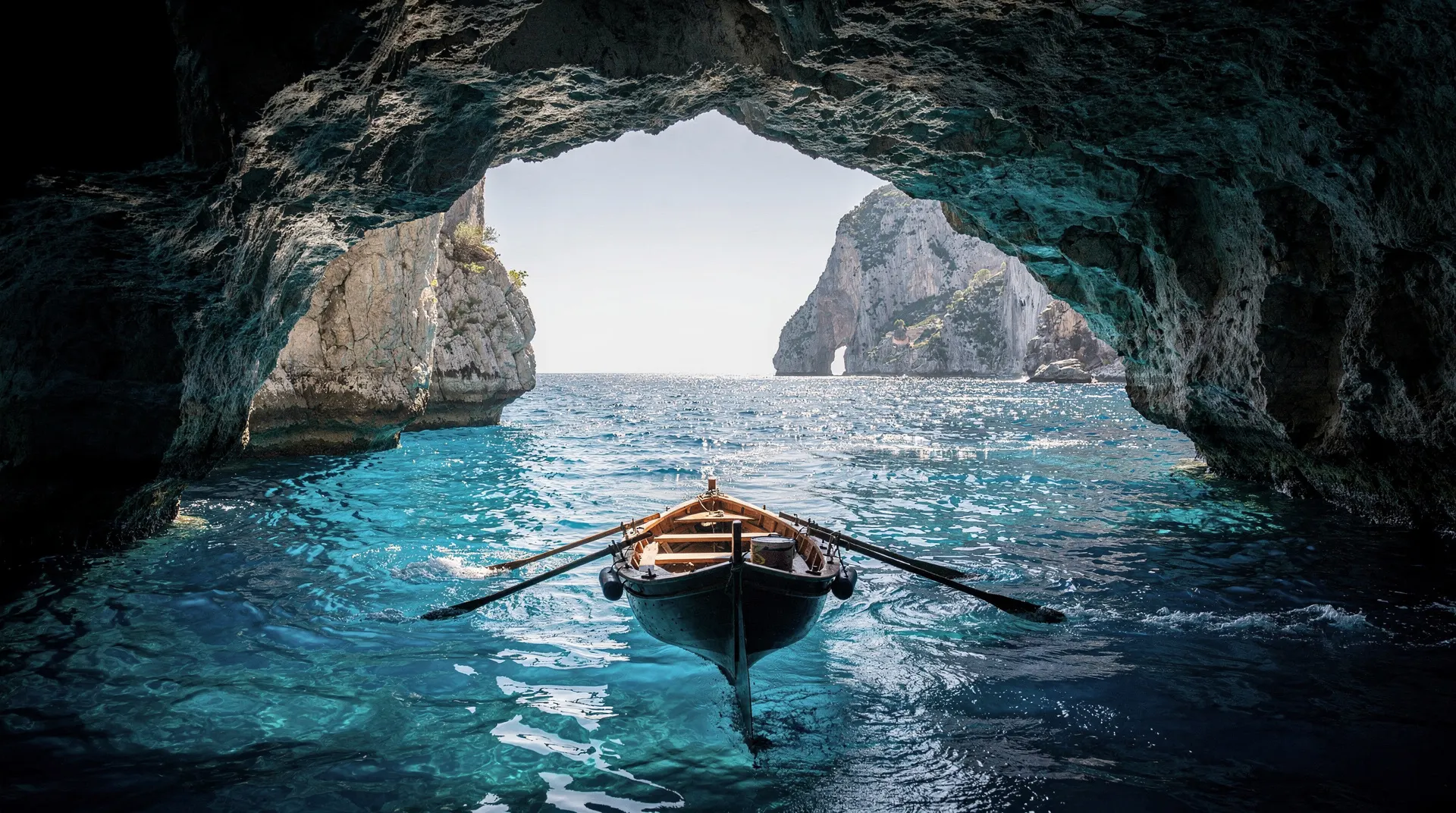
You transfer from the large tour boat to a wooden rowboat in the open water. The boatman tells everyone to lie flat. The boat tilts, the arch passes overhead with perhaps 10 centimetres to spare, and you are inside. The blue light is immediate and striking — deeper and more saturated than in any photograph. The water glows from within. Small movements of the oar create ripples of intensified light. The cave walls are pale limestone.
The boatman rows slowly, often singing (“O Sole Mio” is a perennial). You have time to sit up, look around, and take photographs. There are usually two or three boats inside simultaneously, which gives it a slightly organised feel.
Then you lie flat again, the boat angles back towards the entrance arch, and you emerge into ordinary daylight. Total time inside: about 5 minutes.
Many visitors find it genuinely memorable. Others, having queued and paid and waited, feel the ratio of cost to experience is off. Both responses are entirely understandable.
How to get there — three routes compared
Route 1: Organised tour from Naples or Sorrento
The most common option. An operator handles the ferry to Capri, transfers to the grotto by large boat, and a guide manages the rowboat entry. Cost: €80–120 per person all-in from Naples.
The advantage is simplicity. The disadvantage is that if the grotto closes, you are on a group schedule and may not be able to adapt easily. Some operators offer a “money-back if closed” guarantee — check the specific terms before booking.
Blue Grotto and Capri day tour from NaplesRoute 2: Independent ferry + island bus to Anacapri
Take your own ferry to Capri (see getting-to-capri for all options), bus from Marina Grande to Anacapri, then a short walk to the cliff road where licensed local taxi-boats take you down to the grotto entrance and back for around €10 round-trip (sea transport only, not including entry fees). This approach costs significantly less and gives you full flexibility — if the grotto is closed, you simply visit the Monte Solaro chairlift instead.
Route 3: Round-island boat tour from Marina Grande or Sorrento
Several companies run 2–3 hour coastal boat tours that circle the island and stop at sea caves, including the Blue Grotto if conditions allow. You stay in the larger boat for the exterior view of the cave, and optionally transfer to a rowboat if the grotto is open. These tours run €20–35 per person and include multiple stops.
Private boat tour with Blue Grotto option from Capri/SorrentoSorrento is closer to the grotto than Naples and the sea window is narrow: a private Capri and Blue Cave boat tour from Sorrento can leave on the tide rather than on a fixed departure, which is what decides whether the cave opens at all.
When conditions are best
Go on a calm, sunny morning in May, June, or September. The light effect requires strong sunlight — overcast days significantly reduce the intensity. The best light angle is mid-morning, roughly 10am–noon. After 1pm, even on sunny days, the effect diminishes.
Avoid going after recent poor weather (1–2 days of wind and rain raises swell inside the cave even on subsequently calm days). The boatmen at the grotto are experienced and realistic — ask them directly when you arrive whether conditions are good.
Alternatives if it is closed
The Blue Grotto is not Capri’s only attraction, and a closed grotto does not ruin a visit if you have alternatives planned:
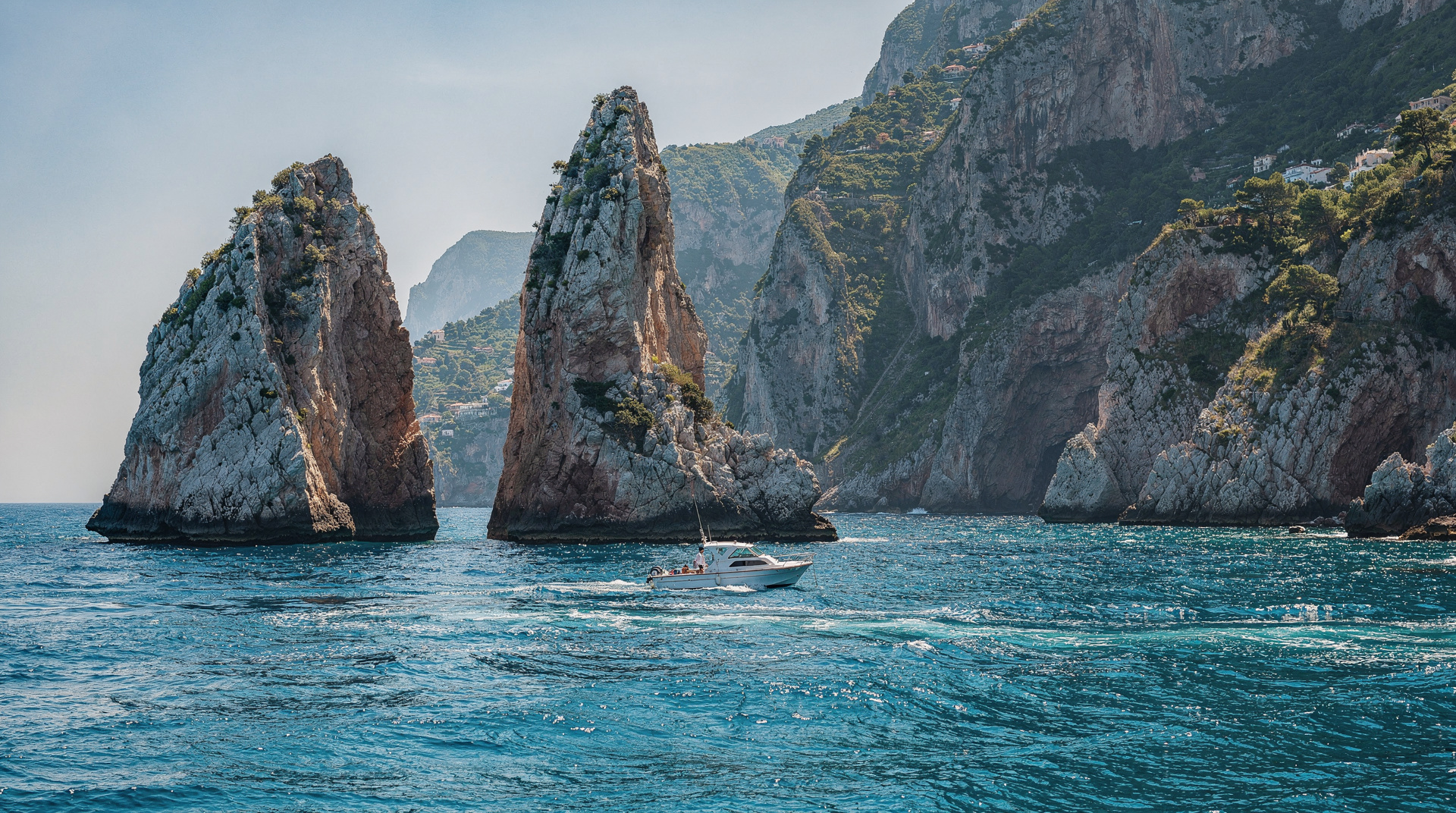
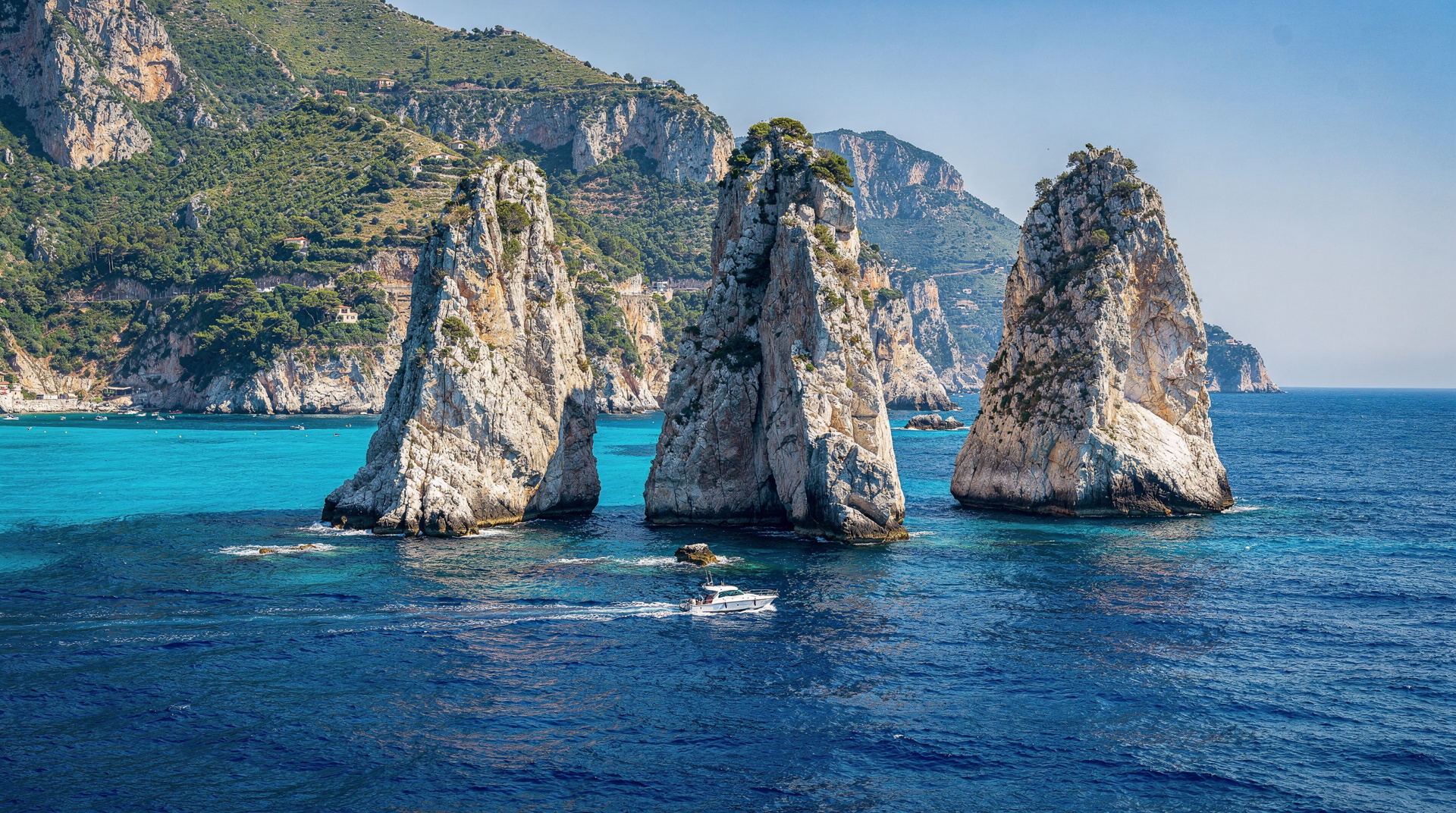
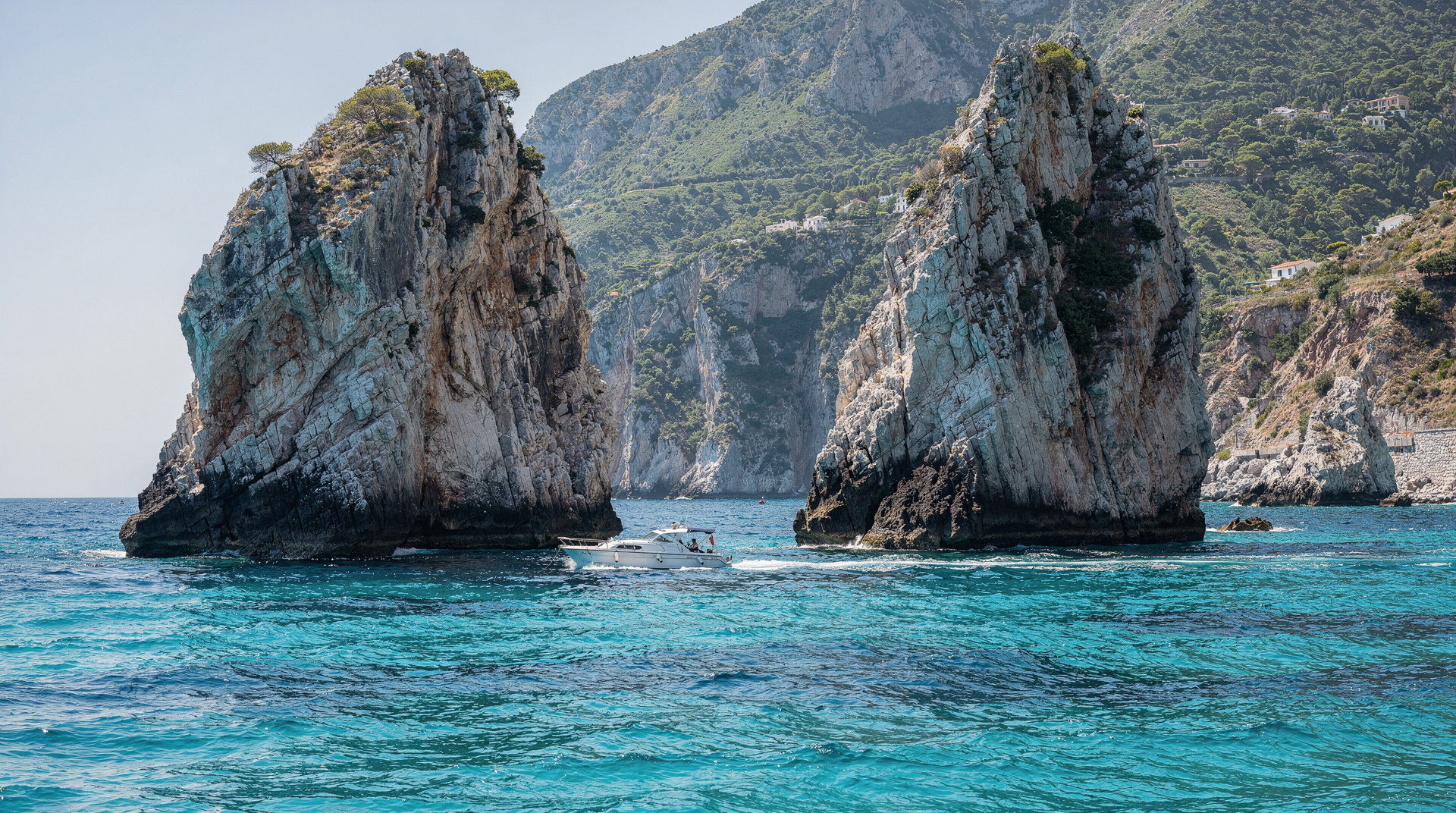
Grotta Verde (Green Grotto) — accessible by boat on the south side of the island, near the Faraglioni rocks. Less famous, less crowded, and less likely to close. The light effect is different — green rather than blue — but the cave is larger and the experience less pressured. Most round-island boat tours include this.
Grotta Bianca (White Grotto) — near the Faraglioni, notable for its white limestone formations. Accessible by small boat or kayak.
Monte Solaro chairlift — the single best thing to do on Capri when the grotto is closed (and arguably always, regardless of grotto status). See the anacapri-and-chairlift guide for detail.
Arco Naturale walk — a 45-minute path through maquis scrubland to a natural stone arch on the east coast. Free, spectacular, and almost empty compared to the main tourist circuit.
The honesty verdict
The Blue Grotto is a genuine natural wonder. The light effect is not exaggerated. On a good day, 5 minutes inside is vivid and memorable in a way that persists years later.
But the experience has a manufactured quality — the mandatory rowboat with singing, the brief entry, the significant cost — that sits awkwardly with some visitors. And the closure rate means that unless you can dedicate multiple days to trying repeatedly, there is a real chance you will not get in.
Our suggestion: go to Capri for Capri — the views from Monte Solaro, the Piazzetta in the morning, the boat trip around the Faraglioni, a long lunch in Anacapri. If the Blue Grotto happens to be open, take the opportunity. If it is not, you have not wasted a trip.
See our capri-day-trip-guide for a full day itinerary that builds in this flexibility.
Reading the sea before you commit
The boatmen decide grotto access based on conditions that are visible if you know what to look for. A flat, glassy sea at Marina Grande in the early morning is the best sign — if there’s visible chop or whitecaps even in the harbour, the exposed northwest coast where the grotto sits is almost certainly worse. Wind direction matters more than wind strength: a light southerly (scirocco) pushes swell directly onto the grotto’s entrance, while a northerly breeze often leaves that side of the island calmer.
If you’re staying overnight on Capri or in Anacapri, ask locally the evening before — residents who work the harbour usually have a good read on the next morning’s likely conditions, even without an official forecast. None of this guarantees an outcome, but it’s a better basis for deciding whether to prioritise an early attempt than guessing blind.
Frequently asked questions about the Blue Grotto Capri
Can I visit the Blue Grotto on my own without a tour?
Yes. Take a regular ferry to Capri (getting-to-capri), bus to Anacapri, and a local taxi-boat down to the entrance. You will still need to hire a mandatory rowboat inside. Total cost is €18–20 plus your transport — significantly less than organised tours.
Is there any way to check if the Blue Grotto is open before going?
No reliable online source. Your best option is to ask your hotel in Capri or Naples the morning of your visit, or call the taxi-boat cooperative directly (the Anacapri tourism office sometimes posts updates). Even confirmed-open in the morning can change by 10am if swell increases.
Does the Blue Grotto charge extra for children?
Yes. There is no child discount on either the entry ticket or the rowboat fee. The full €18–20 applies to every person who enters, including infants in arms (though infants do not need to lie flat if held securely — the boatman will advise).
Is the Blue Grotto accessible for visitors with mobility issues?
With difficulty. The transfer from a large boat to the rowboat requires stepping down into a rocking small craft, and passengers must physically lie flat to pass under the arch. If you have limited mobility, discuss this with your tour operator or the boatmen in advance. In some cases, people remain in the larger boat and view the entrance from outside — you cannot see the light effect from there, but it is an option.
What should I bring to the Blue Grotto?
Nothing bulky. Leave bags on the larger boat if you are on a tour. Bring a waterproof case for your phone if you want photographs — the rowboat can take on a little water in the bottom. The cave is cool even in summer, so a light layer is useful if you are sensitive to cold.
Is it better to do the Blue Grotto morning or afternoon?
Morning, always. The light enters from a specific angle that peaks around 10–11am on a clear day. Afternoon visits, even on open days, typically show a less intense effect. Additionally, any swell tends to build through the afternoon, increasing the risk of closure.
Are there tours from Sorrento that include the Blue Grotto?
Yes. Several operators run Capri day trips from Sorrento that include a Blue Grotto attempt.
Capri and Blue Grotto full-day trip from SorrentoHow does the Blue Grotto compare with other sea caves in the Mediterranean?
The Grotta Azzurra is widely considered the most spectacular example of the submerged-light phenomenon, partly because of the depth and colour of the water and the size of the chamber. The Blue Cave on Hvar island in Croatia offers a similar effect. Neither experience is fungible — both are worth seeing if the opportunity arises.
The history of the Blue Grotto
The grotto has been known since ancient times. Roman Emperor Tiberius, who lived on Capri from 27–37 AD and had twelve villas built on the island, used the cave as a private bathing spot. The Romans carved a series of niches into the cave walls (still visible) where statues of sea gods were placed, effectively turning the grotto into an underwater nymphaeum — a decorative shrine to the water deities.
After the fall of the Roman Empire, the cave fell into disuse and local legend turned it into a lair of evil spirits and sirens. This is not unusual for dramatic natural features in the medieval Mediterranean — the unexplained blue light emerging from a sea cave would have been difficult to rationalise without Roman learning. Local fishermen reportedly refused to enter the grotto for centuries.
In 1826, two young Germans — the writer August Kopisch and artist Ernst Fries — explored the cave with a local fisherman named Angelo Ferraro and published an enthusiastic account. Kopisch’s 1838 poem “Die Entdeckung der Blauen Grotte auf der Insel Capri” (The Discovery of the Blue Grotto on the Island of Capri) circulated widely among German Romantics and set off a wave of cultural tourism to Capri that continues to the present day.
The commercial boat operation was established almost immediately after publication of the accounts, and the essential structure — large boat to small rowboat, mandatory singing guide, controlled entry — has changed remarkably little in 200 years. The boatmen’s cooperative traces its origins to this period.
The light physics
The blue light effect has a straightforward explanation that makes it no less spectacular once you understand it.
The entrance arch at sea level is about 1.3 metres wide and 1 metre high — barely large enough for the rowboat to enter horizontally. Below the surface, however, the underwater opening is much larger. Sunlight enters both through the surface opening and through this large submerged aperture, which acts as a lens.
The submerged light, having passed through a significant depth of water, is strongly filtered — longer red wavelengths are absorbed, while shorter blue wavelengths pass through. This filtered blue light illuminates the interior of the cave from below, making the water glow from within rather than being lit from above.
The effect is most intense when the external sunlight is strong and at the right angle (mid-morning) and the water is calm (no turbidity from stirred-up sediment). On overcast days or in rough conditions, the effect is significantly reduced.
The colour itself — described variously as sapphire, cobalt, or electric — does not photograph accurately because camera sensors and human vision perceive colour differently in extreme lighting conditions. The photographs you have seen understate the vibrancy slightly. This is one case where being there is genuinely better than the image.
Frequently asked questions about Blue Grotto Capri — honest guide to what it is, what it costs, and whether it is worth it
How much does the Blue Grotto cost?
How often is the Blue Grotto closed?
How long do you spend inside the Blue Grotto?
Can I swim inside the Blue Grotto?
What time does the Blue Grotto open and close?
How do you get to the Blue Grotto from Capri town?
What are the best alternatives if the grotto is closed?
Top experiences
Bookable activities with verified prices and instant confirmation on GetYourGuide.