Anacapri and the Monte Solaro chairlift — the best part of Capri most tourists skip
Capri: Monte Solaro Tour with Chairlift & Food Tasting
Is the Monte Solaro chairlift in Anacapri worth it?
Yes — it is one of the best-value experiences on the island. The single-seat open-air chairlift takes 13 minutes to reach the summit at 589 metres, with views across the entire Bay of Naples, the Amalfi Coast, and on clear days all the way to Calabria. It costs €14 return and is far less crowded than the Blue Grotto circuit.
Is the Monte Solaro chairlift worth it? Absolutely. For €14 return you get the best panoramic view in the Bay of Naples — the entire arc from Vesuvius to the Amalfi Coast — via a 13-minute open-air single-seat chairlift that has operated since 1945. It is far less crowded and far more memorable than queuing for the Blue Grotto.
| Where | Anacapri, above Capri town, 589m at the summit |
| Cost | Chairlift €14 return; Villa San Michele ~€9 |
| Time needed | Half a day (3–4 hours) to do it properly |
| Getting there | Bus A from Marina Grande, 20–25 min |
| Best time | Morning (9:30am) or late afternoon, before/after the midday queue |
Why most day-trippers miss the best part of Capri
The standard Capri day-trip itinerary goes: ferry → funicular → Piazzetta → Via Krupp → Blue Grotto attempt → lunch → ferry home. That circuit is not bad, but it completely ignores Anacapri — the second town on the island, which is both more affordable and, from a views perspective, more impressive.
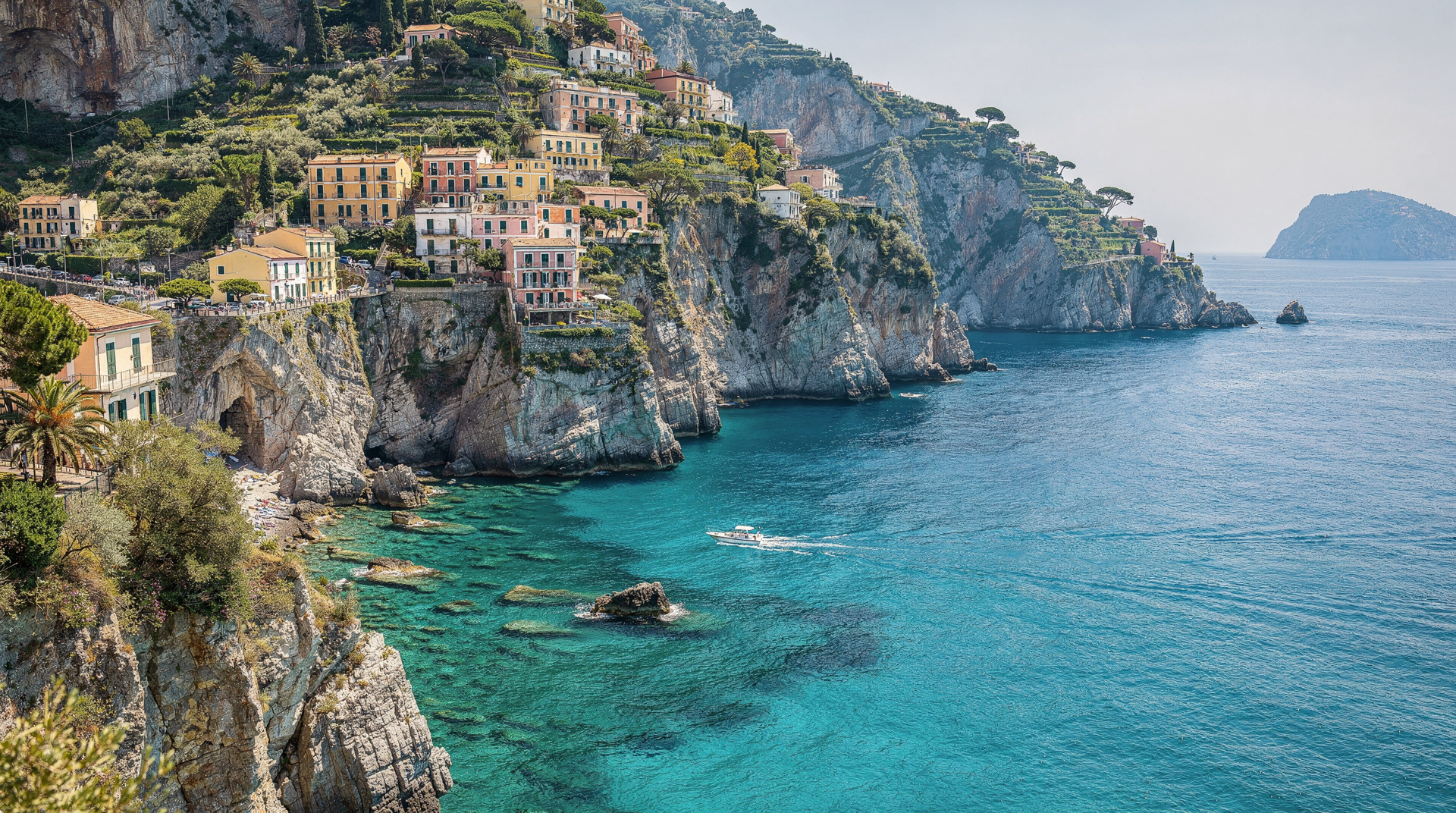
Anacapri sits at a higher elevation than Capri town, connected by the same narrow mountain road that has caused generation after generation of bus drivers to demonstrate extraordinary skill with a multi-point turn. The town has a different feel: smaller, less glossy, more lived-in. Fewer designer shops, more actual locals, and restaurants where a bowl of pasta costs €12 instead of €22.
Above Anacapri, the Monte Solaro chairlift climbs to 589 metres — the highest point on the island — in 13 minutes of gliding over maquis scrubland, olive groves, and gradually more dramatic cliff scenery. The view from the summit is the kind that makes people stand quietly for a while before reaching for their phone.
For the wider logistics of reaching the island in the first place — ferry operators, timings, and which port to use from Naples or Sorrento — see getting to Capri and Capri from Naples vs Sorrento. This guide assumes you’re already on the island and deciding how to spend your time.
The Monte Solaro chairlift: what to know
The seggiovia (open single-seat chairlift) has operated since 1945 and is one of the few surviving examples of this type of ski-style lift in Italy. Each seat is a simple open chair; you sit facing forward, the bar lowers across your lap, and you are off. There is no cabin, no shelter from wind or rain. It is old-fashioned and excellent.
Ticket prices (2026): €14 return, €9 one-way. The return trip is almost always worth it unless you are a very confident hiker (a walking path down exists but is steep and takes about 40 minutes).
Journey time: approximately 13 minutes up, 13 minutes down.
Operating hours: generally 9:30am to sunset in summer, with the last ascent around 45–60 minutes before closing. In winter (November–March) hours are reduced. Check at the booth — hours change with the seasons and occasionally close for maintenance.
Location: Piazza Vittoria, Anacapri — the main square, hard to miss.
Minimum age/height: children must sit alone or on an adult’s lap if very small. There is no absolute height minimum, but children who cannot sit still for 13 minutes should not go. Ask at the ticket booth about current rules.
What you can bring: small bags are fine. Large backpacks, pushchairs, and bikes are not allowed. There is secure storage at the base.
At the summit
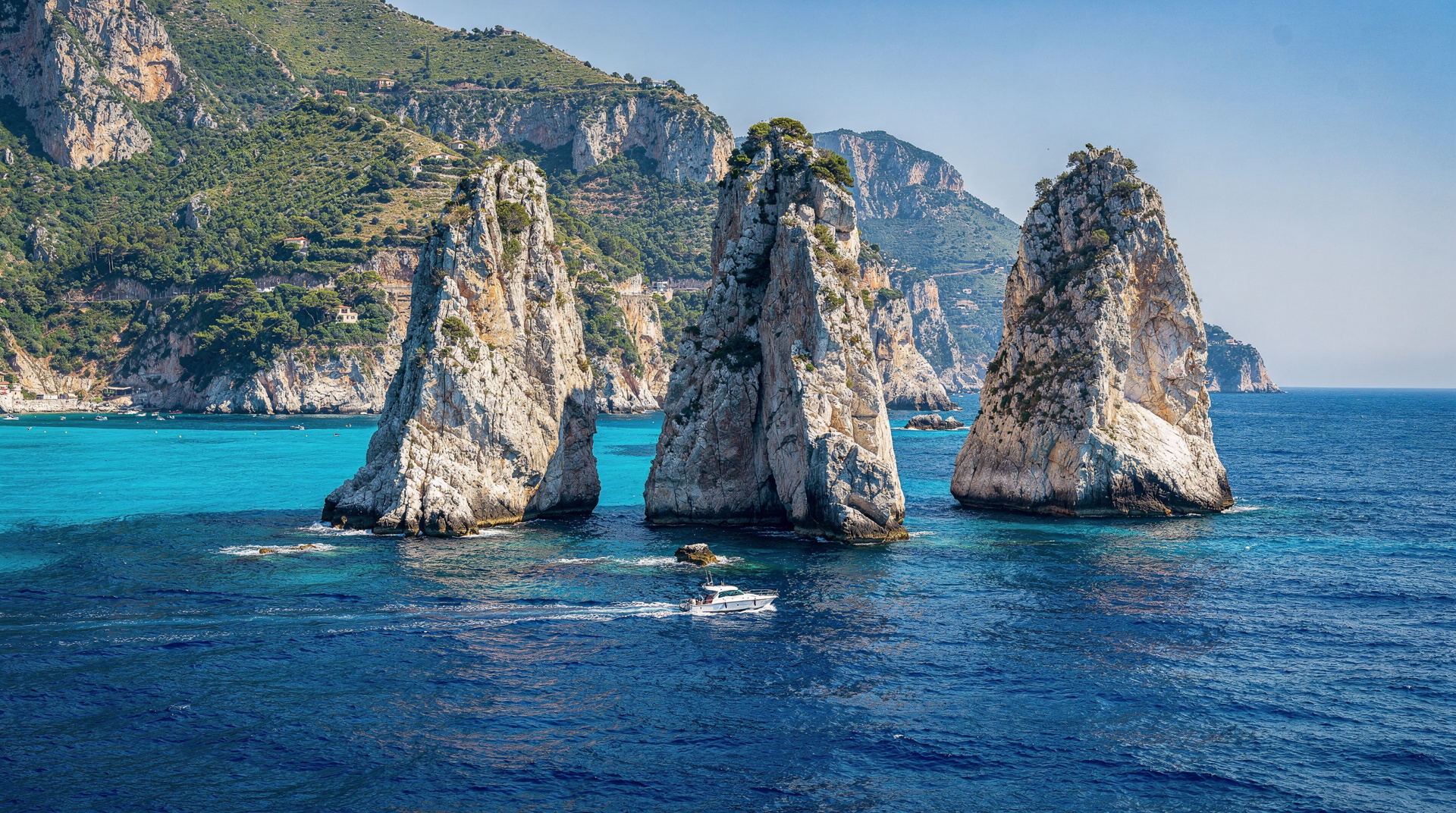
The summit plateau has a small café (coffee around €2, a glass of local white wine around €5) and a church dedicated to Santa Maria a Cetrella, a 14th-century hermitage embedded into the cliff edge with an extraordinary view down the south face of the island towards the Faraglioni.
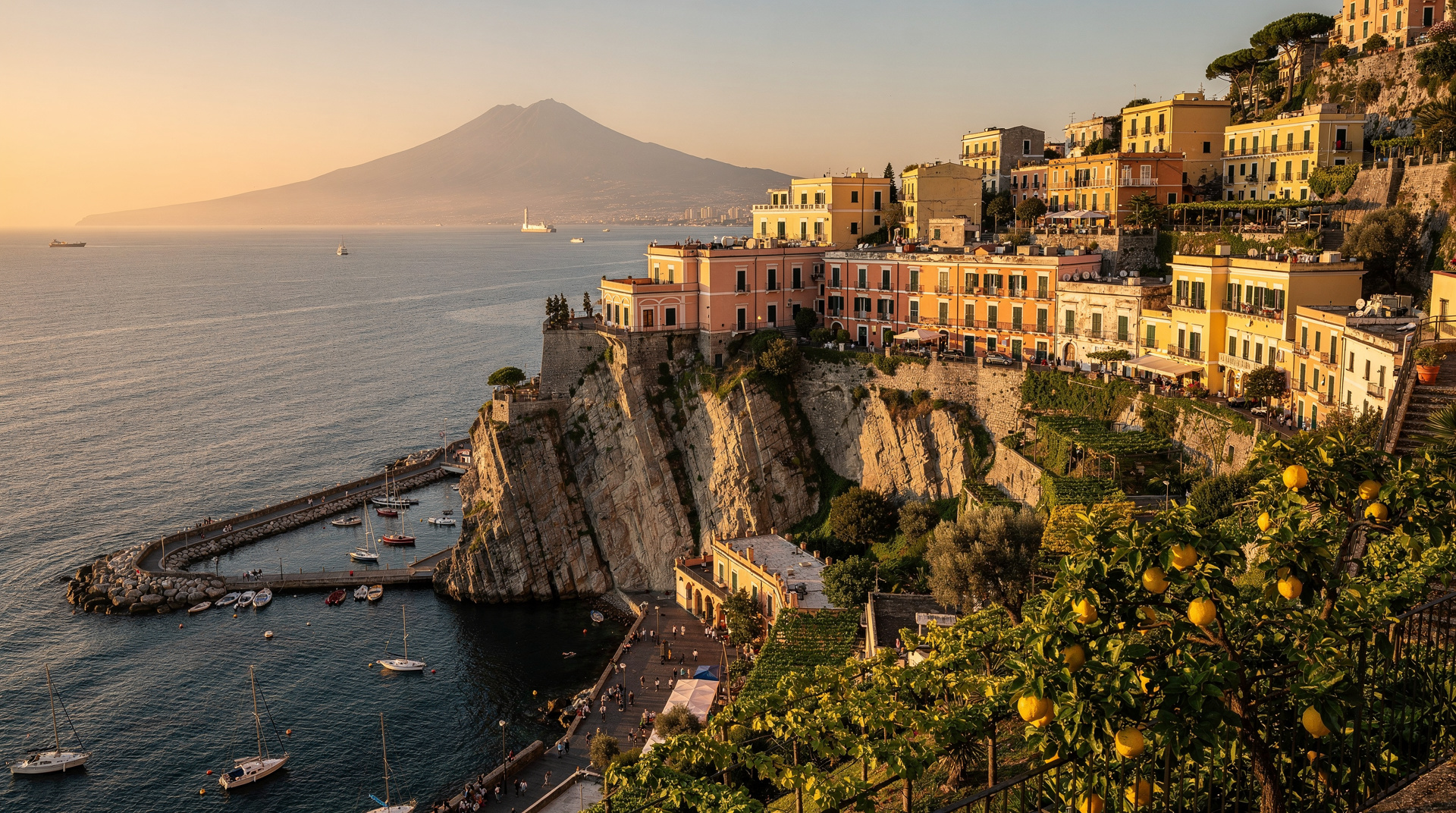
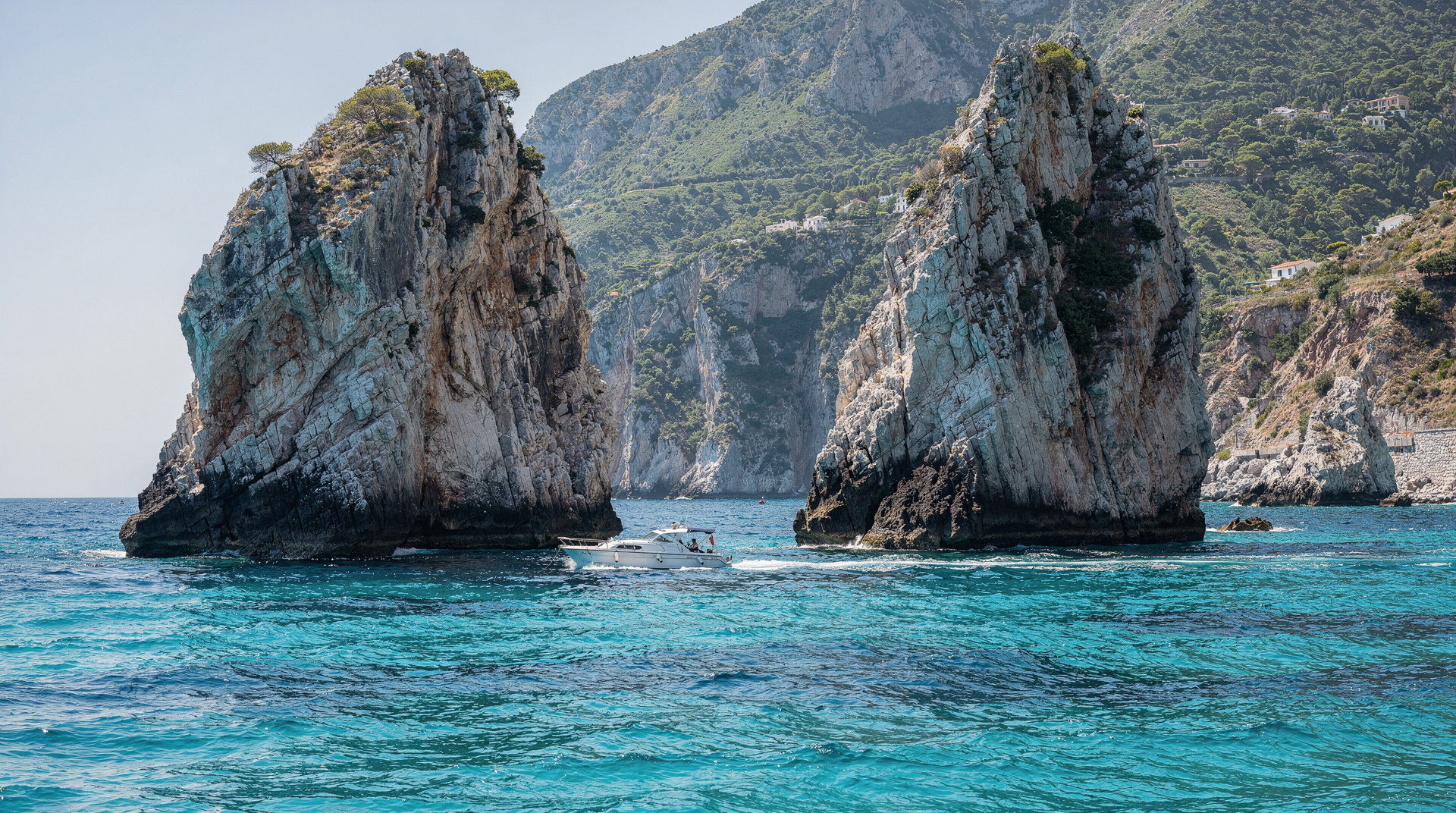
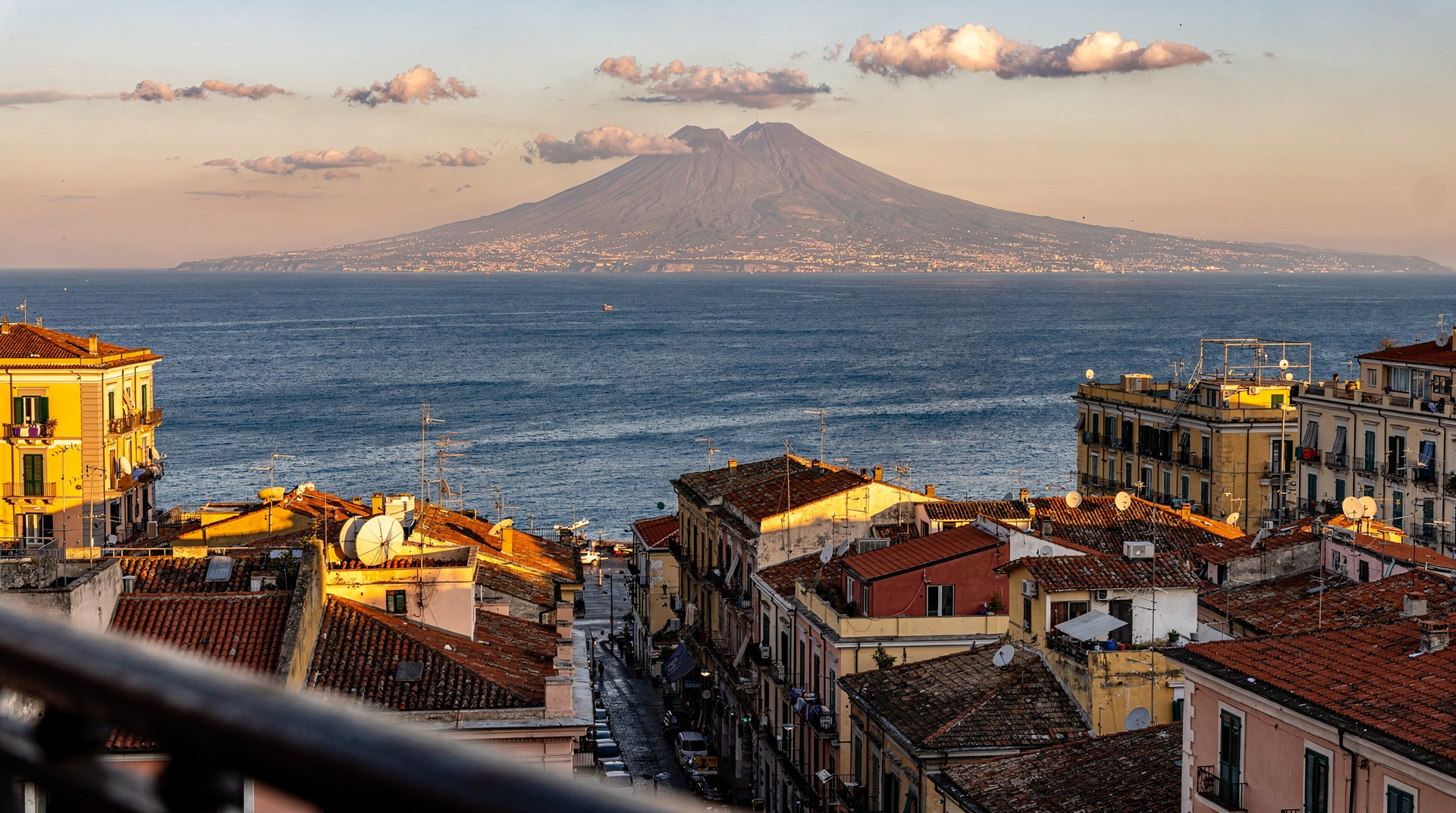
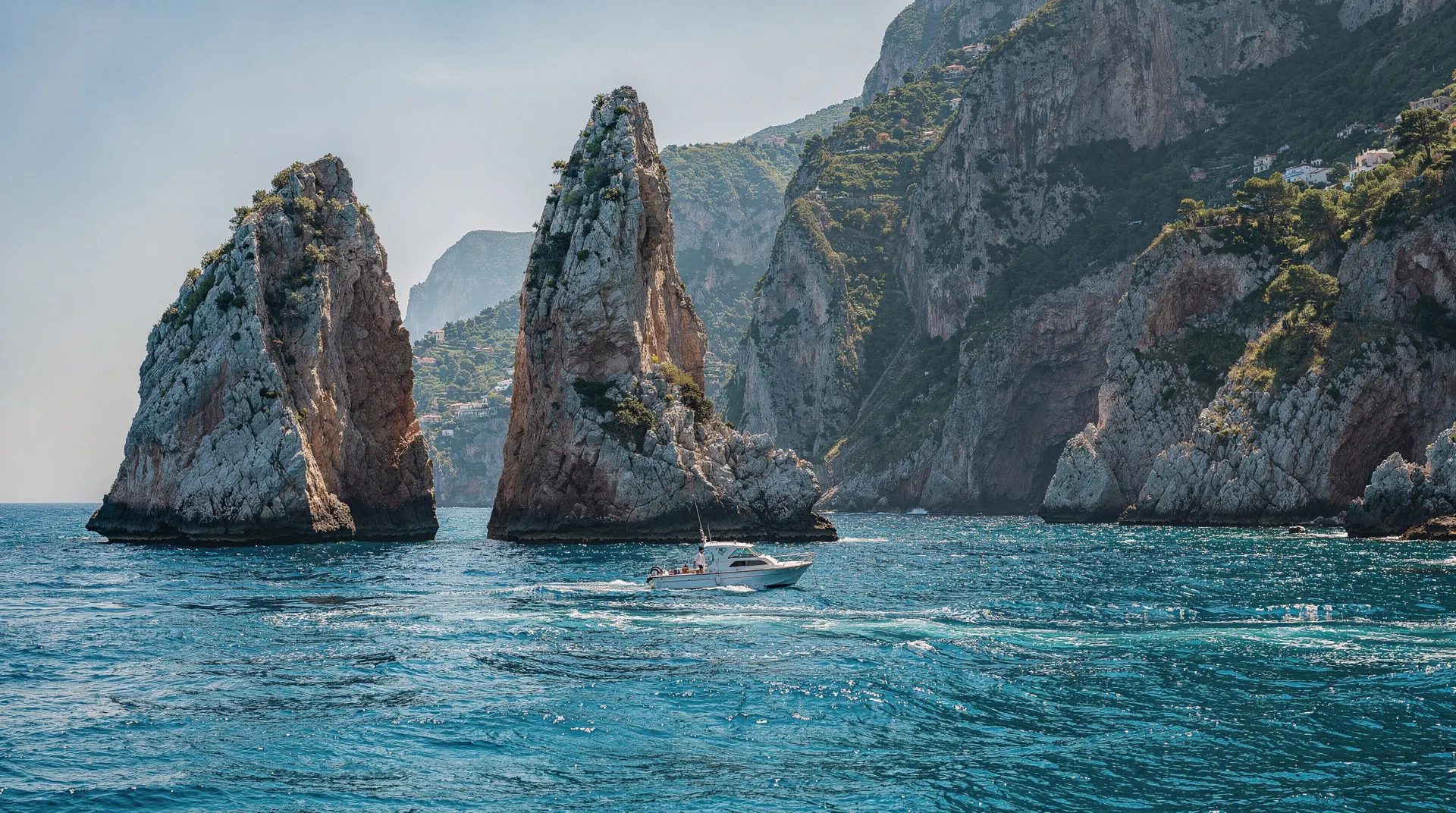
The main viewing area looks north and northwest: on a clear day the visual sweep goes from Vesuvius (with its distinctive flat top and smoke plume visible on active days) across the entire Bay of Naples, past Ischia and Procida, and on to the Campi Flegrei. To the east, Sorrento’s peninsula reaches towards the Amalfi Coast. Below you, directly, the Faraglioni rocks rise from the water like a postcard.
In spring and summer, the summit scrubland is fragrant with wild rosemary and sage. Birds of prey (usually kestrels) circle the thermals off the cliff edge. The elevation means a consistent breeze even on hot August days when Capri town is stifling.
Allow 20–30 minutes at the summit before descending.
Anacapri town: what to do and where to eat
The chairlift station is in Piazza Vittoria. Within a 10-minute walk you can reach:
Villa San Michele — the villa built by Swedish physician and author Axel Munthe in the late 19th century, incorporating fragments of a Roman villa. Munthe wrote a bestselling memoir about it (“The Story of San Michele,” 1929) that made Capri famous internationally. The garden terraces look directly over the north face of the island towards Naples. Entry around €9. Allow 45–60 minutes.
Church of San Michele Arcangelo — an 18th-century church in the old village centre with a remarkable tiled floor depicting the expulsion of Adam and Eve from paradise, made from over 2,500 painted majolica tiles. Entry around €2. Ten minutes inside.
The old village — walk away from Piazza Vittoria towards Via Orlandi (the main shopping street, lower-key than anything in Capri town) and into the smaller lanes beyond. The Bar Tiberio on the main square does excellent granita in summer; the Bar Il Solitario behind the church is a local favourite.
Lunch in Anacapri — the price differential is real. La Rondinella on Via Orlandi is a long-standing local restaurant where a pasta course costs €12–16 and a full lunch with wine runs €25–30. In Capri town, the same lunch costs €35–50. There are half a dozen equivalents; avoid anything with photos on the menu near Piazza Vittoria and walk one street inland.
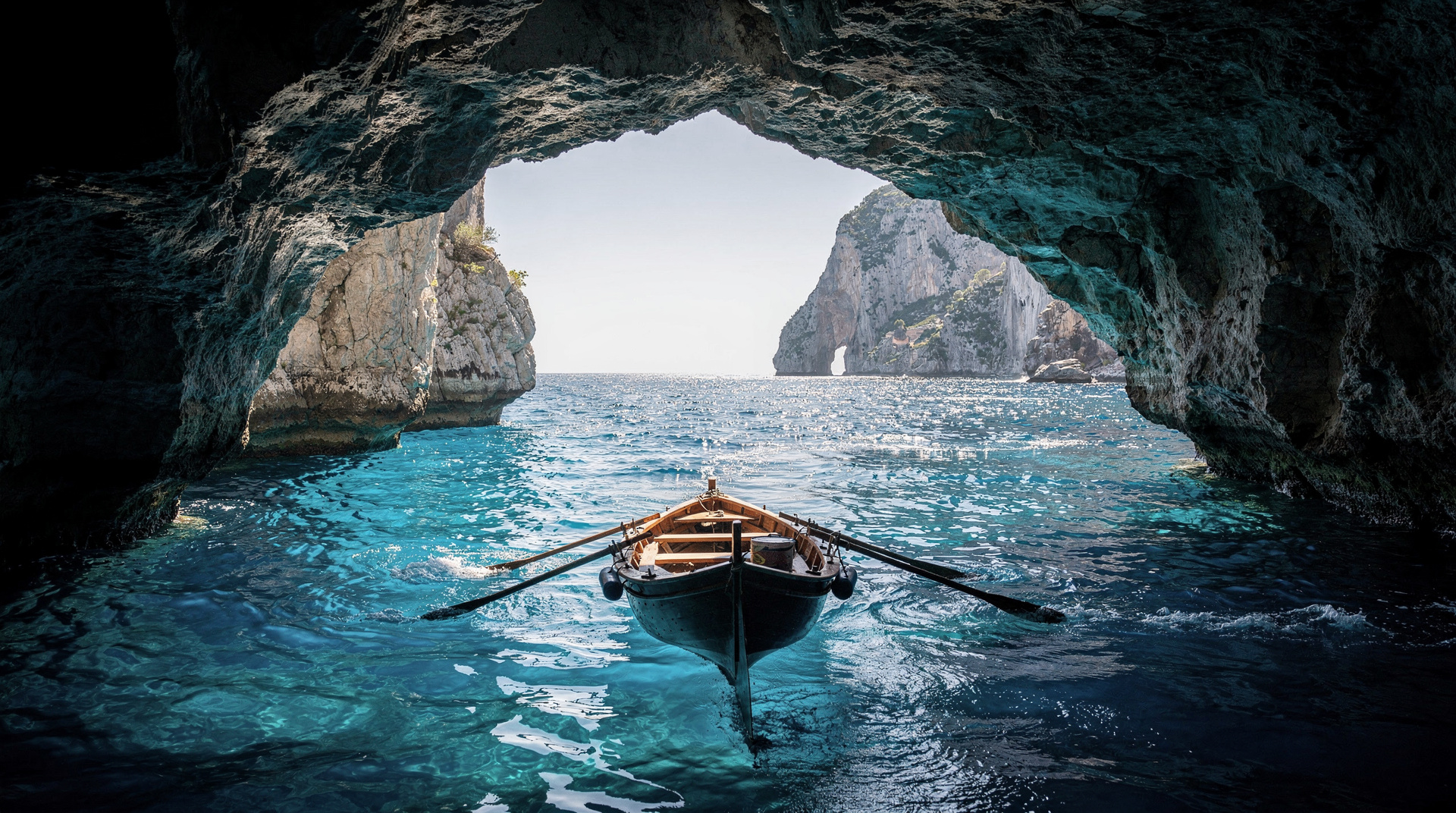
The Blue Grotto from Anacapri — the Grotta Azzurra is reachable from Anacapri by a short bus ride or a longer walk down towards the north coast, making it a natural add-on if you’re already up here rather than trekking back down to Marina Grande first. See the Blue Grotto guide for current entry costs, queue times, and whether it’s worth the wait on a given day.
Organised tours that include Anacapri
If you prefer to visit Anacapri and the chairlift as part of a guided day-trip from Naples, several operators cover this route:
Capri and Anacapri guided day trip from NaplesFor a combined Blue Grotto and Anacapri experience from Sorrento:
Capri Blue Grotto and Anacapri full-day from SorrentoA smaller option focusing specifically on the chairlift and a local tasting:
Monte Solaro chairlift with local food tastingGetting to Anacapri: your options from the ferry
All ferries arrive at Marina Grande. From there to Anacapri:
By bus — the most practical option. Bus A departs from Marina Grande waterfront (bus station signposted) and goes directly to Anacapri. Journey: 20–25 minutes, €2.20 per trip. Buses run every 15–20 minutes in season. They fill up fast — if there is a queue when you arrive, the next bus usually comes within 20 minutes.
Via Capri town — take the funicular up to Capri Piazzetta (€2), then take bus B from the Piazzetta bus station to Anacapri (€2.20). This adds 15–20 minutes but lets you see the Piazzetta before heading up.
By taxi — convertible taxis at Marina Grande will take you directly to Anacapri for a fixed rate of around €25–30. Legitimate and convenient if you are in a small group; expensive for a single person.
How to combine Anacapri with the rest of a Capri day
A practical order for a day that includes both Anacapri and Capri town:
Recommended sequence (departing Naples 7:30am):
- Ferry arrives Marina Grande ~8:30am
- Direct bus to Anacapri — arrive ~9:00am
- Walk to Piazza Vittoria, chairlift opens ~9:30am — summit visit 9:30–10:30am
- Villa San Michele: 10:30–11:30am
- Lunch in Anacapri: noon–1:30pm
- Bus back to Capri town (~2:00pm) — the Piazzetta is full at this hour but walk Via Krupp or Arco Naturale
- Optional: boat tour around the island from Marina Grande 4:00–5:30pm
- Return ferry to Naples
This sequence puts you in Anacapri while it is quietest and gets the chairlift done before the midday heat. It also means you are in Capri town in the afternoon when, paradoxically, it is worth seeing the Piazzetta at its most social — full of people watching rather than peaceful, but an experience in itself.
Honest expectations for the chairlift
A few things worth knowing before you go:
The lift is weather-dependent — it closes in strong winds. In Capri’s summer heat, this is rarely a problem, but spring and autumn can see closures. Check at the booth if conditions seem windy.
The single-seat design means you travel alone, which some people (particularly those afraid of heights) find unexpectedly intense. The lift passes over a cliff section where the drop is considerable. The chairs are sturdy and the route has an excellent safety record, but it is worth knowing that you cannot grip another person’s hand for reassurance.
Photography from the chair is possible and rewarding. A mobile phone held securely and on a wrist strap is ideal. Keep both hands on the safety bar over steep sections.
The best photographs come on the ascent between roughly the two-thirds mark and the summit, once the maquis scrubland gives way to open cliff views over the Faraglioni and the bay. Morning light (before 11am) is softer and reduces haze over the water; afternoon shots into the sun toward Ischia can look washed out. If you only get one good frame, take it looking south over the Faraglioni rather than north toward Naples — the contrast between cliff, rock stacks and sea reads better in a still photo than the wider bay panorama does.
At the summit, there is a modest café but no restaurant and no toilets except a basic facility. Bring water. The summit is noticeably cooler than the town — bring a light layer in spring and autumn.
Anacapri vs Capri town: which is better?
Neither is definitively better — they serve different purposes. Capri town is the hub, with the funicular, the designer streets, the Piazzetta atmosphere, and access to the south-side paths and Via Krupp. Anacapri is the altitude, the panorama, the cheaper lunch, and the genuine town-feeling. A good Capri day does both.
If you have to choose one (perhaps you are only spending 3–4 hours on the island), choose based on your priorities:
- Best view: Anacapri (Monte Solaro)
- Most social atmosphere: Capri town (Piazzetta)
- Best walks: broadly equal (Arco Naturale from Capri town, Villa San Michele from Anacapri)
- Best value eating: Anacapri clearly
For a full comparison of the island with others in the bay, see capri-vs-ischia-vs-procida.
Frequently asked questions about Anacapri and the Monte Solaro chairlift
How crowded is the Monte Solaro chairlift in July and August?
Less crowded than the Blue Grotto circuit, but it does get busy. The queue at Piazza Vittoria in high season can be 20–30 minutes at peak times (10am–1pm). Going early (chairlift opens around 9:30am) or late afternoon (2 hours before closing) is noticeably calmer.
Can I walk down from Monte Solaro instead of taking the chairlift back?
Yes. A marked footpath descends from the summit to Anacapri, taking about 40–50 minutes. The path is rocky and steep in sections; proper footwear is needed. It is not suitable after rain (slippery) or in flip-flops. Some visitors combine: chairlift up, walk down. Others walk up (around 40 minutes from Anacapri) and chairlift down — this is the calmer option and recommended for less confident hikers.
Is there anything at the top besides the view?
The small café, the church of Santa Maria a Cetrella, and an orientation panel showing the panorama. The ruins of a Roman lookout station are also partially visible. It is not a museum or visitor centre — it is a summit with a café and a view. That is what you are there for.
Do I need to book the chairlift in advance?
No advance booking needed — you pay at the base station. In peak summer the only queue is the brief wait at the ticket window. The capacity of the lift means that it rarely backs up significantly because the chairs run continuously.
What is the best souvenir to buy in Anacapri?
Locally produced limoncello from small-scale producers is genuinely different from the mass-market bottles sold in Capri town and Sorrento. Several shops in Anacapri sell directly from family producers. Prices are typically €10–15 for 500ml versus €18–25 for equivalent-quality products in tourist shops on the main Capri circuit. The ceramic-tile work in Anacapri (small plates, tiles, decorative pieces) is also notable, produced by local artisans working in a tradition that dates back to the majolica floors of the churches.
The history of Anacapri
The name Anacapri combines the Greek ana (above) with Capri, reflecting its position above the main town. The settlement was effectively cut off from lower Capri until 1874, when a proper road was finally built around the island’s western flank. Before that, the only connection was a steep stone staircase — the Scala Fenicia (Phoenician Steps) — carved directly into the cliff face, which you can still climb today from Marina Grande as an alternative to the funicular.
This isolation gave Anacapri a distinct character. While Capri town developed around commerce and tourism in the 19th century (when the Bay of Naples became fashionable for wealthy northern Europeans), Anacapri remained more agricultural, more remote, and more Neapolitan in character. The town still has that quality — fewer luxury shops, more local bars, and a pace of life that seems only marginally affected by the thousands of visitors who pass through each year.
The Scala Fenicia itself is worth a mention beyond its historical role: roughly 900 steps carved into the rock, it is still walkable today as a genuinely strenuous alternative route between Marina Grande and Anacapri, used now mostly by hikers and history enthusiasts rather than as practical transport. Climbing it (rather than descending, which is easier on the knees but still demanding) takes 45–60 minutes and rewards you with views that the bus route, further inland, doesn’t offer. It is not recommended in the midday summer heat.
The Monte Solaro chairlift was built in 1945, shortly after World War II, when Capri was rebuilding its tourist infrastructure. The design reflects the single-seat ski-lift technology of the era — functional, open, and allowing an unobstructed view that a modern enclosed gondola would not. The original machinery is still largely in use, maintained and upgraded but fundamentally the same mechanism that has carried visitors up the mountain for 80 years.
Villa San Michele in more detail
For visitors with time to spend more than 2 hours in Anacapri, Villa San Michele deserves extended attention.
Axel Munthe (1857–1949) was a Swedish physician who came to Capri in 1887, fell in love with the site of a ruined medieval chapel and Roman villa foundations on the northern edge of Anacapri, and spent decades building Villa San Michele on top of them. The villa was part construction, part reconstruction — Roman fragments (columns, capitals, statues) incorporated into the architecture alongside pieces Munthe collected from elsewhere in Italy.
The result is unusual: a house that feels both ancient and invented, where a 2nd-century sphinx sits on a pergola above the Bay of Naples looking towards Naples, and where Egyptian fragments sit alongside Roman mosaics and Munthe’s own eclectic collection of European art and antiques.
Munthe published “The Story of San Michele” in 1929. The memoir became an international bestseller, translated into 45 languages and selling millions of copies. It made both Munthe and Capri famous globally in a way that pre-war media rarely achieved. The villa has been a foundation-managed museum since Munthe’s death in 1949.
Practical notes: entry around €9, reduced €7 for students. Open daily from 9am (closing time varies by season). The garden paths are slightly uneven — wear comfortable shoes. The sphinx terrace is the most photographed part and can be briefly crowded; visiting early in the morning or late afternoon reduces the wait for a clear photograph.
Eating and drinking in Anacapri
Beyond the general price advantage over Capri town, a few specific recommendations:
Il Cucciolo — on Via Tommaso de Tommaso above the town, with a terrace that looks across the southern Capri coast towards the Faraglioni. A bit more effort to reach (15-minute walk from Piazza Vittoria) but significantly more local in character. Pasta with local clams and fried zucchini flowers around €12–14.
La Rondinella — on Via Orlandi, the main commercial street in Anacapri. Long-standing family trattoria with generous portions and a menu that does not change significantly with the seasons because it is based on what arrives from the fishing boats. Full meal with house wine around €28–32.
Bar Grottino — near the chairlift station, a small bar frequented by locals who work on the tourist circuit. The cornetto at 8am costs €1.50 and is better than anything served in the hotel breakfast rooms on the island.
Practical tips for the day
Footwear: Anacapri’s lanes and the Villa San Michele gardens are mostly paved but uneven in places; the chairlift summit path and any walk down from Monte Solaro require proper shoes, not sandals.
Cash: most small bars and family trattorie in Anacapri accept cards now, but carrying some cash speeds up small purchases and avoids minimum-spend issues at the busiest counters.
Combining with other islands: if Capri is one stop on a wider island-hopping trip, see best island near Naples for how it compares to Ischia and Procida, and the Ischia day trip guide if you’re deciding between the two for a second island day. Ferry timetables from Naples for all three islands are covered in ferries from Naples.
If you only have one day in the whole Naples area: Capri (with Anacapri included) is a strong contender, but weigh it against the city sights themselves — the best things to do in Naples overview helps decide whether an island day or a city day makes better use of limited time.
Frequently asked questions about Anacapri and the Monte Solaro chairlift — the best part of Capri most tourists skip
How do you get to Anacapri from Capri town?
How much does the Monte Solaro chairlift cost?
Can children use the Monte Solaro chairlift?
What is there to do in Anacapri besides the chairlift?
How long should I spend in Anacapri?
Is Anacapri more affordable than Capri town?
What is the view from Monte Solaro like?
Top experiences
Bookable activities with verified prices and instant confirmation on GetYourGuide.