Naples on a budget in three days: big city, small spend
Campania: Artecard 3-7 Day or Gold/Lite 365 City Pass
Quick answer: Three days in Naples on a budget is genuinely doable — and the city makes it easier than almost anywhere in Italy. The Campania Artecard covers transport and gets you into major sites for free or half-price. Churches, viewpoints, and seafront walks cost nothing. Pompeii is 18 € entry and fully manageable with an audio guide. Daily spend of 40–60 € per person is realistic without feeling like you’re scraping.
| Where | Centro storico, Vomero, Lungomare, Pompeii |
| Cost | budget — around 40-60 €/person/day including accommodation |
| Time needed | 3 days, moderate pace |
| Getting there | on foot and Campania Artecard-covered transport; Circumvesuviana to Pompeii |
| Best time | year-round; first Sunday of the month for free state-museum entry |
The idea behind doing Naples cheaply
Naples has a reputation for being chaotic, but budget travellers tend to love it precisely because the city hasn’t been packaged up and priced accordingly. Pizza costs 1.50–3 €, the metro is one of the cheapest in Europe, and the best viewpoints are free. The trick is knowing which paid sites are worth the entry and which ones you can skip — and using the Campania Artecard pass to make the numbers work when you do go inside.
This three-day plan takes you through the historic centre, the hilltop neighbourhood of Vomero, the seafront, and out to Pompeii — all without a car and without spending like a tourist. If you want the fuller picture on moving around cheaply beyond what’s covered day by day here, the getting around Naples guide breaks down metro, funicular, bus and taxi pricing in more depth, and the general Naples on a budget guide is worth reading before you land — it covers seasonal price swings and accommodation timing that a fixed three-day plan can’t.
Day 1: the centro storico on foot
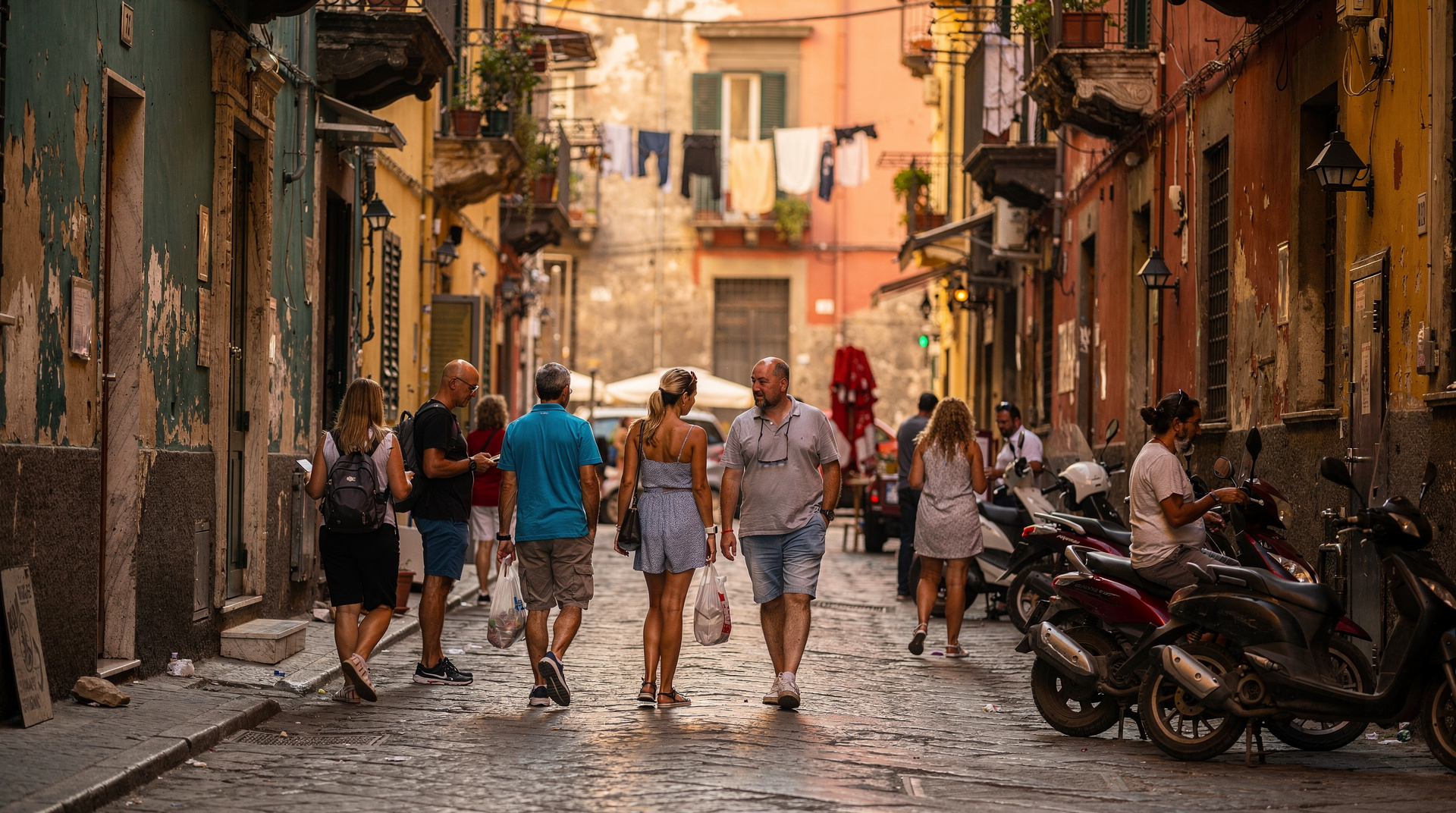
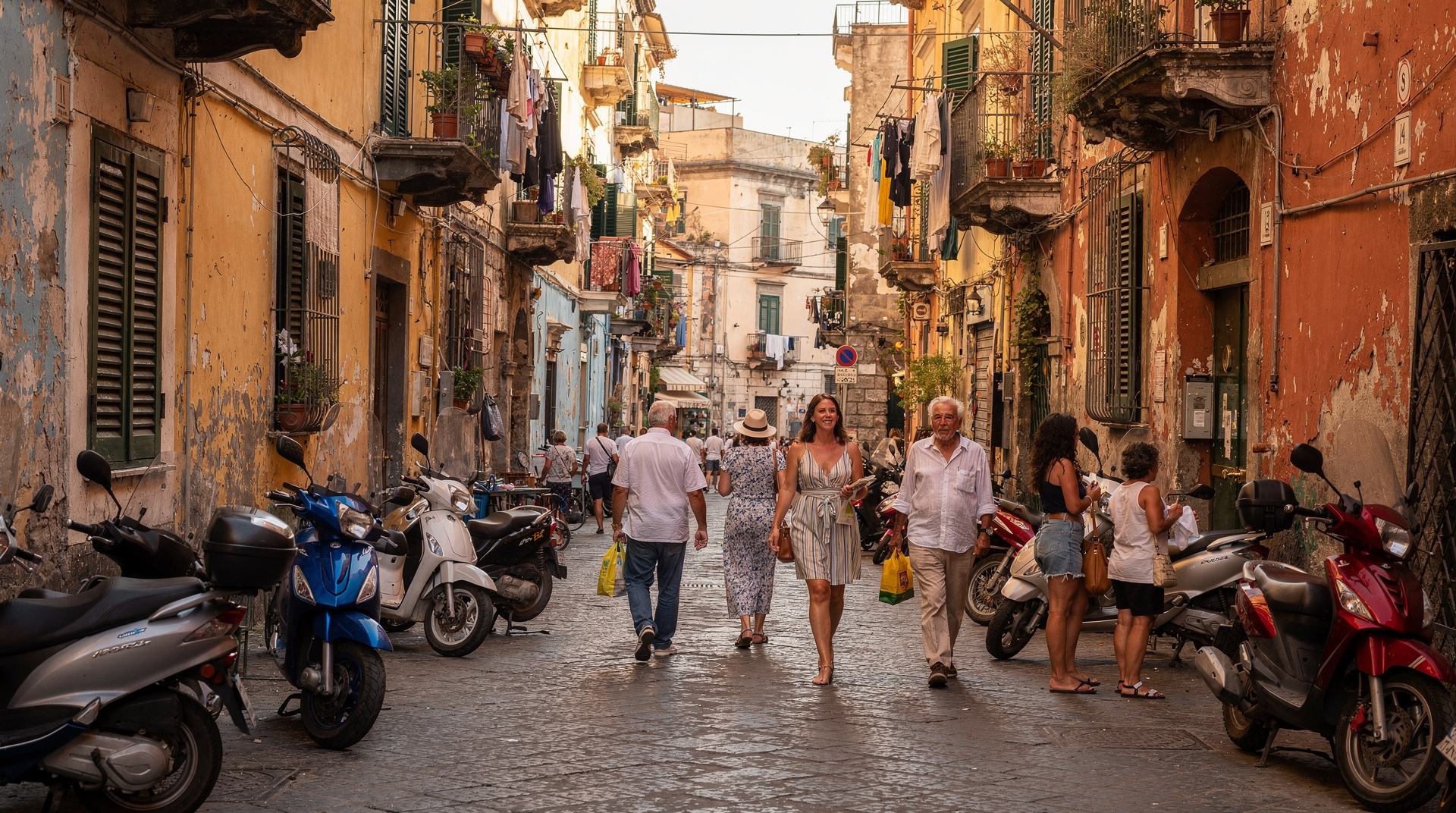
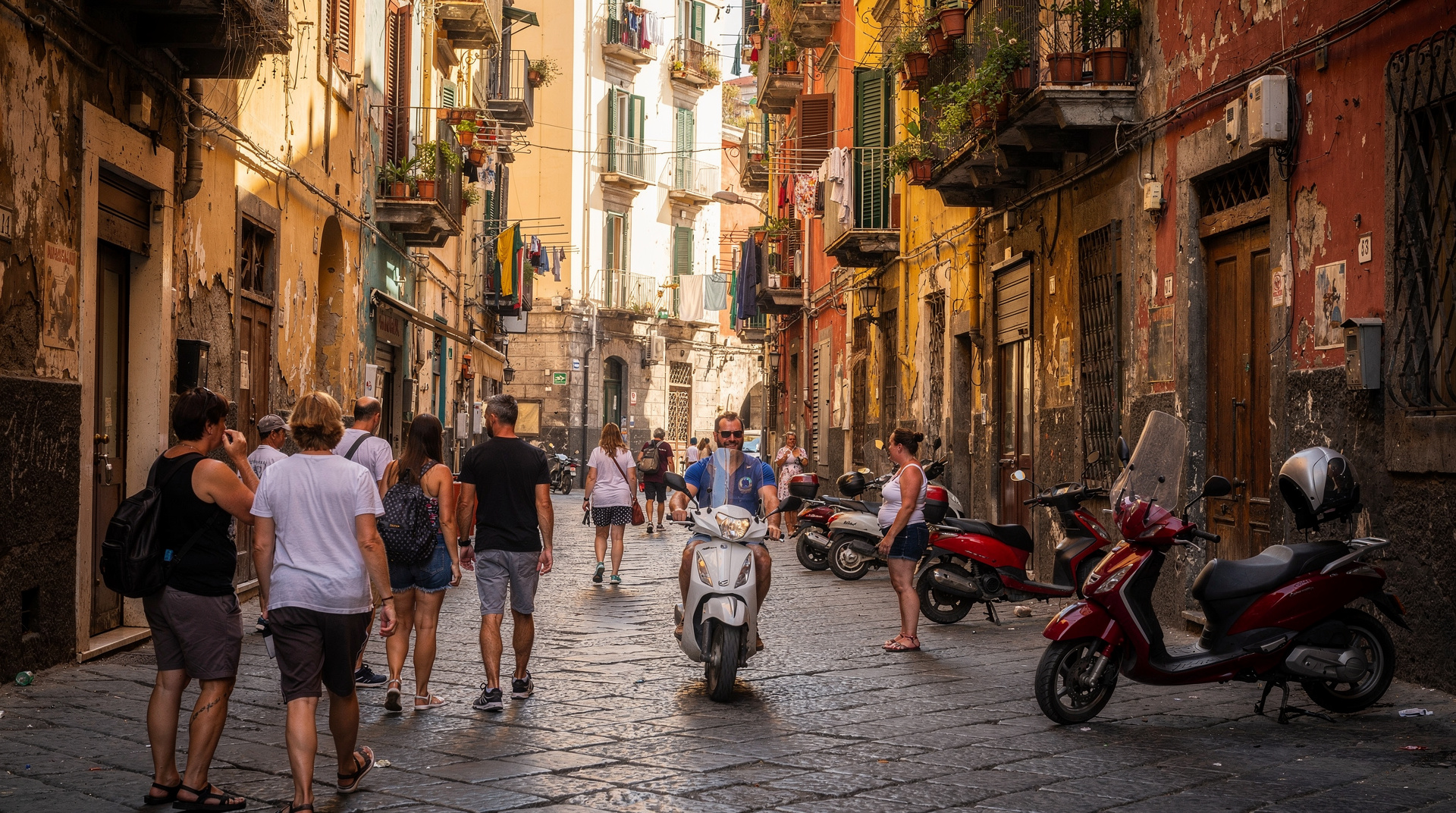
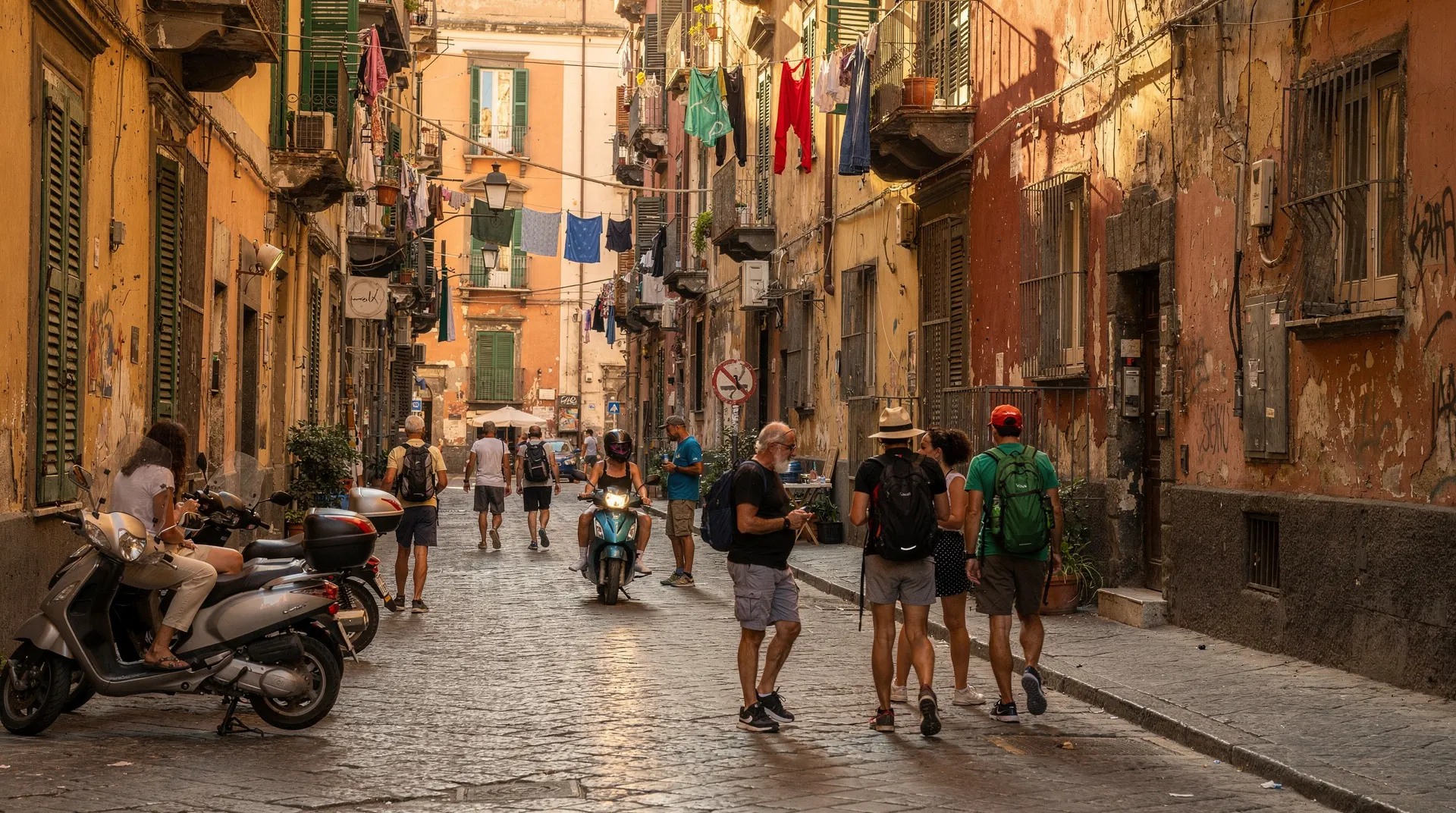
Morning — Start at Spaccanapoli, the long arrow of a street that cuts the old city in half. It costs nothing to walk and delivers more per metre than most paid attractions: street shrines, baroque facades, the smell of coffee from open doorways. Stop at Gesù Nuovo — free entry, astonishing baroque interior — then cross to Santa Chiara, whose Gothic nave is free (the tiled majolica cloister has a small admission of around 6 €, skip it if budgeting hard). The Duomo is free; the chapel of San Gennaro inside it is the most extravagant room in the city and it costs you nothing to stand in it.
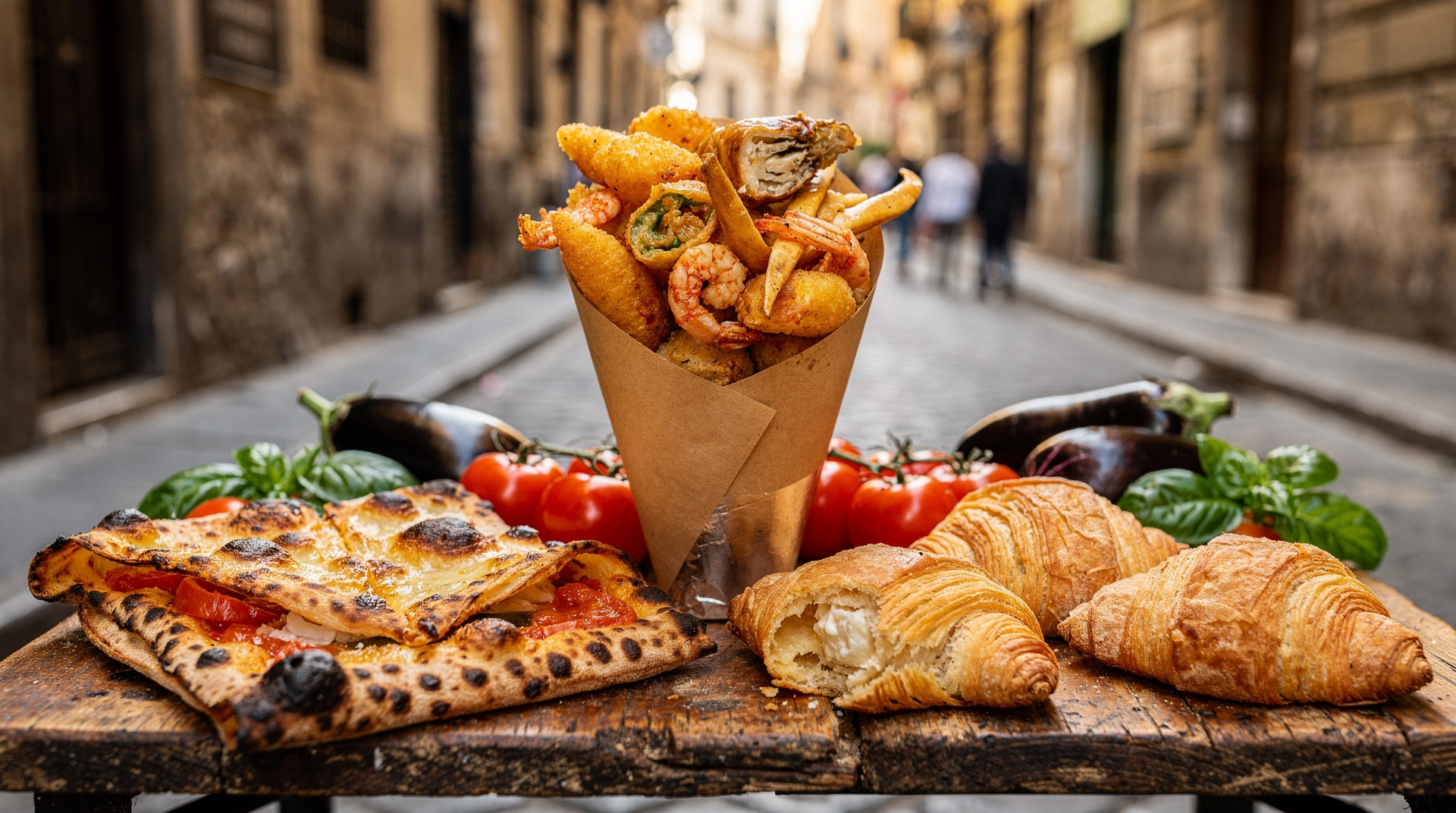
Midday — Lunch is street food or market food, always. A pizza a portafoglio (folded, eaten walking) runs 1.50–2.50 € at any hole-in-the-wall pizzeria off Via dei Tribunali. A cuoppo of fried bits — zucchini flowers, anchovies, dough — is 3–4 €. You will not be hungry. If you want to understand where the food actually comes from, a six-stop street food tour of the centro storico covers the geography of the markets and the bakers alongside the eating.
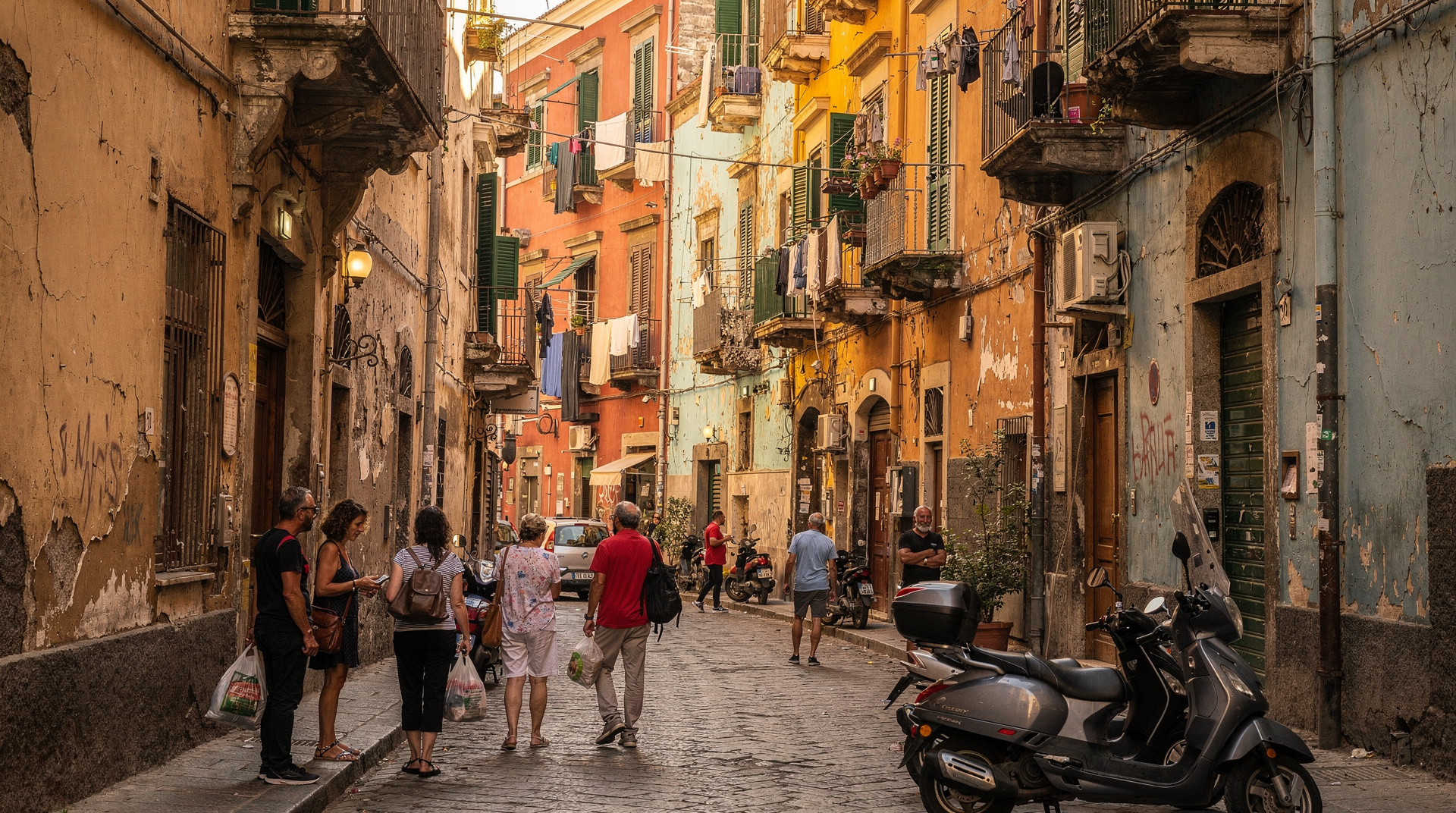
Afternoon — The Cappella Sansevero (around 10 €) is the one paid site on day one that is truly unmissable — the Veiled Christ justifies the entry alone. Beyond that, the afternoon is free: wander the Quartieri Spagnoli, climb any staircase for a rooftop view over domes and washing lines, or follow the street art up toward the Sanità. The Sanità neighbourhood itself is free to walk; the catacombs beneath it charge a modest entry but offer one of the best-value underground experiences in southern Italy.
Evening — Aperitivo at a bar near Piazza Bellini, where you’ll pay 5–7 € for a drink and often get bar snacks with it. Dinner back on one of the side streets off Spaccanapoli — pasta e fagioli or a simple plate of paccheri at a neighbourhood trattoria runs 8–12 € for a full meal.
Day 2: Vomero, the Lungomare, and the Artecard
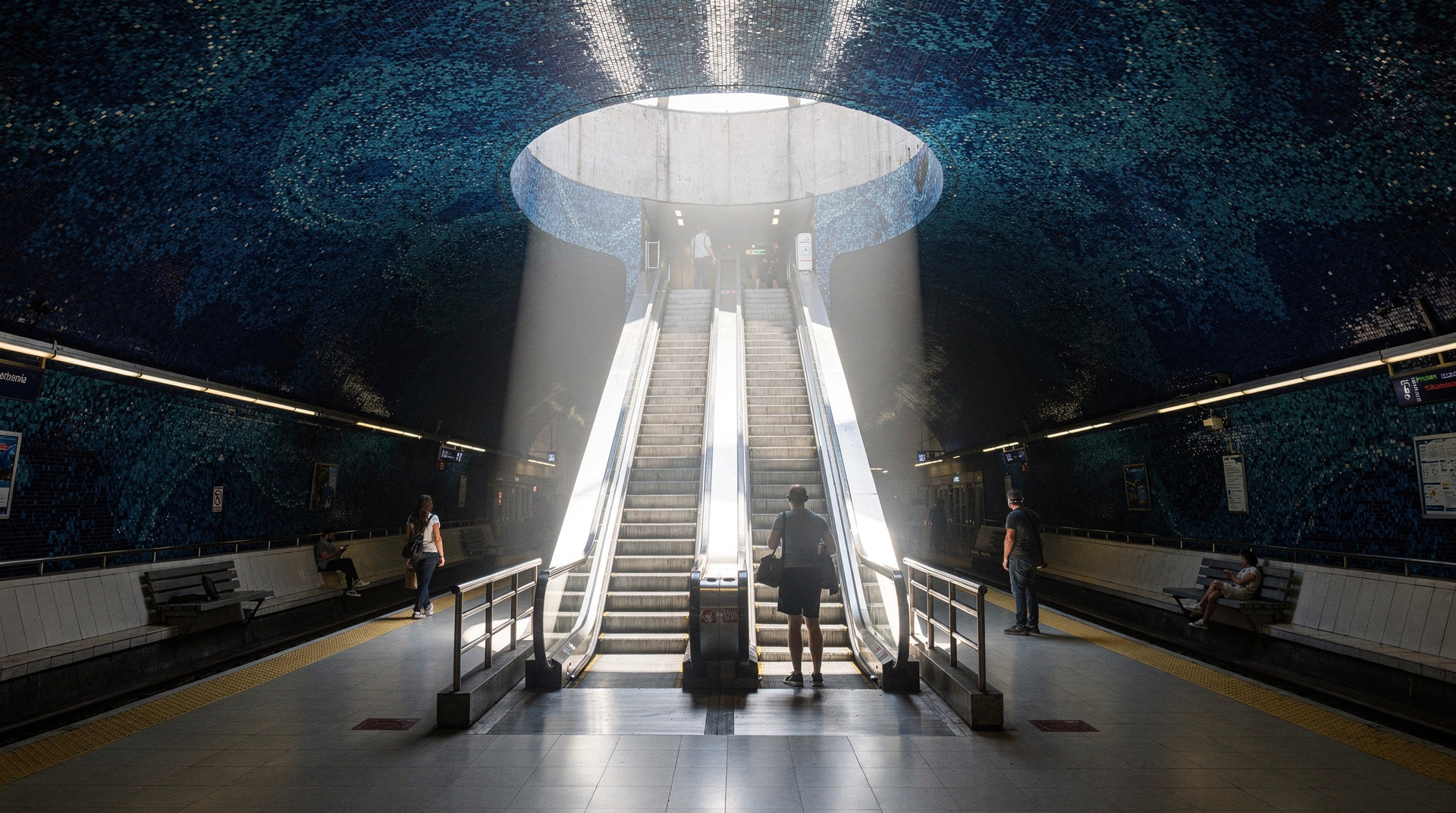
Morning — This is the day to activate your Campania Artecard if you haven’t already. The 3-day Naples card (around 25 €) gives you free entry to two major sites and 50% off subsequent ones, plus unlimited use of the metro, funiculars, and buses across Naples. Run the maths before buying: if you’re visiting the MANN (22 €), Certosa di San Martino (6 €), and Pompeii (18 €), the card pays for itself before day three. Unlimited transport alone saves 3–4 € per day versus buying single tickets at 1.30–1.50 € each.
Ride the Centrale funicular up to Vomero (covered by the Artecard, otherwise 1.30 €). The Certosa di San Martino is one of the most beautiful baroque monasteries in Italy — free with the Artecard, otherwise 6 €. The panoramic terrace looks directly over the bay, Vesuvius, and the full sweep of the city. Spend a slow couple of hours here.
Midday — Lunch in Vomero is noticeably cheaper than the tourist-heavy centro storico. A full sit-down meal at a local trattoria runs 10–14 €. Or pick up provisions from the covered Mercato della Pignasecca on the way back down — bread, olives, a wedge of cheese, and a bottle of water for under 5 € total.
Afternoon — Take the Metro Linea 1 to Municipio and walk down to the seafront. The Lungomare — Naples’s car-free waterfront boulevard — runs from Castel dell’Ovo west toward Mergellina and is one of the great free walks in any Italian city. The Castel dell’Ovo exterior is free; the castle interior has limited opening hours but no entry fee. Walk as far as Posillipo if your legs allow — the views back toward Vesuvius at this distance are the ones worth photographing.
Evening — Sunset drinks in Chiaia (one step up from the centro storico in price, but still manageable), then a seafood dinner down near the waterfront. Fried fish and calamari at a casual waterfront spot: 12–16 €.
Day 3: Pompeii by Circumvesuviana
Morning — Leave early. The Circumvesuviana train departs from Napoli Garibaldi (below the central station) toward Sorrento every 20–30 minutes — the ride to Pompei Scavi–Villa dei Misteri takes about 35 minutes and costs around 3.60 € each way. Arrive by 9:00 before the heat and the tour groups build. Pompeii entry is 18 € (the Artecard gives 50% off if you’ve already used your two free entries — check before you go).
Pompeii is enormous, the signage is thin, and most people walk out having seen a lot of rubble without knowing what any of it meant. That gap is cheaply and effectively filled by an audio guide. A self-guided Pompeii audio guide runs on your phone and costs a fraction of hiring a live guide — it covers the Forum, the Stabian Baths, the House of the Faun, the brothel, the plaster casts of the dead, and the Villa of the Mysteries, with the context that makes the ruins make sense. Allow three to four hours on site. Bring water — refill at the drinking fountains inside — and a hat; there is almost no shade.
Midday — Eat inside Pompeii (a basic snack bar exists on site) or pack a lunch from a Garibaldi-area market before you leave. Restaurants near the ruins entrance are tourist-priced; the ones 10 minutes’ walk away in the actual town of Pompei are half the cost.
Afternoon — Return to Naples by Circumvesuviana in the early afternoon. If you want one more site and your Artecard still has discount value, Herculaneum (same train line, stop before Pompeii) is smaller, better preserved, and has real upper-floor structures the Pompeii excavations lack. A Herculaneum audio guide with skip-the-line entry makes a compelling half-afternoon. Otherwise head straight back to Naples — there’s enough city left to wander.
Evening — A final pizza at one of the Via dei Tribunali legends: 5–8 € for a Margherita or a Marinara, eaten at a marble table. You’ve seen Roman ruins, one of the most beautiful monasteries in southern Italy, and walked the waterfront at sunset, and spent somewhere between 120 and 180 € across three days including accommodation. That is a good trip.
Where to stay
The best-value areas for this itinerary are around Piazza Garibaldi (the central station neighbourhood) and the centro storico itself. Garibaldi has the highest density of hostels and cheap B&Bs and puts you a 10-minute walk from the Circumvesuviana for day three. The centro storico is more atmospheric but slightly pricier — the payoff is being able to walk everywhere on days one and two.
Piazza Garibaldi has an undeserved bad reputation among visitors who mistake busy and working-class for unsafe. It is loud, crowded, and full of life, and the streets behind the station are genuinely fine to walk at night. Use standard urban common sense — keep bags close, don’t flash expensive phones — as you would anywhere. Hostels here run 20–35 € per dorm bed; clean private rooms with en suite at 55–80 €.
Avoid Chiaia and Posillipo for budget accommodation: beautiful neighbourhoods, wrong price bracket for this trip.
Is the Artecard worth it for your trip?
| Buy the Artecard | Skip it, pay per site | |
|---|---|---|
| Best for | Visiting the MANN + Certosa + Pompeii within 3 days | Visiting only one or two paid sites |
| Includes | Unlimited metro/funicular/bus for the card’s duration | Pay-as-you-go transport tickets |
| Roughly breaks even at | 2 paid sites plus daily transport | — |
| Where to check current pricing | Campania Artecard guide | Naples pass worth it guide |
Do the maths for your own itinerary before buying — the Campania Artecard guide walks through the current tiers, and the Naples pass worth it guide is a more sceptical second opinion if you’re on the fence. For the wider picture on what this trip should cost beyond the pass itself, the Naples trip cost and budget guide and Naples on a food budget guide both break down daily spend in more detail, and the free things to do in Naples guide rounds up more no-cost options than fit in this three-day plan.
Practical tips
- Do the Artecard maths before buying. The 3-day Naples card is worth it if you’re hitting two or more paid sites plus using transport daily. The 7-day regional version adds Pompeii and Herculaneum discounts — check the official site.
- First Sunday of the month is free at most Italian state museums, including the MANN and Pompeii. Crowds are heavier; go early or late.
- Picnic from the markets. The Pignasecca, the Porta Nolana fish market, and any neighbourhood alimentari will feed you better and cheaper than a restaurant.
- Walk instead of taxis. The centro storico is compact; taxis add up fast and are often slower in traffic. Metro and funiculars cover the uphill distances.
- Watch your pockets on the Circumvesuviana. The train to Pompeii is notorious — keep valuables in a zipped inner pocket or under your jacket, particularly in crowds.
- Tap water is fine in Naples. Refill a bottle rather than buying plastic — fontanine (drinking fountains) are everywhere in the historic centre.
- Book Sansevero in advance. It’s not free, but it’s small and sells out. Pre-booking saves the queue disappointment.
Naples rewards the budget traveller in a way that Rome and Florence simply don’t. The city has never needed to dress itself up for tourism, which means the best things here — the streets, the churches, the food at a folding table on the pavement — are exactly as cheap now as they have always been. Plan it right and you’ll spend less here than almost anywhere else in Italy, and remember it longer.
Top experiences
Bookable activities with verified prices and instant confirmation on GetYourGuide.