Chasing the Perfect Scoop: A Gelato Hunt Through Naples
Naples does not pretend to be Rome or Florence when it comes to gelato. There are no towering neon-coloured mounds piled into steel vats here, no “all natural” signs above fluorescent green pistachio. What you get instead, if you know where to look, is something quieter and more honest — small local gelaterie where the cases are kept covered, the portions are generous but not absurd, and the flavours taste unmistakably of the thing they claim to be.
I spent three afternoons in May working through the city’s best, and the short version is: you can eat very well here for €2.50 to €3.50 a cone, and the gap between artisan and industrial is enormous.
| Cost | Around €2.50–3.50 per cone or cup |
| Best time | Late afternoon, 4–7 pm |
| Where | Centro storico, Quartieri Spagnoli, Via dei Tribunali |
| Look for | Covered pozzetti, dull natural colours, short seasonal menus |
| Season | Best May–September; some shops trim hours in winter |
How to Tell Artisan from Industrial
The first rule is the display case. Artisan gelato in Naples — like elsewhere in southern Italy — is stored in covered metal containers called pozzetti. The lid keeps air and light out, slows oxidation, and means you cannot see the gelato until it is scooped. If you walk into a shop and the gelato is heaped in uncovered fluorescent mountains, it is made with paste and stabilisers. Walk out.
The second rule is colour. Real pistachio gelato is pale sage green — almost grey. If it glows, it is paste. Real nocciola is the colour of a hazelnut shell, not a supermarket Nutella jar. Real lemon is off-white or barely yellow, not sunshine citrus. The duller the colour, the more likely you are eating something made from actual ingredients.
Third: size of the operation. The best gelaterie in Naples tend to be small, often family-run, with a menu that changes slightly by season. They are not usually on the tourist drag.
The Flavours Worth Seeking
Nocciola (hazelnut) is the Neapolitan standard by which everything else is judged. A good one is roasty, slightly bitter, with a dense texture that coats the mouth. If it is too sweet, it is probably paste.
Pistacchio di Bronte is the prestige flavour — pistachio from the Sicilian town of Bronte, which grows some of the world’s finest, with a distinctive savouriness and olive-toned colour. It costs a little more because it costs more to make. Worth every cent.
Fior di latte — milk gelato with no other flavour added — sounds boring and tastes revelatory when it is made with good milk. It is the truest test of a gelateria’s base.
Limone made from Amalfi or Sorrento lemons in season is sharp, aromatic and refreshing, and the Campania coast grows the right fruit. In May and June it is particularly good.
For granita — the coarser, half-frozen Italian ice — the Neapolitan version leans towards coffee, almond or lemon. A granita di caffè with a scoop of whipped cream on top is an afternoon in a cup.
Where to Go in Naples
Scaturchio in Piazza San Domenico Maggiore is the obvious anchor. It has been there since 1905 and is best known for its pastries, but the gelato counter at the back is serious and the pistacchio is a benchmark. A cone runs €2.80–€3.20. Do not skip the coffee while you are there.
In the Quartieri Spagnoli, several small gelaterie operate without a tourist profile and without a tourist markup. The quality varies but the best are excellent — ask a local rather than following a guidebook pin.
For granita specifically, look towards the old city near Via dei Tribunali. The street food tradition here is ancient and the granita sellers know what they are doing. A granita di caffè with panna in a brioche is the Neapolitan way to eat it — not a spoon, a bread.
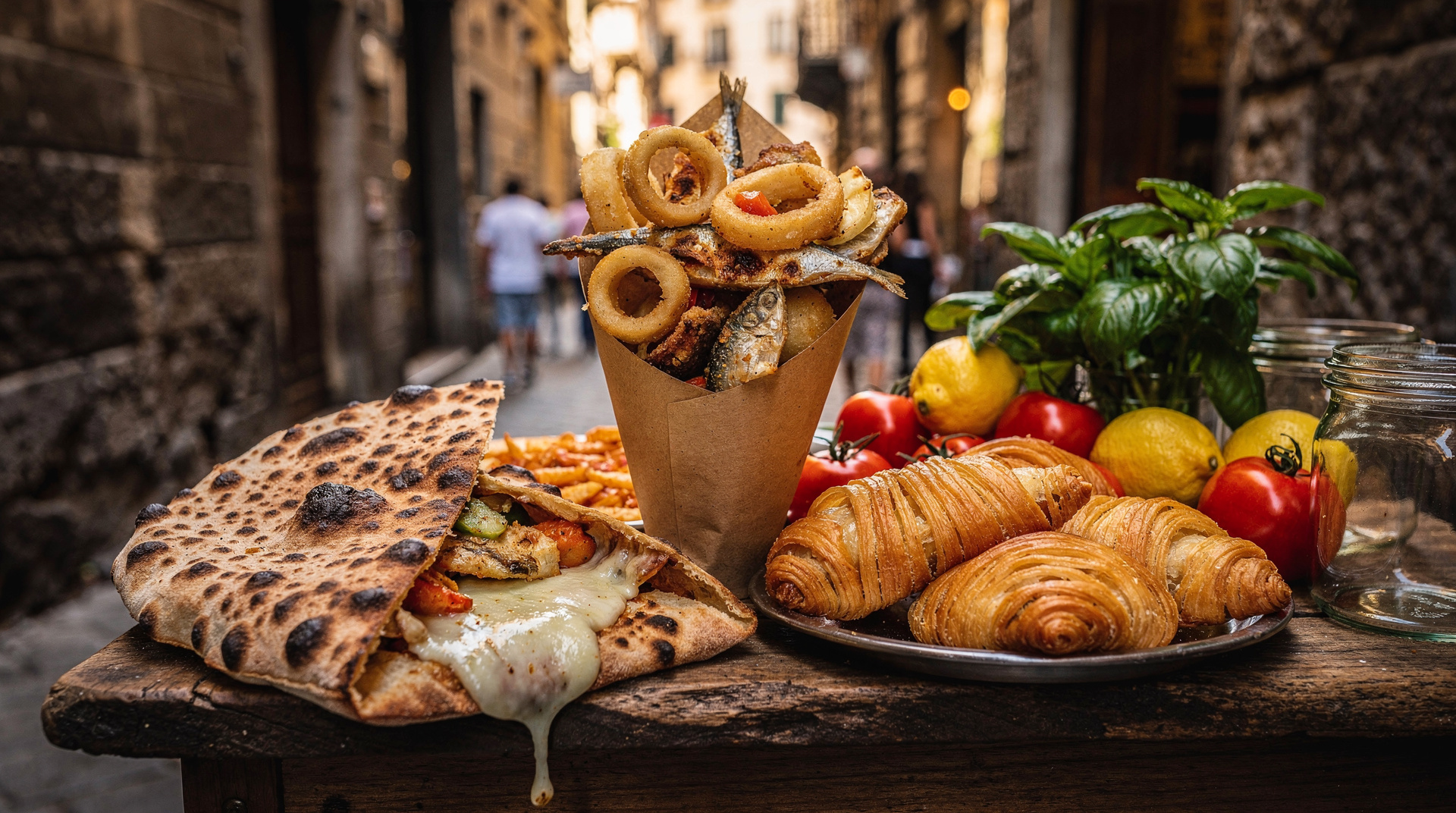
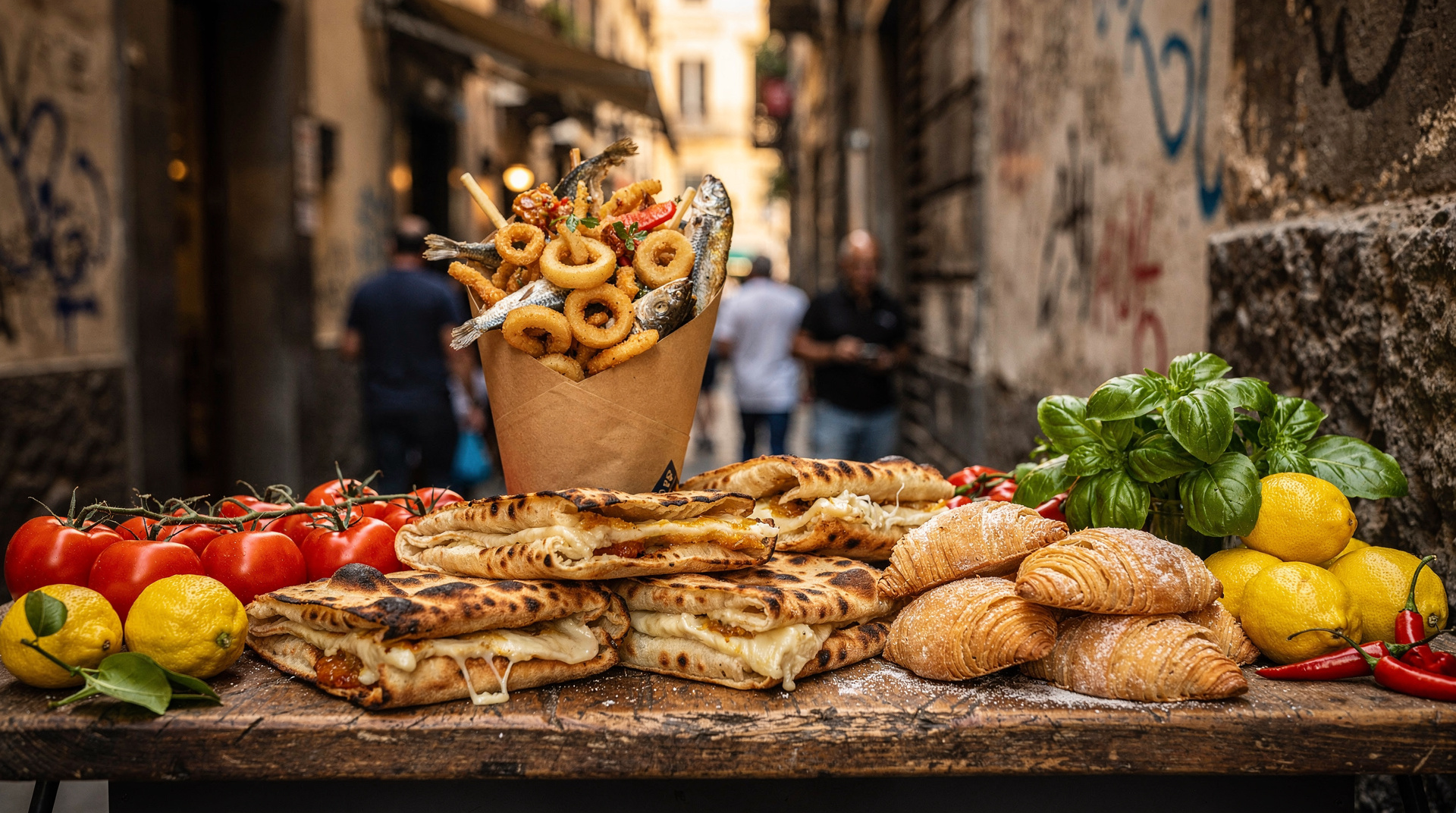
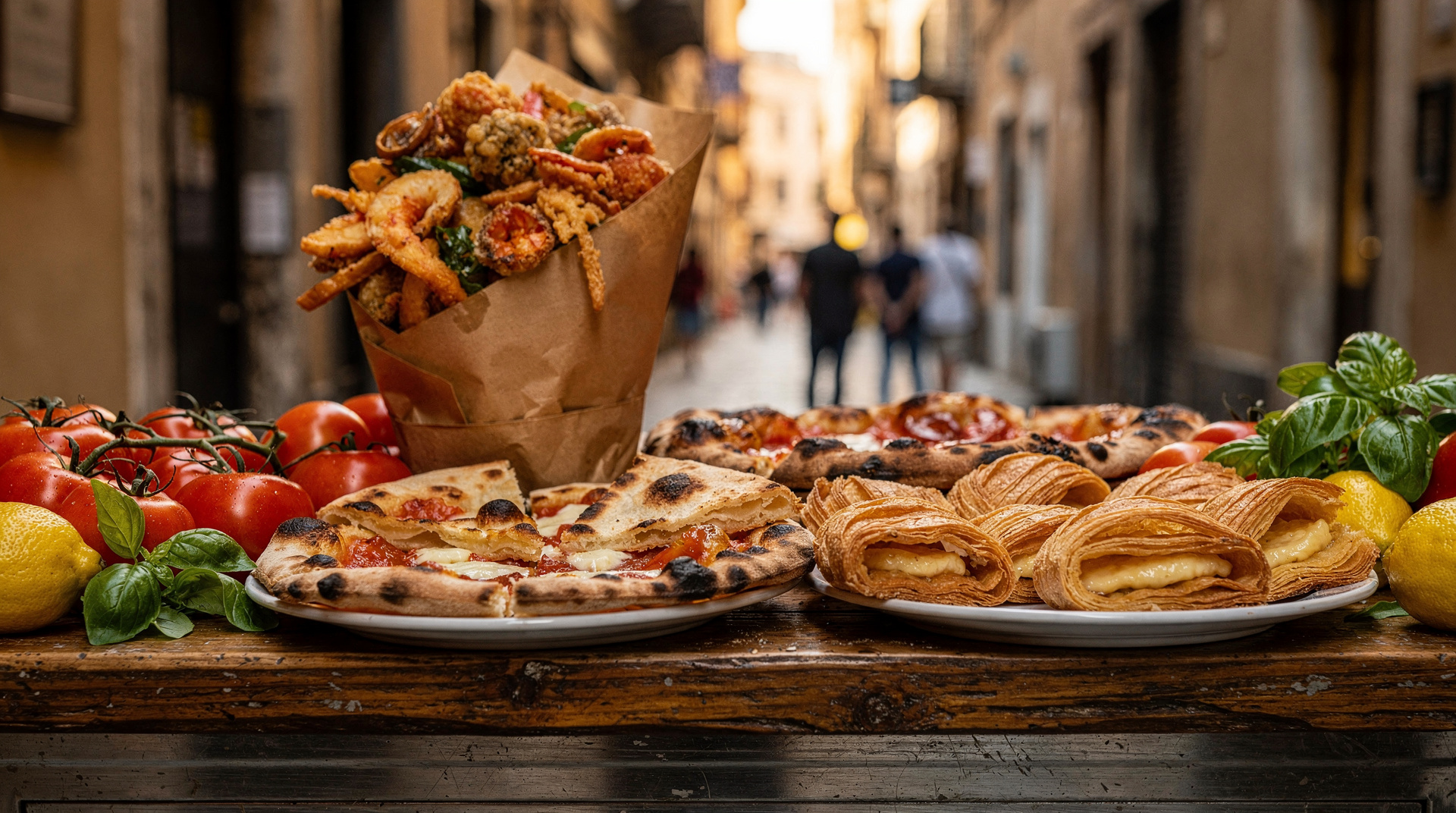
If you want to combine your gelato hunt with the city’s broader street food scene, a guided street food walk with six stops covers the main players in the historic centre and puts the gelato in the context of the larger Neapolitan eating culture — pizza fritta, frittatina di pasta, and the rest.
What to Pair It With
Gelato in Naples is not a standalone dessert. It arrives in the context of an afternoon — after a coffee, before or after a sfogliatella, as part of a passeggiata that is more about the walk than the destination.
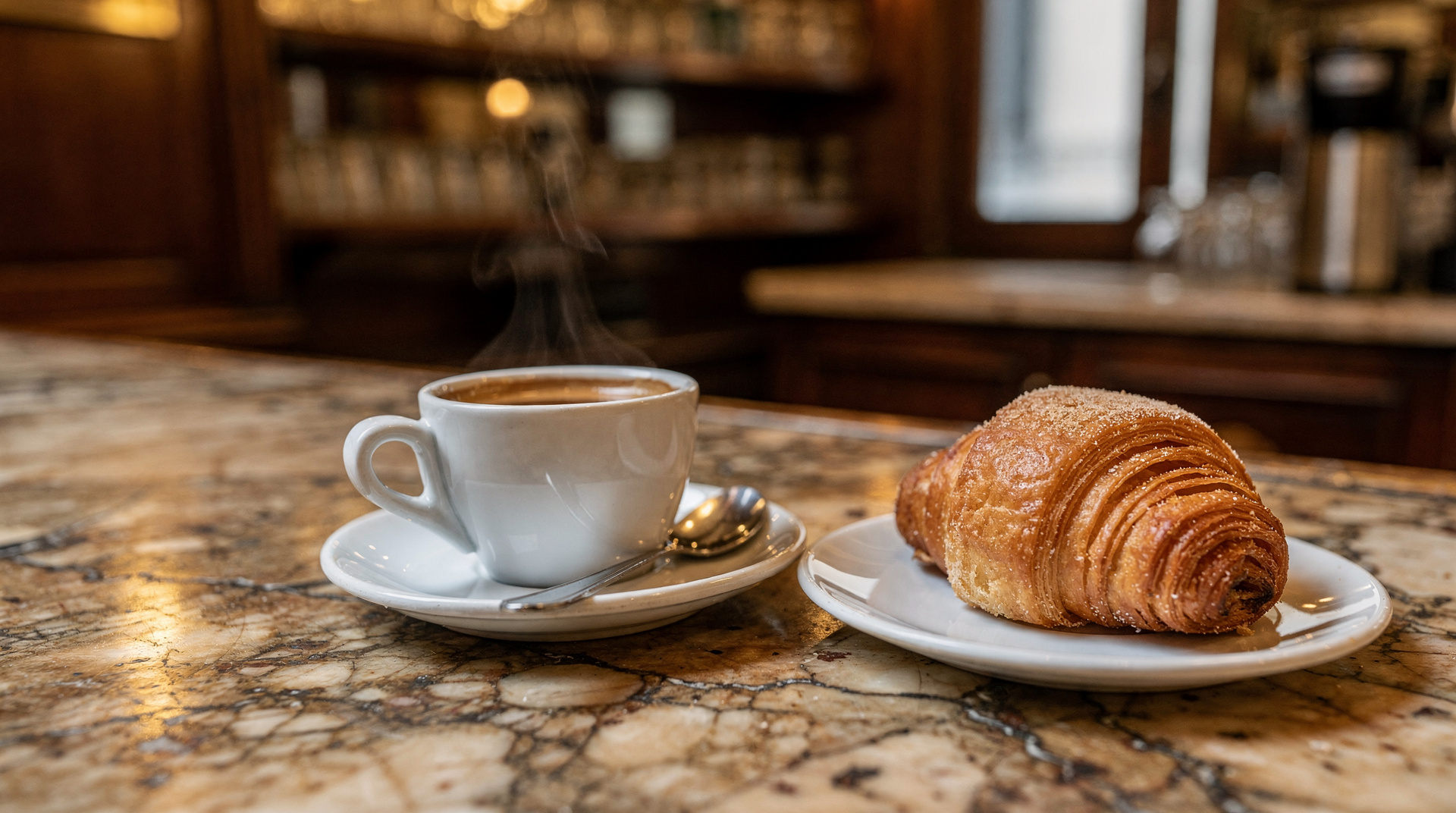
The pairing of coffee and gelato is treated seriously here. A caffè affogato — a shot of espresso poured over fior di latte — is available at most proper gelaterie and is a very good idea. If you want to understand both the coffee and the pastry culture alongside the gelato, a coffee and sfogliatelle tasting tour covers the triangle of Neapolitan ritual eating in a single morning.
Prices, Timing and Practical Notes
A single-scoop cone or cup: €2.50. Two scoops: €3.00–3.50. A granita with panna: €2.50–3.00. Anything significantly cheaper in a tourist area is not artisan. Anything significantly more expensive is charging for the address.
The best time to eat gelato in Naples is in the late afternoon, between 4 and 7 pm, when the gelaterie restock after the lunch rush and the day’s heat creates genuine appetite for something cold. Avoid immediately after the main tourist lunch wave (around 2–3 pm) when queues are longest and replenishment is not guaranteed.
May through September is the right season. Outside of that, some of the smaller operations reduce hours or close temporarily. The city’s year-round gelaterie keep a leaner menu in winter and expand it in spring when the fruit arrives.
The main rule is this: if it looks too perfect, it probably is.
Gelato vs. the rest of Naples’s dessert culture
Gelato is only one corner of a much bigger sweet tradition here. The sfogliatella — the crisp, ridged pastry filled with ricotta and candied fruit — is arguably the more iconic Neapolitan sweet, and our sfogliatella and pastries guide is worth reading alongside this one; the two make a natural double act on the same afternoon walk. Coffee, too, is inseparable from how gelato is eaten here — see the Naples coffee culture guide for how the affogato fits into the wider ritual of caffè.
Where to build a food afternoon around it
The gelaterie mentioned above sit inside a denser food landscape than most visitors realise. If you’re planning a proper eating itinerary rather than a single stop, our Naples food markets guide covers the Mercato di Porta Nolana and the Quartieri Spagnoli market stalls that supply much of the fruit these gelaterie use in season. For a broader restaurant shortlist beyond gelato and street food, the best restaurants in Naples guide is the fuller reference, and if you’re based near Spaccanapoli, where to eat in Spaccanapoli narrows it down to walking distance from most of the gelaterie in this piece.
Frequently asked questions about Chasing the Perfect Scoop
What’s the difference between gelato and granita? Gelato is a dense, churned frozen dessert with less air and fat than ice cream; granita is a coarser, half-frozen ice, most often coffee, almond or lemon in Naples, traditionally served with whipped cream and eaten from a brioche rather than a spoon.
Is gelato in Naples cheaper than in Rome or Florence? Generally yes — €2.50–3.50 for a cone is typical in Naples, whereas tourist-zone prices in Rome and Florence often run noticeably higher for a comparable size, partly because Naples still has fewer purely tourist-oriented operations relative to its size.