Naples with a Baby: What Nobody Warns You About (and What Surprised Us)
Nobody publishes a baby guide to Naples because, on paper, it looks like an absurd idea. Cobblestones that would shake a pram apart. Traffic that treats pedestrian crossings as a suggestion. A historic centre where pavements disappear without warning into steps or scaffolding. We went anyway, our daughter was nine months old, and the honest report is: Naples was harder than almost anywhere we had taken her, and also warmer, and in some ways more forgiving, than we expected.
This is not a sanitised guide. It is the notes I wish someone had sent me before we boarded the flight. For older kids, our Naples with kids guide and kid-friendly things to do in Naples cover different ground — this one is specifically about the under-two crowd.
| Best areas for a pram | Lungomare seafront, Piazza del Plebiscito |
| Hardest terrain | Centro storico (sampietrini cobblestones) |
| Nap-friendly rhythm | Out 9:30–12:30, rest 1–4pm, out again to evening |
| Baby-friendly food | Plain pizza, pasta e patate, friggitoria fried dough |
| Changing facilities | MANN museum, pharmacies; rare in cafés |
The Cobblestone Reality
Let us start with the hardest thing. The centro storico — the area around Spaccanapoli, Via dei Tribunali, the Quartieri Spagnoli — is paved in sampietrini, the irregular volcanic stone blocks that look beautiful in photographs and are genuinely punishing under pram wheels. A standard stroller on these streets requires real effort to push, and the vibration is not gentle on a sleeping baby.
What works: a pram with large, air-filled tyres (not small plastic wheels). What works even better: a structured carrier for the narrowest streets and a pram for the wider avenues. We used the carrier for anything inside the old city and the pram for the Lungomare seafront promenade, the pedestrianised sections of the centre, and the archaeological museum.
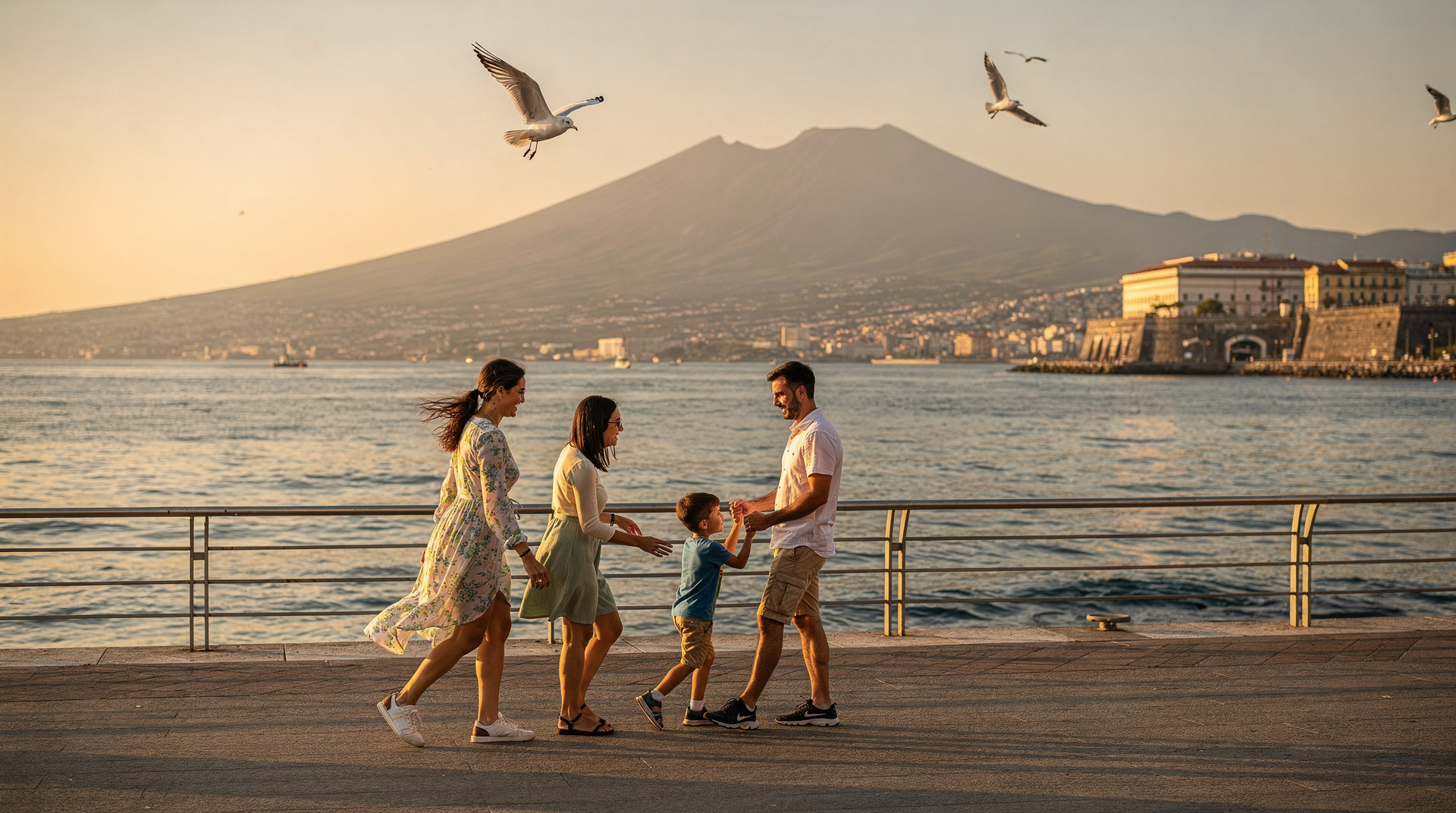
The Lungomare — the seafront road from Mergellina to Castel dell’Ovo — is flat, smooth, and wide enough to push a double buggy. It became our default afternoon route. The Piazza del Plebiscito and the area around it is largely paved with large flat slabs and is perfectly manageable with a pram. Save the deep narrow streets for when the baby is in the carrier or has had a good nap.
Nap Windows and the City’s Rhythm
Naples has a rhythm that suits a baby better than it suits a tourist in a hurry. The city slows substantially between 1 pm and 4 pm — shops close, the streets quieten, the light flattens. This is the city’s version of an afternoon nap, and if your baby’s nap window overlaps with it, you can do your midday feed in a quiet café without fighting foot traffic, then head back out when both the city and the baby are awake again.
The mistake is trying to front-load the day the way you might in a museum city. Naples rewards a slower start. Leave the hotel at 9:30 or 10, do a couple of hours of easy walking, feed and nap from 12:30 to 3, then go back out for the late afternoon and early evening — which in Naples is genuinely the best part of the day anyway.
One practical note: not every café has a nappy changing facility. The ones in the centro storico almost never do. The Museo Nazionale Archeologico (MANN) has a proper parent-and-baby room, as do most large pharmacies if you ask. Keep a travel changing mat and get comfortable with the idea of using a bench in a park.
Baby-Friendly Food
Naples is, unexpectedly, quite good for feeding a baby who has started solids. The food culture here defaults to simple, ingredient-led cooking with very little of the heavy saucing that makes restaurant food difficult to adapt for small children.
Pizza is your friend. A plain Margherita, pulled apart and cooled, is a perfect finger food for a baby eating independently. Neapolitan pizza dough is softer than Rome-style and easy for small hands. Every friggitoria has plain fried dough — pizza fritta senza ripieno — that is cheap, warm and universally accepted by every baby we have ever seen try it.
Pasta e patate — pasta cooked with potato in a light broth — is comfort food in Neapolitan homes and appears in simple trattorias as a first course. It is gentle, not salted aggressively, and easy to mash further if needed. A portion costs €5–€7.
For breastfeeding: Neapolitan café culture is sociable and does not blink. We fed in bars, in restaurants, on benches on the Lungomare, and on the ferry to Pozzuoli. Nobody commented, nobody stared. One older woman in a café near the Duomo brought us a glass of water without being asked.
Formula and nappies: available at any farmacia and in larger supermarkets. The standard Italian formula brands (Mellin, Humana) are widely stocked. Bring a week’s supply of nappies from home if you are particular about brands; if not, you will find Pampers everywhere. Our general Naples packing essentials guide covers the non-baby side of this (footwear for cobblestones, layers for the coast) if you’re packing for the whole family.
Which Sites Work
The Museo Nazionale Archeologico (MANN) is the most practical museum visit with a baby. The galleries are wide, the temperature is controlled, and the collections are genuinely extraordinary — you will actually want to be there, not just ticking a box. Entrance is €15 for adults; children under 18 are free. The marble floors are smooth and stroller-friendly throughout.
Castel dell’Ovo on the seafront peninsula is free to enter and requires very little from a baby except to be carried up a few ramps. The views from the top are excellent. It is also close enough to the Lungomare that you can combine it with a walk without creating a logistics problem.
Pompeii is the obvious question. We went when our daughter was ten months old, using the carrier. The site is large, largely unpaved, and hot in summer — but it is also remarkable, and a baby in a carrier who has been fed and has slept will generally tolerate two to three hours of it without protest. The Pompeii tour from Naples with an archaeologist guide is worth considering precisely because the guide sets the pace and chooses the best-preserved sections — you are not wandering the full four km of rutted stone path with a baby getting heavier on your chest.
What does not work: Herculaneum’s main access involves stairs and is awkward with a pram, though manageable in a carrier. The Capodimonte museum involves a lot of stairs or a slow lift and is fine for older children but feels effortful with an infant. Skip it until a future trip.
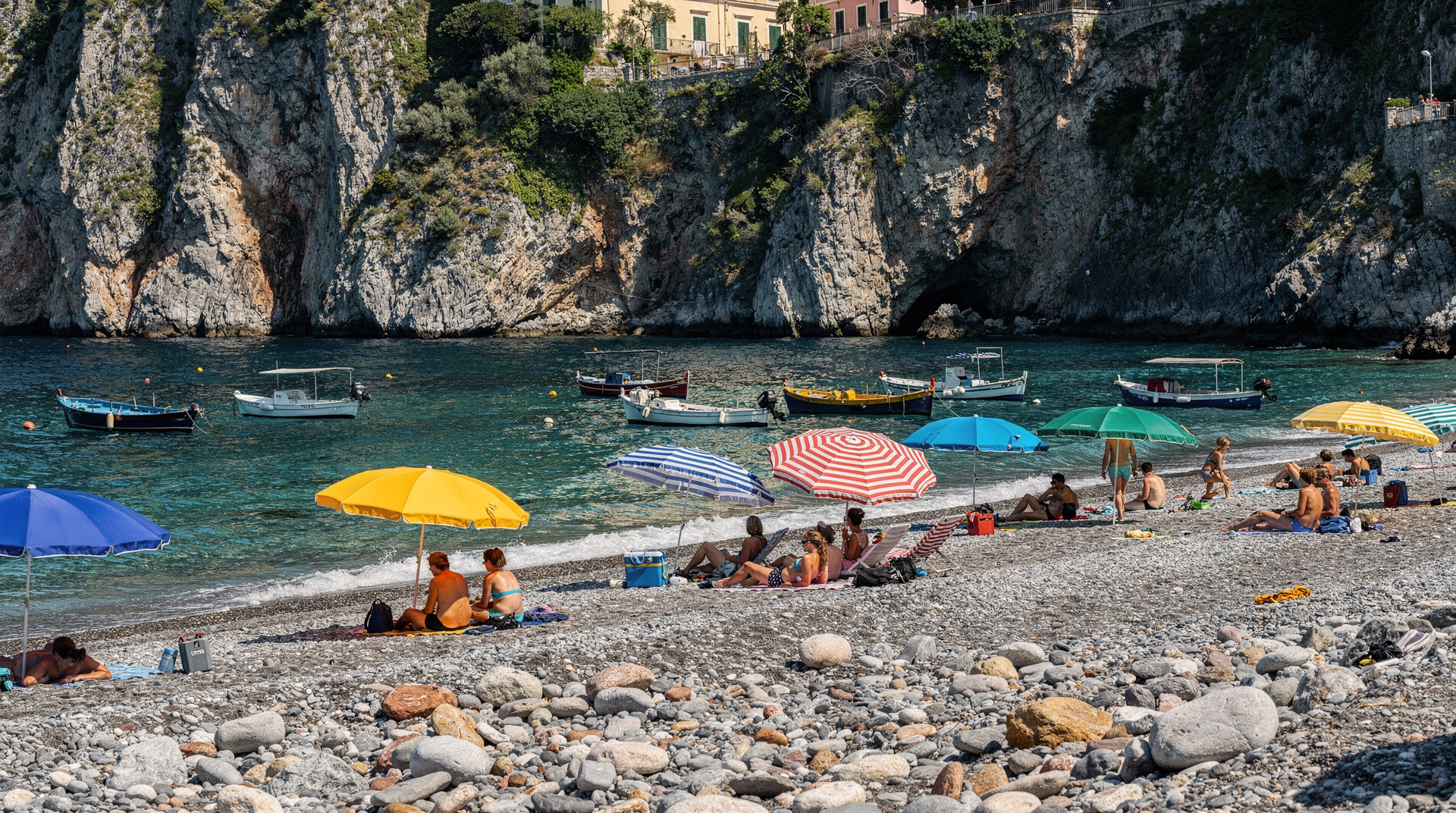
If a beach afternoon is on the agenda, the beaches for families near Naples guide flags which stretches have easy pram or carrier access versus which involve a scramble over rocks — worth checking before you commit a whole afternoon to one option.
Day Trips: What’s Realistic with an Infant
Not every Campania day trip suits a baby, and it is worth being honest about that before you book anything. Pompeii, as above, works with a carrier and a flexible pace. The family day trips from Campania guide is the fuller version of this thinking, ranking outings by how forgiving they are of nap schedules and how much walking they demand.
The Amalfi Coast, tempting as it looks in every photograph, is a harder call with a baby under one. The ferry rides are fine — babies generally sleep through boat engines — but the towns themselves are built on near-vertical staircases, and Positano in particular is punishing with a pram and only slightly better with a carrier once you’re tired by mid-afternoon. If you do go, budget for taxis between points rather than walking everything, and treat it as a half-day rather than a full one.
Procida and Ischia are gentler options: both islands are flatter around their main harbours, the ferries are short, and the pace is naturally slower. Either makes a more relaxed baby day trip than Capri, which crowds up fast and involves a funicular queue that is miserable with a stroller.
The Circumvesuviana with a Pram
It can be done and it is not terrible. The Circumvesuviana from Napoli Garibaldi station runs to Sorrento with stops at Herculaneum, Pompeii and Torre del Greco, among others. The trains have a wide central section where you can park a pram without folding it — though you will need to hold it or wedge it against a seat on crowded services.
The station at Napoli Garibaldi has a lift to the Circumvesuviana platform. The platform level is functional but not pretty, and in high season it is crowded. The train itself is air-conditioned and the journey to Pompeii is about 35 minutes — manageable within most nap windows.
Practical: go early (the 8:30 or 9:00 train is notably less crowded than the 10:00 one). Buy tickets at the machines to avoid the queue. Keep your bag in front of you in the crowded station — this is Naples; pickpockets do exist.
The Unexpected Part: How the City Treats Babies
Every guide to Naples mentions the warmth of the people, and most experienced travellers know to treat this kind of claim with mild scepticism. But with a baby, the warmth is operationally real. Our daughter was commented on, smiled at, occasionally gently touched on the cheek (which startled her) and offered biscuits by strangers in cafés probably a dozen times in four days.
In one alimentari near the Duomo, the owner’s wife took the baby while we paid and walked her around the shop talking to her in Neapolitan dialect. Our daughter found this magnificent. We got our shopping done with two hands free.
The city is not set up for babies in a logistical sense. Lift access is inconsistent, changing rooms are rare, and the streets require planning. But the social environment for a baby in Naples is, in our experience, more genuinely welcoming than almost any northern European city we have visited.
Practical Notes
If you want to do a hop-on hop-off bus to get your bearings without the cobblestone problem, the 24-hour hop-on hop-off Naples bus gives you a smooth, elevated view of the city’s main sights — helpful for a day when the baby is in a settled mood and you want to cover ground without wearing your knees out.
Accommodation: a ground-floor or lift-accessible room matters more with a pram than at any other point in adult travel. Check before booking. Many older Naples hotels have beautiful lobbies and no working lift. Ask directly: C’è un ascensore funzionante?
Pharmacy hours: most are open 8:30 am to 1 pm and 4 pm to 8 pm, closed Sunday afternoons. There is usually a 24-hour farmacia near the main stations — find it before you need it.
Go. It is harder than a flat city with wide pavements and parent rooms everywhere. It is also stranger, more alive, and more memorable, and your baby will be greeted like a small visiting dignitary.