Capri boat tour guide: sea caves, Blue Grotto, and how to hire a boat
Capri: Private Full-Day Boat Tour from Sorrento
How do I book a boat tour around Capri and is it worth it?
Yes — the island's cliffs, Faraglioni rocks, and sea caves are best seen from the water. Depart from Sorrento (closest) or Capri harbour. A 2-hour island circuit costs €25–40/person on a small group boat; a full-day private hire runs €300–500. The Blue Grotto requires a separate rowboat (€15–18 extra, weather-dependent).
| From Sorrento | around 40–50 min crossing; most frequent departures |
| Shared island circuit | around €60–100/person, 5–8 hours |
| Private gozzo, full day | around €300–500 |
| Blue Grotto rowboat extra | around €15–20/person, weather permitting |
| Best light | morning for the Blue Grotto, afternoon for the Faraglioni |
Capri by sea: what you get that a ferry ticket doesn’t give you
The scheduled ferry from Sorrento to Capri takes 25 minutes and deposits you at Marina Grande. This gets you to the island efficiently, but the approach is from the north — one harbour, one pier, the cable car up to Capri town.
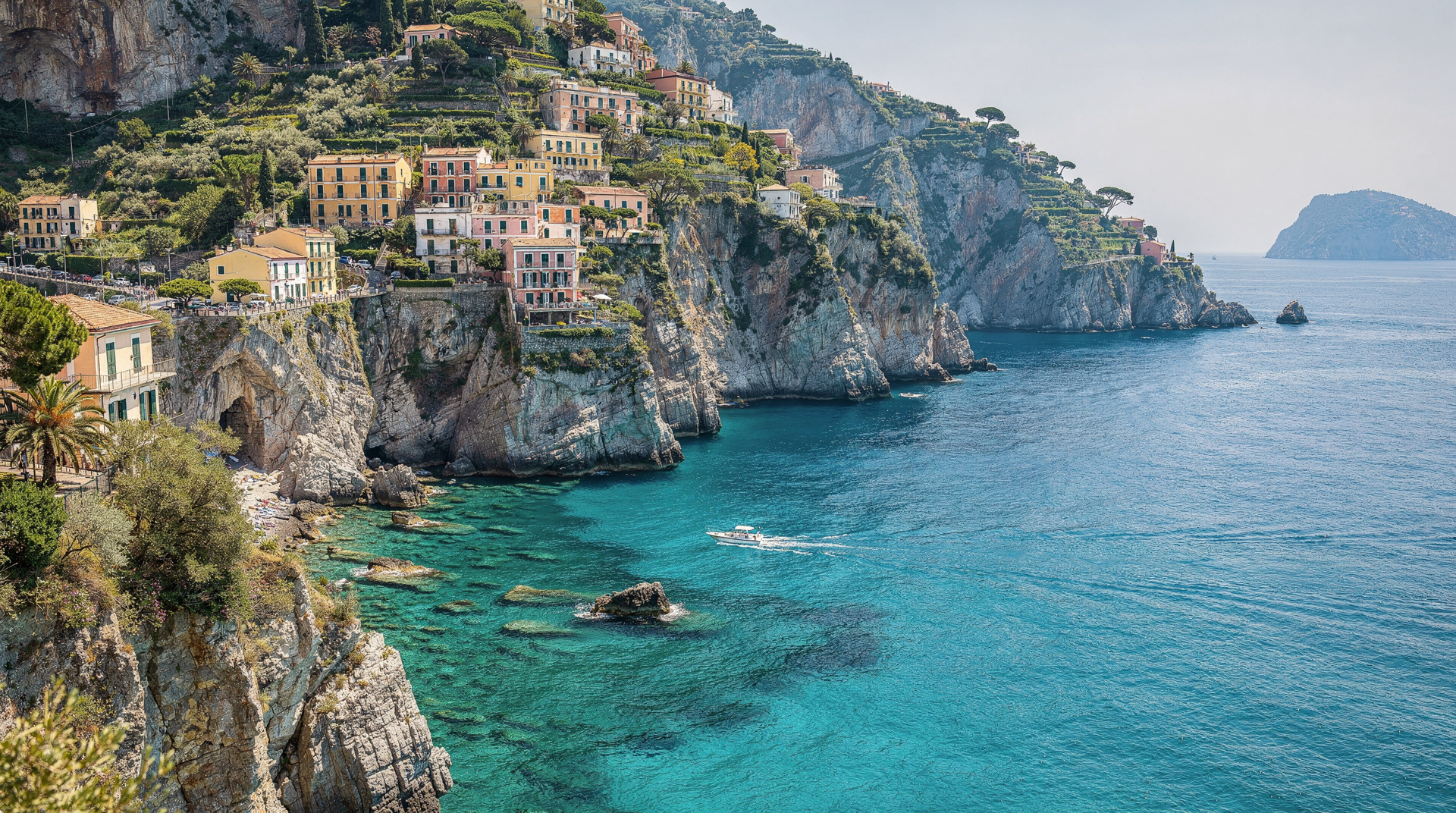
A boat tour around the island takes 3–5 hours and shows you what the ferry doesn’t: the Faraglioni rock stacks rising 109 metres from the sea on the southeast coast; the sheer white limestone cliffs of the southern coast; the sea caves (Grotta Azzurra, Grotta Verde, Grotta Bianca) in the cliff base; the underwater rock arches where the water turns turquoise-green; and the natural arch (Arco Naturale) at the eastern end of the island.
The island from the water is a completely different experience from the island on foot. Both are worth having. For a first visit, combining the ferry with a boat circuit (ferry to Capri, take a boat tour, return by ferry) is the most complete approach.
The sea caves of Capri
Grotta Azzurra (Blue Grotto)
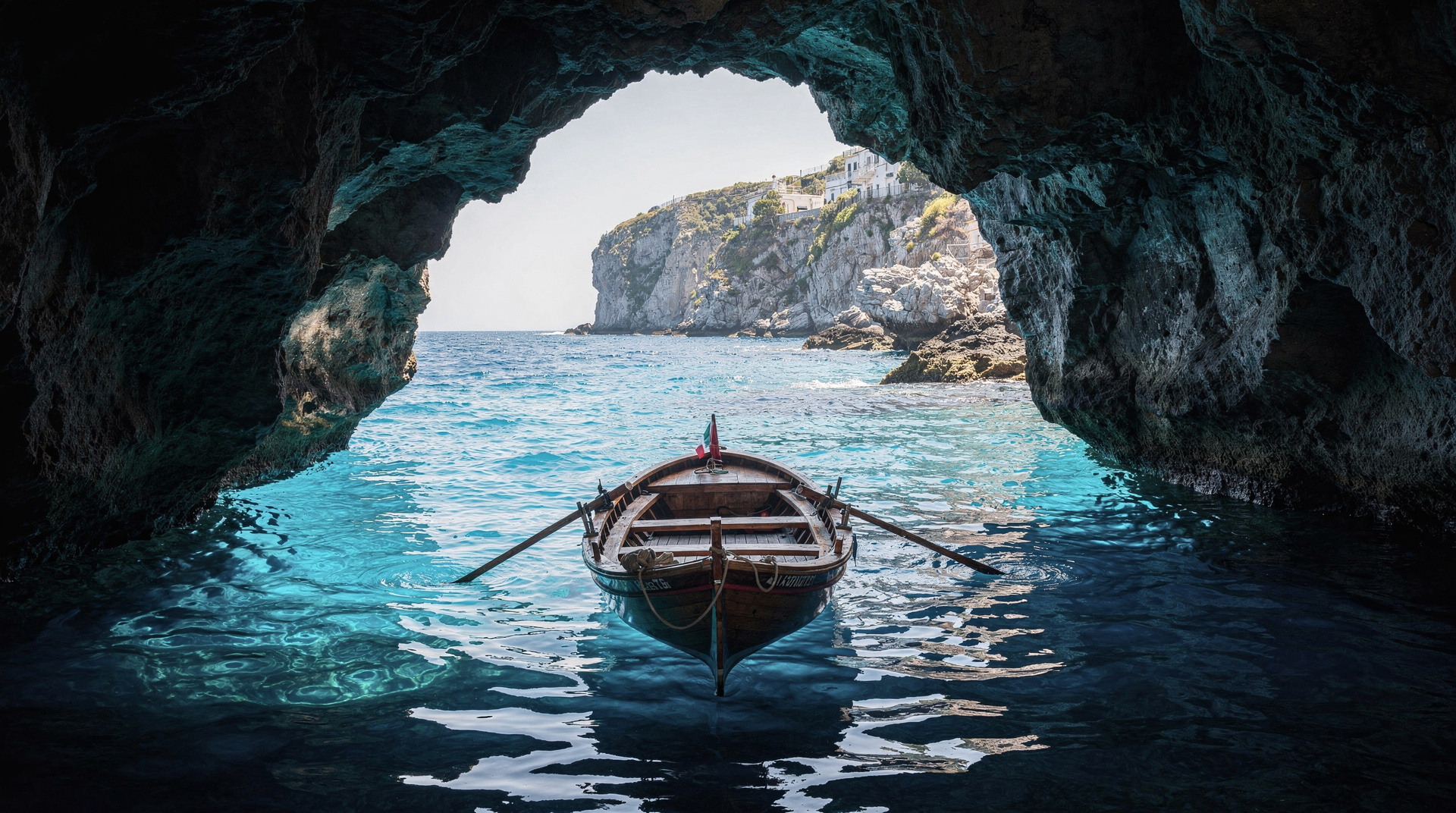
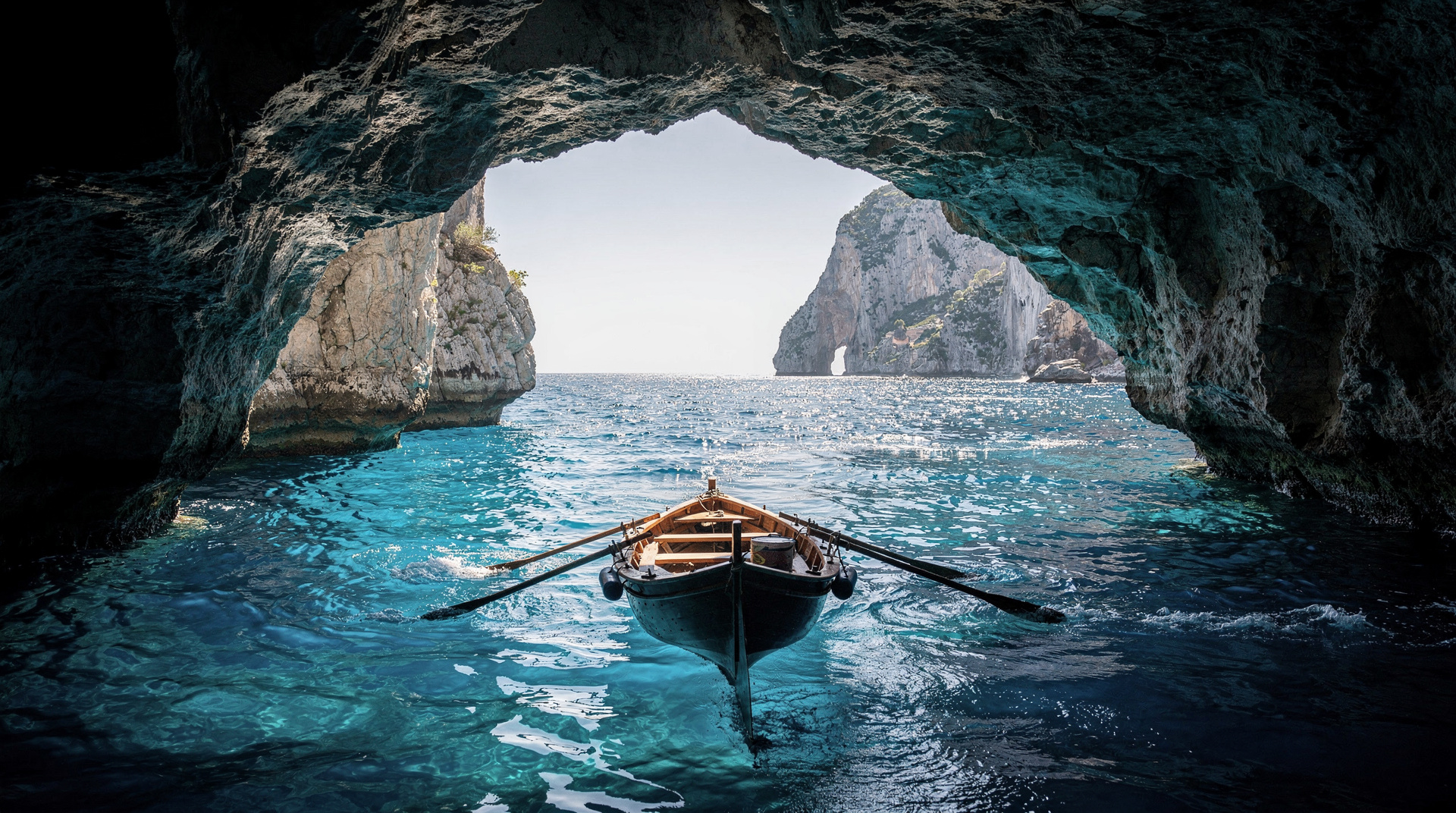
The most famous sea cave in Italy, and a fixture on most Capri boat tours. Located on the northwest coast of the island, accessible only by sea. The optical effect: sunlight enters through an underwater opening and is reflected through the water, illuminating the cave interior with an intense electric blue. The physics is real; the colour on a good day is extraordinary.
Access: Transfer from your boat to a small rowboat (capacity 2–4 passengers) operated by a cooperative of local boatmen. The rowboat captain pulls a chain attached to the cave wall to bring the boat through the 1.3 m gap. Passengers lie flat. Inside, approximately 10 minutes. Return the same way.
The rowboat fee (€15–18/person) is always extra from the tour price. It is paid directly to the rowboat cooperative at the cave mouth. This is not a scam — it is the established system.
Conditions: The grotto closes when sea swell raises the water level inside by more than 30–40 cm. In July–August (typically calm), the grotto is open most days. In May, June, September, and October, closures are more frequent. The grotto is closed in bad weather and during high winds from any direction.
For a complete guide to access, timing, and what to realistically expect, see Blue Grotto boat tips.
Grotta Verde (Green Grotto)
On the southeast coast near Marina Piccola. A cave with green-tinted water from reflected sunlight. Smaller and less famous than the Azzurra, often included in island circuits as a second cave visit. Access by small boat into the cave mouth; entrance is lower than the Azzurra but slightly wider. No queue. Free (no rowboat surcharge — you enter from your tour boat directly in most cases).
Grotta Bianca and Grotta Meravigliosa
Two connected sea caves near the eastern end of the island. The Bianca has white calcium carbonate formations; the Meravigliosa is named for its multicoloured reflections. Access from the water; usually visited by boats that venture to the eastern coast.
The Faraglioni
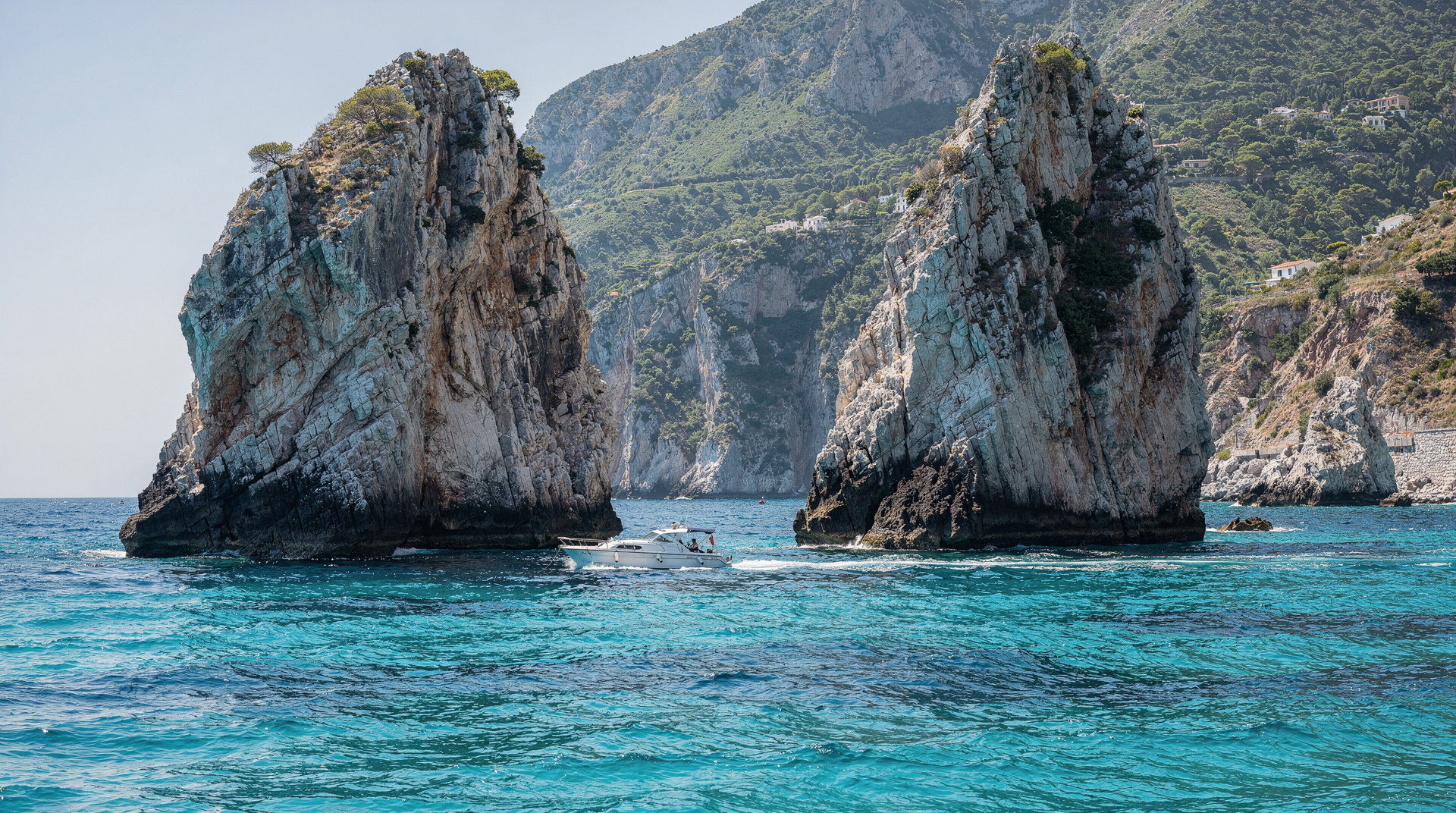
The three Faraglioni rock stacks are the most iconic sight on Capri — recognisable from every photograph of the island. The largest (Faraglione di Terra, attached to the mainland coast) rises 109 metres; the middle stack (di Mezzo) has a sea arch at its base that small boats pass through at calm conditions; the outermost (di Fuori, or Scopolo) hosts the blue lizard (Lacerta caerulea, a local subspecies of wall lizard found only here).
Seeing the Faraglioni by boat: Boats pass close to the rock stacks — close enough to see the textures of the limestone and the dive into the arch. The light in afternoon (14:00–17:00) hits the southern face of the rocks in orange and gold. Swimming stops near the Faraglioni are offered by most tour operators on calm days.
Types of boat tour for Capri
Group tours from Sorrento
The most common entry point. A group boat (8–25 passengers) departs from Sorrento Marina Piccola or the main ferry pier, takes about 40–50 minutes to Capri, completes an island circuit, accesses the Blue Grotto (weather permitting), and returns to Sorrento. Duration: 5–8 hours total.
Cost: €60–100/person including guide and fuel. Blue Grotto rowboat fee (€15–18) always additional.
Capri Blue Grotto and island boat tour from Sorrento with swimmingThe Blue Grotto is a separate transfer into a rowing boat, not a stop the big boats make on their own: a Capri island boat tour with a Blue Grotto stop builds that transfer into the schedule instead of leaving it to chance.
Private boat hire from Sorrento or Capri
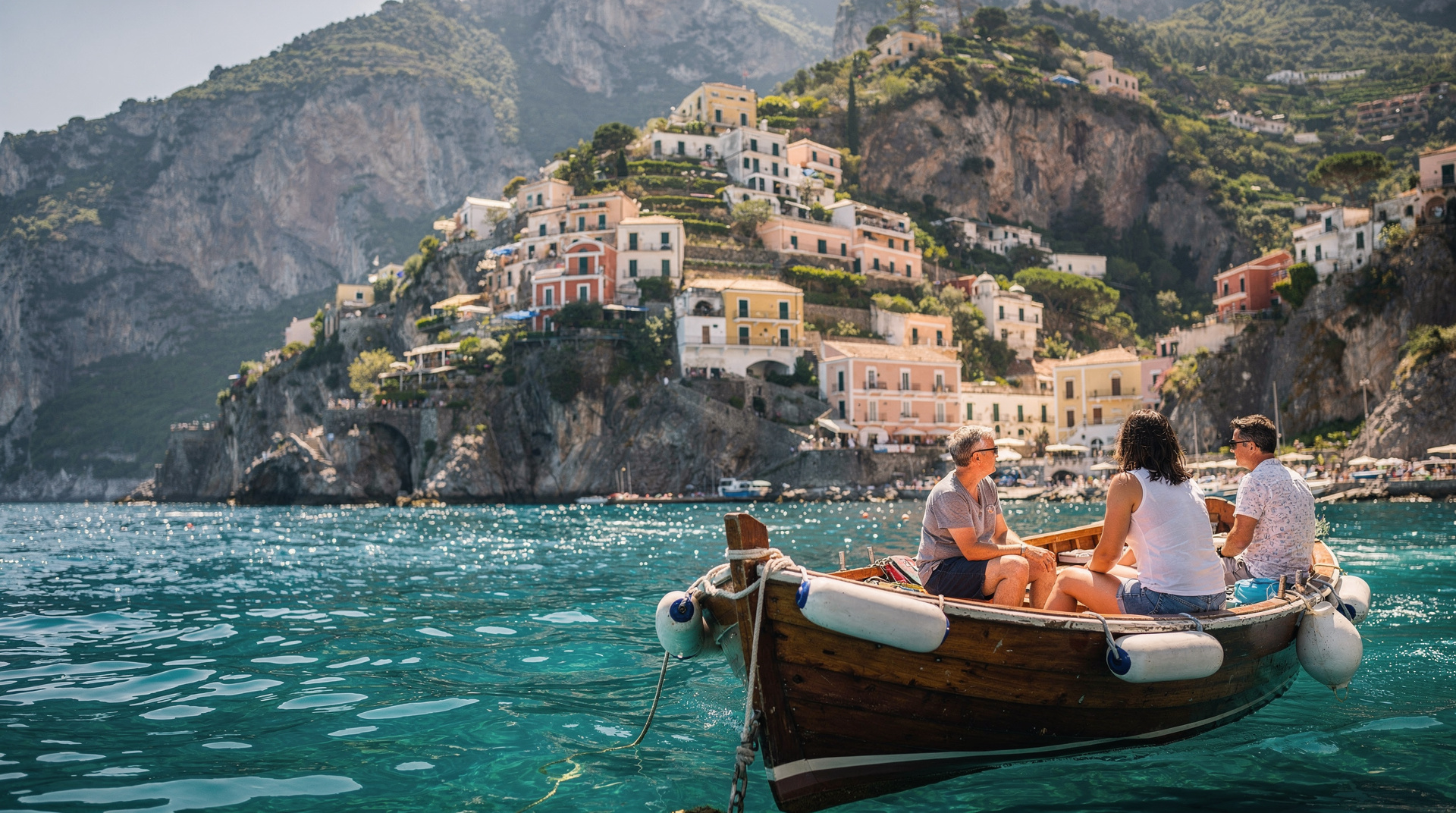
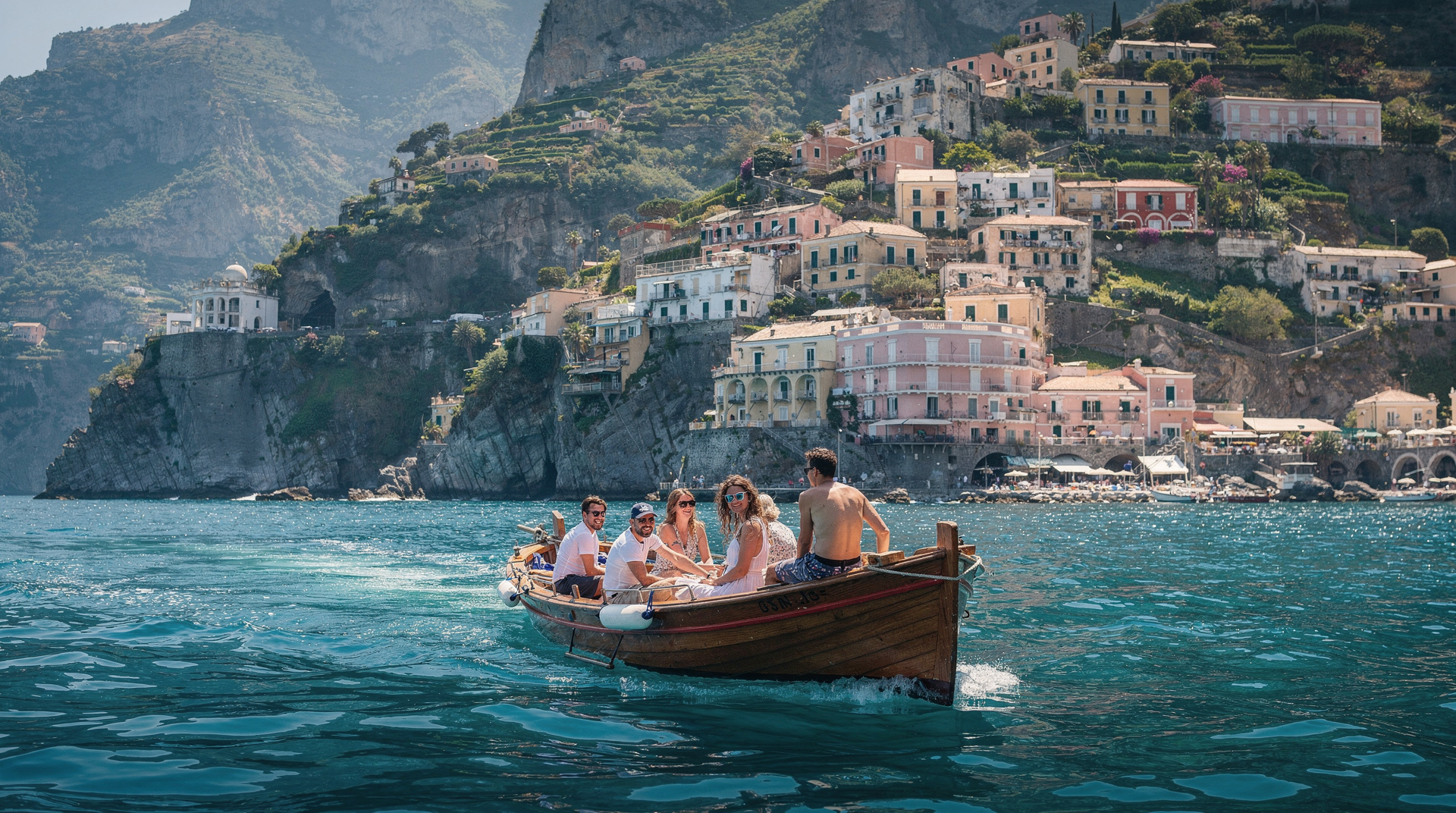
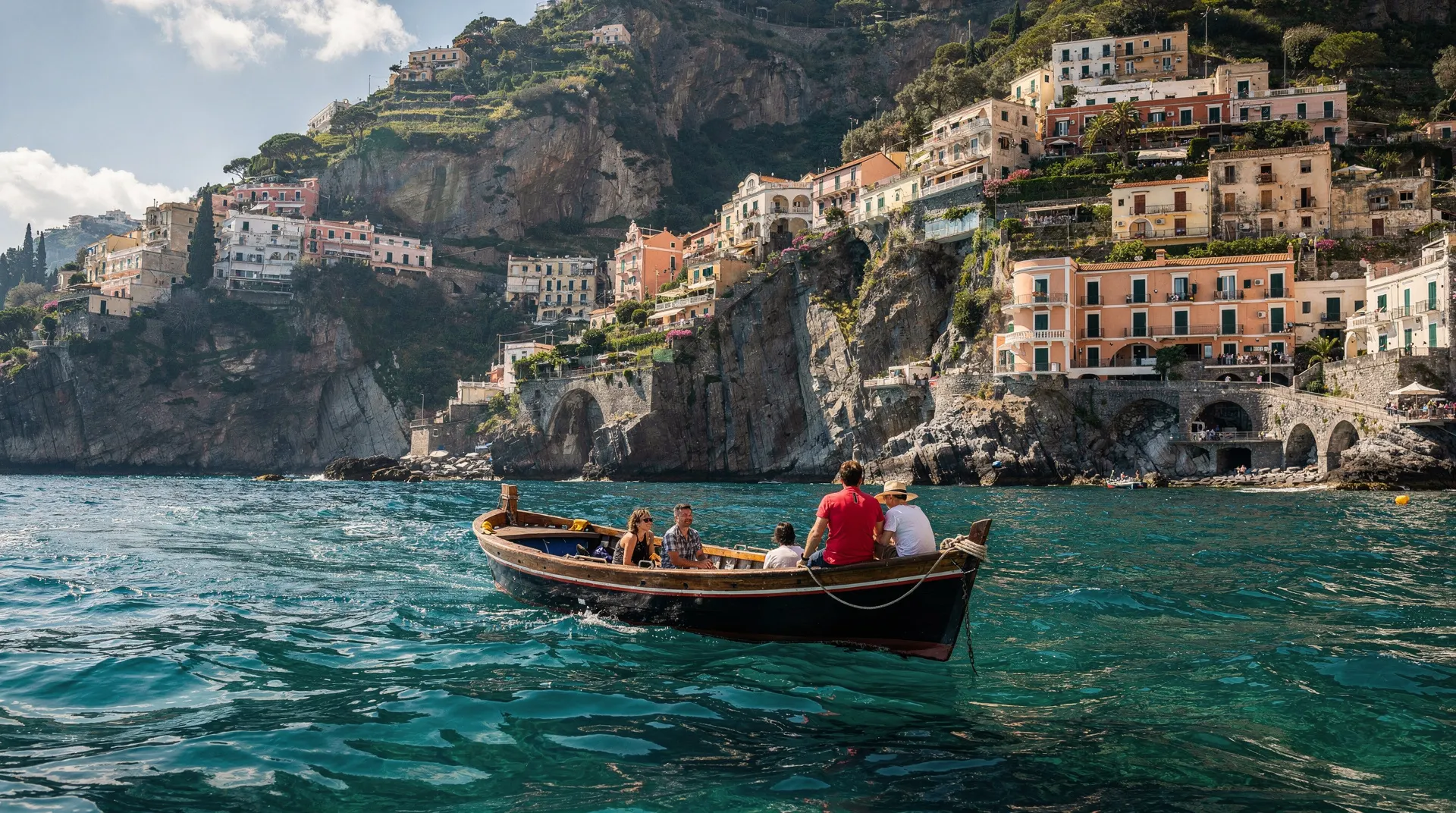
The most flexible option — you set the timing and stops. A gozzo (traditional wooden Sorrentine motorboat) seats 6–10 and is the traditional vessel for the island. A speedboat or RIB is faster and better for covering the full island.
Cost from Sorrento: €300–500 for a full day on a gozzo; €150–250 for 4 hours. A larger motor yacht runs €600–1,500+.
A private hire makes particular sense for groups of 4+ where the per-person cost approaches shared tour prices, and for families who want longer swimming stops or a specific lunch restaurant on the island.
Private full-day boat tour to Capri from SorrentoShort boat circuit from Capri harbour
If you are already on the island (arrived by ferry), you can hire a small boat circuit directly from Marina Grande. Several operators at the dock offer 2–3-hour circuits for €25–45/person. This is the most efficient option for an island circuit if you don’t want to return to Sorrento for a full-day tour.
The boats from Capri harbour are typically smaller and more intimate than the large group tours from Sorrento.
Practical details
Seasickness: The sea between Sorrento and Capri can be choppy from afternoon winds (Maestrale from the northwest is most common). Morning departures are almost always calmer. If prone to motion sickness, choose morning departure, sit in the middle of the boat, and consider taking a non-drowsy anti-nausea tablet an hour before boarding.
Swimwear: Bring it. Most tours have at least one swimming stop. The water around Capri’s southern coast near the Faraglioni is 26–28°C in July–August, clear to 8–10 m depth.
What to wear/bring: Sun protection (high factor — no shade on the water), water, a light layer for the return trip if it’s late afternoon (sea breeze cools quickly), and a waterproof bag for your phone.
Photography: The Faraglioni in afternoon light are extraordinary subjects. A wide-angle lens or phone camera in landscape mode captures the scale. The Blue Grotto is very dark — most photos disappoint; the experience is not photographic.
Frequently asked questions about Capri boat tours
Can I do a Capri boat tour from Naples (not Sorrento)?
Yes, but it takes longer. Naples to Capri by boat is 60–80 minutes (versus 40–50 minutes from Sorrento). A full-day boat tour departing from Naples to circle Capri and return is 10–12 hours total. Most guides recommend departing from Sorrento or using the scheduled ferry to Capri and then hiring a local boat circuit.
How far in advance should I book?
For July–August: 2–3 days minimum for private boats; 1–2 days for shared tours. For May–June and September: same-day or next-day booking is usually possible, but specific morning slots sell out. Popular private boat operators at Sorrento book out a week in advance in peak summer.
Is a Capri boat tour worth it if I’m only on the island for 4 hours?
A short (2-hour) island circuit fits within a 4-hour island visit — depart from Marina Grande shortly after your ferry arrives. The circuit gives you the sea perspective without consuming the full day. The Blue Grotto requires more time (queue, rowboat, circuit) and is better left for a dedicated full-day boat tour.
What is the difference between a gozzo and a speedboat?
A gozzo is the traditional wooden motorboat of the Sorrentine coast — slower (20–25 km/h), more stable, lower to the water, and more atmospheric. A speedboat or RIB (rigid inflatable boat) is faster, less stable in chop, and better for covering large distances quickly. For a relaxed island circuit, a gozzo is the more enjoyable vessel; for combining Capri with Amalfi Coast in a single day, a speedboat covers the distance more practically.
Do Capri boat tours run in the rain or bad weather?
Most operators cancel or postpone in genuinely rough conditions (strong wind, significant swell) for safety and comfort, and will offer a refund or rebooking rather than run an unpleasant trip. Light rain with calm seas does not usually cause cancellation, though the Blue Grotto is more likely to be closed regardless of rain if the swell has risen.
Can I combine a Capri boat tour with the Amalfi Coast in one day?
Yes, on a private speedboat from Sorrento — a long day (8–10 hours) covering Capri’s sea caves and Faraglioni in the morning and a run along the Amalfi coastline (Positano, sometimes as far as Amalfi) in the afternoon. This is a premium, tiring option best suited to groups who want maximum coverage in a single charter rather than two separate day trips.
Choosing between the Capri boat tour and other ways to see the island
If the boat tour is your main reason for visiting Capri rather than a side activity, it’s worth comparing against a straightforward Capri day trip, which covers the ferry, Piazzetta, and Anacapri alongside the sea-cave circuit.
For the specific question of whether the Blue Grotto lives up to its reputation, see the dedicated Blue Grotto Capri guide and the more sceptical Blue Grotto reality check. If you’re deciding whether to depart from Naples or Sorrento, Capri from Naples vs Sorrento breaks down both routes, and getting to Capri covers all the ferry logistics in one place.
Guided small-group boat tour of Capri from SorrentoFrequently asked questions about Capri boat tour guide: sea caves, Blue Grotto, and how to hire a boat
What can I see on a boat tour around Capri?
Why is the Blue Grotto sometimes closed?
What is the Blue Grotto experience actually like?
How much does the Blue Grotto cost?
Is the Blue Grotto worth it given the cost and uncertainty?
What time is best for a Capri boat tour?
Top experiences
Bookable activities with verified prices and instant confirmation on GetYourGuide.