Blue Grotto reality check — is it worth the queues, cost and 5-minute ride?
Capri: Island Boat Tour and Optional Blue Grotto Visit
Is the Blue Grotto worth visiting on Capri?
For many visitors, no — or at least not as a priority. The ride lasts 5 minutes, total costs run €25–35+ per person, closure rates are high (rough sea, wind, tides), queues can stretch to 90 minutes, and the boatman expects a tip. The colour is genuinely extraordinary on a good day. But if you have only one day on Capri, the island offers better value elsewhere.
Quick answer: The Blue Grotto is an iconic experience that disappoints more visitors than most travel sites admit. The cave colour is genuinely spectacular on the right day — but you pay €28–35+ for roughly 5 minutes inside, wait up to 90 minutes in a queue, and risk finding it closed entirely. For most Capri day-trippers, a full island boat tour delivers far better value.
| Total realistic cost | around €28–37/person, excluding the Capri ferry |
| Time inside the cave | around 3–5 minutes |
| Peak-season queue | 30–90 minutes on the water |
| Closure risk | notable even in summer; higher October–April |
| Best strategy | treat as an optional add-on to an island boat tour |
What actually happens at the Blue Grotto
Let’s walk through the experience honestly, from arrival to exit.
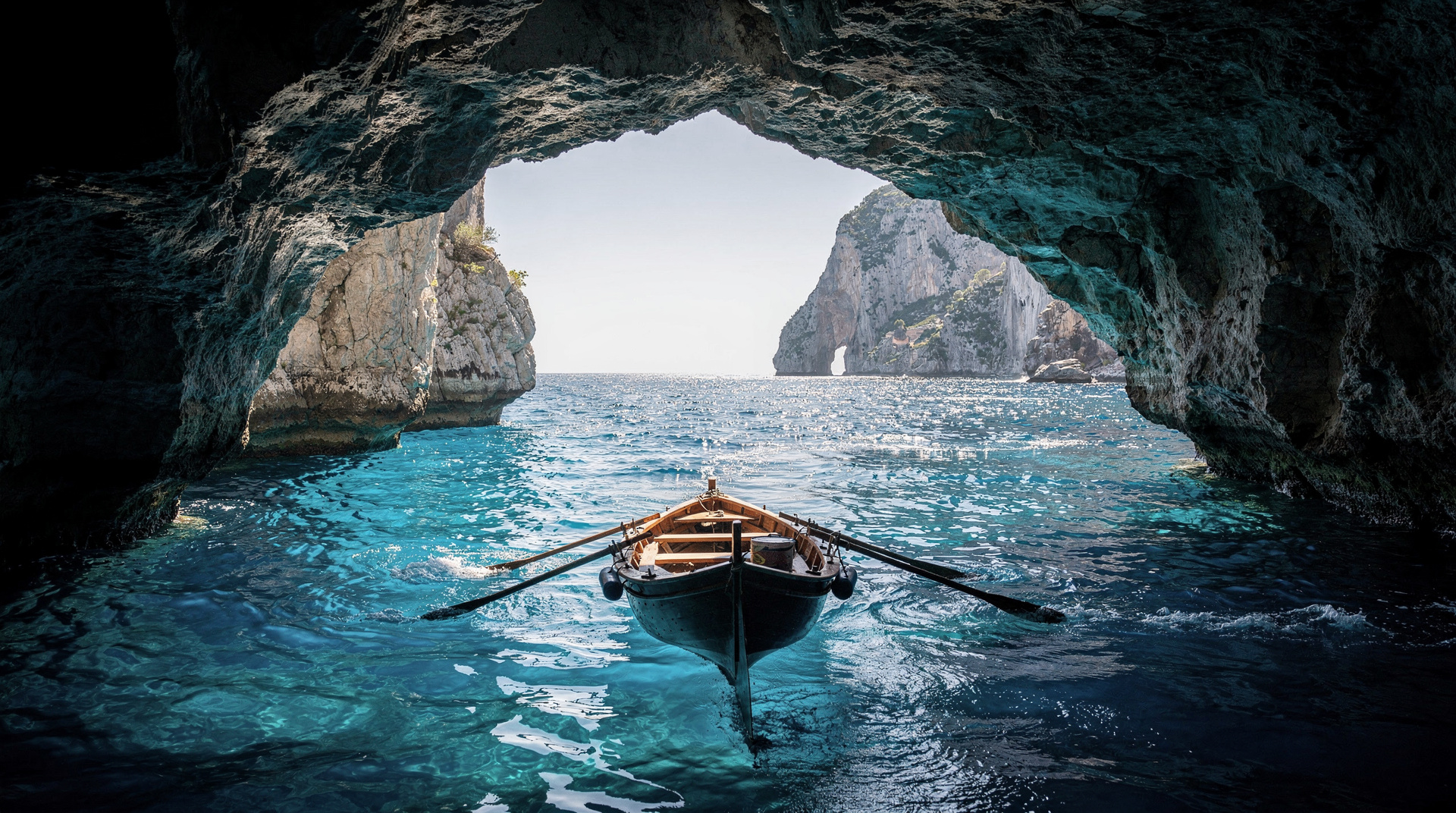
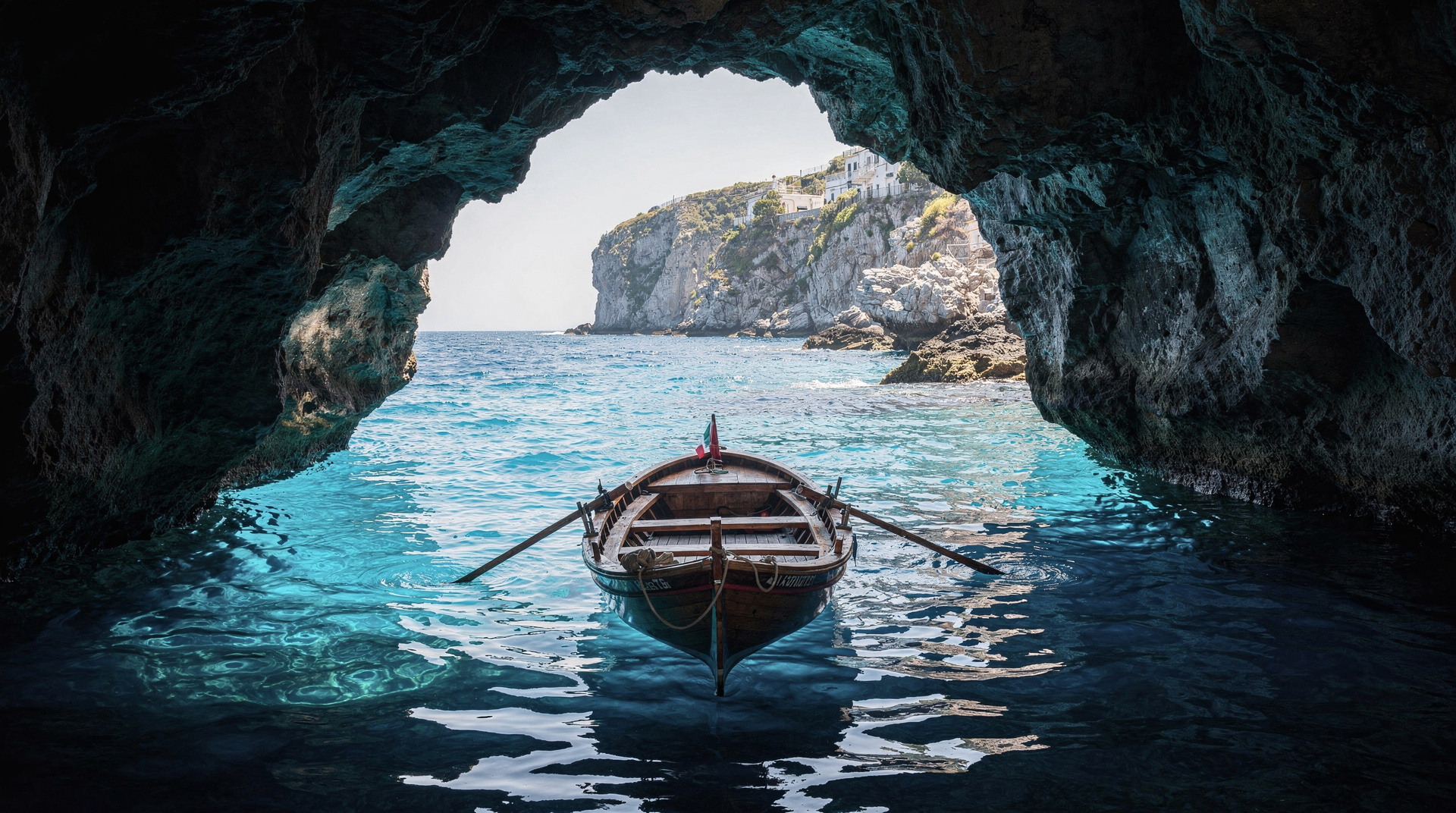
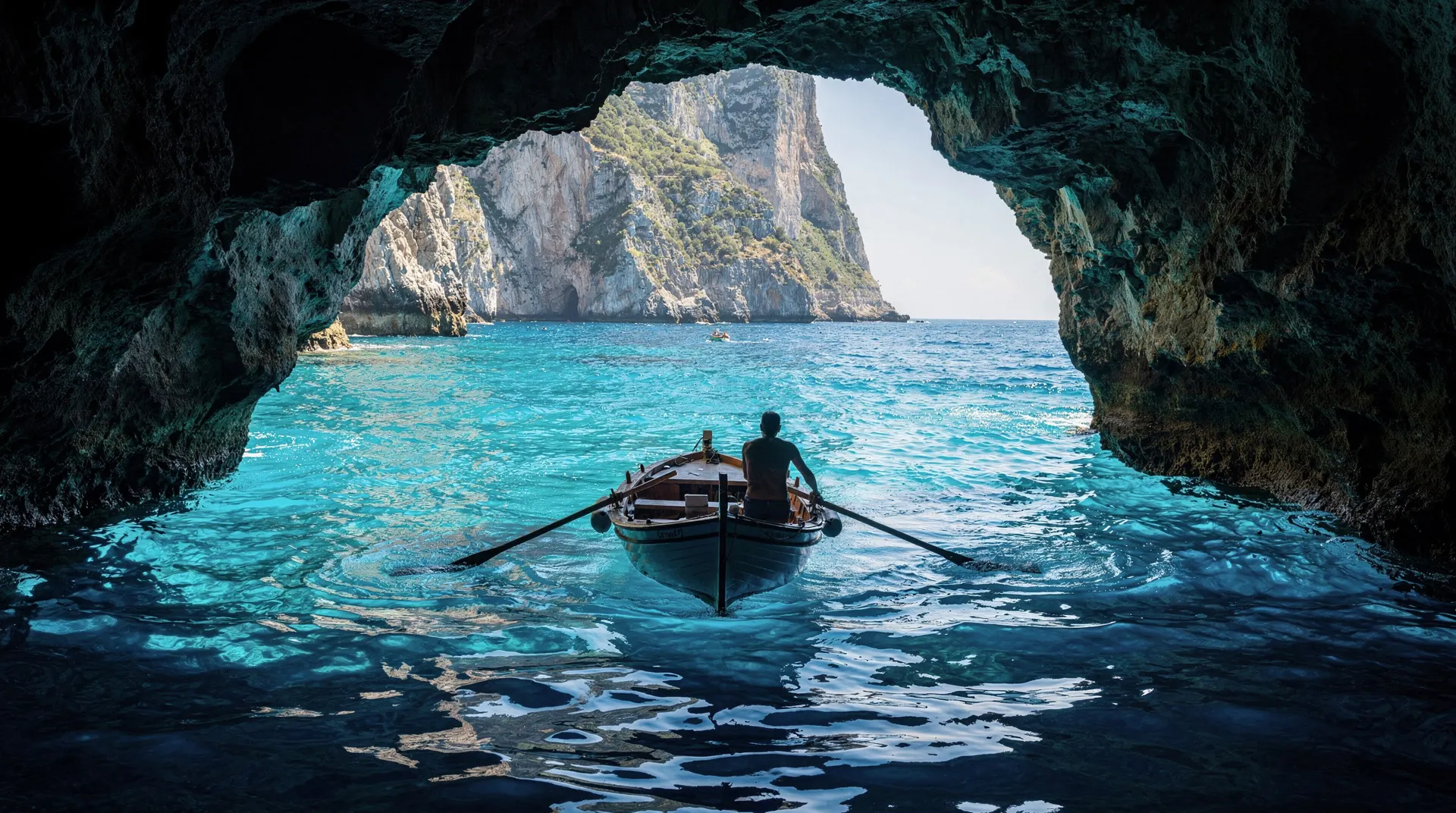
You descend to the grotto entrance — either by steps from the road above Anacapri, or arriving by sea on a transfer boat from Marina Grande. At the water level, you join a queue of rowing boats. Each small wooden boat holds 4–6 passengers plus a boatman. When your turn comes, the boatman instructs you to lie flat on your back, he pulls a chain fixed to the rock, and the boat shoots through the entrance arch — about 1 metre high, sometimes less depending on tide — into the cave beyond.
Inside: the blue is real. Sunlight enters through an underwater opening at roughly 2 metres depth, refracts upward, and floods the water with a bioluminescent-looking azure. On a sunny day between roughly 10:00 and 14:00, the effect is extraordinary. The water appears to glow from below. This is not a trick of lighting rigs or LED strips — it is a natural optical phenomenon, and there is nothing quite like it.
The boatman rows you around the interior. The cave is around 60 metres long and 25 metres wide. The boatman may chant or sing — this is traditional and often charming.
Then you come back out. Total time inside: 3–5 minutes.
That is the experience in full.
The honest cost breakdown
Most listings quote the grotto entrance fee without mentioning the full picture. Here is what you actually pay:
| Item | Approx. cost |
|---|---|
| Grotto entrance fee | ~€14 per person |
| Rowing boat (if arriving by sea independently) | ~€14–18 per person |
| Boatman tip (expected, not optional in practice) | €2–5 per person |
| Total per person (excluding Capri ferry) | €28–37 |
If you arrive on a pre-booked group boat tour from Naples that includes the Blue Grotto, the rowing boat fee is bundled in, but the entrance fee is almost always extra. Read the small print carefully.
The one-way ferry from Naples to Capri costs around €22–24 (hydrofoil, Molo Beverello). A full return day to Capri with a Blue Grotto visit can therefore cost €70–90 per person before any food, other transport, or additional activities.
Queue reality in peak season
In July and August, and on any fine weekend in June or September, the queue of rowing boats at the grotto entrance can stretch to 60–90 minutes of waiting on the water. You wait in the rowing boat, exposed to the sun, often with swell making the experience uncomfortable.
The boats rotate as fast as the grotto pace allows — each boat spends 3–5 minutes inside, and there is only room for one boat at a time. At peak, several dozen boats can be queued. Midday queues in August are the longest.
There is no online pre-booking for the Blue Grotto itself. The queue is first-come, first-served. Arriving at 09:00–09:30 (the earliest the grotto typically opens) gives you the shortest wait, though the colour is better after 11:00. This is an unavoidable trade-off.
The closure problem
The Blue Grotto is closed more often than most travel resources acknowledge. Closures happen when:
- Sea conditions are rough — even moderate swell makes the low entrance arch impassable and dangerous
- Wind is strong — particularly the Tramontane or Libeccio winds, which create waves at the grotto opening
- Tides are unfavourable — at high tide, the entrance arch can be fully submerged, making entry impossible regardless of sea state
- Maintenance or official closure — periodic closures for safety inspections
There is no central real-time closure service online. Locals and boat operators typically know from early morning whether conditions allow entry. The most reliable source is asking directly at the Marina Grande or Anacapri boat dock when you arrive on Capri — not before you leave Naples.
The practical implication: if your primary reason for going to Capri is the Blue Grotto, you are taking a significant risk of wasted time and money, especially outside the June–September core season. Even in summer, a 15–20% closure rate on any given day is a reasonable estimate.
Who it is actually worth it for
Despite everything above, the Blue Grotto is genuinely worth doing for a specific type of visitor:
It is worth it if:
- You are spending 2+ days on Capri or staying overnight — the grotto becomes one activity among many rather than the centrepiece of a limited day
- You visit in shoulder season (May or late September), arrive early (09:00–10:00), and conditions are calm
- You have seen photographs and genuinely want the experience, accepting the queues and cost as part of it
- You are on a group boat tour that includes the grotto as part of a longer island circumnavigation
It is not worth it if:
- You have one day on Capri and want to see the island properly — the grotto can consume 2–3 hours of a day that has many better alternatives
- You are visiting with young children, older adults with mobility concerns, or anyone who might struggle with the boarding process
- The sea has been rough in the 24 hours prior to your visit
- You are on a tight budget — there are more rewarding €28+ ways to spend money in Campania
Better alternatives that most visitors miss
Full island boat tour
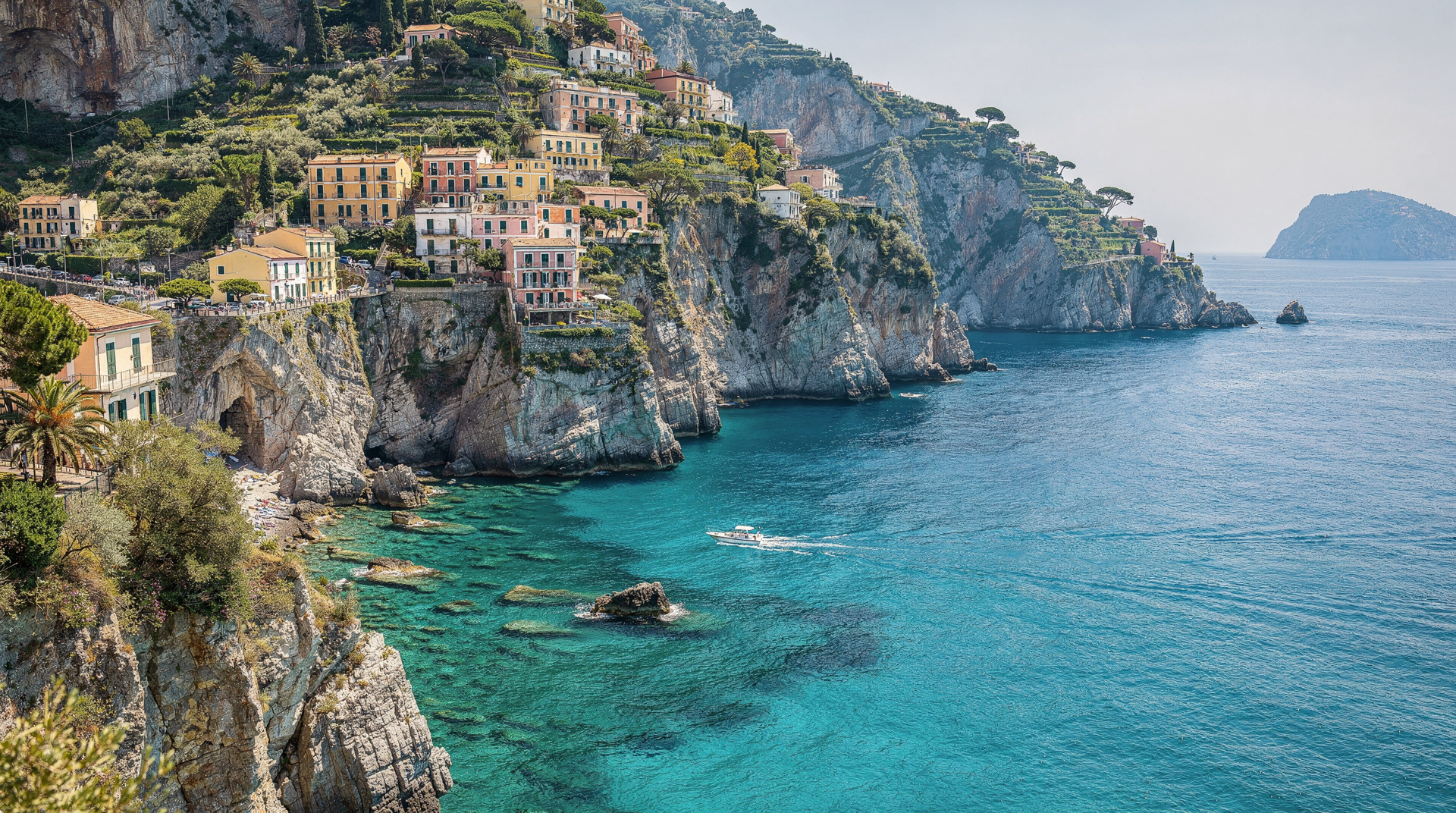
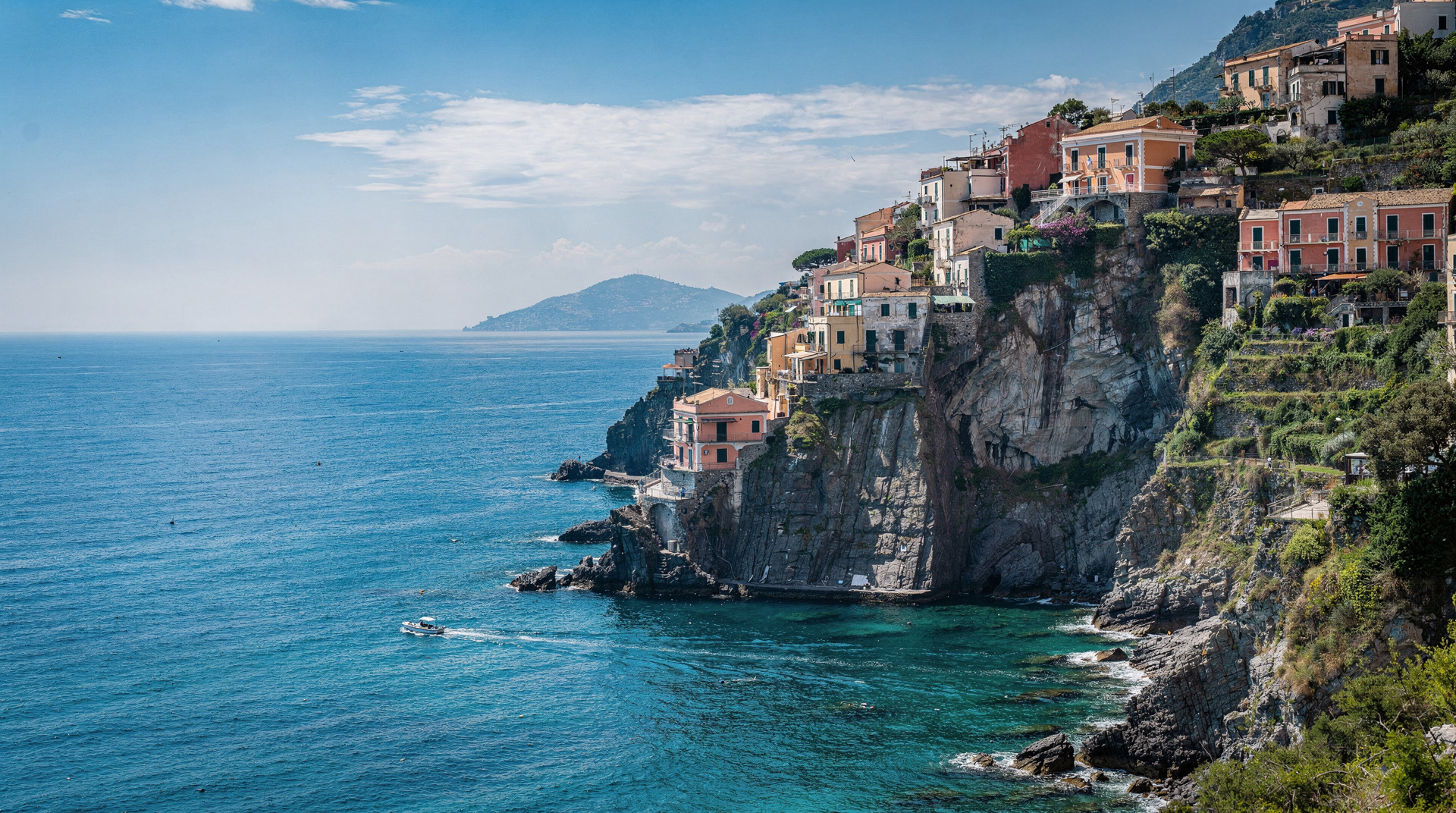
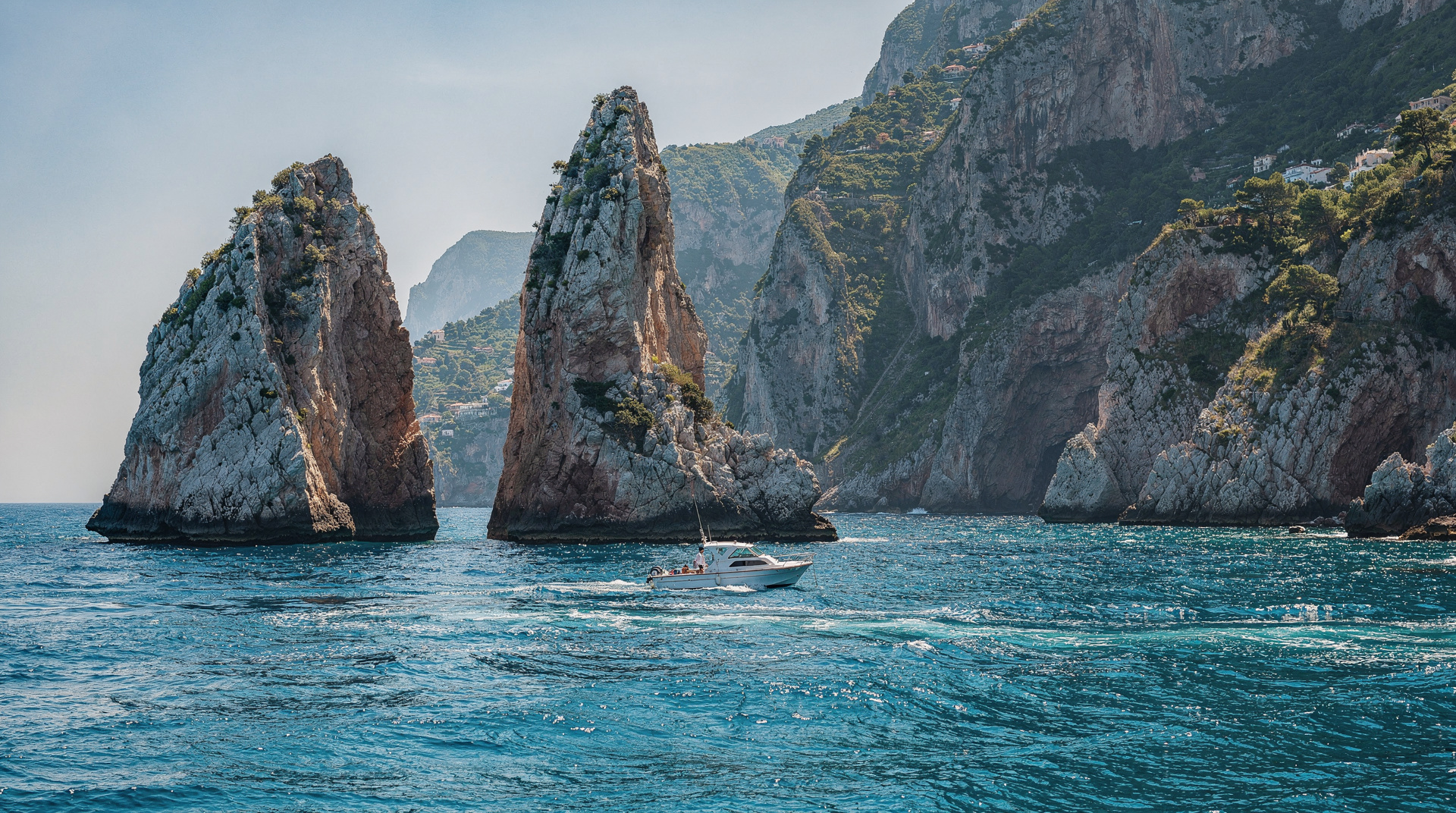
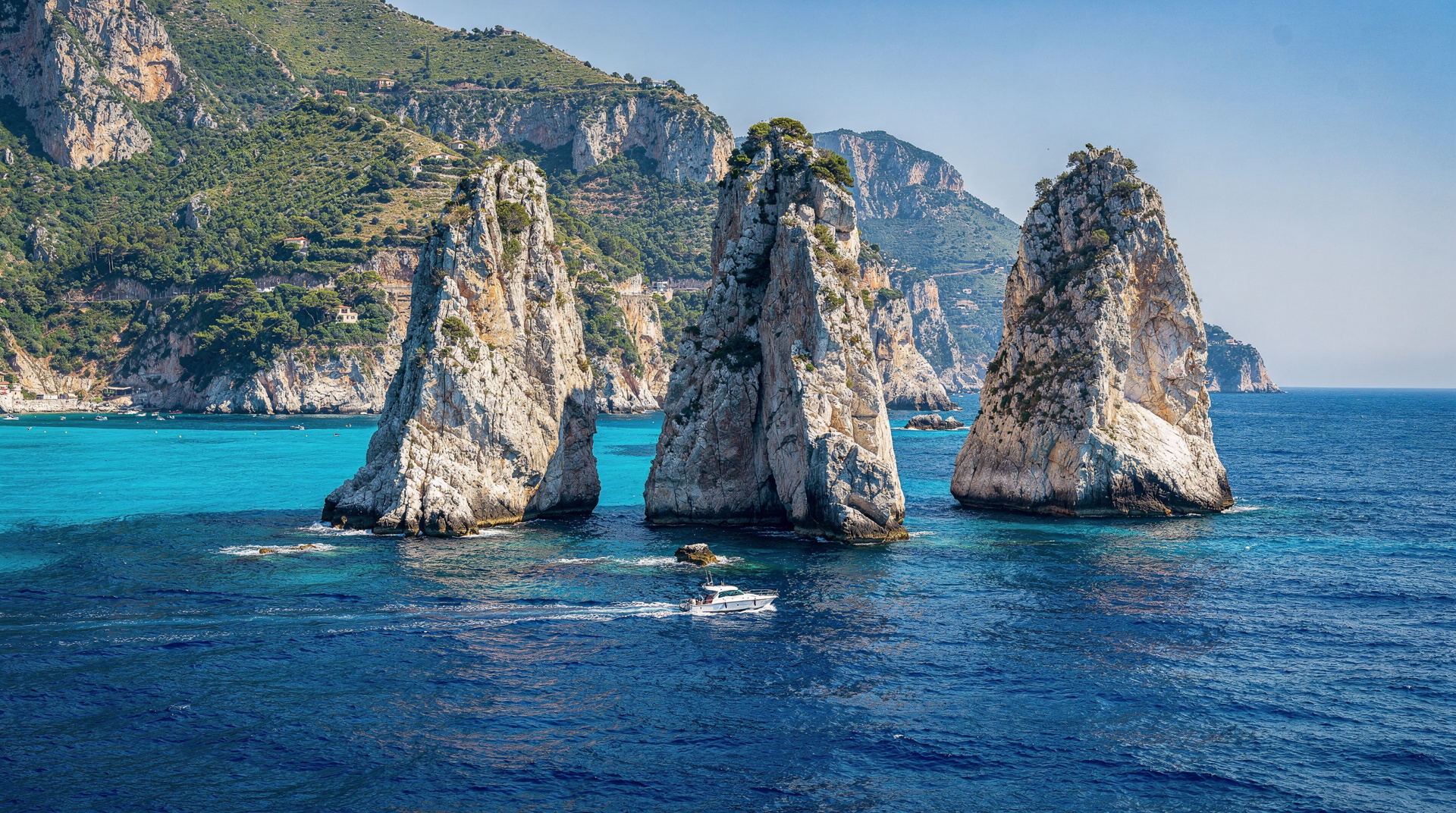
A small-group or shared boat circumnavigation of Capri (typically 2–3 hours, €18–25 per person) visits the grotto entrance from the sea, passes through the Faraglioni rock arches, sees the Green Grotto (Grotta Verde) and White Grotto (Grotta Bianca), and stops for a swim in a sea cave accessible only by boat. You see far more of Capri, often swim in spectacular water, and spend roughly the same amount of money as the Blue Grotto entrance alone.
Capri: Island Boat Tour and Optional Blue Grotto VisitOn many of these tours, entry to the Blue Grotto is offered as an optional add-on at the grotto entrance. If conditions are right and the queue is short, you join. If not, you continue with the boat tour. This is the most sensible approach.
Monte Solaro chairlift from Anacapri
The open-chair lift from Anacapri to Monte Solaro (589 m) takes 12 minutes and costs approximately €13 return. From the summit, the views over the Faraglioni, the Bay of Naples, Vesuvius, the Amalfi Coast, and on clear days as far as the Pontine Islands are arguably the best single viewpoint in the entire region. It is far less crowded than the grotto and reliably open.
See anacapri-and-chairlift for the full visit guide.
Swimming at the Faraglioni
The sea around the Faraglioni rocks on Capri’s south coast is some of the clearest in the Tyrrhenian Sea. Several private beach clubs and boat landing points offer access. Swimming through the arch of the Faraglioni di Mezzo on a calm day is one of the most memorable experiences Capri offers — and one that no photograph, however many millions of people take it, fully prepares you for.
Villa Jovis and the eastern trail
Villa Jovis, Emperor Tiberius’s main residence on Capri (1st century AD), sits on the eastern headland after a 45-minute walk from Capri town. Entry is modest (€6–8). The views from the cliff edge are dramatic and the site has almost no shade but also relatively few visitors compared to the town centre. A worthwhile alternative that puts you in contact with the island’s actual history rather than its grotto tourism economy.
From Naples: Guided Capri Island Day TripPractical logistics if you decide to go
Getting there: From Capri town, take the bus to Anacapri, then a connecting bus (or taxi) to the grotto entrance. Alternatively, charter a small boat directly from Marina Grande to the grotto. The sea approach queues are managed separately from the land queue.
Timing: Aim for 09:30–11:00 arrival at the grotto for the best balance of shorter queues and improving light. Peak colour (10:00–14:00) coincides with peak queues in summer.
What to bring: Cash only for the entrance fee and tip. Some operators do not accept cards. Water — you will be waiting in the sun. Sunscreen applied before you descend.
If it is closed: Do not accept alternative “grotto” offers from unofficial boat operators on the quay. These are invariably overpriced trips to less interesting caves with aggressive sales tactics. Cut your losses and redirect your time to a boat tour or Anacapri instead.
See blue-grotto-boat-tips for specific logistics on sea-approach transfers and timing the tides.
The verdict
The Blue Grotto occupies an odd place in Capri tourism: it is both genuinely extraordinary and genuinely overrated simultaneously. The blue colour inside, when conditions align, is one of those rare natural optical phenomena that photographs fail to capture. It is worth seeing once in a lifetime.
But “once in a lifetime” does not necessarily mean “this particular day trip with limited time and 90 minutes of queuing.” The experience is packaged and sold in a way that inflates expectation relative to the actual 4-minute ride. The cost, the closures, and the queueing experience all create a high risk of disappointment.
The practical recommendation: plan Capri around the island, not around the grotto. If you get to the grotto entrance and conditions are perfect with a short queue, pay your €28 and go in. If you find a 75-minute queue and choppy water — take the boat tour instead and feel no regret.
See capri-day-trip-guide for a full day itinerary, is-capri-day-trip-worth-it for the bigger question of whether Capri fits your trip, and capri-vs-ischia-vs-procida if you are still choosing between the Bay of Naples islands.
What tour listings don’t tell you upfront
Marketing copy for Blue Grotto tours tends to lead with the colour and bury the caveats. A few things worth reading carefully before you book: “Blue Grotto included” often means the boat stops at the entrance and gives you the option to pay the rowboat fee separately — it is rarely bundled into the headline tour price. “Skip-the-line” claims for the grotto itself should be treated sceptically; there is no official fast-track system, only the boatmen’s own queue management on the day.
And “guaranteed entry” is not something any honest operator can promise, since access depends entirely on sea conditions outside anyone’s control. Read the cancellation and refund terms specifically for the grotto portion, not just the tour as a whole — some operators refund the rowboat fee if closed, others simply continue the itinerary without addressing it. The Capri boat tour guide covers what a typical circumnavigation includes so you know what you’re comparing a grotto-specific tour against.
If your Capri day is more about the island’s food and views than any single sight, it’s worth reading the wider overrated things in Naples guide and Naples tourist traps guide — the same honest, expectation-management approach applies to plenty of other heavily marketed stops in the region.
Frequently asked questions about the Blue Grotto
How long does the Blue Grotto actually take?
The boat ride inside the cave is 5 minutes maximum — usually closer to 3–4 minutes. Factor in the transfer from Capri or Anacapri to the grotto entrance (20–30 minutes each way), plus queue time once there (30–90 minutes in peak season). A Blue Grotto visit easily consumes 2–3 hours of your Capri day including travel, waiting, and the brief ride itself.
What does the Blue Grotto cost in total?
The entrance fee to the grotto is approximately €14 per person. This does not include the rowing boat transfer from the dock, which costs around €14–18 extra (and boatmen expect a €2–5 tip). If you arrive by sea from Naples on a group tour, the transfer is included. If arriving independently by land via Anacapri bus, add the descent stairs or lift. Total realistic cost per person is €28–35, not including ferry to Capri.
How often is the Blue Grotto closed?
More often than most guidebooks admit. The grotto can close due to high seas (waves over ~0.5 m make entry impossible), strong winds, and unfavourable tides. The low entrance arch (about 1 m at low tide) can be completely submerged at high tide. Closures are common in October–April and unpredictable even in summer. There is no reliable public closure forecast — you only find out on the day. Many visitors arrive to find it shut.
What are the best alternatives to the Blue Grotto?
A full island boat tour (2–3 hours, roughly €18–25 per person in a group boat) circumnavigates Capri, passes the grotto entrance from the sea, visits the Faraglioni rocks, Green Grotto, and White Grotto, and offers far more variety. Other options include swimming at the rocks below the Faraglioni, the Villa Jovis hike on the eastern headland, and the Anacapri chairlift to Monte Solaro for panoramic views.
What is it actually like inside the Blue Grotto?
The blue is real and extraordinary — an intense, luminous azure created by sunlight refracting through an underwater opening. You lie flat in a small rowing boat, pass through the arch, and float in a cave about 60 metres long. The boatman rows and usually sings or chants. Then you come back out. On a sunny midday visit with the right water colour, the experience is genuinely memorable. On an overcast day, it is significantly less impressive.
When is the best time to visit the Blue Grotto if I decide to go?
Midday (11:00–14:00) produces the most intense blue, as the sun angle maximises the underwater light refraction. Arrive as early as 09:00 to beat the longest queues, even if the colour is slightly less vivid. Avoid the grotto entirely on windy days or after a few days of rough weather. Check conditions at Anacapri before descending. Weekdays in shoulder season (May, late September) are the most manageable.
Is the Blue Grotto suitable for children or people with mobility issues?
The boarding process requires stepping down into a small, low wooden boat while it bobs in open water — this is physically demanding and can be distressing for children, older visitors, or anyone with balance or mobility issues. You must then lie completely flat to pass through the entrance arch. It is not recommended for anyone who struggles with confined spaces, rough water boarding, or lying flat quickly on command.