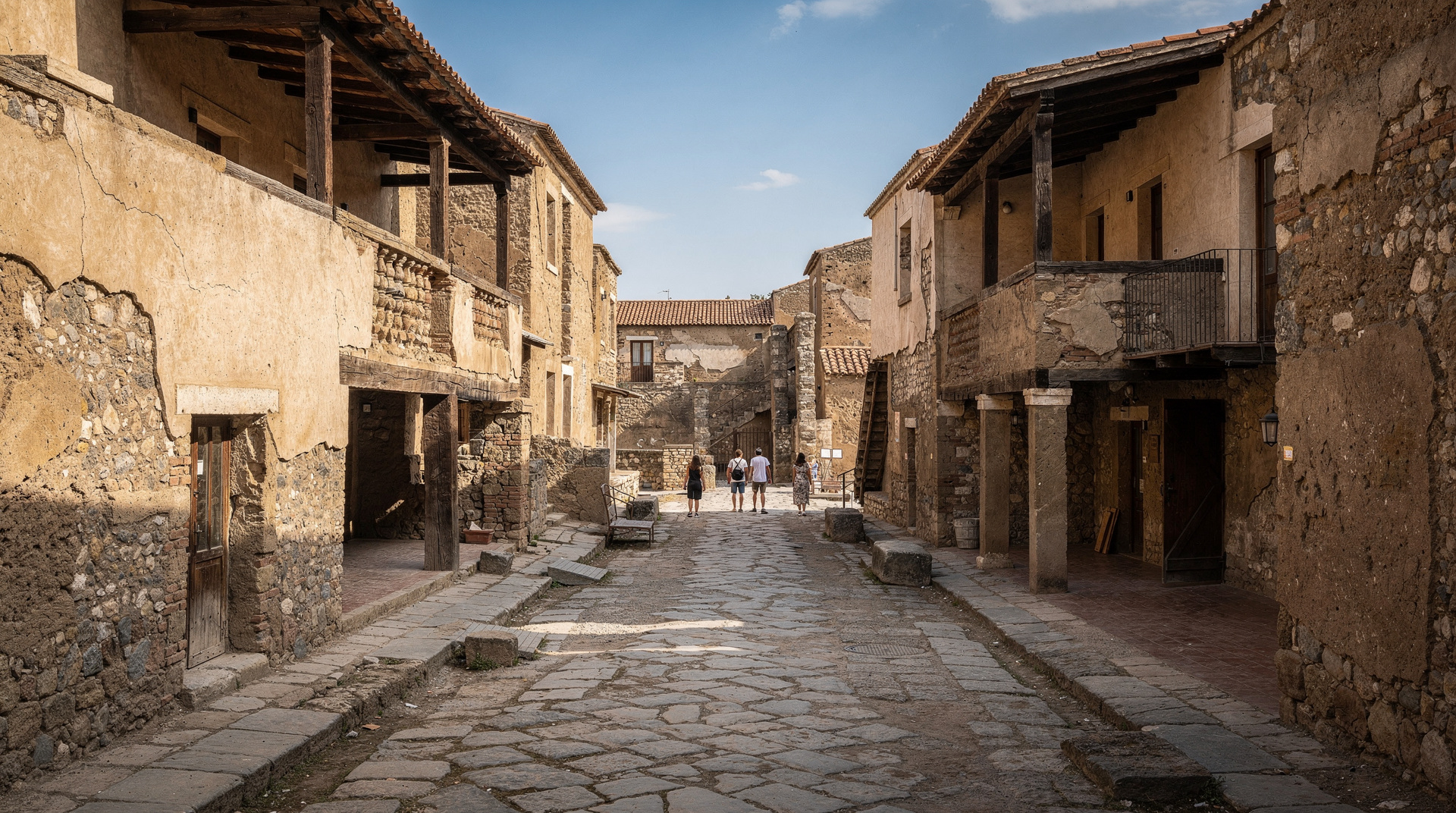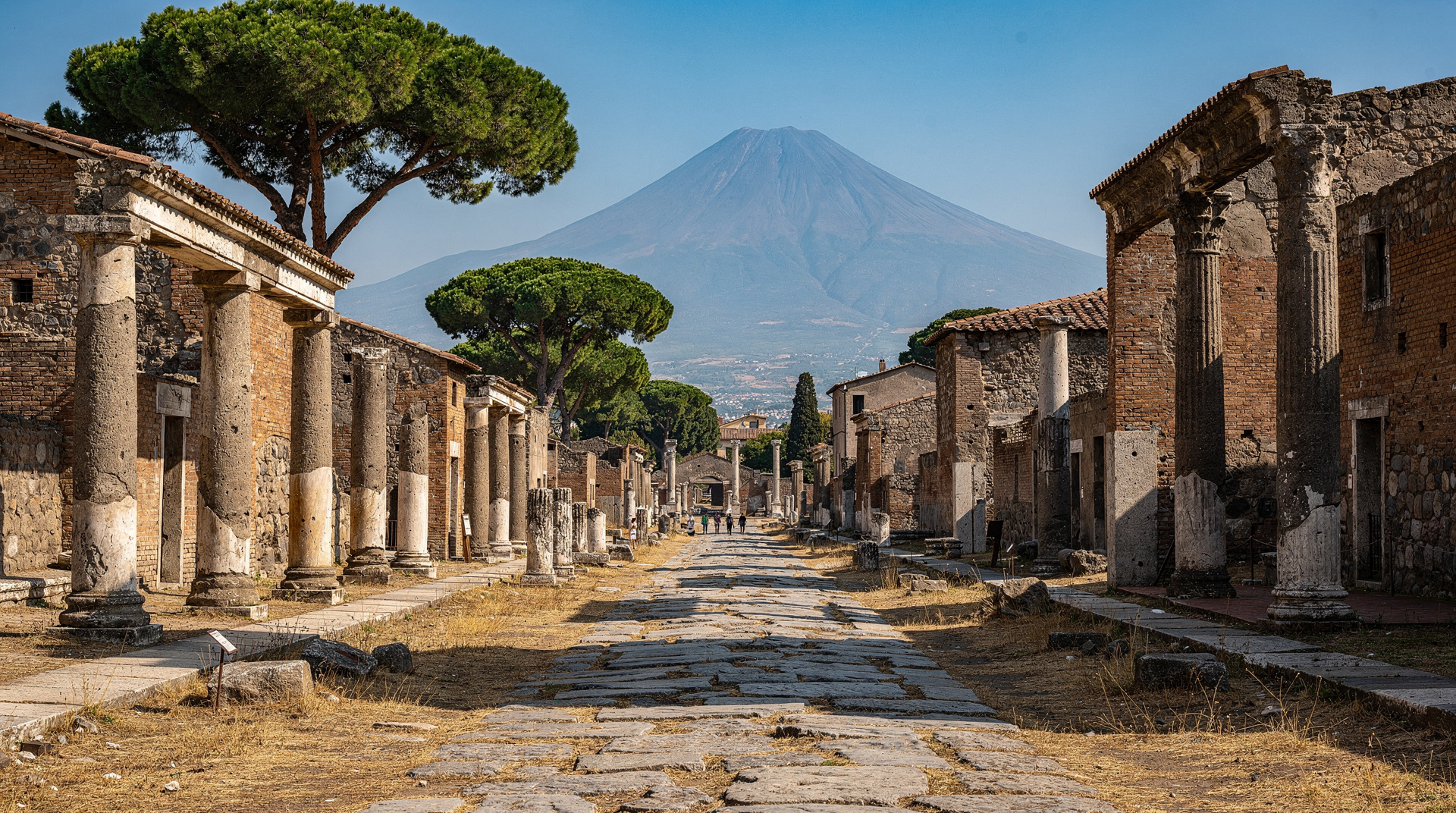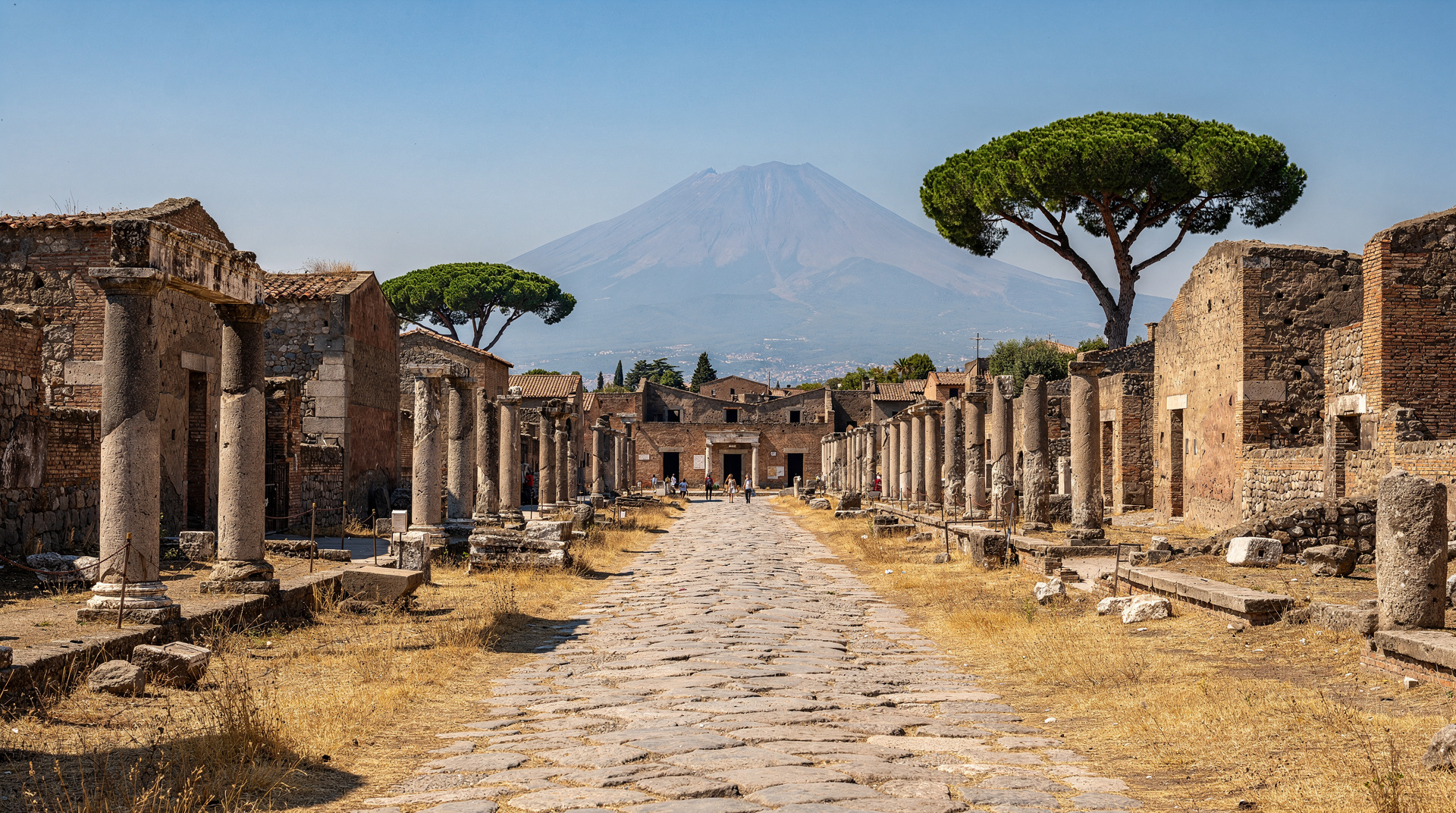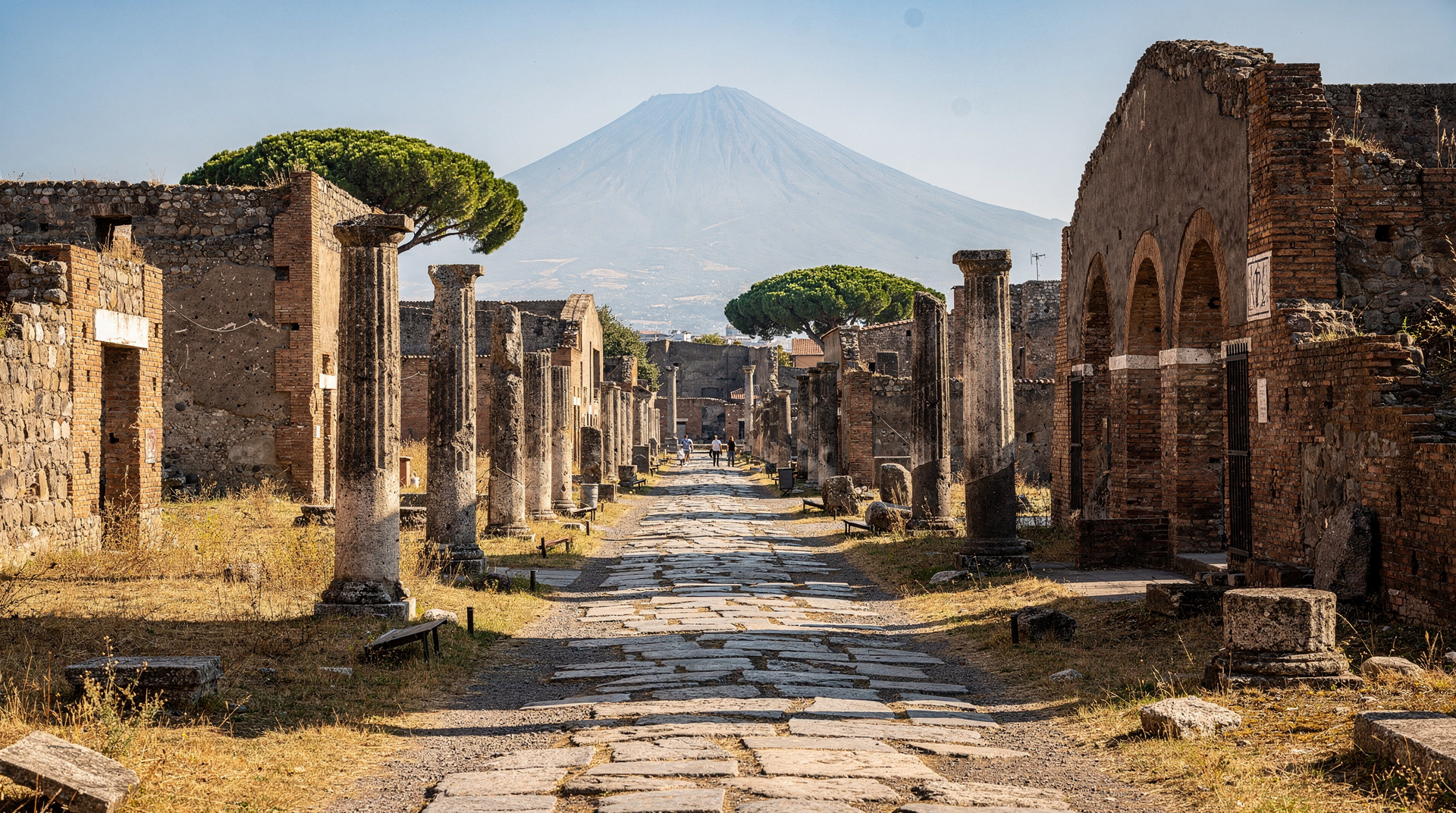
Herculaneum with an Archaeologist: The Guided Tour That Changes How You See It
Herculaneum: Tickets & Tour with a Local Archaeologist
Duration: 2h
Why Herculaneum rewards a guided visit more than almost any other Roman site
Herculaneum is one of those places where a guide is not a luxury — it is the difference between walking through a photogenic ruin and actually understanding what you are looking at. The site is compact enough that most visitors circle it in under two hours and leave feeling they have seen it all. They have not.
Without context, the carbonised timber frames look like ordinary decay. The dark matter on a shelf looks like dirt. The boat sheds down at the ancient seafront are easy to overlook entirely. A specialist guide — particularly one with an archaeology or classical history background — turns each of these into a specific story: the heat of the 79 AD pyroclastic surge, the moment the sea retreated and then the superheated gas hit, the hundreds of people who ran to the boats and never left.
The archaeologist-led Herculaneum tour is the version that does this properly. It is the starting point when deciding how to visit.
| Where | Ercolano, 20 min by Circumvesuviana train from Naples |
| Cost | around €16 entry; guided tours from roughly €25–40pp |
| Time needed | 2 hours guided, 2.5–3 hours total on site |
| Getting there | Circumvesuviana to Ercolano Scavi, then 10-min walk downhill |
| Best time | Early morning, especially April–May or September–October |
If you’re still deciding how Herculaneum fits your Naples itinerary, the Herculaneum guide covers the site independently of any specific tour operator, and the Circumvesuviana guide explains the train line in more depth, including ticket prices and how to avoid the pickpocket hotspots on this particular route.
What survived the eruption — and why it matters
Pompeii and Herculaneum were destroyed by the same eruption of Vesuvius on 24 August 79 AD, but they were buried differently. Pompeii was buried under several metres of loose ash and pumice; roofs collapsed, upper storeys vanished, organic material rotted away over the following centuries. Herculaneum was engulfed by a pyroclastic surge — a fast-moving wall of superheated gas and volcanic material — that was so rapid and so hot that it carbonised rather than crushed.
The result is a Roman town like no other. Specific things to look for on a guided tour:
Wooden structures. Wooden doors, bed frames, shelving, ceiling beams and window shutters survived in carbonised form. At the House of the Bicentenary and several other properties, you can see original upper-floor construction still in place. This is essentially unique in the Roman world.
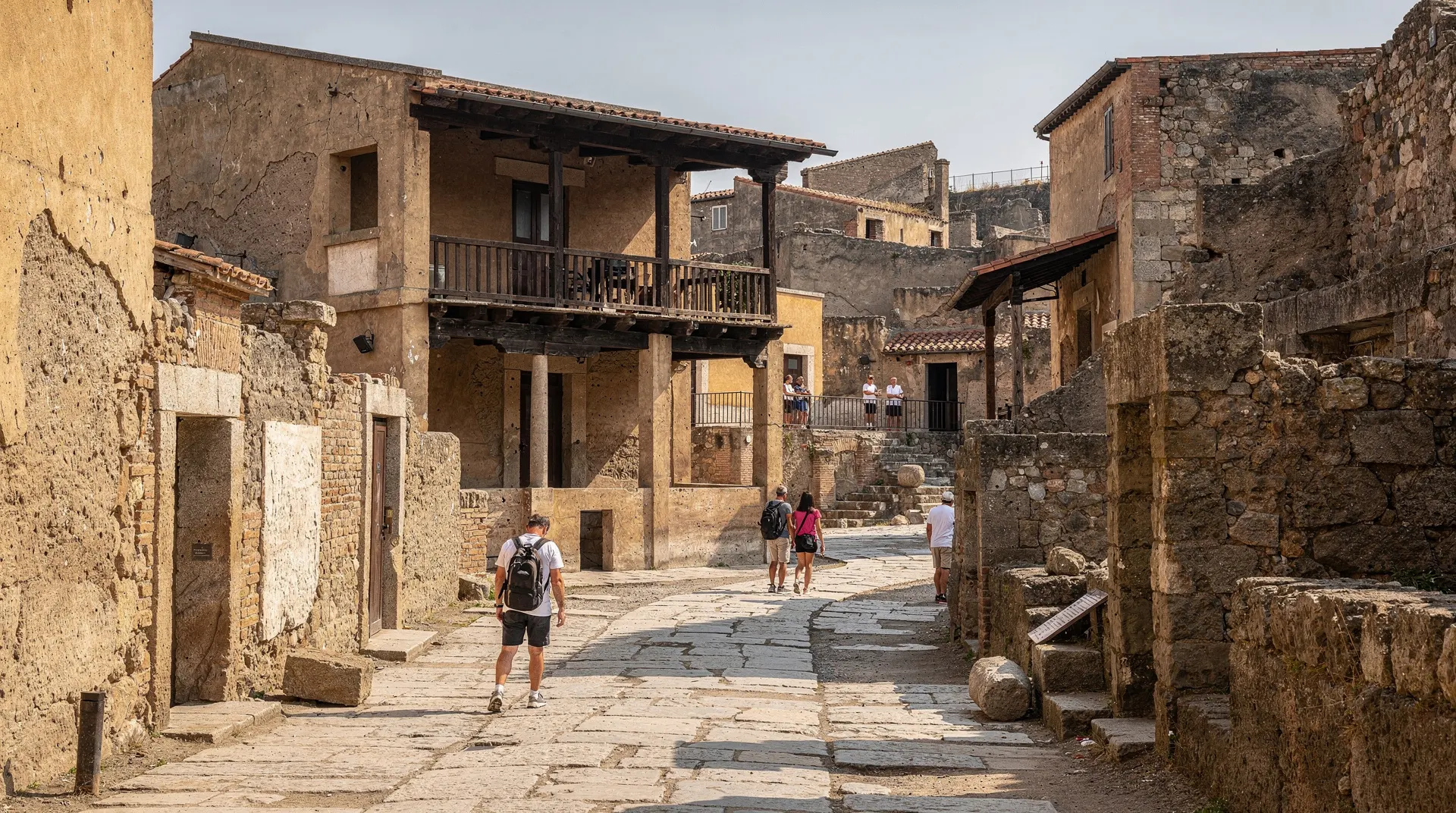
Second floors. Multiple buildings at Herculaneum retain their upper storeys — a rarity that changes how you read domestic Roman architecture. The spatial relationship between street level and private quarters becomes legible in a way that Pompeii rarely allows.
Frescoes and mosaics. The colours at Herculaneum are frequently more vivid than at Pompeii. The thermal shock sealed the surfaces, and the depth of the burial layer above protected them from centuries of weathering and early excavation damage.
The boat-shed skeletons. Down at the ancient seafront — lower than most visitors venture without guidance — are a series of arched stone chambers that served as boat storage. Inside are the remains of approximately 300 people who fled to the shore when the eruption began and died there waiting for rescue. The skeletal remains are still in place. It is the most viscerally affecting part of the entire site, and it is regularly missed by visitors who do not know to go there.
The guide’s value: what expertise changes
The difference between a generic audio guide and a specialist leading you through the site is significant at Herculaneum. The site is dense with detail — graffiti, shop counters, latrine configurations, electoral notices painted on walls — that rewards explanation rather than passive observation.
A good guide will:
- Set the chronology of the eruption and explain why Herculaneum’s death toll and burial character differ from Pompeii’s
- Identify specific houses by their inhabitants and explain what the decoration communicates about status and wealth
- Point out the evidence of commercial life — wine bars, bakeries, cloth-fulling operations — that is easy to walk past without recognition
- Explain what the carbonised organic material actually is and how it was preserved
- Take you to the boat sheds and give the skeletal remains their human context
The archaeologist-guided tour runs at approximately 2 hours and covers the key areas with this level of depth. Shared group tours with a specialist guide are the most cost-effective way to get genuine expertise.
Practical matters: entry, getting there, timing
Entry cost. The standard adult entry to the Herculaneum archaeological site is approximately 16 €. This is included in combined Campania Artecard passes. The site is managed by the same authority as Pompeii; joint tickets combining both sites are available and represent reasonable value if you plan to visit both.
Getting there. The Circumvesuviana train from Naples Porta Nolana or Piazza Garibaldi runs to Ercolano Scavi station approximately every 30 minutes. Journey time is around 20 minutes. From the station, it is a 10-minute walk downhill along Corso Resina to the entrance gate. The walk is straightforward and clearly signposted — no navigation required.
How long inside. The site is compact. A guided tour takes approximately 2 hours; allow another 30–60 minutes if you want to linger independently after the group portion. Unlike Pompeii, you will not feel overwhelmed by scale — Herculaneum is manageable in a single focused visit.
Best time to go. Early morning (opening is 09:00 in most seasons) gives you the coolest conditions and the smallest crowds. The site can become hot by late morning, particularly in July and August, as there is limited shade. Mid-week mornings in shoulder season (April, May, September, October) are the least pressured times.
Who this tour is for
The 2-hour shared guided tour is well suited to:
- First-time visitors to the Bay of Naples who want to understand what they are looking at
- History or architecture enthusiasts who will get more from active explanation than a map
- Anyone who finds large Roman sites like Pompeii slightly overwhelming — Herculaneum’s scale is human and navigable
- Travellers combining with a Naples day who want a structured half-day rather than open-ended exploration
If you have already visited Herculaneum once and want a return visit with more depth, the archaeologist-led format is particularly worthwhile — experienced visitors often report getting significantly more from a specialist guided return than from their independent first visit.
For anyone planning to visit both Herculaneum and Pompeii, the combined Pompeii and Herculaneum tour covers both sites in a single day with guided access throughout. It is a long day but the contrast between the two sites — experienced back-to-back with expert commentary — is one of the most effective ways to understand Roman provincial life before and after Vesuvius.
Herculaneum vs Pompeii: which to prioritise if you only have one day
The comparison comes up constantly, and the honest answer depends on what you want from the visit. Pompeii is vast — you can spend a full day and still not see everything — and delivers the scale and spectacle of an entire buried city, forum, amphitheatre and all. Herculaneum is a fraction of the size but goes deeper into domestic detail: the wood, the upper floors, the boat sheds.
The Herculaneum vs Pompeii guide and its companion Pompeii vs Herculaneum comparison both walk through the trade-offs stop by stop, which is worth reading if your schedule genuinely only allows one site. For getting from Naples to either or both, the getting to Pompeii from Naples guide covers the shared Circumvesuviana route and where the lines to each site diverge, and the Pompeii complete guide is the deeper resource if Pompeii ends up being the priority.
Verdict
Herculaneum is a smaller site than Pompeii but a richer one in many respects. The organic preservation — the wood, the upper floors, the boat-shed skeletons — is unmatched anywhere in the Roman world. Without a guide, visitors frequently leave with a vague sense that it was interesting but not why. With a specialist alongside, the same two hours inside the site becomes a coherent and genuinely moving experience.
The priority access guided tour is worth the modest premium if you are visiting in peak season and want to arrive at opening without queuing. In quieter months, the standard shared tour delivers the same quality of expertise at a lower price point.
Either way, it is one of the best half-day options within easy reach of Naples — and one of the most consistently underrated archaeological sites in Southern Italy.