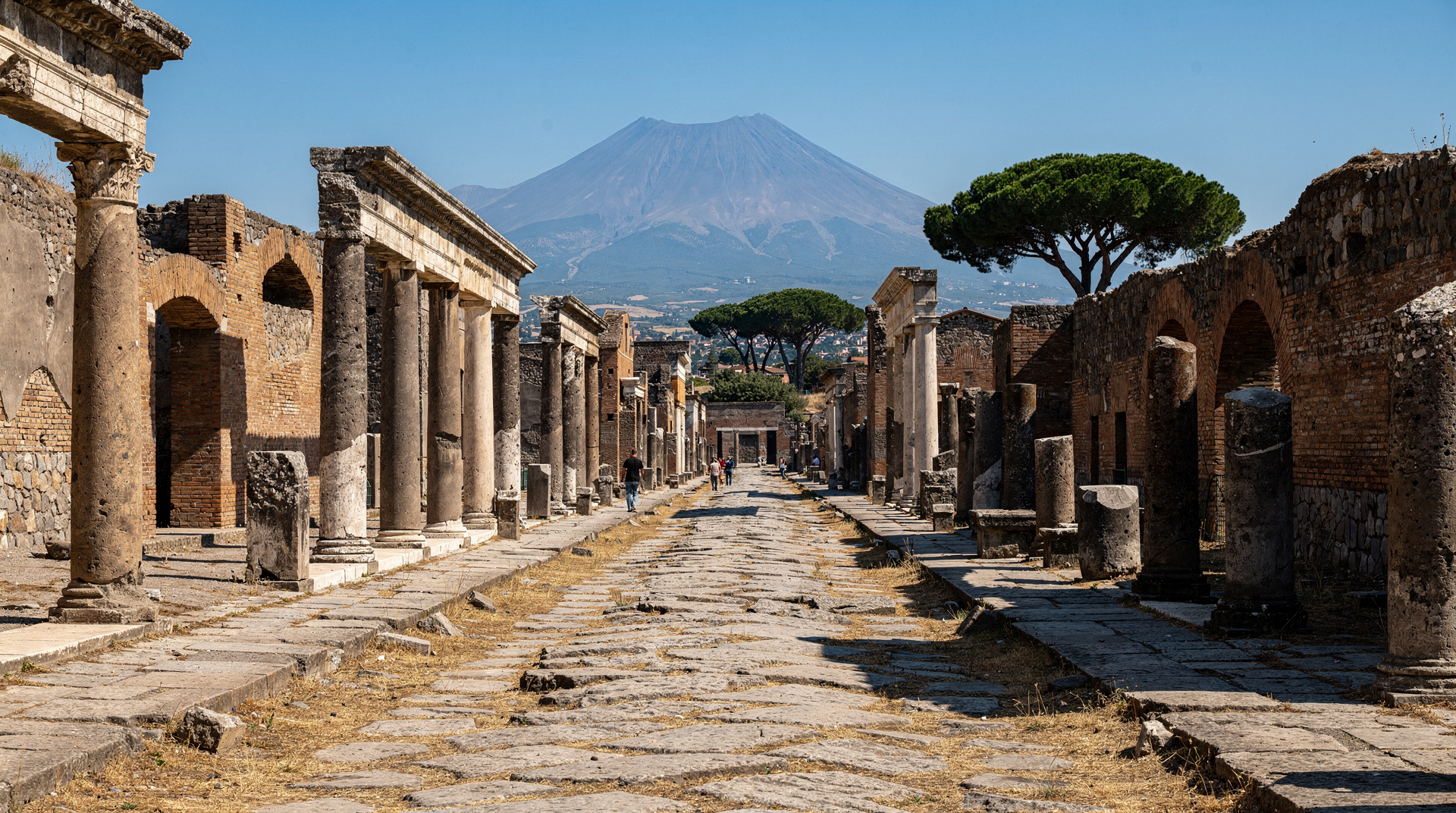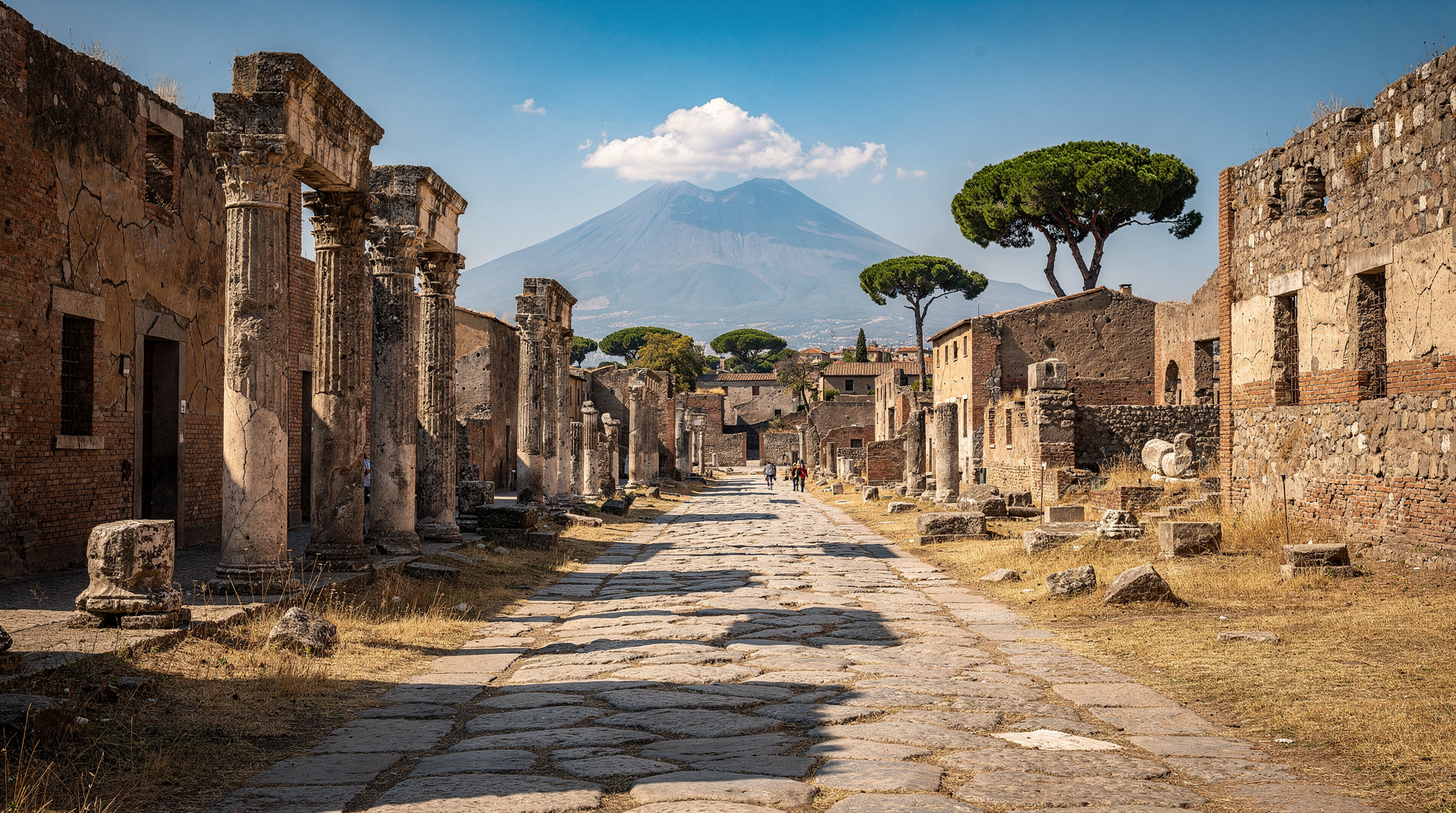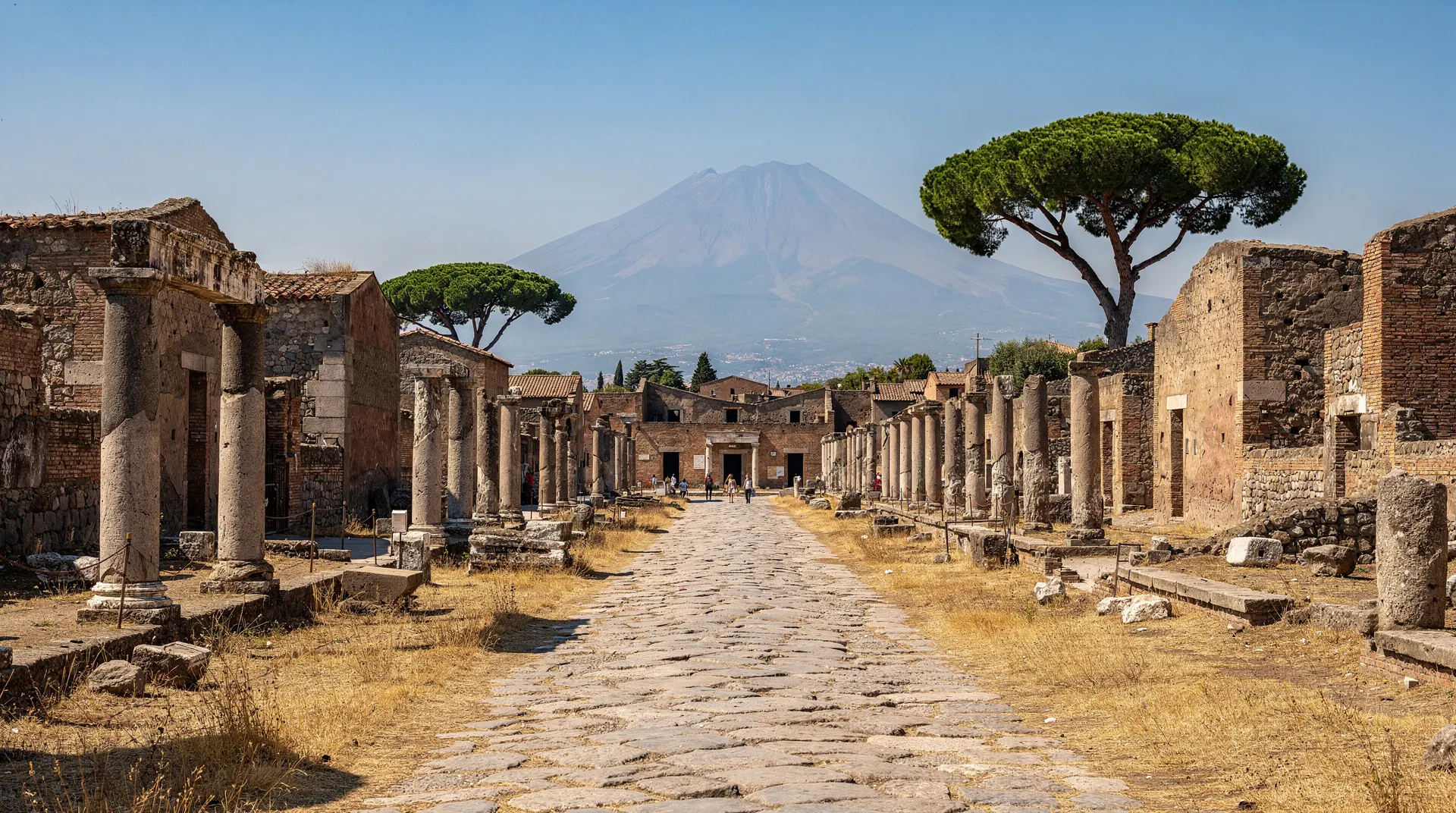
Pompeii vs Herculaneum — which Roman ruin site to visit?
From Naples: Pompeii and Herculaneum Tour
Is Pompeii or Herculaneum better to visit?
Pompeii is larger with more visible highlights spread across a vast site — the scale alone is extraordinary. Herculaneum is smaller, better preserved, far less crowded, and has more intimate domestic detail including original upper floors, wooden furniture, and carbonised food still in bowls. Both are genuinely exceptional. If you have one day, Pompeii is the default. If you have half a day and want depth over breadth, Herculaneum.
Pompeii or Herculaneum? Pompeii for scale and the overwhelming sense of a complete Roman city. Herculaneum for better preservation, more detail, and far fewer crowds. Both were destroyed in the same eruption in 79 AD. Both are extraordinary. The difference is breadth versus depth.
| Pompeii | Herculaneum | |
|---|---|---|
| Size | 44 hectares excavated | 4–5 hectares excavated |
| Time needed | 3–5 hours | 2–2.5 hours |
| Entry ticket | around €18 | around €13 |
| Crowds | very high, especially summer | far lower year-round |
| Best for | first-time visit, scale | preservation detail, less time |
The same eruption, two completely different sites
Mount Vesuvius erupted on 24 August 79 AD (or possibly 24 October — new evidence from the 2018 Pompeii excavations suggests an autumn date). Both Pompeii and Herculaneum were destroyed, but by different volcanic mechanisms, and this difference is why the two sites look and feel so different today.
Pompeii, 9 km southeast of Vesuvius, was initially buried under a 4–6 metre fall of volcanic pumice and ash over 18–20 hours. The fine ash preserved the city’s layout and the voids left by decomposed human bodies (which Fiorelli in the 19th century filled with plaster to create the famous body casts), but organic materials — wood, food, cloth — did not survive.
Herculaneum, 8 km from the volcano, was not hit by the initial ash fall in the same way. Instead it was engulfed by a series of pyroclastic surges — superheated avalanches of gas, ash, and volcanic matter at temperatures of 400–700°C — which swept through the town in minutes. This violent burial was in some ways more destructive to bodies (the victims in the boat sheds were essentially vaporised, leaving only bones) but more preserving of materials. Carbon-charged conditions prevented the organic decay that affects Pompeii. The result is a site where you can stand in a Roman house and see wooden beams, shop counters with painted advertisements, food carbonised in bowls, and furniture that has not moved in 2,000 years.
Pompeii: scale and famous highlights
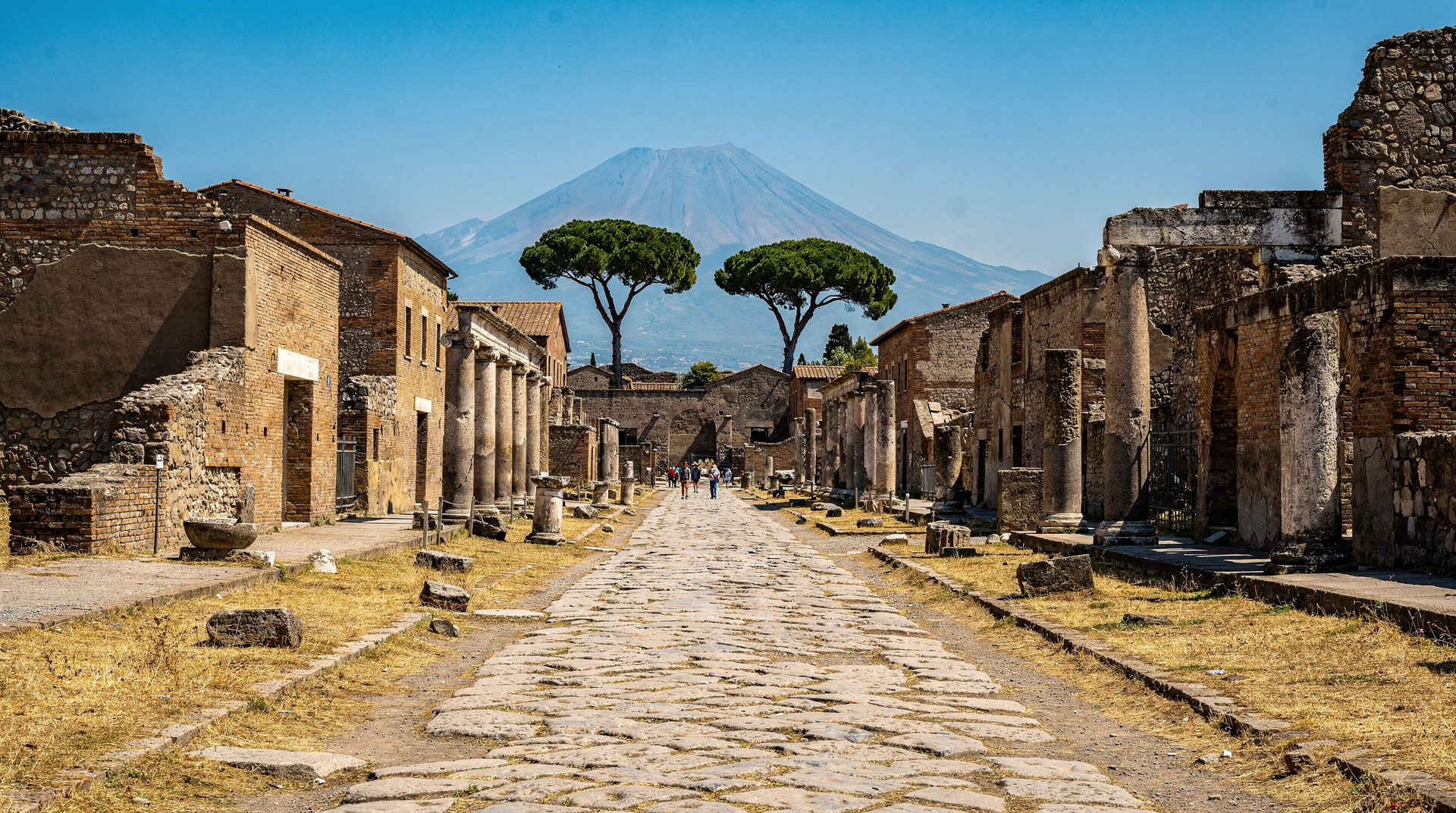
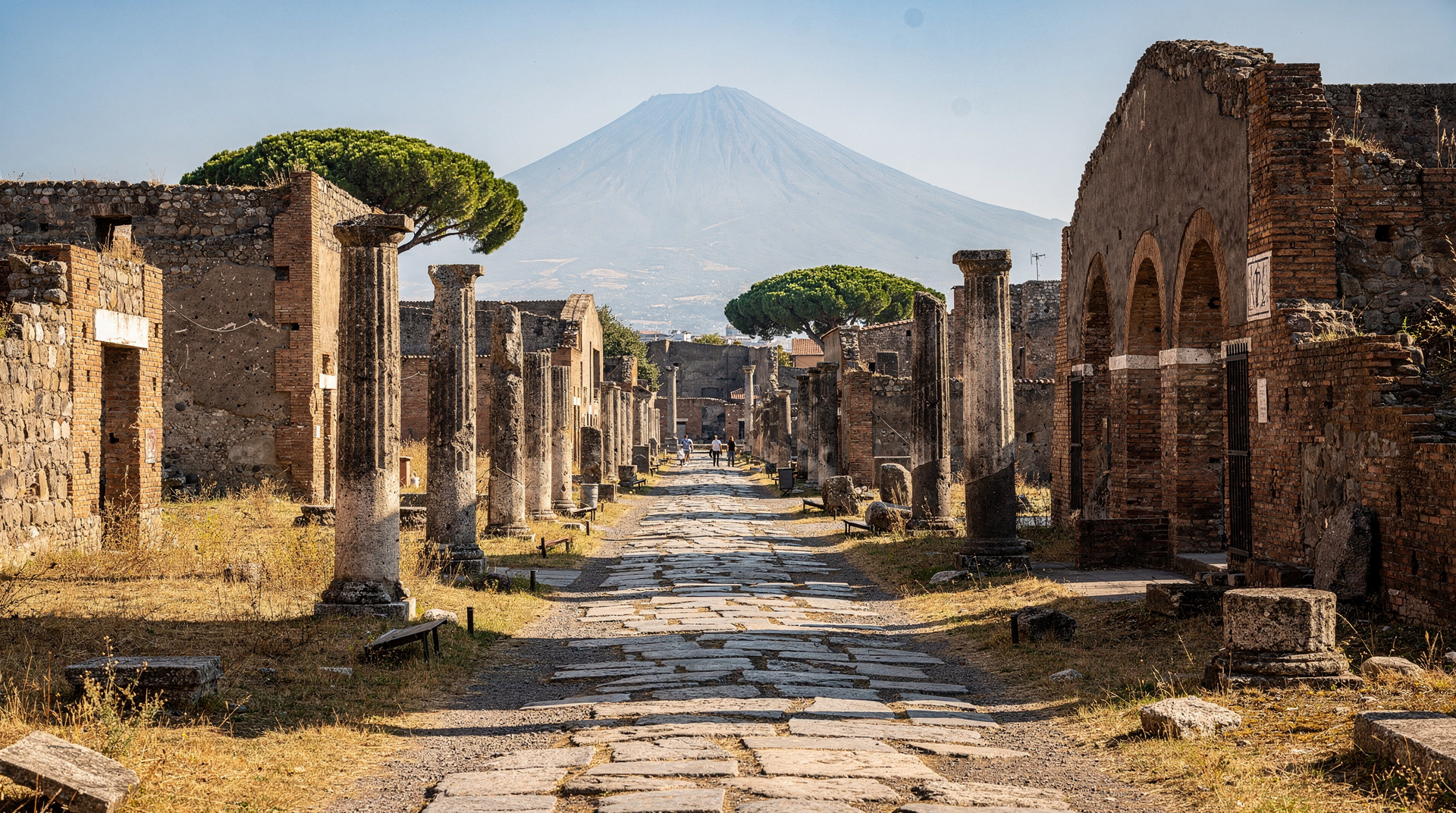
Pompeii covers 44 hectares and contained approximately 20,000 inhabitants. Only about two-thirds of the site has been excavated; the rest remains underground pending future technology and resources. What has been uncovered is a complete Roman city with:
- Forum — the civic and religious centre, with temples to Jupiter, Apollo, and the Imperial cult, the macellum (market building), and the administrative basilica
- Amphitheatre — the oldest surviving Roman amphitheatre, seating 20,000, restored to use for concerts
- Lupanar — the purpose-built brothel, with original erotic frescoes above the bed niches (room 1 in the UNESCO-listed building)
- House of the Faun — the largest private house in Pompeii, covering an entire city block; the original Alexander Mosaic was found here (now in the MANN in Naples)
- House of the Vettii — the best-preserved wealthy merchant house, with extensive painted rooms including the Priapus fresco at the entrance
- Via dell’Abbondanza — the main commercial street with election graffiti still visible on walls
- Plaster body casts — at multiple locations including the Garden of the Fugitives (nine people sheltering together, including children)
The site requires 3–5 hours minimum to cover the main areas; a full archaeological exploration takes a full day. See pompeii-complete-guide for detailed guidance on what to prioritise.
Pompeii skip-the-line guided tour with archaeologistHerculaneum: preservation and intimacy
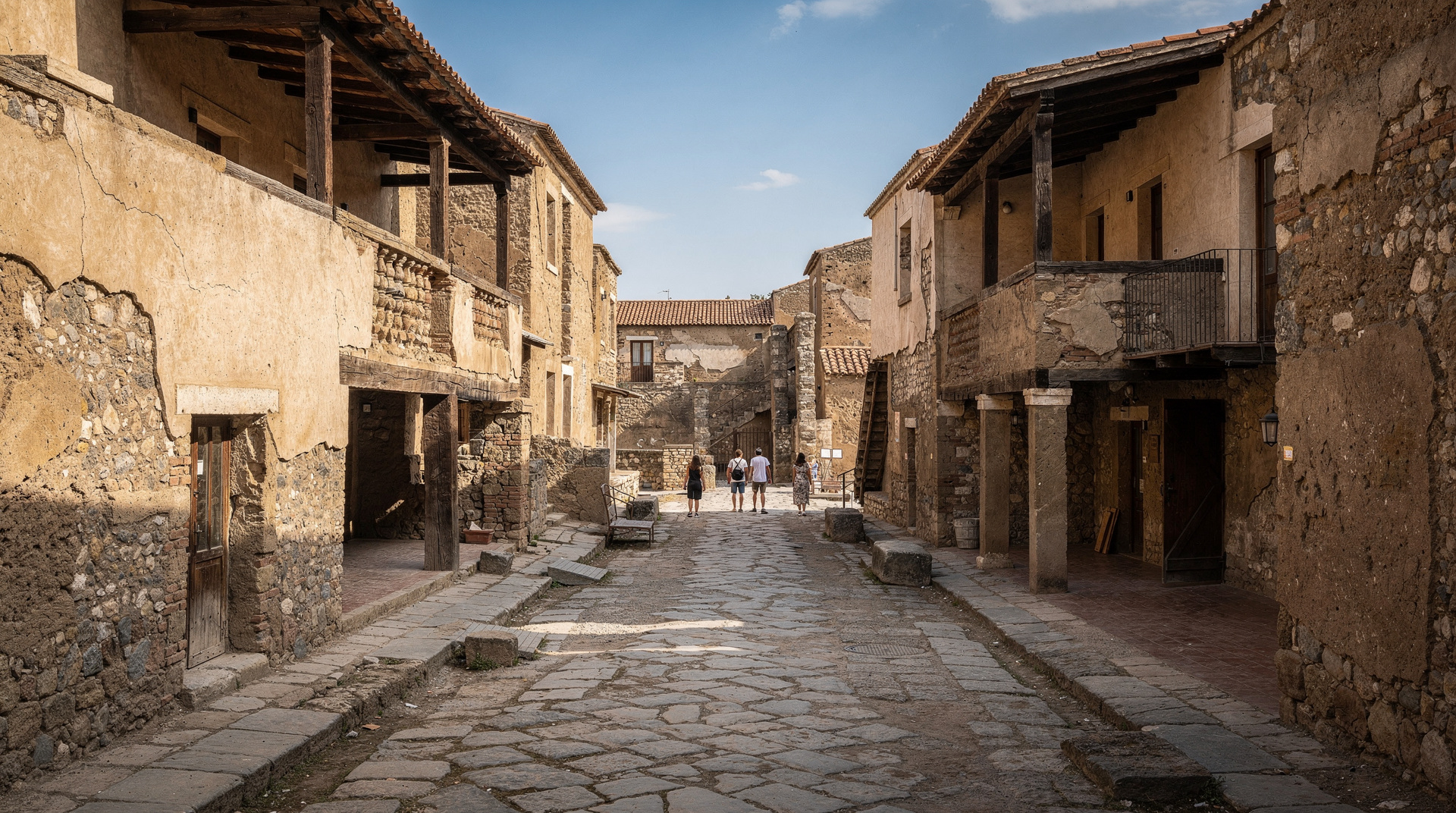
Herculaneum is much smaller — about 20 hectares total, of which roughly 4–5 have been excavated. The modern town of Ercolano sits directly above the unexcavated portion, making further excavation complex. What you see is a grid of streets, approximately 5 metres below the modern street level, surrounded by the retaining walls of the excavation pit.
The scale of preservation is genuinely astonishing for a site that has been open to visitors since the 18th century:
The boat sheds — at the waterfront edge of the site, 300 skeletons were discovered huddled in the boat storage areas on the ancient beach. They had sheltered there as the eruption began, assuming the sea would be their escape route, but the pyroclastic surge reached them. The bone deposits are visible as found.
House of the Bicentenary — a large house with a wooden cross imprinted on its upstairs wall. Disputed interpretation: either the earliest known Christian symbol in a private house or a fitting for a shelf that happened to be cross-shaped. The fact that there is an upstairs at all is remarkable — Pompeii’s upper floors are largely gone.
House of the Gem and House of the Deer — wealthy houses with intact mosaic floors, painted rooms, and garden sculptures (casts of the originals, which are in the museum).
The college of the Augustales — the meeting house of the cult of the deified Augustus, with spectacular frescoes intact, including the elaborate ceiling fresco that has survived 2,000 years in a closed room.
Suburban baths — the best-preserved bath complex at either site, with original marble benches, mosaic floors, and the erotic fresco paintings in the apodyterium (changing room).
Carbonised shop fronts — the most remarkable everyday detail: shop counters with storage jars still in the wall, painted menus advertising what was served, amphorae still standing in their pits.
Herculaneum guided tour with archaeologistCrowd comparison: this matters
The difference in visitor pressure between Pompeii and Herculaneum is extreme and underappreciated by most people planning a Campania visit.
Pompeii receives approximately 3.5–4 million visitors annually, making it one of Italy’s most visited archaeological sites. In July and August, the site operates near capacity and the main streets — Via dell’Abbondanza, the Forum area — can feel like a theme park queue. Advance ticket booking is essential and the site sometimes reaches daily capacity by early afternoon.
Herculaneum receives approximately 300,000 visitors annually — roughly one-tenth of Pompeii. Even in peak season, the site is uncrowded by comparison. On a summer morning when Pompeii is wall-to-wall coach groups, Herculaneum will have a few dozen visitors per hour. This is not because it is inferior — it is because it is less well-marketed and smaller.
The crowd differential makes a real difference to the experience. At Herculaneum you can stand in the House of the Bicentenary alone for several minutes. At Pompeii in August, the House of the Vettii tour has a queue.
Combined visits and logistics
The two sites are on the same Circumvesuviana railway line. From Naples Garibaldi (Napoli Centrale lower level):
- Herculaneum: Ercolano Scavi station, 10–15 min, €2.60 single
- Pompeii: Pompei Scavi-Villa dei Misteri station, 30 min, €3.30 single
Combining both sites is possible in a single day starting early. The standard sequence is:
- Depart Naples by 8:30am
- Herculaneum first (2–2.5 hours is enough for the main site)
- Return to the station, continue to Pompeii
- Pompeii afternoon (3–4 hours)
- Return to Naples by evening
This is a long, physically demanding day. In summer heat, it is genuinely exhausting — neither site has meaningful shade. Spring and autumn are dramatically better for a combined visit.
The combined Parco Archeologico ticket covers both sites plus Oplontis, Stabiae, and Boscoreale and costs €22, valid for 3 consecutive days. This allows splitting the visits across two days if you prefer.
Pompeii and Herculaneum combined tour with guideThe MANN connection
Both sites cannot be understood fully without the Museo Archeologico Nazionale di Napoli (MANN), which holds the principal objects recovered from both cities: the original Alexander Mosaic (from the House of the Faun), the Secret Cabinet of erotic objects, the Farnese Hercules, and thousands of domestic items — surgical tools, jewellery, food containers, gaming dice — that give the sites context. If your itinerary includes both Pompeii and the MANN, schedule the museum before the sites if possible. See naples-archaeological-museum-mann for planning guidance.
What guided tours emphasise differently at each site
A guide at Pompeii spends much of the tour on orientation and prioritisation — telling you which of dozens of possible buildings are worth the walk given your time, and filling in the social and political history that turns a stone street into a legible city.
A guide at Herculaneum works differently: because the site is small enough to see completely in a couple of hours, the guide can slow down and go deep on individual rooms — pointing out the carbonised wood grain in a door lintel, the still-legible paint on a shop sign, or the specific reasoning behind the “Christian cross” debate in the House of the Bicentenary. If you only have time and budget for one guided experience in Campania, the choice between these two styles — broad orientation versus close-up depth — is worth factoring in alongside crowd levels and preservation.
Full-day Pompeii, Herculaneum and Vesuvius combo tourWhich site should you prioritise?
Go to Pompeii if:
- You have never visited an ancient Roman city
- Scale and the overwhelming sense of a complete urban environment is what you want
- You are interested in the full range of Roman public architecture
- You have a full day available
- You are travelling in shoulder season when summer heat is not a concern
Go to Herculaneum if:
- You have limited time (2–3 hours) and want depth over breadth
- You have already seen Pompeii
- Preservation detail and domestic life interest you more than grand monuments
- You want to avoid summer crowds
- You are travelling with children (more compact, more dramatic details, shorter walking distances)
Visit both if:
- You are making a dedicated Campania archaeology trip
- You have 2+ days for the volcanic sites
- You want the contrast between the two different burial mechanisms
Cost comparison side by side
| Pompeii only | Herculaneum only | Combined (3-day) | |
|---|---|---|---|
| Adult entry | around €18 | around €13 | around €22 |
| Concession (EU 18–25) | around €9 | around €9 | around €11 |
| Audioguide | around €8 extra | around €8 extra | separate per site |
| Guided small-group tour | around €35–55 pp | around €40–60 pp | around €70–100 pp |
The combined ticket is close to the price of Pompeii alone with Herculaneum added almost for free — it’s rarely worth buying single tickets for both unless your dates don’t line up with the 3-day validity window. See Pompeii tickets explained for the full breakdown of ticket types, including the Campania ArteCard.
If you can only choose one, decide by this
Most visitors overthink this decision. The honest shortcut: if it’s your only ancient Roman site on this trip, go to Pompeii — the scale is what people travel for, and you’ll regret skipping the Forum and the Amphitheatre more than you’d regret skipping Herculaneum’s finer detail. If you’ve already seen Pompeii on a previous trip, or you’re short on time (half a day or less), or you’re visiting with young children who tire on long walks, Herculaneum is the better use of your remaining hours.
If you’re building a longer Campania itinerary that also covers Vesuvius and the coast, see ancient Campania: Pompeii, Herculaneum and Vesuvius for how a multi-day sequence fits together without the exhausting single-day double.
For the practicalities of getting between Naples and either site, getting to Pompeii from Naples and the Circumvesuviana guide cover the same train line that serves Herculaneum, so read either one regardless of which site you choose first.
Frequently asked questions about Pompeii vs Herculaneum
How much time do I need at each site?
Pompeii: 3 hours minimum for a highlights visit covering the Forum, main houses, and amphitheatre. 5–6 hours for a thorough exploration. A full-day specialist visit is possible and rewarding. Herculaneum: 2–2.5 hours is enough to cover the entire excavated area with attention. A well-guided 2-hour tour will cover everything significant.
Is there shade at Pompeii and Herculaneum?
Almost none. Pompeii has a few shaded walkways and trees in the southern sections near the amphitheatre, but the main Forum area and principal streets are completely exposed. Herculaneum, being set below street level and slightly enclosed, has marginally more shade from the retaining walls. In summer, bring a hat, sunscreen, and at least 1.5 litres of water per person. Water is available at a few points in both sites but in limited quantities. See pompeii-in-summer-heat-tips for full summer-visit preparation.
Are there cafés or restaurants inside the sites?
Both sites have café/snack facilities inside. Pompeii has a larger cafeteria near the main entrance that is serviceable but expensive (€4–5 for a panino). Herculaneum’s café is basic. A better option for both is to eat at a café near the station before entering — the streets outside both archaeological parks have multiple options at normal prices.
Can I visit Herculaneum and Vesuvius on the same day?
Yes. The standard combination is Herculaneum in the morning (10am–12:30pm) then take the bus up Vesuvius from outside Ercolano Scavi station (approximately €10 for the shuttle bus, plus €15 Vesuvius entry). This is a feasible half-day combination. Pompeii and Vesuvius is also a common pairing — the access bus from Pompeii station makes this easy. See pompeii-and-vesuvius-same-day for logistics.
Are the body casts at Pompeii appropriate for children?
Most children find the body casts fascinating rather than disturbing — the shapes are clearly human but abstracted by the plaster process. The most concentrated display is in the Garden of the Fugitives in the southeastern part of the site. The Lupanar (brothel) has erotic frescoes that require a parental judgment call; the building has a separate access charge. Overall, Pompeii is a family-appropriate site with material that prompts genuine historical questions rather than causing distress.
What is the difference between the Pompeii entrance near the Circumvesuviana station and other entrances?
Pompeii has three entrances: the main Porta Marina entrance (near the Circumvesuviana station), the Anfiteatro entrance on the eastern side, and the Piazza Esedra entrance. Train visitors use Porta Marina, which puts them directly at the Forum — the most significant zone of the site. Independent travellers by car use the Anfiteatro entrance. The ticket booking portal identifies which entrance each ticket uses.
Frequently asked questions about Pompeii vs Herculaneum — which Roman ruin site to visit?
How close are Pompeii and Herculaneum to Naples?
Can I visit both Pompeii and Herculaneum in one day?
Which site is better preserved?
How much do tickets cost?
Is Herculaneum good for children?
Which site gets hotter in summer?
Is a guided tour worth it at these sites?
Top experiences
Bookable activities with verified prices and instant confirmation on GetYourGuide.