Eating brilliantly as a vegetarian in Naples
The reputation that precedes Naples — ragù simmering for six hours, fresh ricotta in sfogliatelle, anchovy-draped everything — is not wrong exactly, but it gives vegetarians the wrong impression of what eating here looks like in practice. The reality is that Neapolitan cuisine has a deep and serious vegetable tradition that predates the meat-heavy version most people associate with the south. The poor ate vegetables because meat was expensive. What they did with those vegetables became some of the most celebrated food in Italy.
You will not struggle in Naples as a vegetarian. You will, if you know where to look, eat extraordinarily well.
| Signature vegetarian dish | Pizza Marinara (tomato, garlic, oregano, olive oil) |
| Cost of a meal | Around €8–20 depending on style |
| Key phrase | ”Senza carne, per favore” (without meat, please) |
| Watch for | Broth (brodo) and lardo used as hidden bases in some traditional dishes |
| Best season for veg | Spring/summer for zucchini flowers, autumn/winter for friarielli |
Pizza Marinara: the vegetarian original
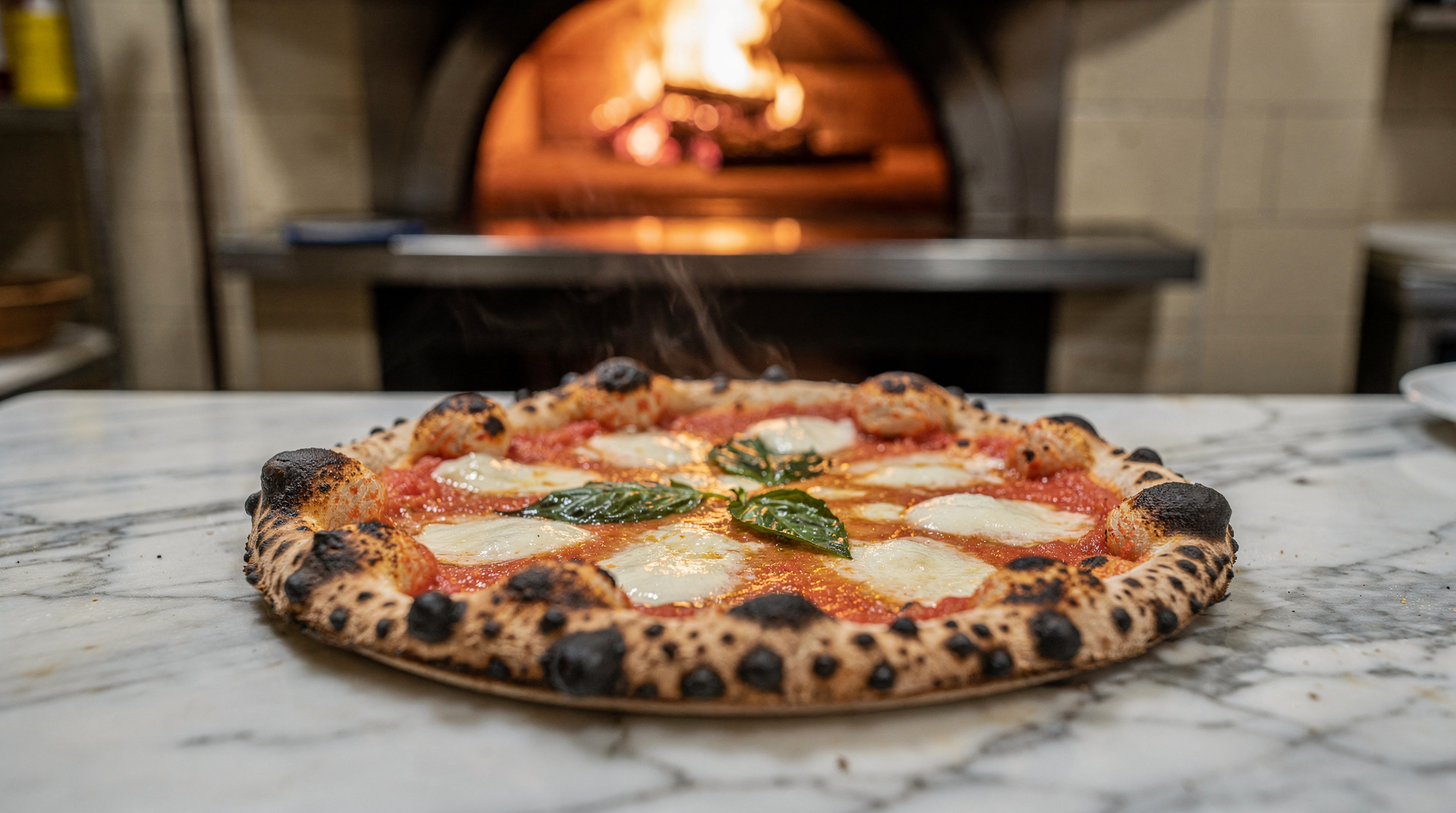
The Marinara is not a compromise pizza. It is, by most serious arguments, the better pizza — the one the fishermen actually ate, the one without the mozzarella that goes rubbery in the wrong oven, the one where you can actually taste what the tomato and the dough are doing.
A classic Neapolitan Marinara has a San Marzano tomato base, garlic, oregano, and olive oil. That’s all. At the right pizzeria — Sorbillo on Via Tribunali, Di Matteo, or the slightly more touristy but genuinely excellent Brandi — it costs around €5–7, and the char on the crust and the sweetness of the tomatoes do something together that needs nothing added to it.
Ask any Neapolitan pizzaiolo about the Marinara and they’ll tell you it was there before the Margherita, before the myth of Queen Margherita of Savoy, before cheese was considered obligatory. It’s a complete dish. Order it confidently.
Friarielli and the greens tradition
Friarielli — the slightly bitter, slightly sweet Neapolitan green, technically a relative of broccoli rabe — is the city’s defining vegetable. In autumn and winter you find it everywhere, wilted fast in olive oil with garlic and a little chilli, piled onto pizza bianca or served alongside just about anything. The combination of slight bitterness and sweet olive oil, with a hit of chilli heat, is one of those flavour combinations that seems obvious once you’ve had it.
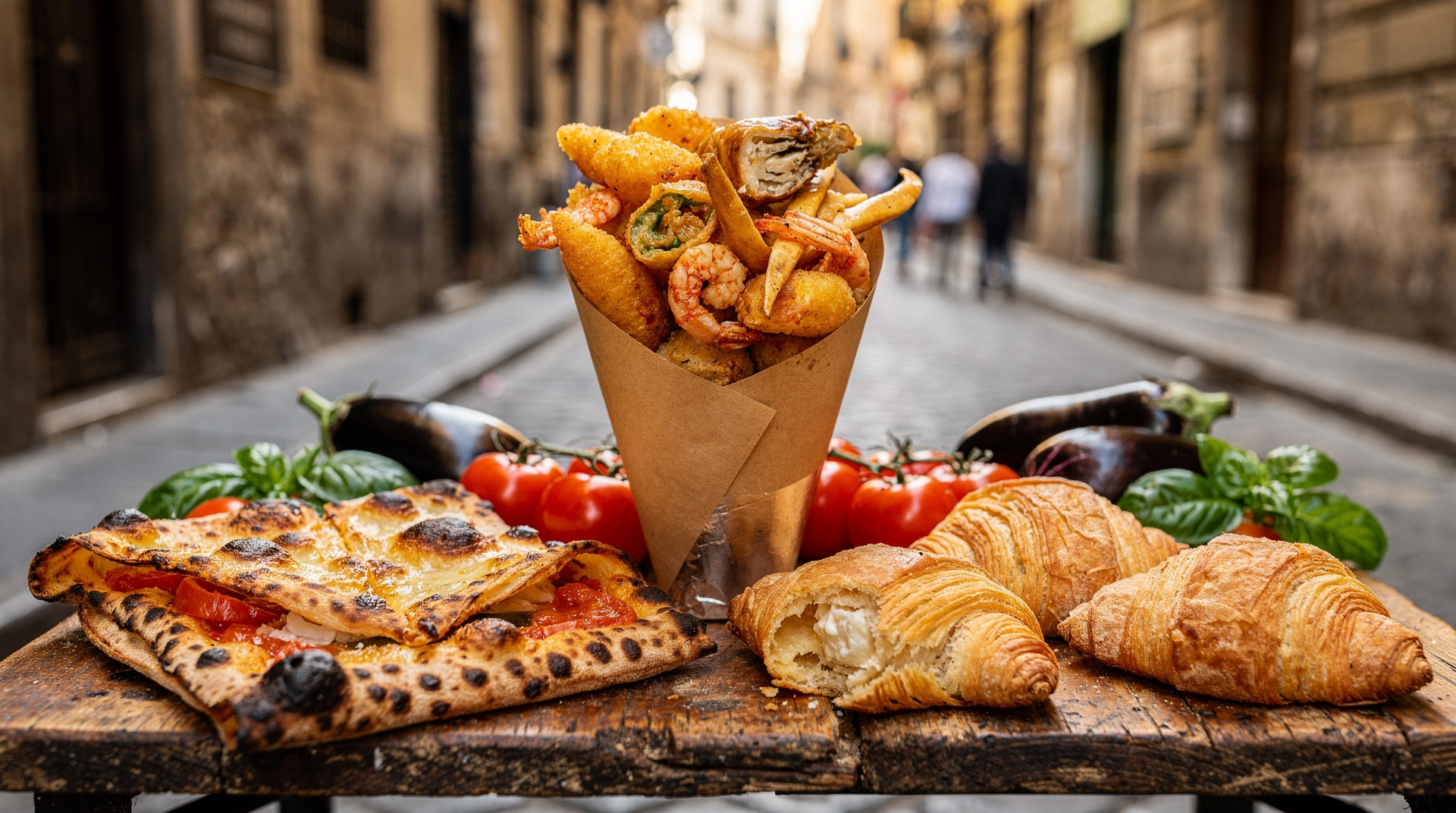
Fried zucchini flowers, stuffed with ricotta and occasionally a small piece of mozzarella, appear in the street food rotation from spring through summer. A plate of them at a friggitoria costs about €3–4. They are exactly what they sound like: delicate, crisp, faintly vegetal, and gone in two bites.
The city also has a serious relationship with legumes — pasta e fagioli (pasta with beans) and pasta e lenticchie (lentils) appear on trattoria menus as cucina povera staples, cheap, filling, and very good. Neither is vegetarian by default — they often use a ham bone for stock — but ask (senza carne, per favore) and many places will confirm or offer a version without.
Street food as a vegetarian strategy
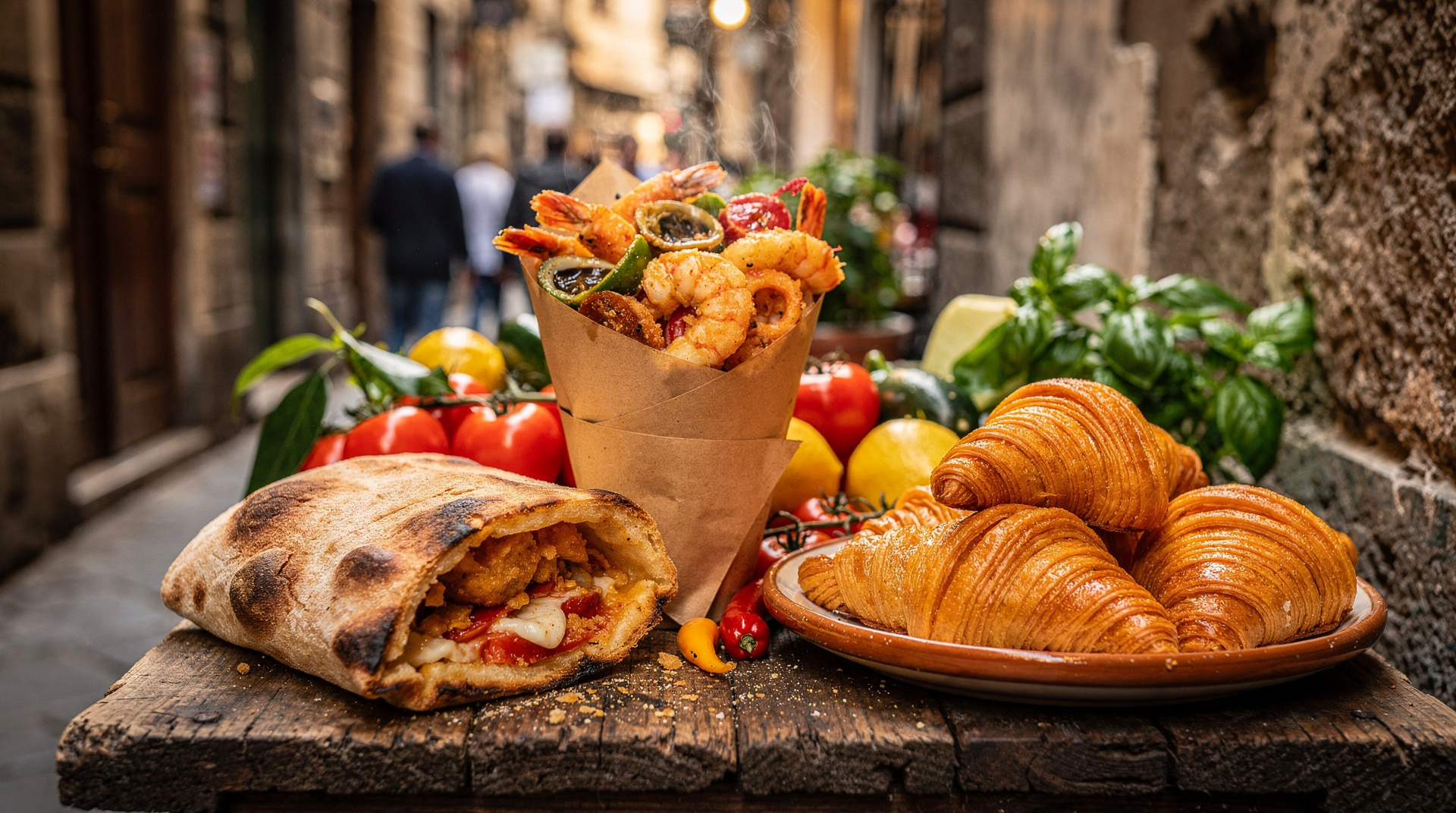
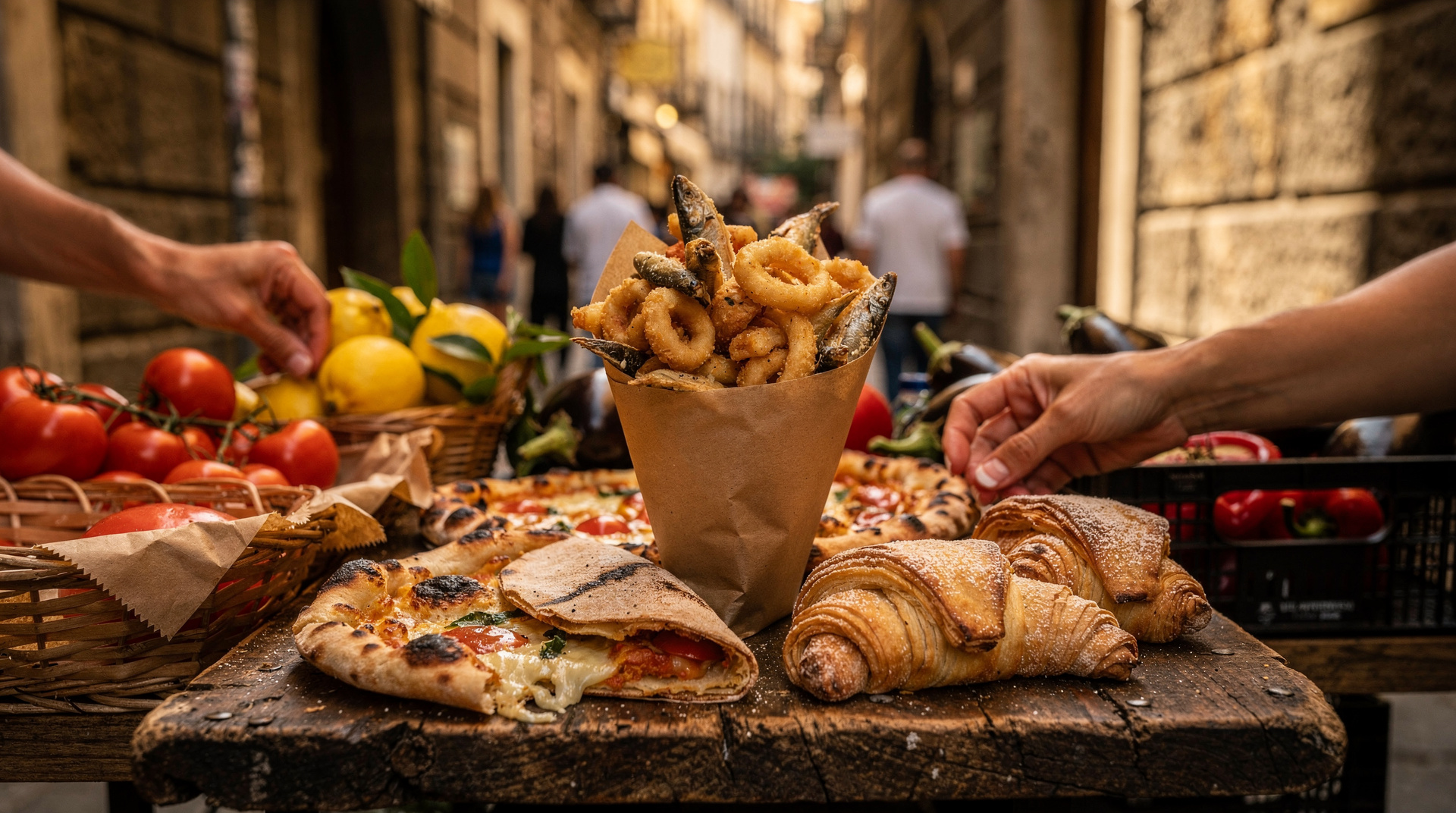
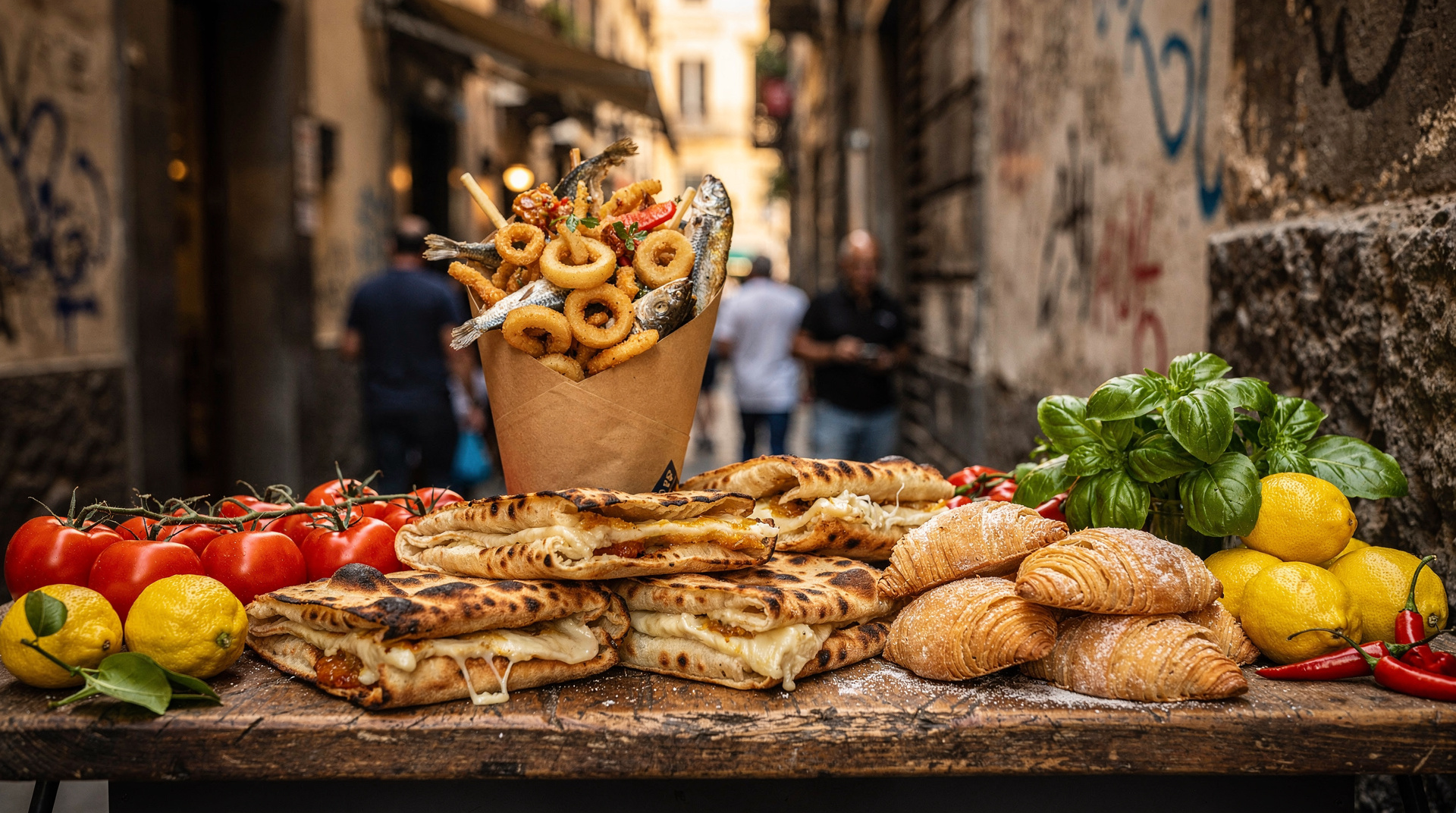
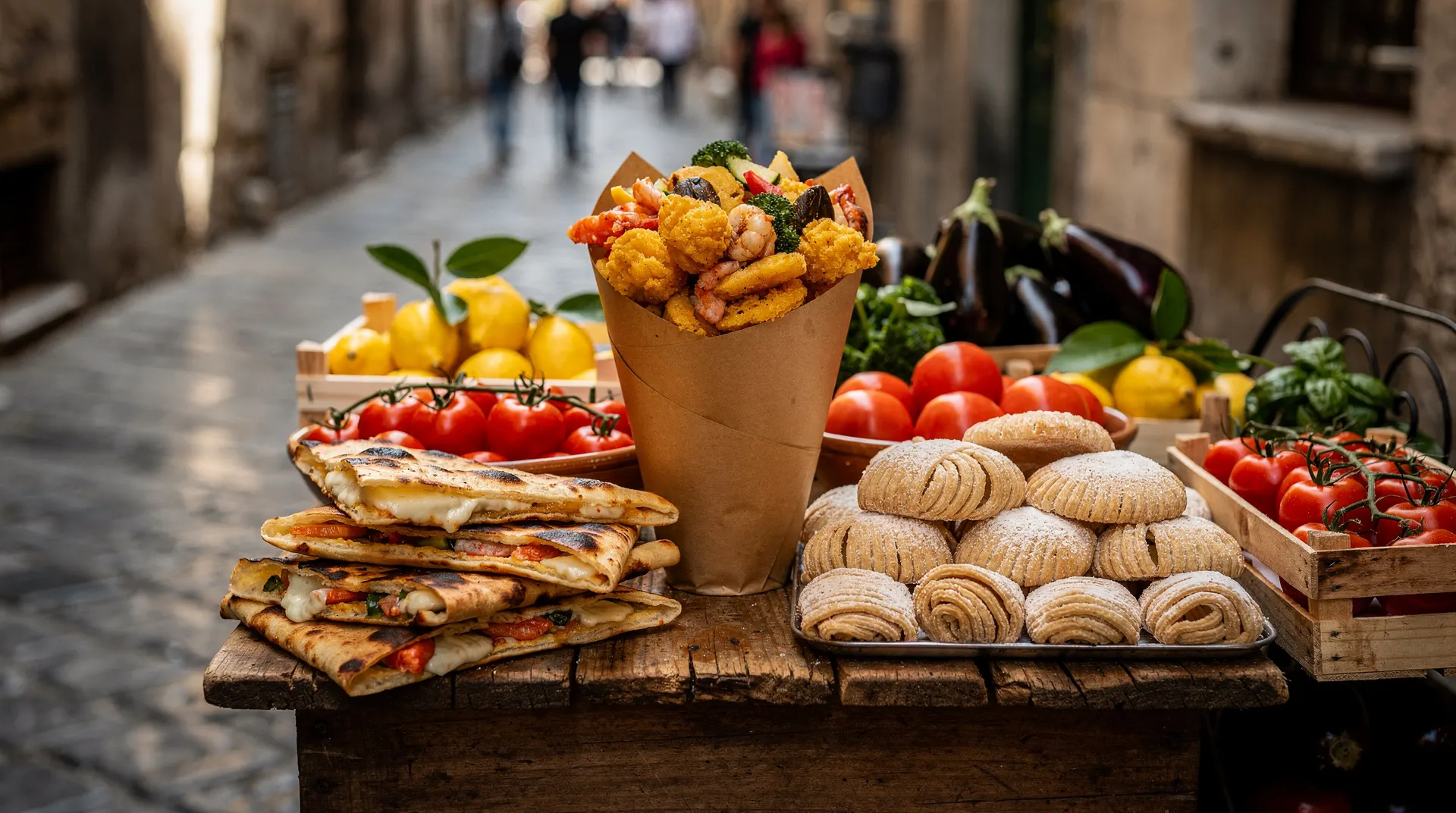
Neapolitan street food skews naturally toward a vegetarian visitor in a way that Roman or Florentine street food doesn’t. The friggitoria tradition — the deep-fry shop — produces a rotating selection of potato croquettes (crocchè), rice balls, fried mozzarella, and seasonal vegetables that are meatless as a matter of course rather than as a concession.
The pizza fritta from a street stall costs €2–3 and comes filled with ricotta, provola, and black pepper. It’s hot, heavy, and exactly what you should eat standing on a street corner in the Quartieri Spagnoli at lunchtime.
Naples street food tour with 6 stops — a guided street food tour is the fastest way to get oriented as a vegetarian visitor. A good guide knows which stops have the best vegetarian options and can explain what you’re actually eating, which helps enormously when the menu is handwritten on a chalkboard in Neapolitan dialect.
Parmigiana: the dish that deserves its own section
Melanzane alla parmigiana — layers of fried aubergine, tomato sauce, basil, and hard cheese, baked until molten — is one of the great Italian dishes, and its spiritual home is Naples. This is not the rubbery restaurant-chain version. Done properly, each aubergine slice is fried separately, the tomato is fresh and uncooked, and the whole thing goes into the oven only long enough to meld. The result is silky, intensely savoury, and completely filling as a main course for about €8–12 at a good trattoria.
Order it as a secondo and you have a full, serious meal. Order it as part of a spread with bread and a carafe of local white wine and you have an excellent lunch for under €20.
Markets and self-catering
The Mercato di Porta Nolana near the central station and the covered market in the Quartieri Spagnoli both run daily until early afternoon. The produce is genuinely excellent — the tomatoes, peppers, aubergines, and courgettes are sourced from the fertile volcanic soil of the Campanian plain, and the prices are startlingly low by northern European standards. A kilogram of San Marzano tomatoes costs around €1.50–2 in season.
For self-caterers or anyone wanting to assemble a picnic for the Amalfi Coast, these markets are a revelation. Combine with a visit to a forno for fresh bread (€1–1.50 per loaf), a fromageria for fresh fior di latte, and you have lunch taken care of for under €8.
Naples pizza-making class with lunch — making your own pizza is essentially a guaranteed vegetarian experience, and you leave with a better understanding of the dough work and tomato selection that makes a Marinara extraordinary. This kind of class also gives you a lunchtime structure that takes the decision fatigue out of the middle of the day.
The honest picture
There are gaps. Many Neapolitan soups, stews, and slow-cooked dishes use meat stock as a base, and kitchens do not always separate these rigorously. Asking specifically about broth (brodo) or lardo (lard used in some traditional baking) is worth it at traditional places. But the gap between what people assume about Naples and what vegetarians can actually eat here is enormous.
The city’s best food — the pizza, the fried things, the vegetables cooked with the seriousness that comes from centuries of necessity — happens, by coincidence or design, to be largely meatless. That’s not a concession to modern dietary preferences. It’s just what Neapolitan food actually is.
Building a full vegetarian food day
This piece focuses on specific dishes, but planning a whole day of eating benefits from a wider map. Our Naples street food guide covers the friggitoria circuit in more depth than fits here, and the dedicated Naples pizza guide is the fuller reference if the Marinara section above leaves you wanting to understand the city’s pizza culture more broadly, vegetarian or not. For sit-down options beyond what’s listed here, the best restaurants in Naples guide flags which kitchens are genuinely accommodating rather than just tolerant.
Eating well on a budget
Vegetarian eating in Naples happens to line up unusually well with eating cheaply, since the cucina povera tradition this piece describes was built around affordable vegetables and legumes in the first place. Our Naples on a food budget guide goes further into stretching a daily food budget without sacrificing quality, and the Naples food markets guide is essential reading if you’re self-catering any part of your trip — the market prices mentioned above only make sense once you’ve seen the full range of what’s on offer.
Quick reference: what’s safely vegetarian
| Dish | Vegetarian by default? | Notes |
|---|---|---|
| Pizza Marinara | Yes | Tomato, garlic, oregano, olive oil — no cheese |
| Melanzane alla parmigiana | Usually | Confirm no meat ragù variant at traditional trattorie |
| Fried zucchini flowers | Yes | Seasonal, spring–summer only |
| Pasta e fagioli / e lenticchie | Not always | Often uses ham-bone stock; ask for a meatless version |
| Crocchè / arancini (street food) | Usually | Confirm filling; some contain ham or meat ragù |
Frequently asked questions about Eating brilliantly as a vegetarian in Naples
Is Naples genuinely vegetarian-friendly, or is that overstated? It’s genuinely friendly, more so than its meat-heavy reputation suggests — the local cucina povera tradition was built around cheap vegetables and legumes, and dishes like Pizza Marinara and melanzane alla parmigiana are vegetarian by default, not adapted.
What’s the one phrase I should learn to eat vegetarian confidently in Naples? “Senza carne, per favore” (without meat, please) — most traditional dishes with a meat-stock base can be confirmed or adjusted with this simple ask, particularly for soups and legume dishes.