Is Pompeii overrated? An honest answer from someone who's been twice
Short answer: no. Long answer: it depends entirely on how you visit, and there are real problems worth talking about honestly before you spend half a day there and come away disappointed.
I have been to Pompeii twice. The first time was a solo visit on a Wednesday in July, no guide, no pre-reading, peak summer. The second time was on a small-group tour with an archaeologist, shoulder season, booked in advance. These were, in a meaningful sense, two completely different experiences of the same place.
| Verdict | Not overrated — but the experience varies enormously by how you visit |
| Best time | April or October, at opening time |
| Recommended time on site | At least 3–4 hours, with a guide |
| Worst time | Midday in July/August, without a guide |
| Pairs well with | Herculaneum, 30 minutes away by Circumvesuviana |
The case for “yes, it’s overrated”
Let me give the prosecution its fair hearing. Pompeii in summer is genuinely difficult. The site covers 44 hectares — larger than the entire historic centre of Sorrento — and almost none of it is shaded. In July and August the ground temperature on the basalt road surfaces can exceed 50°C. You will sweat through your shirt. You will want water more frequently than you thought possible.
The crowds are real too. The main entrance on Via Villa dei Misteri receives roughly 3.5 million visitors a year, and on a busy summer morning the bottleneck near the Forum and the Via dell’Abbondanza can feel more like a theme park queue than an archaeological site. The most famous attractions — the plaster casts of the victims, the House of the Faun, the Villa of the Mysteries — have specific peak times that make them unpleasant.
And then there’s the signage. Or rather, the absence of it. Self-guided visitors at Pompeii get fairly thin information plaques, often only in Italian, frequently sun-bleached to illegibility. You can walk through one of the most astonishing archaeological sites on earth and understand very little of what you are seeing. Many visitors leave knowing only that a volcano erupted and people died. Which is true, but not the whole story.
Why it’s still worth it
Here is the thing about Pompeii: it is a complete Roman city. Not a forum. Not a temple. Not a set of foundations. A city, with bakeries that still have carbonised loaves in the ovens, with electoral graffiti on the walls (Latin insults about candidates that read like a contemporary comment section), with brothels that have painted price lists above the doors, with garden walls still bearing their original frescoes, with ruts worn into the road by two thousand years of cart wheels.
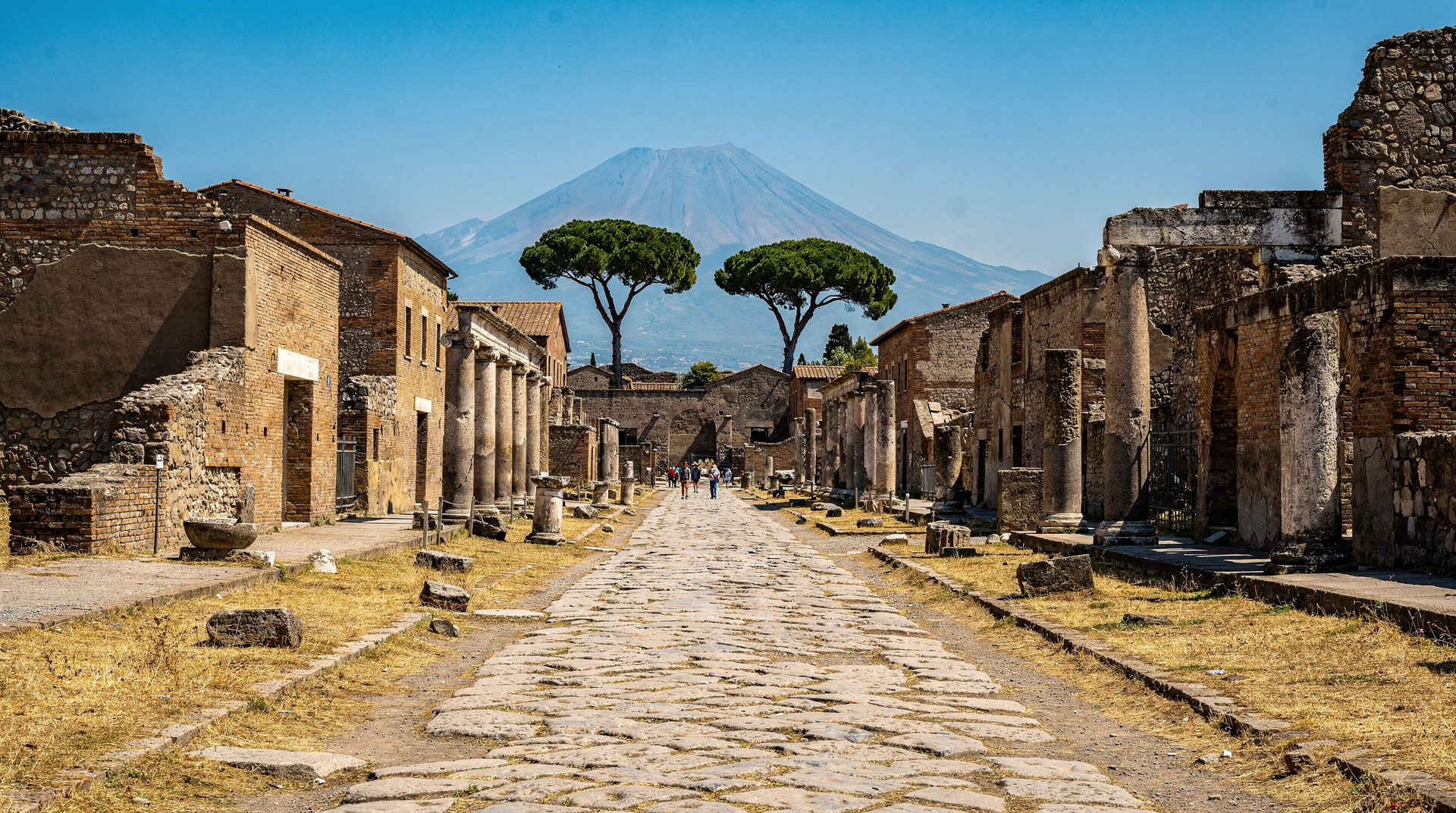
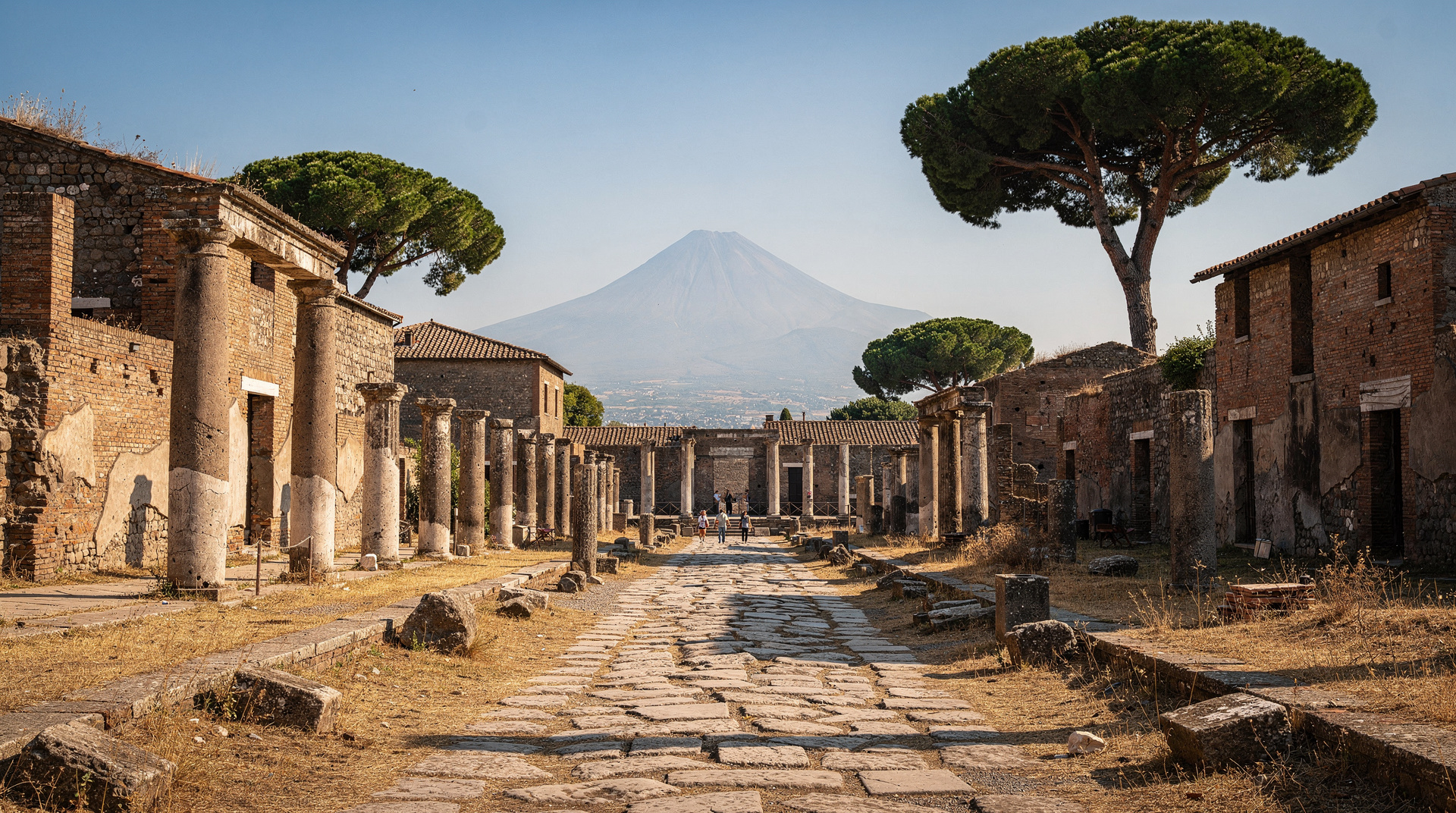
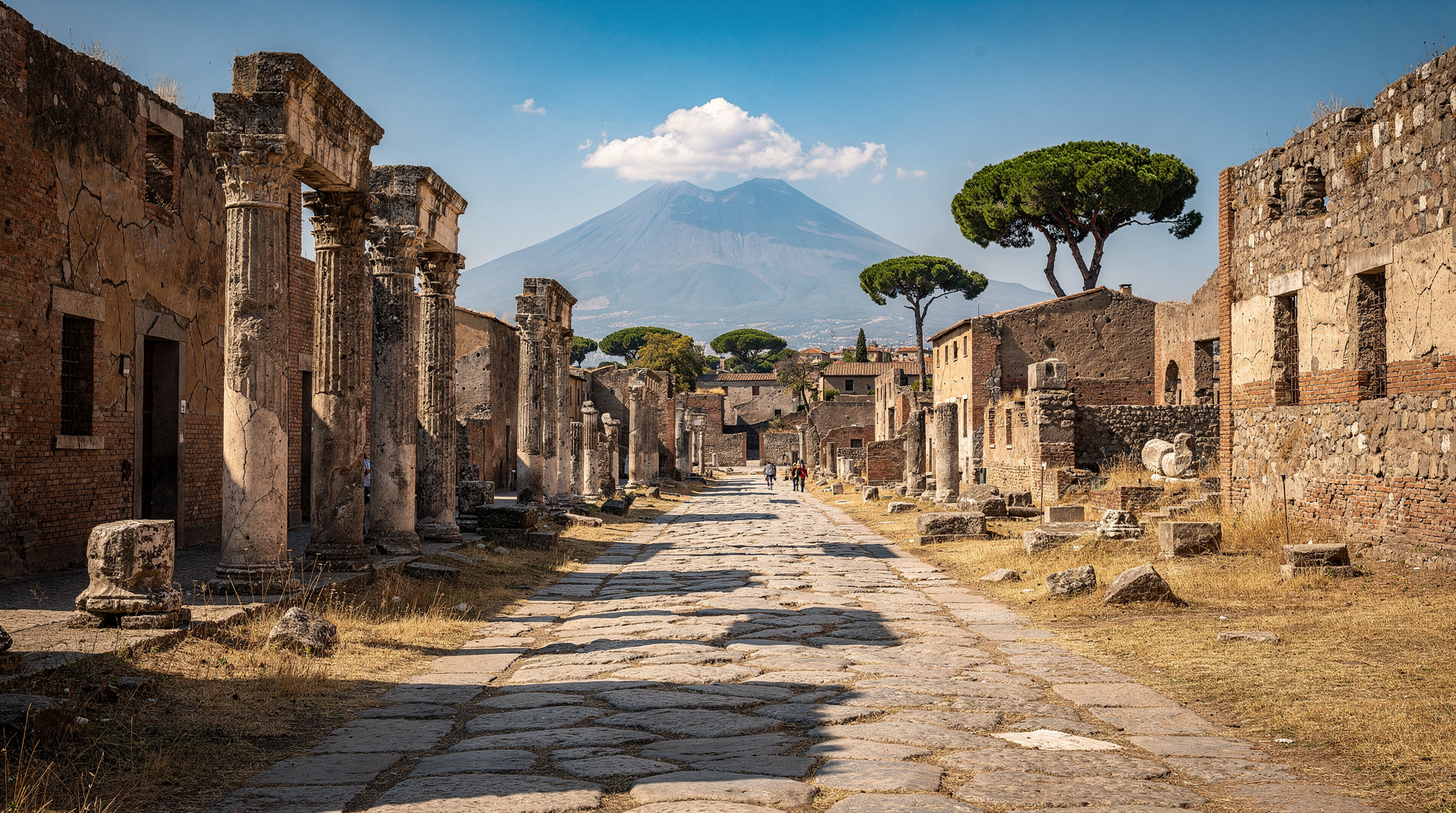
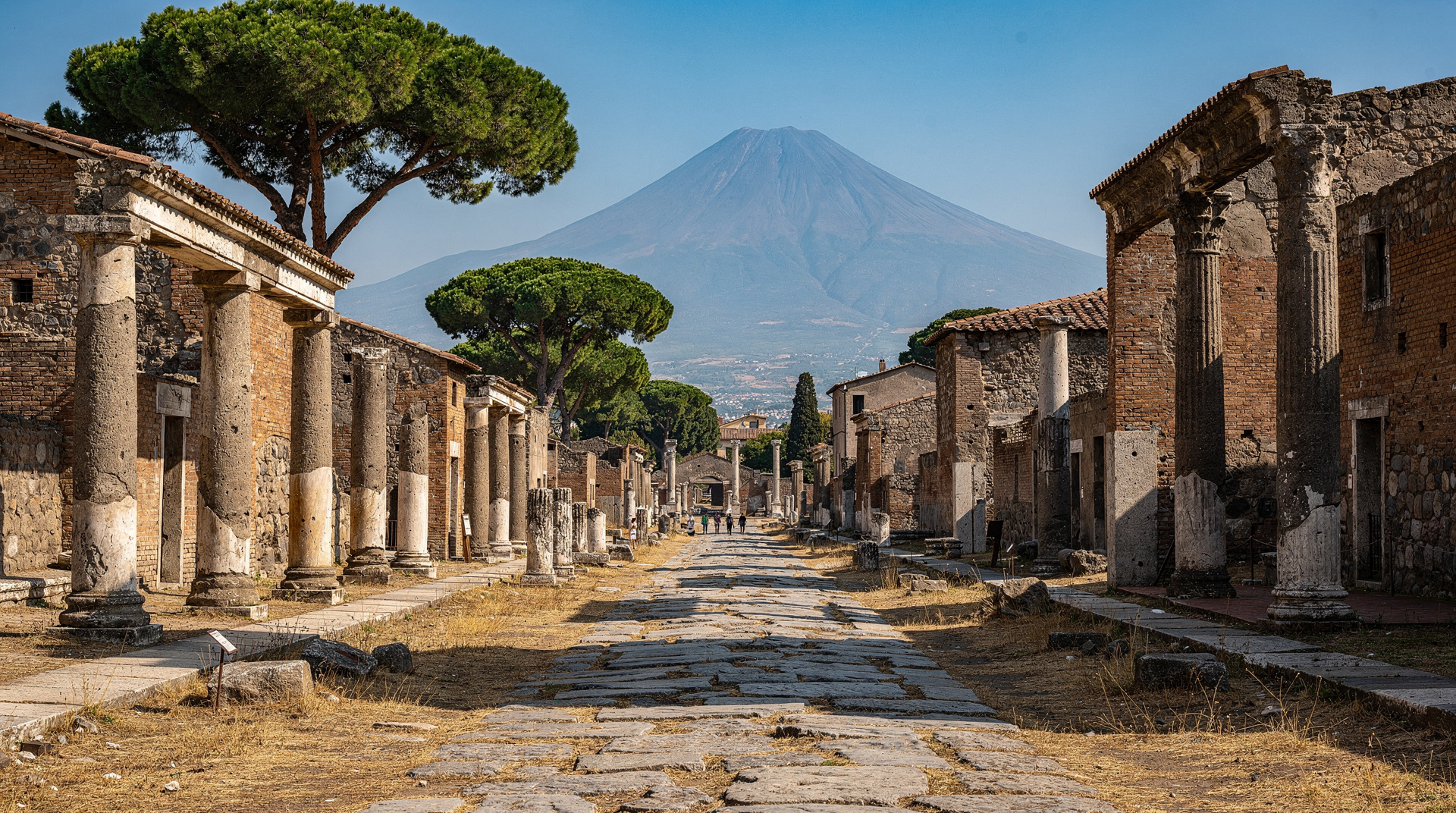
No reconstruction, no model, no film prepares you for standing on a Roman street and looking down an entire insulae to a mountain that is still, demonstrably, a volcano. The scale of it — 79 AD frozen mid-morning — is an immediate, physical thing that nothing else in the ancient world quite replicates. Herculaneum is more intimate and better preserved (more on that in a moment), but Pompeii is the whole city.
The plaster casts of the victims are genuinely haunting. Pompeii’s dead were preserved in the voids left by their bodies in the hardened ash — casts made in the 1860s by pouring plaster into those voids reveal exact postures: a man curled with his hands over his face, a dog still on its leash, a family huddled together. These are not abstractions. They are people, in the last few seconds of their lives, visible 2,000 years later. If this doesn’t affect you, I don’t know what to tell you.
The guide question
My first visit was largely wasted. I walked around for four hours, saw the Forum, found the House of the Faun by accident, got briefly excited about some mosaics, and left knowing roughly as much as when I arrived. My second visit — with a specialist guide on a small-group guided tour — was transformative. Same streets, same ruins. Completely different experience.
A good guide answers the questions the signage doesn’t. Why did the ash preserve some things and not others? What was happening in Pompeii that morning — it was election week, the town was mid-campaign, and we know the names of the candidates from the walls. Why is the House of the Tragic Poet called that? What was the actual function of those stones in the middle of the road? (Stepping stones to keep feet dry when the streets flooded — the roads doubled as drainage channels.) Pompeii is a puzzle and a guide hands you most of the pieces.
If you want maximum context with specialist depth, the Pompeii day trip from Naples with an archaeologist guide is the premium version — a smaller group, more time in the site, more room to ask questions, and a guide who has spent years working in the excavations rather than just reading about them.
Herculaneum: the honest comparison
Herculaneum was buried not by falling ash but by pyroclastic surges — superheated flows of gas and rock that travelled at speed and then solidified. This means organic materials — wood, cloth, food — were carbonised rather than destroyed. It also means the site is smaller (only a fraction of the city has been excavated) but dramatically better preserved.
At Herculaneum you can see wooden door frames still in place. Intact second-floor balconies. Beds. Carbonised loaves from the thermopolium. A boat shelter full of skeletons — victims who ran for the shore and didn’t make it. The mosaics and frescoes are more vivid. The crowds are a fraction of Pompeii’s. The visit takes two to three hours instead of a half-day.
My honest recommendation: if you can only do one, and you want the full Roman-city experience with maximum scale and shock, do Pompeii — but do it with a guide. If you want something more intimate, quieter, and more viscerally preserved, Herculaneum is the underrated answer. If you have a full day, do both — they’re 30 minutes apart on the Circumvesuviana and they tell the same story from different distances.
Our full Herculaneum vs. Pompeii comparison guide breaks this decision down in more detail if you’re genuinely torn between the two rather than doing both.
Guided or self-guided: the honest trade-off
The section above already makes the case for a guide, but it’s worth being specific about what you gain and lose either way. Our dedicated guided vs. self-guided Pompeii guide lays out the full comparison, including audio-guide options that sit between the two extremes in both cost and depth. If you’ve decided a guide is the way to go, the best Pompeii tours guide rounds up the strongest options beyond the two mentioned above, sorted by group size and specialism.
What else gets called overrated in Naples
Pompeii isn’t the only Naples-area sight that attracts this question. If the “is it overrated” framing is useful to you, our broader overrated things in Naples guide applies the same honest scrutiny to several other well-known attractions, some of which hold up better than others.
The verdict
Pompeii is not overrated. It is under-visited correctly. The visitors who come away disappointed are usually the ones who arrived without context in peak heat, walked around for two hours reading nothing, and left sweating and confused. The visitors who come away stunned are the ones who went with a guide, went in April or October, arrived at opening time, and gave the place four hours.
The volcano is still there. The city is still there. Go properly. For the full practical planning picture — opening hours, ticket options, what to bring — our complete Pompeii guide is the reference to bookmark before you go.
Frequently asked questions about Is Pompeii overrated? An honest answer from someone who’s been twice
Is Pompeii worth it if I only have a few hours? It’s better than nothing, but a rushed one-to-two-hour visit is exactly the experience that leads people to call Pompeii overrated; if your time is genuinely limited, prioritise a guided tour over a self-guided rush, since a guide covers the highlights efficiently in less time.
Should I do Pompeii or Herculaneum if I can only pick one? If you want the full scale of an entire Roman city, choose Pompeii, ideally with a guide. If you’d rather see fewer, better-preserved details in a shorter, less crowded visit, Herculaneum is the better pick — see our Herculaneum vs. Pompeii guide for the full comparison.