Torre Annunziata
Torre Annunziata is the gateway to Oplontis (Villa Poppaea) and the heart of Gragnano pasta country. Honest guide to what this gritty town offers visitors.
Pompeii: Skip-the-Line Entry Ticket with Audio Guide or Tour
Quick facts
- Distance from Naples
- 25 km south-east
- Train (Circumvesuviana)
- ~25 min from Naples (€3.10)
- Main attraction
- Oplontis (Villa Poppaea) — 10 min walk from station
- Pasta connection
- 3 km from Gragnano, capital of artisan pasta production
- Population
- ~44,000
- Character
- Working-class port town, not a tourist destination
| Where | 25 km south-east of Naples, Circumvesuviana ~25 min |
| Cost | Around €3.10 train fare each way; €8–14 for a full trattoria lunch |
| Time needed | 2–3 hours combined with an Oplontis visit |
| Getting there | Circumvesuviana (Poggiomarino/Sarno line) to Torre Annunziata |
| Best time | Spring and autumn for Oplontis; year-round for the Gragnano pasta trip |
Torre Annunziata: what it is and what it is not
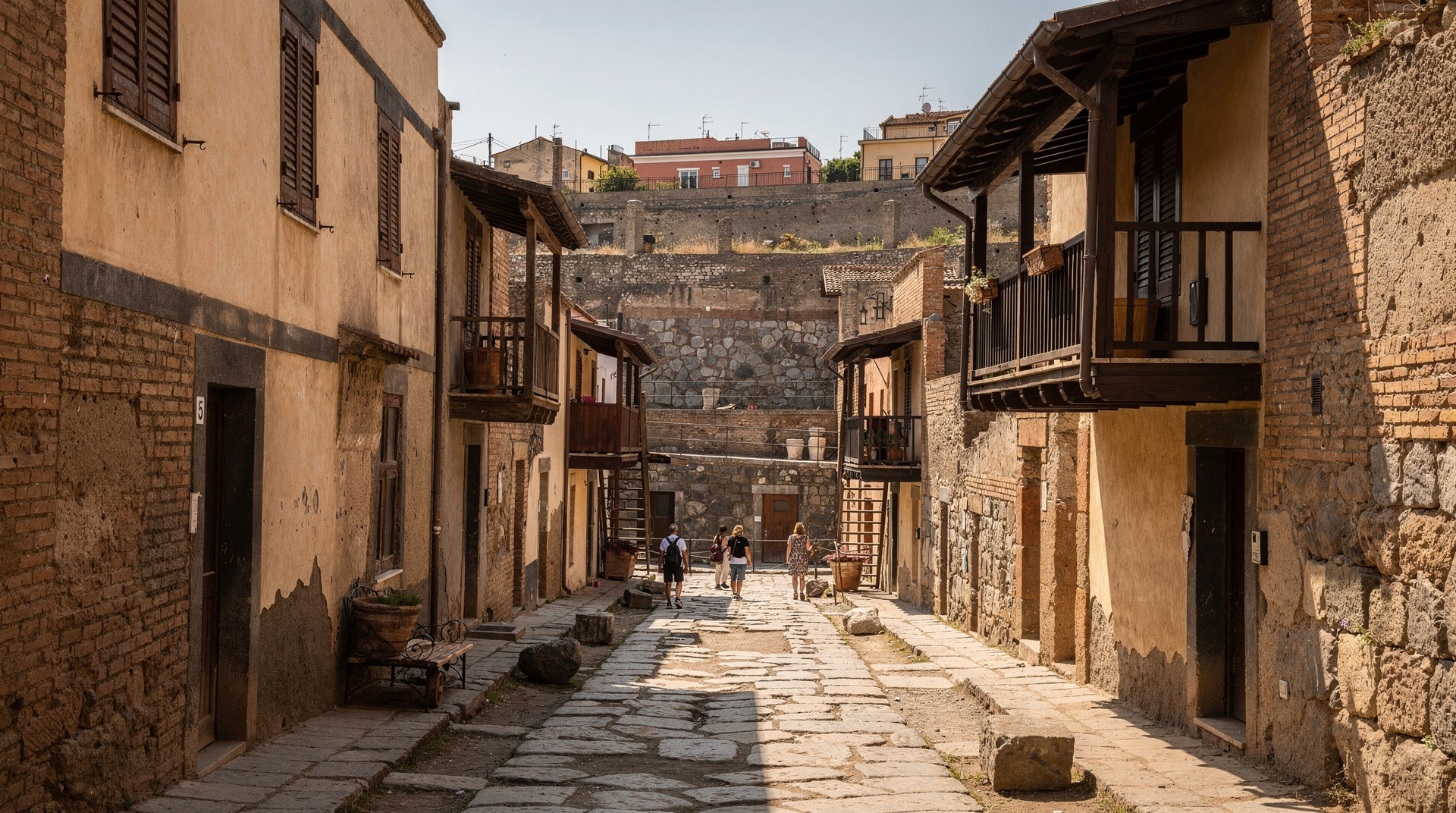
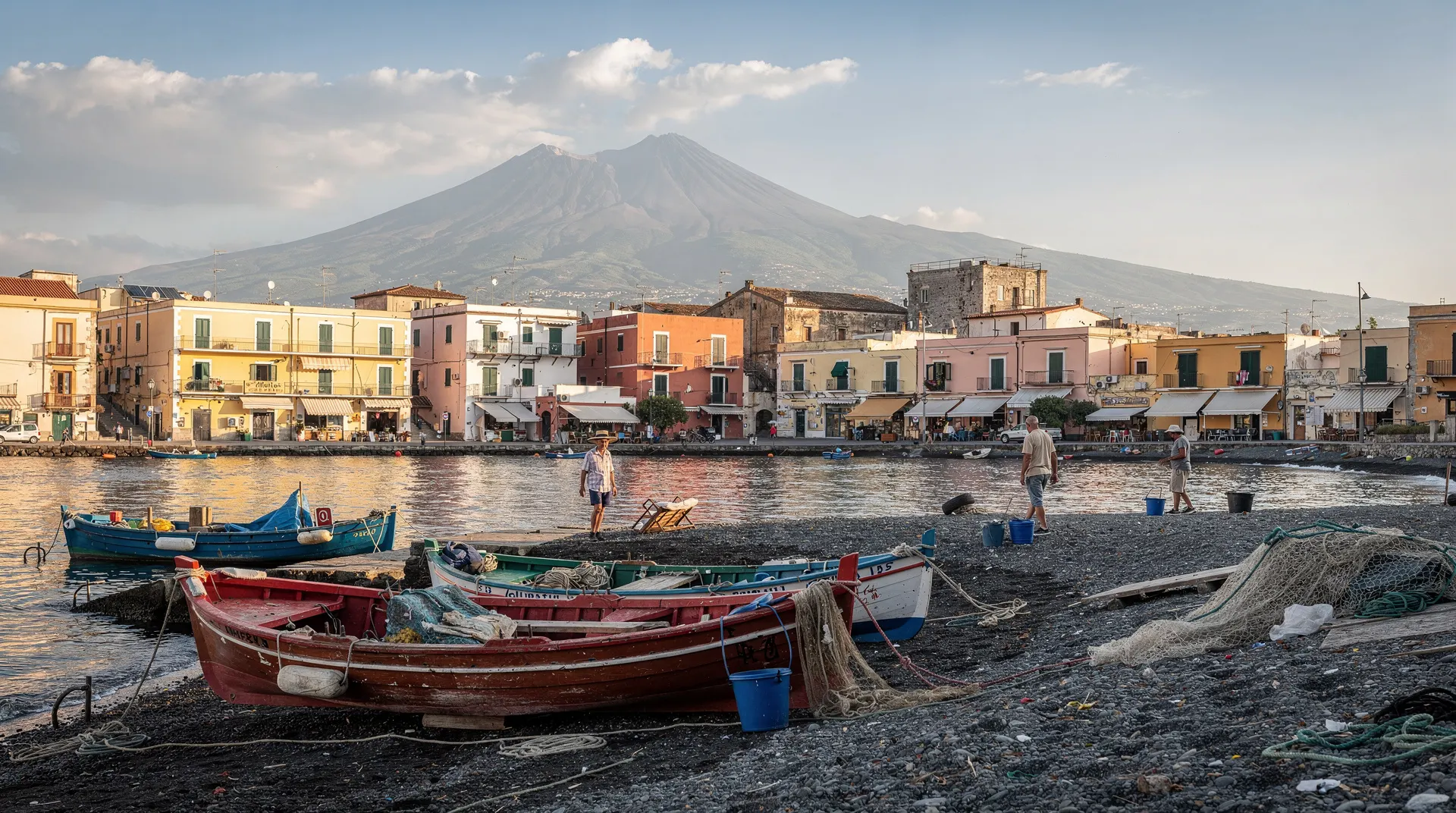
Torre Annunziata is not a tourist destination. It is a working-class port town that has had a difficult post-industrial century, with economic decline following the closure of its arms manufacturing factories and the reduction of its once-significant port activity. Streets near the station can feel neglected. The seafront is functional rather than scenic.
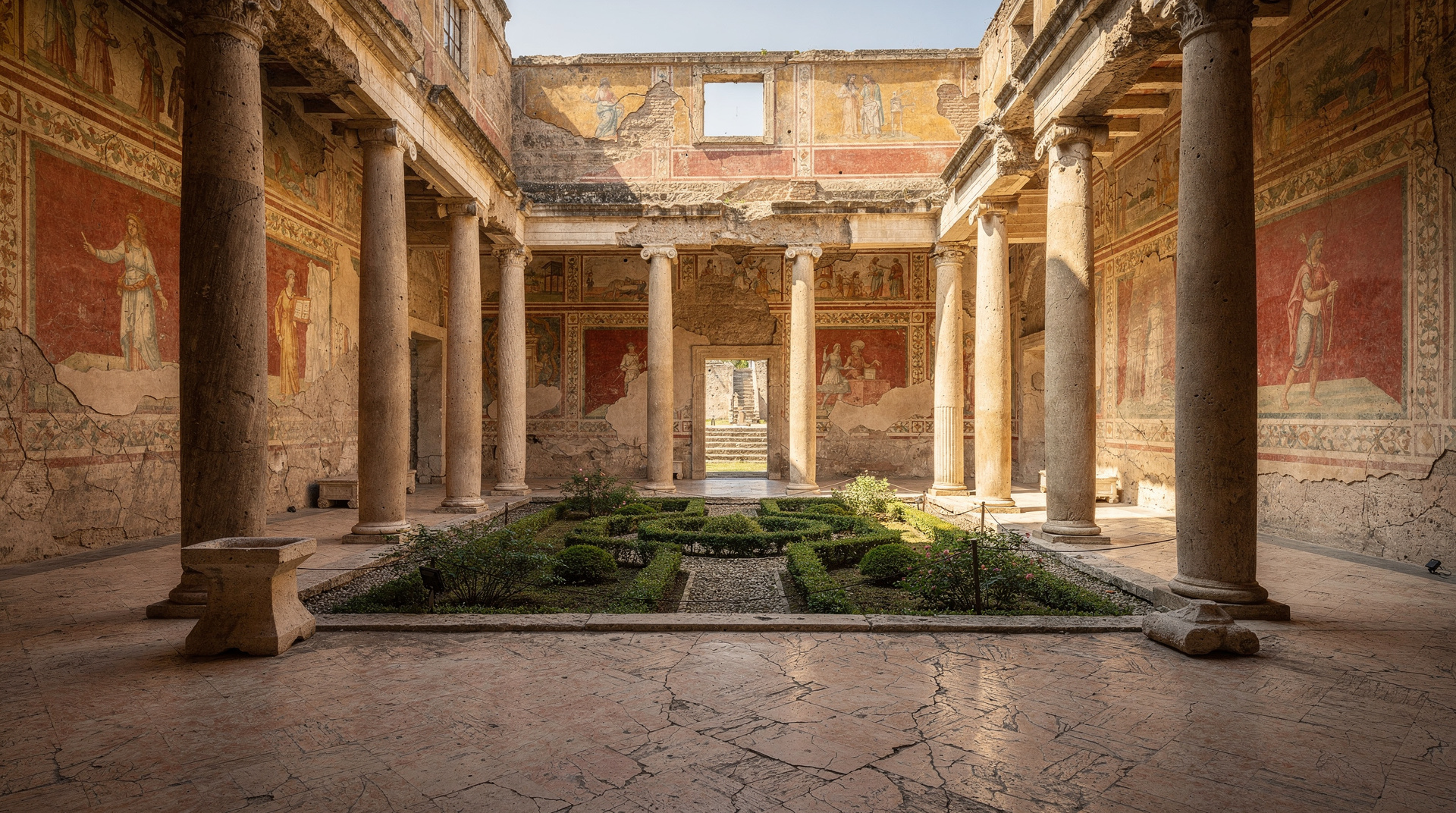
But Torre Annunziata has a legitimate reason to appear in a Campania travel guide: it sits 10 minutes’ walk from Oplontis, one of the finest and least-visited Roman sites in southern Italy — the Villa Poppaea, a UNESCO World Heritage Site. And it sits at the edge of one of Italy’s most significant artisanal food production zones: the Gragnano pasta district.
Anyone visiting Oplontis passes through Torre Annunziata. Understanding what else the area offers is worthwhile.
Getting there
The Circumvesuviana (line toward Poggiomarino or Sarno) stops at Torre Annunziata station, approximately 25 minutes from Napoli Centrale (€3.10). The station is at the north end of town. From here:
- Walk south for 10 minutes to reach the Oplontis excavations entrance
- The town centre and seafront are a further 5 minutes south
- Gragnano is about 3 km to the south-east (best reached by taxi or car)
If you are visiting Torre Annunziata specifically as a base for Oplontis, this is the correct train to take. If coming from Pompeii, Torre Annunziata is three stops north on the same line (about 8 minutes; €1.40).
Oplontis: the reason most visitors come
The Villa Poppaea at Oplontis is covered in full in the Oplontis guide. In brief: this is a luxury Roman villa dating to the first century BC, with some of the finest surviving Second Style wall paintings in the world. It is part of the same UNESCO inscription as Pompeii and Herculaneum. It receives a fraction of the visitors.
From Torre Annunziata station, signs point south toward the Scavi (excavations). The walk is straightforward. The site entrance is on Via Sepolcri, below street level — look for the ramp and the green archaeological park signs.
The Gragnano pasta connection
Gragnano is a small town about 3 km south-east of Torre Annunziata in the foothills of the Monti Lattari. It has been producing dried pasta commercially since the sixteenth century — the local microclimate (warm Vesuvian winds channelled through the valley, moderate humidity) was uniquely suited to outdoor drying on the town’s main street, Via Roma. The street was aligned specifically to maximise the drying wind.
Pasta di Gragnano IGP (Protected Geographical Indication) is a category of dried pasta that must be produced within the Gragnano municipality using specific traditional methods: bronze die extrusion (which creates a rough, porous surface that holds sauce better than Teflon-extruded pasta) and slow air-drying at low temperatures (36–40 hours for most formats vs. 2–4 hours for industrial pasta). The result is noticeably different in texture and sauce adhesion.
The main producers accessible to visitors include Pastificio Di Martino (the largest, with a visitor centre on Via Roma) and Pastificio Gentile (artisanal, smaller batches, occasional tours by arrangement). Pasta di Gragnano is widely sold in shops throughout the Pompeii area and in Naples, and is considerably cheaper bought directly here than in tourist shops.
Practical access from Torre Annunziata: taxi from the station costs around €8–12 to central Gragnano. There is no direct bus connection. Alternatively, rent a bicycle in Ercolano or arrange a car.
For context on Campania food culture more broadly, see the Naples food markets guide.
The arms factory history
Torre Annunziata’s other historical distinction is its role in Italian weapons manufacturing. The Real Fabbrica d’Armi (Royal Arms Factory) was established here by the Bourbon kings in the late eighteenth century, and the town produced military equipment well into the twentieth century. The factory buildings survive in various states of conversion — some have been partially repurposed, others remain derelict.
This industrial heritage is not currently a developed visitor attraction, but historians of the Bourbon Kingdom of the Two Sicilies and students of the Italian Risorgimento will find the context interesting. The Museo del Corallo (Coral Museum) in nearby Torre del Greco covers the related tradition of coral and cameo carving, which developed in the same period as part of Bourbon luxury industry.
Eating and drinking in Torre Annunziata
The town is not known for exceptional restaurants, and the area immediately around the train station has some unremarkable options. That said:
Pasta al forno and local trattorie: the town’s proximity to Gragnano means that locally produced pasta features heavily in the kitchen. Several hole-in-the-wall trattorias on Via Plinio and in the town centre serve competent Neapolitan cooking at very local prices (€8–14 for a full lunch).
Seafood: the port area has a few restaurants serving fresh catch. Quality varies; ask locals for current recommendations.
Coffee: as anywhere in the Neapolitan hinterland, the coffee is reliably good and very cheap. Espresso at the counter: €1–1.20.
Honest travel assessment
Torre Annunziata is not a place most international travellers should deliberately build an itinerary around. It lacks the charm of Ercolano (which has better infrastructure for Herculaneum visits), the drama of Pompeii, and the character of Sorrento as a base.
But if you are visiting Oplontis — which you probably should, especially if holding a combo ticket — you will pass through Torre Annunziata, and combining a pasta shop visit in Gragnano with the Oplontis excavations makes for an authentic half-day that few tour itineraries even consider.
The Pompeii day trip guide covers how to incorporate Torre Annunziata and Oplontis into a broader Vesuvian circuit.
Combining Torre Annunziata with the wider Vesuvian circuit
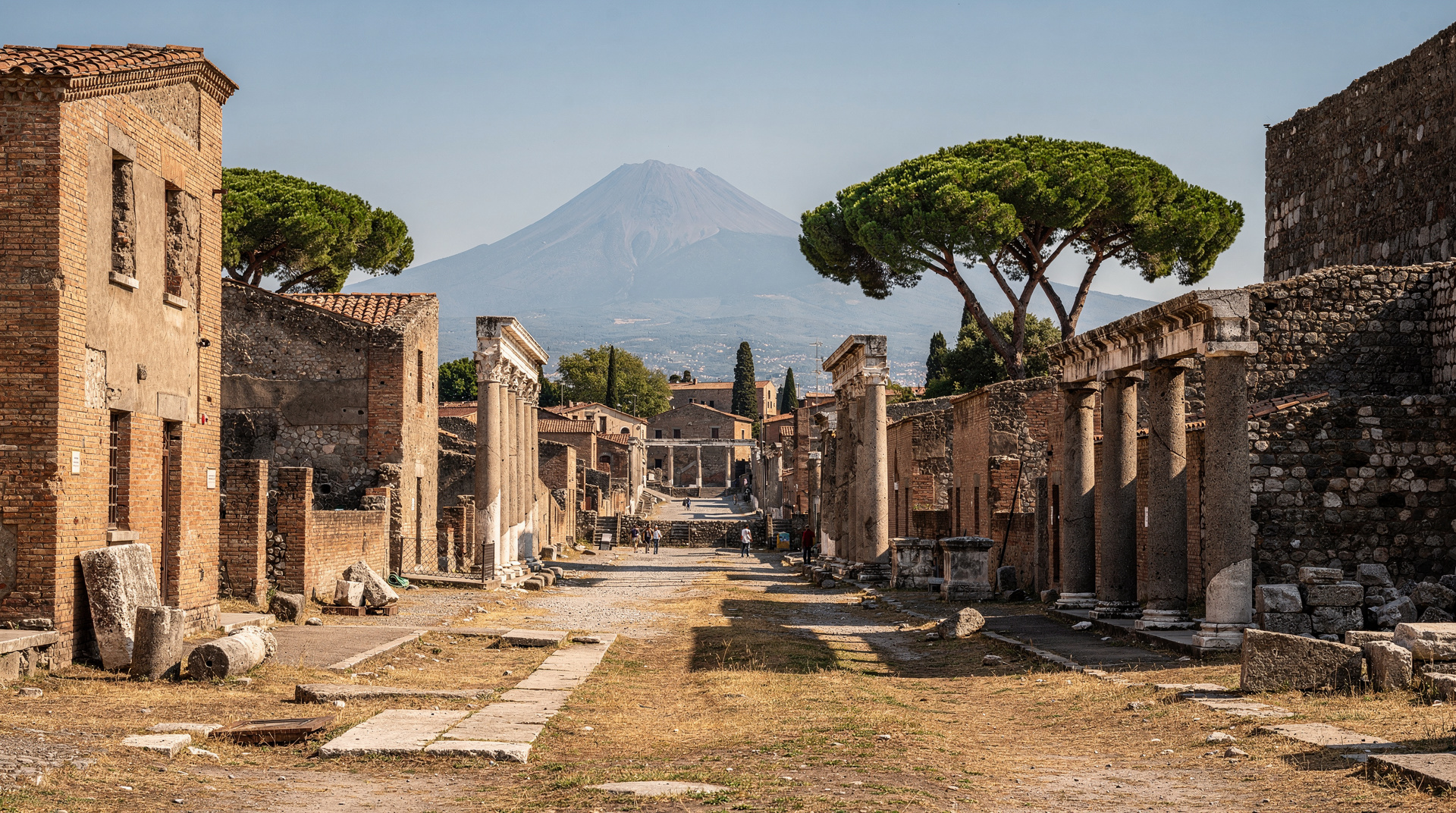
Torre Annunziata sits on the Circumvesuviana line between Naples and both Pompeii and Herculaneum, which makes it a genuinely easy add-on rather than a special trip. A practical structure for anyone holding a combined ticket covering Pompeii, Herculaneum, and the smaller Vesuvian sites: start early at Herculaneum, take the Circumvesuviana three stops to Pompei Scavi for the main afternoon visit, then backtrack to Torre Annunziata for Oplontis on the way back toward Naples. This keeps the whole circuit within a single Circumvesuviana day pass and avoids doubling back across the same stretch of track twice.
Combined Pompeii and Herculaneum day tour from NaplesTravellers with a car or who prefer a guided version of the same circuit can also reach Oplontis directly from Pompeii or Naples without relying on the Circumvesuviana; several tour operators run the Pompeii–Herculaneum combination with door-to-door transport, which removes the need to navigate the local train and its occasional pickpocket risk on the Naples–Pompeii stretch.
Who should actually stop here
Torre Annunziata is not a destination to build a day around. It makes sense specifically for: travellers holding a combo ticket that includes Oplontis who want to use it rather than let it go to waste; food-interested visitors who want to buy genuine Pasta di Gragnano IGP directly from a producer rather than a Naples souvenir shop; and anyone curious about the less-visited corners of the Bourbon industrial history that shaped this stretch of coast. If none of those apply, the time is better spent at Pompeii or Herculaneum directly.
Frequently asked questions about Torre Annunziata
Is Torre Annunziata safe to visit?
The town has a reputation for difficulty but it is generally safe for daylight visitors to the main archaeological sites and the town centre. Standard urban precautions apply. Avoid isolated areas near the industrial port at night.
Can I visit Gragnano pasta producers?
Pastificio Di Martino has a visitor-friendly shop and occasional scheduled tours. Pastificio Gentile and some smaller producers require advance arrangements. For food tourism in the area, the Naples food guide covers where to buy quality products across Campania.
Is there anything to see in Torre Annunziata beyond Oplontis?
The seafront has a stretch of beach popular with locals in summer. The old Bourbon arms factory area is architecturally interesting for industrial heritage enthusiasts. Otherwise, most visitors treat Torre Annunziata as a transit point for Oplontis.
How do I get from Torre Annunziata to Pompeii?
Take the Circumvesuviana south — Torre Annunziata is three stops from Pompei Scavi. Journey time approximately 8 minutes, €1.40. Alternatively, it is about a 3 km walk between the two archaeological sites.
Is there a market in Torre Annunziata?
A weekly street market runs on Tuesday mornings along Via Plinio and the surrounding streets — a local affair with produce, clothing, and household goods. Not specifically a food market, but interesting as a window into everyday Neapolitan suburban life.
Top experiences
Bookable activities with verified prices and instant confirmation on GetYourGuide.