Capri vs Ischia — which Bay of Naples island to visit in 2026?
Sorrento: Capri & Blue Grotto Boat Cruise with Swim Stops
Should I visit Capri or Ischia?
Capri for dramatic cliff scenery, the Blue Grotto, and the iconic Mediterranean island experience — but at a high price and with significant crowds in summer. Ischia for beaches, volcanic thermal baths, a larger landscape to explore, and prices pitched to Italian holiday-makers rather than luxury tourists. Capri is the more famous; Ischia is often the better value and the better experience for a full day or overnight.
Capri or Ischia? Capri is the classic choice — dramatic, iconic, expensive. Ischia is larger, greener, has real beaches and thermal baths, and costs less. For a first Bay of Naples island visit, most people default to Capri. For a second visit, or for anyone who values beaches over scenery, Ischia is often the better day.
What these two islands actually are
Capri and Ischia occupy the same bay and are served by the same ferries, but they are radically different places.
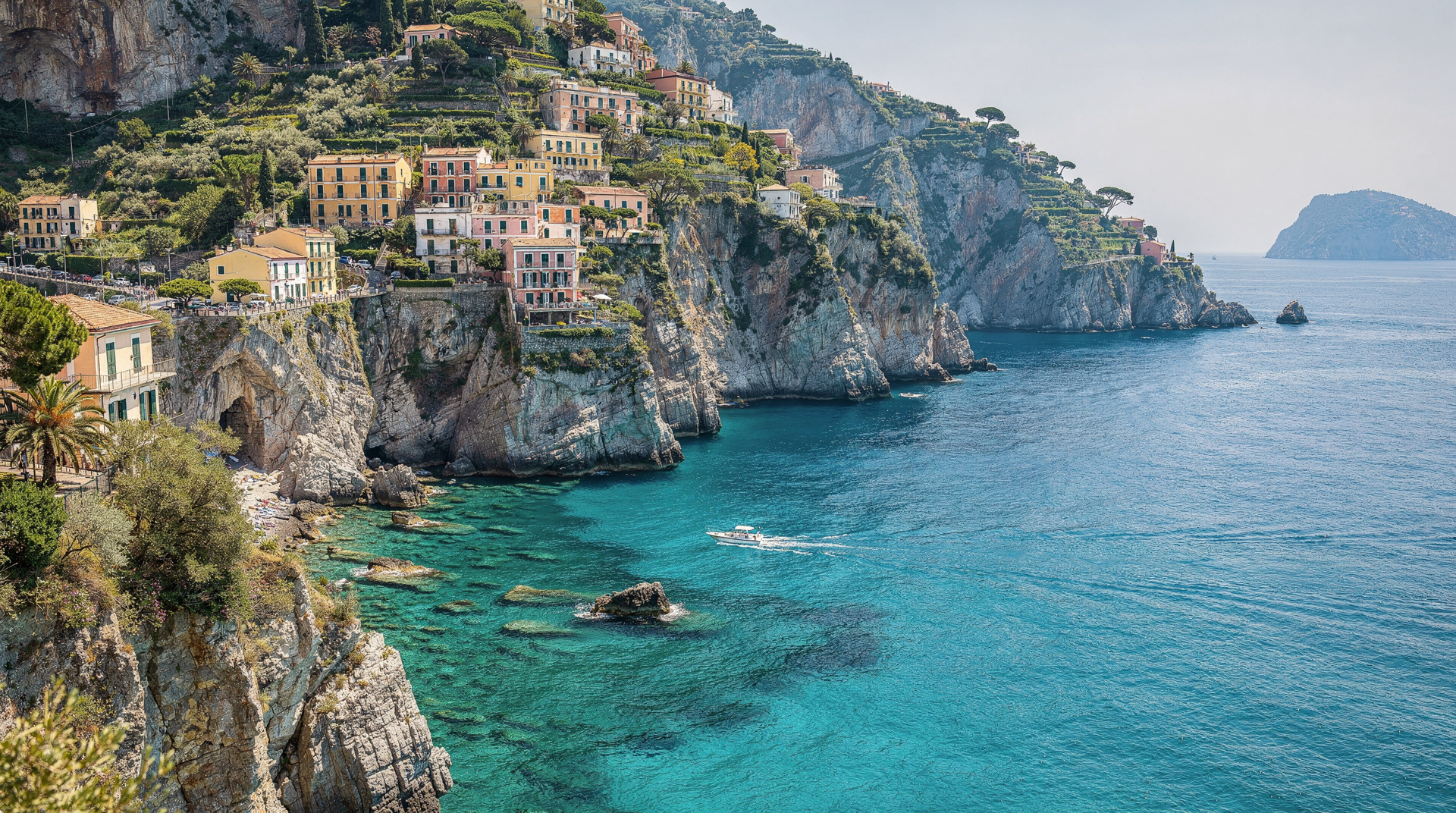
Capri (10 sq km) is a limestone mountain rising from the sea. There is almost no flat ground. Its character was shaped over centuries of serving as a destination for the wealthy — Roman emperors, 19th-century British aesthetes, 20th-century film stars. The island’s infrastructure (funicular, scooters, narrow lanes, open-air restaurants on cliffs) exists to maximise the experience of beauty. Prices reflect this.
Ischia (46 sq km) is a dormant volcano. It is the largest island in the Bay of Naples and has been a destination for thermal bathing since antiquity — the geological activity that makes it geologically young also provides the hot springs that feed its famous thermal gardens. Its character is primarily Italian domestic tourism: Neapolitan families have been coming here for generations as a beach-and-spa destination. International visitors are a secondary audience.
These different identities explain almost everything about the comparison.
Getting there: ferry practicalities
Both islands are served from Molo Beverello (central Naples port) by hydrofoil and conventional ferry. Check ferries-from-naples and beverello-vs-porta-di-massa before you go.
| Route | Journey time | Approx fare (one way, 2026) |
|---|---|---|
| Naples → Capri (hydrofoil) | 45–50 min | €21–24 |
| Naples → Capri (ferry) | 80 min | €14–16 |
| Naples → Ischia (hydrofoil) | 50 min | €20–22 |
| Naples → Ischia (ferry) | 90 min | €12–15 |
| Sorrento → Capri (hydrofoil) | 20–25 min | €18–22 |
For Capri, departures from Sorrento rather than Naples shorten the crossing significantly. If you are already based in Sorrento or doing both in the same trip, this matters. See capri-from-naples-vs-sorrento for the trade-offs.
Summer booking: For Capri morning sailings in July–August, book online 2–3 days ahead. Ischia has more capacity and same-day tickets are usually available except on Ferragosto (mid-August).
Capri in detail
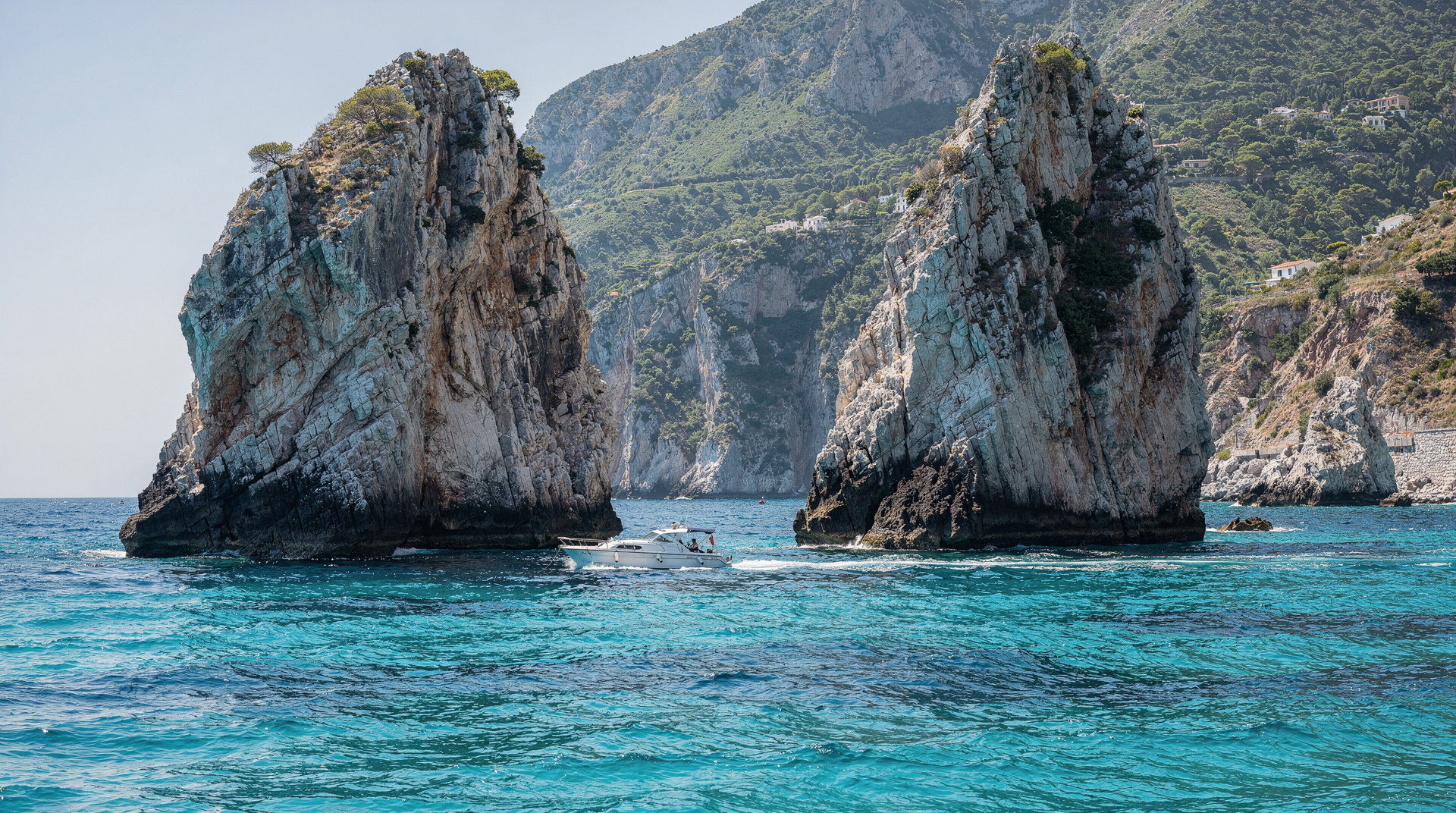
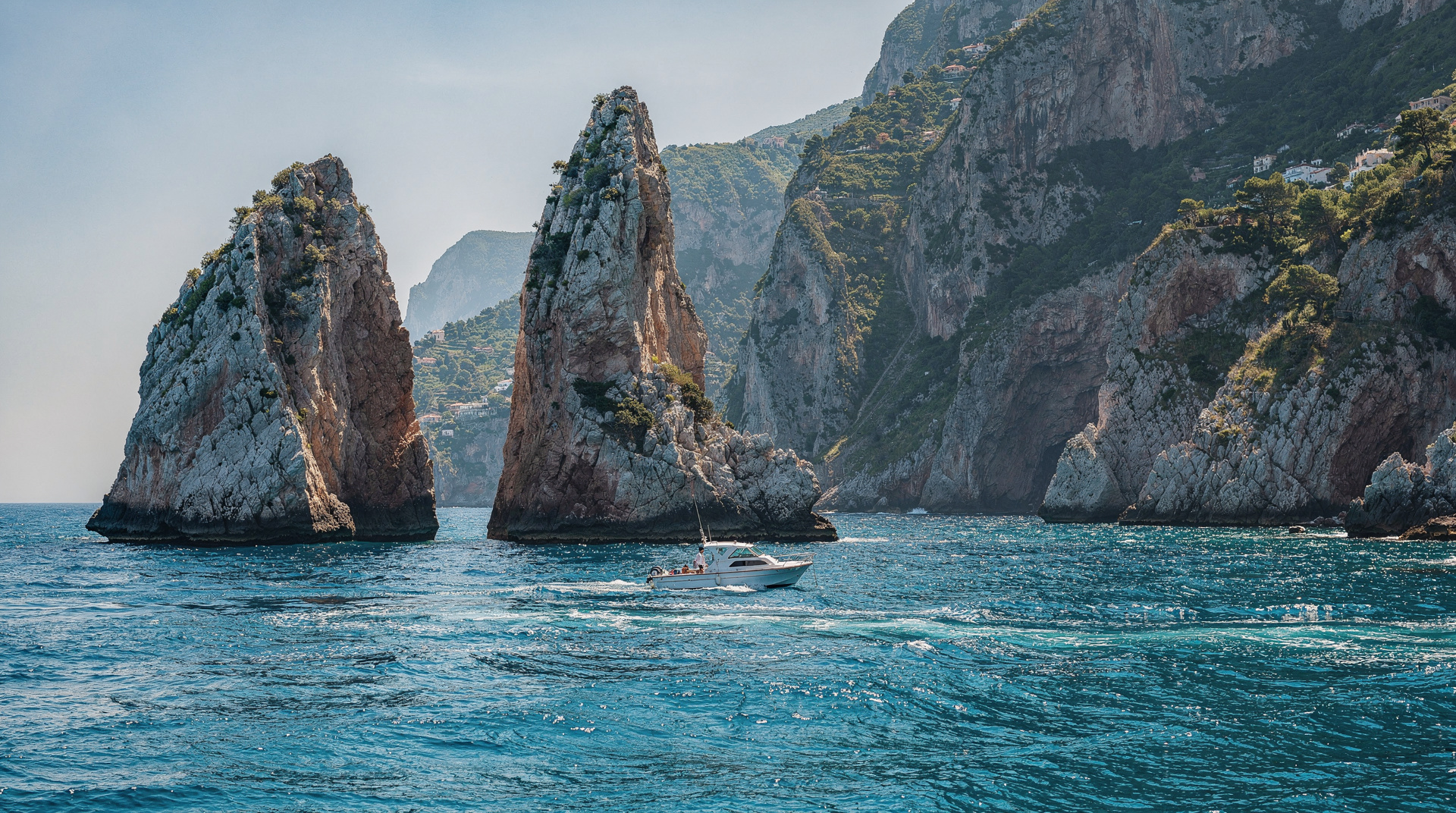
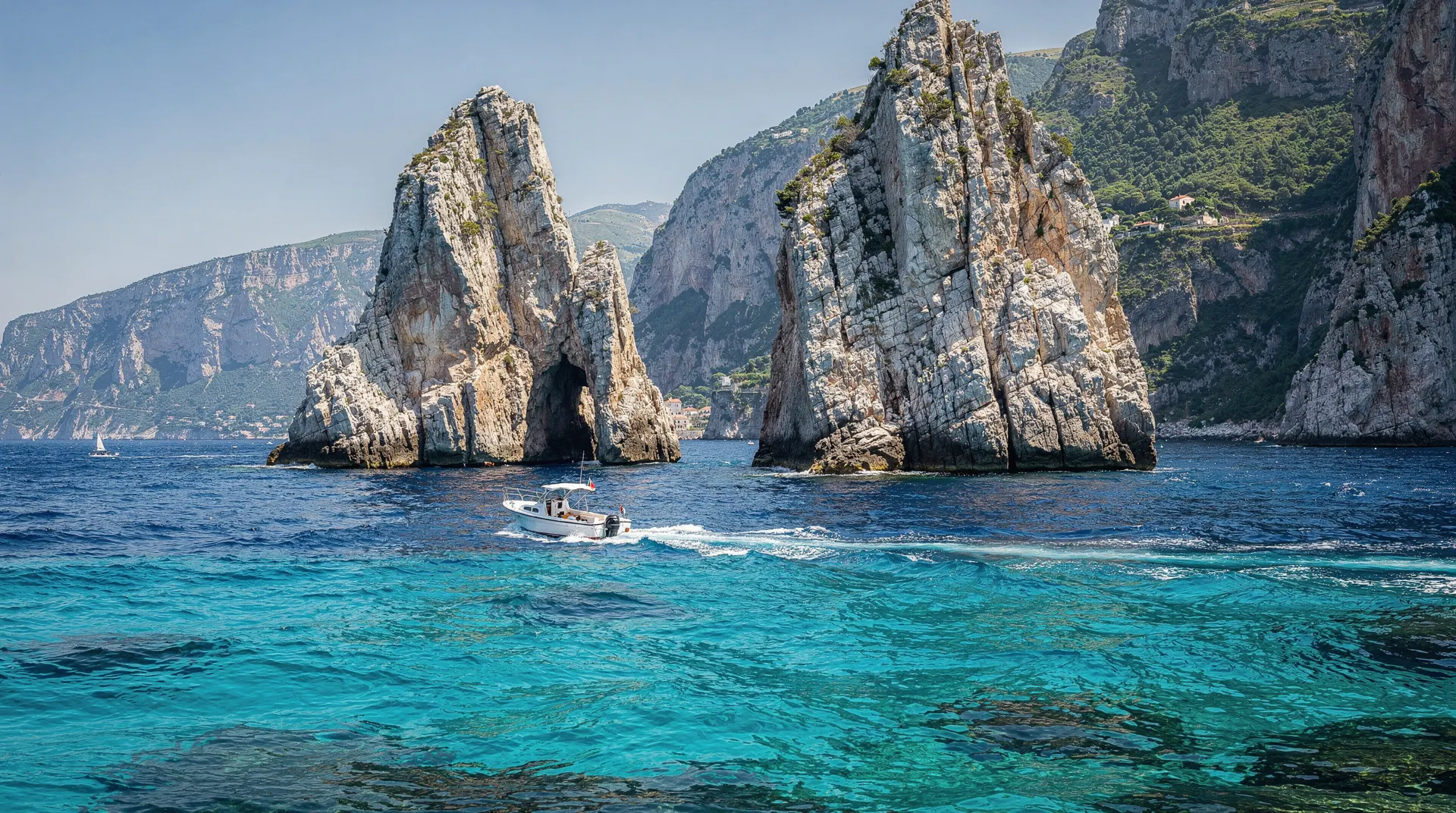
What it does well: Capri’s signature attractions justify the reputation. Monte Solaro, accessed by chairlift from Anacapri, provides one of the best views in the Mediterranean (€14 return, 12 minutes). The Faraglioni rock stacks are genuinely spectacular, especially from the water. The Piazzetta in Capri town is a beautiful, expensive, entirely authentic piece of Mediterranean theatre.
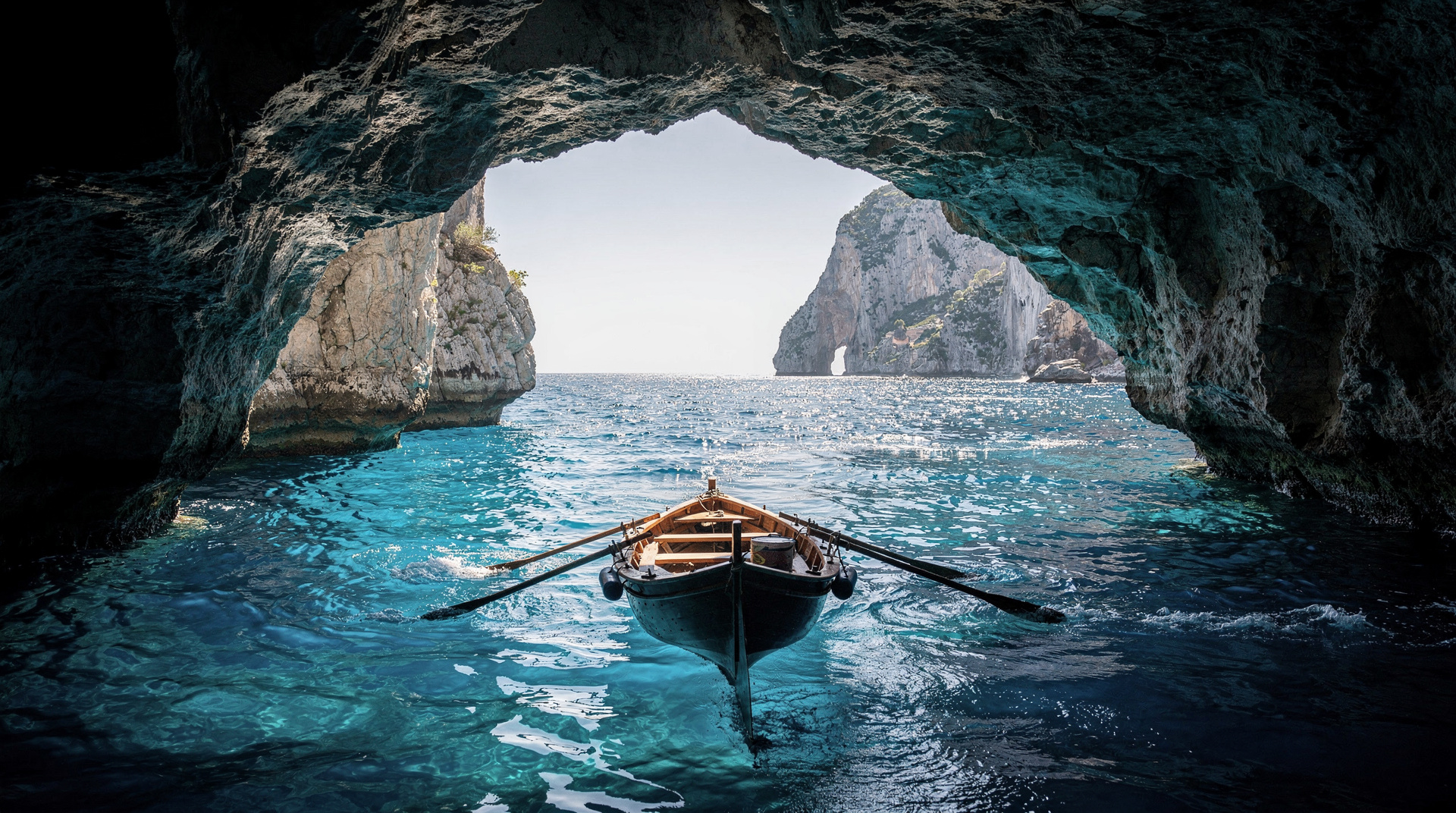
What it overpromises: The Blue Grotto is genuinely beautiful — a sea cave illuminated by refracted light that turns the water an electric blue — but the experience is often disappointing relative to the hype. The rowing boat queue in summer runs 1.5–2 hours. Once inside you have roughly 3 minutes before the boat is turned around. Entry is €18–20 plus the rowing boat fee. It is also closed roughly 30–40% of the time due to tides and weather. See blue-grotto-reality-check for the full picture.
The crowds problem: Capri has a fixed physical capacity and a tourist pressure that regularly exceeds it. The funicular between the Marina Grande and Capri town runs a queue of 20–45 minutes on busy summer mornings. The bus from Capri town to Anacapri holds 20 people; the queue is 80. The Piazzetta at noon in August is shoulder-to-shoulder. None of this makes Capri not worth visiting, but arrival timing matters acutely — the first ferry of the morning (typically 7:15–8am from Naples) gives you 90 minutes before the tourist wave crests.
Cost reality check:
| Item | Typical cost |
|---|---|
| Return hydrofoil Naples | €42–48 |
| Funicular Capri town (return) | €4 |
| Monte Solaro chairlift (return) | €14 |
| Blue Grotto entry + boat | €18–20 + €4–6 |
| Sit-down lunch (mid-range) | €25–40 per person |
| Limoncello/lemon granita | €5–8 |
| Total typical day | €80–130 |
Ischia in detail
What it does well: Ischia’s volcanic character gives it something Capri cannot offer — thermal geothermal activity that feeds a network of natural and commercial thermal gardens (terme). The island has six distinct towns, each with its own character: Ischia Porto and Ischia Ponte (connected by a bridge to the medieval Castello Aragonese), Forio (the most visited, with the Poseidon thermal gardens and the garden of La Mortella), Lacco Ameno, Casamicciola, and Sant’Angelo (a pretty car-free village on the southern coast).
Beaches: Ischia has the Bay of Naples’ best beaches. Maronti is a 2km dark volcanic sand beach accessed by water taxi from Sant’Angelo (€5 each way). Citara near Forio is a large sandy beach adjacent to the Poseidon gardens. Spiaggia dei Maronti, San Montano (near the thermal hotel area), and the beach at Lacco Ameno are all alternatives. None of these exist on Capri in any comparable form.
Thermal gardens: The commercial thermal gardens are Ischia’s most distinctive offering. The largest and most popular is Poseidon at Forio: 23 pools at different temperatures fed by volcanic springs, sun-bed hire, restaurants, and spa services. Entry is approximately €35–45 depending on season. It is a well-maintained holiday park with genuinely therapeutic properties — not a wild spring in a forest. The Negombo at San Montano is more design-focused and slightly more expensive.
Honest caveats: Ischia’s Castello Aragonese (€10 entry) is a genuine highlight — a medieval fortress complex on a volcanic rock connected to the main island by a causeway — and is sometimes overlooked in favour of the thermal gardens. The island’s roads are busy in summer and the buses can be crowded. Sant’Angelo village, car-free and perched on its promontory, is the most atmospheric part of the island and worth the bus journey.
Cost reality check:
| Item | Typical cost |
|---|---|
| Return hydrofoil Naples | €40–44 |
| Poseidon thermal gardens | €35–45 |
| Sun-bed hire (optional) | €10 |
| Lunch (mid-range) | €15–25 |
| Castello Aragonese (optional) | €10 |
| Total typical day | €60–100 |
Direct comparison by visitor type
Choose Capri if you:
- Have never visited a Bay of Naples island and want the iconic experience
- Are more interested in dramatic scenery than beaches
- Plan to visit in May, early June, or September (off-peak)
- Are comfortable spending €100+ per person for a day
- Enjoy a mix of sightseeing, walking, and café culture
- Are interested in the Blue Grotto (accepting it may be closed)
Choose Ischia if you:
- Want a proper beach day with sand and warm water
- Are interested in thermal bathing as an activity
- Are travelling with children under 12
- Want to explore multiple towns rather than one concentrated resort
- Are visiting in July or August (less extreme crowds than Capri)
- Are on a tighter budget (€20–40 per person less than Capri)
- Want to go overnight and explore properly
Choose both if: You have at least three days free on the coast and are based in Naples. Capri one day, Ischia the next — both are 45–90 minutes from Naples and give you very different experiences of the Bay.
Ischia Poseidon thermal gardens with transfer from Naples portThe overlooked third comparison: Procida
Any honest Capri vs Ischia comparison should mention Procida. This small island (4 sq km), 30–40 minutes from Naples, was almost unknown to international visitors until its Italian Capital of Culture year in 2022. It has minimal paid attractions, the most authentic village atmosphere in the Bay, and costs a fraction of either island. If you have already visited Capri and are returning to Naples, Procida is a compelling alternative. See capri-vs-ischia-vs-procida for the three-way comparison.
Seasonal advice
May and September are the best months for both islands. Ferry schedules are full, weather is warm (water swimmable in September), crowds are manageable, and prices are 10–15% lower than peak summer. For Capri specifically, this timing transforms the experience.
June is excellent for Ischia (beaches open, not yet at full summer pressure) and very good for Capri (before the worst July–August compression).
July–August on Capri requires very early departures and adjusted expectations. On Ischia, the same period is busy but not dysfunctional.
October is better for Ischia than Capri. Ischia’s thermal gardens stay open through autumn and the island retains activity because of its thermal hotel culture. Many Capri restaurants close by late October.
Winter (November–March): ferry schedules are reduced and some operators suspend service during bad weather. Capri is significantly quieter, with many businesses closed. Ischia’s thermal hotels remain open year-round for long-stay spa guests. Procida is equally quiet but has more functioning daily-life activity.
What to see on each island: the essentials
Capri priorities:
- Monte Solaro chairlift from Anacapri — the view is the headline attraction
- Arco Naturale walk (1 hour circuit from Capri town, free)
- Blue Grotto boat excursion — if conditions permit and queue is under 30 min
- Piazzetta in Capri town — expensive drinks, excellent people-watching
- Villa San Michele in Anacapri (€8) — Axel Munthe’s house and garden, exceptional views
Ischia priorities:
- Castello Aragonese — most historically significant site on the island
- Poseidon thermal gardens at Forio — the full thermal experience
- Giardini La Mortella near Forio — one of Italy’s great botanical gardens
- Maronti beach — best beach on the island, accessed by water taxi
- Sant’Angelo village — car-free, visually beautiful, good for a long lunch
Frequently asked questions about Capri vs Ischia
Is it possible to visit Ischia without going to the thermal gardens?
Yes. Ischia has beaches, the Castello Aragonese, boat trips, wine (the island has its own DOC wines — Biancolella and Per’ e Palummo), and several good towns to explore. The thermal gardens are the island’s distinctive selling point and worth at least one visit, but a beach and sightseeing day on Ischia without them is perfectly satisfying.
How busy is Capri on a weekday versus a weekend?
The difference is modest in summer (July–August), as cruise ships operate 7 days a week. In May, June, and September, weekday visits are noticeably quieter than Saturday–Sunday. If you have flexibility in your Campania week, Tuesday and Wednesday mornings on Capri in shoulder season are the optimal timing.
What is the best way to get around Capri?
Walk (the island is small enough), use the two bus lines (Capri town ↔ Anacapri, Capri town ↔ Marina Piccola), or take the funicular between Marina Grande and Capri town. Taxis exist but are expensive. Scooter hire is available and popular with locals, but the roads are narrow and in summer conditions extremely crowded — not recommended for unfamiliar visitors.
Can I swim on Capri without paying beach club fees?
Yes, but the free options are limited and require a walk to reach them. The free public beach at Marina Grande is not particularly attractive. The area below the Arco Naturale has some accessible rock platforms for swimming with exceptional water clarity. Marina Piccola has a public access point next to the paid beach clubs. Most visitors end up paying €15–25 for a sun bed and access at one of the established beach clubs.
Is Ischia good for snorkelling?
Yes. The waters around Sant’Angelo, Punta Imperatore, and the Maronti coastline are clear and calm, with moderate marine life. The island’s volcanic rock formations provide interesting underwater terrain. None of this is as dramatic as Capri’s grottos from a scenic perspective, but Ischia has considerably more accessible water for snorkelling without crowds.
Which island has better food?
Ischia has a stronger local food identity. The island’s wine (DOC Ischia), rabbit prepared alla cacciatore (a historic island dish using rabbit raised on the island), fresh seafood, and the locally grown vegetable tradition make for better eating than Capri’s tourist-facing restaurant scene. Capri has excellent high-end restaurants, but the value-to-quality ratio at mid-range establishments is worse than Ischia’s equivalents.
If you’re deciding as a repeat Naples visitor
First-timers overwhelmingly default to Capri, and that instinct is reasonable — it is the more photographed, more mythologised island, and it earns its reputation on a good-weather day. But for anyone returning to Naples for a second or third trip, the calculation flips. Capri’s headline sights (Blue Grotto, Piazzetta, Monte Solaro) don’t change much between visits, while Ischia rewards a longer stay: a different town each visit, a different thermal garden, a different beach. Visitors who have already “done” Capri and want a genuinely different Bay of Naples day increasingly choose Ischia over a repeat Capri trip, and report higher satisfaction for it. If you are choosing purely by return-visit value, Ischia wins.
A note on sustainability and island infrastructure
Both islands host far more day-trippers than their permanent populations, and both show visible strain from it — Capri from cruise-ship volume concentrated into a few hours, Ischia from the sheer footprint of hotel and thermal-garden development along its coastline.
Neither problem is going away, but you can reduce your own impact modestly: avoid the two or three peak cruise-ship days if your dates allow it (check Naples port cruise schedules), carry a refillable water bottle rather than buying plastic on the ferry, and on Ischia specifically, consider one of the smaller family-run thermal gardens near Casamicciola or Lacco Ameno instead of always defaulting to the largest commercial complex — spreading demand helps the island’s smaller operators as much as it improves your own experience.
Capri and Anacapri guided small-group experienceFrequently asked questions about Capri vs Ischia — which Bay of Naples island to visit in 2026?
Which island is more expensive — Capri or Ischia?
Which island has better beaches?
Is Capri worth visiting despite the crowds?
Can I do both Capri and Ischia in one day?
Which island is better for families with children?
How do I get from Capri to Ischia directly?
Which island is quieter in August?
Top experiences
Bookable activities with verified prices and instant confirmation on GetYourGuide.