Naples Street Food Walking Tour: 6 Stops, Zero Filter
Naples: Street Food Experience With 6 Stops
Duration: 2h
What you actually eat across the 6 stops
The core appeal of this six-stop street food tour is the range it packs into roughly two to three hours. Naples does not do fusion or experimentation — the food here is relentlessly local and has been for generations. Each stop reflects that stubbornness.
| Where | Centro storico, Spaccanapoli, ending at Pignasecca market |
| Cost | around €40–55pp (6-stop format) |
| Time needed | 2–2.5 hours |
| Getting there | Meets in the centro storico, walkable from central hotels |
| Best time | Morning departure, arrive hungry (skip breakfast) |
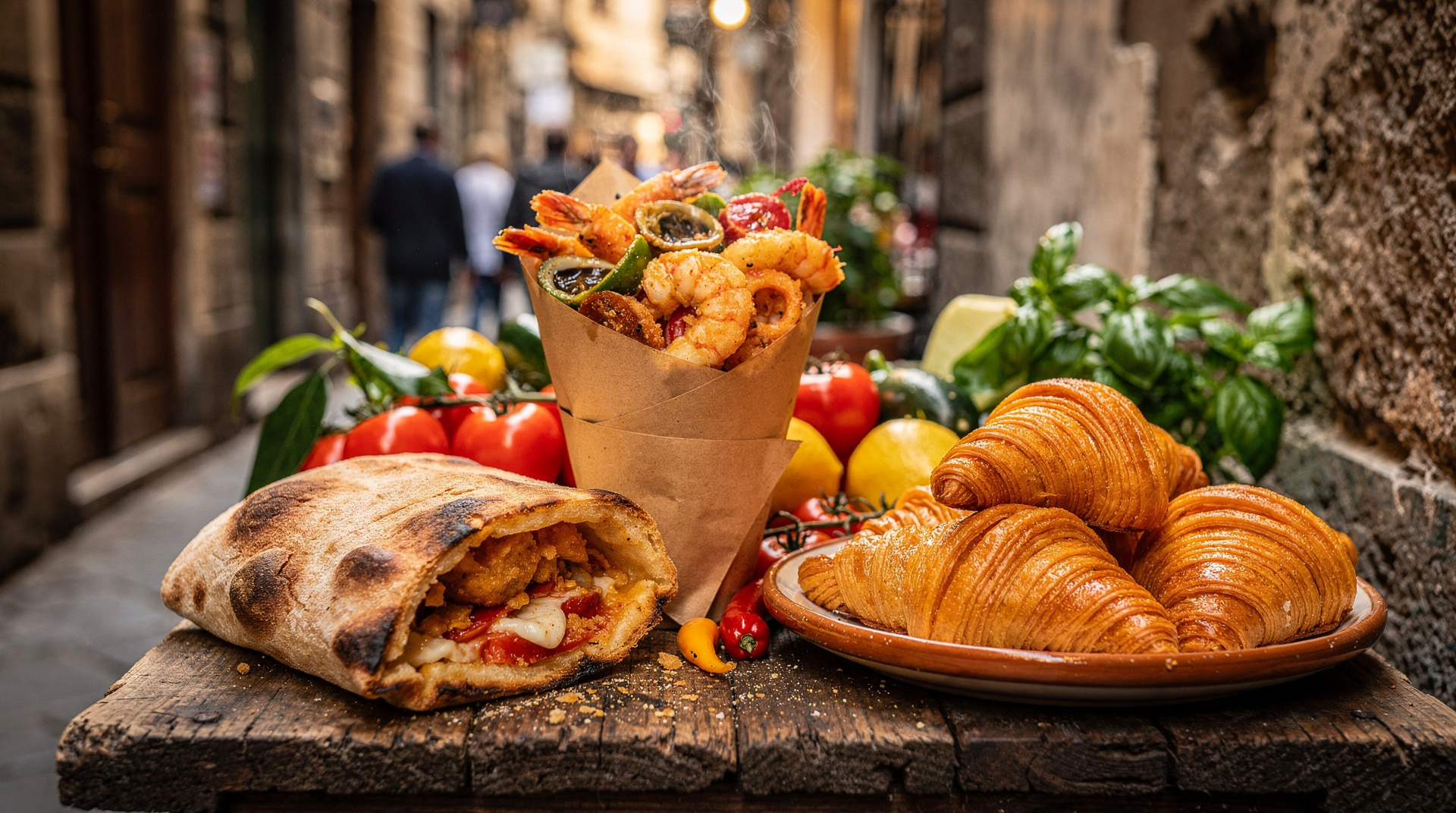
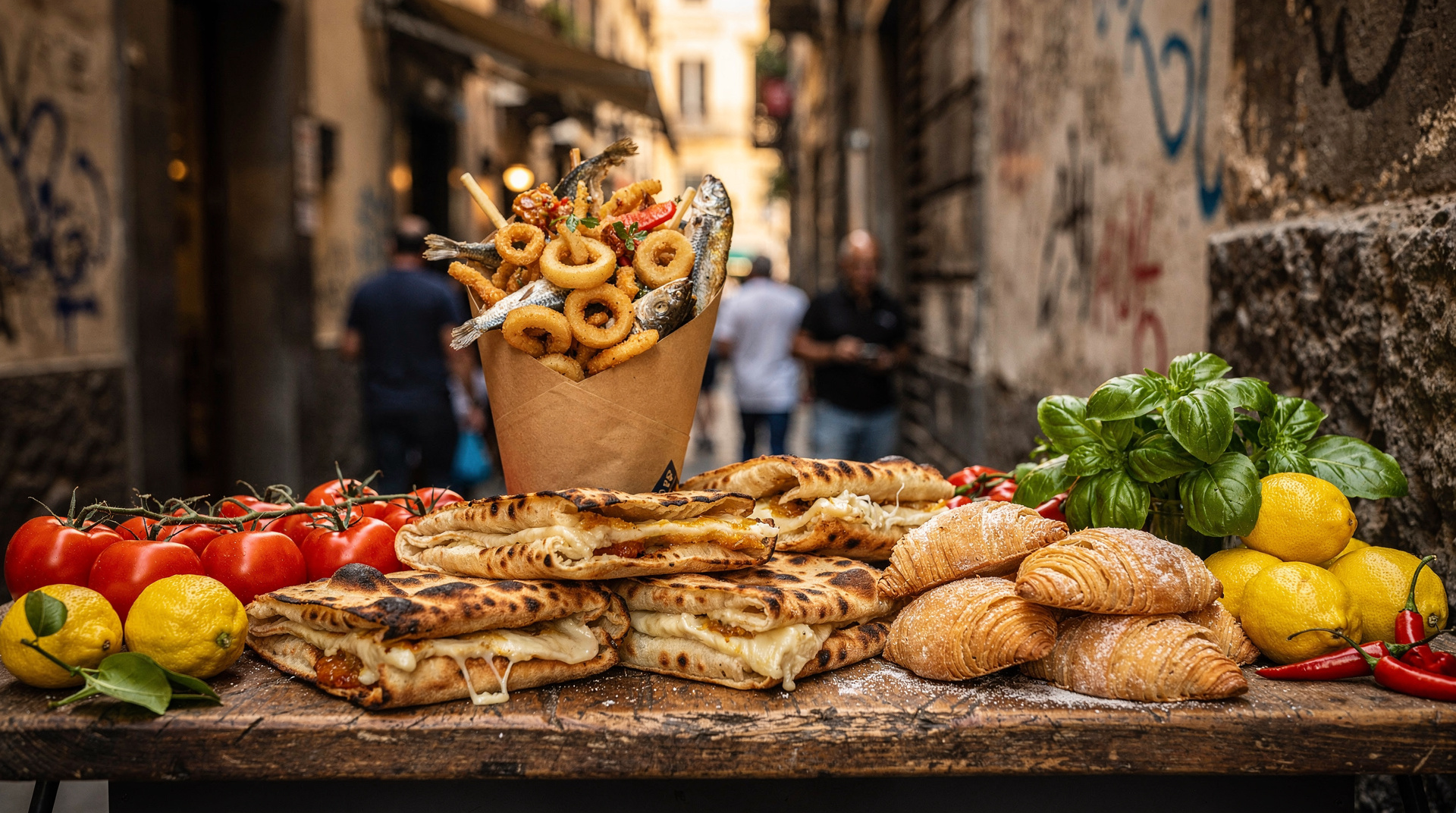
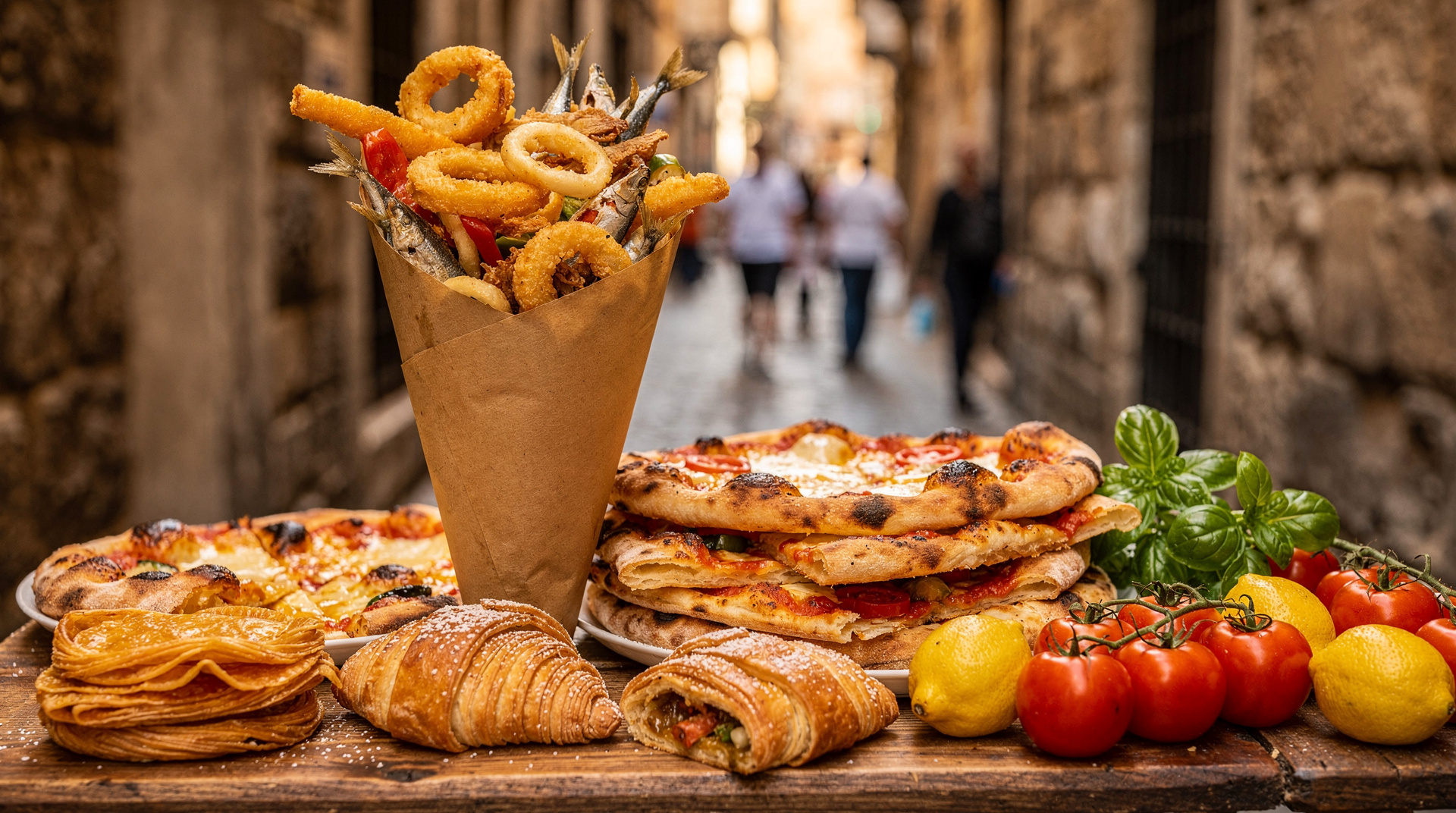
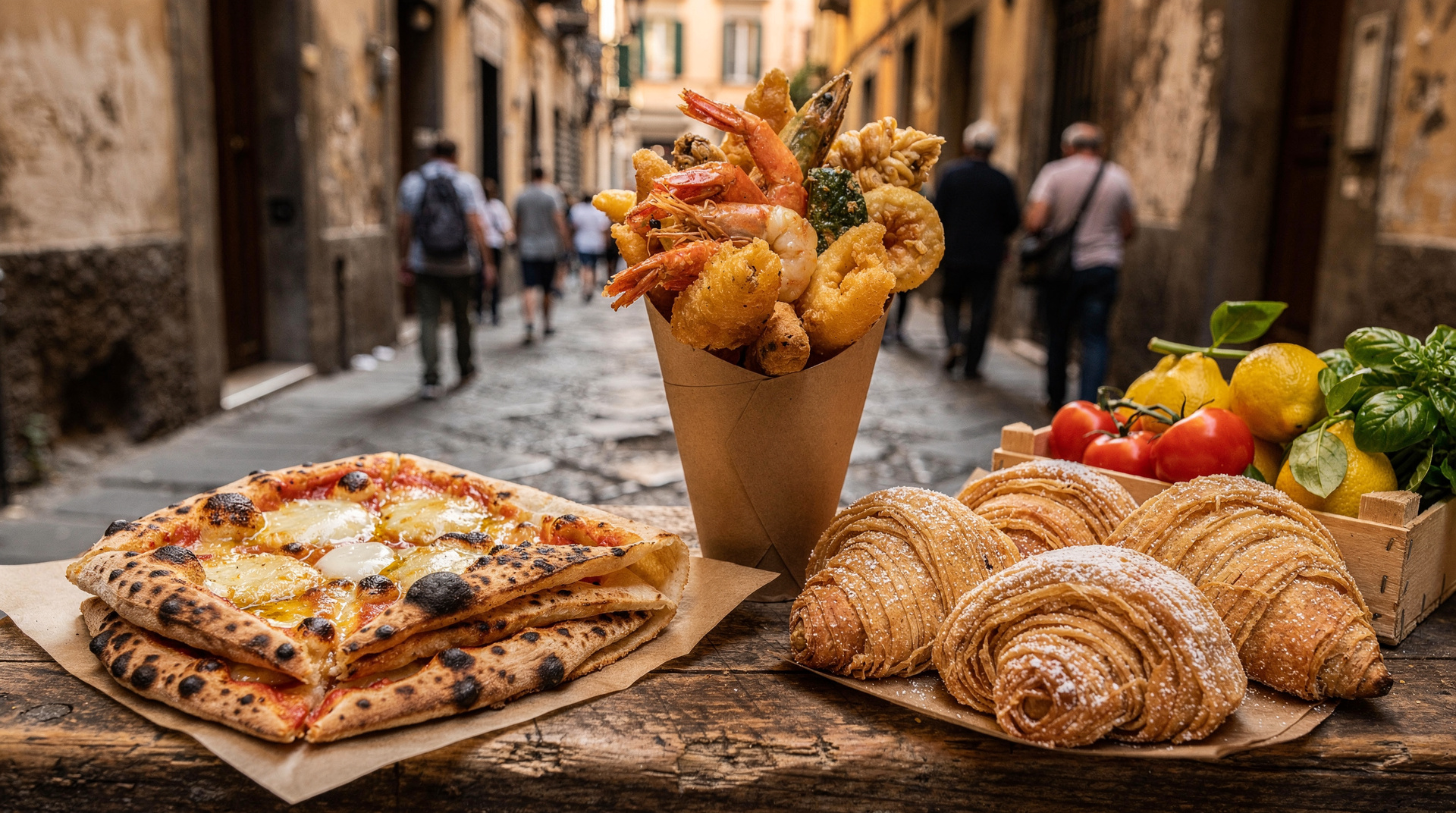
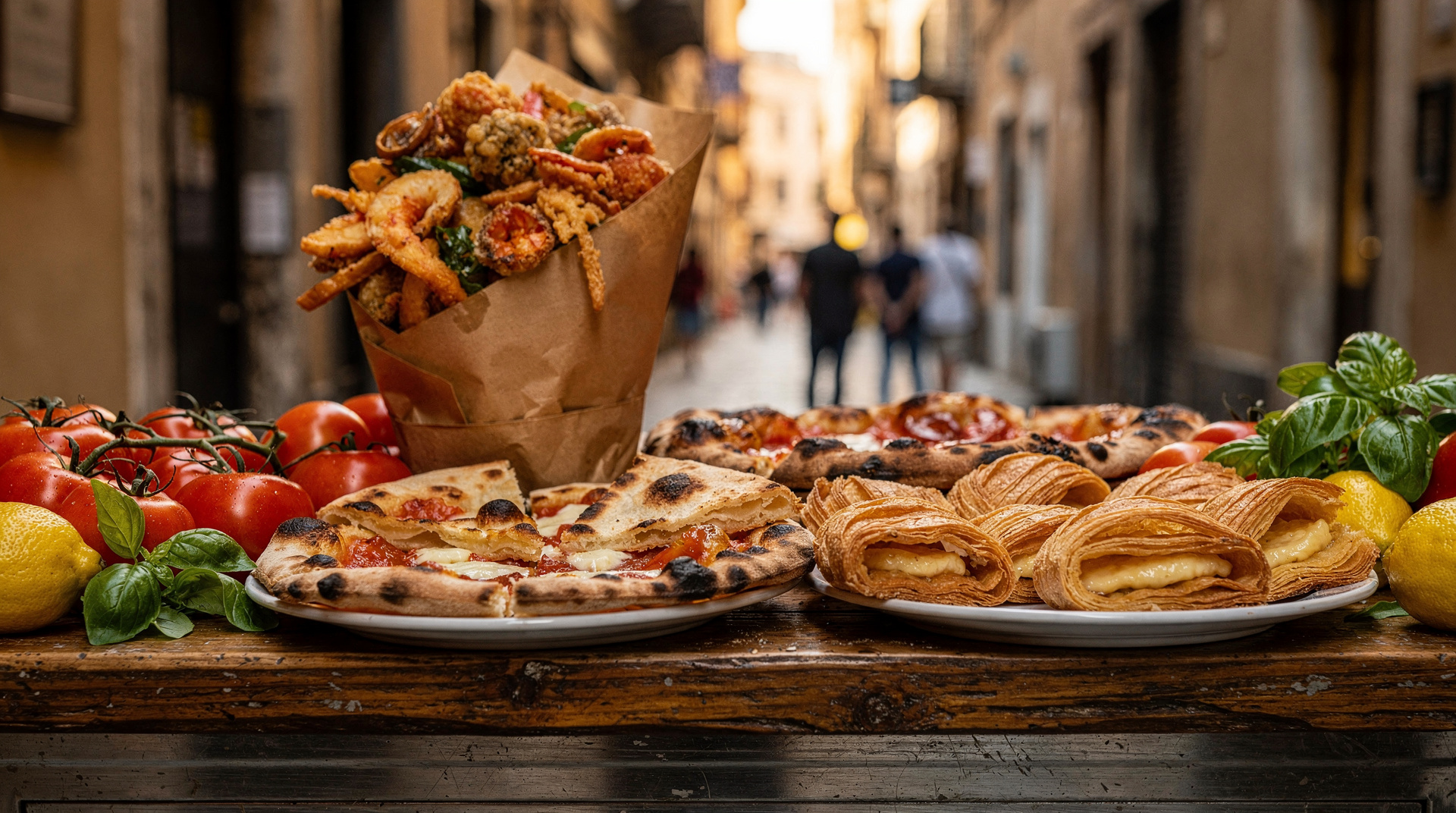
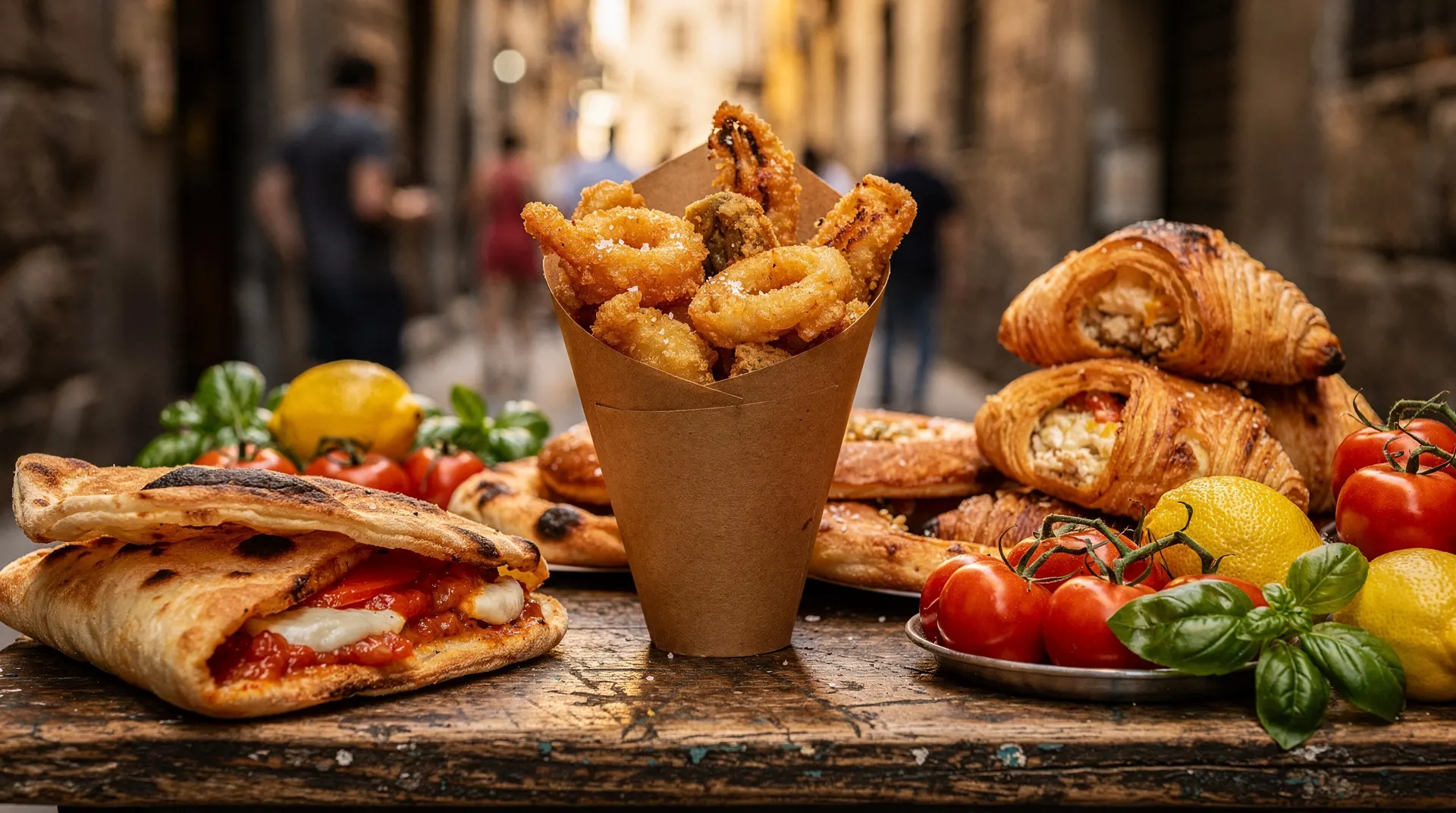
Pizza a portafoglio comes first and it should — this is Naples in one bite, a round of thin dough folded twice into a wallet shape so you can eat it walking, for around €1.50 at a classic pizzeria al taglio. No table, no cutlery, grease on your fingers immediately.
Cuoppo is a paper cone stuffed with fried things: battered potato croquettes, zeppoline (fried dough balls), montanara (small fried pizza discs), and depending on the vendor, tubetti fritti or frittatine di pasta. A satisfying cone runs €3–5. The guide steers you past the tourist-trap versions toward vendors where the oil is fresh and the turnover is high.
Frittatina di pasta deserves its own moment. A dense fried cake of spaghetti bound with béchamel, studded with peas and ham or just cheese — it looks like a hockey puck and tastes like a revelation. €1.50–2.
Sfogliatella closes the savoury-sweet transition: a clam-shell pastry with crunchy ridged layers and a ricotta-semolina filling spiked with candied citrus peel. The riccia version (flaky) is the harder one to make right; a good one at €1.80–2 from a proper pasticceria is one of the best things you’ll eat in Italy.
Taralli fill any gaps — small baked rings knotted with lard and pepper, intensely savoury, sold loose in bags. Cheap, addictive, and a native snack Neapolitans eat the way Romans eat supplì.
A final savoury stop — often pizza fritta or a second fried item depending on group pace — rounds out the six.
The route: centro storico, Spaccanapoli, Pignasecca
The walk itself is half the value. The tour begins near the Decumani, the two surviving Roman streets that still form the spine of the centro storico, and works westward along Spaccanapoli — the long, dead-straight corridor that cuts the historic centre in half and concentrates street food vendors, churches, and noise at maximum density.
From Spaccanapoli the group descends toward Pignasecca, Naples’s scrappiest and most photogenic daily market. Stalls of improbably fresh fish, piled vegetables, and butchers who seem entirely unbothered by the chaos around them. The market dates to the 18th century and feels it. This is where the tour earns its “as a local” framing — most visitors never leave the main tourist drag, let alone push into Pignasecca on a weekday morning.
The total distance is modest — roughly 2 km — but the stops and conversation slow the pace to something enjoyable rather than aerobic.
The guide’s value: context that changes what you taste
The food is good on its own. The guide makes it better. Neapolitan street food has layers of context that a solo wander will miss: why sfogliatella riccia and sfogliatella frolla exist as two separate pastries with distinct monastic origins, why pizza fritta is the post-WWII poor-man’s version of the oven-baked kind, why taralli con pepe are an entirely different category from the plain dried ones sold in supermarkets elsewhere in Italy.
The local guide format means you get someone with family roots in the city, not an expat who learned the talking points from a handbook. The difference shows when someone asks an off-script question — about the vendor, the neighbourhood, what the street used to look like — and gets a real answer.
Group sizes cap around 12, which matters in Spaccanapoli where the alley width barely allows two people to pass side by side. Smaller groups navigate better and get more vendor face-time.
How it compares to the “eat as a local” alternatives
There are several competing food tours in Naples, and the “as a local” variant emphasises the market portion more heavily — more time in Pignasecca, more interaction with vendors, slightly less walking. Worth considering if the market atmosphere is the priority over variety of tastings.
The 8-tastings format covers more items across more stops, runs closer to 3.5 hours, and costs proportionally more (typically €55–70 per person versus €40–55 for the 6-stop). It’s the better choice for serious food travellers who want to get into the details — wine pairings at one stop, a proper pastry lesson at another. For a first visit or a tighter schedule, the 6-stop is the tighter, more manageable option.
The 6-stop tour hits the sweet spot for most visitors: enough food to constitute a meal, enough ground covered to understand the geography, and short enough to leave the afternoon free for the MANN or Pompeii.
There are other operators covering similar ground worth a glance before booking — the best food tours in Naples guide rounds up how the main options compare on route, price and group size beyond just this one company’s listings.
The Pignasecca market beyond the tour
If Pignasecca is the part of the route that appeals most, it’s worth knowing you can return independently afterwards — the market runs daily and rewards a slower browse than a group tour allows. The Naples food markets guide covers Pignasecca alongside the city’s other markets, useful if you want a follow-up visit without a guide. For a self-directed food crawl through the same neighbourhood at your own pace, where to eat around Spaccanapoli picks up where this tour leaves off.
Who this tour is for
This is not a slow-travel, wine-with-cheese-boards afternoon. The pace is street food pace: standing, walking, eating from paper cones and paper bags in alleys. It rewards people who are genuinely curious about why Neapolitan food tastes the way it does and who want an excuse to eat things they might not find alone.
It works well for:
- First-time visitors who want a fast, opinionated introduction to the city’s food culture before exploring independently
- Solo travellers who find wandering alone without context less satisfying
- Couples or small groups who want a structured morning before a freer afternoon
It is probably not the right choice for:
- Anyone who has already spent significant time eating through Naples on previous trips
- People who prefer long table lunches over snacking-in-motion
- Groups with severe dietary restrictions across multiple members (though the guide can adapt more than most)
Practical details: prices, timing, and the come-hungry rule
Tours depart most mornings, typically at 10:00 or 11:00. Duration is 2–2.5 hours for the standard format. Meeting point is in the centro storico, within walking distance of most central hotels.
Price range: €40–55 per person for the 6-stop tour. Book via the link to confirm the current rate — prices shift by season and group configuration.
The single most repeated piece of advice from past participants: do not eat breakfast first. A hotel breakfast before this tour wastes real capacity. Coffee is fine. Food is not. Arrive genuinely hungry and you’ll appreciate the cumulative effect of six stops rather than tapping out after three.
Wear comfortable shoes. Pignasecca’s pavement is uneven. The centro storico alleys are narrow, sometimes wet, and always busy. This is not a problem — it’s the point — but sandals with no grip will make the experience worse than it needs to be.
Verdict
Naples is one of the few cities in Europe where street food is not a tourist add-on but the actual native food culture. Eating pizza a portafoglio standing outside the pizzeria is not performing an experience — it’s doing what Neapolitans do for lunch. This tour provides the map, the vocabulary, and enough well-chosen stops to give that eating a framework. The guide context is genuine, the food is real, and the Pignasecca stretch is worth the price of admission alone. Book hungry, go in the morning, and don’t make restaurant reservations for lunch. If pizza specifically is your priority beyond the single portafoglio bite on this route, the Naples pizza guide is the next stop.