Path of the Gods Guided Hike from Sorrento — Honest 2026 Review
Sorrento: The Path of the Gods Hike
The Path of the Gods — Sentiero degli Dei — is arguably the finest coastal walk in Italy. Running along the high ridge above the Amalfi Coast between Bomerano and Nocelle, it places you at around 600 metres above sea level with the Tyrrhenian spread below and Capri floating on the horizon. A guided departure makes logistics simple, but the trail itself does the work: the views are extraordinary, the exposure is real, and the long staircase down to Positano is genuinely demanding. This review of the guided Path of the Gods hike from Sorrento gives you the honest version of what to expect.
| Where | Bomerano to Nocelle to Positano, above the Amalfi Coast |
| Cost | around €45–75pp guided group; €120–180 for two private |
| Time needed | 4–5 hours on trail (incl. the 1,500-step descent) |
| Getting there | Minibus transfer to Bomerano, ~90 min from Sorrento |
| Best time | April–May or September–October |
For the fuller background on the trail beyond this guided-tour review, see the Path of the Gods guide and the wider hiking near Naples guide if you want to compare it against other walks in the region.
The trail: Bomerano to Nocelle along the high ridge
The Sentiero degli Dei begins at Bomerano, a quiet hamlet above the town of Agerola on the inland side of the Amalfi mountains. Most guided tours from Sorrento or Naples include a minibus transfer to Bomerano — roughly 90 minutes from Sorrento — dropping you at the trailhead just above the village.
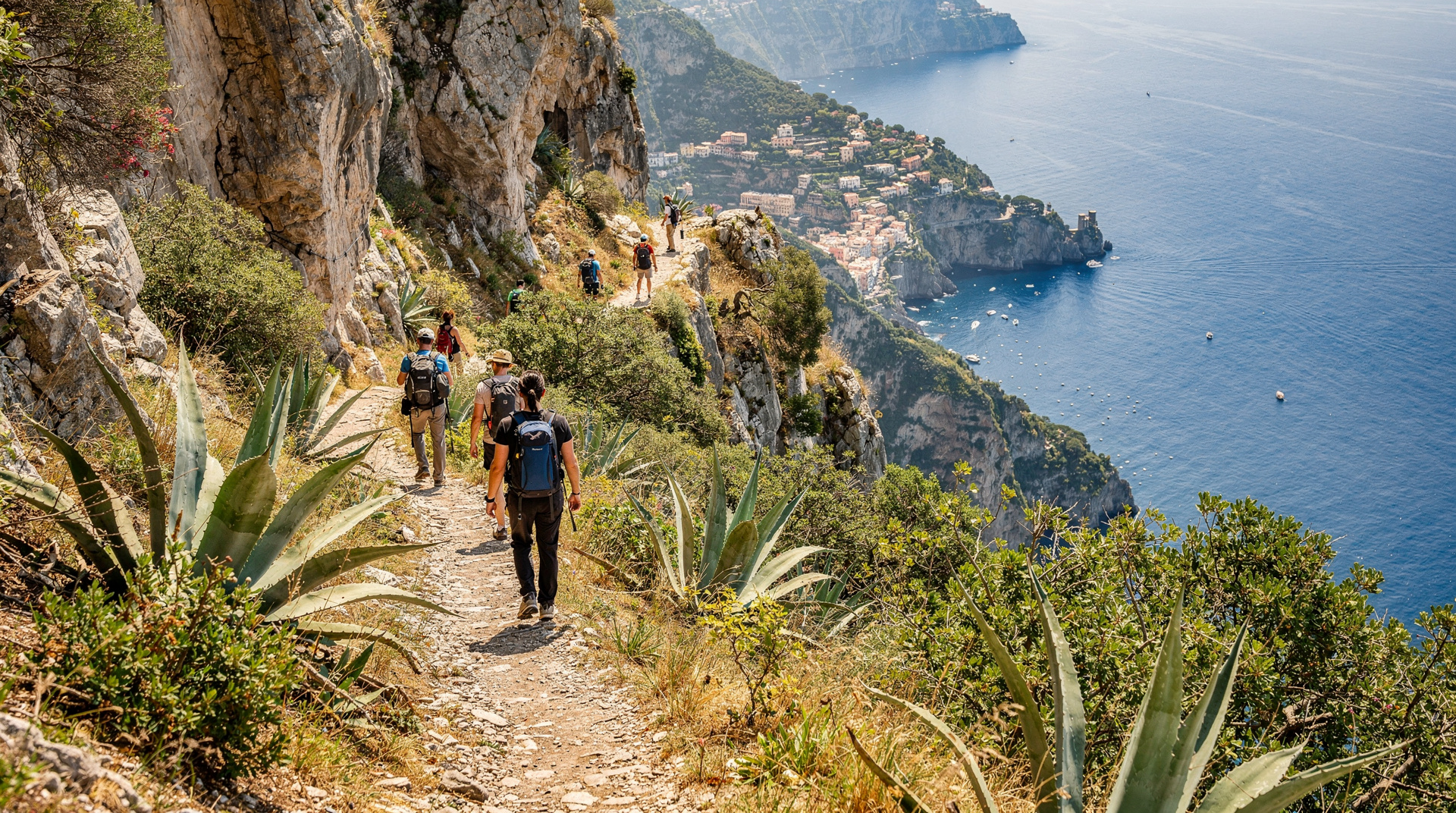
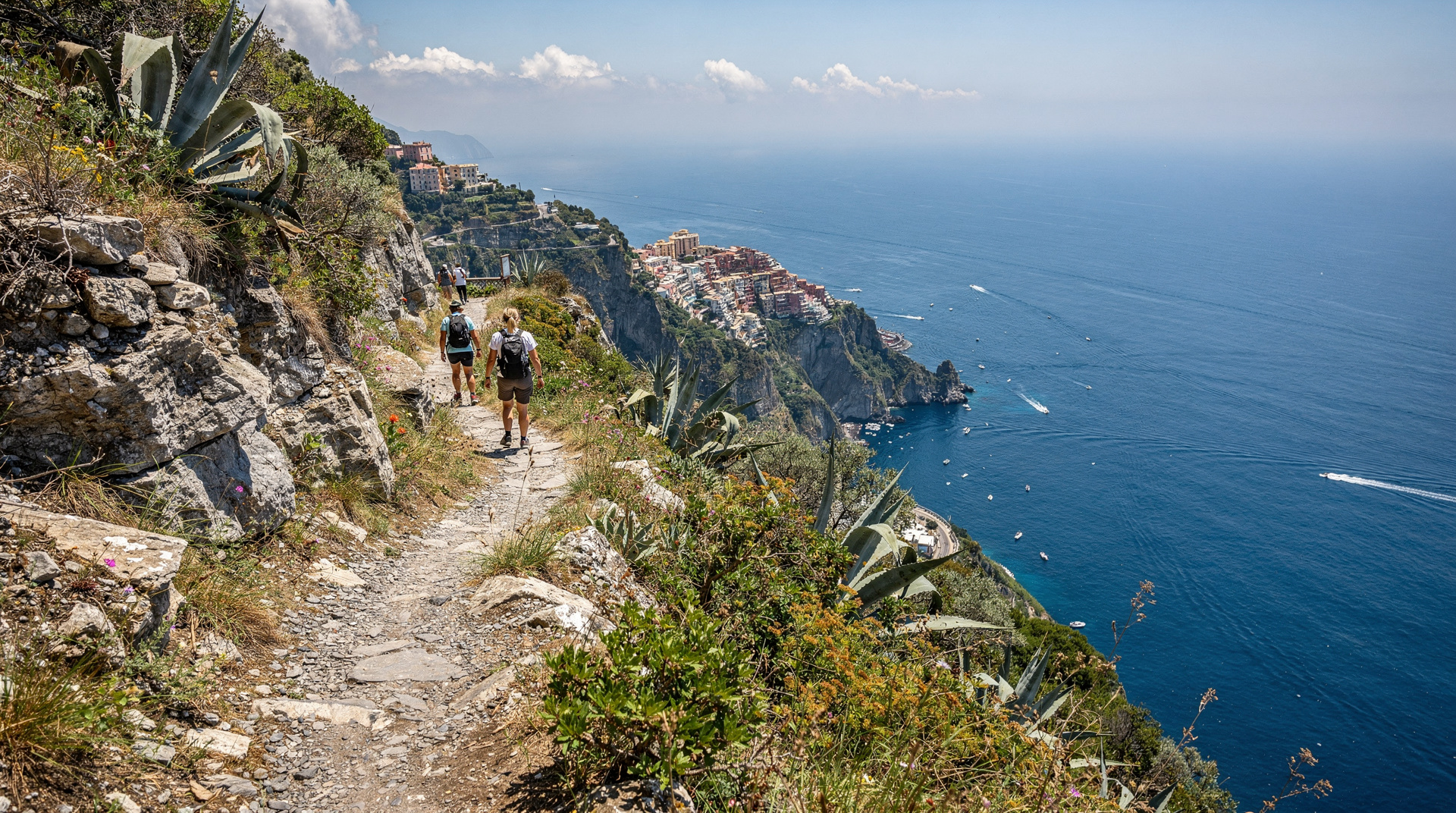
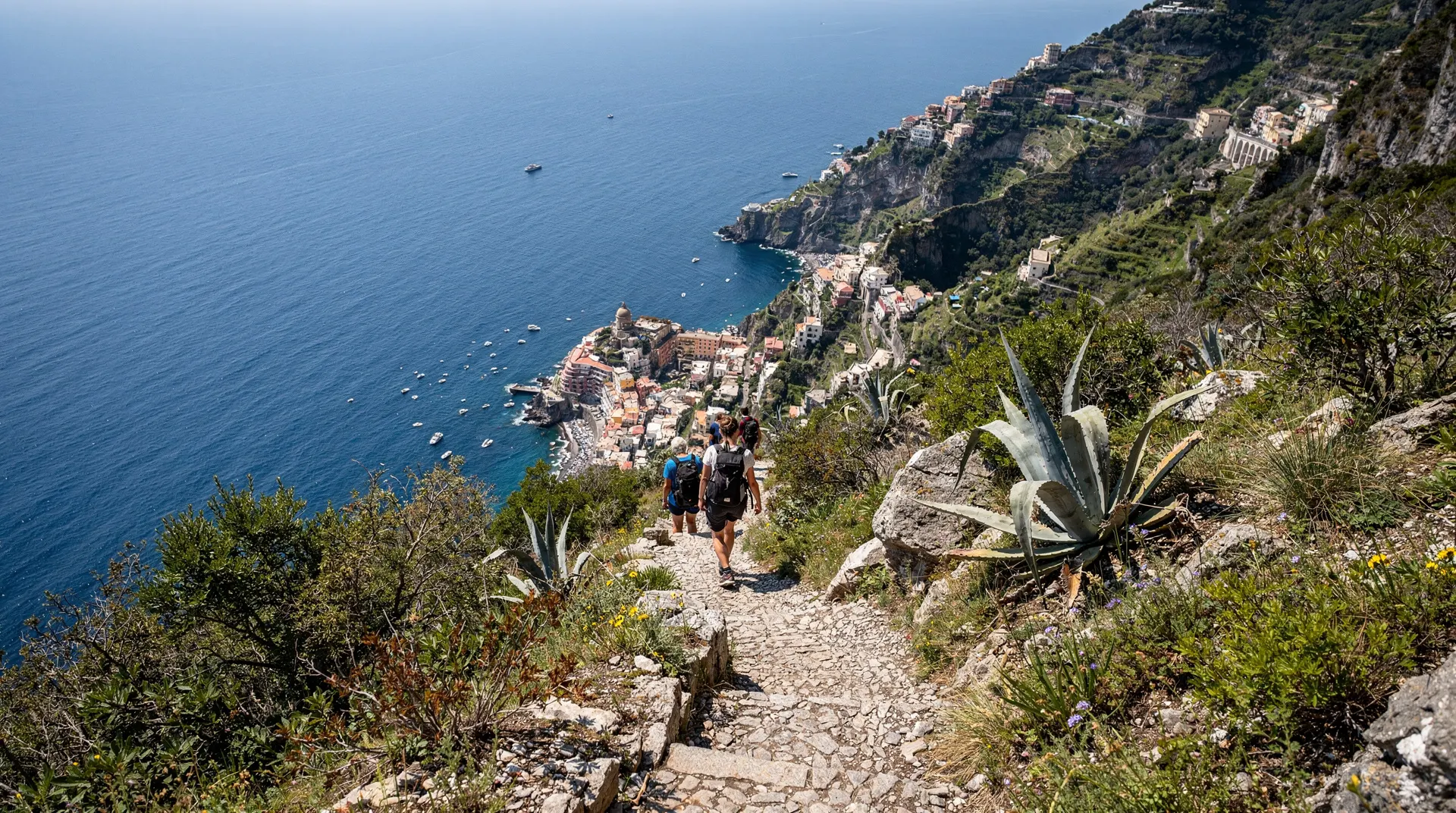
From Bomerano, the path heads west along the ridge for approximately 7 km, mostly contouring at altitude with short climbs and longer descents before reaching Nocelle. The surface alternates between carved stone stairways, wide mule-track, and narrow rock ledge. The trail is waymarked and generally clear, but some sections are less than a metre wide with a sheer drop on the coastal side. Vertigo is a genuine concern for a minority of walkers; if you know you struggle with heights, factor this in.
The Agerola start variant begins slightly lower in the village rather than at the top trailhead, adding around 20 minutes and some extra ascent — a minor difference, but worth knowing if you’re booking independently from the Amalfi Coast rather than joining a Sorrento minibus tour.
The views: what you actually see from up here
The view from the Path of the Gods is the reason everyone talks about it. For most of the route the southern drop is near-vertical to the sea, and on a clear day the panorama extends from the Sorrentine Peninsula and Capri in the west to the cliffs above Praiano and the distant outline of Paestum’s plain in the east.
The most photogenic stretch lies roughly 2 km west of Bomerano, where the trail widens onto a small terrace and the full sweep from Li Galli islands to Capo d’Orso opens up. Midmorning light — when most guided groups are on this section — hits the cliff faces from the east and makes the terracotta villages below glow against the blue. Carry a phone with plenty of charge; you will stop many times.
On hazy summer days (typically July–August) the full depth of the view can flatten, and overcast conditions occasionally obscure Capri entirely. Spring (April–May) and autumn (September–October) consistently offer the sharpest visibility and the coolest walking temperatures.
The guide and transfer logistics from Sorrento and Naples
The practical value of a guided departure is primarily the transfer. Getting yourself to Bomerano independently from Sorrento involves a combination of local buses and considerable waiting time; from Naples the logistics are even more complex. A guided tour picks you up at a central point in Sorrento (often Piazza Tasso) or in Naples, handles the minibus to Bomerano, leads the walk, and arranges the connection from Positano back to your starting point by ferry or bus.
The Sorrento-based guided group tour is the benchmark option for most visitors — groups stay small (typically 10–15 people), the guide sets a pace that accommodates the slowest walkers without dragging, and the return boat from Positano to Sorrento is usually included. This is the version that makes the logistics entirely seamless.
If you prefer a more flexible experience, the trekking-focused Sorrento departure moves at a brisker pace and includes more context about the landscape, vegetation and coastal history along the route — a better fit for active walkers who want substance alongside the scenery.
Who the hike is for — and the long descent to Positano
The Path of the Gods suits fit adults and older teenagers who are comfortable walking on uneven terrain for 4–5 hours. It is not a technical scramble and does not require special equipment beyond good footwear, but it is not a casual stroll either. The combination of distance, altitude, heat, and the long descent places it firmly in the moderate-plus category.
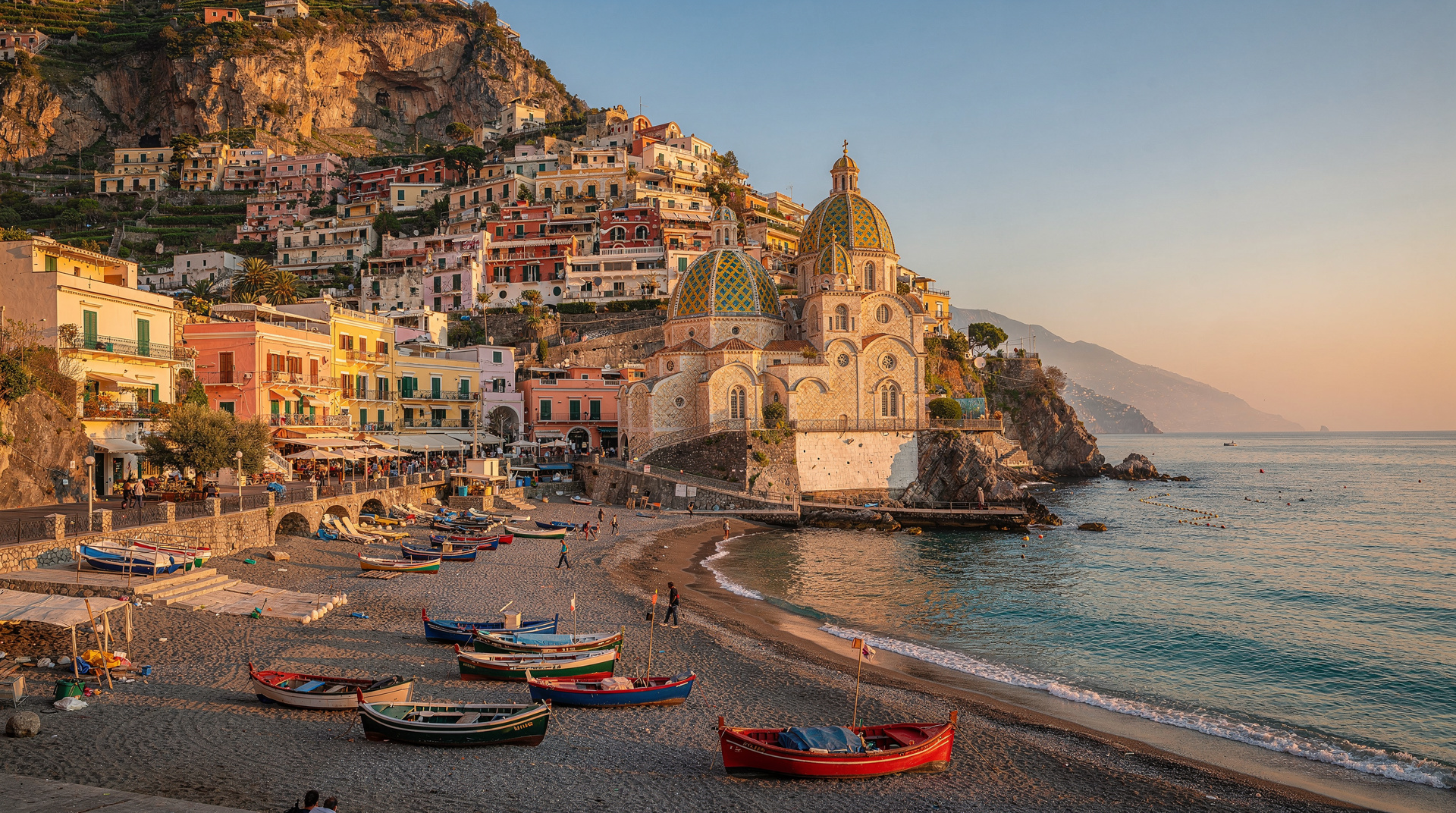
The staircase from Nocelle to Positano — roughly 1,500 irregular stone steps — is the section that catches the most people off guard. It takes 45–60 minutes and is steep from start to finish. Knees and ankles take punishment going down; the path is narrow and there is little shade at the top. Trekking poles (bring your own or hire at the trailhead) reduce the strain considerably. At the bottom you emerge into upper Positano village, from where the beach and the ferry quay are a further 15–20 minutes on foot through the steeply terraced streets.
For walkers who want the ridge experience without the staircase, some operators offer pick-up at Nocelle by minibus instead of the Positano descent — ask when booking. The private guided walk ending in Positano is worth considering for couples or small groups who want to control the pace and skip the staircase if conditions require it.
Comparing Path of the Gods to Vesuvius as a half-day hike
| Path of the Gods | Mount Vesuvius crater walk | |
|---|---|---|
| Distance | 7 km ridge + 2 km descent | ~1.5 km round trip |
| Time | 4–5 hours | 1.5–2 hours |
| Difficulty | Moderate-plus, sustained exposure | Easy, managed gravel path |
| Highlight | Sustained coastal ridge views | Active volcano crater rim |
Both are worth doing on a longer Naples stay, but they don’t fit into the same day comfortably alongside anything else. If your schedule only allows one hiking half-day, the Path of the Gods rewards more physical effort with a proportionally bigger payoff in scenery; the hiking Vesuvius crater guide covers the shorter alternative in full if a quicker outing suits your itinerary better.
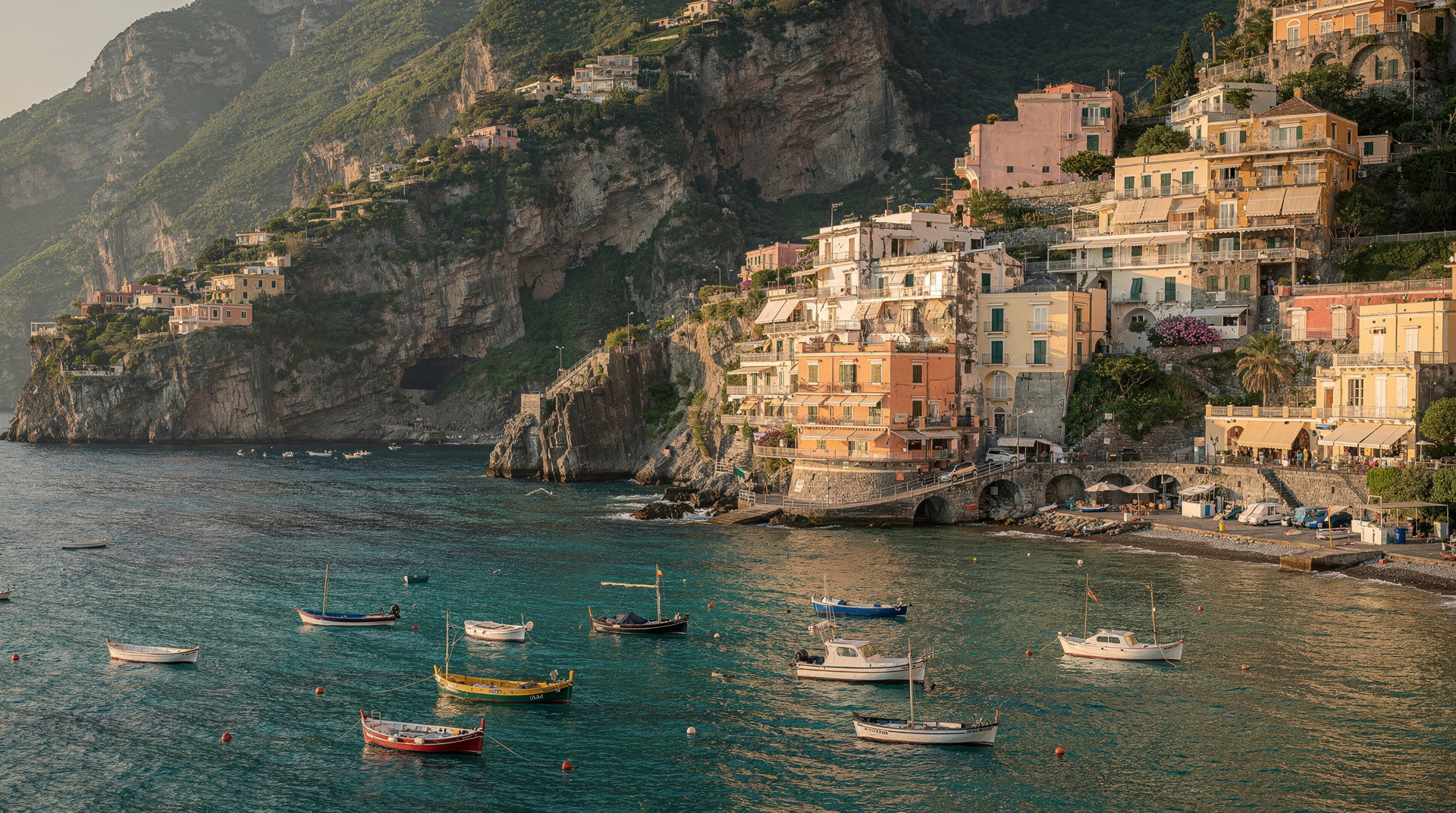
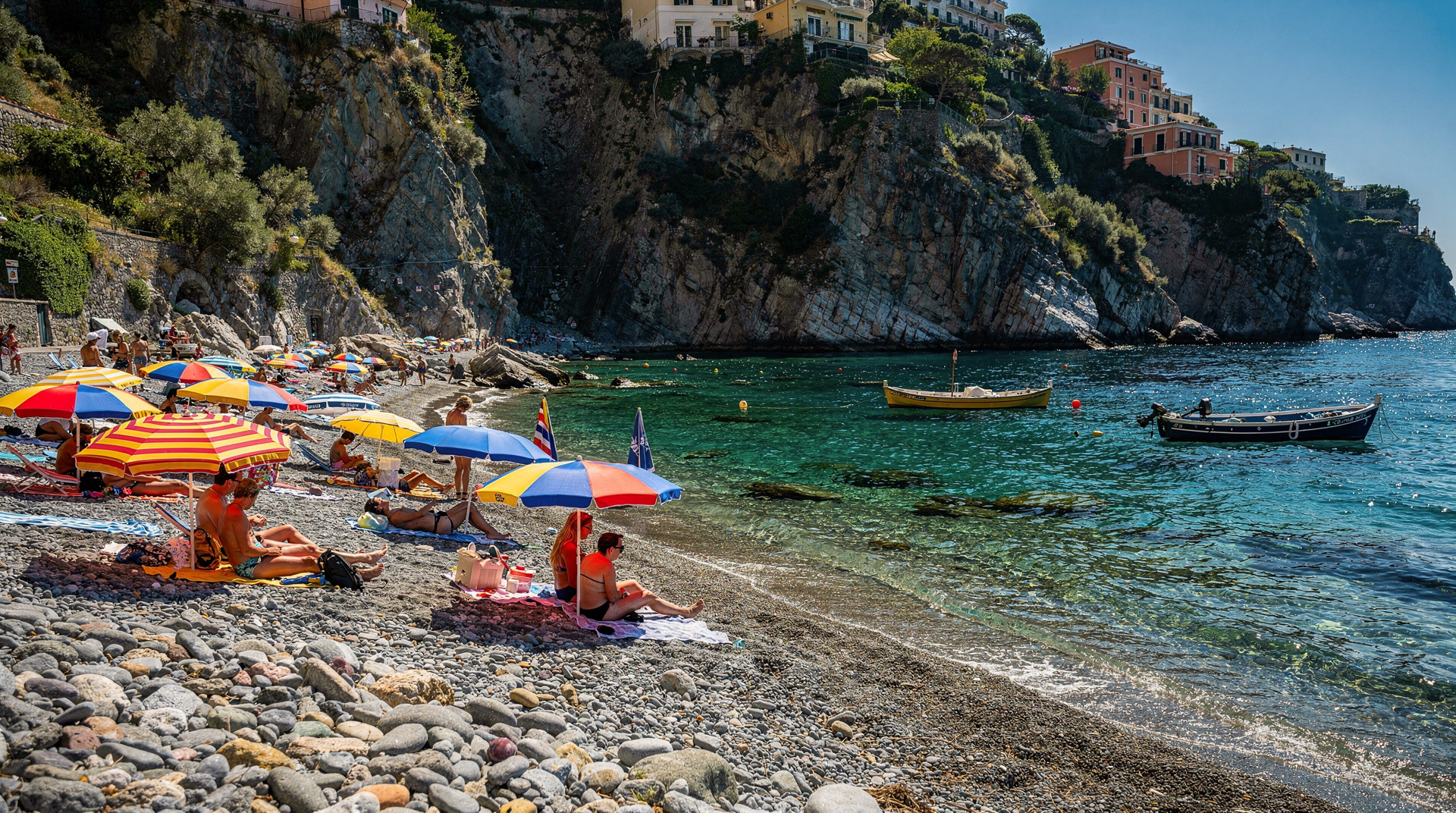
Once you’re down in Positano at the end of the hike, it’s worth having a plan for the rest of the day or evening — the Positano guide covers the town itself, and the best beaches on the Amalfi Coast guide is useful if you want to reward tired legs with a swim before heading back.
Practical information: prices, season, shoes and what to pack
Price range. Guided group tours from Sorrento run €45–75 per person in 2026 depending on group size, whether the return ferry is included, and pickup location. Private guided options cost €120–180 for two people. The transfer alone — without guiding — from Sorrento to Bomerano by shared shuttle runs around €15–20 per person if you want to walk independently.
Best season. April, May, September and October are the sweet spot: temperatures on the ridge stay comfortable (18–25°C), visibility is sharp, and trail crowding is manageable. July and August are hot (often 30°C or above at midday at altitude), the trail gets busy from 09:00 onwards, and haze reduces the view quality. The trail is technically open in winter but can be slippery after rain.
Footwear. Hiking shoes or trail runners with ankle support and a grippy rubber sole are non-negotiable. The path is rocky and some sections are damp from spring water. Sandals, flat-soled trainers or anything without traction grip are unsuitable and potentially dangerous on the descent.
Water and sun. There are no water sources or cafes on the trail between Bomerano and Nocelle. Carry at least 1.5 litres per person, more in warm weather. Sunscreen, a hat and a light windproof layer cover the remaining essentials — the ridge can be surprisingly breezy even in July.
Verdict
The Path of the Gods earns its reputation. The ridge views are as good as anything on the Italian coast, the trail is long enough to feel like a genuine achievement, and ending the day in Positano by descending those famous stairs ties the experience together in a way that no other hike on the Amalfi Coast quite matches. A guided tour from Sorrento makes the logistics entirely manageable for anyone visiting the coast without a hire car.
Go in spring or autumn if you can. Wear real hiking shoes, carry more water than you think you need, and treat the descent to Positano as a significant physical effort rather than an afterthought. Do that, and the Sentiero degli Dei will be the highlight of your Amalfi Coast trip — see the Amalfi Coast guide for how to fit it alongside the coast’s other towns.