Hiking near Naples: the best trails in Campania for every level
From Sorrento: Path of the Gods Guided Hike with Transfers
What are the best hiking options near Naples?
The top three are: (1) Path of the Gods above the Amalfi Coast (7.5 km, best coastal views in Italy), (2) Mount Vesuvius crater rim hike (2 km, active volcano summit), (3) Valle delle Ferriere from Amalfi town (6 km, waterfall, medieval paper mill). Day-trip accessible from Naples on public transport.
| Where | Lattari Mountains (Amalfi Coast), Vesuvius, Campi Flegrei |
| Cost | Free–€12 (Vesuvius crater entry is the only paid trail) |
| Time needed | Half a day (Vesuvius) to a full day (Path of the Gods) |
| Getting there | Circumvesuviana + SITA bus, or Metro Line 2 for Campi Flegrei |
| Best time | April–June and September–October |
Campania as a hiking destination
Naples is usually thought of as a city, food, and ruins destination. The region around it — Campania — is also a serious hiking destination, with three distinct environments within day-trip distance: the active volcanic landscape of Vesuvius and the Campi Flegrei, the limestone mountains of the Lattari range above the Amalfi Coast, and the coastal cliff paths connecting the maritime towns.
None of these require specialist equipment or technical experience. All are reachable by public transport from Naples. The combination of dramatic scenery, historical context, and accessibility makes Campania underrated as a walking destination relative to better-publicised Italian hiking areas like the Cinque Terre or Dolomites.
The main trails
1. Path of the Gods (Sentiero degli Dei)
Location: Above the Amalfi Coast, Lattari Mountains Distance: 7.5 km one-way (Bomerano to Nocelle) Difficulty: Easy-moderate Duration: 2.5–3 hours walking + 45-min descent to Positano Best season: April–May, September–October
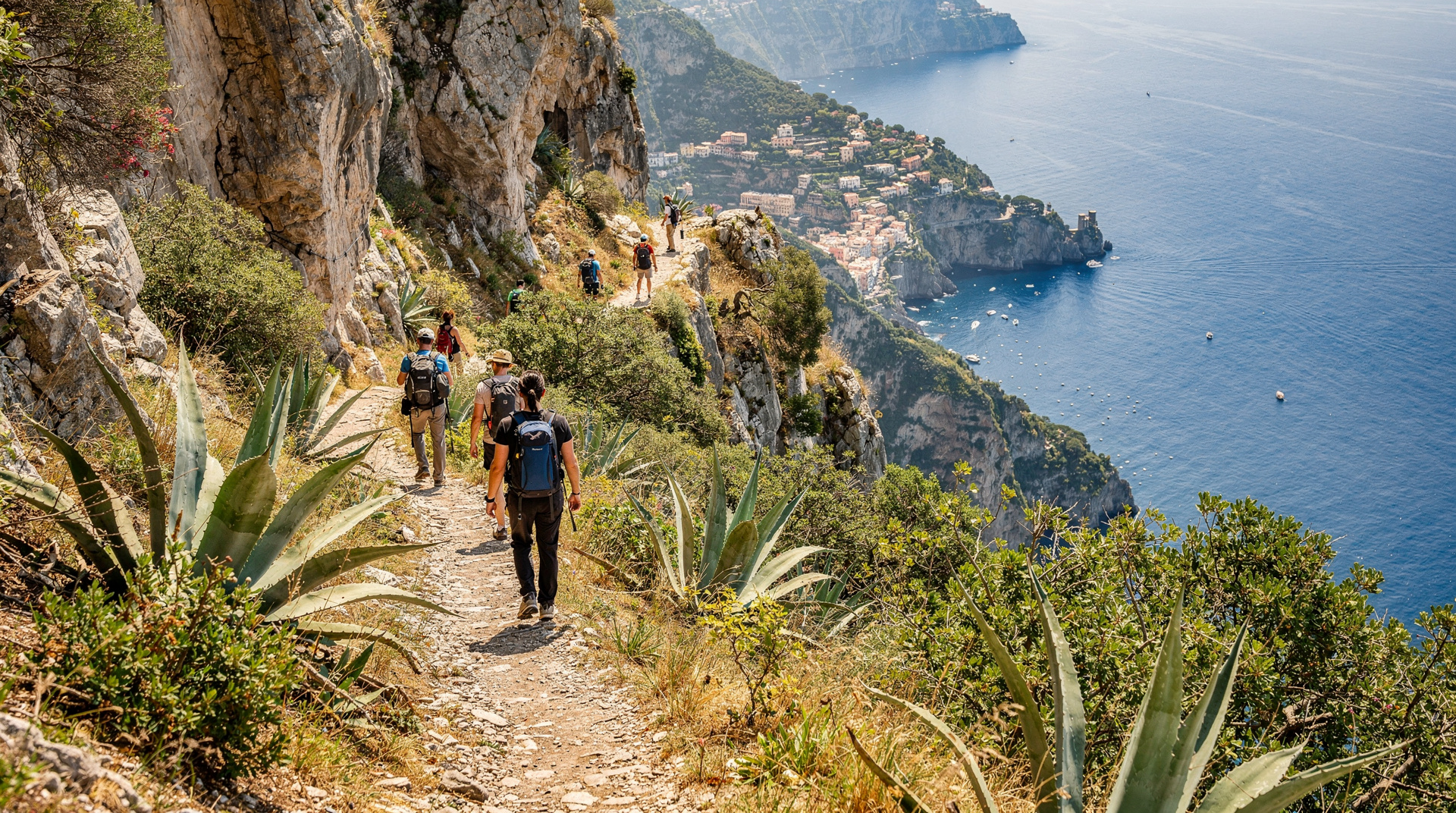
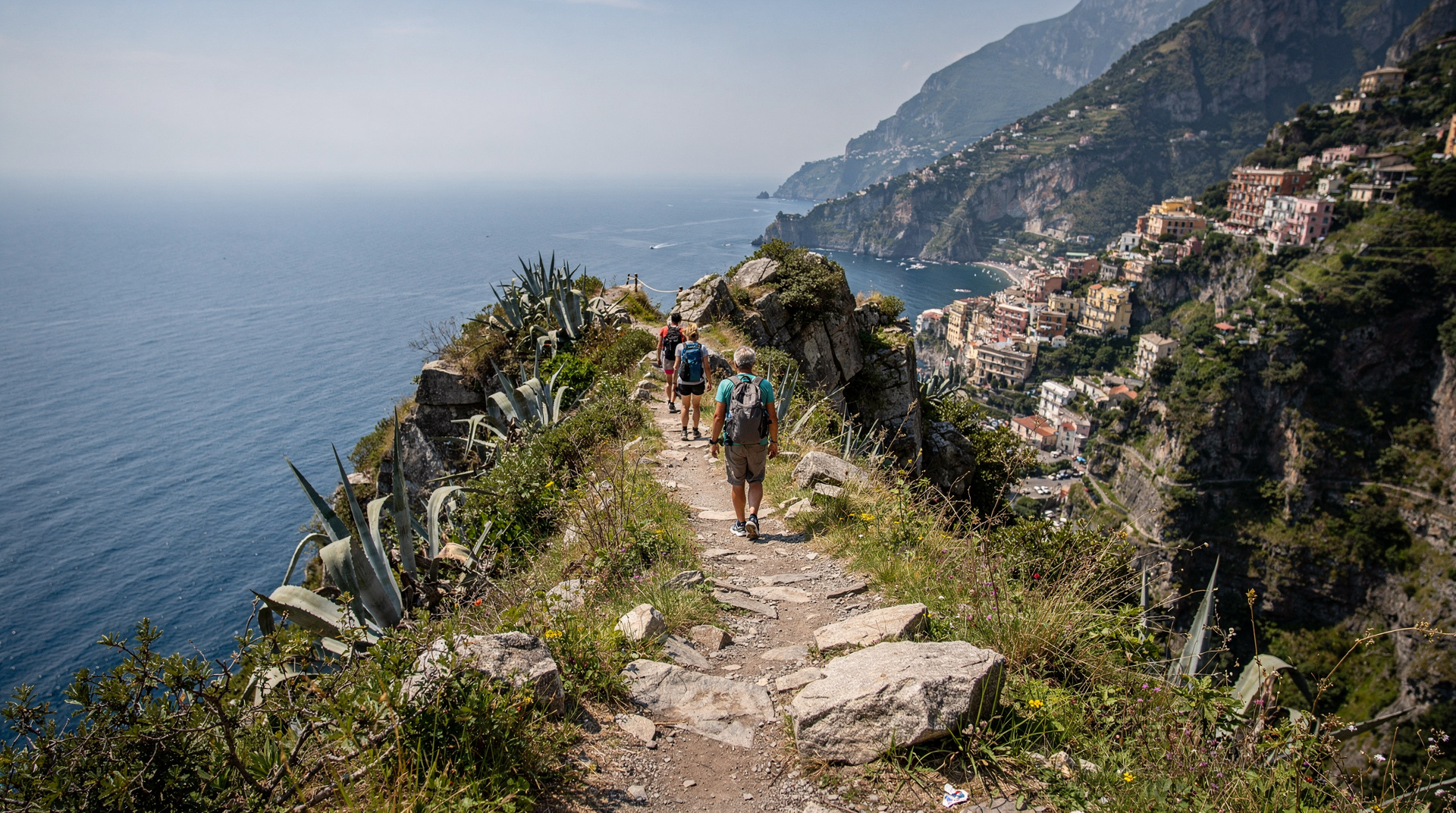
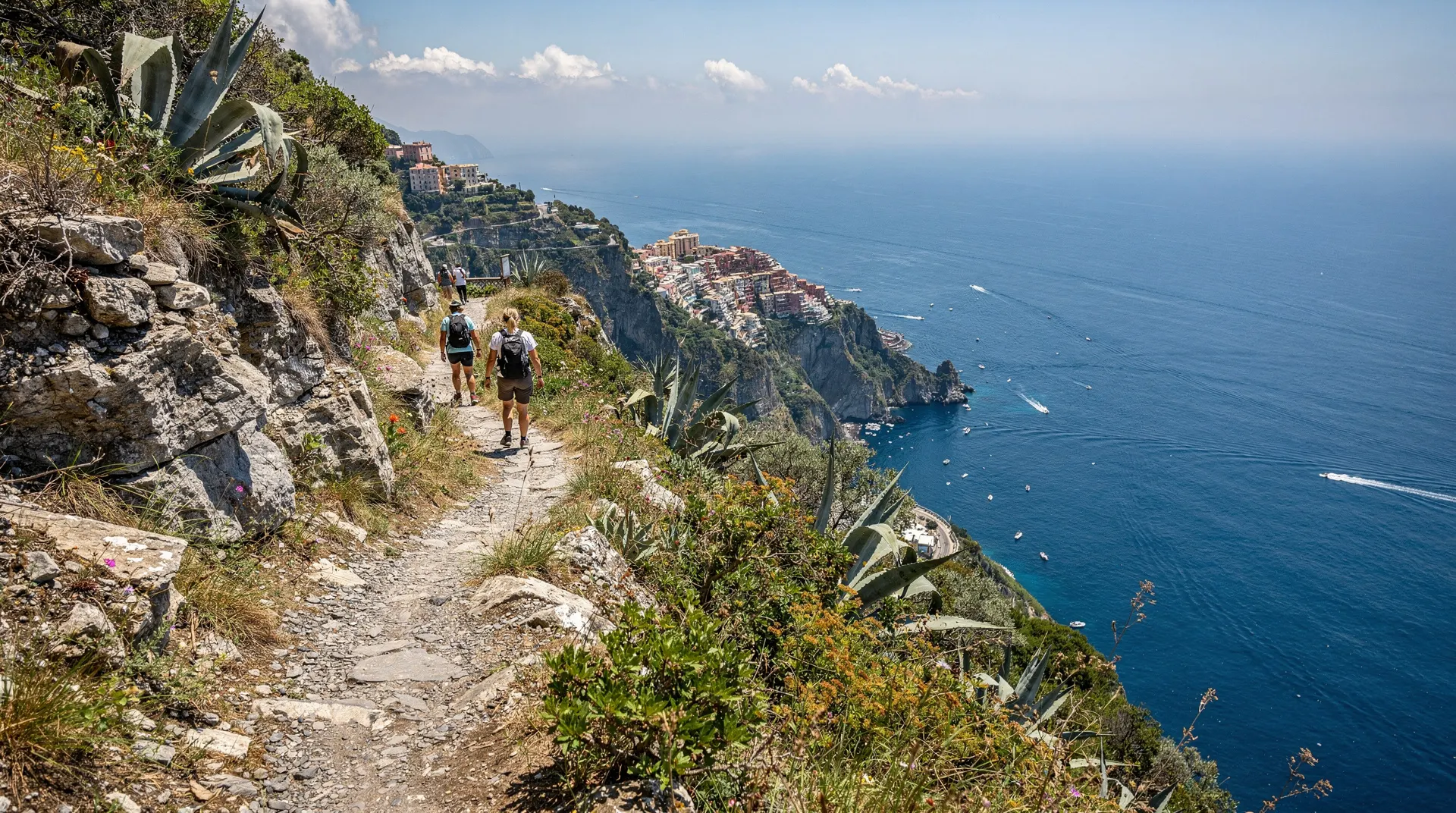
The classic walk of the region. The trail traverses the southern face of the Lattari Mountains at 450–680 metres, with continuous views of the Amalfi Coast towns and the sea below. See the full Path of the Gods guide for complete logistics.
Transport from Naples: Circumvesuviana to Sorrento + SITA bus to Amalfi + SITA bus to Bomerano = approximately 3.5 hours. Early departure (6:00–7:00 from Naples) is necessary for a summer start.
Guided Path of the Gods hike from Sorrento2. Mount Vesuvius crater rim
Location: Parco Nazionale del Vesuvio, above Ercolano Distance: 2 km from car park to rim (return) Difficulty: Easy-moderate (45 min uphill, loose ash and gravel) Duration: 2 hours including crater viewing Best season: March–November (weather-dependent)
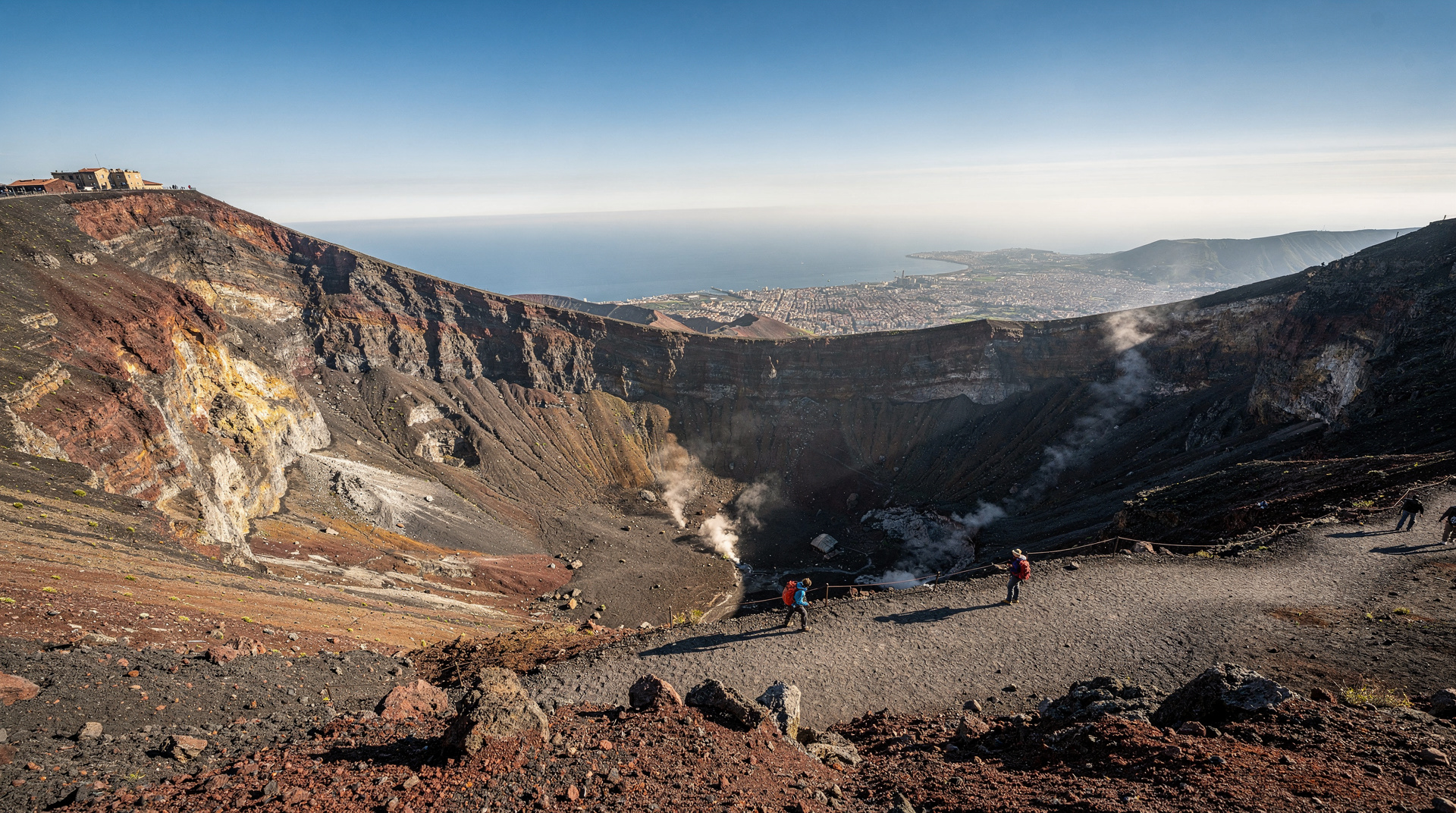
The most iconic hike near Naples — walking to the rim of an active volcano that destroyed Pompeii in 79 AD. The trail from the 1,000 m car park (reachable by shuttle bus from Ercolano) to the crater is short but steep, on loose volcanic material. The crater itself is 440 m wide and 300 m deep. Steam vents are visible. The view back over the Bay of Naples is remarkable.
See Mount Vesuvius guide and hiking Vesuvius crater for full details including potential closures and transport. See getting to Vesuvius.
Transport from Naples: Circumvesuviana to Ercolano Scavi (15 min), then local bus or organised shuttle to the 1,000 m car park (further 30–40 min). Total from Naples: approximately 1–1.5 hours.
3. Valle delle Ferriere, Amalfi
Location: Valley above Amalfi town Distance: 6 km round trip Difficulty: Easy Duration: 3 hours including waterfall stop Best season: Year-round (avoid very hot midday in summer)
Starting from the northern edge of Amalfi town on Via Fiume, this walk follows a shaded stream through lemon terraces, chestnut forest, and abandoned agricultural terraces to the ruins of a 13th-century paper mill and a 30-metre waterfall. The valley contains endemic plant species and is a recognised nature reserve.
No entrance fee. The trail is well-maintained and family-friendly. Wet section near the stream at the top — waterproof shoes or trail runners recommended for the final approach to the waterfall.
Transport from Naples: Circumvesuviana to Sorrento + SITA bus to Amalfi = approximately 2.5 hours. The walk begins in the town itself.
Guided Valle delle Ferriere walk from Amalfi4. Lattari mountain network (extended routes)
The Lattari Mountains form the spine of the Sorrentine Peninsula, and the CAI (Italian Alpine Club) maintains an extensive network of waymarked trails at altitude. Most start from the highland villages above the coast towns — Agerola, Tramonti, Ravello, Scala, Pontone.
Ravello–Scala circuit: 3.5 hours, moderate, passing through medieval villages. Pontone–Amalfi traverse: 2.5 hours descending, dramatic views of the coast. Agerola–Conca dei Marini: 4 hours, less-used section of the Lattari range with good coast views.
These routes require more navigation ability than the Sentiero degli Dei’s well-signed main trail. Download the relevant CAI map section before departing.
5. Sentiero dei Limoni (Lemon Path)
Location: Between Positano and Praiano, on the Lattari southern face Distance: 5 km one-way Difficulty: Easy-moderate Duration: 1.5 hours one-way
A trail through working lemon terraces connecting Positano’s upper village to Praiano, passing stone walls, lemon groves, and abandoned fishing settlements. Less famous than the Sentiero degli Dei but equally scenic for its section. Return by SITA bus from Praiano.
6. Campi Flegrei (Phlegraean Fields)
Location: West of Naples (Pozzuoli, Solfatara) Primary hike: Solfatara crater walk, 2 hours, easy
The Campi Flegrei is an active volcanic area to the west of Naples — not Vesuvius, but a different and equally dramatic volcanic landscape with fumaroles, boiling mud, and craters. The Solfatara crater walk (starting from Pozzuoli, accessible by Metro Line 2 from Naples) gives a visceral sense of active volcanism. See Campi Flegrei day trip.
Side-by-side comparison
| Trail | Distance | Time | Transport from Naples | Difficulty |
|---|---|---|---|---|
| Path of the Gods | 7.5 km + descent | 3–4 h | 3.5 h each way | Easy-moderate |
| Vesuvius crater | 2 km return | 2 h | 1.5 h each way | Moderate |
| Valle delle Ferriere | 6 km return | 3 h | 2.5 h each way | Easy |
| Ravello–Scala circuit | 7 km loop | 3.5 h | 3 h each way | Moderate |
| Sentiero dei Limoni | 5 km one-way | 1.5 h | 2.5 h each way | Easy-moderate |
Combining hiking with other activities
Hiking + archaeology: Vesuvius hike combined with Pompeii or Herculaneum on the same day is very popular. The Circumvesuviana makes this possible — visit Herculaneum first (2 hours), then continue to the Vesuvius base. See Pompeii and Vesuvius same day.
Hiking + coastal town: Path of the Gods finishes above Positano. The descent to the coast (45 min) deposits you in Positano for the afternoon. This combination — hiking the ridge in the morning, beach and lunch in Positano in the afternoon — is the best single-day activity in the region.
Hiking + boat trip: After descending from the Path of the Gods to Positano, a boat tour along the coast (see Amalfi Coast by boat) adds a sea perspective to complement the ridge perspective.
Path of the Gods guided hike: Agerola/Bomerano startPractical notes for all Campania hikes
Water: Critical on Vesuvius and the Path of the Gods — carry at least 2 litres per person. No reliable sources on either trail.
Shoes: Walking shoes or trail runners minimum on all trails listed. Flip-flops or fashion trainers are a safety risk on the loose volcanic ash of Vesuvius and the uneven limestone of the Lattari paths.
Season: April–June and September–October are the best hiking months. July–August on exposed trails is feasible but requires very early starts (before 8:00). November–March is possible for Valle delle Ferriere and low-altitude trails; Vesuvius crater may be closed in bad weather.
Guides: Not required for any of the main trails listed above (except specific extended national park routes). Worth considering for the Path of the Gods if you are not confident with the transport logistics and timing.
Month-by-month hiking conditions
| Month | Conditions | Notes |
|---|---|---|
| Mar–Apr | Cool, green, occasional rain | Trails less crowded; Vesuvius may still see closures after storms |
| May–Jun | Warm, dry, best light | Peak hiking window before summer heat and crowds arrive |
| Jul–Aug | Hot, exposed trails demanding | Start before 8:00; Vesuvius rim can feel like an oven by midday |
| Sep–Oct | Warm, clearer air, fewer people | Arguably the best overall month for the Path of the Gods |
| Nov–Feb | Cold, wetter, frequent closures | Valle delle Ferriere still viable; Vesuvius crater often closed |
This table pairs with the transport times above: a long summer transport day to the Path of the Gods is a much bigger commitment than the same trip in a mild September week, when you don’t need to leave Naples before dawn to beat the heat.
Choosing your first Campania hike
If you only have time for one hike, the choice comes down to what you want out of the day. Want the single most photogenic walk in Southern Italy and don’t mind a long transport day? Path of the Gods. Want the most dramatic single payoff for the least effort — an hour of walking, an active volcano crater, a full Bay of Naples panorama? Vesuvius. Want something calm, shaded, and family-friendly with a genuinely different landscape (waterfall, medieval ruins, lemon terraces)? Valle delle Ferriere. Short on time and staying in the city? The Campi Flegrei day trip delivers a volcanic landscape without leaving Naples’ immediate area.
Combining a hike with the Amalfi Coast by boat or an overnight in Sorrento turns any of these single-day walks into a more relaxed two-day trip, which is worth considering if the transport times above look punishing for a single day.
Frequently asked questions about hiking near Naples
What is the most spectacular hike near Naples?
For views: the Path of the Gods has the most consistent dramatic scenery across its full length — the coast below from 600 m altitude. Vesuvius offers the most dramatic single moment (the crater rim). Valle delle Ferriere is the most serene and varied in terms of vegetation and character.
Can I do the Path of the Gods and Vesuvius on the same day?
Technically possible but very long and tiring. You would need to take the early ferry from Naples to Positano, ascend to Nocelle, walk to Bomerano, then somehow get to Vesuvius — logistically complicated and requiring transport connections that may not align. Better to plan each as a separate day.
Is there a national park pass for hiking?
The Parco Nazionale del Vesuvio charges an entry fee for the crater trail (approximately €10–12, included in most tour packages). The Lattari Mountains and the Valle delle Ferriere are free. No general national park pass covers all trails in the region.
Are these trails crowded?
The Path of the Gods is busy in summer (July–August), with 100–200 people on the trail daily. Vesuvius crater is very busy — particularly the 10:00–14:00 slot. Valle delle Ferriere is quiet by comparison. Starting any trail before 8:30 in summer significantly reduces the crowd experience.
Frequently asked questions about Hiking near Naples: the best trails in Campania for every level
Can I hike in the Naples area without a car?
Is hiking Mount Vesuvius difficult?
What is the Valle delle Ferriere walk?
Are there guided hikes available from Naples or Sorrento?
What should I wear for hiking in Campania?
Can I hike on the Vesuvius national park trails independently?
Top experiences
Bookable activities with verified prices and instant confirmation on GetYourGuide.