Standing Room Only: Inside the Neapolitan Coffee Ritual
There is no sitting down for the first coffee of the day in Naples. That is not the rule — but it might as well be. You walk in, you stand at the zinc counter, you order in a voice that implies you do not have time to waste, and the barista has your espresso in front of you before you have finished saying the word. The whole transaction takes ninety seconds. Then you leave.
This is not rudeness. This is the form, and the form is everything. Our companion Naples coffee culture guide covers the broader history behind this ritual if you want the fuller context before you dive in.
| Cost | €1.00–€1.30 standing at a traditional bar |
| Where | Via Toledo, Quartieri Spagnoli, Piazza Dante |
| Etiquette | Pay at the cassa first, then order at the counter |
| Timing | Cappuccino = morning only |
| Don’t miss | Caffè sospeso — pay it forward |
The Bar as Ritual Space
A Neapolitan bar is not a place to linger over a laptop. It is a social structure. The counter is the focal point, the barista is the authority, and the unspoken contract is that you drink, you pay, and you free the space for the next person. Sit-down tables exist but they cost more — sometimes significantly more — and are for tourists or for the kind of slow mid-morning visit that happens after the rush.
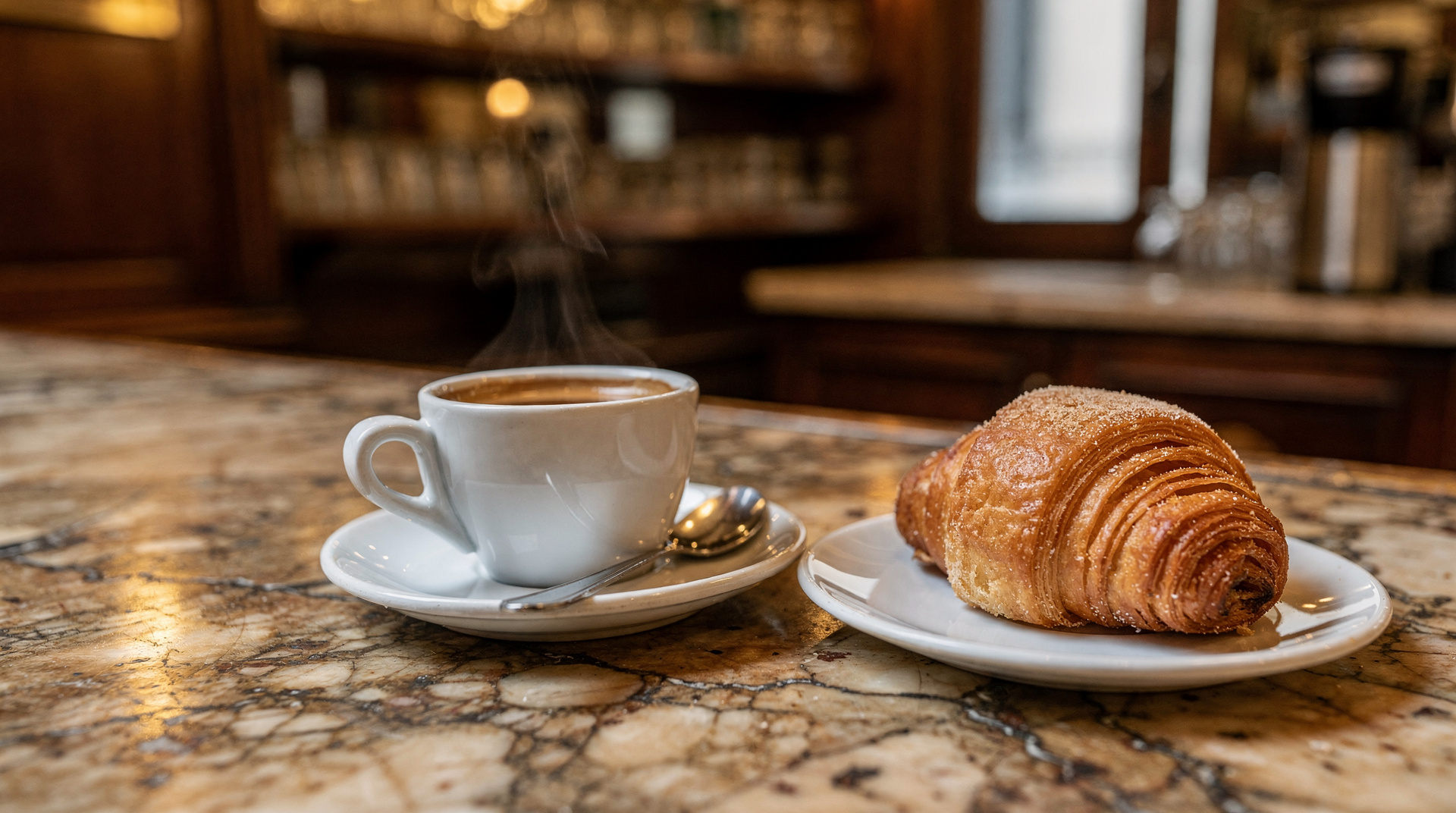
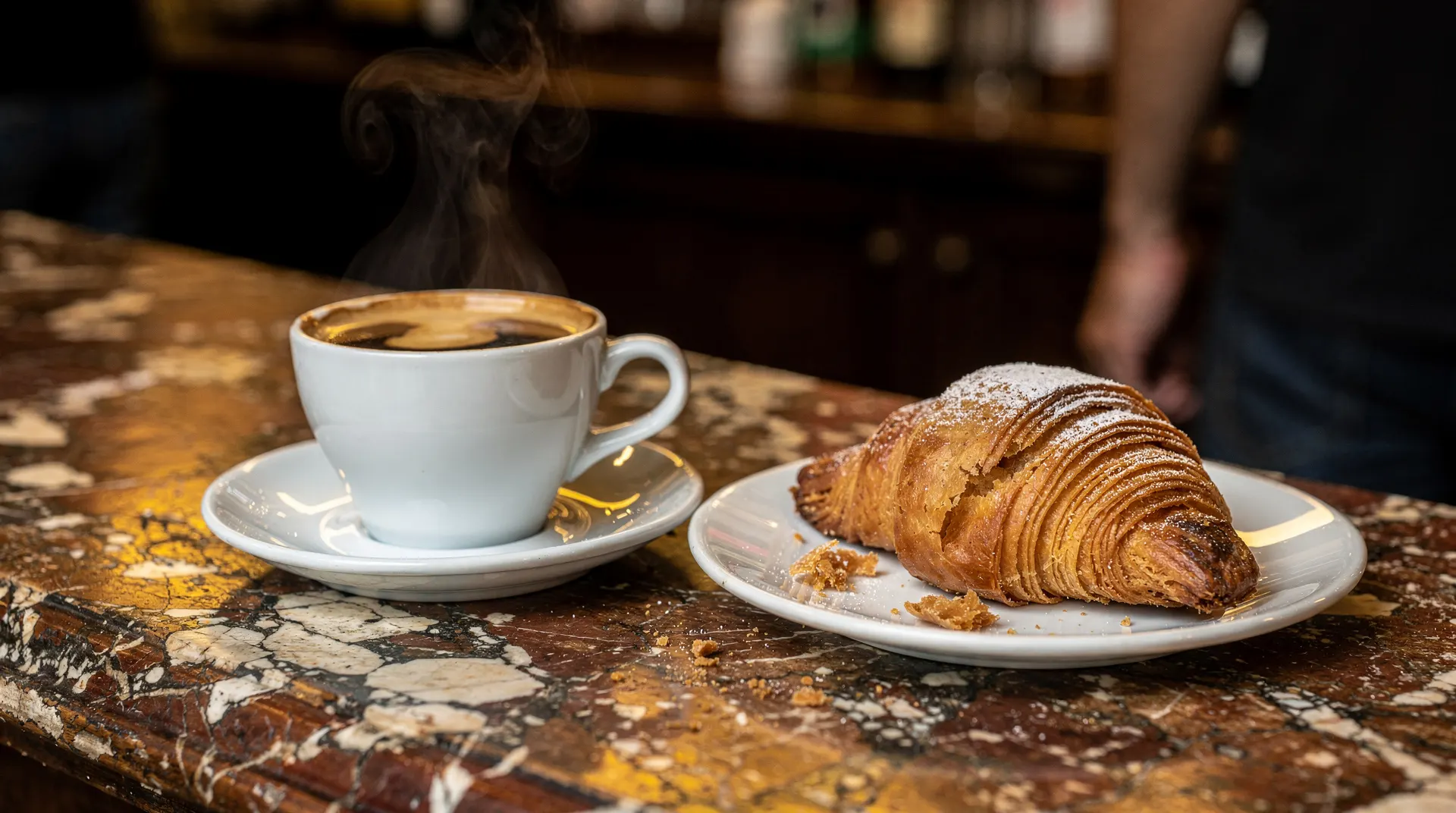
The espresso itself is shorter and denser than what passes for espresso in most of northern Europe. The coffee-to-water ratio is higher, the roast is darker, and the result is a small, thick, almost syrupy shot with a deep caramel crema. It is served in a pre-warmed ceramic cup. It is gone in two sips. It costs between €1.00 and €1.30 at most traditional bars, which is not a misprint.
The machine is a La San Marco or a La Pavoni or sometimes a vintage Faema, and it is treated with the kind of reverence reserved elsewhere for older relatives. The grind matters, the pressure matters, the temperature of the water matters. A barista who has worked the same machine for twenty years will not let you tell them otherwise.
The Sugar Question
The debate about whether to add sugar to Neapolitan espresso is real and ongoing, and visitors often get it wrong in both directions.
The traditional Neapolitan way is to add a small amount of sugar before the espresso hits the cup — not stirred in afterwards, but already in the cup so that the pour incorporates it from the start. Some baristas do this automatically if you look like a regular; others will wait for you to ask. The result is a slightly different texture and a more integrated sweetness than stirring sugar into a finished shot.
There is also a camp — increasingly common among younger Neapolitans — who drink it unsweetened, as the coffee quality has improved enough over the past decade that the bitterness no longer needs masking. Neither position is wrong. Taking a coffee at a bar here will not come with a judgment either way. But asking for it amaro (without sugar) or con zucchero (with sugar) before the pour will mark you as someone paying attention.
Caffè Sospeso: The Suspended Coffee
Caffè sospeso is one of the most specifically Neapolitan things in the city’s culture. The practice: when you pay for your own coffee, you pay for two — one for yourself and one left “suspended” at the bar for whoever comes in later and cannot afford it. The barista keeps a tally. Someone in need asks if there is a caffè sospeso available and is served without ceremony.
The tradition is documented as far back as the early twentieth century and likely predates that. It emerged from a city that understood poverty intimately and also understood that dignity matters — you do not mark out who is the recipient and who is the donor. The transaction is invisible. It’s one of many customs covered in our broader Neapolitan culture and traditions guide, which places it alongside the city’s other unwritten social codes.
The practice faded during the mid-century decades and was revived earnestly in the early 2010s, partly through social media and partly through a genuine cultural reckoning with the city’s identity. Today it is practiced in dozens of traditional bars, particularly in the Quartieri Spagnoli and around the Mercato neighbourhood. You can participate simply by paying for a sospeso when you order your own coffee. No announcement required.
Where to Drink It
Gran Caffè Gambrinus on Piazza del Plebiscito is the grand institution — founded in 1860, all marble and gilt mirrors, a menu that runs from espresso to rum-laced caffè alla nocciola, and a history that includes Oscar Wilde and Hemingway at the same counter. It is not cheap by Neapolitan bar standards (€1.50–€2.00 for an espresso standing), but it is worth one visit.
For the everyday version, the bars along Via Toledo and in the Quartieri Spagnoli are more representative. Look for a place with a long counter, a busy barista and no menu board in English by the door. The coffee will be better.
Caffè Mexico near Piazza Dante is a long-standing Neapolitan favourite — it opens early, closes late, serves a coffee that has a devoted following, and does the sospeso. The decor has not changed in decades. This is a compliment.
If you want to understand Neapolitan coffee culture in its full context — alongside sfogliatelle, pastiera, and the bars where they are consumed together — a coffee and sfogliatelle tasting tour with a local guide covers the institutions, the history, and the etiquette in a way that a solo wander might not.
Beyond Espresso: The Rest of the Order
Caffè macchiato — an espresso with a small amount of frothed milk — is acceptable and common. Cappuccino is a morning drink and a morning drink only; ordering one after noon will not get you arrested but it will get you a look. Caffè lungo (a longer pull) exists but is not the Neapolitan preference. Caffè corretto with a splash of grappa or sambuca is an afternoon or post-lunch option.
The caffè alla nocciola is a Naples-specific invention: espresso blended with hazelnut cream into a thick, almost mocha-like drink, often served cold or at room temperature. It is very sweet and very good and not to be had in any great hurry.
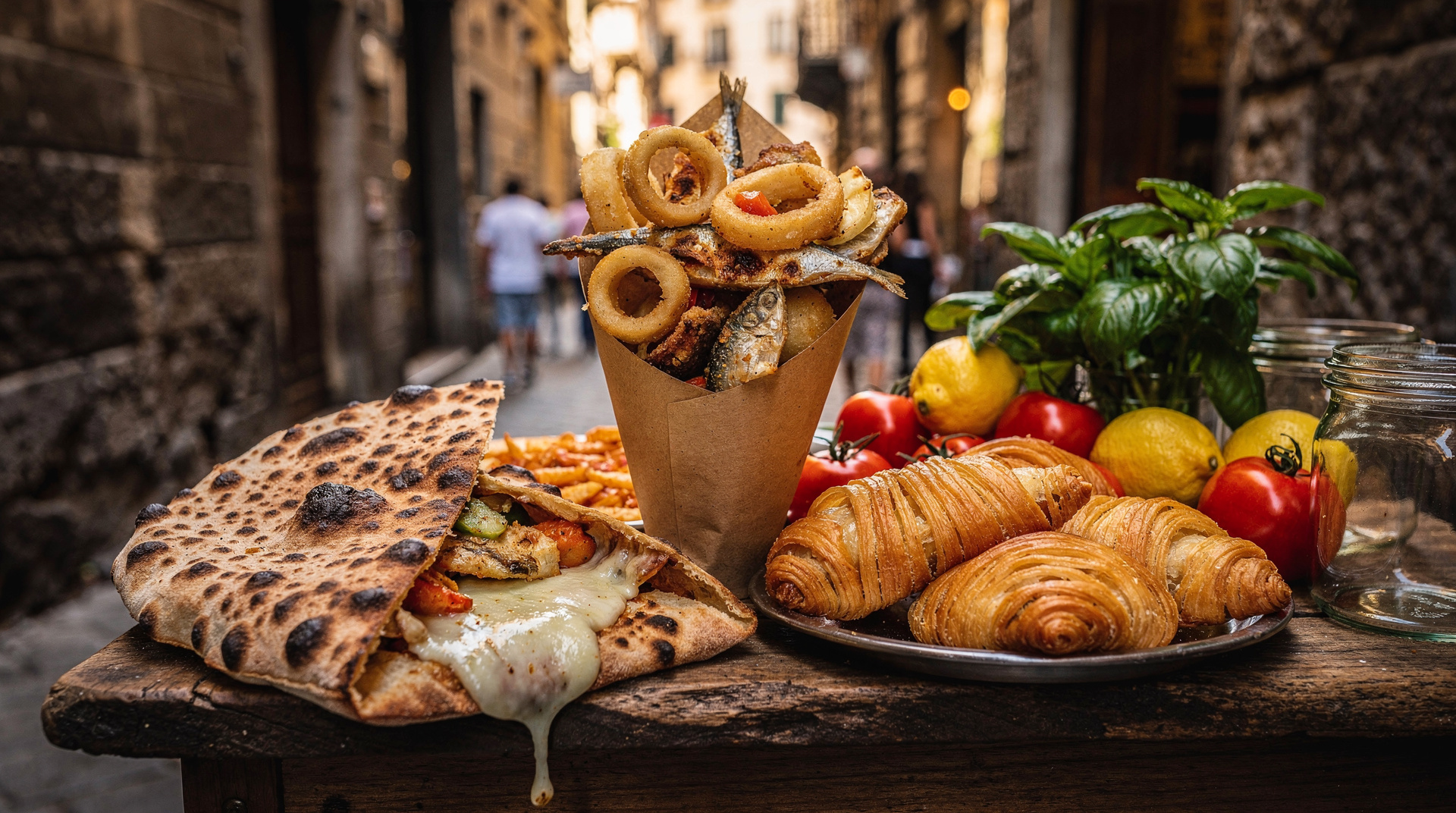
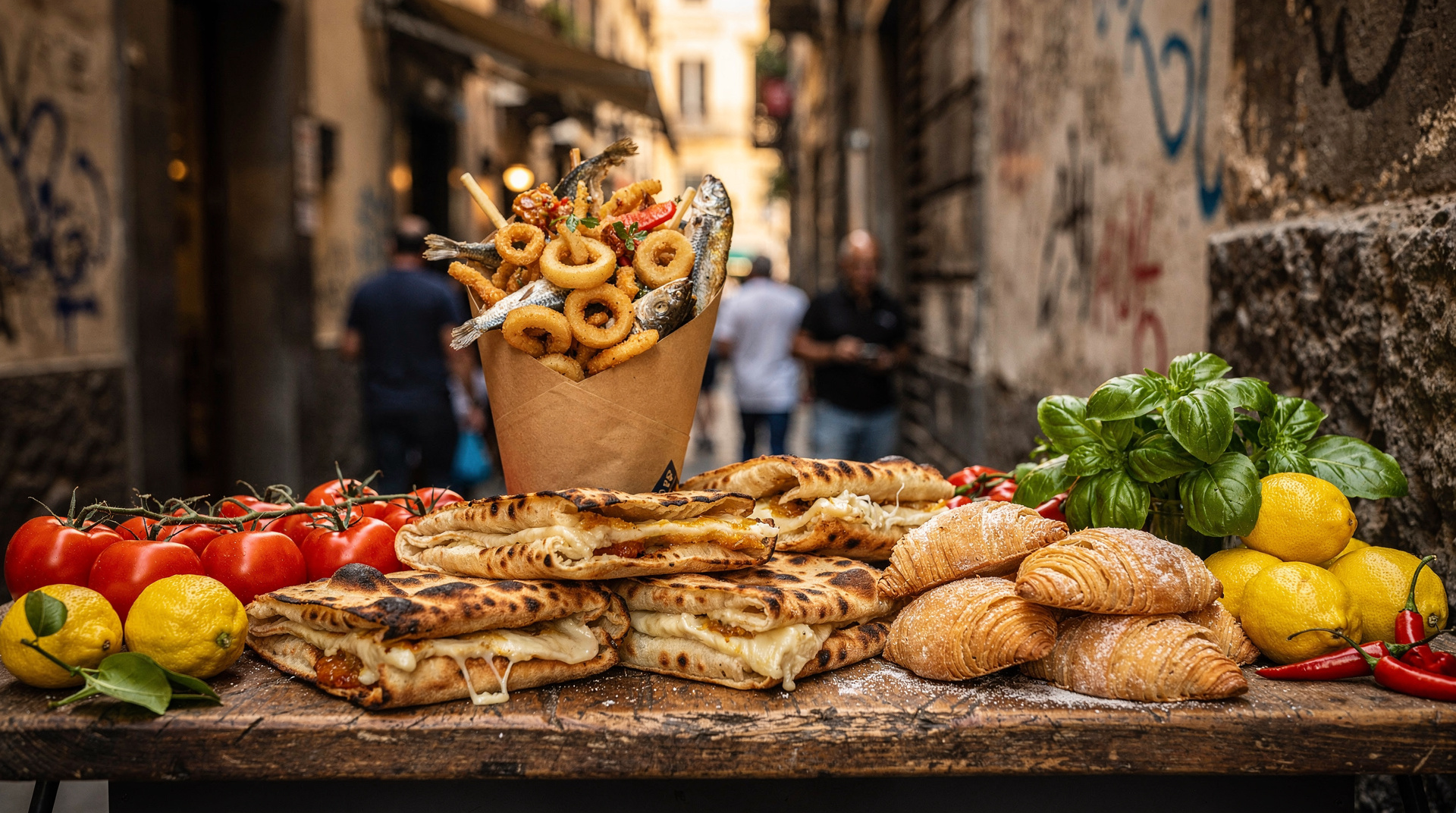
For anyone spending proper time in the city’s food culture — the bars, the markets, the street vendors — a food tour with eight tastings covers the full arc from morning coffee through afternoon street food, with guides who can explain what you are eating and where it comes from. And pairing coffee with pastry properly deserves its own attention — our sfogliatella and pastries guide covers exactly what to order alongside your espresso.
Coffee Styles at a Glance
| Order | What it is | When to drink it |
|---|---|---|
| Caffè (espresso) | Short, dense, syrupy shot | Any time |
| Caffè macchiato | Espresso with a dash of frothed milk | Any time |
| Cappuccino | Espresso with steamed milk | Morning only |
| Caffè corretto | Espresso with grappa or sambuca | Afternoon/after lunch |
| Caffè alla nocciola | Espresso blended with hazelnut cream | Any time, as a treat |
A Note on Pace and Patience
Visitors sometimes mistake the speed of the transaction for coldness, and it is worth correcting that impression before you arrive. Neapolitan bar culture moves fast because it is efficient, not because anyone is being unfriendly — the same barista who hands you your espresso in fifteen seconds will happily chat for five minutes if the bar is quiet and you show genuine interest. The pace is a function of a busy, functional space serving a neighbourhood that passes through it dozens of times a day, not a reflection of how you are being treated. Our Naples travel tips guide has more on reading these small social signals correctly.
The Last Sip
The coffee ritual in Naples is not about the coffee, exactly. It is about a shared agreement that some things are worth doing properly, at the right time, in the right place, with the right company or none at all. The espresso is the vehicle. The bar is the theatre. The ninety seconds are the point.
Order yours standing. Pay when you are done, not before. Leave when the cup is empty.