Rome or Naples first? The case for getting it the right way round
Most people who visit Naples for the first time have already been to Rome. That sounds like a demographic observation but it’s actually a problem, because it means most people arrive in Naples having already formed their sense of what Italian cities feel and look like — and then they measure Naples against that template, and Naples fails the test, and they spend two days unsettled by a place that rewards a completely different mode of attention.
Here is my honest opinion after visiting both cities multiple times and talking to dozens of travellers: if you’re doing Rome and Naples in a single trip and you haven’t done either before, go to Naples first. For the fuller case on whether Naples belongs on your itinerary at all, see is Naples worth visiting and our head-to-head Naples vs Rome guide.
| Train time | 1hr 10min, Frecciarossa, €19–55 |
| Recommended split | 4 days Naples/Campania, 2–3 days Rome |
| Why Naples first | Arrive with energy for the harder, less curated city |
| Why Rome last | Its grandeur lands better as a closing chapter |
| Booking | Book Frecciarossa tickets ahead for the best fares |
The logic of the train
The Frecciarossa from Rome Termini to Naples Centrale takes about 1 hour 10 minutes and costs between €19 and €55 depending on how early you book. This is relevant because it means the cities are not really in competition the way the question “Rome or Naples first?” implies. You’re not choosing between them — you’re sequencing a single itinerary, and the sequence matters.
If you fly into Rome, as most transatlantic travellers do, the natural instinct is to spend your first days there and save Naples for later. I want to argue against this instinct, specifically if Naples is the destination you’re more uncertain about or more curious about. Visit the city while your energy is fresh and your expectations are open, before Rome has calibrated you to a particular kind of grandeur.
Naples from Rome hop-on trip — a flexible day option if you want to get a first read on Naples from a Rome base before committing to a longer stay.
Two completely different energies
Rome is a city that performs its history at you. The monuments are enormous and legible and spaced across the city in a way that rewards a systematic itinerary. You can plan a day in Rome almost from a map, moving from the Forum to the Palatine to the Colosseum, and the city will comply. The experience is magnificent but also somewhat managed — you are a tourist in a city that has been receiving tourists for three hundred years and has developed efficient systems for doing so.
Naples is not like this. The history is just as deep — older in many respects, with Greek foundations beneath the Roman foundations beneath the medieval city — but it is compressed and layered and frequently invisible. The centro storico is a UNESCO World Heritage site that functions as a working-class neighbourhood. There are Roman-era market halls that have been continuously occupied for two thousand years. The Spaccanapoli cuts the city in a straight line that follows the original Greek street grid from Neapolis. None of this is labelled very well. None of it is managed for you.
This makes Naples more difficult and more rewarding in roughly equal measure. The difficulty is real — the city is noisy, the streets are confusing, the traffic operates by conventions that seem to have no written form. But the reward of cracking it, of spending three days in a place that required something from you and gave something back, is a different quality of experience than the one Rome provides.
Why Naples is better when you arrive with energy
The problem with doing Naples second, after Rome, is exhaustion. Rome takes a lot out of you — the walking distances are significant, the sights are numerous, the restaurant decisions are fatiguing. Travellers who arrive in Naples on day five or six of a trip often report feeling overwhelmed or disappointed. The city’s intensity reads differently when you’re tired: the Vespas seem more threatening, the street food queues seem longer, the hotel rooms seem smaller.
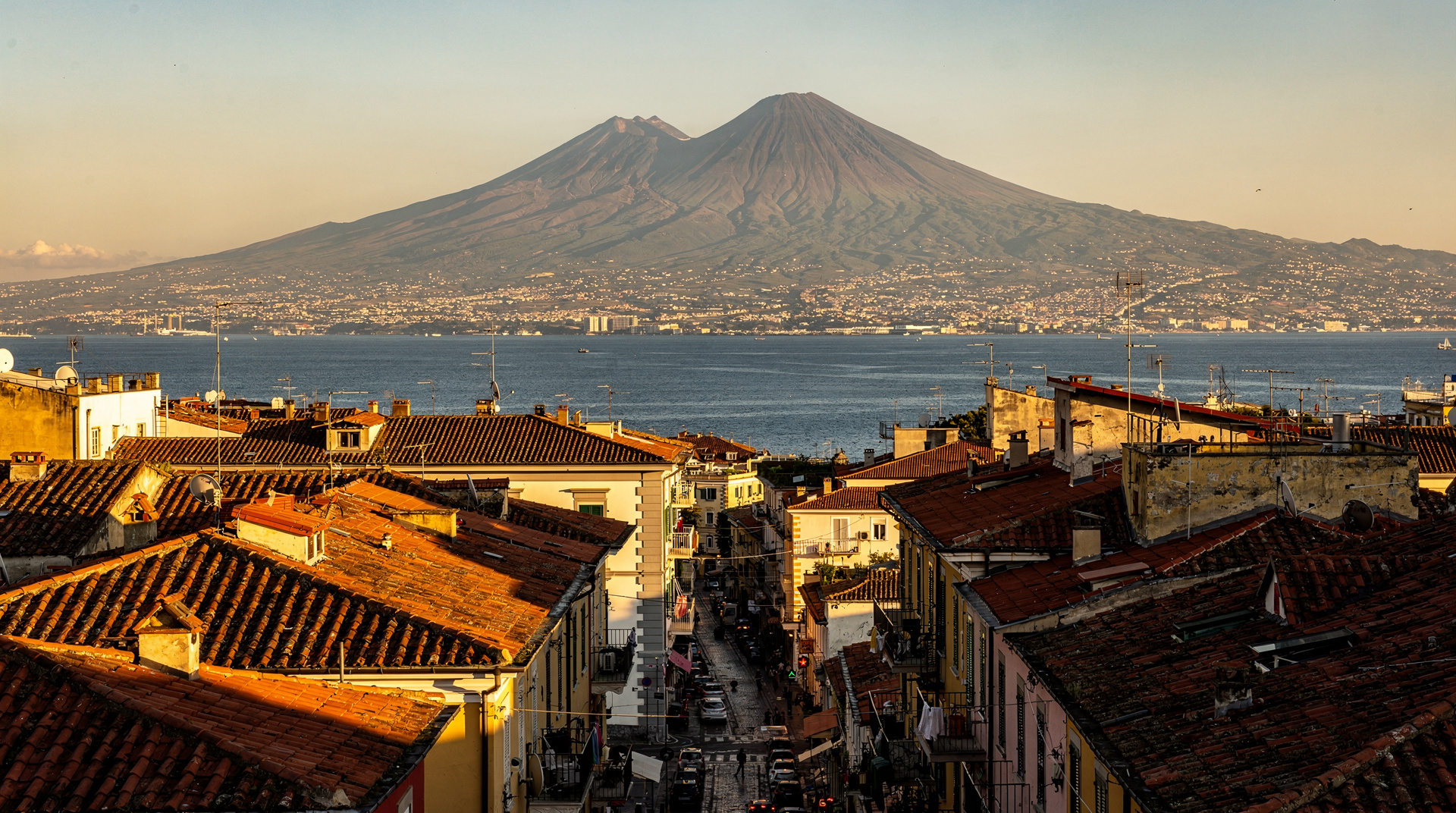
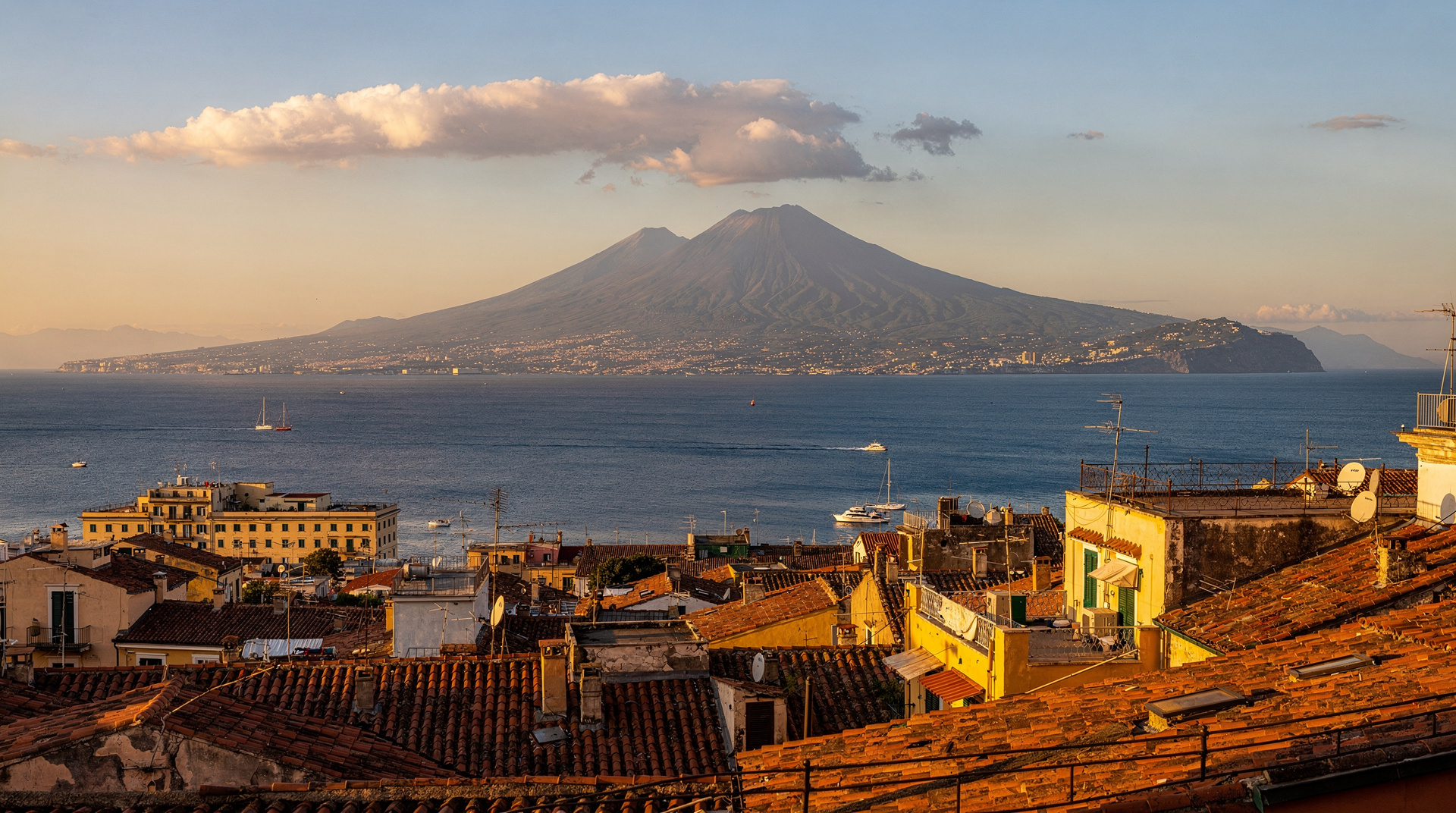
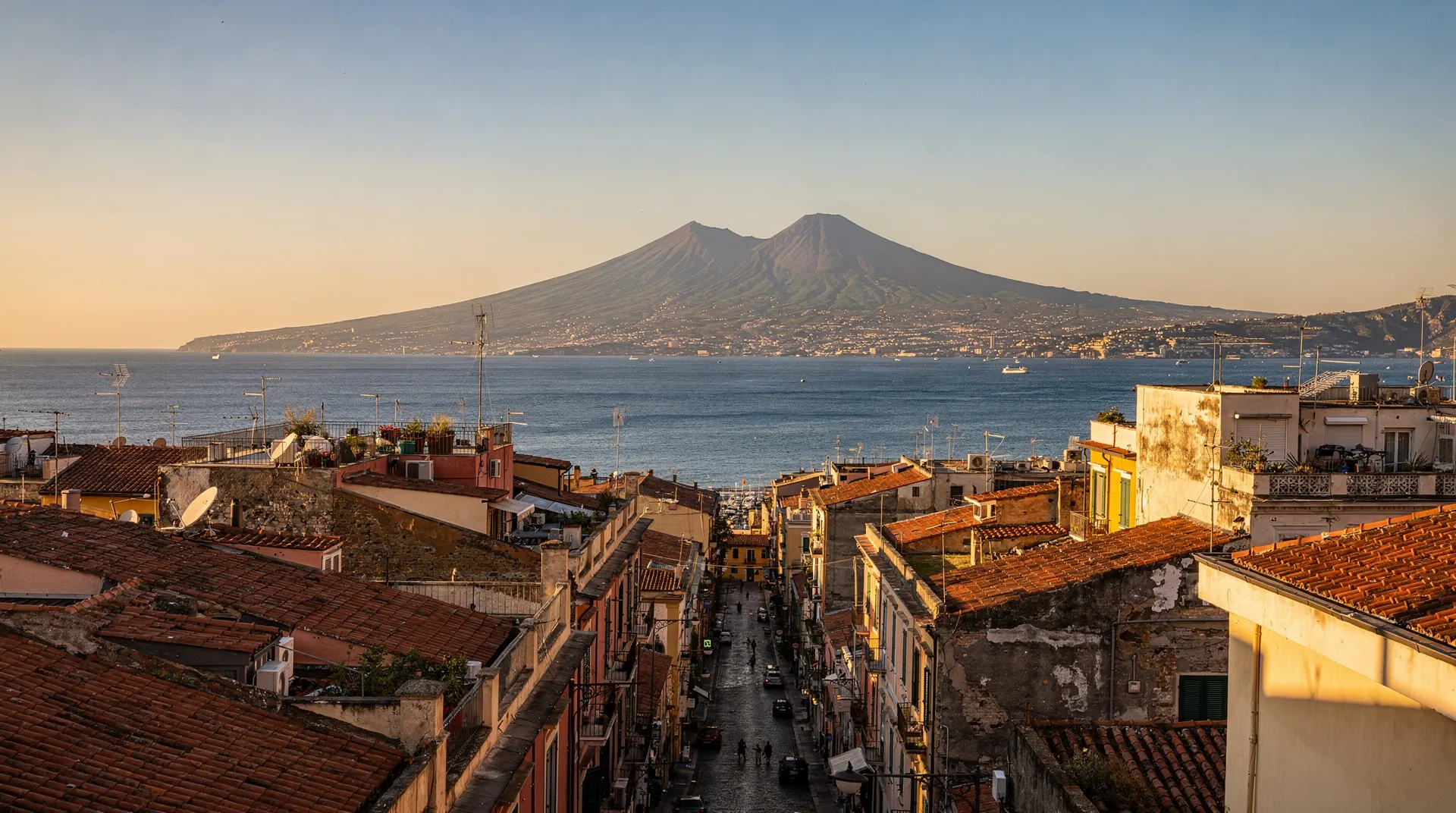
Arriving in Naples fresh, on day one or two of a trip, you have the reserves to let the city work on you rather than against you. The first morning walk through the Quartieri Spagnoli before the cafés fill up. The shock of the vegetable market in Porta Nolana. The view from Castel Sant’Elmo at sunset with Vesuvius behind the smoke. These are experiences that require attentiveness, and attentiveness requires energy.
Naples street food tour — 6 stops — the best introduction to the city I know of for a first day, because it takes you through neighbourhoods a map won’t send you to and puts the food in context.
The Campania argument
The other reason to go to Naples first is Campania. If your itinerary includes Pompeii, Capri, the Amalfi Coast, Paestum, or the Phlegraean Fields — and it should, because this is one of the most concentrated regions of antiquity and natural drama in Europe — then Naples is your base, not a stop on the way to Rome.
Pompeii is 35 minutes from Naples Centrale on the Circumvesuviana. Capri is 50 minutes by hydrofoil. Positano is reachable in under two hours. Paestum, with its Greek temples that predate the Parthenon by a generation, is 90 minutes south by train. None of these are reasonable day trips from Rome. They are all easy day trips from Naples.
This means that if you give Naples and Campania three or four days, you cover a density of experience that no other single region of Italy can match at the same depth. Then you take the Frecciarossa north to Rome for the final stretch of the trip, arriving into the capital as a finisher rather than a starter. Rome is magnificent as a closing chapter — the grandeur and the history land differently when you’ve already been disoriented and reoriented by something rawer.
The objection worth answering
The standard objection to “Naples first” is that it’s unsafe or unwelcoming to first-time visitors. This objection is outdated. Naples has gentrified significantly in the past decade — not in the sense of losing its character, but in the sense of becoming genuinely navigable and hospitable for travellers without local knowledge. The centro storico has Airbnbs and cocktail bars and specialty coffee. Scooter theft happens but so does it in Rome. The neighbourhoods worth spending time in are as safe as any comparable city.
The more legitimate concern is that Naples requires more of your attention to appreciate than Rome does. Rome is self-explanatory. Naples demands that you read it rather than just look at it. If you arrive prepared for that demand — knowing that the city will not orient itself toward you and that its rewards are proportional to your curiosity — you’ll find it more satisfying than any other city on the trip. Our is Naples safe: the data guide has the numbers behind this, if you want more than a reassurance.
The Train Journey Itself
The Frecciarossa route between Rome and Naples is worth a note of its own, because it changes how you should think about sequencing. It is not a slow regional connection you have to endure — it is a genuinely comfortable high-speed service with reclining seats, a café car, and reliable wifi, running roughly hourly through the day. Booking two or three weeks ahead typically gets you the €19–29 fares; booking the same day can mean paying closer to €55. Our Naples to Rome train guide has the full timetable logic, including which departure times avoid the worst crowding around Rome Termini.
This matters for the “Naples first” argument specifically: because the journey itself is short and comfortable, there’s no real logistical cost to doing it in either direction. The case for Naples first is entirely about energy and attention, not about which route is easier to book or ride.
A suggested sequence
Four days Naples and Campania, then two or three days Rome. On the Naples side: one full day in the city (centro storico and Capodimonte or Castel Sant’Elmo), one day for Pompeii and Vesuvius, one day for Capri or the Amalfi Coast, one half-day for Pozzuoli and the Campi Flegrei. On the Rome side: the Vatican complex and Castel Sant’Angelo on day one, the Forum and Palatine and Colosseum on day two, Trastevere and Campo de’ Fiori in the evenings.
Both cities deserve more than this. But given a constraint of a week or ten days, this sequence gives you the region and the capital in the order that seems to me to produce the most satisfying experience — arriving with energy, giving the stranger city the attention it requires, and finishing with the city that announces itself from the moment you step off the train.
If you’re building out the Naples side of this itinerary in more detail, the first time in Naples guide and the Naples bucket list guide are the natural next reads — both assume no prior familiarity with the city and work well alongside this sequencing argument.