Solo in Naples: A Safety-Smart Traveller's Honest Diary
I almost did not go. I had read the forums — the warnings about mopeds, the scooter bag-snatching anecdotes, the Reddit threads with titles like “is Naples safe for a solo female?” — and the cumulative effect was a low-grade anxiety that I could not quite talk myself out of. Then I went anyway, for five days in January, and came back with a notebook full of observations and a much more complicated relationship with the word “dangerous.”
This is the diary version. Not a safety checklist — you can find those elsewhere, including our dedicated is Naples safe: the data guide and solo travel Naples guide — but the actual experience of being alone in Naples: what the streets feel like, what it is like to eat alone, where the risks are real, and what the kindness of strangers looks like when nobody is performing for a travel brochure.
| Trip length | 5 days, January (shoulder/off-season) |
| Incidents | Zero theft or aggression; one declined “helper,” one scooter startle |
| Daily food spend | €15–40 depending on sit-down vs street food |
| Best solo social hour | Aperitivo, 6–8pm, at a bar counter |
| Key precaution | Phone in inside pocket, crossbody bag, avoid station area late |
Arriving Alone: The First Hour
I took the Alibus from the airport to Piazza Garibaldi and found myself on the piazza in early afternoon — which is not, I will be honest, Naples at its most welcoming. The station area is chaotic, loud and full of people who will approach you with offers of unofficial taxi services, phone top-ups and things in bags. I kept moving, kept my backpack on my front, and declined everything with a flat “no, grazie” without making eye contact. Nobody followed me. The whole walk from the stop to my hotel near the Quartieri Spagnoli took twelve minutes and nothing happened.
That first hour sets an expectation that the rest of the city does not entirely match. The station area is a particular version of Naples. Most of the rest of it is not like that.
My hotel was a converted palazzo apartment, third floor, no lift, beautiful high ceilings and a host who told me — unprompted — which streets to avoid after midnight and which bar to go to for the best sfogliatella in the morning. This turned out to be the defining social texture of the trip: unsolicited useful information from people who seemed genuinely invested in whether you had a good time.
Eating Alone: The Part I Was Most Anxious About
Eating alone in Italy has a reputation for being awkward. In Naples it was fine. Better than fine.
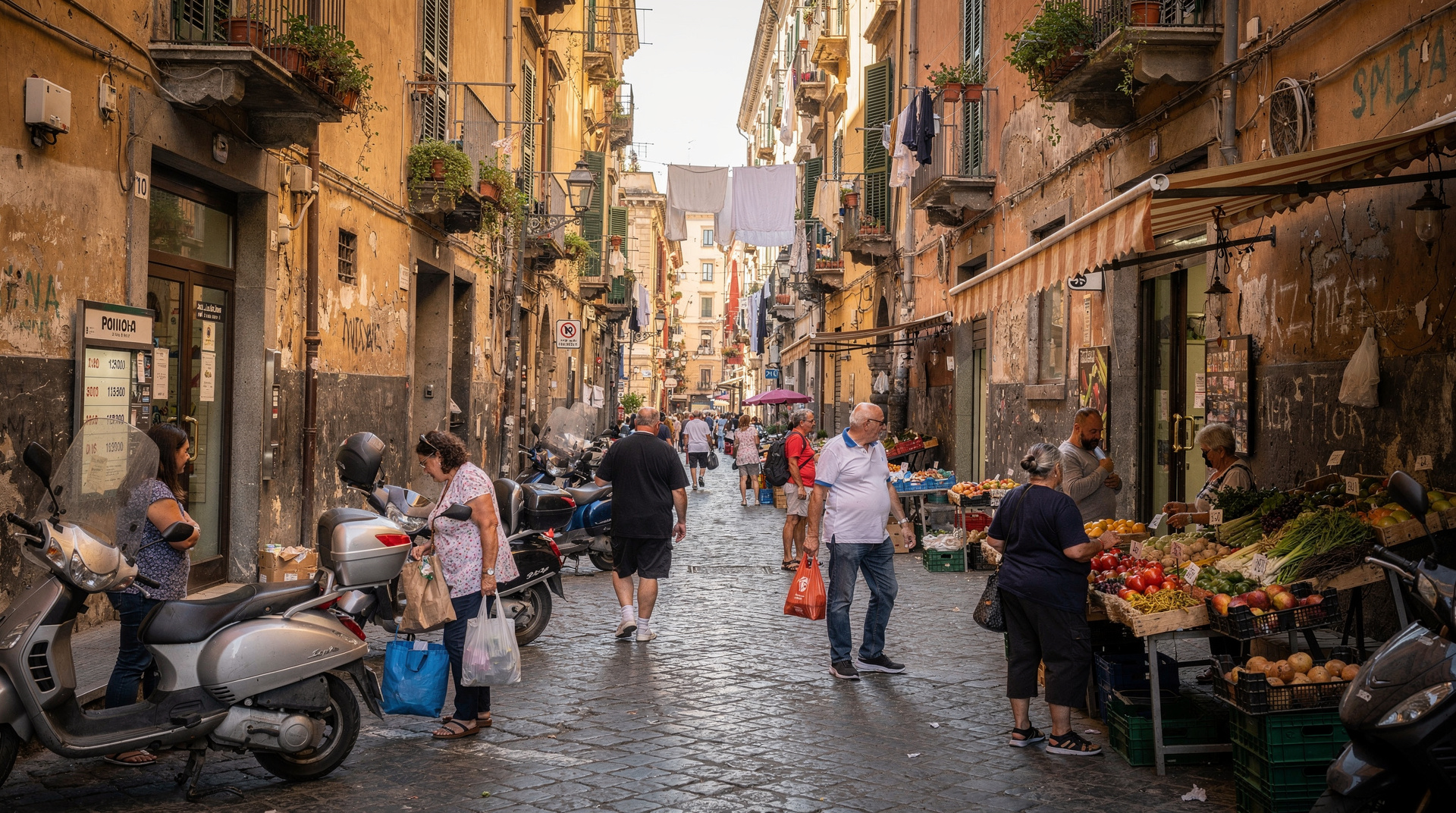
The trick is to eat at the counter. Every Neapolitan bar and many of the simpler trattorias have a standing counter where you drink your coffee, eat your cornetto or your sfogliatella, pay, and leave. Nobody is watching you. Nobody is performing concern about your table-for-one status. The social norm is quick and convivial and you are part of it immediately.
For lunch I found a latteria near the Duomo — the kind of place with six tables and a blackboard menu that changes daily — where I had pasta e fagioli and a glass of local red for €10. The owner’s adult son sat at the counter the entire time I was there and we discussed, in broken Italian and broken English, whether the current Naples football squad would survive the season. He was pessimistic. I did not have enough Italian to be either pessimistic or optimistic.
For dinner I was more deliberate. I booked a table at a proper trattoria for 8 pm — which in Naples is an early sitting — and arrived to find myself one of two solo diners in a room of large, loud groups. Nobody looked at me with pity. A primo of spaghetti alle vongole, a secondo of grilled swordfish, and a carafe of house white came to €38. The waiter asked me where I was from and recommended that I try the baba al rum if I had not already (I had not) and brought me one as a complimentary dessert at the end. I do not know if this happens to everyone or was particular to the solo foreigner in January. Either way it was a good baba.
Street Food and the Underground City
The street food argument for solo travel is simple: you can eat when you want, as much as you want, without negotiating with anyone. A solo traveller in Naples can have a frittatina di pasta for €2, a cuoppo of fried mixed seafood for €5, and a pizza fritta at the counter of a friggitoria for €2.50 all in the same afternoon, and nobody thinks this is strange.
The guided street food walk with six stops through the historic centre is the best investment a solo traveller can make on a first Naples day. It puts you with a small group (typically eight to twelve people), you eat an absurd amount across six spots, and the guide narrates the city’s food history in a way that gives the meal context rather than just calories. I went on my second morning and came away with a mental map of the eating neighbourhoods that I used for the rest of the trip. It is also a low-key social occasion — every group I have seen on these walks ends up chatting at the final stop.
The Naples Underground hidden city tour is the other essential solo experience. You descend into the Greek-Roman tunnels beneath the historic centre with a guide and a candle and spend ninety minutes inside the architecture of the original city. It is atmospheric in a way that photographs do not capture, and the small-group format means you are not wandering down there alone, which in January would have been genuinely eerie. It costs around €15 and runs multiple times daily.
The Real Risks vs the Reputation
Here is the honest version. In five days I had:
- One attempt by a man near the station to “help” me find my hotel (declined; he followed for two minutes then stopped)
- One moment on a narrow street in the Quartieri at night where two scooters passed very close and I tightened my grip on my bag instinctively (nothing happened; they were just scooters)
- Zero incidents involving theft, aggression, or anything genuinely threatening
What I did that contributed to this: I kept my phone in my inside jacket pocket, not in my hand. I wore a crossbody bag with the strap across my body, not a dangling shoulder bag. I did not walk around after midnight in the areas around the station or in the deepest parts of the Quartieri alone. I looked like I knew where I was going even when I did not, which in practice means walking at a purposeful pace and checking the map before turning onto a street rather than stopping in the middle of it.
The scooter bag-snatch is the real risk and it is not mythological — it happens, disproportionately to tourists with their phones out. The solution is not to leave your phone in the hotel; it is to not hold it out in an obviously grabbable way in unfamiliar streets. Use it, put it away.
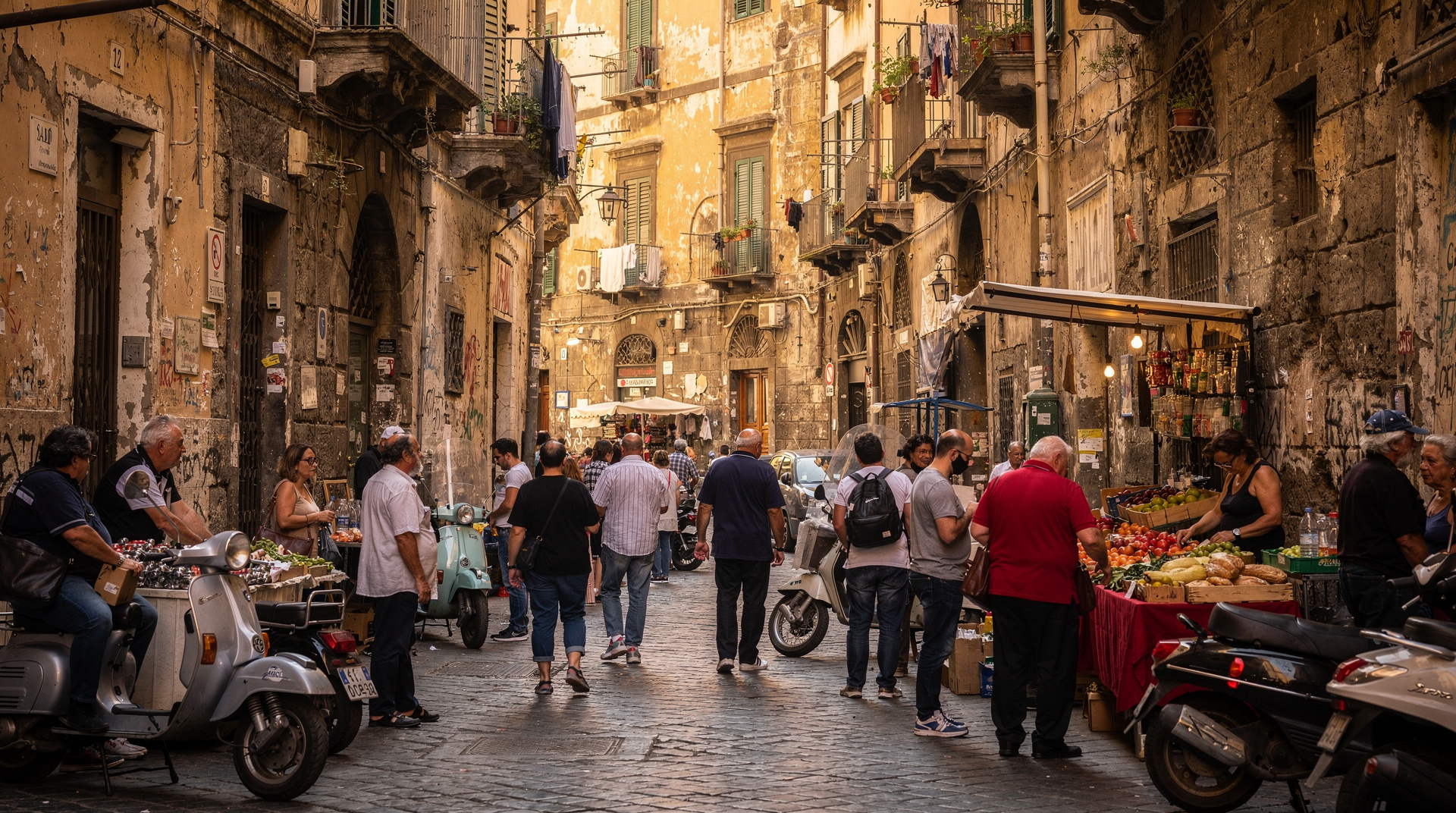
Petty theft from bags and pockets in crowded spaces is also real. The market at Porta Nolana, the Spaccanapoli tourist drag, the station — these are pickpocket environments. Standard precautions apply. Our Naples scams to avoid guide goes through the specific tricks — the “friendship bracelet,” the overcharging taxi meters, the fake petition clipboards — that solo travellers are disproportionately targeted with.
The dramatic violent crime that the reputation implies — the sense that danger is ambient and random — did not match my experience at all. Naples has specific risk areas (the Scampia district is not a tourist destination and there is no reason to go there) and specific risk behaviours (phone out, bags accessible, obvious map-staring on unfamiliar streets). Managed with ordinary attention, the city is substantially safer than the forums suggest.
Solo at Night: What I’d Tell a Friend
The one part of solo travel that deserves its own honest paragraph is nighttime. Naples at night is not uniformly one thing — Chiaia and the streets around Piazza Bellini stay lively and well-lit until late, full of students and young professionals, and feel entirely comfortable to walk through alone. The deep Quartieri Spagnoli after midnight is a different proposition: narrower, darker, quieter in a way that reads as watchful rather than peaceful. I did not walk through it alone after about 11pm, and I would not recommend it to anyone. Our Naples at night guide breaks the city down by neighbourhood for exactly this kind of planning, rather than treating “is it safe at night” as a single yes-or-no question.
Evenings Out: The Best Part
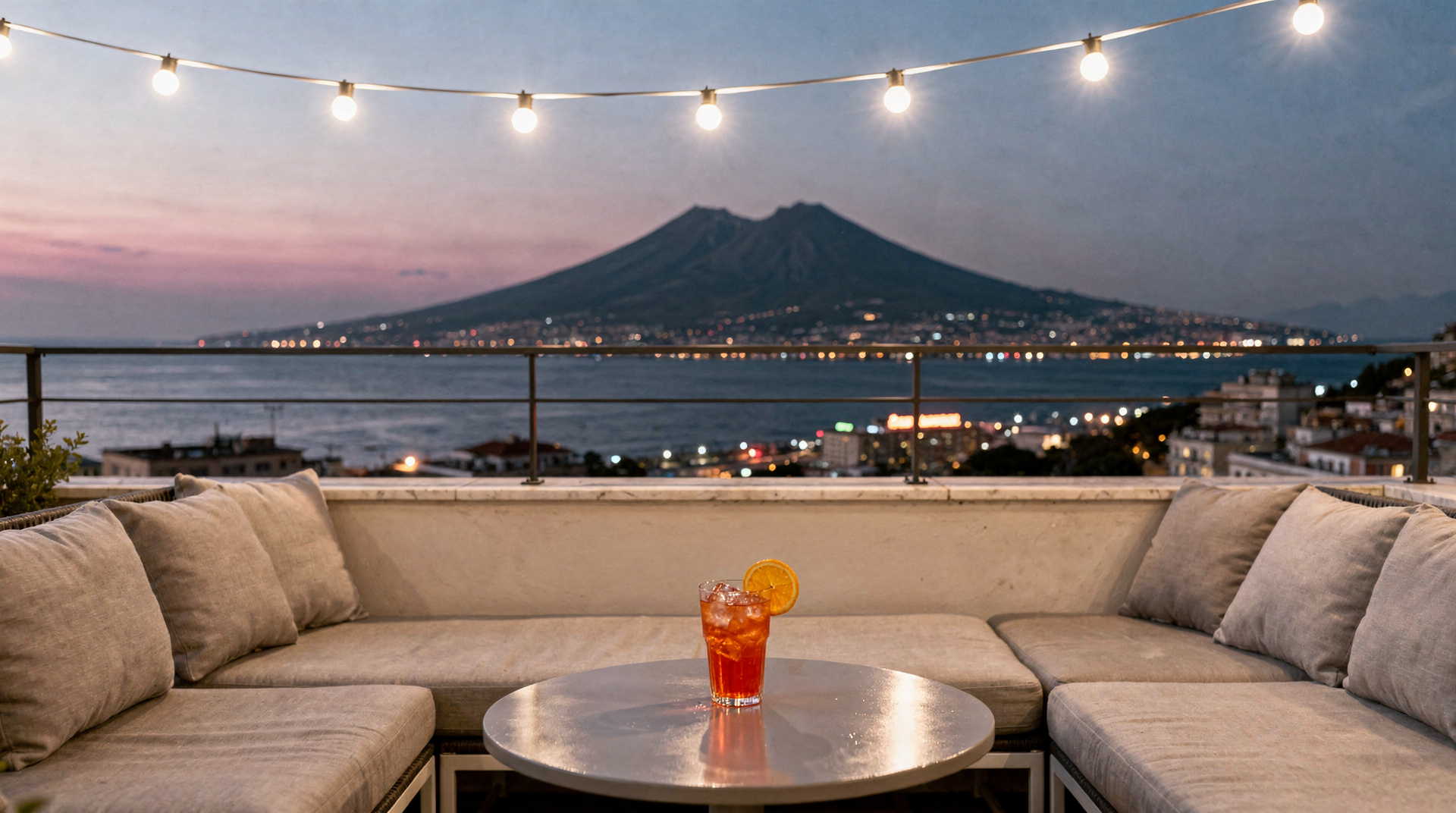
January in Naples is quiet in the way that city centres without tourist infrastructure go quiet when the season ends. The locals remain. The bars are full of them. The aperitivo hour — 6 to 8 pm — is the best solo social occasion in Italy and Naples is no exception.
I spent three evenings sitting at the counter of a wine bar in the Chiaia neighbourhood with a glass of Falanghina and a small plate of fried things, and on two of those evenings had extended conversations with strangers who were simply standing next to me doing the same thing. One was a doctor from the Ospedale Civico, on her way home. One was a retired schoolteacher who wanted to discuss Brexit in great detail. Neither interaction required me to do anything except be there, make eye contact, and respond.
This is the thing that the safety forums do not capture: the social life of a Neapolitan bar counter is genuinely open, genuinely curious, and entirely normalised for a solo person of any description. The city talks to itself constantly. A foreigner who is not visibly anxious and not glued to a phone is simply another person to talk to.
The Kindness of Strangers: A Few Notes
On the third day I took a wrong turn in the Quartieri and ended up in a dead-end courtyard. A woman leaning out of a first-floor window called down directions to the main street without being asked. She had clearly watched me realise my mistake and decided to intervene.
Near the archaeological museum I was trying to photograph the façade from a good angle and a man on a bicycle stopped, put the bicycle down, and spent three minutes suggesting better positions. He then cycled away without offering a tour, a restaurant recommendation, or a fee.
At the fish market at Porta Nolana a vendor, unprompted, cut a small piece from a buffalo mozzarella he was selling and handed it to me. It was excellent. I bought a whole one.
None of this is unique to solo travel, but solo travel makes you more available to it. When you are not managing a group or navigating a conversation with someone else, you are more present in the city, and the city is more present in you. Naples, particularly, has a lot to be present with.
Where I Stayed and Why It Mattered
I chose a small, host-run apartment over an anonymous hotel deliberately, and in retrospect it was the single most important decision of the trip. The host’s willingness to volunteer local knowledge unprompted — which streets to avoid, where to eat, what the correct price for a taxi from the station actually is — did more for my sense of ease in the city than any guidebook. If you’re travelling solo, I’d weight this heavily when choosing where to stay: a host who treats you as a person rather than a booking reference changes the texture of the entire trip, especially in a city as socially dense as Naples.
I’d also recommend against staying directly around Piazza Garibaldi or the station, regardless of how convenient it looks on a map. It’s the one part of the city where the diary above and the forum warnings actually line up, and a solo traveller benefits more than most from being based somewhere calmer to return to at the end of the day.
Come in the shoulder season or in winter if you can. The summer version, which I have also experienced, is noisier, more crowded, and the kindness gets diluted by sheer volume. January Naples, with its emptier streets and its locals in full domestic rhythm and its faint smell of wood smoke from the apartments, is a different city and a very fine one to be alone in.
For the practical side of solo trip planning beyond safety — where to stay, how to structure the days — the Naples travel tips guide rounds up what I’d have wanted before I left, if the diary format here leaves gaps.