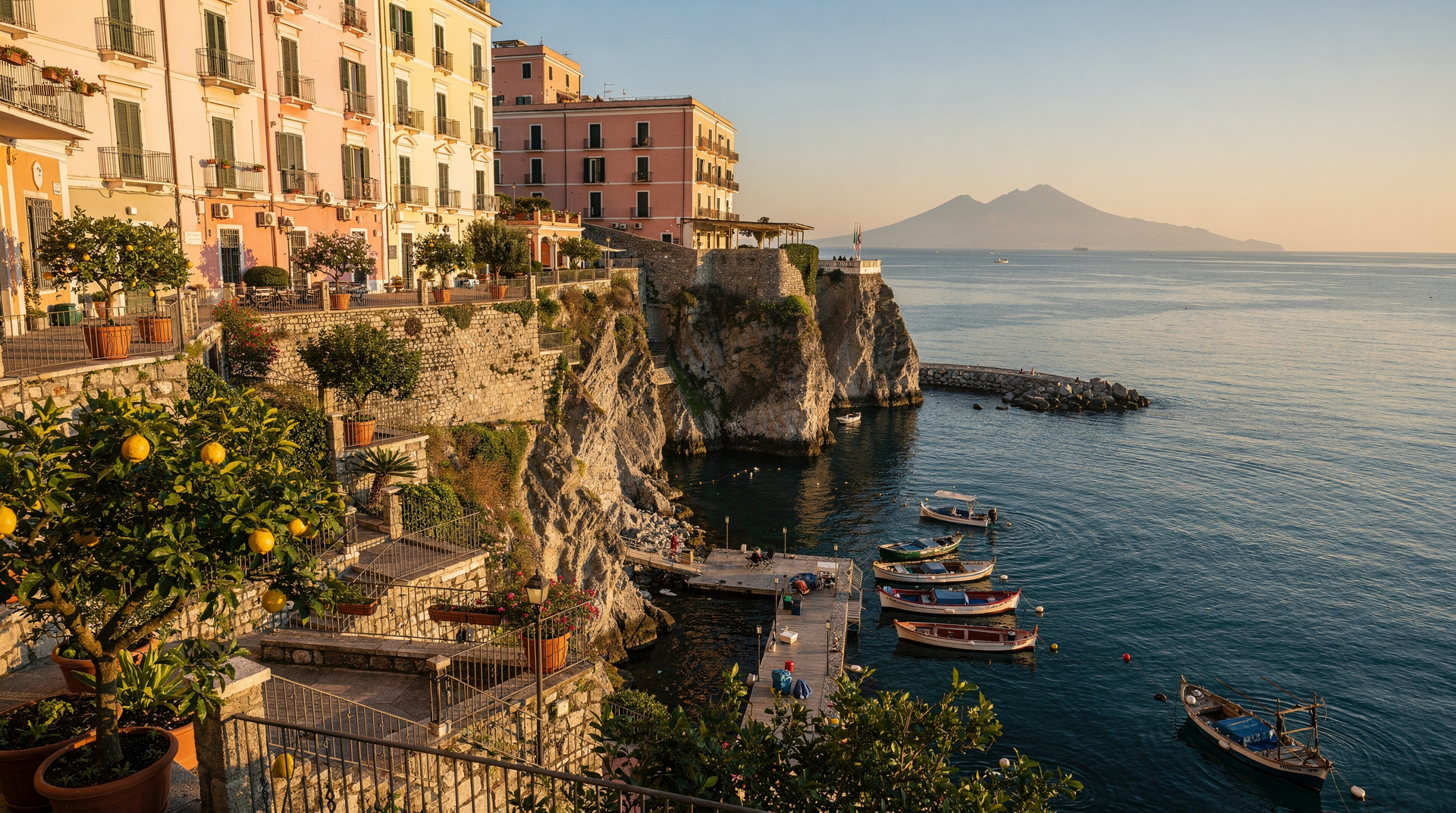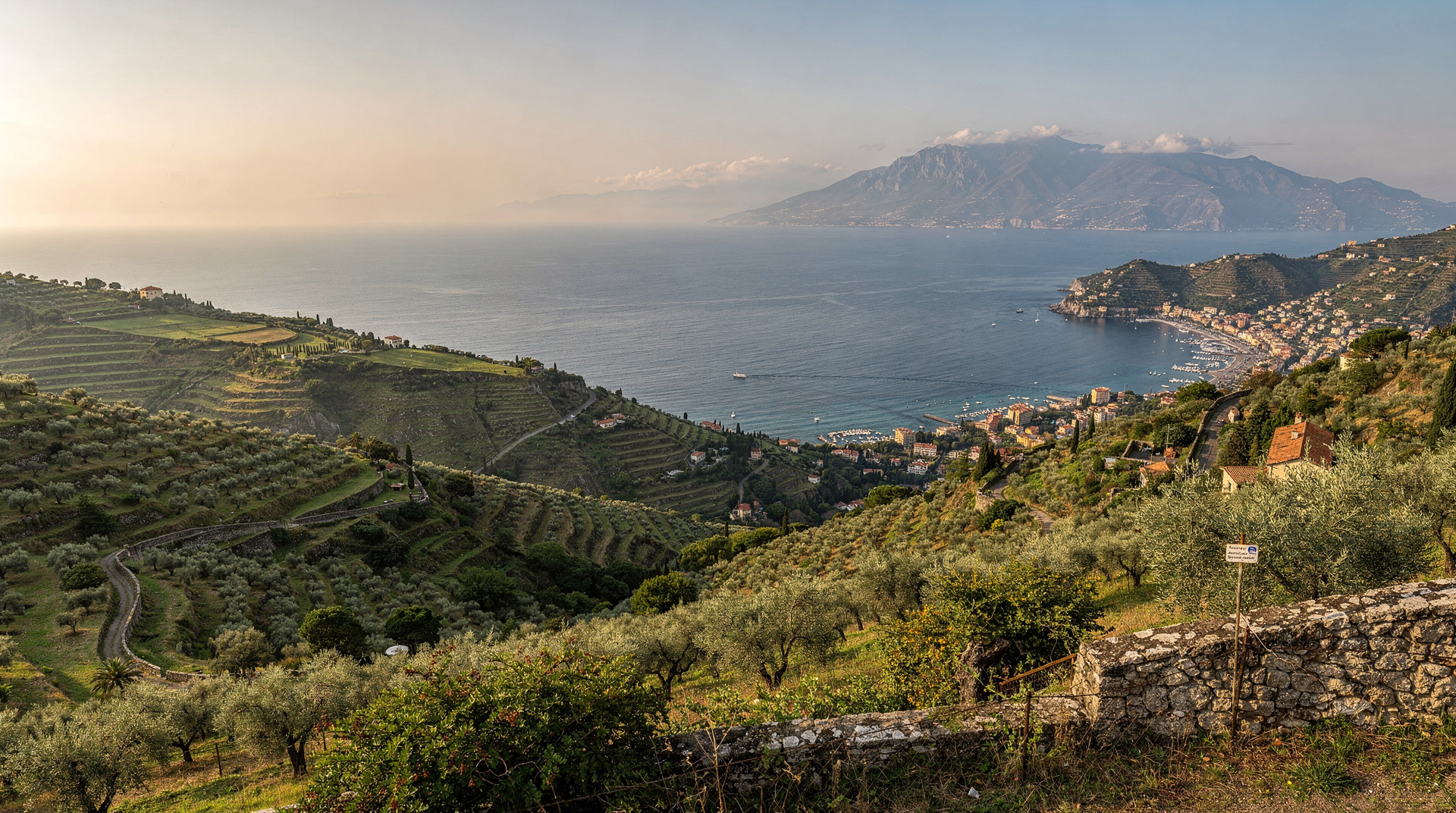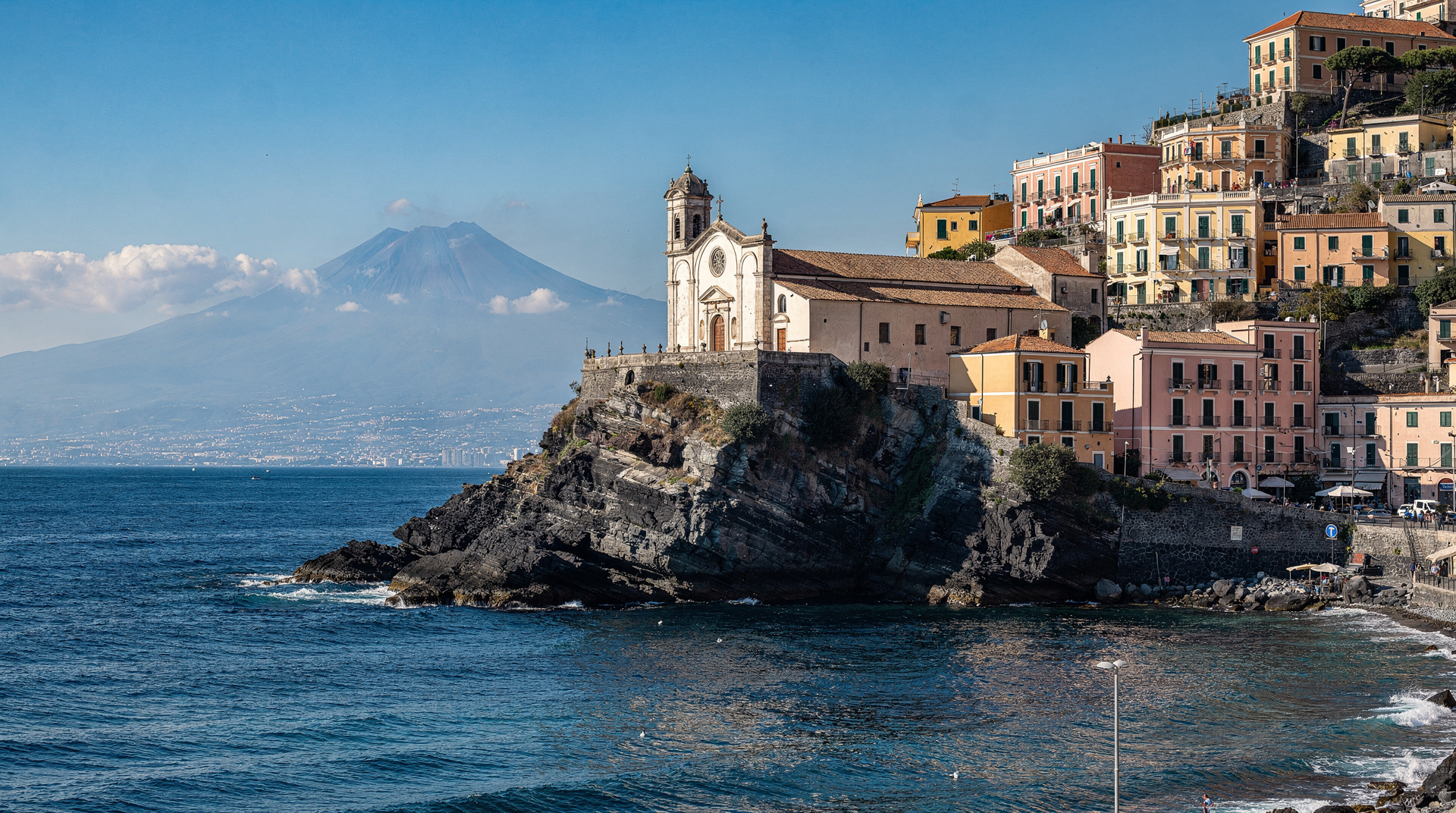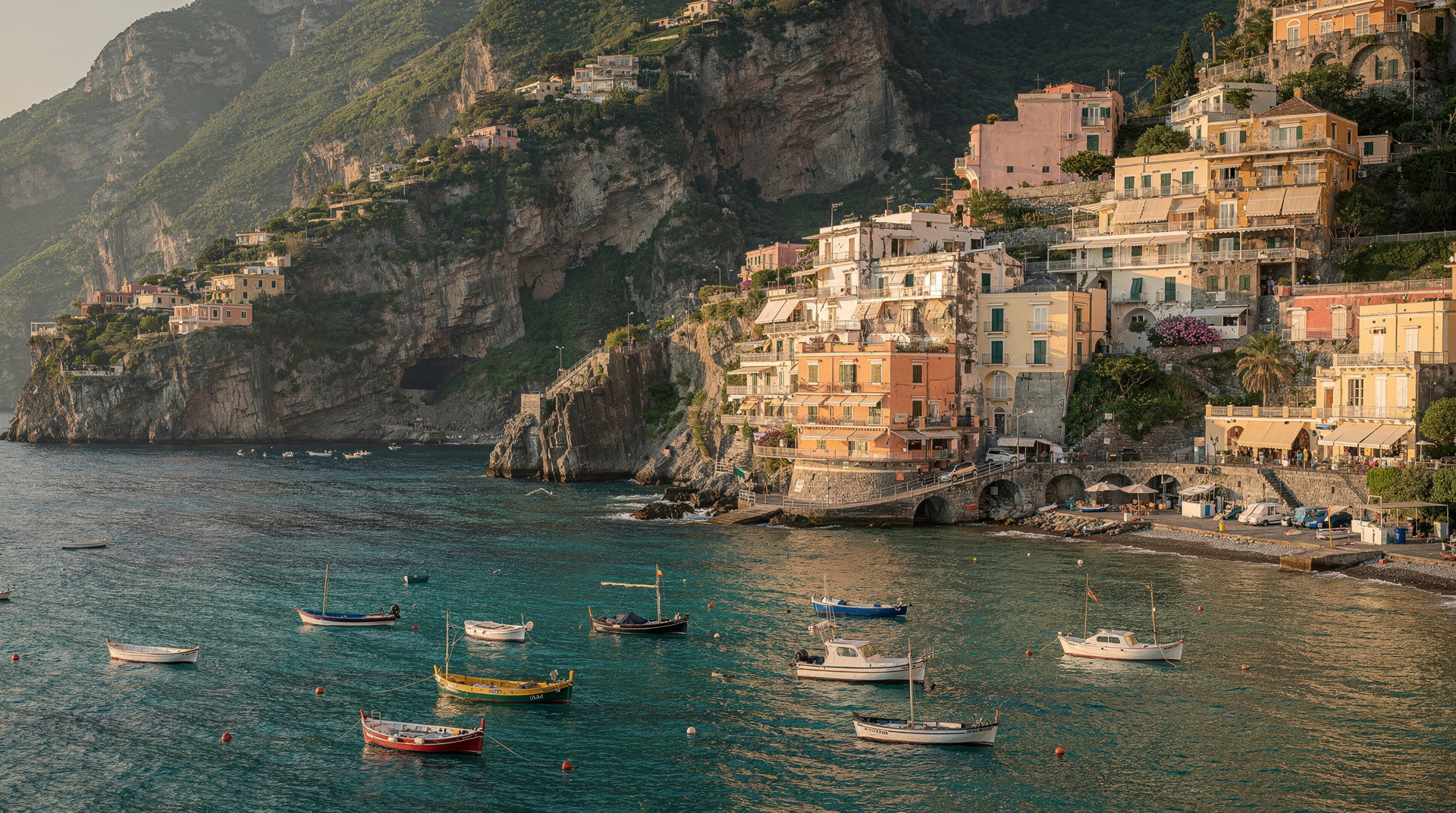
Massa Lubrense
Massa Lubrense: quiet Sorrentine Peninsula tip, Marina del Cantone, Nerano's spaghetti dish, Ieranto bay, diving, and real Campanian village life.
Sorrento: Walking Tour with Local Guide
Duration: 2h
Quick facts
- Getting there
- Bus from Sorrento, ~30–40 min, or car
- Size
- Largest municipality on the peninsula by area
- Spiaggia di Marina del Cantone
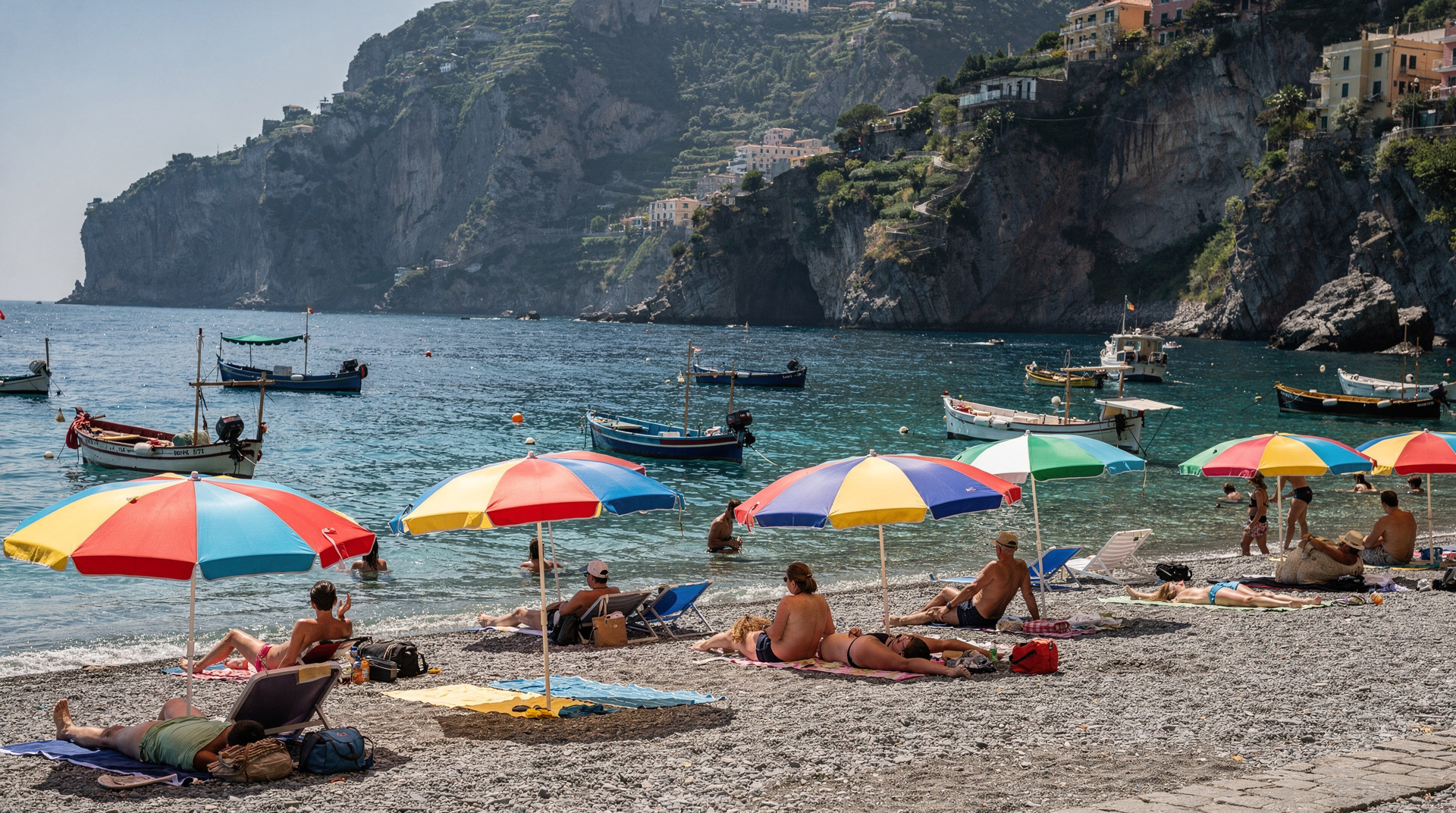
- Pebble beach, calm water, lido rentals
- Nerano
- Small hamlet, birthplace of spaghetti alla Nerano
- Ieranto bay
- WWF nature reserve, best by boat or 45-min hike
- Best season
- May–October; village life year-round
Massa Lubrense is the municipality at the southwestern tip of the Sorrentine Peninsula, between Sorrento and the beginning of the Amalfi Coast. It is the largest municipality on the peninsula by area and the least visited by international tourists in proportion to its size. This gap between scale and visibility is the reason to go: the villages here — Nerano, Termini, Annunziata, Marciano — have a working agricultural and fishing character that the centre of Sorrento has largely traded away for tourism.
| Where | Southwestern tip of the Sorrentine Peninsula, ~30–40 min from Sorrento |
| Cost | Free to explore; beach lido €15–20/day; boat to Ieranto €10–20 |
| Time needed | Half-day from Sorrento; 1–2 nights for a slower-paced base |
| Getting there | Local bus from Sorrento or car via SP145 |
| Best time | May–June and September–October; August is busy at Marina del Cantone |
Getting there from Sorrento
Local buses from the Sorrento station square serve Massa Lubrense and its coastal hamlet Marina del Cantone. The journey to Marina del Cantone takes about 35–45 minutes on winding peninsula roads. Frequency is roughly every hour; check current SITA timetables before going, as service can be irregular outside summer.
By car, the drive is 15–20 minutes via the SP145 coastal road. Parking at Marina del Cantone is limited in August — arrive before 9am or plan to park in the village above and walk the steep path down.
By scooter: a popular option for visitors renting from Sorrento. The roads are narrow and scenic; the SS145 runs high above the coast with views that justify the journey even before you arrive.
Marina del Cantone
The main beach access point for Massa Lubrense. A small pebble and coarse sand cove sheltered by cliffs, with clear water that turns turquoise in the shallower sections. In peak July–August, the beach fills with Italian holiday makers and the lido operators charge €15–20 for a sunbed-and-umbrella set. In May, June, and September, it is considerably more relaxed and the water temperature is still good from September onward.
The beach has several restaurants: Lo Scoglio (the most famous, serving local seafood and fresh pasta at honest prices for the location, roughly €20–28 for a first course) and Quattro Passi (more upscale, one Michelin star, focused on elevated versions of Campanian cuisine — book well in advance for summer). There are also simpler options along the front for a post-swim focaccia and beer.
From Marina del Cantone, small boats run to the Ieranto bay and to sea caves in the cliffs — informal services for €10–20 per person round trip depending on the boatman.
Spaghetti alla Nerano
Nerano is a hamlet of perhaps 200 people above Marina del Cantone. Its claim to any wider attention is spaghetti alla Nerano: pasta with fried courgette, provolone del Monaco cheese, and basil. The dish was reportedly invented in the 1950s at the restaurant Maria Grazia, which is still operating in Nerano and remains the definitive version.
Spaghetti alla Nerano at Maria Grazia costs around €14–16 and is as good as you will find anywhere. The restaurant is small and in summer requires either a reservation or patience. The dish has since spread across the peninsula and to Naples, where it appears on many restaurant menus — but the Nerano version uses local provolone del Monaco, a PDO-protected cheese from the Monti Lattari farms above, which makes a genuine difference.
Baia di Ieranto
The Ieranto bay is a WWF nature reserve at the tip of the peninsula, separated from the regular Sorrentine coast by the Punta Campanella headland. The water clarity here — no motorised boats allowed inside the reserve — is exceptional by any Mediterranean standard. The seabed drops quickly and visibility regularly exceeds 15 metres.
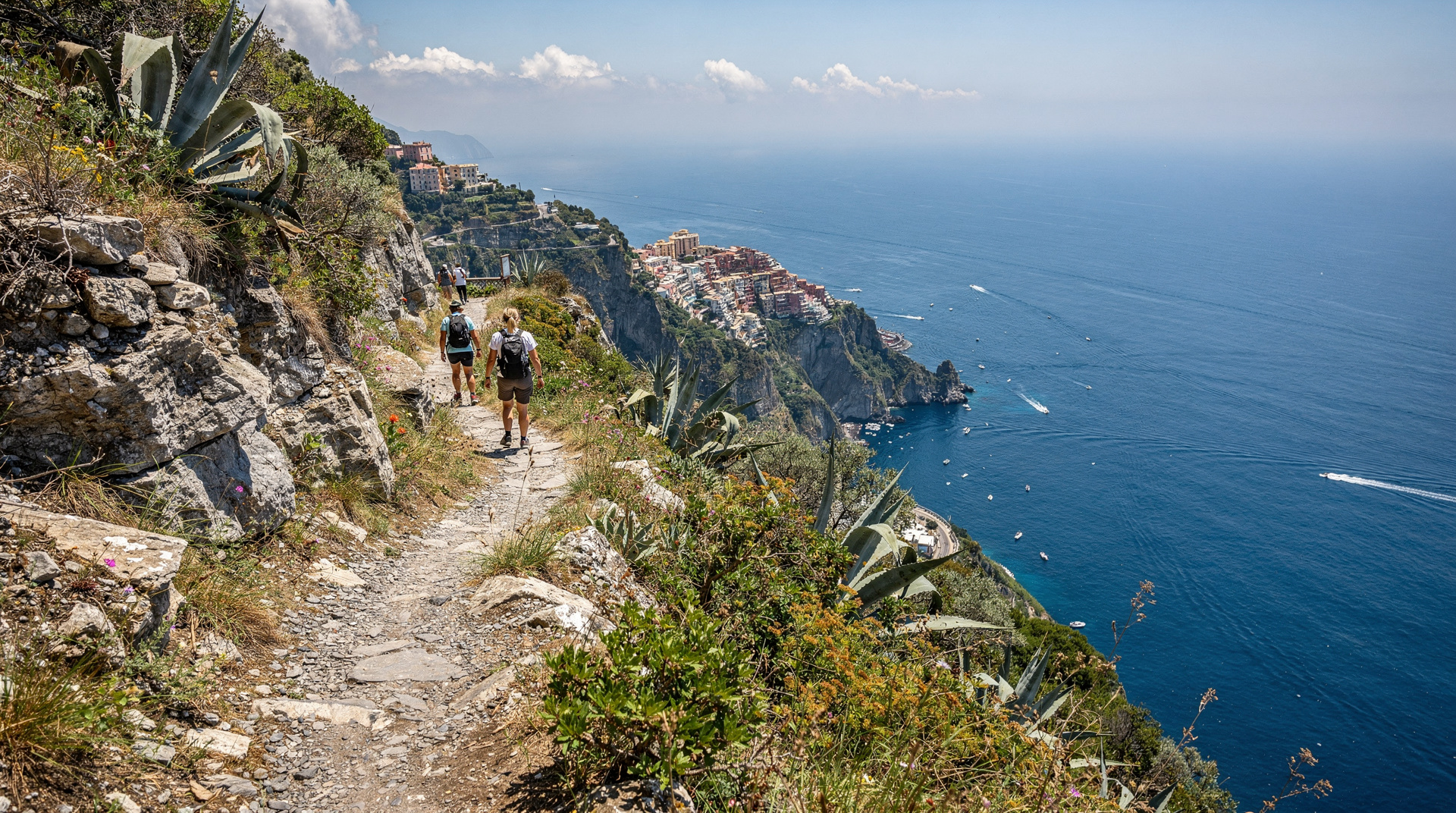
Access by land: a 45-minute walk from Nerano on a clearly marked trail (some steep sections, appropriate footwear required). Access by sea: small boats from Marina del Cantone drop passengers at the pebble beach inside the bay. The sea access is easier in terms of logistics; the land walk offers better views of the Capri channel en route.
Swimming here in May–June, before the July–August concentration, is genuinely one of the better experiences on the peninsula. The bay is popular with snorkellers and divers — visibility and marine biodiversity are among the best on the southern Sorrentine coast.
Diving and snorkelling
The waters around the Sorrentine tip have good diving conditions: rocky walls, posidonia meadows, and the protected zone around Ieranto. Several dive centres operate from Sorrento and Marina del Cantone. A guided shore dive with equipment rental costs €40–60. PADI Open Water certification courses are available if you want to learn while on the peninsula.
Snorkelling is free and productive from the rocky shores at Marina del Cantone and in the Ieranto shallows. Clear-water mask-and-fins equipment rents for €5–8/hour from beach operators.
Walks on the peninsula
Massa Lubrense sits on the edge of the Alta Via dei Monti Lattari, a long-distance ridge trail that crosses the Sorrentine Peninsula and eventually connects with the Amalfi Coast. Several day sections pass through or near the Massa Lubrense municipality.
The Punta Campanella trail: from Termini village (bus from Sorrento) to the cape lighthouse, 45 minutes each way on a clear path. The lighthouse is the southernmost point of the peninsula. On clear days, Capri is visible across the strait less than 5 km away.
The Nerano–Ieranto trail: described above, 45 minutes from Nerano.
For routes further afield toward Sorrento and Sant’Agata sui Due Golfi, the trail network is well-marked.
Walking and food tour in the Sorrento and Massa Lubrense areaWhere to stay
Accommodation in Massa Lubrense runs significantly cheaper than Sorrento and Capri. Agriturismi (farm stays) operate in the hills above the coast — typically €60–90 per room per night including breakfast, often with views across the strait to Capri. These are genuinely restful bases for anyone who wants to drive or scooter to different points on the peninsula over several days.
Olive oil and local agriculture
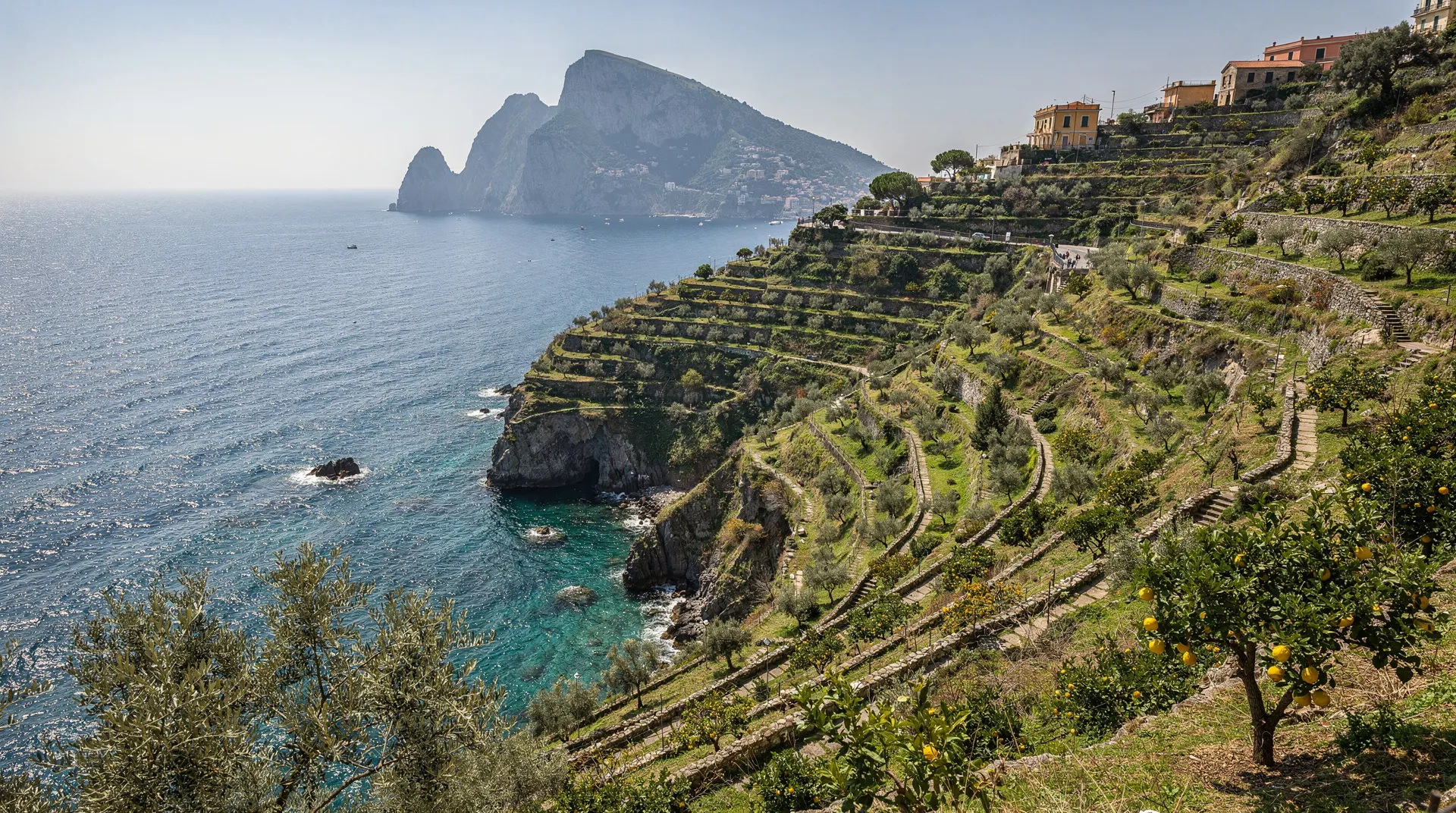
The Sorrentine Peninsula has been under continuous agricultural use since antiquity. The slopes between Sorrento and Massa Lubrense support lemon groves, olive orchards, and small vegetable plots, and the local produce is genuinely excellent rather than marketing-grade excellent.
Olive oil from the peninsula uses primarily the Minucciola variety, an ancient cultivar producing oil that is fruity and slightly peppery. Several small producers in the Massa Lubrense hills sell directly to visitors — look for signs reading “vendita diretta” on agricultural gates. Prices start at €8–10 per litre for genuine extra virgin. The local supermarket in Massa Lubrense town also stocks local oil at prices below what you would pay in Sorrento tourist shops.
Lemons from this end of the peninsula (including the Limoni di Sorrento IGP variety) feed local limoncello production. The lemons grown below 100 metres on south-facing slopes are notably different in flavour from supermarket lemons — thick-skinned, very aromatic, low acidity. A bag of three lemons from a road-side vendor costs €1.
The Thursday morning market in Sorrento includes produce from Massa Lubrense farms. If your schedule allows, this is a better place to buy local agricultural products than the dedicated tourist shops.
Churches and historical heritage
Massa Lubrense proper (the main town centre, at 120 metres elevation) has a modest historic core. The Basilica di Santa Maria delle Grazie, the main parish church with a tiled dome visible from below, dominates the central piazza. The interior has an inlaid marble floor and some 17th-century paintings — not a major monument, but worth 20 minutes if you are in the town.
The chapel of Santa Maria di Fontanella, at the road junction toward the coast, has an exterior majolica tile panel (18th century) that is a minor but charming example of the Campanian ceramic tradition that also appears in Naples churches.
The ruins of a Roman fish tank (peschiera) are visible near Punta del Capo, accessible on foot from the Villa di Pollio viewpoint. Roman fish cultivation in coastal rock tanks was widespread on this stretch of coast; the Massa Lubrense examples are modest but free to view.
Practical information
There is no tourist office in Massa Lubrense; the Sorrento tourist information point covers the area. ATMs exist in the main village of Massa Lubrense town (not Marina del Cantone). Mobile coverage is good on the main roads; the Ieranto trail has partial coverage near the cape.
Supermarkets exist in Massa Lubrense town; Marina del Cantone has only small seasonal shops. Buy supplies before heading to the beach.
The Punta Campanella lighthouse and cape
Punta Campanella is the southernmost tip of the Sorrentine Peninsula, the point where the peninsula’s ridge drops into the Bocca Piccola strait separating the mainland from Capri. The lighthouse at the cape is not a tourist attraction in the conventional sense — it is an operational navigation light. But the walk to it from Termini village (the nearest bus stop) takes about 45 minutes along a clear path and delivers views that are difficult to equal on the peninsula: Capri across 5 km of water to the south, the Gulf of Salerno to the east, and the full length of the Amalfi Coast visible in the distance.
The path passes ancient Greek watchtower ruins (3rd century BC) built to protect against pirate raids. The torre at the cape has successive Roman, Byzantine, and medieval modifications. The structure is not open to enter but visible from outside.
The Punta Campanella protected marine area extends both sides of the cape and covers the waters around the tip of the peninsula and the northern coast of Capri. Commercial fishing is restricted and motorboats are limited in certain zones — this is why the Ieranto bay’s water is particularly clear.
When to visit: a seasonal breakdown
| Season | Conditions | Notes |
|---|---|---|
| May–June | Warm, clear water, wildflowers | Best overall balance of weather and quiet |
| July–August | Hot, crowded at Marina del Cantone | Book Quattro Passi and Maria Grazia well ahead |
| September–October | Warm sea, thinning crowds | Arguably the best window; water stays swimmable |
| November–April | Cool, many seasonal businesses closed | Village life continues; hiking trails at their clearest |
Outside the May–October window, Marina del Cantone’s restaurants and boat operators mostly close for the season, but the town of Massa Lubrense itself functions normally year-round — this is a genuine distinction from the more seasonal beach hamlets of the Amalfi Coast proper.
Fishing traditions and the local sea economy
Massa Lubrense’s relationship with the sea predates its tourism entirely. Small-scale fishing (paranza-style, using flat-bottomed boats designed for the rocky coastline) continues from Marina del Cantone and the smaller landings around the peninsula tip, supplying the restaurants that have made Nerano’s cuisine what it is. Anchovies, small pelagic fish, and octopus caught within sight of the coast still appear on menus described simply as “pescato locale.”
The Punta Campanella marine protected area, which extends around the tip of the peninsula, restricts certain types of commercial fishing to protect the waters that feed both the local economy and the exceptional visibility that draws divers to Ieranto. This combination of working fishing tradition and marine protection is part of what distinguishes Massa Lubrense from more purely recreational coastal towns — the sea here is still a livelihood, not only a backdrop.
Getting the most from the peninsula: a suggested day loop
A realistic loop from Sorrento covering Massa Lubrense, the cape area, and Nerano by scooter or car:
- 9:00 — Depart Sorrento. Drive via Via Sant’Agata toward Termini (15 minutes).
- 9:30–11:00 — Punta Campanella walk from Termini (45 min each way, plus time at the cape).
- 11:30 — Drive to Nerano (15 minutes from Termini).
- 12:00–13:30 — Lunch at Maria Grazia in Nerano: spaghetti alla Nerano (the original).
- 14:00–16:00 — Descend to Marina del Cantone for swimming. Optional: boat to Ieranto.
- 16:30 — Drive back to Sorrento via Massa Lubrense town, stop for olive oil purchase.
- 17:30 — Return Sorrento.
Total scooter distance: approximately 35 km round trip. By car the same circuit is possible but parking at Termini and Marina del Cantone can be tight in August.
Where to stay in Massa Lubrense
Staying in Massa Lubrense rather than Sorrento has practical and experiential benefits. The accommodation is cheaper (20–35% lower than comparable Sorrento options), the setting is quieter, and the ratio of actual Campanian life to tourist infrastructure is reversed compared to Sorrento.
The practical trade-off: fewer ferry connections and less direct bus service to the Amalfi Coast. If your priorities are the coast and Capri, Sorrento is the better base. If your priorities are the peninsula interior, diving, the Ieranto bay, and a slower pace, Massa Lubrense works.
Agriturismo options: Several farms in the hills above Nerano and Marina del Cantone rent rooms and serve meals using their own produce. Prices from €70–100 per night including breakfast. The quality of the meals at these places is often better than anything in the same price range in Sorrento.
Apartments: Short-term rentals in the hamlets offer more space and independence. A two-person apartment in a Massa Lubrense village for a week in May costs €600–900 total, significantly less than a comparable week in a Sorrento hotel.
Practical information
There is no tourist office in Massa Lubrense; the Sorrento tourist information point covers the area. ATMs exist in the main village of Massa Lubrense town (not Marina del Cantone). Mobile coverage is good on the main roads; the Ieranto trail has partial coverage near the cape.
Supermarkets exist in Massa Lubrense town; Marina del Cantone has only small seasonal shops. Buy supplies before heading to the beach.
Combining with a wider peninsula itinerary: many visitors treat Massa Lubrense as a stop within a broader Sorrentine Peninsula loop rather than a standalone destination. Pairing it with Vico Equense to the north (known for its own pizza tradition and clifftop position) or a scooter circuit that also touches Sant’Agata sui Due Golfi makes for a full day that shows the peninsula’s range — from the working coastline at Marina del Cantone to the ridge views inland.
Medical access: the nearest hospital with emergency services is in Sorrento (Ospedale Santa Maria della Misericordia). There is a local pharmacy in Massa Lubrense town.
Ferry services: there are no regular ferry services from Massa Lubrense itself. The nearest ferry terminals are Sorrento (Marina Piccola, 15 km north) and in summer a seasonal connection from Marina del Cantone to Capri — this is a private service with seasonal schedules, not a regular public ferry.
Frequently asked questions about Massa Lubrense
Where exactly is Massa Lubrense?
It is the municipality at the tip of the Sorrentine Peninsula, west/southwest of Sorrento. It covers a large area including villages like Nerano, Termini, Santa Maria della Lobra, and Marina del Cantone beach.
Is Marina del Cantone worth visiting?
Yes — it is the most accessible good beach on the Sorrentine Peninsula, with clearer water than most Sorrento beaches and a more relaxed atmosphere. Combined with a meal in Nerano or a boat trip to Ieranto, it makes a strong half-day from Sorrento.
What is spaghetti alla Nerano?
A pasta dish from the hamlet of Nerano: spaghetti with fried courgette, provolone del Monaco cheese, and basil. It was reportedly invented in the 1950s at Maria Grazia restaurant in Nerano. This restaurant still makes the most authentic version.
Can I visit Ieranto bay without a boat?
Yes — a 45-minute walking trail from Nerano reaches the beach. The path has some steep sections but is manageable with normal trainers. The sea access by small boat from Marina del Cantone (€10–20 round trip) is easier logistically.
How do I get from Sorrento to Massa Lubrense without a car?
SITA buses from Piazzale De Curtis (Sorrento station square) serve Massa Lubrense and Marina del Cantone, taking about 35–45 minutes. Frequency varies by season — check the schedule. Scooter rental from Sorrento is the most flexible option.
Is Massa Lubrense worth staying overnight rather than a day trip from Sorrento?
If diving, quiet village life, and slower mornings matter more than nightlife and ferry connections, yes — agriturismi in the hills above the coast are genuinely restful and cost less than comparable Sorrento accommodation. If Capri and the Amalfi Coast are priorities, Sorrento’s better transport links make more sense as a base.
When is the best time to swim at Ieranto bay?
May–June and September, before and after the July–August crowds. The bay has no motorised boats inside the reserve, which keeps the water exceptionally clear year-round, but peak summer brings considerably more visitors by both the walking trail and the boat access from Marina del Cantone.
Top experiences
Bookable activities with verified prices and instant confirmation on GetYourGuide.