Naples in the Rain: How a Wet Day Becomes One of Your Best
Naples is a city that most visitors plan around the sun. The day trips, the islands, the seafront walks — the itinerary assumes clear skies and the kind of warm light that makes even a traffic jam look photogenic. And then it rains. Not a brief shower but a proper Campanian downpour, grey and persistent, the kind that sends the Vespa riders into doorways and turns the basalt pavements of the centro storico into something between a mirror and a river.
The instinct is to panic, to rearrange, to sit in a café refreshing weather apps until noon. Resist it. A wet day in Naples, handled with some intention, can become one of the most interesting days of a southern Italy trip. The city has spent two thousand years filling its buildings with things worth looking at, and most of those things are indoors.
| Best rainy-day stops | MANN, Naples underground, Capodimonte, baroque churches |
| Cost | MANN €22, underground ~€15, Capodimonte €15 |
| Time needed | Full day if combining two or three stops |
| Weather-proof option | The underground — 14°C year-round regardless of surface weather |
| Season most likely | November–February |
Start with the MANN
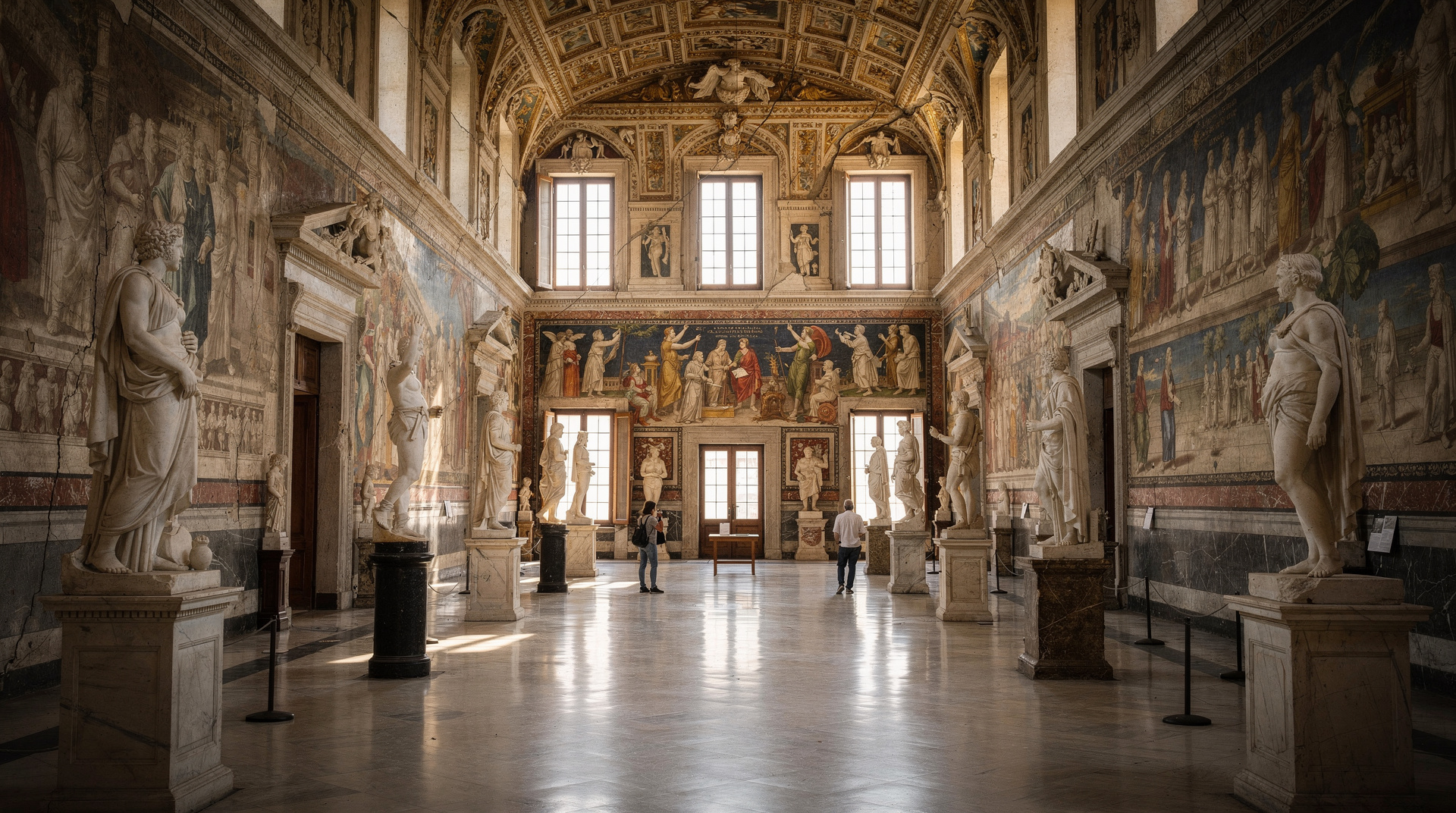
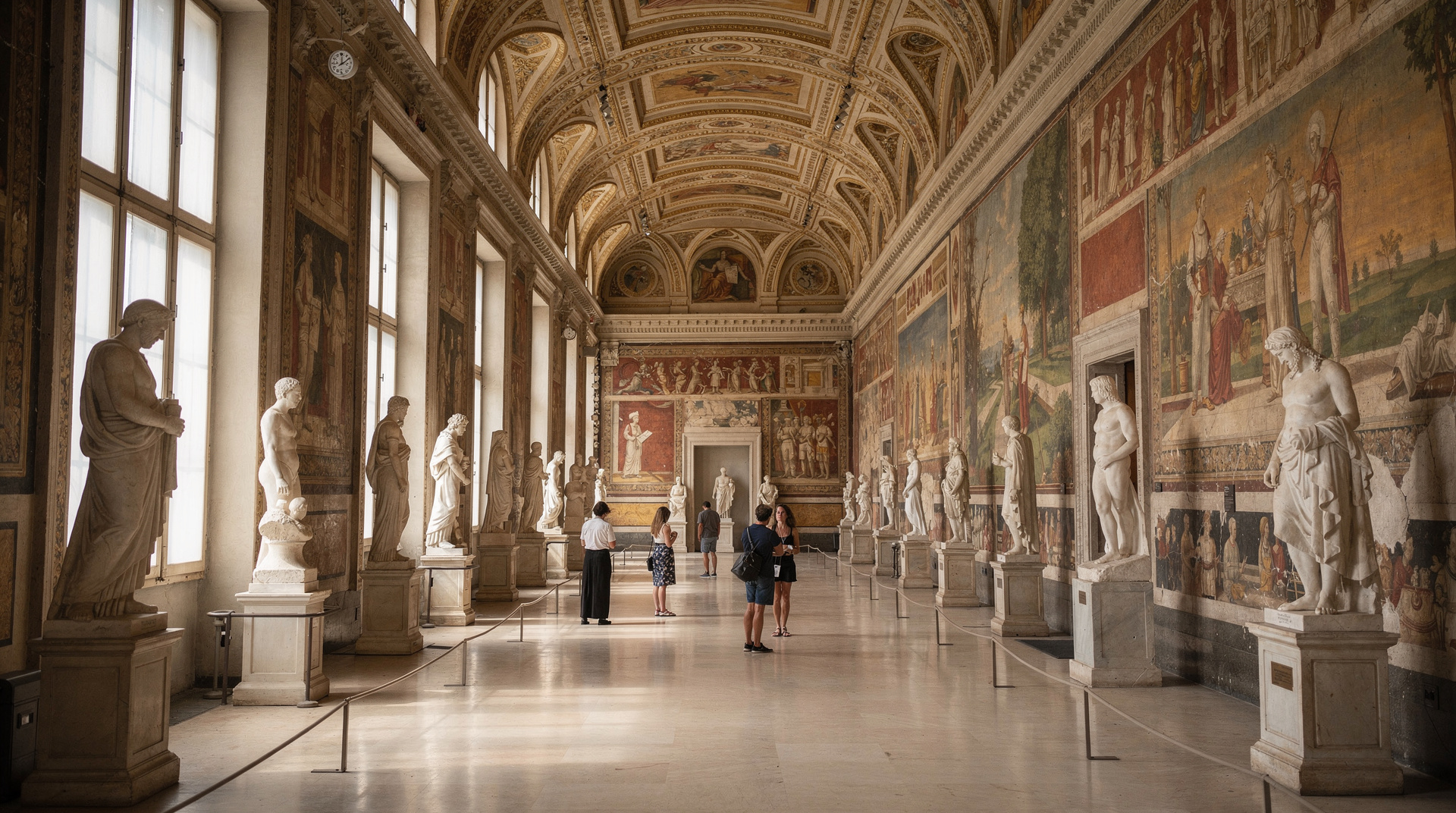
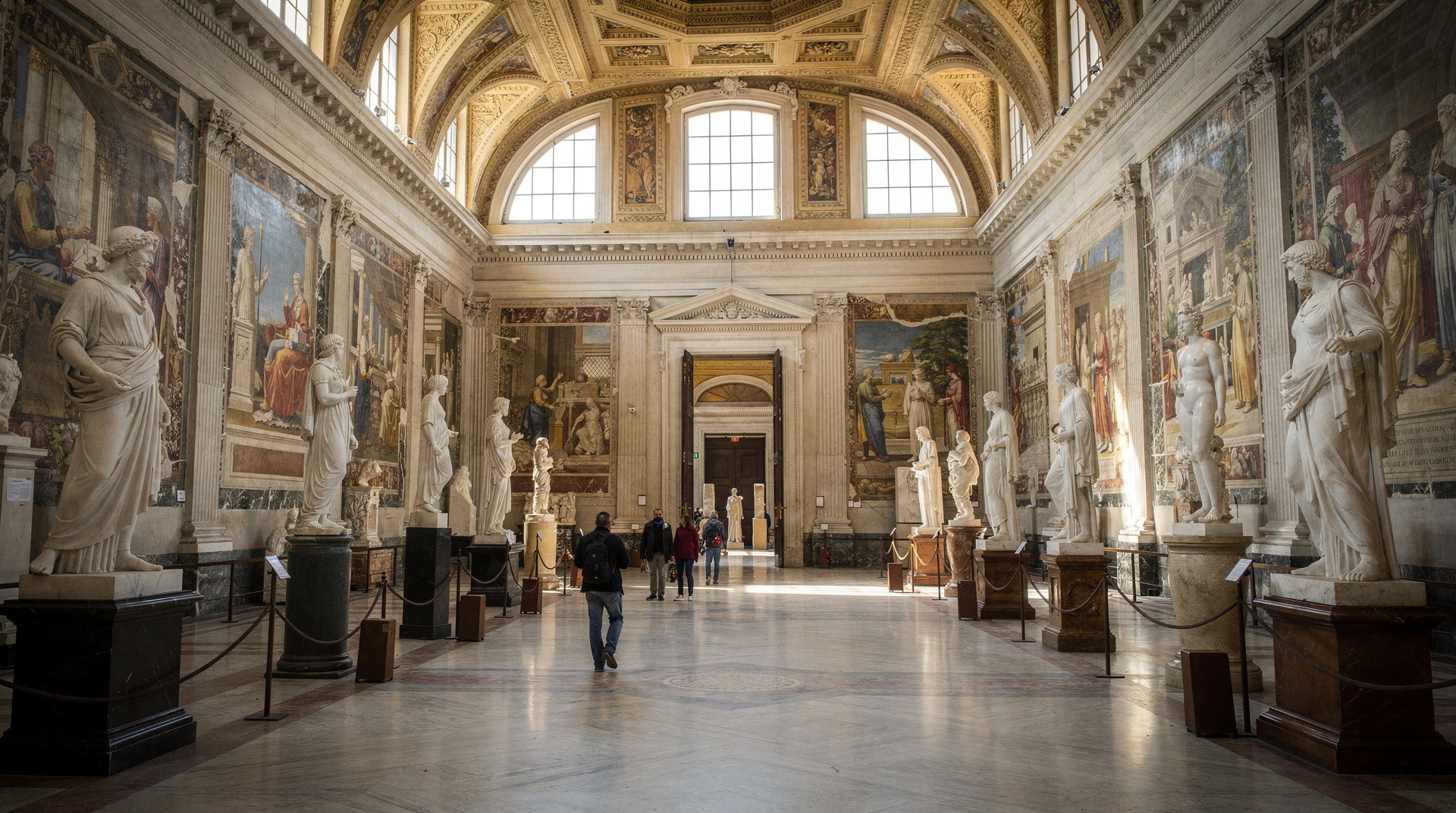
The Museo Archeologico Nazionale di Napoli is not a backup plan. It is one of the great museums in Europe and it happens to be indoors. Most visitors to Naples skip it in favour of the day trips — an error they often regret when they finally go — and a rainy day provides exactly the excuse needed to spend three or four proper hours inside it. Our full Naples Archaeological Museum (MANN) guide covers the room-by-room highlights if you want a plan before you go in.
The collections from Pompeii and Herculaneum alone justify the visit: mosaics that were floor decorations in private houses, bronzes from the Villa dei Papiri, frescoes removed and framed like paintings, the extraordinary Farnese collection of ancient sculpture. The Secret Cabinet — the room containing erotic art from Pompeii, once locked away for two centuries — is now fully accessible and genuinely interesting as both art history and social document.
Entry is €22. The building is large enough to absorb crowds without feeling cramped. A guided visit to the MANN makes particular sense here because the scale of the collection can overwhelm without some structure — a two-hour guided arc through the key rooms saves the confusion of working out what to prioritise.
Leave the MANN when the light starts to change, around 1pm, and head south through the Quartieri Spagnoli for coffee.
The Underground, Where Weather Is Irrelevant
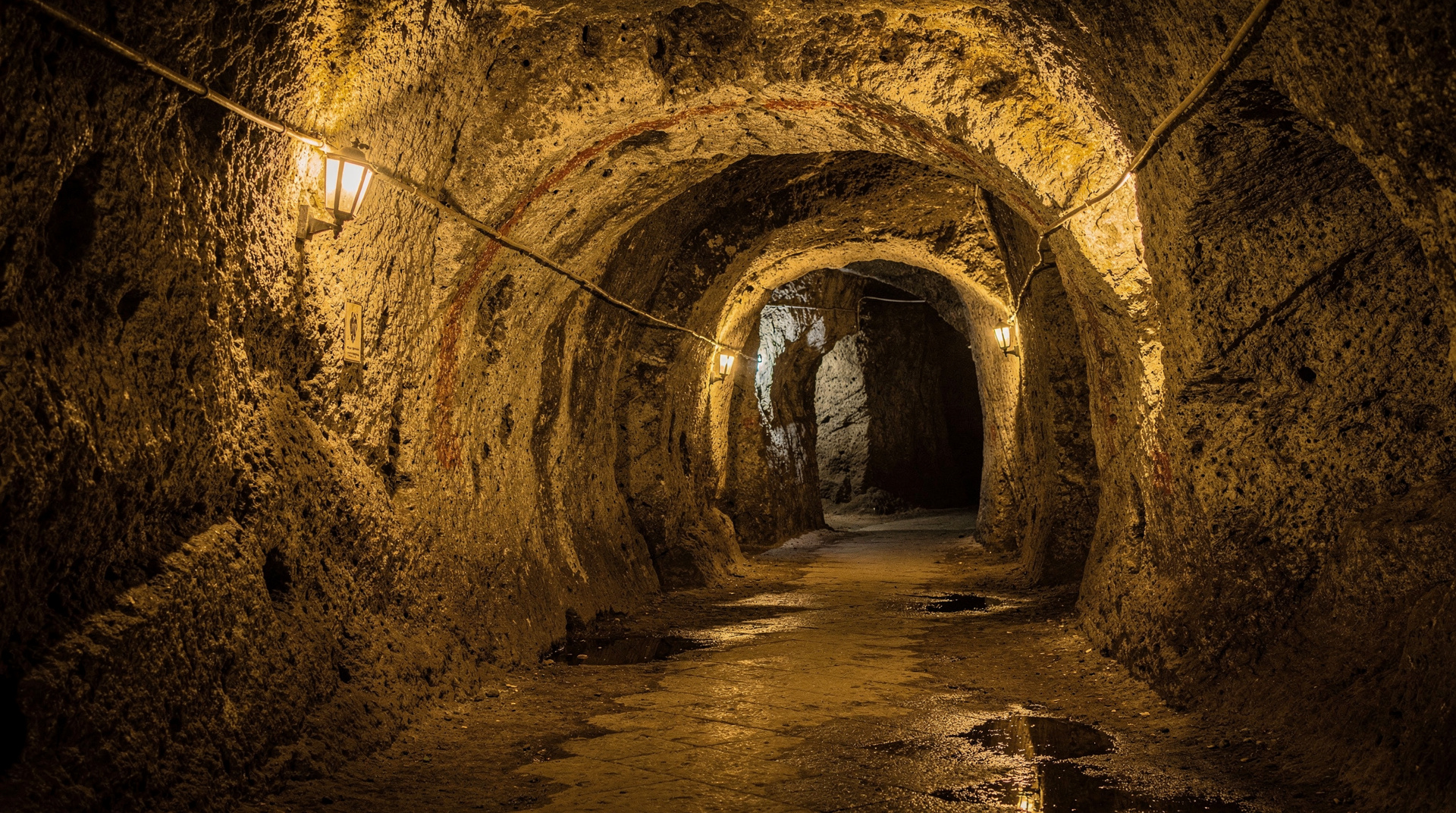
Below Naples, at a depth of around forty metres, there is an ancient Greek and Roman aqueduct system that runs for eighty kilometres under the city. It supplied water for two millennia, was converted to cisterns, then to a wartime shelter for twenty thousand people during Allied bombing raids in 1943, then forgotten, then rediscovered in the 1990s. The temperature underground stays at fourteen degrees year-round, regardless of what is happening on the surface. The full Naples underground guide compares the different underground tour options if you want to pick between them.
A guided tour of the Naples underground hidden city takes you through passages narrow enough that you carry your candle sideways, into cisterns where graffiti from 1943 sits next to Greek chisel marks from the third century BC, past the root systems of lemon trees hanging from above. It takes about ninety minutes and costs €15. It is one of the more genuinely surprising things you can do in Naples regardless of the weather, and on a rainy day it has an additional appeal: the city disappears entirely and you are somewhere else.
The main entrance is on Via dei Tribunali, which puts you in the heart of the old city for what comes next.
Via dei Tribunali: Baroque, Pizza, Coffee
The main artery of the ancient Greek Neapolis is lined with churches, most of which are free to enter and several of which contain things that would be headline attractions in a smaller city. San Lorenzo Maggiore has a Gothic interior and an excavated Greek agora beneath it. Gesù Nuovo has a facade of rusticated lava stone that looks like nothing else in the city. Santa Chiara has a cloister tiled in the majolica patterns that define Neapolitan decorative art — yellow lemons on white tiles, pastoral scenes, geometric borders — that is peaceful even when the rest of the city is not.
None of these charge entry. Duck into one when the rain gets heavy. Sit in the pew. Look at the ceiling.
At some point, stop at one of the pizzerias along Via dei Tribunali or the parallel Via Tribunali for lunch. In January and February, when the tourist volume is low, the queue at places like Di Matteo or Sorbillo is manageable. A margherita runs €5–7. The rain is irrelevant inside — our Naples pizza guide has the wider list if you want more options along the route.
Coffee on Via dei Tribunali is the neighbourhood bar with the old machine and the marble counter — not a café designed for tourists. Espresso is €1.10 to €1.30. Stand at the bar. Order, drink, leave.
Capodimonte for the Afternoon
If you still have energy after the MANN and the underground, Capodimonte — the Bourbon royal palace on the hill north of the centre — is a different kind of museum day. It sits in a large park that is genuinely appealing on a grey day when the summer crowds are absent, and the palace contains a picture gallery that most visitors to Naples never see. The Capodimonte museum guide has the full collection highlights and getting-there details.
The collection includes Caravaggio’s Flagellation of Christ, Titian’s Danae, Raphael, El Greco, Simone Martini’s Lippo Memmi. The second floor devoted to decorative arts — Capodimonte porcelain, the chinoiserie salottino from the Royal Palace, Bourbon tapestries — is extraordinary and almost always empty.
Entry is €15. A taxi from the centro storico runs about €12–15 in rain; alternatively the 178 bus from Via Toledo takes you directly up. Allow two hours. The park café, basic as it is, serves decent coffee and a place to sit and decompress.
Rainy-Day Options Compared
| Stop | Time needed | Cost | Why it works in the rain |
|---|---|---|---|
| MANN | 3–4 hours | €22 | Enormous indoor collection, never feels cramped |
| Naples underground | ~90 minutes | ~€15 | Constant 14°C, weather-irrelevant by design |
| Baroque churches (Via dei Tribunali) | 1–2 hours | Free | Duck in and out as showers pass |
| Capodimonte | 2 hours | €15 | Large park + gallery, quiet on grey days |
Beyond a Single Day
If the rain persists for more than a day, our best museums in Naples guide has enough indoor options to fill two or three full days without repeating yourself, and the Naples in winter guide covers the broader seasonal picture — what closes, what’s worth it, and how to pack for a genuinely wet week rather than just one afternoon shower.
End the Day with a Long Dinner
A rainy evening in Naples is the right time for the kind of dinner that takes two and a half hours and involves pasta, a secondo, a carafe of local wine, and no particular agenda. The tourist-facing restaurants on the waterfront are less appealing on grey evenings; instead, look towards the Quartieri Spagnoli or the residential stretch of Chiaia for trattorias where the menu is short and the food is the point.
Budget €35–50 per head for a full meal with wine and water at a mid-range trattoria. Neapolitan pasta dishes — spaghetti alle vongole, paccheri al ragù, vermicelli with clams and bottarga — are among the best things Italy produces and they taste particularly good when the city outside is dark and wet.
The rain, by then, is not a problem. It is just weather, and Naples has been inside it for a long time.