Surviving Naples and Pompeii in the summer heat
Nobody tells you how physical Naples in July feels. The city is built from volcanic stone and dark tufa that soaks up heat all day and breathes it back at you until well past midnight. Walk up the Spaccanapoli steps at 2 p.m. and the air is thick, still, and somewhere between a sauna and a very warm hug from a stranger. It’s not comfortable. It’s also, in its way, completely alive — the city doesn’t shut down, it just slows, relocates to the shade, and carries on differently.
If you understand what summer actually looks like here — at Pompeii, on the islands, in the street food queues — you can have one of the best trips of your life. If you arrive expecting the easy shoulder-season version, you’ll struggle. Our full Naples in summer guide covers the month-by-month picture if you want more detail than this survival-focused piece.
| Temps | 33–36°C in July/August |
| Pompeii strategy | Arrive at 9am opening, done by noon |
| Best cooldown | Ischia, Procida or Capri by hydrofoil |
| Avoid | Ferragosto fortnight (Aug 10–25) for restaurant closures |
| Carry | Water, sun protection, cash for street food |
What July and August actually feel like
Daytime temperatures in Naples in July and August regularly hit 33–36°C, and the humidity off the Bay amplifies it. The historic centre is beautiful but claustrophobic in the midday heat — the narrow streets trap air and the pavement radiates. The only relief is inside a bar with a frozen granita, inside a church (genuinely useful, completely free), or by the water.
August is the month that surprises first-timers most. The city changes character around the 10th and becomes almost eerie by ferragosto on the 15th. Many Neapolitans leave — for Ischia, for the family village in Campania, for anywhere cooler. Small family-run restaurants and local shops close for one to three weeks. What stays open tends to be the larger tourist-facing places. The Naples in August closures guide has the specifics on what shuts and for how long.
This isn’t a disaster — it just means you eat at different restaurants than you planned and make more use of street food, which runs year-round. The city has a strange August peace to it that some visitors find charming. But do not arrive on the 14th expecting to wander into your favourite Neapolitan trattoria for a proper dinner.
Pompeii: the only strategy that works
Pompeii in summer is a serious undertaking. The site covers 44 hectares of open ground, mostly unshaded, and the stone and pumice paths reflect heat upward like a grill. By 11 a.m. in July the temperature on site can feel a full five degrees hotter than the air — you are walking on the surface of an ancient Roman city that has been in direct sun since dawn. Our dedicated Pompeii in summer heat guide has a fuller hour-by-hour plan if this is the centrepiece of your trip.
The strategy that actually works is simple and non-negotiable: be at the ticket gate when it opens at 9 a.m., or better still, have pre-booked timed entry that gets you in at the first slot. Spend two to three hours exploring before the heat peaks. By noon, retreat to the shaded areas near the Forum or exit entirely. Everything else is suffering.
Pompeii guided tour from Naples with an archaeologist — a guided morning departure like this is the smart summer format. An expert keeps you moving efficiently through the key areas before the worst heat, and you don’t waste time working out where the Lupanare or the Villa of the Mysteries actually are.
Wear real sun protection — hat, high-factor sunscreen, light long sleeves if you tolerate them. Bring at least a litre of water more than you think you need. The drinking fountains inside the site work but are not always easy to find quickly when you’re wilting.
The island escape: your summer sanity valve
The Bay of Naples islands are the correct answer to almost every summer complaint. Ischia, Procida, and Capri are all reachable by hydrofoil from Molo Beverello in under an hour, and the temperature difference is perceptible the moment you’re on the water. A sea breeze at 28°C is a completely different thing from stagnant air at 35°C on the Spaccanapoli.
Ischia is the under-rated choice — larger, less fashionable than Capri, with actual beaches (Spiaggia dei Maronti, Citara) and thermal parks where you can sit in warm volcanic pools surrounded by pine trees. Entry to Giardini Poseidon thermal park runs around €35 for a full day. It’s wonderfully restorative after a morning at Pompeii.
Full-day Capri island tour including the Blue Grotto from Naples — Capri is the splurge option, and a guided full-day departure handles the ferry logistics and Blue Grotto timing, which in summer especially you want sorted before you arrive at the harbour.
Procida is the smallest and least touristed of the three, with a raw fishing-village atmosphere, good prices, and swimming off rocky platforms near the Corricella harbour. Hydrofoil from Naples takes about 35 minutes; a return ticket costs roughly €20.
Beaches within the city and close by
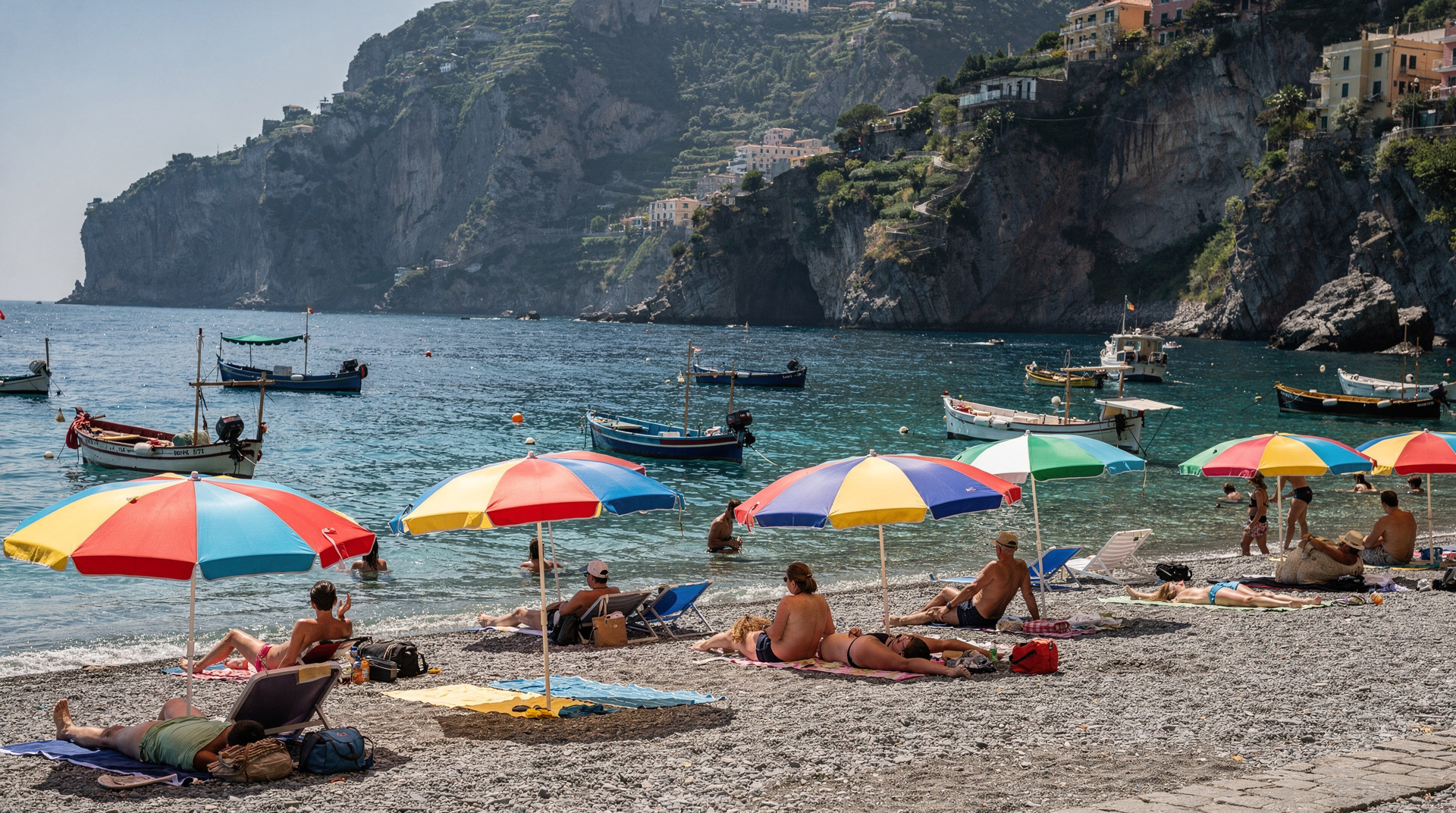
People forget that Naples itself has a waterfront — the Lungomare from Chiaia down to Posillipo has swimming spots, though the city beach at Mappatella is crowded and not the most pristine. Better options within easy reach include the beach at Bacoli (around 40 minutes by Circumflegrea train, free public beach) and the volcanic coast near Miseno. Our best beaches near Naples guide has the full list, including which ones are worth the extra travel time.
For something with cleaner water, head to the Cilento coast south of Salerno, or accept that the best summer swimming near Naples involves a boat or a ferry.
Summer Heat Strategy at a Glance
| Time of day | What to do |
|---|---|
| 6:30–9am | Pompeii/Vesuvius or island ferry departures |
| 9am–12pm | Peak sightseeing window before the worst heat |
| 12–4pm | Retreat indoors, long lunch, museum, or island thermal pool |
| 4–7pm | Second sightseeing window as temperatures ease |
| 7pm onward | Aperitivo, dinner, Lungomare walk |
Practical summer logistics
Start everything early. The Circumvesuviana to Pompeii-Scavi runs from Naples Garibaldi from around 7 a.m.; the journey takes 35–40 minutes and costs €2.80. Book Pompeii entry online in advance — in summer the queues without a reservation are real, and they add time you don’t want to spend in the sun.
Carry cash for street food and smaller bars; not everything has a card reader. A portable fan (under €10 from any pharmacy or street vendor) is not embarrassing — it is functional. The locals use them without shame.
The one genuine upside of summer heat in Naples is the city’s gelaterias and coffee bars, which perform at their absolute peak when demand is high. A granita di caffè con panna at 8 a.m. in a crammed bar is one of the city’s great summer pleasures, and it costs about €2.50. Some things about summer here are simply correct. If the heat still sounds like too much, our best time to visit Naples guide makes the honest case for shifting your trip to spring or autumn instead.