One Perfect, Unhurried Day on the Amalfi Coast
There are days on the Amalfi Coast that you plan meticulously and days that simply happen to you. The best ones are usually the latter — or at least, they feel that way in memory. This is an account of a day I did plan, carefully, but that unfolded with enough looseness to feel like luck.
The rule I gave myself: no buses. The coast road in high season is a single-lane theatre of honking and reversing, and I’ve spent enough time on it to know it will eat an hour from either end of your day. Instead, I’d move by boat and on foot, take the long lunches seriously, and not try to see everything. For the fuller planning version of this route, see our Amalfi Coast guide and Amalfi Coast day trip guide.
| Route | Naples → Positano (ferry) → Praiano (walk) → Ravello (ferry+bus) → Positano (sunset boat) |
| Total cost | Roughly €90–120 per person, transport + lunch + boat |
| Best months | Late April–May or September–early October |
| Booking ahead | Sunset boat cruise, yes; everything else, walk-up is fine |
| Physical demand | Moderate — about 90 minutes of coastal walking |
Positano Before the Crowds Arrive
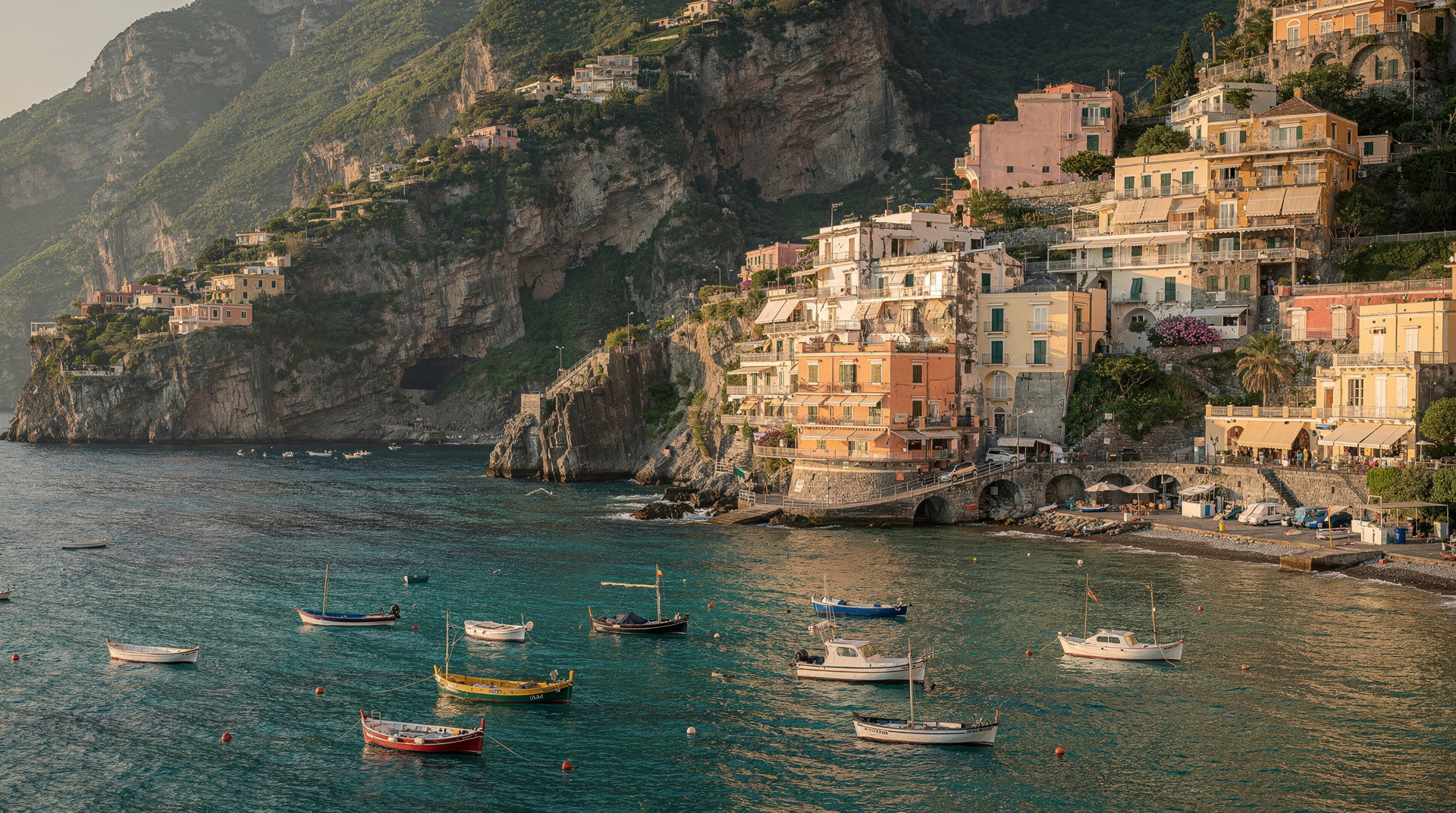
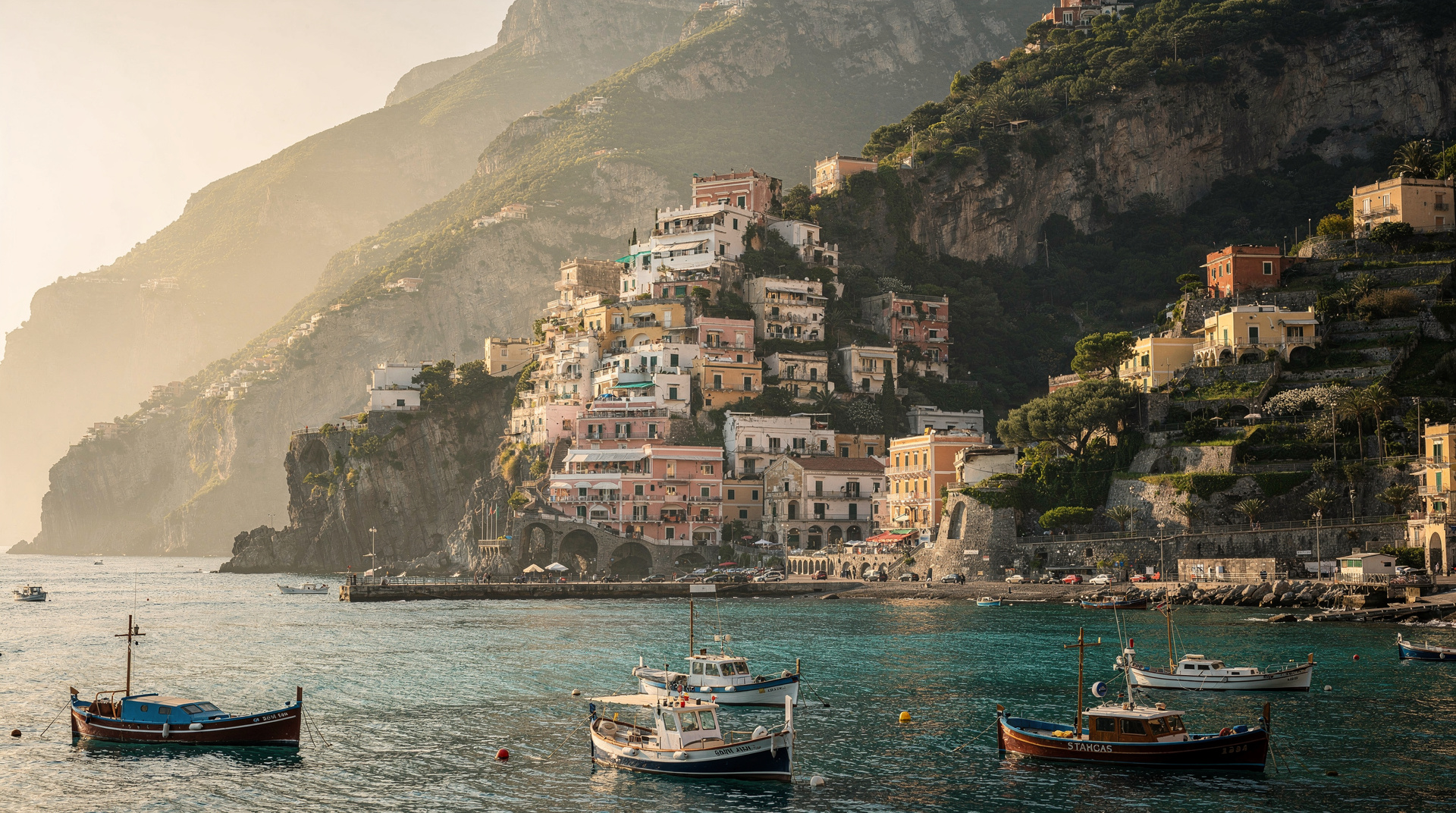
The ferry from Naples gets you into Positano around 9 a.m., and that first hour — before the day-trippers arrive from Sorrento — is genuinely different. The light comes in low over the hill, the waterfront cafés are setting out their chairs, and the narrow alleys below the church are still quiet enough that you can hear your own footsteps.
I walked up through the village slowly, stopping at a pasticceria on Via dei Mulini for a cornetto and a proper espresso. Around €1.50 for both, standing at the bar. Sit-down service at the terrace tables is a different price in a different universe — worth it once for the view, but not for a quick morning coffee.
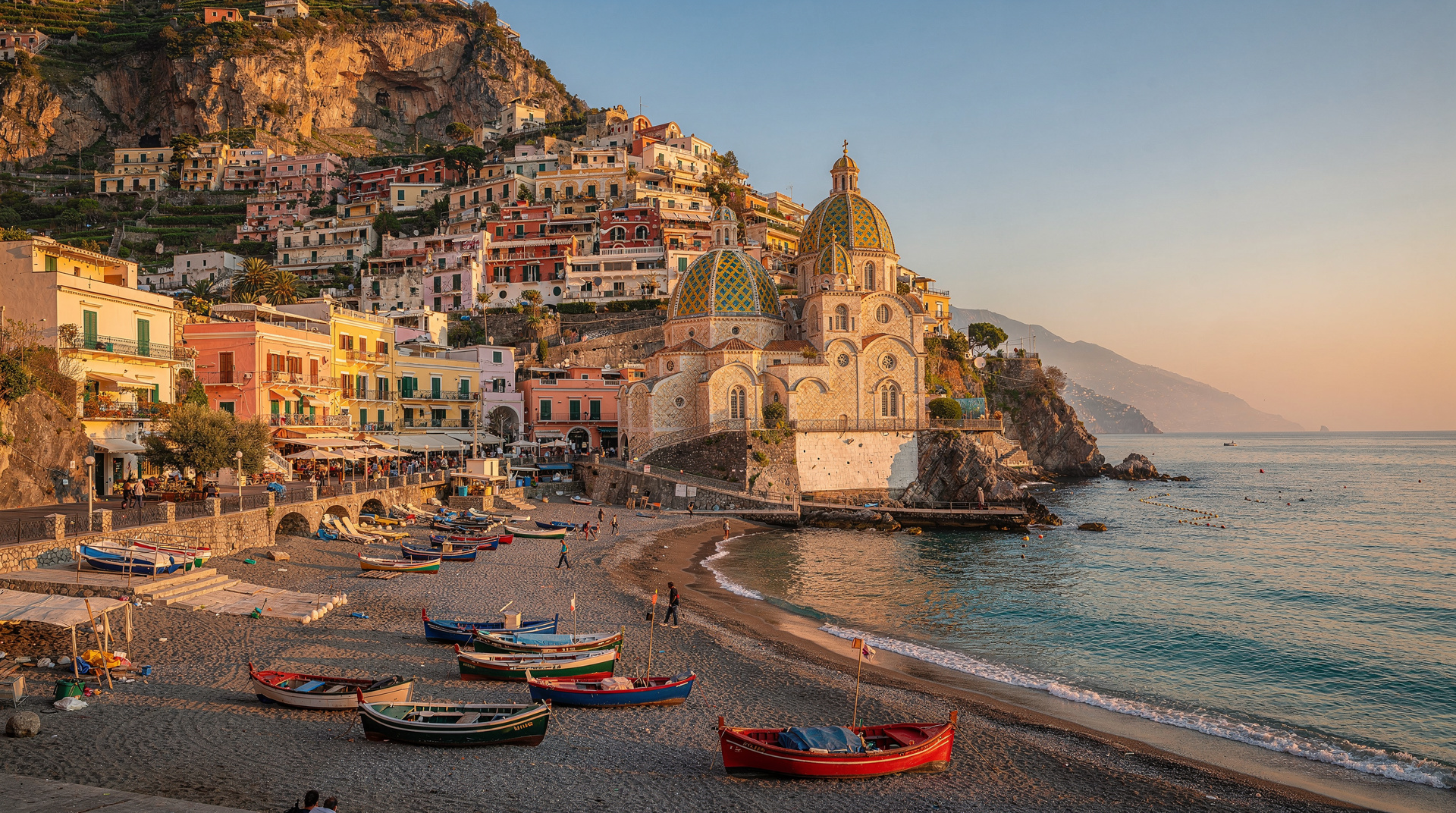
The church of Santa Maria Assunta is worth ten minutes of your time. The Byzantine icon inside is older than the town as most tourists know it, and the ceramic-tiled dome, seen from the beach, is one of those images that ends up on every postcard for a reason.
The Slow Walk to Praiano
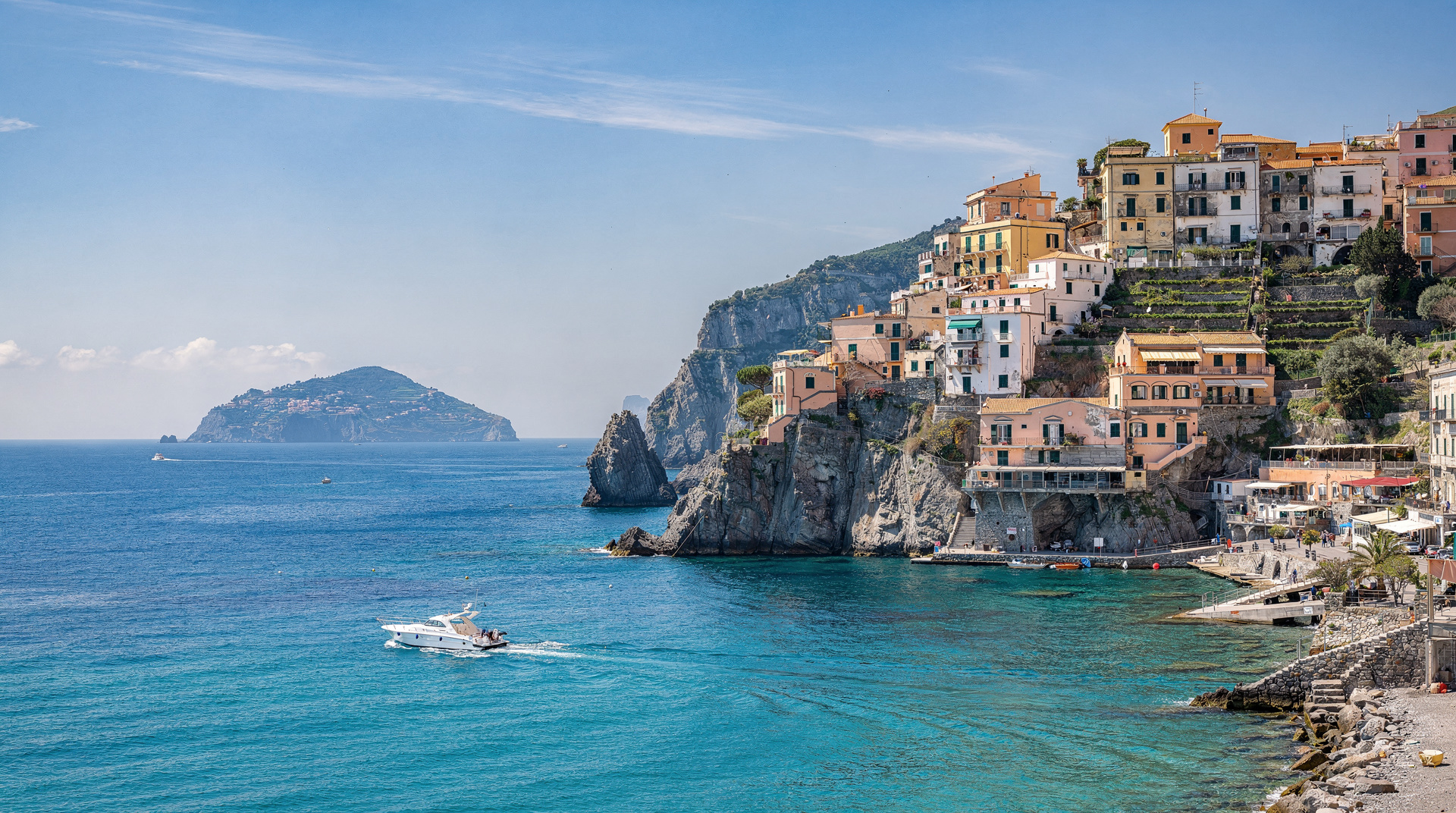
Most people don’t walk between Positano and Praiano. They should. The coastal path — the Sentiero degli Dei drops in from above, but the lower variant stays close to the sea — takes about an hour and a half at a relaxed pace and costs nothing except the effort. The views open up behind you as you go, Positano receding into the cliffside like a painting folding away.
Praiano itself is what Positano was in the 1960s, or so locals claim. I’m not sure the comparison is entirely fair — it’s quieter partly because it’s smaller and less photogenic — but the absence of tour groups is real, and the restaurants on the main drag charge about 30% less than their counterparts in Positano.
Lunch at a trattoria on the seafront: spaghetti alle vongole (€14), grilled fish of the day (€18), a carafe of the house white that tasted strongly of somewhere specific and cost €8. No complaints from anyone at the table.
Ravello in the Afternoon
From Praiano, a short ferry hop east to Amalfi town, then the bus up the valley to Ravello. The bus is unavoidable here and takes about 25 minutes — it’s fine. Ravello sits high above the coast, the air noticeably cooler, the noise of the sea entirely absent.
The Villa Rufolo gardens are the reason people come, and they deliver. Entry is €7. The terrace at the far end of the garden, where the cliff drops away and you can see the coast stretching in both directions, is the kind of place that makes you want to sit quietly for longer than is practical. I sat there for about forty minutes. It felt correct.
The town itself is small enough to walk completely in an hour — the cathedral, the main piazza, the belvedere at the end of the promontory. It works best at this hour, late afternoon, when the light has gone golden and the day-trippers have already started heading down.
Why This Sequence, Specifically
The order matters more than it might seem. Positano first, early, catches the town at its most photogenic and least crowded — arrive after 10am in summer and you’re sharing the alleys with day-trip coaches from Sorrento. Praiano in the middle of the day works precisely because it has no headline attraction to rush toward; it’s a lunch stop, not a sight, and treating it that way is what makes it good. Ravello last, in the golden hour, is when its gardens do the most work — the same terrace at midday, under a flat white sun, is a different and lesser place.
If you’d rather not manage each leg independently, the best beaches Amalfi Coast guide and where to stay on the Amalfi Coast guide are useful for building variations on this day around your own base, whether that’s Positano, Praiano or Sorrento.
The Boat Back at Sunset
This is the part I planned most carefully and the part that made the day. Instead of retracing the journey back by bus and road, I’d booked a small-group evening boat from Positano that times its return run to catch the sunset on the water.
The sunset prosecco cruise departs Positano in the early evening and runs along the coast as the light changes. It’s not a private charter — there were about twelve people aboard — but the format is relaxed enough that it doesn’t feel packaged. Prosecco, the cliffs in the last of the light, and a slower re-entry to reality than any bus ride provides. Around €45 per person for the evening.
If you’re coming from Naples and want to see Positano and Amalfi without the logistics of organising each leg independently, the small-group Amalfi Coast day trip from Naples covers the main stops with a guide who handles the transport — a sensible option if you’re only here for one day and don’t want to spend it problem-solving ferries.
What Made It Work
The honest answer is: low expectations, early start, and saying no to a few things. I didn’t go to the Blue Grotto. I didn’t try to fit in Capri. I ate lunch somewhere no one had recommended to me. I spent forty minutes in a garden looking at a view.
The Amalfi Coast rewards this approach more than almost anywhere else I’ve travelled. The scenery is so relentlessly beautiful that slowing down doesn’t cost you anything — you just see more of the same extraordinary light from fewer, better vantage points.
If your itinerary has room for more than one day, the Positano guide covers what a second, less rushed day in the town itself looks like — worth reading before you decide whether to extend the trip.
One day is not enough. But one perfect, unhurried day is entirely possible.