Caravaggio in Naples: seven works across three churches and a museum
Naples: National Gallery of Capodimonte Tour with Art Historian
Where are Caravaggio's paintings in Naples?
Caravaggio painted multiple works during two stays in Naples (1606–1607 and 1609–1610). The Seven Works of Mercy is at the Pio Monte della Misericordia near the Duomo. The Flagellation of Christ is at the Capodimonte Museum. The Salome with the Head of John the Baptist is at the Royal Palace. A Judith and Holofernes is disputed. Six confirmed works remain in Naples.
In 1606, Michelangelo Merisi da Caravaggio — the most disruptive painter in Italian history, responsible for a visual revolution that permanently altered how European art depicted light, shadow, and ordinary human flesh — killed a man in a street fight and fled Rome under a death sentence. He ended up in Naples.
The circumstances of his flight shaped the work he made here. An artist on the run, working under constant awareness of legal jeopardy, separated from the Roman patronage networks that had sustained him — these conditions produced some of the darkest, most concentrated paintings of his career. Naples received him with commissions and money. The city received from him, in return, a body of work that remains in Naples, visible in the buildings where it was intended to hang.
| Where | Pio Monte della Misericordia, Capodimonte Museum, Royal Palace |
| Cost | Around €7 + €12 + €6–8 for all three sites |
| Time needed | Half a day for the centro storico sites; a separate afternoon for Capodimonte |
| Getting there | Pio Monte and Royal Palace are walkable in the centro storico; Capodimonte needs a taxi, bus, or shuttle |
| Best time | Weekday mornings before 10am, especially at Pio Monte della Misericordia |
Why Naples received Caravaggio
Naples in 1606 was under Spanish viceregal rule — outside the direct jurisdiction of the Papal States and the papal warrant that had declared Caravaggio subject to summary execution. The Spanish viceroy’s administration had no particular incentive to extradite a Roman fugitive for a killing that had occurred in Rome, particularly when the fugitive was the most famous painter in Italy.
The Neapolitan nobility and the major charitable institutions of the city understood immediately who had arrived. Commissions came quickly. The Pio Monte della Misericordia — a confraternity founded in 1601 to fund charitable works among Naples’ poor — had been planning a major altarpiece for their new church near the Duomo. They approached Caravaggio within months of his arrival. The result was the most important single painting in Naples.
The Seven Works of Mercy: the masterpiece
The Seven Works of Mercy (Sette Opere di Misericordia Corporale, 1607) hangs in the octagonal chapel of the Pio Monte della Misericordia on Via dei Tribunali 253 — a short walk from the Naples cathedral (Duomo) in the heart of the centro storico.
The painting depicts all seven acts of corporal mercy mandated by Catholic tradition — feeding the hungry, giving drink to the thirsty, clothing the naked, sheltering the stranger, visiting the sick, ransoming prisoners, and burying the dead — compressed into a single Naples street scene. The setting is specific and recognisable: a narrow Neapolitan street, probably the Spaccanapoli area, at night, with the artificial light that characterises all of Caravaggio’s mature work. The Virgin and Child float above the street scene on what appears to be a balcony, attended by two angels, observing what is happening below.
The painting works simultaneously as theology (the seven mercies all present) and as social document (the setting is poor Naples, not idealised antiquity). The figures performing the acts of mercy are not saints but ordinary people — a man giving water to a prisoner through bars, a man using his cloak to shelter a naked beggar, a family burying a body in the shadows. Caravaggio’s characteristic technique — chiaroscuro at its most extreme, with figures emerging from and dissolving into darkness — gives the entire scene the quality of a lantern-lit street glimpsed at night.
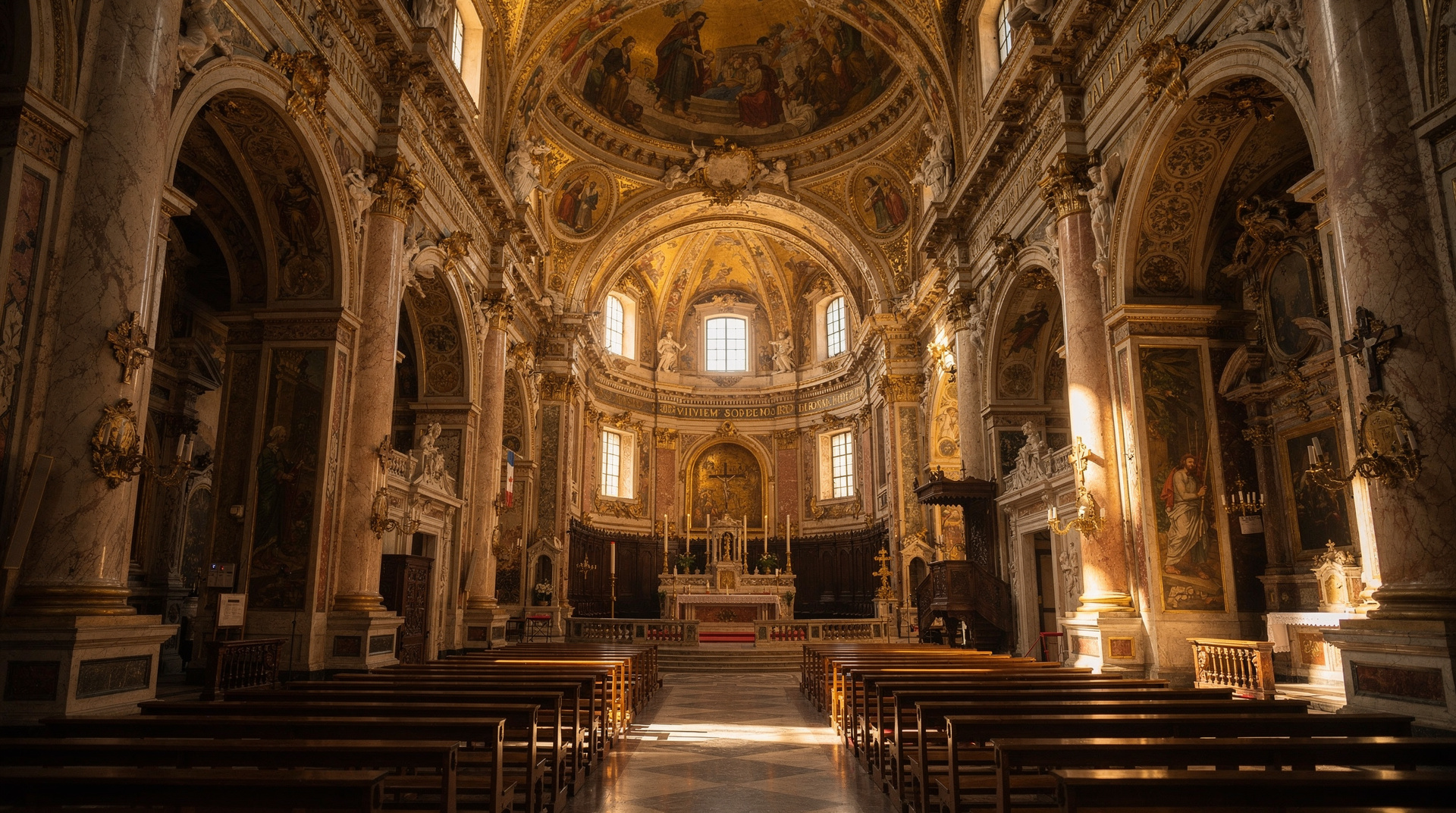
Practical details: The Pio Monte della Misericordia is a small museum with the original altarpiece in its original location. Hours: daily 9:00–18:00. Entry €7. The museum also contains a gallery of later Neapolitan paintings commissioned by the Pio Monte. The chapel itself — where the Seven Works hangs in the position it was designed for — is the reason to come. Allow 45–60 minutes.
For visitors who prefer a guided introduction to the Seven Works and the wider Duomo art district, a small-group option covers the historic centre’s key artworks with a knowledgeable guide rather than a self-directed walk.
The Capodimonte Caravaggios
The Capodimonte Museum on the northern hill holds two Caravaggio works from his first and second Naples stays.
The Flagellation of Christ (1607 or 1609). Commissioned for the church of San Domenico Maggiore, this large altarpiece depicts the moment before the crucifixion — Christ bound to a pillar, soldiers preparing to whip him. The scene is characteristic Caravaggio: Christ’s body illuminated against darkness, the tormentors’ faces in half-shadow, the violence suggested in posture and expression rather than depicted with theatrical excess. The painting was transferred to Capodimonte in the 19th century and is now in Room 78 of the museum.
Judith Beheading Holofernes (sometimes attributed). Attribution of this work is disputed among scholars — some consider it a Caravaggio, others attribute it to followers. If genuine, it is from his Naples period. The Capodimonte conservators will explain the current status of the attribution discussion on request.
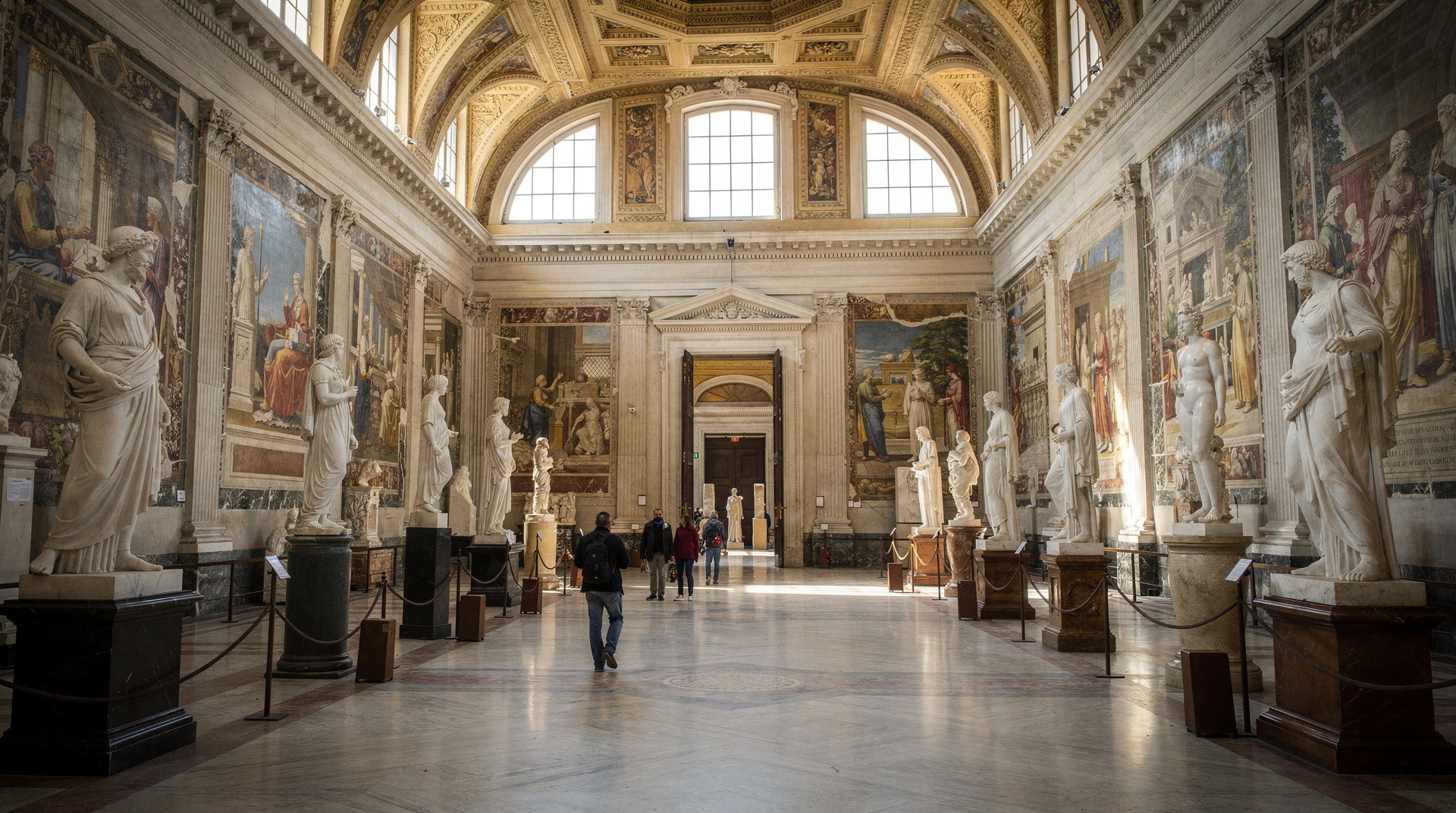
Practical details for Capodimonte: The museum is on the Capodimonte hill, accessible from the centro storico by taxi (about 15 minutes from Piazza Dante), bus 168 or C63 from Piazza Cavour, or the Capodimonte free shuttle that runs from Piazza Trieste e Trento. Hours: Thursday–Tuesday 9:00–19:00, closed Wednesday. Entry €12. The Farnese collection (Titian, Raphael, Bellini, El Greco, Bruegel the Elder) justifies the trip independently of the Caravaggio pieces.
Given the museum’s size and the density of its collection, a guide who can point directly to the two Caravaggio rooms and explain the Farnese holdings saves real time versus wandering unassisted.
Capodimonte Museum guided tour with art historianWhere else to see Naples’ religious Baroque art
Caravaggio’s influence on Naples did not end with his own paintings — the churches of the centro storico are dense with the Neapolitan Baroque he helped set in motion. The Naples Archaeological Museum (MANN) is a different kind of collection (classical antiquity rather than painting) but sits within easy walking distance of the Caravaggio route and is worth combining if you have a full day for art in Naples. Cappella Sansevero, a short walk from the Duomo, holds the famous Veiled Christ sculpture and an extraordinary Baroque interior — not a Caravaggio site, but thematically continuous with the same period of Neapolitan religious art and commonly visited on the same day.
Cappella Sansevero and Veiled Christ skip-the-line guided visitSalome and other works in the Royal Palace
The Royal Palace (Palazzo Reale) contains a late Caravaggio — the Salome with the Head of John the Baptist, dated to approximately 1609–1610. This is a smaller painting than the major commissioned works, possibly intended as a gift rather than an altarpiece. The subject — Salome receiving the severed head of John the Baptist on a platter — was one Caravaggio returned to repeatedly in his late career, and the interpretation here is notably intimate and psychologically ambiguous.
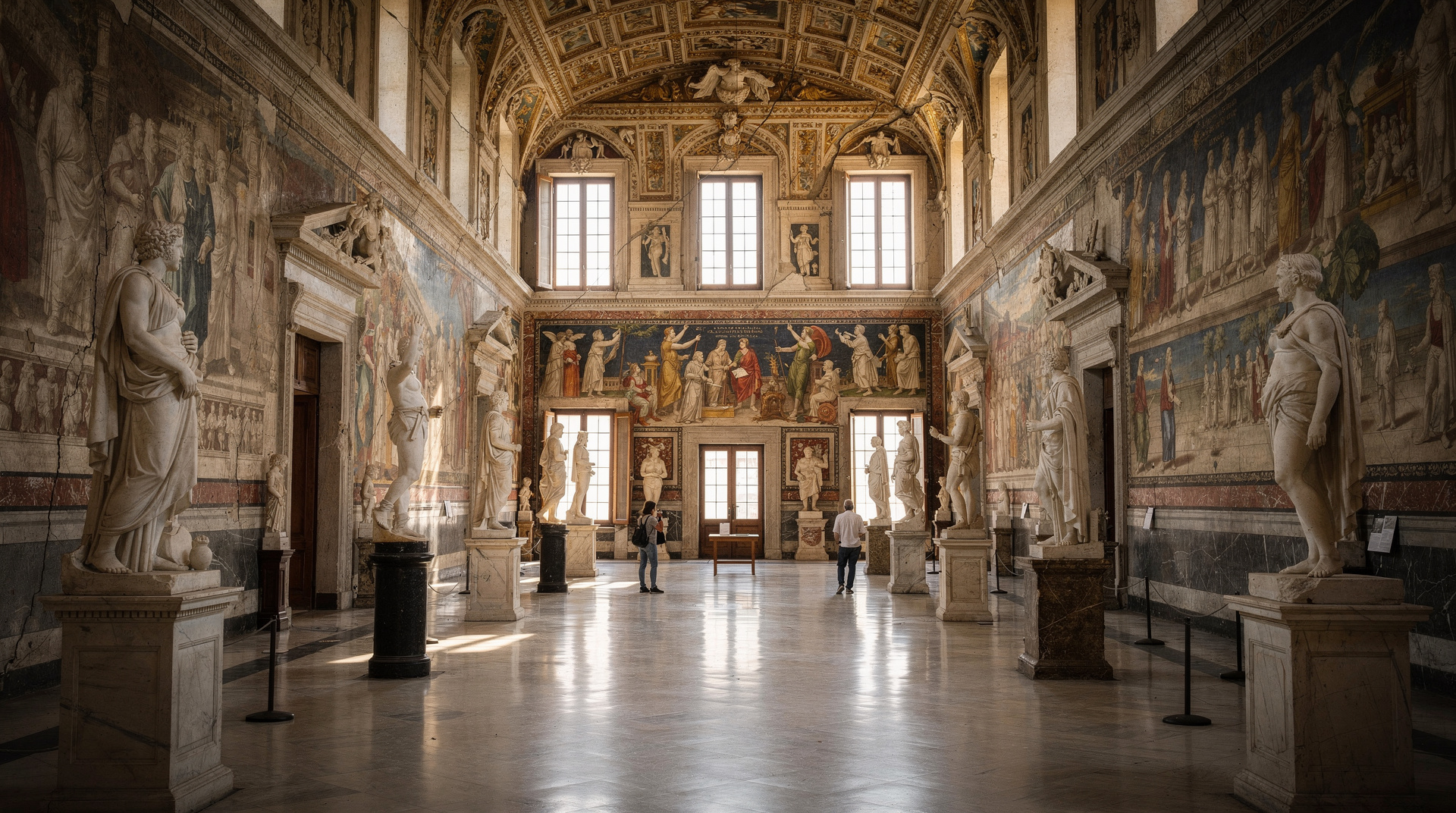
Practical details for the Royal Palace: Open daily except Wednesday. Entry €6–8. The royal apartments are the main attraction; the Caravaggio is in the picture gallery section. The building also contains the historic royal library (Biblioteca Nazionale) with separately arranged access.
The context: Caravaggio and Neapolitan Baroque painting
Caravaggio’s two stays in Naples (1606–1607 and 1609–1610) had a substantial and lasting impact on Neapolitan painting. The Caravaggesque style — extreme chiaroscuro, working-class or poor figures in religious scenes, psychological intensity over classical idealism — was absorbed by local painters who developed it into the Neapolitan Baroque: one of the most distinctive regional schools in Italian art.
The major Neapolitan Baroque painters — Jusepe de Ribera (Spanish, working in Naples), Battistello Caracciolo, Artemisia Gentileschi (who spent significant time in Naples), Francesco Solimena — were directly or indirectly influenced by what Caravaggio did in the city. The Capodimonte museum holds a substantial collection of their work alongside the Caravaggios, making it the best single place to trace the line from Caravaggio’s influence to the mature Neapolitan Baroque tradition.
The second stay and the attack
Caravaggio left Naples in 1607, apparently attempting to reach Malta — where the Knights of Malta had the authority to grant pardons and were potential patrons. He did receive the Maltese knighthood he sought, but was expelled from the order in 1608 following another violent episode and fled to Sicily, then returned to Naples in 1609.
In the autumn of 1609, an attack in Naples — described in contemporary sources as an ambush at a tavern door — left Caravaggio seriously injured, apparently with facial disfigurement severe enough that contemporary letters described him as ‘almost dead’. He continued to paint: the Martyrdom of Saint Ursula (now in the Banco di Napoli collection, sometimes shown at Capodimonte) and the Salome are generally dated to this post-injury period.
In July 1610, Caravaggio sailed north apparently heading for Rome — a papal pardon had reportedly been arranged. He died at Porto Ercole on the Tuscan coast on 18 July 1610, cause unknown (fever, sunstroke, and old wound infection are all proposed). He was approximately 38 years old. The papal pardon had reportedly already been issued — he died days before it reached him.
A walking route for Caravaggio in the centro storico
Starting from Piazza del Duomo, a half-day can cover the main centro storico Caravaggio sites:
- Pio Monte della Misericordia (Via dei Tribunali 253) — 45 minutes for the Seven Works
- Naples cathedral (Duomo) — 5-minute walk, to see the Chapel of San Gennaro and the overall Duomo context (no Caravaggio here but essential Naples context)
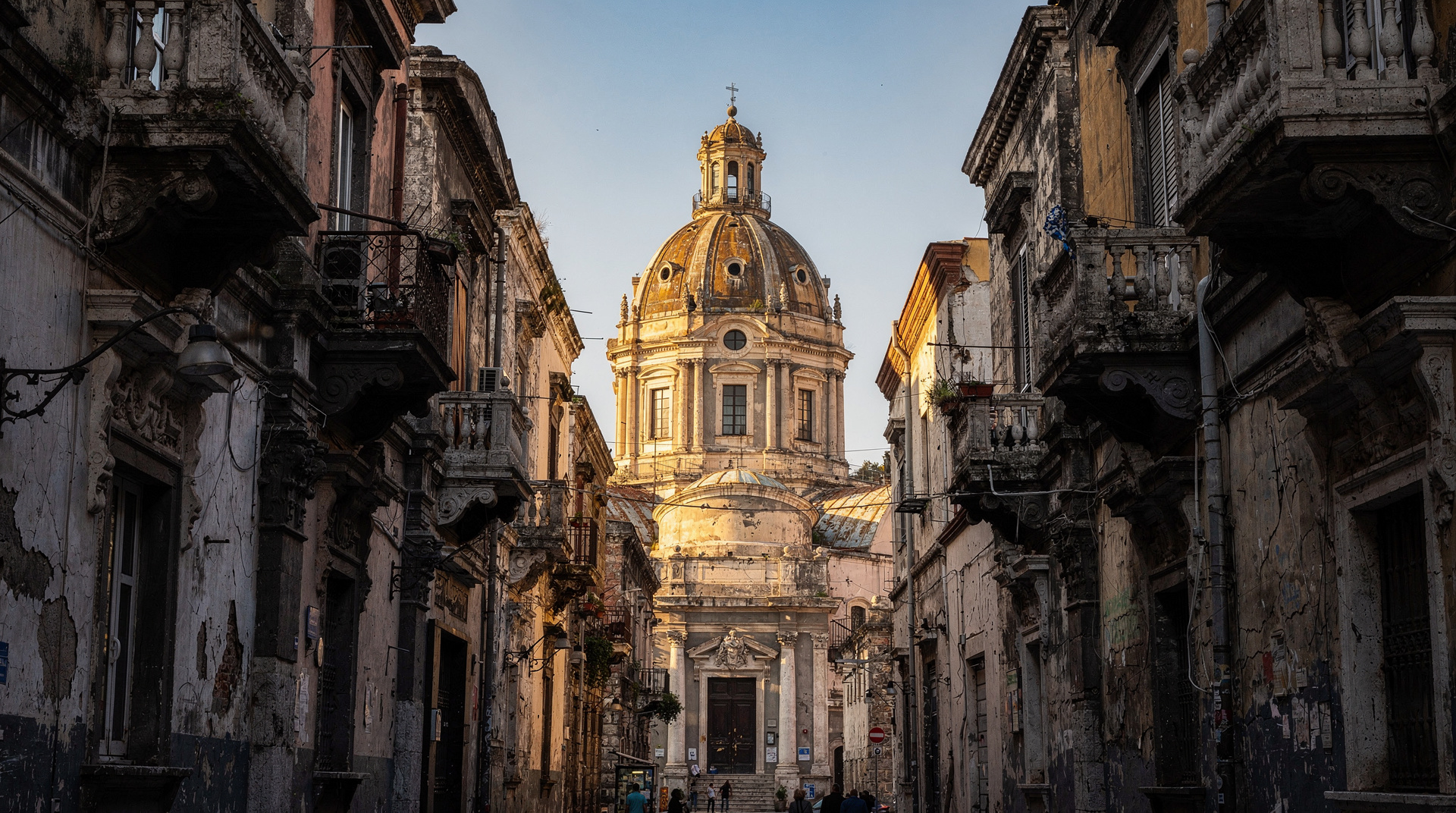
- Spaccanapoli walk — the street itself as the likely visual reference for the street scene in the Seven Works
- Walk through the centro storico toward San Domenico Maggiore — Caravaggio’s Flagellation was commissioned for here (the painting itself is at Capodimonte, but seeing the original chapel space is interesting)
The Capodimonte visit is a separate afternoon — the museum requires 2–3 hours minimum and is in a different part of the city.
Frequently asked questions about Caravaggio in Naples
Is the Seven Works of Mercy the most important Caravaggio in Italy?
It is one of the most important. The competition for the single most significant Caravaggio is between the Seven Works in Naples, the Calling of Saint Matthew in Rome (San Luigi dei Francesi), and the Conversion of Saint Paul (Santa Maria del Popolo, Rome). The Seven Works is unique in its compositional ambition — depicting seven separate actions in a single canvas — and its integration of Neapolitan street reality with religious iconography.
Can I photograph the Seven Works of Mercy?
Photography without flash is permitted at the Pio Monte della Misericordia. The painting is in a relatively small octagonal chapel with controlled lighting; a phone camera with night mode captures the painting reasonably well.
Are there other Caravaggio works visible outside Naples proper?
Caravaggio’s Annunciation is in the Musée des Beaux-Arts in Nancy, France. His works in Italian collections outside Naples include the significant pieces in Rome (Santa Maria del Popolo, San Luigi dei Francesi), Florence (Uffizi), Milan (Pinacoteca di Brera and Ambrosiana), and Messina (Museo Regionale). If you are planning a broader Italian art trip, the Naples Caravaggios represent the artist’s late period and should be seen in conjunction with the Roman works for the full trajectory.
Is there a connection between Caravaggio and Naples’ culture of darkness?
This is a recurring interpretive point in art history: that Naples, with its tightly packed lanes, the deep shadows of its streets and the violent reality of its poverty, was the right city for Caravaggio at this stage of his life. The Seven Works has a nocturnal urban quality that reads as specific to Naples — not generic Italian city life, but the specific Spaccanapoli light quality, the density of bodies in a narrow street, the mixing of poverty and charity that was visible in the city’s religious confraternity culture.
How does seeing Caravaggio in the original setting compare to a museum?
The Pio Monte della Misericordia is one of the few places in Europe where a major Caravaggio is seen in the architectural context it was painted for. The Seven Works was painted for this specific octagonal chapel, for this specific lighting angle, to be seen from this specific distance. No matter how good the lighting in a modern museum, this is not replicable. The difference in the viewing experience is substantial.