Naples Pizza-Making Class — Honest 2026 Review (Learn from a Real Pizzaiolo)
Naples: Pizza Making Workshop and Lunch
Naples is the city that invented pizza as the world knows it — and a hands-on class with a working pizzaiolo is one of the most satisfying ways to engage with that history. This review of the Naples pizza school and lunch experience covers what you actually do, what the teaching is like, who the format suits, and whether the price is justified.
| Where | Centro storico, Spaccanapoli or Quartieri Spagnoli |
| Cost | around €30–65pp depending on drinks/inclusions |
| Time needed | 2–3 hours |
| Getting there | Walkable from central Naples accommodation |
| Best time | Book 48–72h ahead; a week ahead in July/August |
If you want the broader context of Neapolitan pizza before or after the class, the Naples pizza guide is the natural companion piece — it covers the history and the AVPN rules this class puts into practice.
What you actually do: dough, stretching, topping, and the oven
The session begins with the dough — and this is where most people realise pizza-making is harder and more intuitive than any YouTube video suggests. Your dough ball has already been proofed (fermented for at least 8 hours, sometimes 24), so the first task is learning to stretch it by hand using the classic Neapolitan slap-and-rotate technique. No rolling pins. The AVPN (Associazione Verace Pizza Napoletana) tradition explicitly prohibits them, and you will understand why the moment you feel the air pockets respond to your palms rather than being crushed flat.
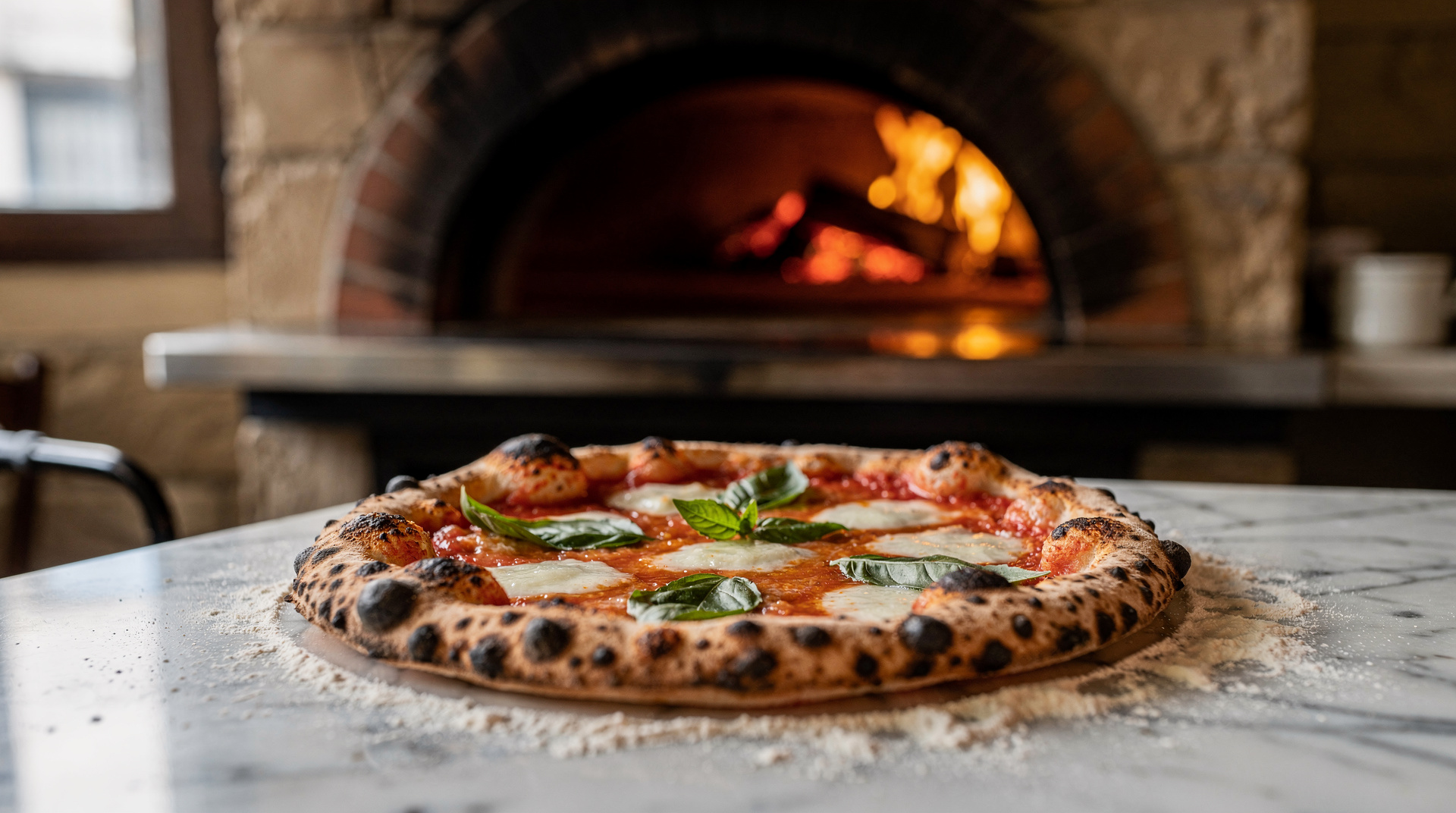
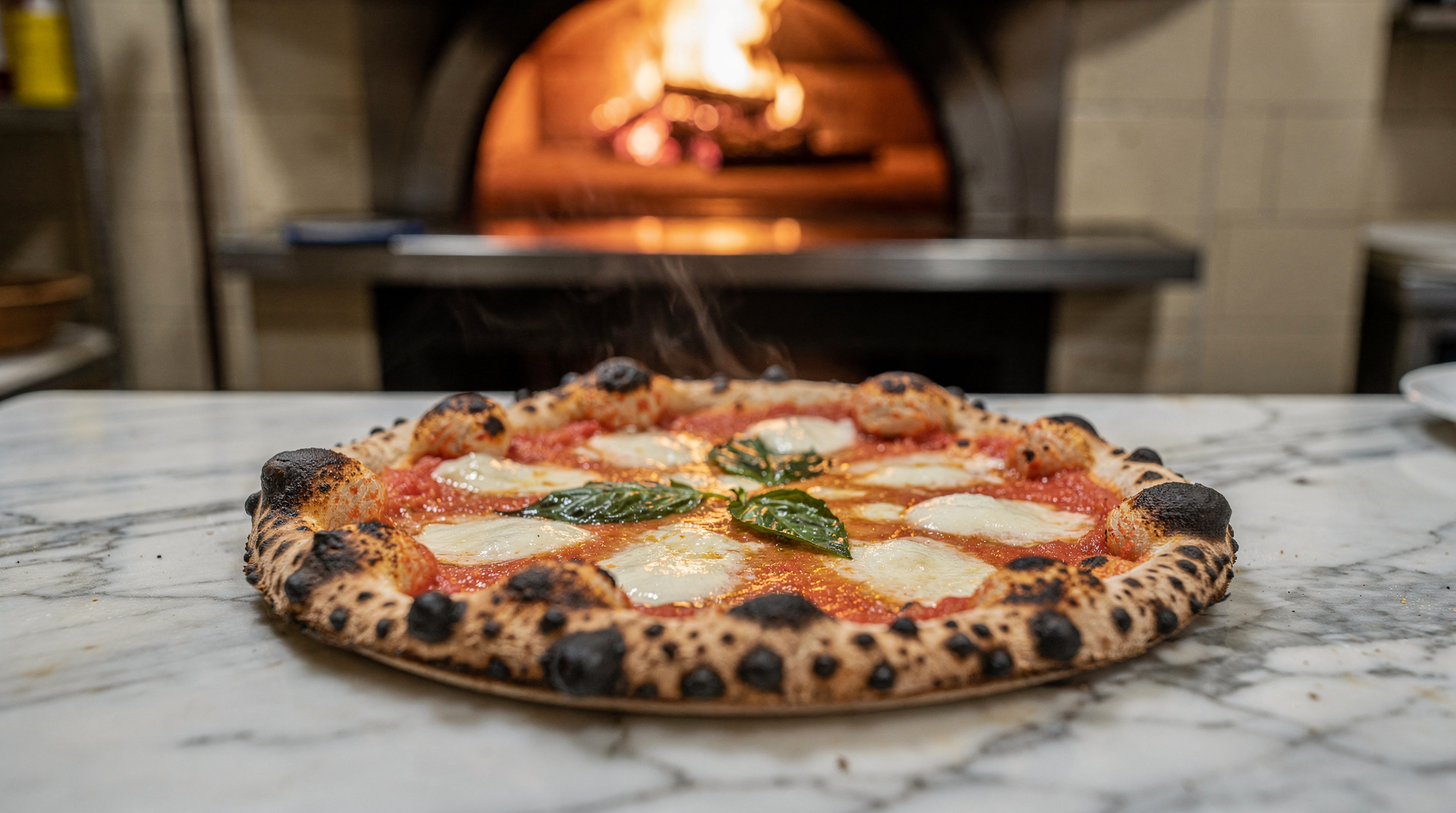
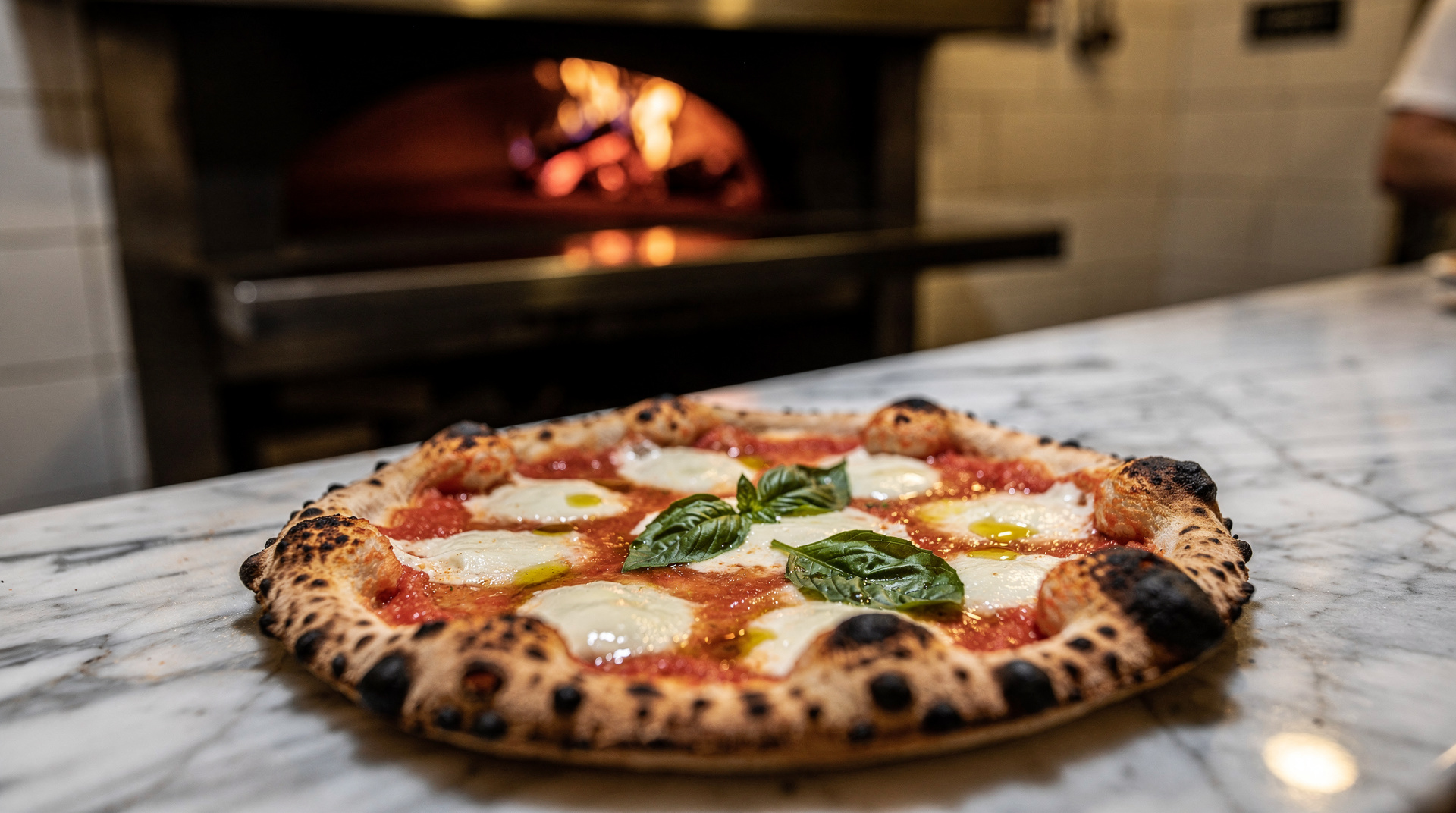
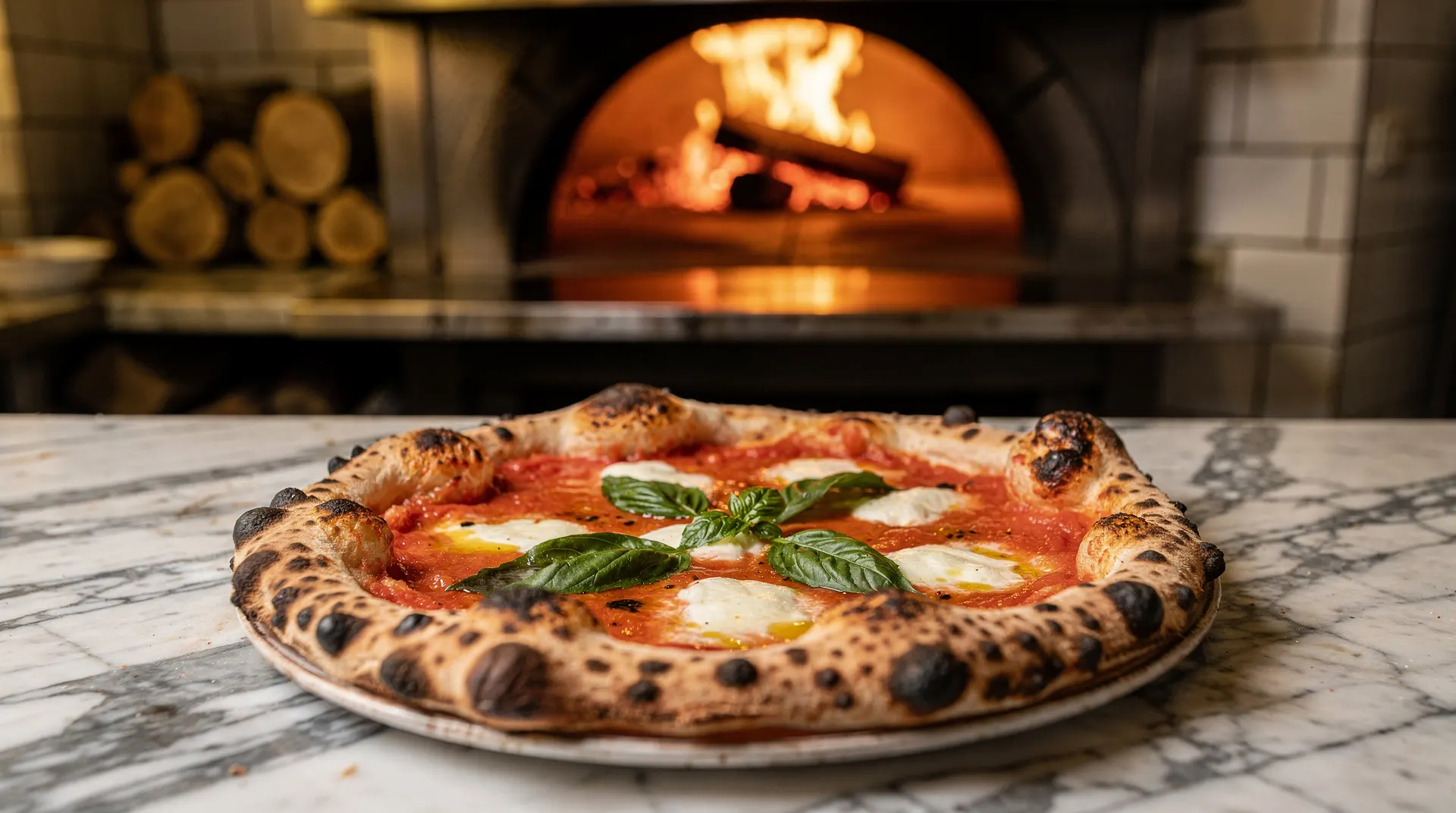
Toppings come next. The canonical Margherita uses San Marzano DOP tomatoes — crushed by hand, never cooked beforehand — spread in a spiral leaving a 2 cm cornicione border. Fior di latte (fresh cow’s milk mozzarella from the Agerola area) goes on in torn pieces rather than slices, which allows it to melt unevenly into golden pools rather than turning rubbery. A drizzle of cold-pressed Campanian olive oil and a single basil leaf added after the bake complete the picture. It is a short list of ingredients by design; the AVPN specifications exist precisely because each one matters.
The wood-fired oven runs at 450–480°C. Your pizza goes in on a long-handled peel, rotates once at the 45-second mark, and is out in roughly 90 seconds with a leopard-spotted crust and a lightly charred underside. Watching it happen is satisfying. Doing it yourself — even with the instructor guiding the peel — is genuinely thrilling.
The pizzaiolo’s teaching: technique over performance
The quality of a cooking class lives or dies with the instructor, and Naples pizza classes generally attract working pizzaioli who use the same techniques professionally. Expect a confident, hands-on style: they demonstrate once, then put you to work rather than lecturing. Questions are welcomed mid-dough. The 90-second bake is explained not as a party trick but as a consequence of oven temperature and hydration level — context that makes the technique stick.
The class with a local pizzaiolo in a neighbourhood setting tends to offer the most candid instruction: smaller groups, a working kitchen rather than a demo space, and an instructor who bakes for paying customers the same evening. Some operators run classes in dedicated teaching facilities, which are more polished but can feel less like the real Naples. Both formats deliver the core skills; the neighbourhood setting delivers more atmosphere.
Most classes cover a brief history of the Margherita and Marinara as the only two pizzas officially recognised by the AVPN, the difference between 00 flour and standard bread flour, and why Neapolitan pizza is never crispy in the centre (a feature, not a flaw — it is called sciù sciù).
Who it’s for: families, couples, solo travellers
Pizza classes in Naples attract a wide range of participants and the format handles most of them well. Couples and small groups find the hands-on format naturally sociable. Families with children do particularly well — dough stretching is immediately satisfying for kids, the session is short enough to hold attention, and eating the result keeps everyone motivated throughout. Solo travellers are common; most classes combine small groups, so you will share a bench with other visitors and the conversation flows easily around shared flour-dusted failures.
The 2-hour express pizza class is the better pick for families with younger children or anyone on a tight schedule. The full 2.5–3 hour format suits people who want to understand the technique in depth or who are treating the class as a main activity for the day rather than a quick add-on.
Mobility considerations: most classes involve standing at a waist-height counter for 60–75 minutes. If standing for extended periods is difficult, check with the operator in advance — some can accommodate seating at the dough station.
What’s included: ingredients, apron, drinks, and the meal
A standard booking covers all ingredients, tuition, an apron to take home, and the pizzas you make as a sit-down meal at the end. The ingredient quality is consistent across reputable operators: Italian 00 flour, San Marzano DOP tomatoes, fior di latte, extra-virgin olive oil from Campania, and fresh basil. These are not compromises.
Drinks policy is where packages diverge. The pizza class with chef and drink included adds a welcome beverage — typically a local craft beer or a small glass of Campanian wine — as part of the price. Budget for roughly €45–65 per adult for a full class with drinks included; €30–45 for a basic class without. Most operators include water and a soft drink as standard even at the lower price point. A digital recipe card so you can attempt the dough at home is almost always provided and genuinely useful.
Some operators offer the option to make a second pizza with a different topping — often a Marinara (tomato, garlic, oregano, olive oil, no cheese) or a Diavola with salami. This is worth confirming at booking if variety matters to you.
Pizza class vs a street food tour: which fits your day better
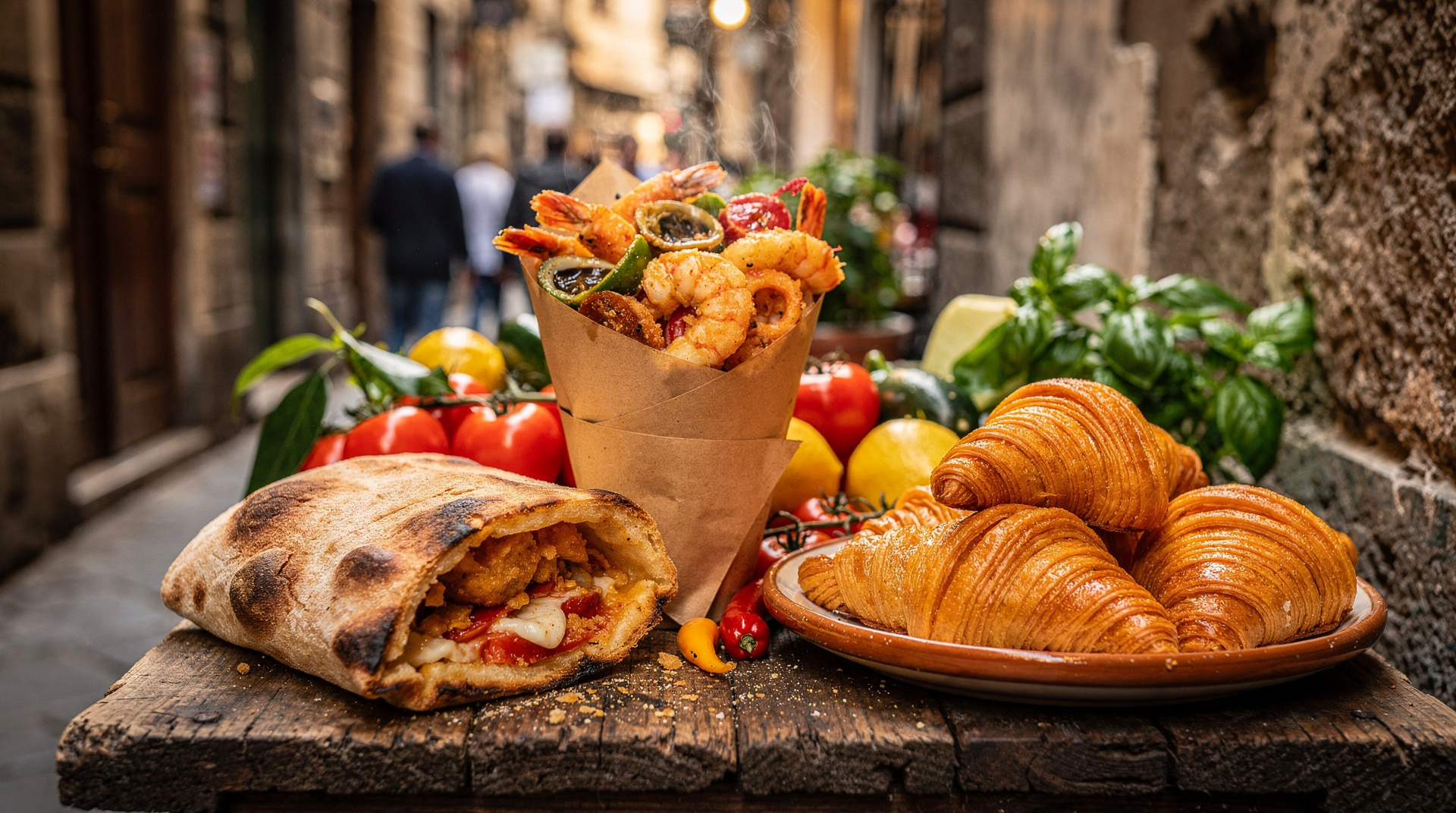
If your interest is pizza specifically, the class is the deeper option — you leave with a technique and a recipe, not just a meal. If you want a wider taste of Neapolitan food culture in the same amount of time, the Naples street food guide covers the fried snacks, sfogliatella and market stops a class doesn’t touch, including the cuoppo fried street food that’s arguably as central to the city’s food identity as pizza itself.
Doing both across two different days is the fullest way to understand why Neapolitans take their food this seriously — the Naples pizza pilgrimage piece and learning pizza from a pizzaiolo both cover the personal angle on making that pilgrimage yourself.
Practical details: duration, location, booking
Classes run 2 to 3 hours depending on the format. Most departures are offered at 10:00, 12:00, and 18:00; evening sessions have a livelier atmosphere and fit naturally into a dinner plan. Classes take place in the centro storico (historic centre), Spaccanapoli area, or the Quartieri Spagnoli — all walkable from the main tourist accommodation zones.
Group sizes range from 6 to 16 participants. Smaller groups (under 10) give you more time at the oven with the instructor; larger groups are more social but mean slightly less individual attention during the dough stage. Booking 48–72 hours in advance is sufficient outside of July and August; peak summer weeks fill faster, so book a week ahead if your dates are fixed.
Wear clothes you can flour. Aprons are provided but dough has a talent for finding shirt cuffs.
Verdict
A Naples pizza class is one of the most honest food experiences the city offers: you work with the actual ingredients and techniques that define Neapolitan pizza, you eat the result, and you leave with a recipe you can replicate at home. The 90-second wood-fired bake alone is worth attending for; it reframes everything you thought you knew about how pizza is supposed to cook.
The full 2.5–3 hour format delivers the best return on time investment. If budget is tight, the shorter express class still covers the essential technique. Either way, arriving in Naples and not spending an afternoon learning to make a Margherita from a working pizzaiolo is a missed opportunity that no restaurant meal fully replaces.