A Day Among Vines on Vesuvius: Tasting Campania's Volcanic Wines
The vine rows on Vesuvius grow in soil that is, by any reasonable measure, not supposed to support viticulture. The ground is dark and porous — pulverised lava, centuries of ash, minerals in concentrations you won’t find anywhere else in Italy. The roots go deep, searching for water in stone. What comes back up, when it works, is wine that tastes like nowhere else: saline, tense, with a mineral backbone that food scientists still argue about and winemakers simply call character.
A day in this landscape, tasting through Campania’s best grapes with a working vineyard as your base, is one of the most quietly surprising things you can do within an hour of Naples.
| Where | Vesuvius’s lower slopes, 30–40 min from Naples |
| Cost | Around €50–80 per person incl. lunch and tastings |
| Time needed | Half day to full day |
| Getting there | Car, or Circumvesuviana to Ercolano/Torre del Greco + taxi |
| Best season | Spring (Apr–May) or autumn (Sep–Oct) |
The Grapes You Need to Know
Campania doesn’t have a single famous wine — it has a canon. Understanding even three of its varieties before you arrive will make the tastings considerably more interesting.
Lacryma Christi — literally “tears of Christ” — is the wine grown on Vesuvius itself, from the Piedirosso and Coda di Volpe grapes. The white version is the one to focus on: delicate, slightly smoky, with a finish that carries the mineral character of the volcanic soil more clearly than almost any other Italian white. You’ll pay €8–14 per bottle at a vineyard; Naples restaurant markups push it higher.
Aglianico is the region’s serious red — thick-skinned, late-ripening, high in tannin and acid. The best expressions come from the Taurasi DOCG zone further inland, but Aglianico grown on Vesuvius’s lower slopes makes a more approachable, food-friendly version. It ages exceptionally well and is chronically underpriced relative to its quality.
Falanghina is the crowd-pleaser: aromatic, citrus-driven, lower acid than Lacryma Christi and easier to drink in the heat. The Campi Flegrei version, grown on the volcanic fields northwest of Naples, has a slightly more complex, smoky quality. If you’re new to Campanian wine, Falanghina is the right starting point.
What a Vineyard Day Looks Like
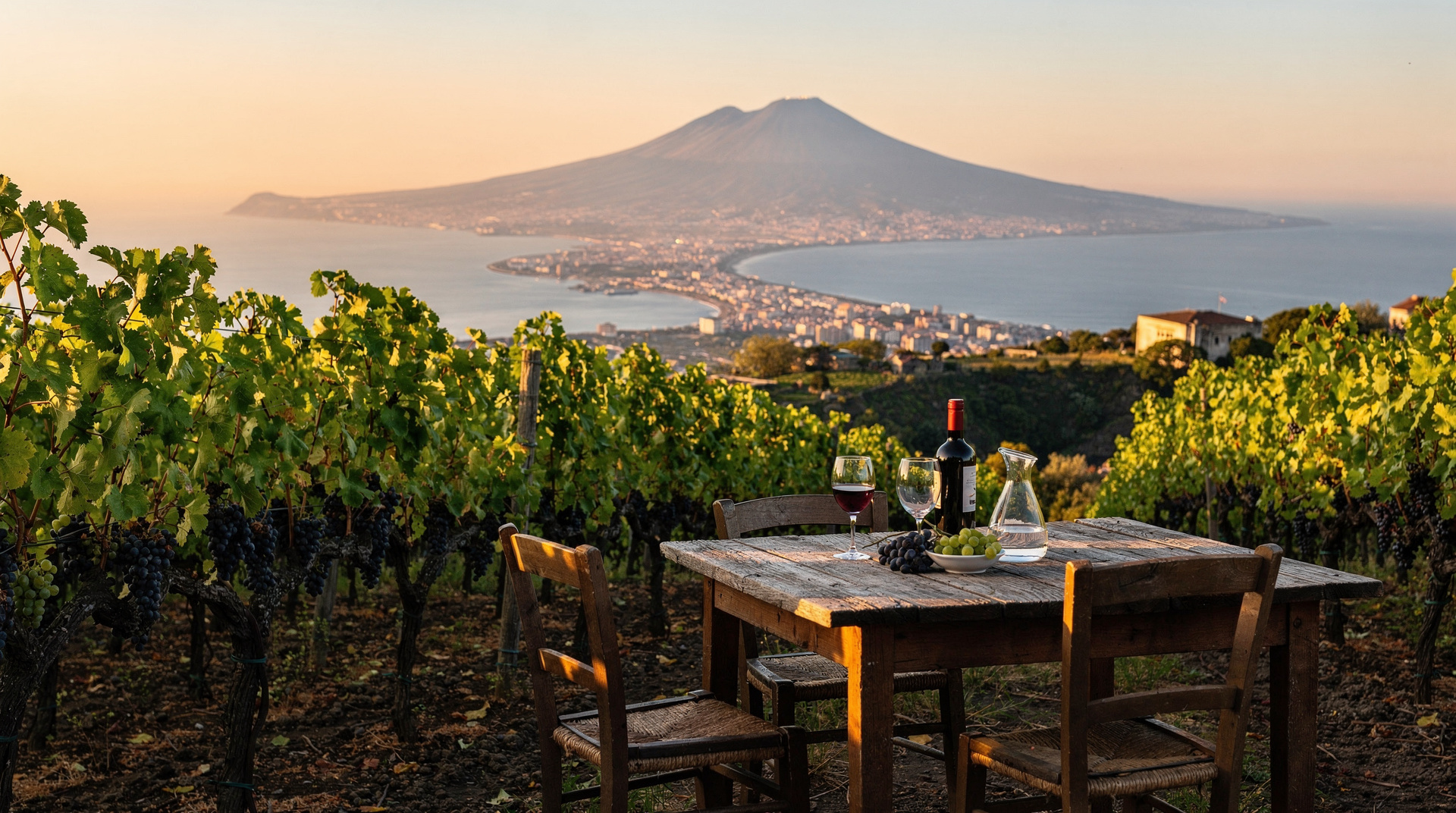
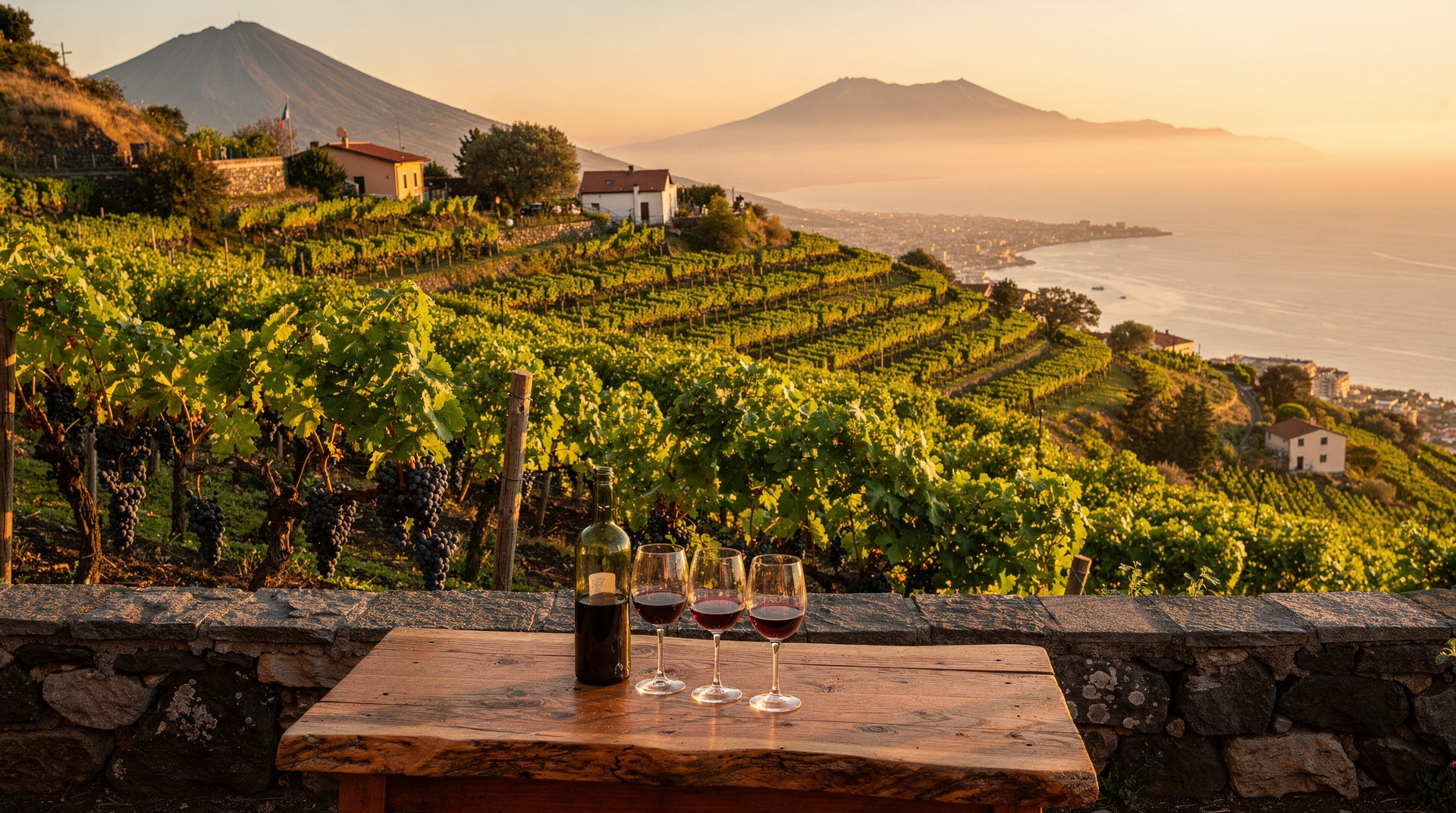
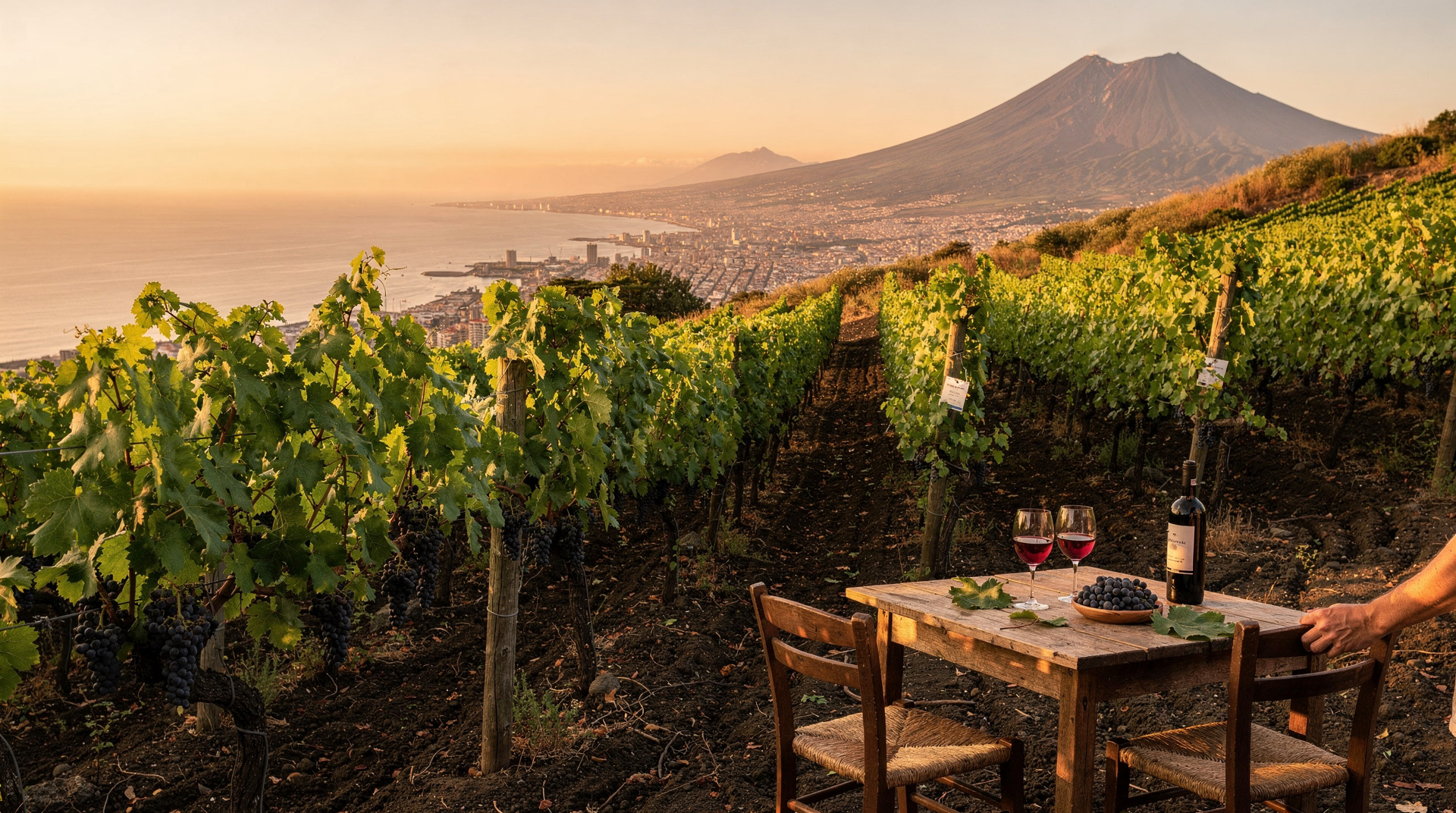
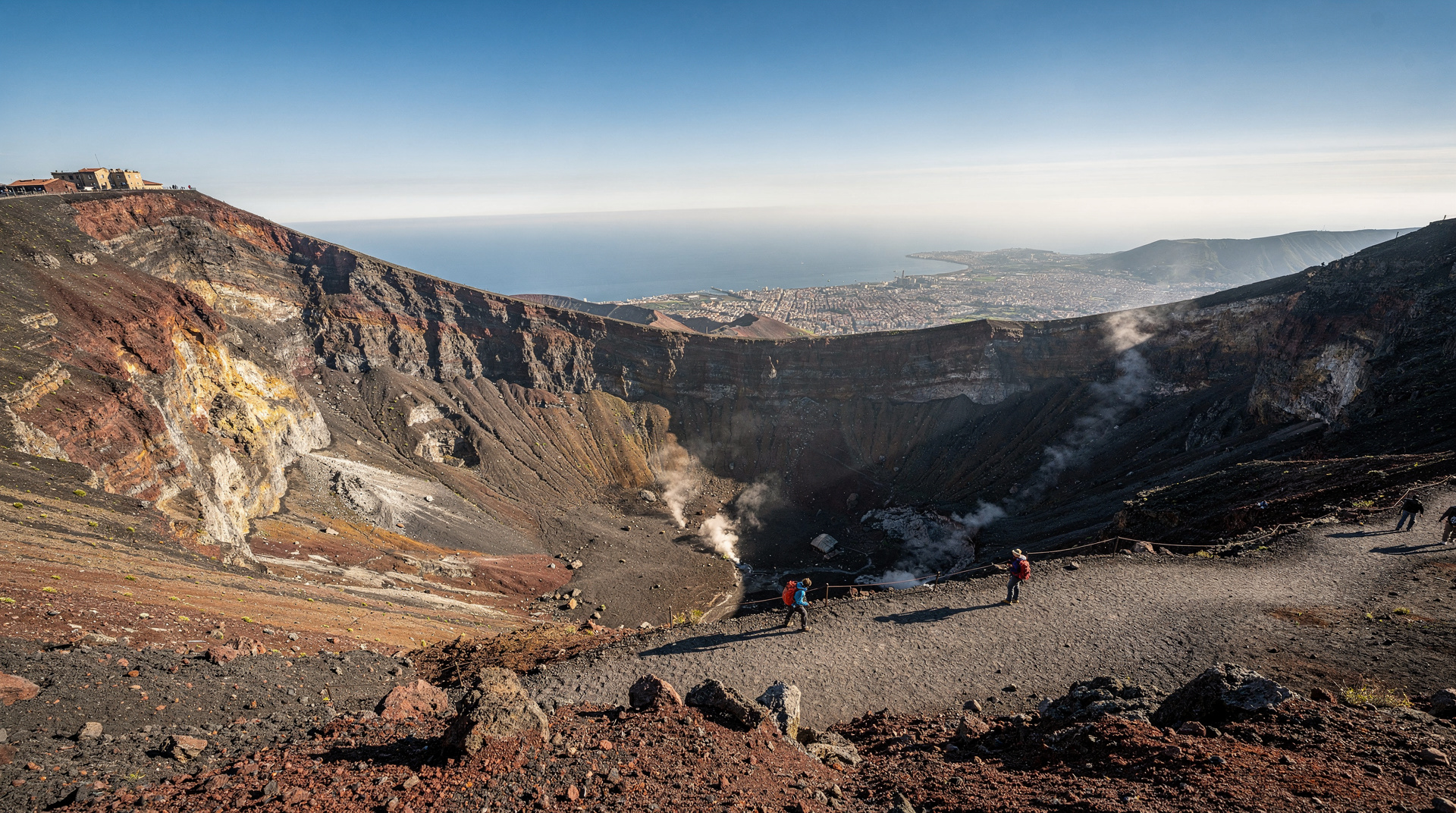
The working vineyards on the lower flanks of Vesuvius are mostly small family estates. The landscape is simultaneously agricultural and volcanic — you can see the summit clearly, and the soil underfoot looks like something left over from a different planet. Summer visits have the vines in full leaf; spring and autumn show the exposed volcanic rock more clearly.
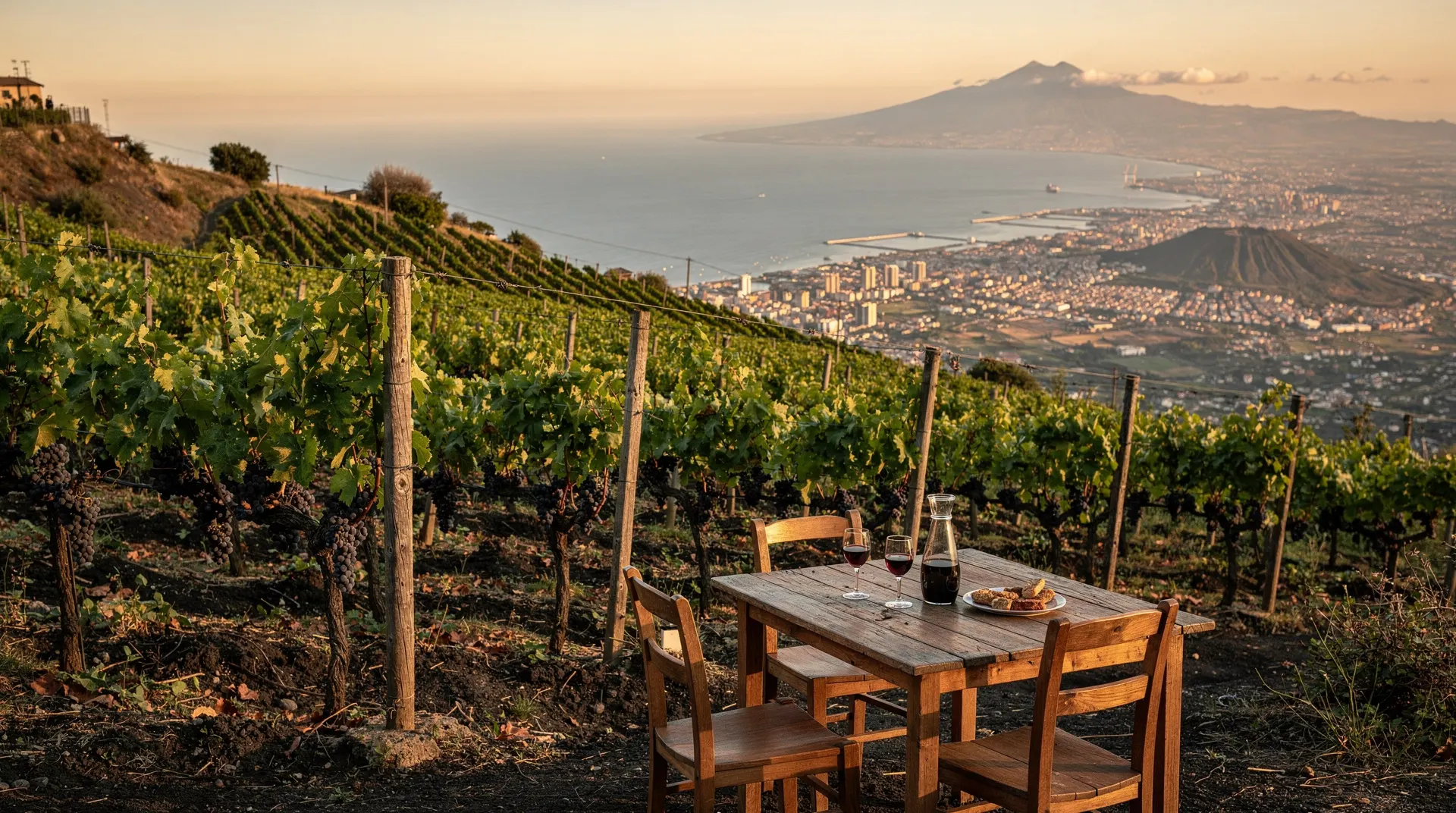
A typical tasting experience involves a walk through the vines, usually with the winemaker or a knowledgeable guide, followed by a seated tasting of four to six wines. What distinguishes the better experiences is lunch — a proper Neapolitan meal, made from what’s grown nearby, served outside with the bay visible in the distance. This is Campania, so the food is as serious as the wine.
A Vesuvius vineyard wine and lunch experience organises this well: the tasting is structured, the food is genuinely good, and the view of the bay from the terraced slopes earns its place in your memory long after the wine has faded.
The View That Changes the Wine
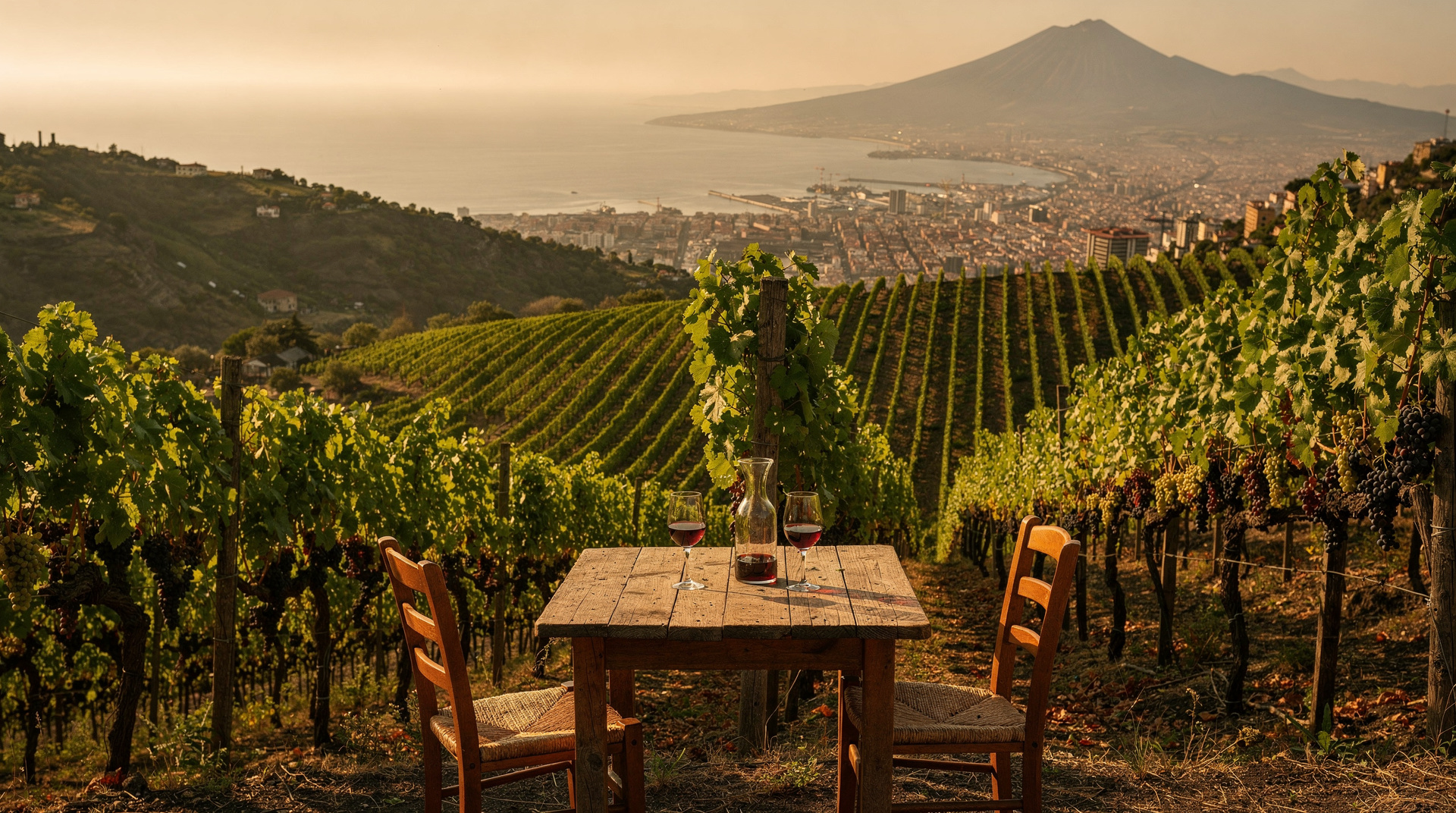
There’s something about tasting wine while looking at the place that made it. The Bay of Naples from the Vesuvius slopes is an extraordinary sight — the island of Capri on a clear day, Ischia to the northwest, the city’s sprawl along the shore below. The perspective shifts your understanding of what’s in the glass.
It sounds like marketing language, and I was sceptical too, until the first time I sat on a terrace at around 400 metres altitude, ate a plate of pasta e fagioli made with local beans, and understood why these wines exist in this form. The terroir story isn’t mysticism — it’s literal. The same geology that makes the view dramatic makes the wine taste the way it does.
Lunch on the Slopes
The food served at vineyard lunches in this area tends toward the hearty and local: cured meats from nearby producers, buffalo mozzarella from the Caserta plain just north, seasonal vegetables from the volcanic kitchen gardens, and pasta sauced in ways that work with the wine rather than competing with it. There’s no tasting menu theatre — it’s lunch, the way Campania eats.
A Vesuvius vineyard with lunch typically includes two to three wine pours matched to the meal — Falanghina with the antipasto, an Aglianico with the meat course, and a Lacryma Christi white to come back to at the end when the heat has risen and you want something lighter. Budget around €50–80 per person for a full experience including food.
Practical Notes for the Visit
The vineyards are accessible by car in about 30–40 minutes from Naples, or by the Circumvesuviana train to Ercolano or Torre del Greco, followed by a short taxi ride up the slopes. The Vesuvius National Park entrance sits higher up; the vineyard visits happen on the lower flanks and don’t require summit entry.
Go in spring (April–May) or autumn (September–October) if you can. Summer visits are possible but the midday heat on the dark volcanic soil is intense, and the light is harsher. Autumn brings harvest energy and the winemakers are most engaged when the grapes are coming in.
Bringing a Bottle Home
Most estates will sell direct. The Lacryma Christi whites and the better Aglianicos travel well if you’re heading home by car or have space in checked luggage. A good Lacryma Christi white runs €10–18 at the estate; Aglianicos worth taking seriously start at around €15–20.
If you’re flying, the train north from Naples to Florence or Rome opens up a wider selection of wine shops, but you won’t find better value on Campanian wines anywhere outside Campania itself. Buy what you actually tasted, from the people who made it.
The volcanic wines of Campania are a genuine discovery for most visitors — not because they’re obscure, but because wine lists outside Italy almost never stock them. A day on the slopes of Vesuvius is the best possible reason to understand why that’s their loss.
Going deeper on the wine
This piece focuses on the day-trip experience, but if the wine itself is what draws you in, our Campania wine guide covers the region’s full range of appellations beyond Vesuvius, and the Lacryma Christi guide is a deeper single-appellation dive into the wine this piece keeps circling back to. If you’d rather taste closer to the city without the Vesuvius trip, wine tasting near Naples covers venues that don’t require leaving town, and Falanghina and Aglianico is worth reading if those two grapes are new names to you before you sit down at a tasting table.
Pairing the wine day with the rest of Vesuvius
Most vineyard visits sit on the same lower slopes covered by our broader Mount Vesuvius guide, which is worth reading if you’re combining the tasting with a crater walk on the same day — the two are entirely compatible logistically, since the vineyards sit below the National Park entrance. If your Campania trip has room for a second volcanic-soil day, Caserta’s royal palace and gardens makes an entirely different but complementary excursion, and history-minded visitors sometimes pair a wine day with the Magna Graecia temples at Paestum, whose ancient vineyards were already being praised by Roman writers.
Frequently asked questions about Day Among Vines on Vesuvius
Do I need a car to do a Vesuvius wine day? No — the Circumvesuviana train to Ercolano Scavi or Torre del Greco followed by a short taxi ride up the slopes works well, and most organised wine-and-lunch tours include transport from Naples.
Can I combine the wine tasting with visiting the Vesuvius crater on the same day? Yes, logistically it works well since the vineyards sit on the lower flanks below the National Park entrance, though it makes for a long day — many visitors prefer to split the crater walk and the wine tasting across two mornings if their schedule allows it.