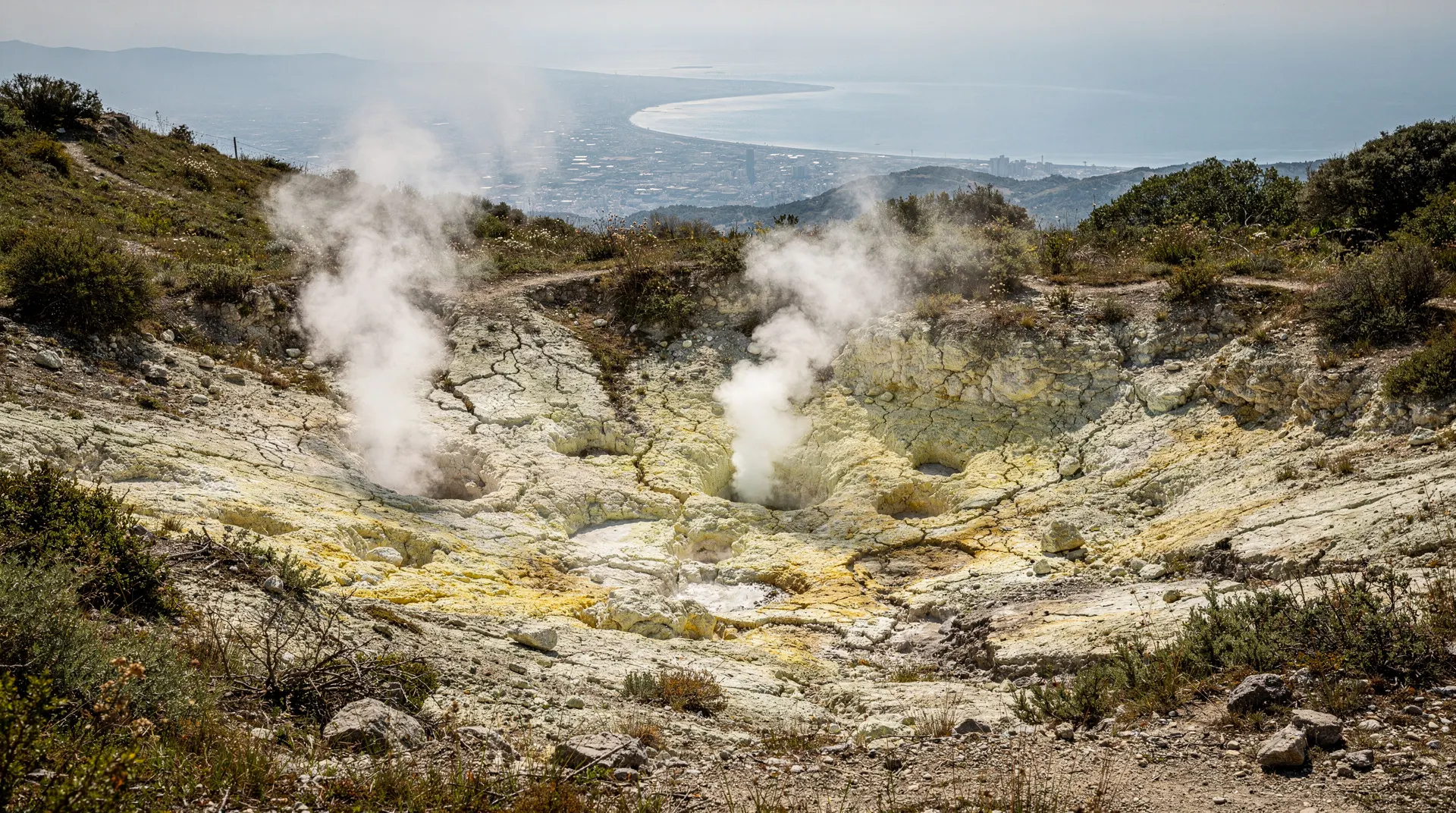
Campi Flegrei
Baia's underwater ruins, Cuma's Sibyl cave, and Europe's most active volcanic landscape — the Campi Flegrei is the Naples day trip almost nobody takes.
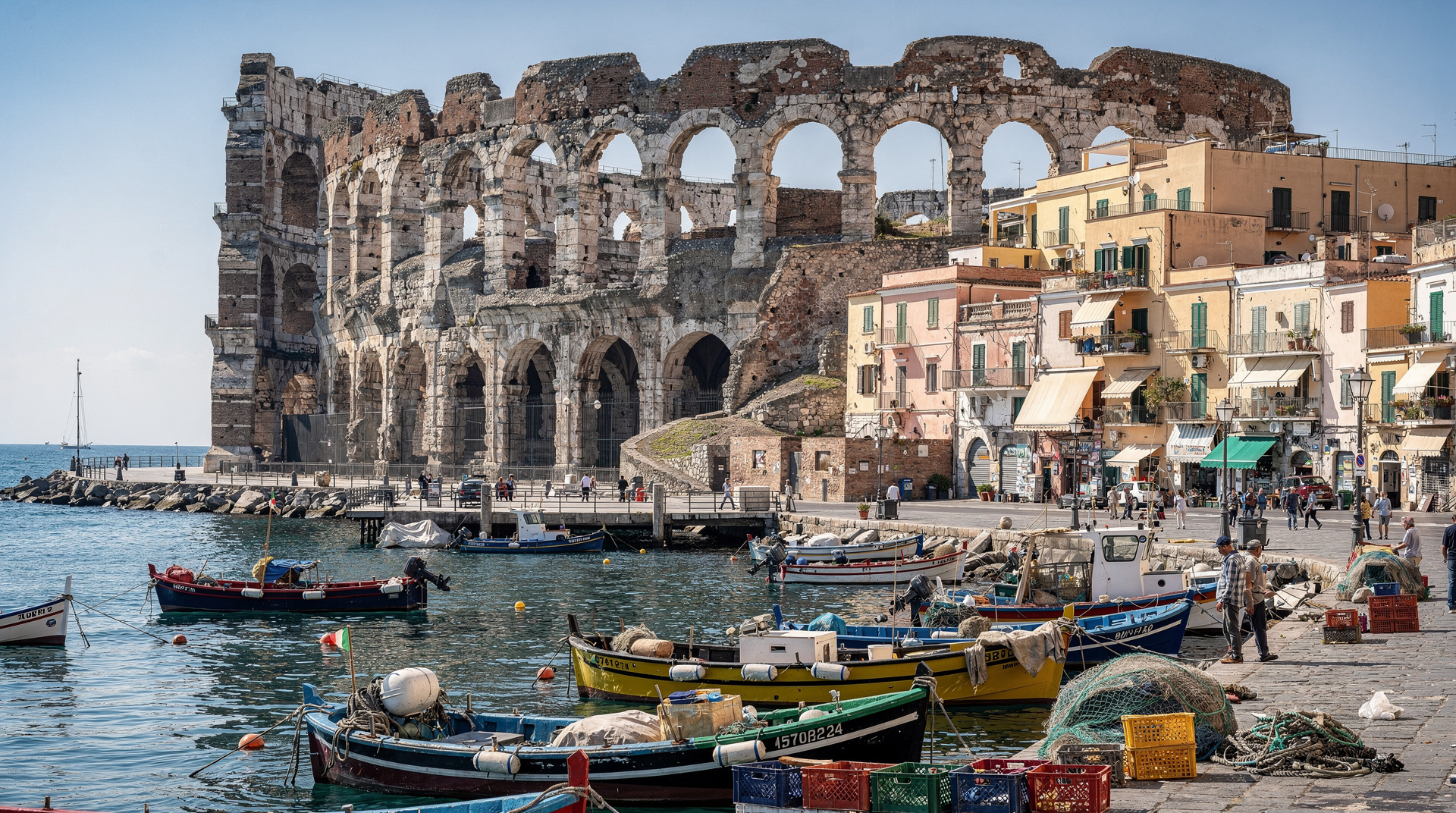
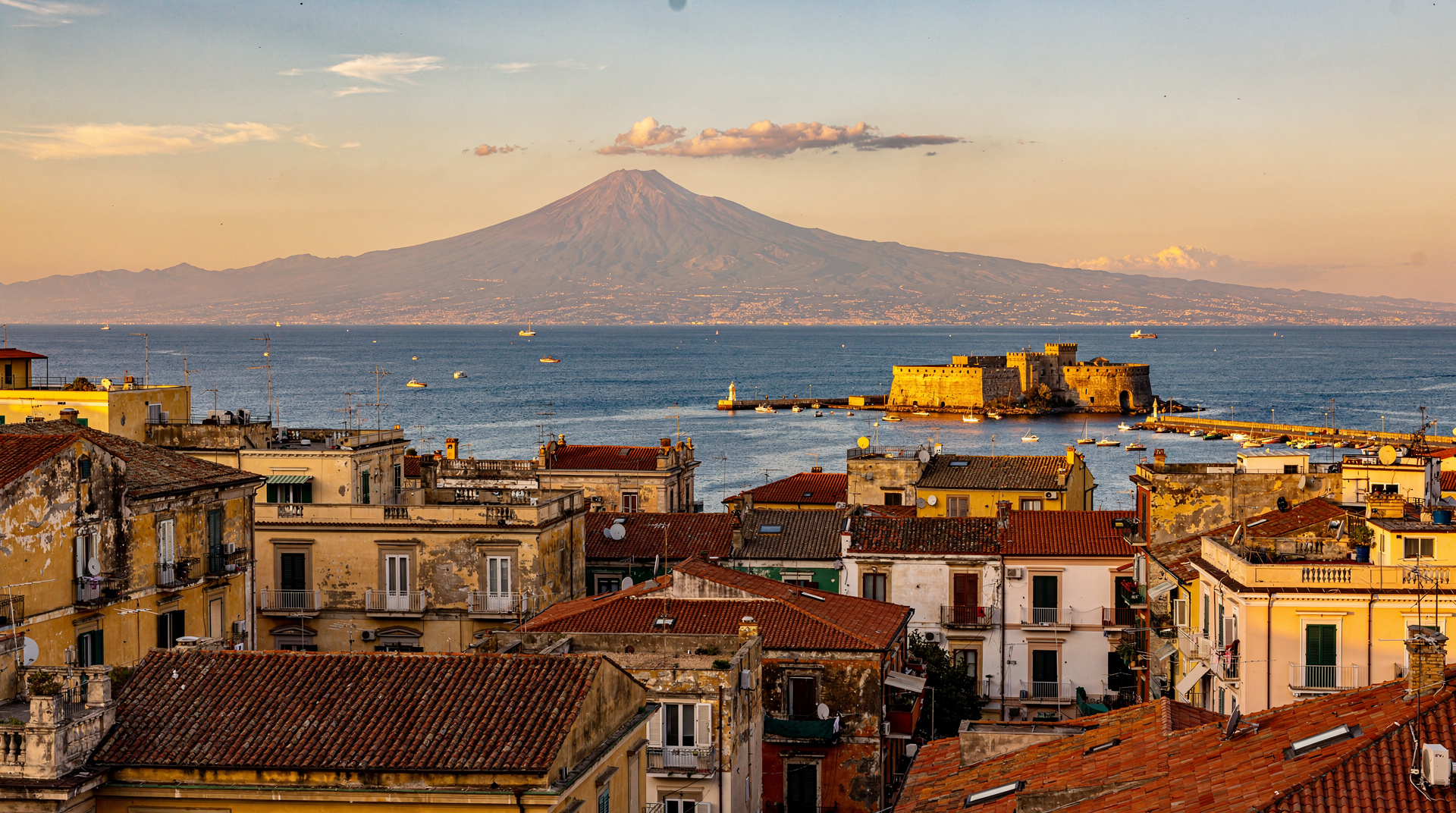
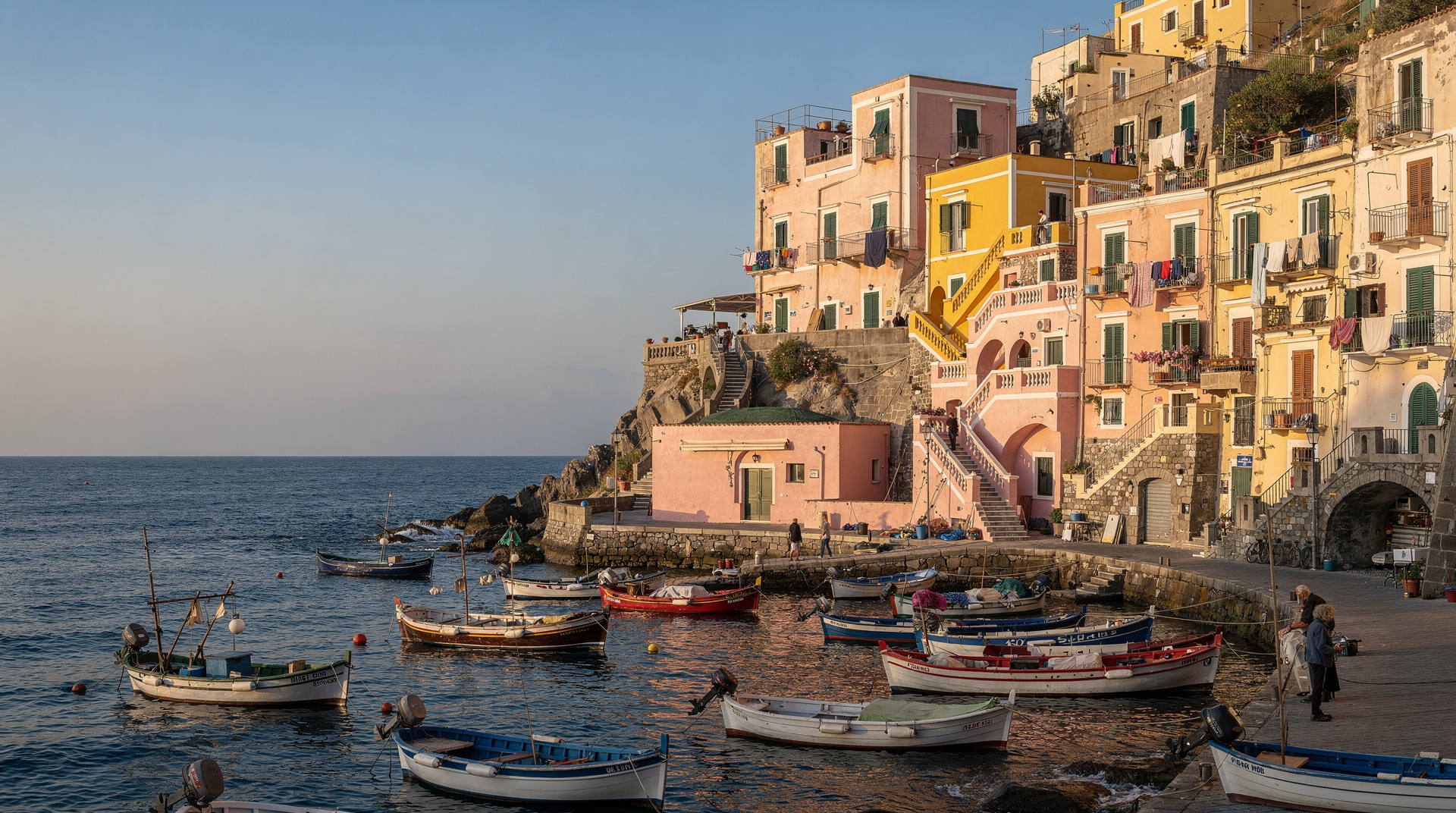
Phlegraean Fields: Cuma, Baia and Pozzuoli Private Excursion
Quick facts
- Location
- West of Naples; main sites 15–25 km from centre
- Volcanic alert
- Yellow (ongoing bradyseism monitoring)
- Key sites
- Baia (underwater park), Cuma (Sibyl's cave), Lake Avernus
- Baia snorkel/dive
- Seasonal boat tours from Baia port
- How to get there
- Car recommended; some sites reachable by train + bus
- Best for
- Avoiding tourist crowds, mythology, geology, archaeology
The most geologically dramatic landscape near Naples — almost entirely unvisited by tourists
The Campi Flegrei (Phlegraean Fields — from the Greek phlegra, “burning”) is a 150-square-kilometre volcanic caldera west of Naples, containing 24 volcanic craters, boiling mud pools, fumaroles, ancient Roman spa complexes, a submerged archaeological city, the oldest oracle site in the western Mediterranean, and a lake that Virgil described as the entrance to the underworld.
| Where | West of Naples/Pozzuoli; main sites 15–25 km from centre |
| Cost | Around €5 per site; combined tickets available |
| Time needed | Full day, longer with a car |
| Getting there | Car recommended; Metro Line 2 to Pozzuoli + EAV train/taxi otherwise |
| Best time | April–June, September–October; underwater tours June–September |
Every year, four million people visit Pompeii, 45 kilometres to the east. The Campi Flegrei receives around 200,000 visitors. This is partly a marketing failure and partly a logistics issue — most of the key sites require a car or private transport to connect efficiently. But for travellers who make the effort, it offers some of the most unusual and memorable experiences in the region.
The volcanic alert (yellow level, ongoing bradyseism) does not make the area off-limits — most sites are open and functioning. It does mean some access points change, particularly at Solfatara in Pozzuoli. Always verify current conditions at individual sites before planning.
Baia: the Roman resort beneath the sea
Baia was the most fashionable resort in the Roman Empire. Julius Caesar, Nero, Augustus, Cicero, and Tiberius all had villas here. The town was famous for its thermal baths, fed by volcanic hot springs, and its exceptional luxury. Seneca complained about the city’s moral decadence. The coastline was crowded with imperial palaces, nymphaea, and entertainment complexes.
Then the ground sank. Bradyseism lowered the Baia coastline by 3–6 metres between the 4th and 8th centuries, submerging the entire ancient waterfront under the sea. The result, after centuries of gradual recognition, is the Parco Sommerso di Baia (Underwater Archaeological Park) — an area of approximately 1.77 square kilometres of submerged Roman city, visible through the clear bay waters.
Visiting Baia’s underwater ruins
Glass-bottom boat tours from the port of Baia run from April to October, allowing non-diving visitors to see the ruins directly beneath the hull. Tours last approximately 45 minutes and provide extraordinary views of mosaic floors, column fragments, stucco architectural details, and the original street grid — all in around 5–8 metres of water.
Snorkelling tours are available for confident swimmers in the summer months (typically June–September). Some operators offer guided snorkel sessions over specific mosaic areas.
Scuba diving in the park requires authorisation and a registered guide from the Parco Sommerso administration — the best way to see the site in full detail.
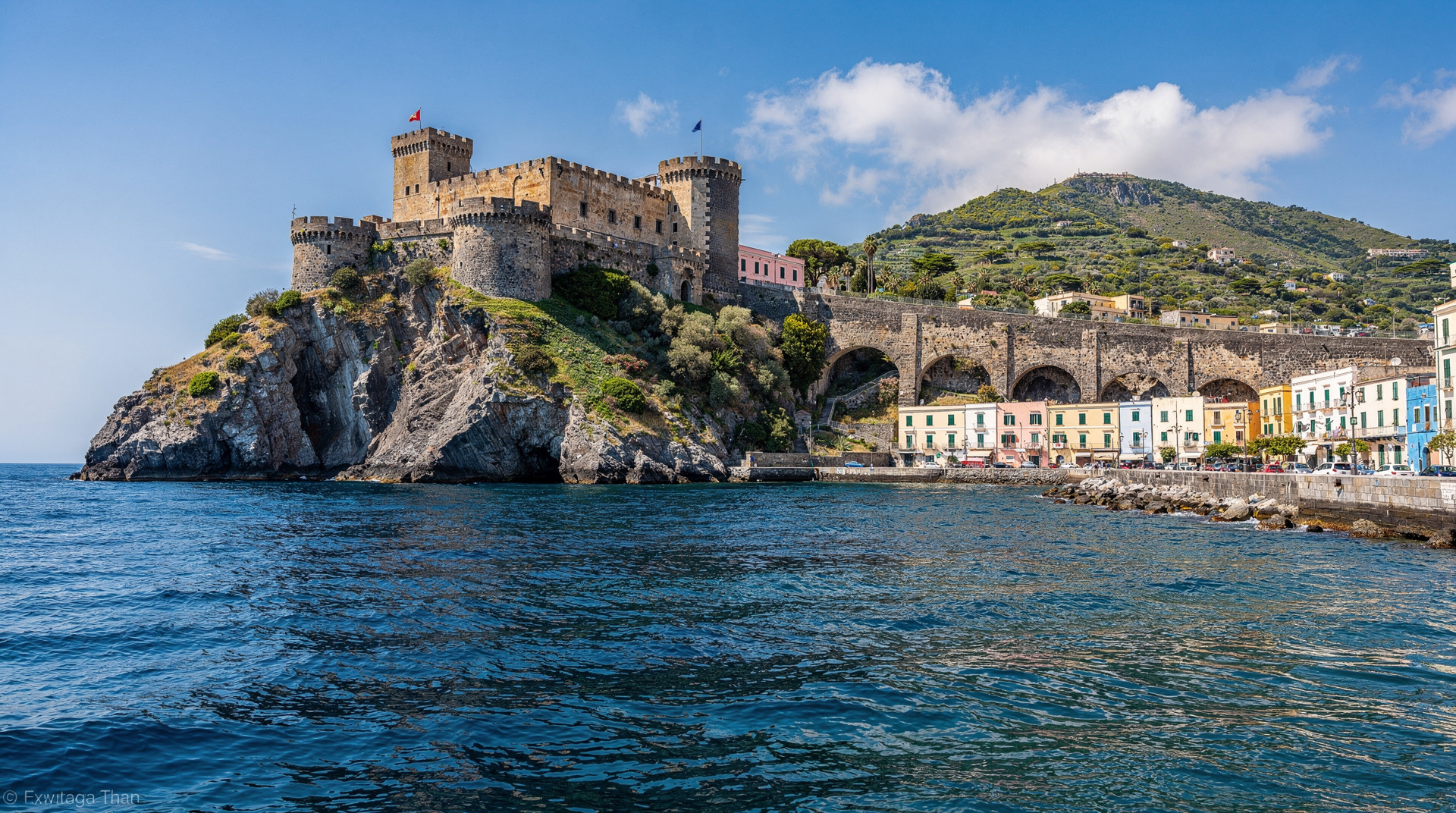
The Museo Archeologico dei Campi Flegrei, inside the Castello di Baia (a 15th-century Aragonese castle above the port), displays plaster casts of some of the submerged sculptures (the originals were too fragile to raise), mosaics, and finds from the area including nympheum reconstructions. The museum offers an essential context for understanding what you are looking at underwater.
Cuma and Baia private Phlegraean Fields tourCuma: the Sibyl’s cave and the oldest Greek city in Italy
Cuma (Cumae) was the first permanent Greek settlement in Italy, founded around 740 BC by colonists from the island of Euboea — about 40 years before the foundation of Naples. It became a major city and the main Greek cultural and political force on the Italian mainland for two centuries. It was from Cuma that the Greek alphabet was transmitted to the Etruscans and then to the Romans: the script you are reading now has a direct lineage to the Cumaean colony.
The site’s most famous feature is the Antro della Sibilla — the Sibyl’s cave, a 131-metre trapezoidal tunnel cut into the volcanic tuff of the acropolis hill. Ancient sources record that the Sibyl of Cumae offered prophecies here; Virgil’s Aeneas consulted her before descending to the underworld (which he accessed via Lake Avernus, 3 km away). The tunnel is genuine: carved in the 5th–4th century BC, it is one of the most atmospheric archaeological spaces in Italy — long, dim, with lateral galleries, leading to a chamber at the far end where the Sibyl’s throne is cut into the rock.
Beyond the Antro, the acropolis (the upper city) preserves the podium of the Temple of Apollo (converted to a Christian church in the 6th century) and the Temple of Jupiter/Ceres. Views from the acropolis across the coastline and toward Lake Avernus are exceptional on a clear day.
The lower city excavations (partially accessible) include the Via Sacra, a cryptoporticus, and a residential grid. Several large tombs (the Fossa Cumana) are visible along the approach.
Entry: approximately €5 (site only). Combination tickets with other Phlegraean sites. Hours: typically 9:00–17:00 or later in summer.
Getting there: Cuma is about 16 km from Pozzuoli and 25 km from Naples. No direct public transport. Taxi from Pozzuoli approximately €20–25. A car is the most practical option for an independent visit.
Lake Avernus (Lago d’Averno)
Three kilometres from Baia, Lake Avernus sits in a perfectly circular volcanic crater — a maar formed when a magma intrusion hit groundwater. The Romans believed this was one of the entrances to the underworld. Ancient writers noted that no birds flew over it (false — the toxic gas concentrations near the surface have dissipated since ancient times), and the shoreline still has a distinctly uncanny quality: dark water, steep crater walls, volcanic silence.
Virgil placed the descent of Aeneas to the underworld here, in Book VI of the Aeneid — one of the most influential passages in Latin literature. Augustus later had a channel cut linking the lake to the sea, creating a military harbour complex (the Portus Julius) that briefly served as the home port of the Roman fleet.
Today the lake is calm, dark, and largely unvisited. You can walk around it in about an hour. There is a small trattoria on the lakeside. The silence and the geology make it one of the most genuinely eerie places you can reach as a day trip from Naples.
Astroni Reserve
The Oasi WWF Astroni is a volcanic crater converted to a wildlife reserve — closed to development since the 15th century when it was used as the Bourbon royal hunting reserve. The interior has dense oak and ash forest, two small lakes, and abundant birdlife (raptors, woodpeckers, herons). Access is by guided tour on weekend mornings. An unusual and very quiet alternative to the archaeological sites.
Phlegraean Fields volcanic landscape tourGetting around Campi Flegrei
This is the main practical challenge. The key sites (Baia, Cuma, Lago d’Averno) are spread across a roughly 15 km radius from Pozzuoli, connected by secondary roads without direct public transport links between them.
Best option: car. From Naples, drive west on the Tangenziale (ring road) toward Pozzuoli, then follow signs for Baia and Cuma. Allow 30–40 minutes from central Naples to Baia without traffic. Parking is available at all major sites.
Without a car: Pozzuoli is reachable by Metro (Line 2, 20 minutes from Naples — see Pozzuoli guide). From Pozzuoli, the EAV regional train serves Baia and Fusaro stations on the Cumana line. A taxi from Pozzuoli to Cuma and back runs approximately €40–50. For a full Phlegraean circuit in one day without a car, a private guided tour is the most efficient option.
Private guided tour: the most practical solution for visitors without a car, as it handles transport between sites and provides context across the full circuit.
Phlegraean Fields Fiat 500 tour from NaplesSuggested itinerary for a Campi Flegrei day
With a car (full day):
- 09:00 — Drive to Baia, visit Museo Archaeologico dei Campi Flegrei (45–60 min)
- 10:15 — Glass-bottom boat tour of Parco Sommerso (45–60 min)
- 11:30 — Drive to Lake Avernus (10 min), walk the crater (1 hour)
- 13:00 — Lunch at lakeside trattoria
- 14:30 — Drive to Cuma (15 min), visit acropolis and Sibyl’s cave (1.5–2 hours)
- 16:30 — Return to Naples
Without a car (half day + Pozzuoli):
- Metro to Pozzuoli, walk Macellum, Rione Terra, Anfiteatro Flavio (see Pozzuoli guide)
- EAV Cumana train to Baia, museum and/or boat tour
- Return to Pozzuoli and Metro back to Naples
- Cuma requires taxi or private tour from Pozzuoli
The Campi Flegrei day trip guide covers this in more detail.
Honest assessment: why come here
The Campi Flegrei is not a polished tourist experience. Signage is inconsistent, sites vary in opening hours, and public transport logistics are genuinely inconvenient. The Baia underwater park glass-bottom boats run by small operators whose availability varies seasonally.
In exchange, you get a day without the Pompeii crowds, sites of genuine archaeological and geological significance that most Naples visitors never see, and the specific quality of a Roman resort city visible beneath clear water — which is not available anywhere else in the world.
For context on how Campi Flegrei compares to other day trips: best day trips from Naples and naples day trips compared.
The Solfatara crater and Pozzuoli’s own volcanic features
Beyond Baia, Cuma, and Lake Avernus, the caldera has closer sites worth knowing about even on a car-free trip. The Solfatara crater, just above Pozzuoli town, is itself a shallow volcanic crater with active fumaroles and mud pools that has been partially closed to walk-in visitors since a fatal accident in 2017; check current access before planning a visit, as the site’s status changes with monitoring conditions.
The Roman Macellum of Pozzuoli (often mislabelled a “Temple of Serapis” by 18th-century antiquarians) has three marble columns bored by marine molluscs at a height well above current sea level — direct physical evidence of bradyseism raising and lowering the coastline over centuries, and one of the clearest illustrations anywhere of how dynamic this landscape actually is. Both sit inside Pozzuoli itself, reachable on the same Metro Line 2 trip that starts a Campi Flegrei day — see the Pozzuoli guide for the full walking route.
What a private tour actually adds here
Unlike Pompeii, where a guide mainly adds narrative colour to a site you could navigate alone, in the Campi Flegrei a guide or private driver solves a genuine logistics problem: the sites are spread across a wide, poorly signed area with no direct public transport between them, opening hours vary by site and season, and the Baia boat tours depend on small independent operators whose schedules shift.
A private tour bundles transport, timing, and site access into one booking, which is the main reason to pay the premium over improvising with taxis. Compare this to best day trips from Naples for how the Campi Flegrei stacks up against Pompeii, the Amalfi Coast, and Capri on the guided-vs-independent question.
Pozzuoli walking tour covering the Macellum and Rione TerraFrequently asked questions about Campi Flegrei
Is Campi Flegrei dangerous to visit?
At yellow volcanic alert level, the area is open and functioning normally. Individual sites may have access restrictions (particularly at the Solfatara crater in Pozzuoli). The bradyseism causes minor earthquakes that are felt but not dangerous. Check current status from INGV before planning around specific sites.
What is the best way to see the underwater ruins at Baia?
A glass-bottom boat tour is the most accessible option (no swimming required, all ages). Snorkelling tours offer a more immersive view in summer. Scuba diving shows the greatest detail but requires advance arrangement with an authorised guide. All depart from the port of Baia.
How long does the Sibyl’s cave take to visit?
The Antro della Sibilla itself takes 15–20 minutes to walk and explore. Allow 1.5–2 hours for the full Cuma site including the acropolis temples and the walk between the entrance and the upper city.
Is Campi Flegrei reachable without a car?
Partially. Pozzuoli is on Metro Line 2 (20 min from Naples). Baia is served by the EAV Cumana train from Pozzuoli. Cuma has no practical public transport link and requires a taxi or private tour. For the full circuit in one day, a car or organised tour is effectively necessary.
Can I combine Campi Flegrei with Procida or Ischia?
Yes — ferries to Procida and Ischia depart from Pozzuoli port, making a combination of a morning at Solfatara/Pozzuoli with an afternoon island visit logistically straightforward. This works better as two separate half-days than as a single attempt to do both fully.
What is the volcanic alert for Campi Flegrei in 2026?
As of mid-2026, the Campi Flegrei system remains at yellow alert (the second level of a four-level scale), indicating active monitoring of elevated seismic and ground deformation activity. This level has been maintained with intermittent variations since 2012. It does not indicate an imminent eruption. Full up-to-date information is published daily by the Osservatorio Vesuviano at the INGV website.
Is the Solfatara crater open to visitors?
Access has been restricted since a fatal accident in 2017 and the site’s opening status has changed several times since. Check directly before planning a visit around it — do not rely on older guidebook descriptions of a walk-in crater floor tour.
Top experiences
Bookable activities with verified prices and instant confirmation on GetYourGuide.