Vesuvius day trip from Naples
From Naples: All-Inclusive Mount Vesuvius Half-Day Tour
How do you visit Vesuvius from Naples?
Take the Circumvesuviana to Ercolano (18 min) or Pompeii (30 min), then a shuttle bus to the crater car park at ~1,000 m altitude. The crater trail takes 30–45 minutes up, 20–30 minutes down. Entry €10. No independent vehicle access above the park barrier. Best combined with Pompeii or Herculaneum for a full day.
Quick answer: Circumvesuviana to Ercolano (18 min) then shuttle bus to the crater car park (~€12 return). The crater trail takes 30–45 min up. Entry €10. No private vehicles. Best combined with Pompeii (same day) or Herculaneum for a full-day visit.
| Where | Mount Vesuvius, 15 km southeast of Naples |
| Cost | Around €10 crater entry + €10–15 shuttle return |
| Time needed | Half a day; full day if combined with Pompeii |
| Getting there | Circumvesuviana to Ercolano or Pompeii, then EAV shuttle |
| Best time | Morning, April–July for the most reliable weather |
Getting to Vesuvius from Naples
Mount Vesuvius is 15 km southeast of Naples. No private vehicle can reach the crater car park — the park gate at ~800 m altitude closes to general traffic. The three practical options are:
Option 1: Circumvesuviana + EAV shuttle bus
- Take the Circumvesuviana from Napoli Centrale (Garibaldi lower level) to Ercolano Scavi. 18 minutes, ~€2.60 one way.
- From Ercolano station, catch the EAV shuttle bus toward Vesuvius. The bus stop is directly outside the station exit — look for “Vesuvio” or “Gran Cono” signs. Shuttle runs approximately every 40 minutes in season (April–October). Return ticket: ~€10–12.
- Journey by shuttle from Ercolano to the crater car park: ~35 minutes.
- Walk from the car park to the crater: 860 m, 30–45 minutes uphill.
- Crater entry: €10 (pay at the barrier at the start of the walking path — cash or card).
Option 2: Shuttle from Pompeii (if combining both)
Vesuvius crater — round-trip transport from PompeiiLocal shuttle operators run minibuses from near the Pompeii Scavi south entrance to the Vesuvius car park. Look for shuttle touts near Piazzale Anfiteatro after exiting Pompeii. Cost: ~€12–15 return, journey ~35 minutes. Practical if you are already at Pompeii and want to add Vesuvius in the same day.
Option 3: Organised tour from Naples
Vesuvius from Naples — all-inclusive with transportGuided tours include hotel pickup, transport to the crater park, the crater walk with a volcanologist or mountain guide, and transport back to Naples. Cost: €50–80 per person. Worthwhile for the expert geological commentary and for visitors who prefer not to navigate the shuttle system independently.
The crater trail
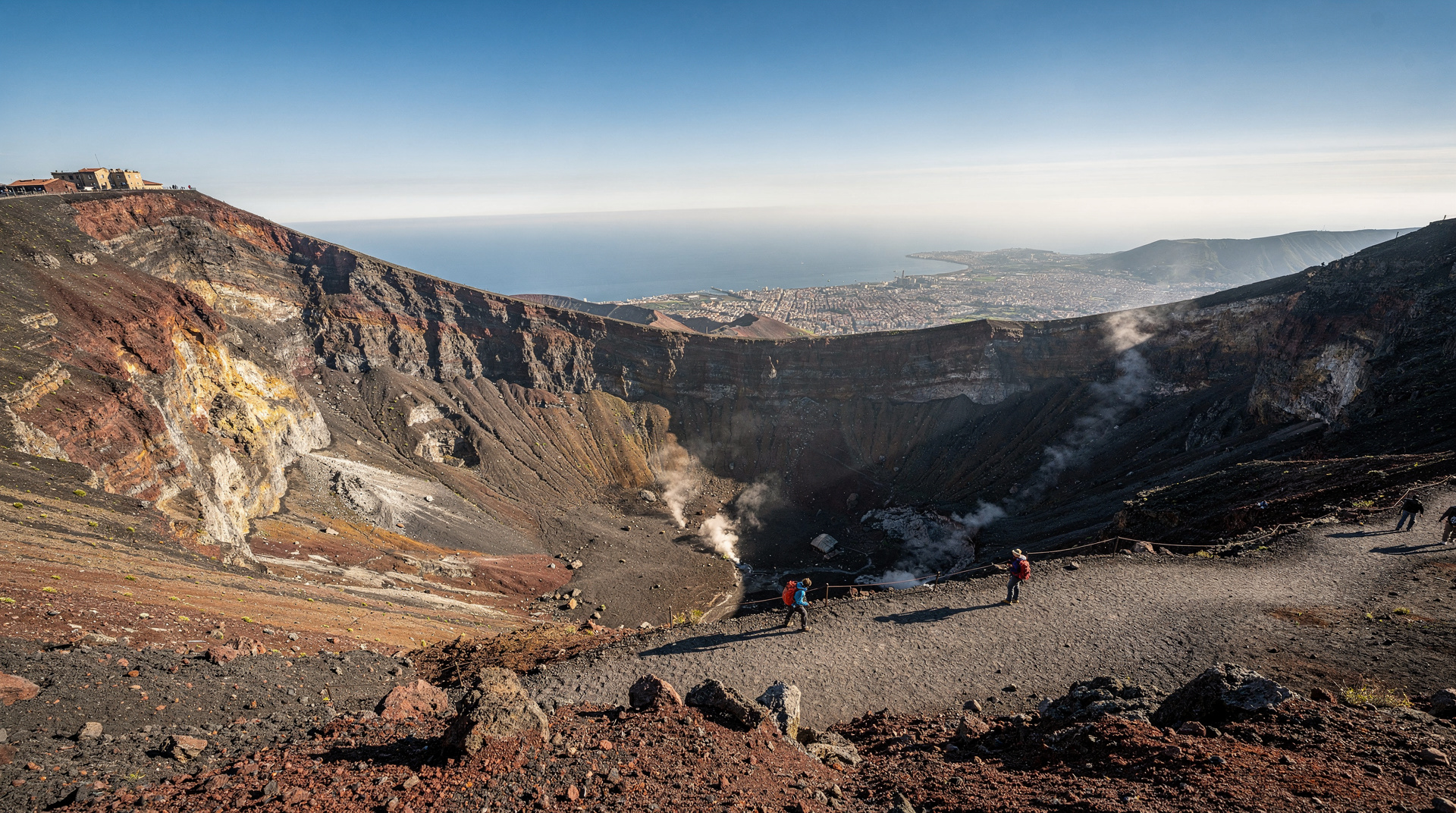
The trail begins at the car park at approximately 1,000 m altitude. The crater rim is at 1,281 m — a vertical gain of about 280 m along the 860 m path.
Surface: Loose volcanic lapilli (small pumice fragments) on a beaten earth base. Rope handrails are installed on the steepest sections. The surface is grippy when dry; slippery when wet. Do not attempt in heavy rain.
Pace: Most visitors take 30–45 minutes going up, 20–30 minutes coming down. The path is steady throughout — no flat sections, no technical climbing. A family with children should allow 60–90 minutes for the full ascent-descend cycle.
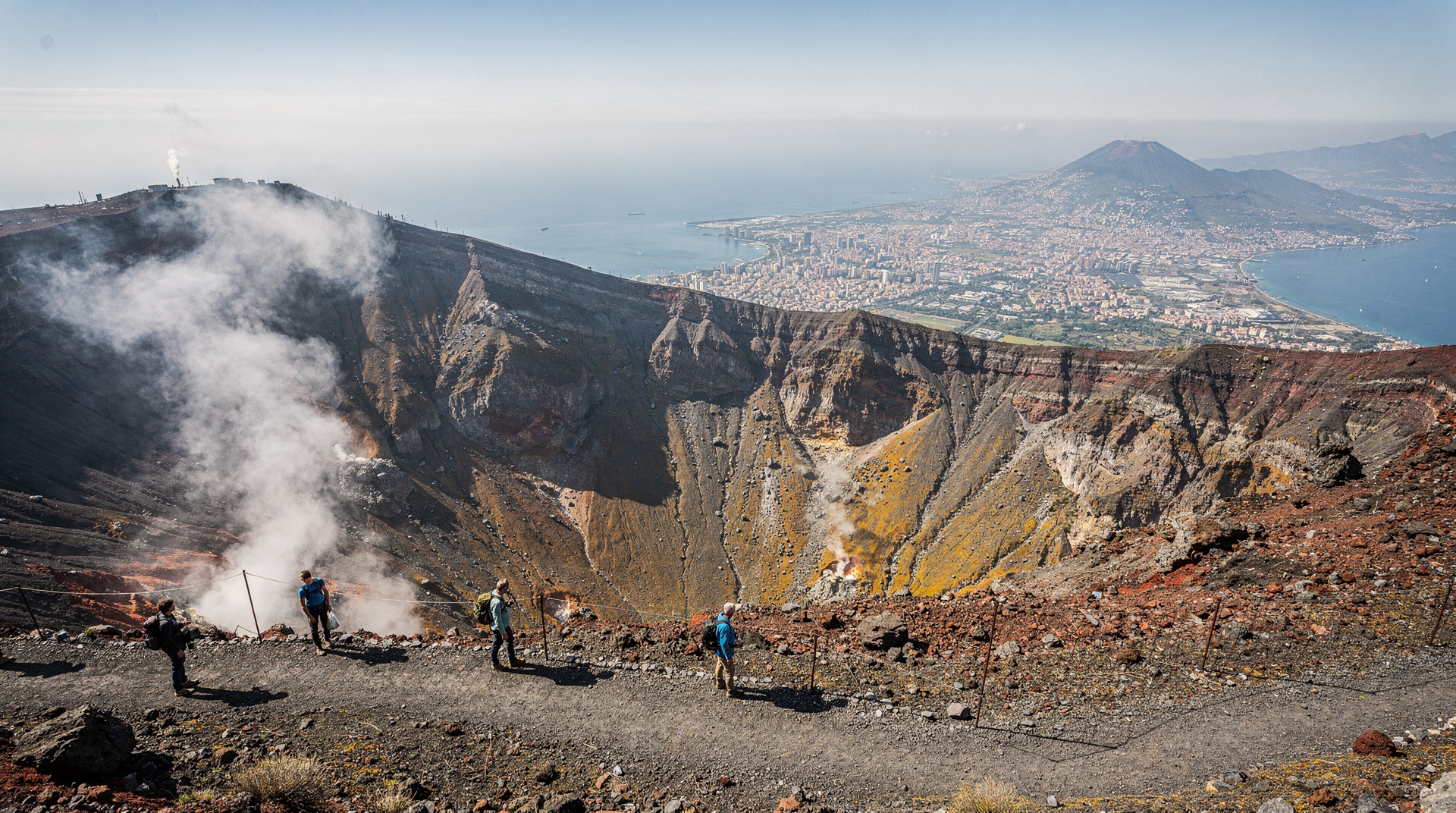
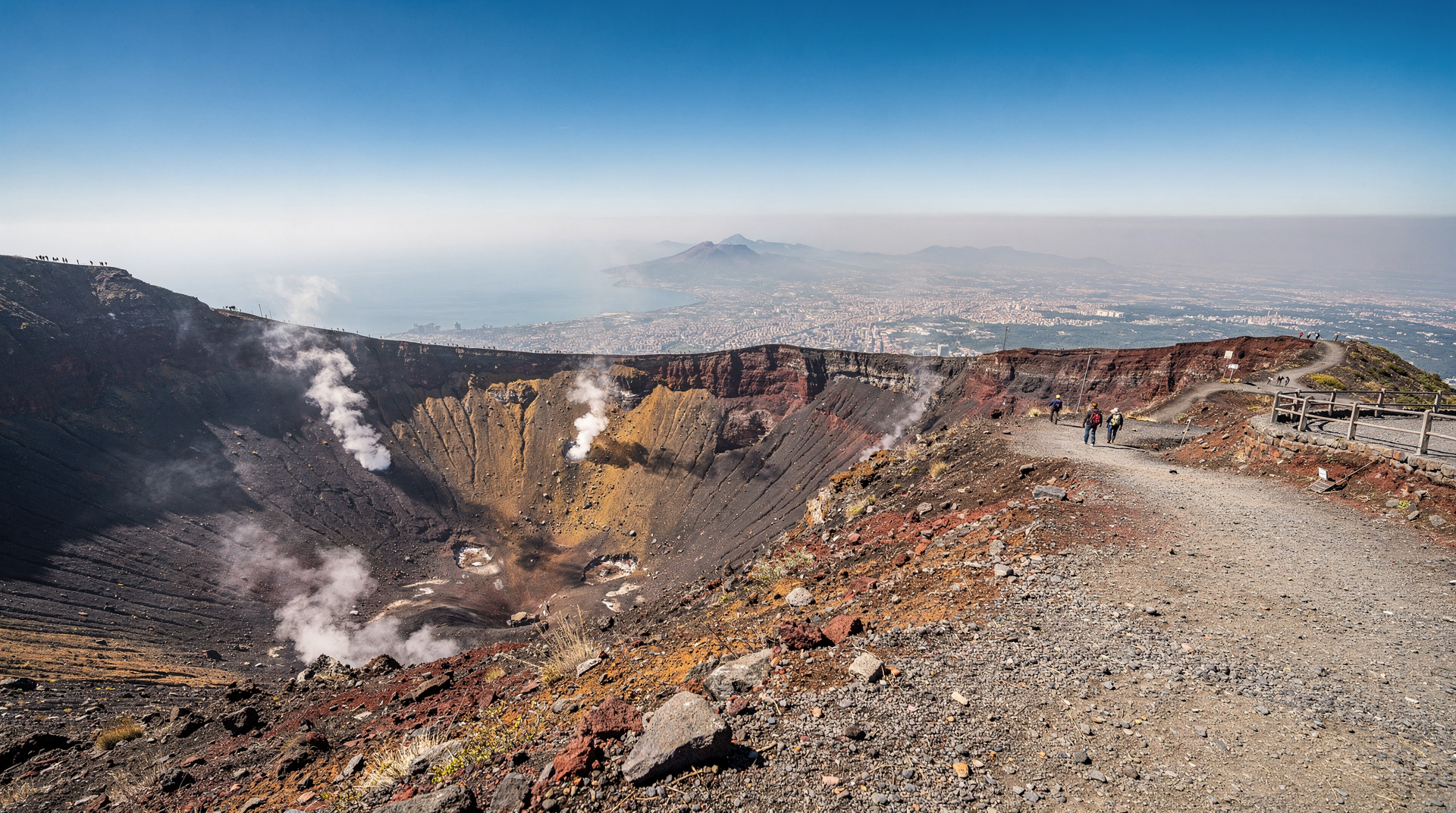
At the crater rim: There is a walkable section along the rim of approximately 200 m to the best viewpoint over the interior. The crater is 600 m wide and 300 m deep — the inner walls drop steeply. Do not lean over the rope barriers. Steam vents on the far inner wall produce visible wisps; the sulphur smell is faint at the rim (stronger at Solfatara in Campi Flegrei).
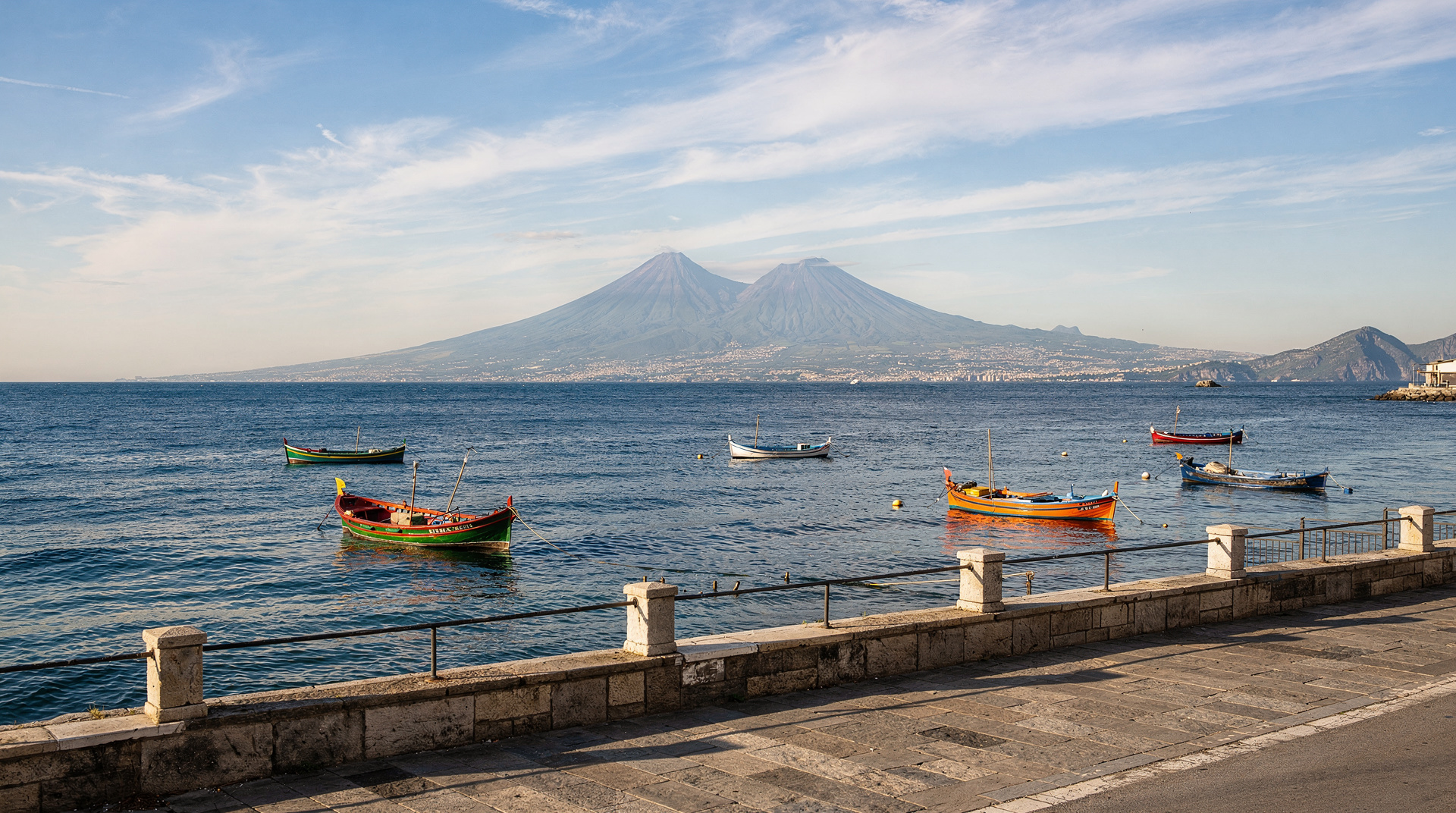
View conditions: On a clear day, the panorama encompasses Naples bay, Capri, Ischia, Procida, the Sorrento Peninsula, the beginning of the Amalfi Coast, and the Phlegraean Fields. On a hazy day (typical in July–August), the view is less impressive. The best light for photography is morning.
Weather: At 1,281 m, the summit is substantially cooler and windier than Naples even in summer. Bring a layer regardless of season — a wind-proof jacket is sensible in spring and autumn.
What to bring
| Item | Why |
|---|---|
| Walking shoes with grip | Loose gravel surface — essential |
| Wind-proof layer | Summit is 8–12 °C cooler than Naples |
| Water (500 ml minimum) | No services on the trail itself |
| Sunscreen | High altitude, no shade on trail |
| Cash (€10 for crater entry) | Card readers exist but can fail |
No poles are provided or needed. Photography equipment (cameras, tripods) is permitted.
Combining Vesuvius with Pompeii
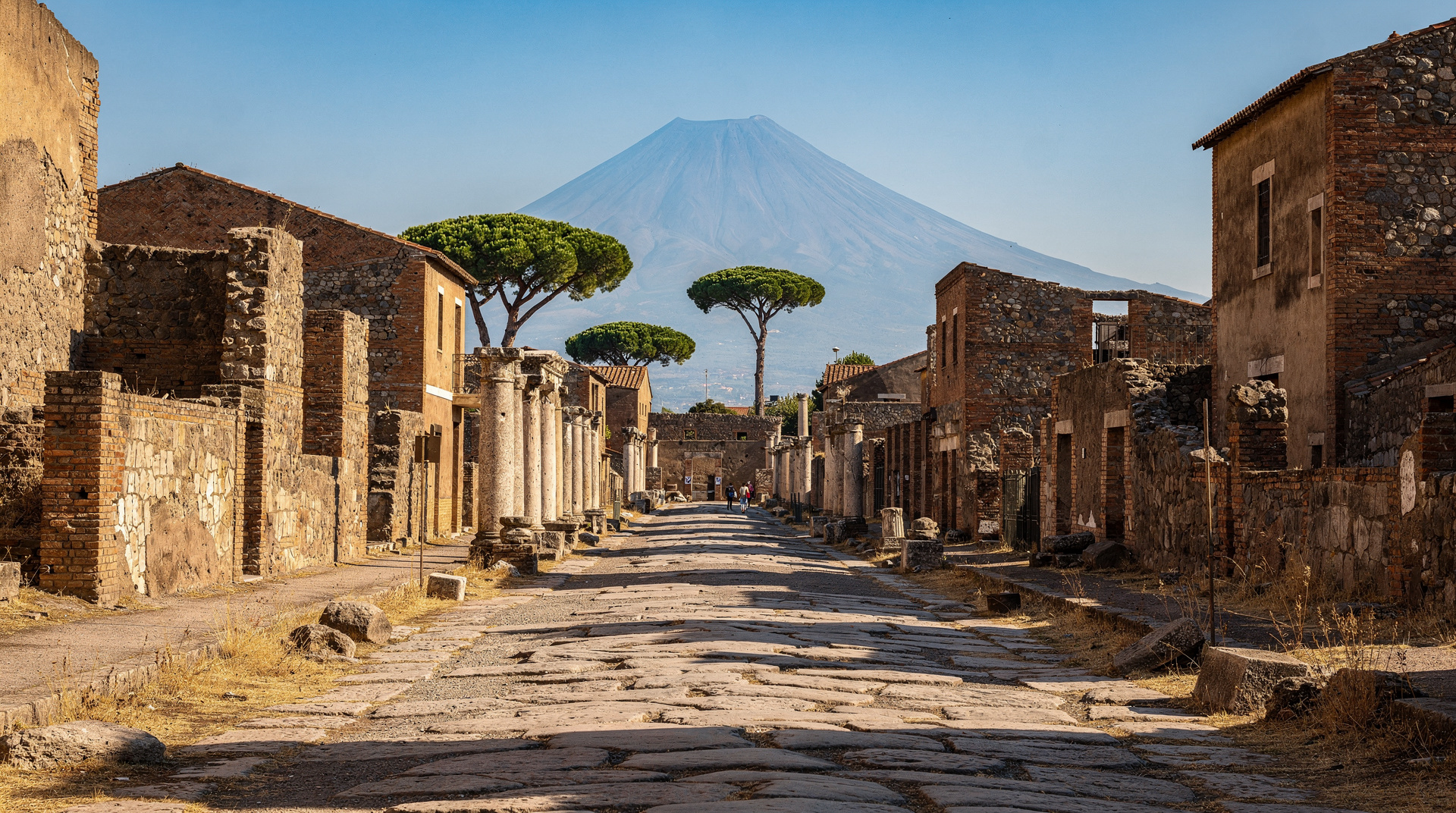
The most common itinerary is Pompeii in the morning (09:00–13:00) followed by Vesuvius in the afternoon. This is easily achievable with an early start from Naples.
Suggested timing:
- 08:30: Depart Napoli Centrale on Circumvesuviana.
- 09:00: Enter Pompeii.
- 09:00–12:30: Visit main Pompeii highlights.
- 12:30–13:00: Lunch near Pompeii (avoid the tourist traps; walk 5 min into town).
- 13:15: Shuttle bus from Pompeii south entrance toward Vesuvius.
- 13:50: Arrive crater car park.
- 14:00–15:30: Crater walk up, views, descent.
- 15:40: Shuttle return to Pompeii station.
- 16:15: Circumvesuviana back to Naples.
- 17:00: Arrive Napoli Centrale.
See the full logistics in Pompeii and Vesuvius same day guide.
Vesuvius closures — what to know
The crater path closes without advance warning for:
- Wind: When gusts exceed ~40–50 km/h on the summit (common in autumn and spring).
- Rain: The loose gravel surface becomes hazardous.
- Volcanic activity: If monitoring shows unusual seismic sequences, the park may precautionarily close.
- Maintenance: Periodic path maintenance causes temporary closures (usually overnight but occasionally extending into the day).
How to check: parconazionaledelvesuvio.it (park website, has current closure notices in Italian — use browser translate). The park phone line (tel: +39 081 858 5911) is staffed in the morning. Tour operators who include Vesuvius typically track closures and will reschedule.
If the crater is closed when you arrive: The car park area has views across the bay from the parking level, which is not without value. But the visit without the crater walk is incomplete — if the weather looks unstable when you depart Naples, consider switching to an interior destination (MANN, underground Naples) and rescheduling Vesuvius.
Vesuvius National Park context
The Gran Cono of Vesuvius is the main visitor zone within the Parco Nazionale del Vesuvio, established in 1995. The park covers 8,000+ hectares including the entire Vesuvius massif, Monte Somma (the older caldera wall to the north), and a buffer zone of vineyards, oak woods, and chestnut forests.
Lacryma Christi vineyards: The slopes of Vesuvius between 200–600 m altitude are covered in volcanic vineyards producing Lacryma Christi DOC wine — both red (Piedirosso grape) and white (Coda di Volpe). Several wineries on the western slopes welcome visitors for tastings. The volcanic soil gives the wine a distinctive mineral character. See Lacryma Christi wine guide.
Wildlife: The park has reintroduced Mediterranean fauna — red foxes, weasels, kestrels, peregrine falcons. The forest on the northern (Monte Somma) slope is genuinely quiet and rarely visited.
Sample itinerary — Vesuvius only (half day from Naples)
| Time | Activity |
|---|---|
| 10:00 | Circumvesuviana from Napoli Centrale to Ercolano |
| 10:18 | Arrive Ercolano, board EAV shuttle |
| 11:00 | Arrive crater car park |
| 11:00–12:30 | Crater walk up, rim views, descent |
| 12:40 | Shuttle return to Ercolano |
| 13:15 | Arrive Ercolano |
| 13:30 | Lunch in Ercolano or board train back to Naples |
| 14:00 | Arrive Napoli Centrale |
This leaves the afternoon free for Naples itself — MANN, underground city, Spaccanapoli.
Frequently asked questions about a Vesuvius day trip
Can Vesuvius erupt suddenly without warning?
No major eruption (lava flows, pyroclastic events) would occur without a period of significant precursor activity — increased seismicity, ground deformation, thermal anomalies — that INGV would detect and on which evacuation plans (Piano Rosso) would be activated. Vesuvius is one of the most closely monitored volcanoes on Earth. The risk of a surprise eruption during a visit is essentially zero at current activity levels.
Is there food available at Vesuvius?
A small bar/snack stand operates at the crater car park. Limited menu — coffee, cold drinks, packaged snacks. Prices are inflated (€3–4 for a small water, €3.50 for a coffee). Bring your own water and snacks from Naples. Proper restaurant options are in Ercolano town after you descend.
How is Vesuvius different from Campi Flegrei?
Vesuvius is a classic composite volcano (stratovolcano) — a single conical mountain with a defined summit crater. Campi Flegrei is a supervolcanic caldera — a much larger system where the land itself is the volcano with multiple vents. Vesuvius last erupted in 1944; Campi Flegrei shows ongoing seismic and ground deformation activity. Both are monitored by INGV. See the Naples and volcanoes guide for the full context.
Can children do the Vesuvius crater walk?
Yes, with comfortable footwear. Children aged 6+ with appropriate shoes handle the trail without difficulty. The 860 m path is not technically demanding. Strollers and pushchairs cannot manage the loose gravel — carry young children in a carrier if needed. The view from the rim is safe behind the rope barriers.
Is there a guided crater walk option?
Yes — park-authorised guides and private tour operators offer guided ascents. The guides explain the volcanic geology, show historical eruption evidence in the rock layers, and provide context that transforms the experience from a walk to a geology lesson. Cost adds ~€20–40 per person above the base crater entry fee.
What surprises first-time visitors most
Visitors who arrive expecting a dramatic, smoking crater are sometimes surprised by how quiet and grey the interior actually looks — Vesuvius’s last eruption was in 1944, and the crater today shows only faint steam from scattered vents rather than any visible lava or dramatic activity. The real payoff is the view outward rather than downward: the 360-degree panorama over the Bay of Naples, the islands, and the Sorrento peninsula from the rim is consistently what visitors describe as the highlight, more than the crater itself. Set expectations accordingly and the visit reads as genuinely rewarding rather than anticlimactic.
Timing your visit to avoid the worst crowds
The Ercolano shuttle and crater car park get genuinely congested between roughly 11am and 2pm in peak season, when both independent visitors and multiple tour bus groups converge on the same narrow trail. An early departure from Naples (targeting an 09:00–09:30 arrival at the car park) beats the bulk of the day’s tour groups and gives cooler summit temperatures for the climb. Visitors doing the combined Pompeii-then-Vesuvius itinerary should be aware that the early-afternoon shuttle from Pompeii is typically the most crowded slot of the day, precisely because it is the natural continuation point for morning Pompeii visitors; arriving at the crater by early afternoon rather than mid-afternoon avoids the worst of this overlap.
Vesuvius versus other Campania day trips
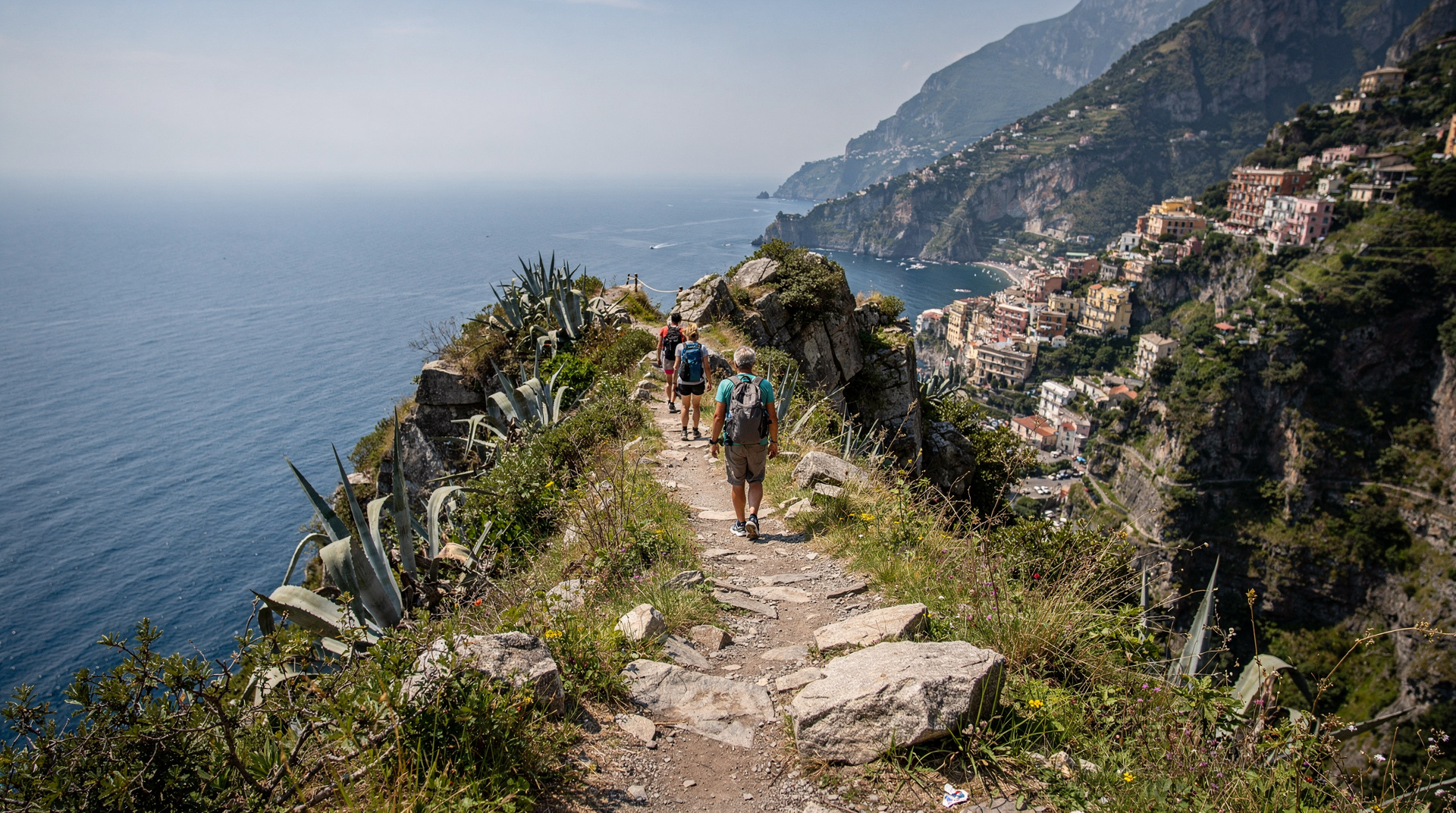
For visitors deciding how to spend a single free day, it helps to know how Vesuvius compares to the other big day-trip options. Vesuvius delivers a physical, active experience (a real hike, genuine altitude, sweeping views) rather than a passive sightseeing visit — closer in feel to hiking the Path of the Gods than to a museum day.
Compared with Pompeii, Vesuvius is shorter and less historically dense, which is exactly why the two combine so well in a single day — Pompeii for depth, Vesuvius for a change of pace and the payoff view over the bay it created. Compared with a Capri or Amalfi Coast day, Vesuvius is considerably cheaper and less weather-dependent on travel logistics, though more weather-dependent on whether the crater itself is open. See best day trips from Naples for the full range of options if Vesuvius doesn’t end up being the right fit for your remaining days.
Frequently asked questions about Vesuvius day trip from Naples
Can you drive to Vesuvius?
How difficult is the Vesuvius crater hike?
Is Vesuvius closed sometimes?
What do you see from the Vesuvius crater rim?
When did Vesuvius last erupt?
Is Vesuvius dangerous to visit?
Top experiences
Bookable activities with verified prices and instant confirmation on GetYourGuide.