Walls That Talk: A Street Art Walk Through Naples
Naples has always talked in images. The presepi workshops of San Gregorio Armeno, the votive shrines lit by LED candles at every corner, the political placards that go up overnight and stay for years — the city expresses itself on its walls. What has changed in the last decade is that this impulse has acquired a new vocabulary: the street art movement that began in Rione Sanità and spread outward has turned entire neighbourhoods into open-air galleries, and the results are worth a deliberate walk.
This is not the curated mural tourism of certain other cities, where the art is approved and the neighbourhood is safe and the cafés sell flat whites for €6. Naples street art is messier, more contextual, more tied to the actual fabric of the streets it inhabits. Some of it is world-class. Some of it is propaganda. All of it tells you something true about where you are.
| Where | Rione Sanità, Quartieri Spagnoli, Metro Line 1 stations |
| Cost | Free — €1.30 for metro fare, €9 for the catacombs |
| Time needed | Full day for the complete route |
| Best light | Morning in the Sanità, midday at Toledo station |
| Don’t miss | The Maradona mural in the Quartieri Spagnoli |
Rione Sanità: Where the Transformation Started
The Rione Sanità sits north of the centro storico, beneath the Capodimonte hill, in a neighbourhood that spent the better part of a century being described as a place to avoid. The statistics were real: high unemployment, Camorra presence, crumbling housing stock, a persistent sense of abandonment by the official city. What changed was not a government programme or a development fund.
It was a combination of community activism, the basilica-based social enterprise of Don Antonio Loffredo, and a decision to use the neighbourhood’s extraordinary visual assets — the Roman catacombs, the baroque palazzi, the dramatic overhead bridges — as the raw material for regeneration. Our full Rione Sanità guide covers the neighbourhood’s history and layout beyond the art itself.
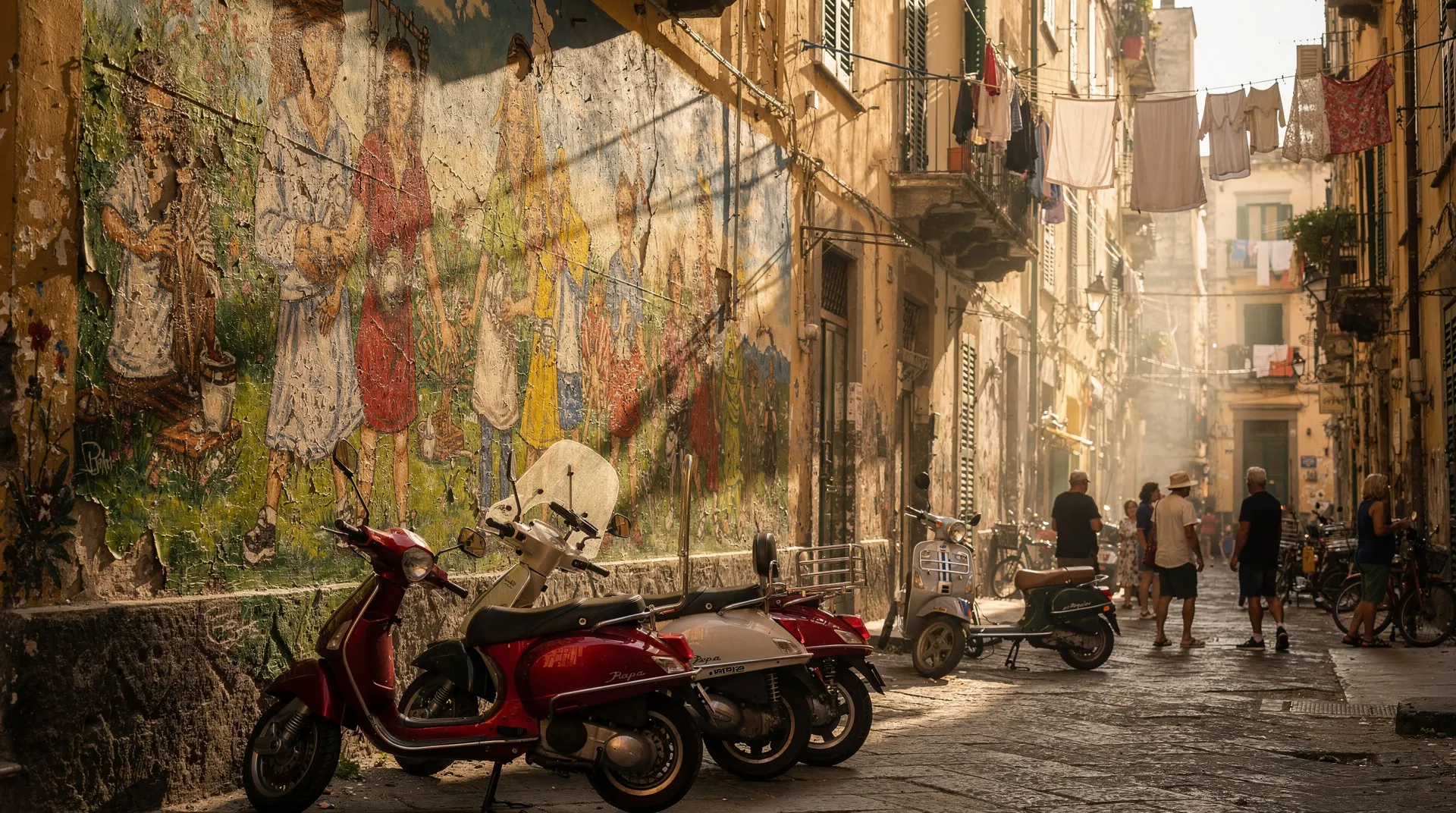
The murals arrived as part of this process. Artists invited to the Sanità painted the external walls of the bassi (the ground-floor dwellings), the sides of the elevated road supports, the shuttered facades of closed shops. The subjects are often neighbourhood-specific: portraits of residents, historical figures associated with the area, abstract compositions that reference Neapolitan textile and ceramic traditions.
The walk through the Sanità should start at Piazza Sanità and proceed on foot — the neighbourhood is compact, and the art is not in any single location but distributed across the alleys and courtyards. Budget two hours if you want to look properly rather than walk quickly. Entry to the catacombs of San Gennaro, which sit directly beneath some of the most significant murals and provide their own extraordinary visual experience, costs €9.
The Maradona Mural
Diego Armando Maradona is not dead in Naples. He is present in a way that transcends the usual posthumous tribute. The murals, the shrines, the names of bars and children — the city’s relationship with its greatest adopted son is active and ongoing, a civic emotion rather than a historical footnote. Our companion Maradona and Naples pilgrimage piece covers the wider constellation of shrines and bars devoted to him across the city.
The most famous Maradona mural — a large-format portrait that has become the city’s most photographed image in certain circles — sits in the Quartieri Spagnoli, on the facade of a building at the intersection of Via Emanuele de Deo and Via Gigante. It was painted by Mario Filardi and shows Maradona in his Napoli shirt, rendered with enough technical quality to stop you mid-step. Around it, the neighbourhood has accreted additional tributes: smaller paintings, framed photographs behind glass, scarves and flags that are replenished when they fade.
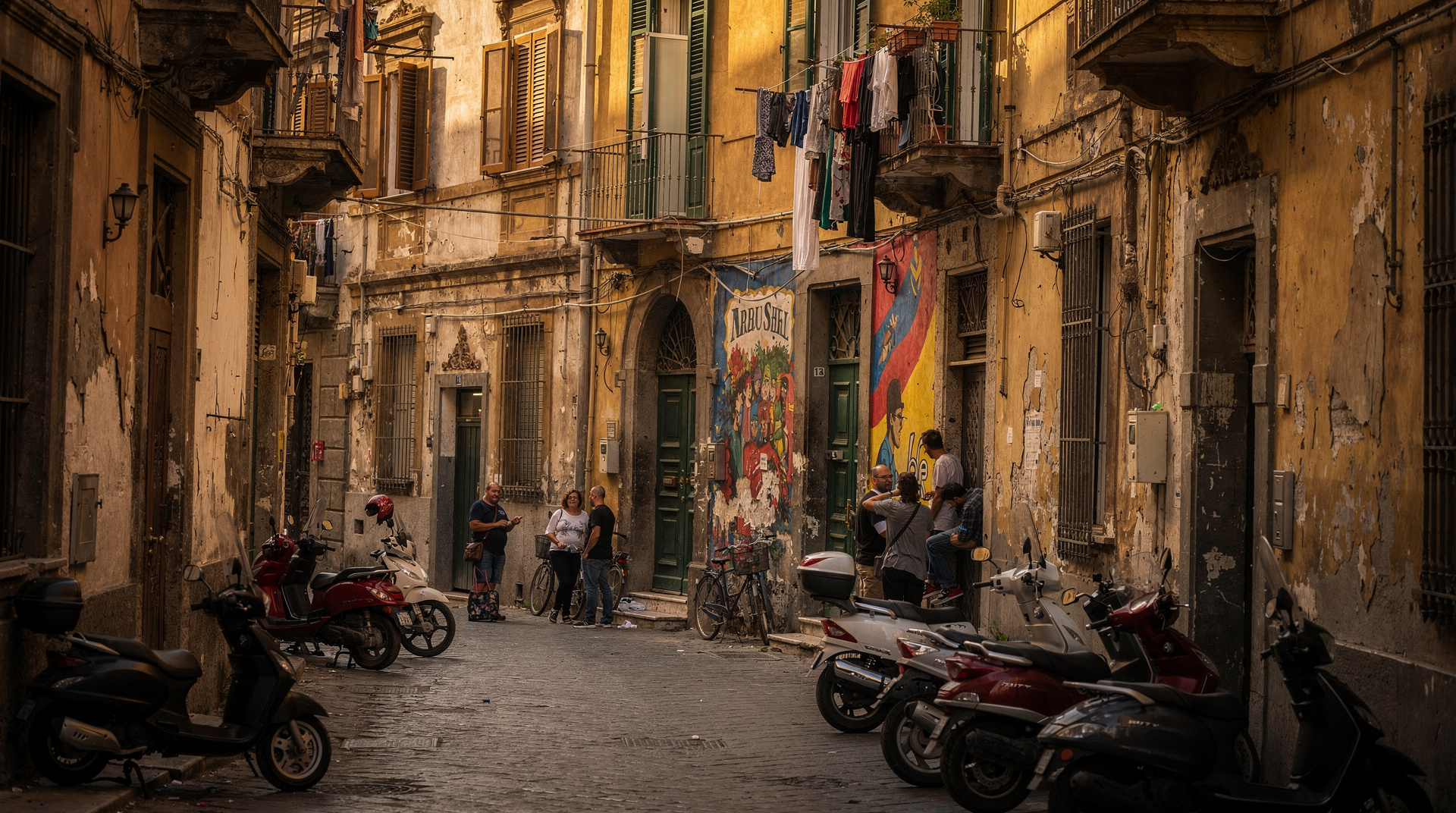
The Quartieri Spagnoli is worth half a day on its own terms — the Spanish Quarter grid of narrow streets running perpendicular to Via Toledo is one of the most architecturally coherent parts of Naples, the washing still strung between the buildings, the ground-floor workshops opening directly onto the street. The Maradona mural is the anchor, but it is not the only art here.
The Metro Art Stations
Naples has built what is arguably the most ambitious public art programme in any urban metro system in Europe. The stations of Line 1 — Università, Toledo, Museo, Dante, Materdei, Salvator Rosa, Quattro Giornate — were designed by major architects and filled with permanent commissions from artists including William Kentridge, Jannis Kounellis, and Joseph Kosuth. Our dedicated Naples metro art stations guide has the full route and which stations reward the most time.
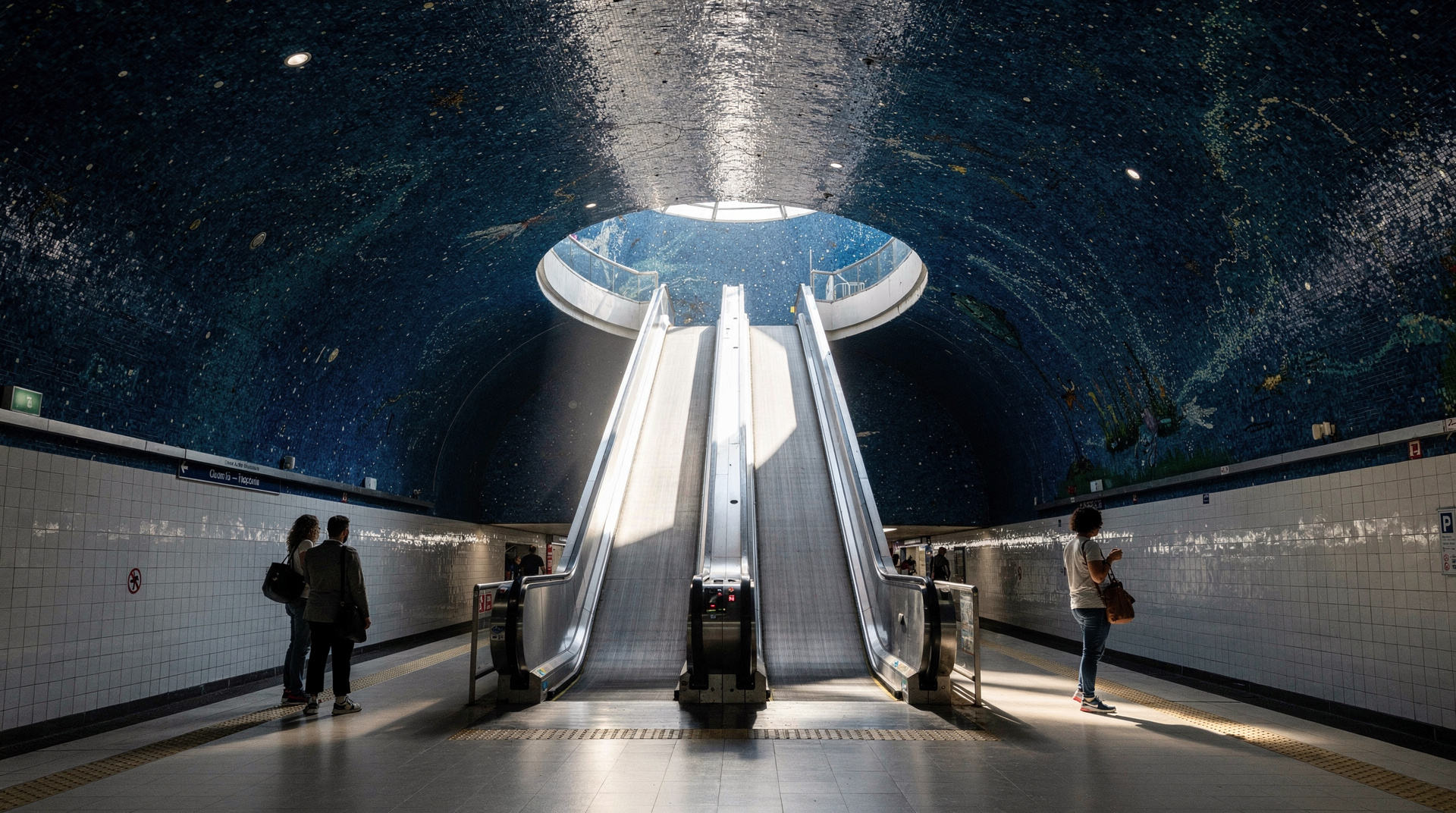
Toledo station, designed by Óscar Tusquets Blanca, is the most visited and the most spectacular: a mosaic-covered shaft descending into the earth, its walls lined with gradated blue-to-black ceramic tiles that create the sensation of diving underwater. It was named by National Geographic as one of the most beautiful metro stations in the world, and the designation is not hyperbole. Even Neapolitans who use it daily sometimes pause at the mezzanine level to look up.
Università station contains a permanent installation by Kosuth of illuminated text — philosophical and literary quotations in multiple languages — running the length of the platforms. Museo station, adjacent to the National Archaeological Museum, uses the archaeological collection as its visual logic: fragments and motifs from the collection above appear in the tilework below.
The metro art stations are free with a standard journey ticket — €1.30 per trip — and the art is simply there, embedded in the infrastructure. Taking Line 1 end-to-end and getting off at each art station takes around three hours at a comfortable pace.
A Guided Walk Through the Art and the Legends
The difficulty with self-navigating Naples street art is context. The Rione Sanità pieces are legible on their own terms, but the story behind specific works — why a particular portrait was commissioned, who the subject is, what the artist was responding to — is largely inaccessible to a visitor without local knowledge. The metro stations have some English interpretation but it is limited.
For this reason, a private street art and legends tour of Naples is one of the more useful guided experiences the city offers. The format gives you the visual content and the narrative behind it together, including the neighbourhood history that makes the Sanità murals coherent rather than decorative.
If you want to combine the art walk with a broader exploration of what lies beneath the city’s visual surface — the subterranean layers of Greek, Roman and early Christian Naples that inform so much of what appears above ground — the Naples Underground and hidden city tour provides the archaeological complement to the street-level story.
The Wider Picture: Art as Urban Regeneration
The Rione Sanità story is instructive because it is not entirely a success story, and the nuance matters. The murals and the catacombs tourism have brought visitors and attention, reduced some of the isolation, and provided local employment. They have also contributed to a gradual pressure on rents that complicates the narrative of uncomplicated regeneration. This tension — art as tool of renewal versus art as precursor to displacement — is live and recognised within the neighbourhood itself.
Walking through the Sanità without being aware of this context is possible. Walking through it with the context is more honest and more interesting. The murals did not save the neighbourhood; they changed it, in ways that are still being negotiated. Our broader Neapolitan culture and traditions guide situates this street art movement within the city’s wider visual and social habits, from the presepi workshops to the votive shrines.
The Three Legs of the Walk, Compared
| Stop | Time needed | Cost | Character |
|---|---|---|---|
| Rione Sanità | ~2 hours | Free (catacombs €9) | Community murals, historical portraits |
| Quartieri Spagnoli / Maradona mural | ~2 hours | Free | Football devotion, dense street life |
| Metro Line 1 art stations | ~3 hours end-to-end | €1.30 per ride | Architect-designed, internationally curated |
Where Else to Point Your Camera
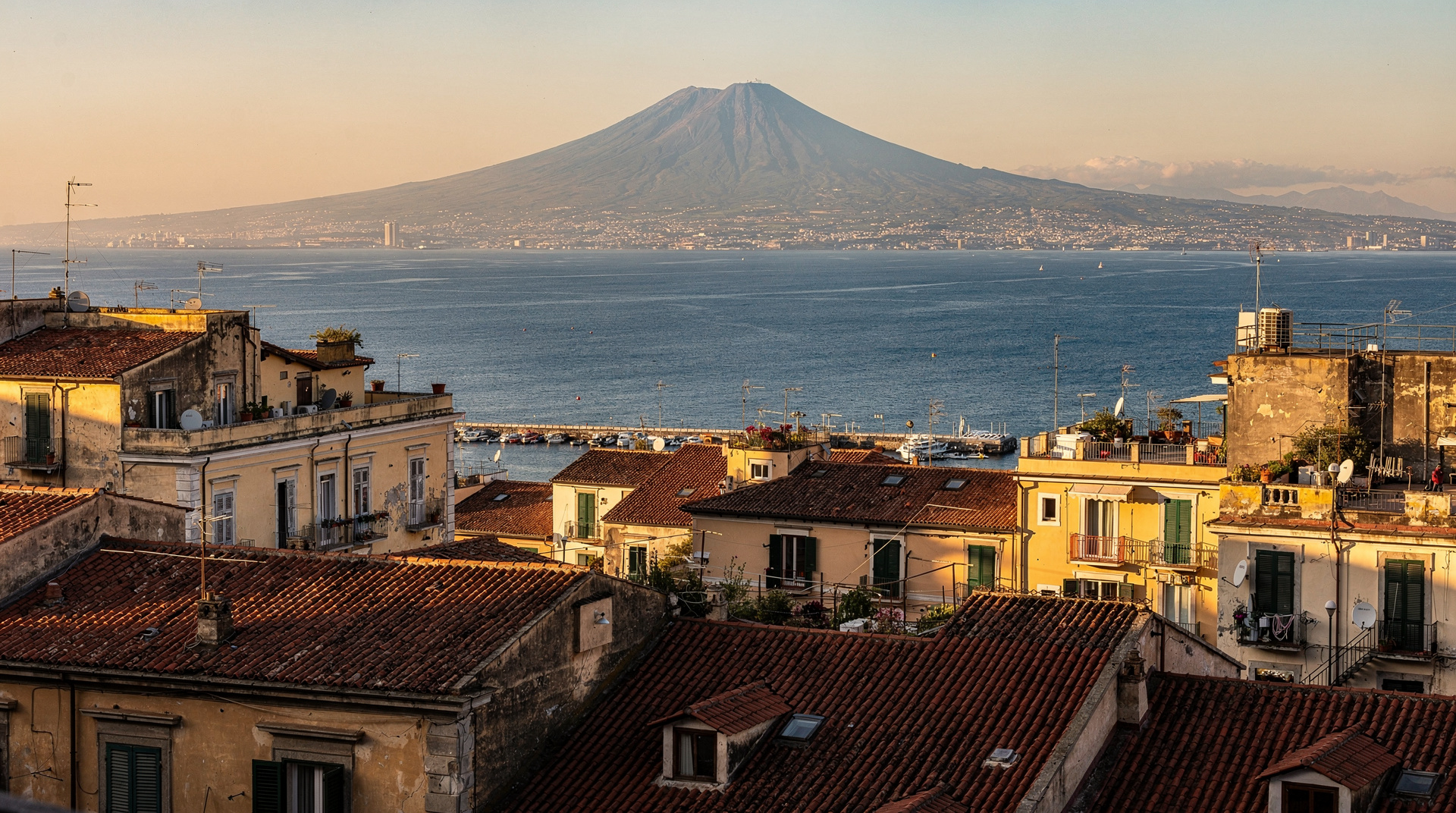
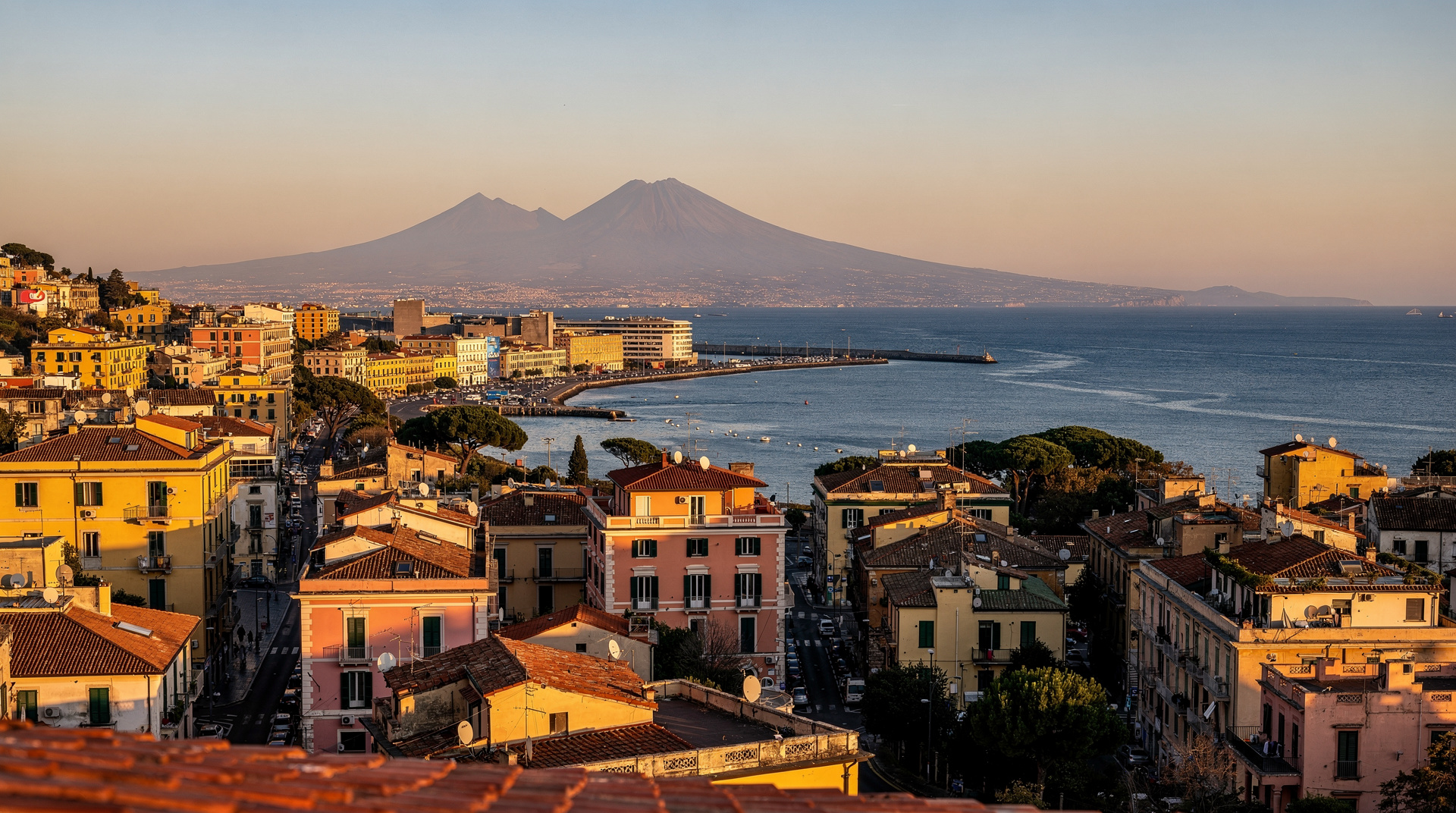
If the murals and mosaics leave you wanting more of the city’s visual side, Naples rewards a dedicated eye well beyond street art — balconies dripping with laundry, baroque church interiors, the light on the bay at dusk. Our best photo spots in Naples guide rounds up the rest, and the hidden gems of Naples guide covers lesser-known corners that reward the same slow, attentive walking this route asks of you.
Practical Notes for the Walk
The full route — Rione Sanità, Quartieri Spagnoli, and three or four metro art stations — can be covered in a single day if you start at 9 am and pace yourself. The logical sequence is: Sanità in the morning (cooler, quieter, the light on the murals is better before noon), the Quartieri Spagnoli and Toledo station at midday, then the remaining metro stations on the commute south or east.
Wear comfortable shoes. The Sanità streets are not flat, and the paving in the historic centre is uneven everywhere. Bring a good camera or accept that your phone will not adequately capture the scale of the larger pieces — the Toledo station mosaic especially benefits from a wide lens.
The art is free. The context is what you bring to it.