Hidden gems in Naples — beyond the obvious
Naples: Private Tour with Locals – Highlights & Hidden Gems
Duration: 3h
What are the hidden gems of Naples that most tourists miss?
The Pio Monte della Misericordia Caravaggio, the Crypta Neapolitana ancient Roman tunnel, Palazzo dello Spagnolo courtyard in Rione Sanità, the Pignasecca market, the Galleria Borbonica Bourbon tunnel, and the Quartieri Spagnoli neighbourhood are the most rewarding things most tourists walk past without knowing they exist.
Quick answer: The best hidden gems are the Pio Monte Caravaggio, the Galleria Borbonica, Rione Sanità, Palazzo dello Spagnolo, the Pignasecca market, and the Quartieri Spagnoli. All are within 30 minutes of the tourist centre and almost all tourists miss them.
| Where | Centro storico, Rione Sanità, Posillipo, Quartieri Spagnoli — all within 30 min of Via Toledo |
| Cost | Free–€10 per site; Pio Monte €8, catacombs €9 |
| Time needed | Half a day for 3–4 sites, a full day to cover most |
| Getting there | On foot from the centro storico, or metro/funicular for Vomero and Posillipo |
| Best time | Weekday mornings — quiet even by “hidden gem” standards |
Why Naples has more hidden gems than most cities
Naples has been continuously occupied for 2,700 years and has never had the kind of wholesale urban renewal that erases a city’s layers. The result is a city with more historical density — and more genuinely overlooked places — than almost any other in Europe. The tourist circuit covers perhaps 10% of what the city actually contains.
This guide focuses on places with real cultural or experiential value that are not on the standard itinerary, priced honestly, and accessible without specialist knowledge.
Pio Monte della Misericordia — the hidden Caravaggio
At Via dei Tribunali 253 — literally on the most touristy street in Naples — most visitors walk straight past the unassuming facade of the Pio Monte della Misericordia. Inside, Caravaggio’s Seven Acts of Mercy (1607) occupies the main altar.
This is not a minor work. It is one of Caravaggio’s largest and most compositionally complex paintings, commissioned specifically for this chapel. Seven different acts of mercy (feeding the hungry, clothing the naked, caring for the sick, visiting prisoners, burying the dead, welcoming pilgrims, ransoming captives) are compressed into a single scene with a theatrical light source and a crowd of figures including the Madonna and angels in the upper half.
Entry €8. The visit takes 20–30 minutes. The gallery above has additional 17th–18th century Neapolitan paintings that are secondary but fine.
This is one of the most significant things in Naples and hardly anyone knows it is there.
Rione Sanità — the neighbourhood time forgot
Rione Sanità is a working-class neighbourhood north of the historic centre, in the valley between two hills. It has almost no tourist infrastructure — no English menus, no guided tour signs on every corner. What it has is:
Palazzo dello Spagnolo (Via Vergini 19): A baroque palace with one of the most famous external staircases in Italy — the scalone a piperno (stone staircase) with double-ramp arches. The building is owned by private families but the courtyard is accessible during daylight hours. Often used in film shoots; strikingly photogenic.
Catacombs of San Gennaro (€9): The most important early Christian site in Campania, open daily. Better explained and more culturally layered than the Fontanelle cemetery. Book tours at the ticket office at Via Capodimonte 13.
Fontanelle Cemetery (free): The bone-filled tufa cave with the tradition of skull adoption. Strange, moving, free. Distinctly Neapolitan.
Street markets and cafés: Rione Sanità has a genuine neighbourhood café culture. Sit at a bar counter with locals for an espresso (€1) and see a side of Naples that the Spaccanapoli tourist circuit does not show.
Local guide tour: hidden Naples highlights (3h, Rione Sanità included)Galleria Borbonica — the Bourbon tunnel
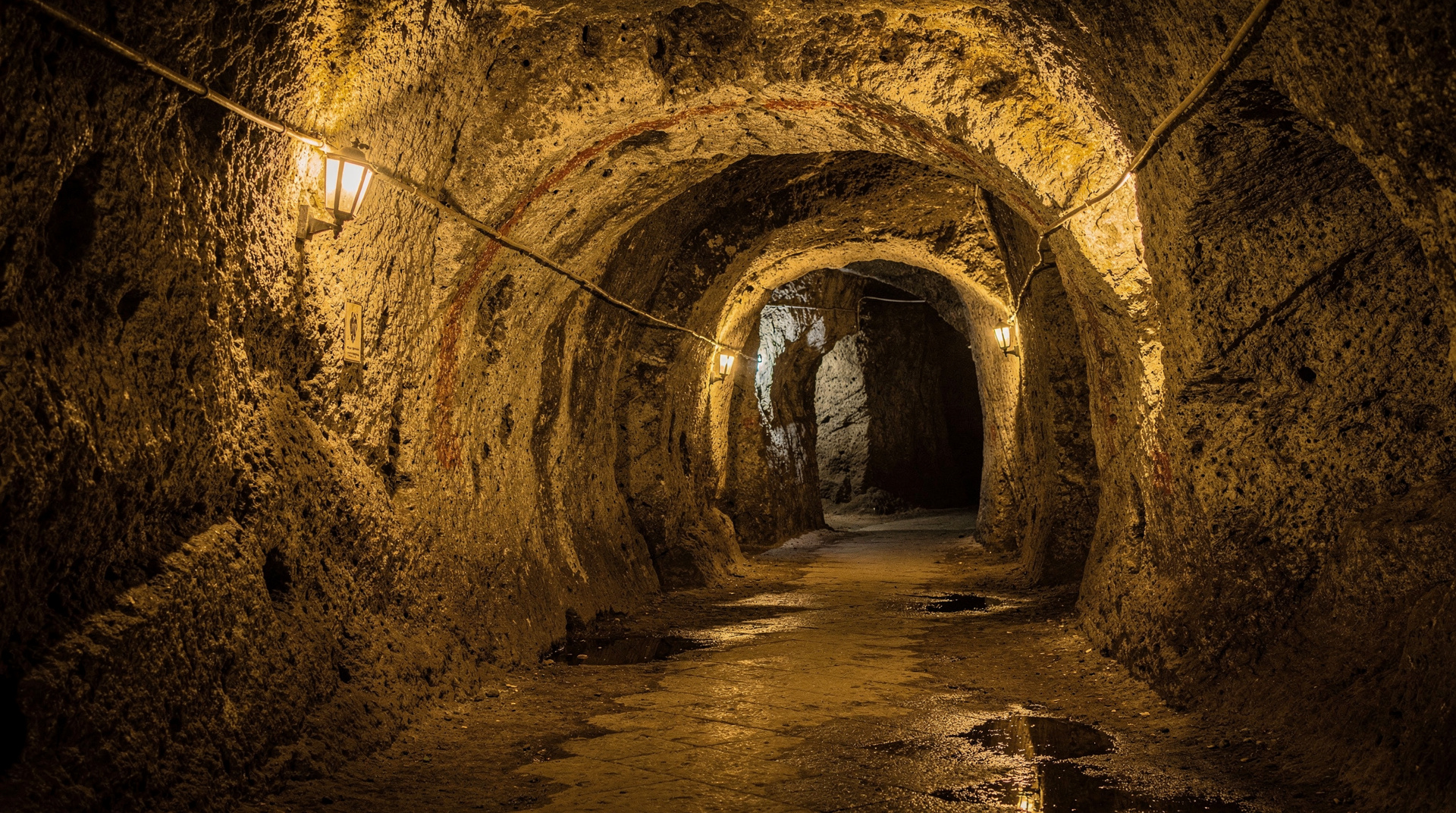
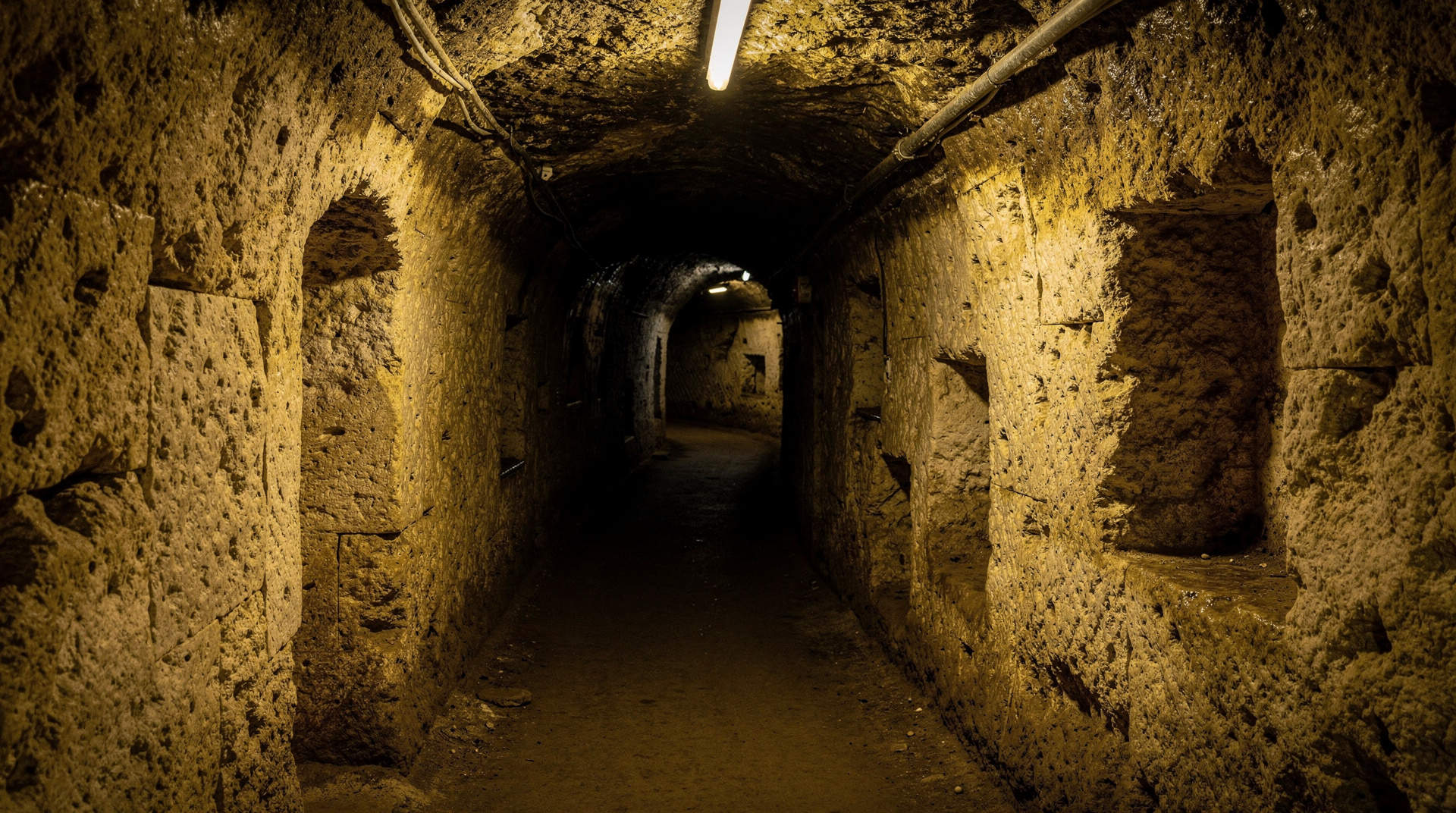
The Galleria Borbonica (Vico del Grottone 4, near Piazza del Plebiscito) is a 19th-century escape tunnel commissioned by Ferdinand II of the Two Sicilies in 1853 — a precautionary route from the Royal Palace to the barracks on Via Morelli, in case of revolution. It was never needed for its original purpose.
During WWII it became an air-raid shelter, a vehicle dump, and a hiding place. Today several hundred metres of the tunnel are open to visitors, including the carriages, motorcycles, and household objects left behind during the war.
Three tour formats run: standard walking tour, “adventure” tour (involving ladders and tighter passages), and a raft tour through a flooded section. Entry €10–16 depending on tour type.
Different in character from Napoli Sotterranea (which is ancient and archaeological) — the Borbonica is more recent and more viscerally industrial. Worth visiting if you are interested in the WWII layer of the city. Full guide at Galleria Borbonica.
Quartieri Spagnoli — the Spanish Quarter
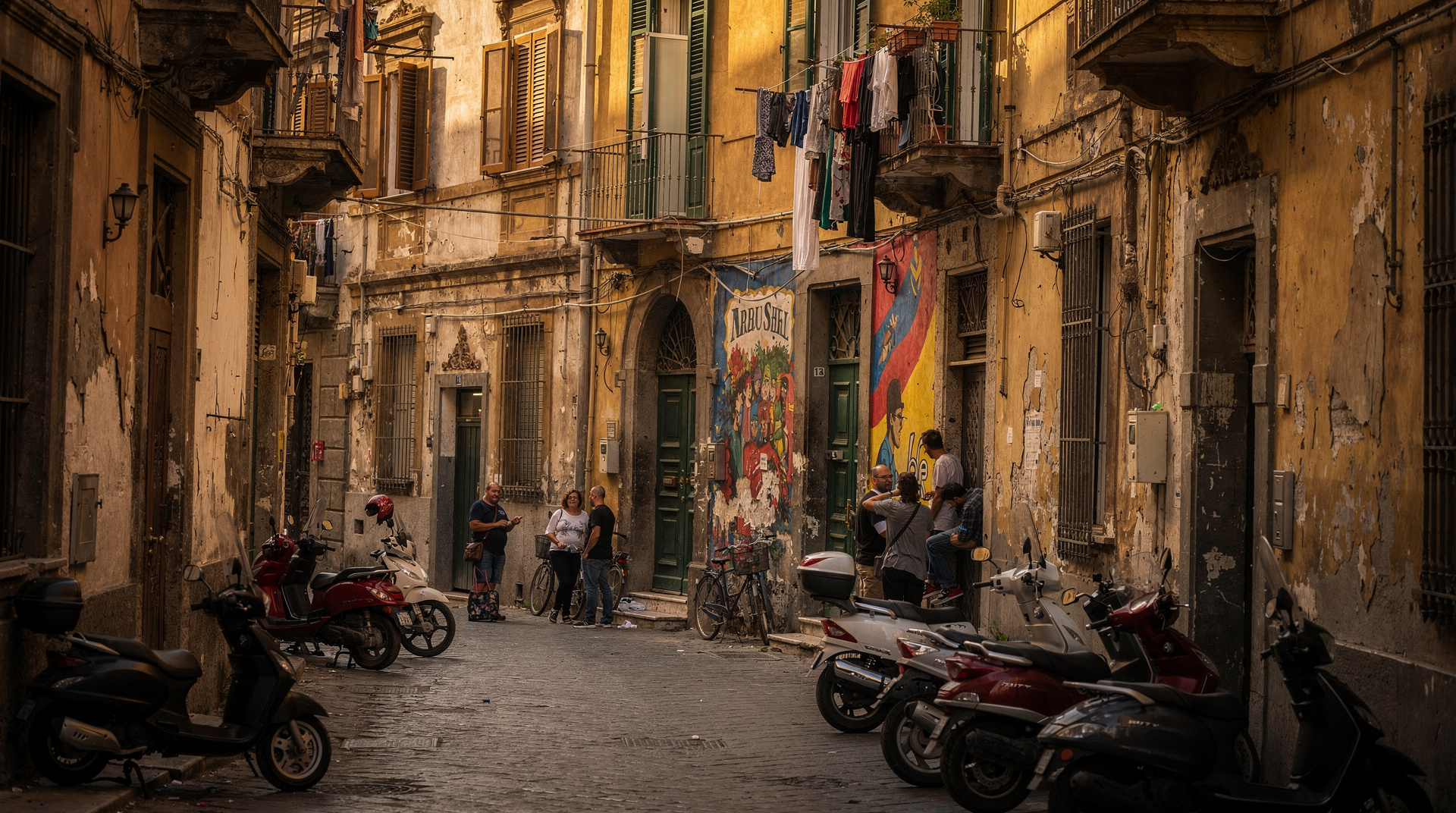
The Quartieri Spagnoli occupy the grid of streets immediately west of Via Toledo — visible from the main shopping street but barely entered by tourists. The neighbourhood was built by the Spanish viceroys in the 16th century to house the garrison; the tight streets and tall apartment blocks were designed for soldiers, not comfort.
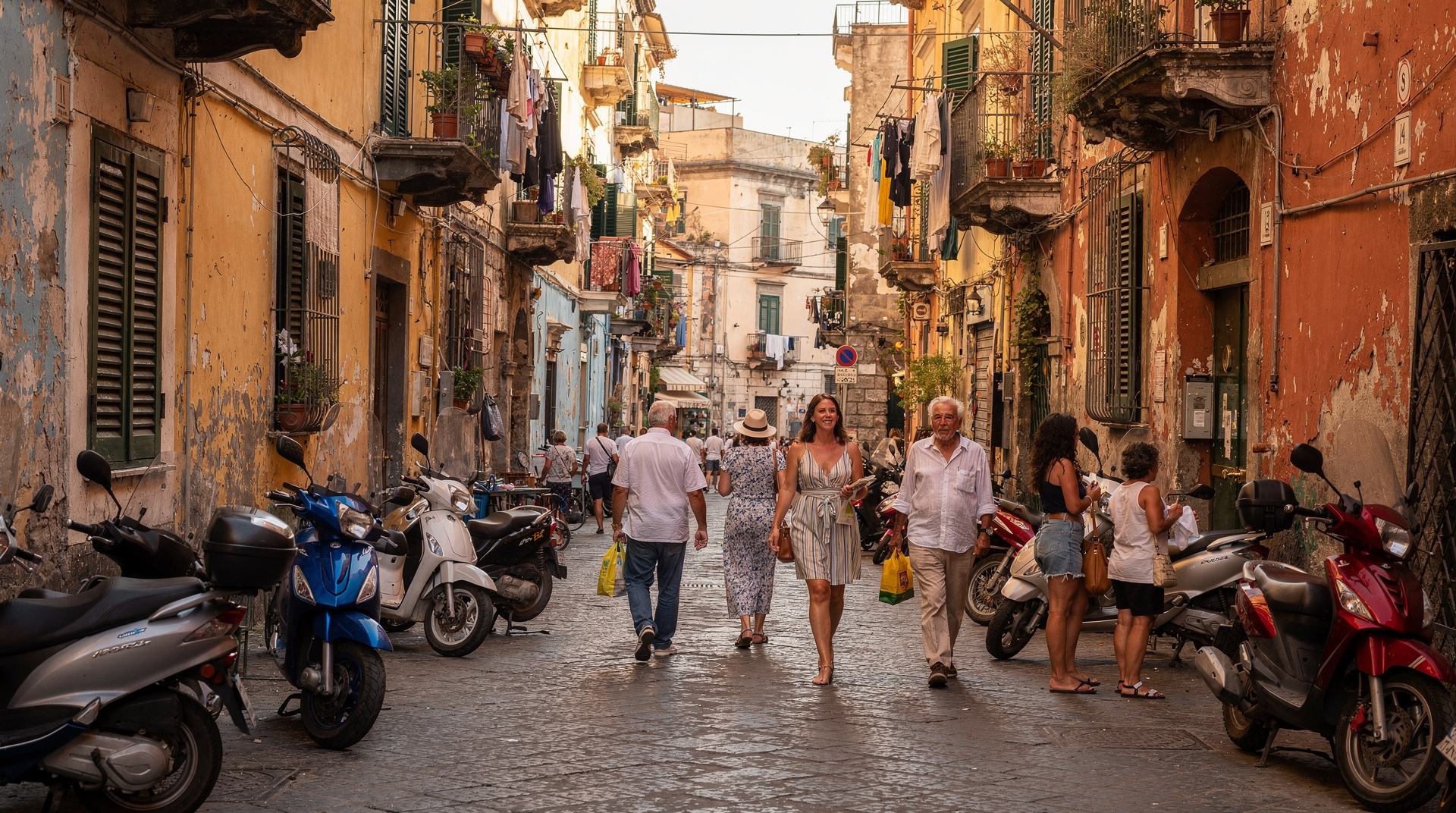
Today it is a densely populated working neighbourhood with excellent cheap food, street art (including the famous Maradona murals on Via Emanuele De Deo), laundry strung between buildings, and a street energy that is specifically Neapolitan rather than Italian-generic.
Walk in from Via Toledo on any side street heading west. The main Maradona shrine (spontaneous, evolving, with match scarves, photographs, and candles) is on Via Emanuele De Deo. No entry fee. Maradona guide for context.
Crypta Neapolitana (Roman tunnel under Posillipo)
The Crypta Neapolitana is a 711-metre Roman road tunnel cut through the Posillipo hill in the 1st century BCE, attributed (possibly incorrectly) to the engineer Cocceius. It served as the main road between Naples and Pozzuoli for 2,000 years. Dante walked through it in 1306.
The tunnel is now a scheduled archaeological monument at Parco Virgiliano, Posillipo. It is accessible periodically through the Campania archaeological service — opening hours are irregular, and you should check before visiting. When open, entry is free or nominal. The tunnel itself is well-preserved and genuinely ancient.
Even if the tunnel is closed, Parco Virgiliano at the tip of the Posillipo headland is a free public park with excellent bay views and local families picnicking.
Palazzo Reale di Portici — the least-visited Bourbon palace
Portici, 10 km south of Naples (accessible by Circumvesuviana, ~15 minutes), has the Royal Palace of Portici — the first Bourbon royal palace in Italy (1738), built for Charles VII directly above the buried site of Herculaneum. The palace now houses the Faculty of Agriculture of Naples university; the grounds are partially open.
Almost no tourists visit. The Herculaneum excavations are visible in part from the palace gardens. The nearby Villa Campolieto and Villa Ruggiero (part of the Reggia di Portici estate) are free to visit on scheduled days and have been restored.
This is genuinely off the tourist circuit — worthwhile for visitors who have seen the main Naples sights and want something unusual.
Pignasecca market — the real Naples daily market
Via Pignasecca, near the Montesanto metro station and the Spanish Quarter, is Naples’ most authentic daily street market. Unlike the tourist-facing stalls on Via San Gregorio Armeno, the Pignasecca is where Neapolitans buy fish, vegetables, cheese, and street food at honest prices.
Arrive between 8:00 and 12:00 for maximum activity. Watch how the vendors interact with regulars, observe the price negotiating (less common than it used to be but still present), and eat a cuoppo or pizza a portafoglio from one of the stalls.
Free to walk through. This is covered in the food markets guide.
Sant’Elmo castle — better than Castel Nuovo
Castel Sant’Elmo, the star-shaped fortress on the Vomero hill above the Certosa di San Martino, is less visited than any of the seafront castles despite having better panoramic views. Entry €5. The 14th-century star fort was used as a prison until 1952; today it has a small contemporary art gallery and extraordinary 360-degree views of the bay, Vesuvius, the islands, and the city below.
Accessible by funicular from Piazzetta Duca d’Aosta or Montesanto station.
The Pausilypon archaeological site
On the Posillipo headland, the Villa Pausylipon was the private estate of the Roman aristocrat Vedius Pollio and later passed to Augustus. The remains include a small odeon (theatre), a grotto (Grotta di Seiano, 770 metres long, cut by Vedius Pollio in the 1st century BCE), and coastal ruins.
Access is on guided tours from the waterfront, arranged through the Campania archaeological service. Opening is irregular and advance booking required. Free when open. One of the most genuinely ancient and overlooked sites accessible from Naples.
Origins of Naples walking tour — lesser-known historic sites (2.5h)Basilica di Santa Maria della Sanità — the hidden baroque gem
On Via Sanità in the Rione Sanità neighbourhood, this 17th-century Dominican church is one of the more spectacular baroque interiors in Naples. The coloured marble floor, the painted vault, and the catacombs below (catacombs of San Gaudioso, entry €9) make it a complete package. The catacombs below are among the earliest Christian burial sites in the city.
Free church entry; paid for the catacombs. More at catacombs of San Gaudioso.
Getting to these places
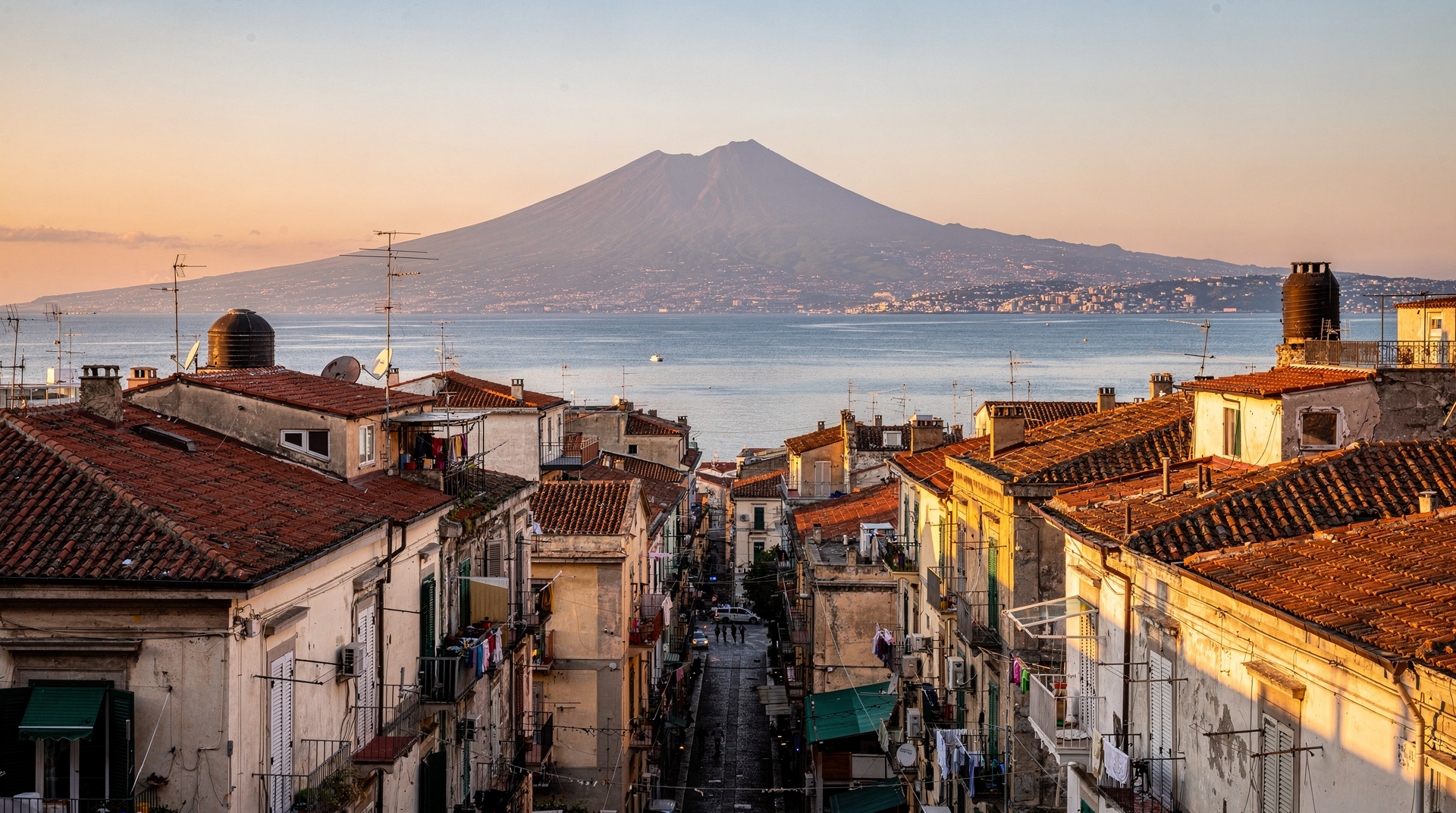
Most of these are in or adjacent to the city centre and accessible on foot or by metro. Rione Sanità is 15 minutes north of the MANN. Quartieri Spagnoli is next to Via Toledo. Posillipo requires a bus or taxi (20–30 minutes).
For structured access to lesser-known sites, guided tours focused on the hidden city are the best option.
Planning your hidden-gems day by time available
Half a day (3–4 hours): Pio Monte della Misericordia, then walk into the Quartieri Spagnoli, finish at the Pignasecca market for lunch. All three are within 15 minutes of each other on foot and cost under €15 total. This is the most efficient combination if you have already done the best things to do in Naples and want a contrast.
A full day: Add Rione Sanità in the morning (Palazzo dello Spagnolo, catacombs of San Gaudioso or San Gennaro, a coffee at a neighbourhood bar), then the Galleria Borbonica or the Crypta Neapolitana in the afternoon, depending on which is open that day — both run on irregular schedules, so check ahead. Round it off with the sunset view from Castel Sant’Elmo.
If you only have one extra hour: The Pio Monte della Misericordia is the single best return on time — one Caravaggio, ten minutes from Via dei Tribunali, almost never crowded. Pair it with a walk through the Spanish Quarter street art on your way back.
These sites reward the same slow, unhurried pace covered in the self-guided walking tour — rushing between them defeats the point of visiting places precisely because they are not on the rushed circuit.
Why these places stay hidden
None of the sites on this list are secret in the sense of being unknown — they appear in specialist guidebooks and on local blogs. What keeps them uncrowded is a combination of unglamorous marketing (a plain oratory facade, a working-class neighbourhood name that still carries an outdated reputation), irregular opening hours that discourage casual drop-ins, and the simple fact that most first-time visitors have only two or three days and default to the MANN, Pompeii, and Spaccanapoli. That triage is entirely reasonable for a first trip — see how many days in Naples for how the maths works out — which is exactly why these places stay calm even in high season.
The upside for you is durability: a hidden gem discovered this year will likely still be hidden next year, because the forces keeping it quiet (irregular hours, an unglamorous name, being one metro stop further than most tourists bother to go) are structural, not temporary. Booking ahead is rarely necessary here — the opposite problem of the headline sights, where Cappella Sansevero tickets sell out days in advance.
Frequently asked questions about hidden gems in Naples
What is the most overlooked museum in Naples?
The Pio Monte della Misericordia for the Caravaggio. The Museo di Palazzo Reale (Royal Palace) is also significantly undervisited relative to its content quality. Certosa di San Martino is better known but still sees a fraction of the MANN’s visitors despite being excellent.
Is Rione Sanità safe to visit?
Yes, during the day. It has a reputation (largely outdated) as a rough neighbourhood. In practice, the tourist-accessible parts — Via Sanità, the Fontanelle cemetery, the catacombs — are well-visited and safe. Use normal city-centre awareness.
What is the best neighbourhood for seeing real Naples daily life?
Rione Sanità, Quartieri Spagnoli, and Montesanto are the three neighbourhoods least affected by tourist gentrification. Pignasecca market is the single best vignette of daily Neapolitan life accessible to visitors.
Are there hidden gardens or parks in Naples?
Yes: the Capodimonte park (free), Parco Virgiliano at Posillipo (free), Villa Comunale in Chiaia (free, not hidden but underused by tourists), and the gardens of various private palaces opened occasionally for events. The Orto Botanico near the MANN is a free botanical garden.
What is worth seeing in Naples beyond the historic centre?
Posillipo (coastal walks, villa remains, views), Vomero (Certosa, Castel Sant’Elmo, funicular rides), Chiaia (evening atmosphere, aperitivo culture), and Rione Sanità (catacombs, baroque palaces). None of these require special transport — all are accessible by metro or funicular.
Frequently asked questions about Hidden gems in Naples — beyond the obvious
Are there places in Naples that are genuinely off the tourist trail?
What is Pio Monte della Misericordia?
What is the Crypta Neapolitana?
Is the Galleria Borbonica different from Napoli Sotterranea?
What neighbourhood do locals actually live in?
Are there hidden beaches near Naples?
Top experiences
Bookable activities with verified prices and instant confirmation on GetYourGuide.