Gardens and parks in Naples and Campania: green spaces worth visiting
Caserta: Guided Tour of the Royal Palace and Gardens
What are the best gardens near Naples worth visiting?
The finest formal garden is the Royal Palace park at Caserta (UNESCO, 120 hectares, free to walk). In Naples itself: Capodimonte park (free, 134 hectares), Villa Floridiana (free entry to park). On the Amalfi Coast: Villa Cimbrone and Villa Rufolo in Ravello (entry €7–10 each). All are accessible by public transport.
Why green spaces matter in a dense city
Naples is Italy’s most densely populated city. The historic centre (a UNESCO site for its grid of Greek and Roman streets) is almost entirely urban. But the city and its surroundings have several significant green spaces — royal parks, botanical gardens, hilltop villas — that provide both respite from the urban intensity and genuine horticultural and historical interest.
This guide covers both the gardens within Naples and the most significant regional gardens accessible by day trip.
| Best free option | Capodimonte park (134 ha) or Villa Floridiana |
| Best formal garden | Royal Palace of Caserta (around €8–10, garden only) |
| Best view | Villa Cimbrone, Ravello (around €8–10) |
| Time needed | 1–1.5 hrs (city parks) to a half day (Caserta) |
| Best season | Spring and autumn for walking; May–Oct for Ravello gardens |
In Naples city
Real Bosco di Capodimonte (Capodimonte Park)
Size: 134 hectares Entry: Free (park; museum has a separate entry fee) Getting there: Bus R4 or 168 from Piazza Garibaldi, or Plebiscito; approximately 30 minutes
The park of the Real Bosco di Capodimonte is one of the largest urban parks in Italy — a forested hill above central Naples originally established as a Bourbon royal hunting reserve in 1738. The same year, work began on the palace that now houses the Capodimonte Museum (Museo di Capodimonte), one of the finest art collections in Italy with works by Raphael, Caravaggio, Titian, and Bellini.
The park is genuinely large and quiet compared to the city below. Paths wind through mature oaks, chestnuts, and Italian pines with occasional viewpoints. The old ice house (ghiacciaia, 18th century) and the porcelain manufactory building (now museums) are interesting architectural details within the park.
Practical: Enter via Porta Grande on Via Miano or Porta di Mezzo on Via Capodimonte. The museum and park have different opening hours — check separately.
Capodimonte Museum entrance ticketVilla Floridiana and Museo Duca di Martina
Size: 6 hectares Entry: Free (park); small fee for museum (€4–6) Getting there: Funicular Centrale (Chiaia direction) to Petraio, or Metro Line 1 to Vanvitelli + walk
The Villa Floridiana on the Vomero hill was commissioned by Ferdinand I of the Two Sicilies for his morganatic wife, Lucia Migliaccio, Duchess of Floridia. The garden — designed in the English landscape style with terraces, citrus groves, and bay views — is a pleasant 45-minute walk. The view across the Bay of Naples toward Posillipo and the islands is one of the better ones in the city.
The villa houses the Duca di Martina Museum, a collection of European and Asian decorative arts (porcelain, maiolica, enamel) assembled in the 19th century. Small and manageable — about an hour covers it.
Orto Botanico di Napoli
Size: 12 hectares Entry: Free or small fee; check current hours (university botanical garden, not always open to public) Getting there: Walk from Piazza Cavour; approximately 20 minutes from the Duomo
The botanical garden of the University of Naples Federico II (established 1807 under French administration during the Napoleonic period) occupies a formal garden near the Rione Sanità with over 10,000 plant species. The collection includes ancient Mediterranean species, succulents, medicinal plants, and a greenhouse section.
Less known to international tourists but worth 1–1.5 hours for anyone with botanical interest. The garden is managed by the university and may have limited weekend opening — check the website before visiting.
Villa Rufolo and Villa Cimbrone, Ravello
Both gardens described in detail in the Ravello guide. In summary:
- Villa Rufolo (medieval, 11th century): €7 entry, garden and tower, Ravello Festival concert platform
- Villa Cimbrone (Belle Époque, 20th century): €8–10 entry, English garden, Belvedere dell’Infinito terrace with the most famous view on the Amalfi Coast
Both accessible by SITA bus from Amalfi (30 min). See Amalfi Coast bus guide.
Day trip gardens
Royal Palace of Caserta — the grand garden
Distance from Naples: 40 minutes by train (Regionale from Napoli Centrale, ~€4.50) Entry: Palace and garden combined: €14–16; garden only: currently €8–10 (check current prices)
The gardens of the Royal Palace of Caserta (Reggia di Caserta) are the most impressive formal gardens in Italy south of the Alps. The main axis — the Viale dei Corsi — runs 3 km from the palace facade to the Grande Cascata waterfall, flanked by a series of fountains with mythological sculpture groups (Aeolus, Ceres, Venus, Diana and Actaeon, the Grande Cascata at the top).
The waterfall is 78 metres high, fed by the Carolino aqueduct (itself a Bourbon engineering achievement). The view from the base of the cascade looking back down the avenue to the palace is one of the great formal garden panoramas in Europe.
Practical: Allow 3–4 hours for the main axis and fountains. The gardens are enormous — electric bikes are available for hire within the park (€10–15 for a 2-hour hire). The upper garden (English garden, jardin anglais) is a landscaped area at the top of the hill above the cascade — less visited but botanically interesting.
Caserta Royal Palace and gardens guided visitGiardino di Ninfa (within day-trip range)
Strictly outside Campania (in Lazio, near Latina), Giardino di Ninfa is mentioned because it is accessible as part of a journey between Rome and Naples and is considered one of the world’s great romantic gardens. The garden grows through the ruins of a medieval town flooded in the 14th century — waterfalls, wild roses, and centuries-old ruins with the Ninfa stream running through. Open on specific days (check calendar on fondazionecaetani.org). Not on the typical Naples tourist circuit but worth a detour if you pass through Lazio.
The lemon terraces of the Amalfi Coast
The lemon groves (limoneti) of the Amalfi Coast are not formal gardens — they are working agricultural terraces supported by dry-stone walls, producing the large Sfusato Amalfitano lemon used in limoncello and traditional cooking. But the aesthetic effect of a working terraced lemon grove, with the sea below and the stone walls radiating pattern across the hillside, is garden-like in its visual organisation.
The terraces are most impressive from March to May (spring growth) and October (harvest period). The Path of the Gods walk (see path of the gods guide) passes through lemon terraces for its first section. Several agriturismo properties in the hills above Positano and Amalfi offer visits and limoncello making.
Naples panoramic e-bike tour through parks and viewpointsCombining gardens with nearby neighbourhoods
Villa Floridiana sits at the edge of Vomero, Naples’ hilltop residential district — pair a garden visit with a wander through the Vomero neighbourhood guide area for panoramic viewpoints and a quieter, more local pace than the centro storico. Capodimonte park borders Rione Sanità, where the Rione Sanità guide covers the catacombs and street art that make the neighbourhood worth an extra hour beyond the park gates. For a coastal alternative to formal gardens, Posillipo offers cliffside parks and sea views — see the Posillipo guide for the best access points.
Spring is the strongest season for garden visits generally: wisteria and citrus blossom peak in March–April, and temperatures are comfortable for the longer walks at Capodimonte or Caserta. The Naples in spring guide has a fuller seasonal breakdown if you’re planning a trip specifically around blooming gardens.
A realistic day plan for garden lovers
If gardens are a priority rather than an add-on, one efficient day pairs Capodimonte park in the morning (before the heat, when the woodland paths are at their quietest) with Villa Floridiana in the early afternoon — the funicular link between Vomero and the city centre makes the transition straightforward, and both are free to enter. Save Caserta for a separate half-day trip: trying to combine it with the city parks in a single day means rushing the gardens that most reward slow walking. If you have a full week in the region, add Ravello’s two villas as a stand-alone day trip built around the Ravello guide, ideally timed for late afternoon light on the Belvedere dell’Infinito.
Practical summary
| Garden/Park | Location | Cost | Travel from Naples | Best season |
|---|---|---|---|---|
| Capodimonte Park | Naples | Free | 30 min bus | All year |
| Villa Floridiana | Naples (Vomero) | Free | 20 min funicular | All year |
| Orto Botanico | Naples | Free/small fee | 20 min walk | Spring/Autumn |
| Villa Rufolo | Ravello | €7 | 2.5 h (bus+train) | May–Oct |
| Villa Cimbrone | Ravello | €8–10 | 2.5 h | May–Oct |
| Caserta gardens | Caserta | €8–10 | 40 min train | All year |
Frequently asked questions about gardens and parks near Naples
Which garden has the best view?
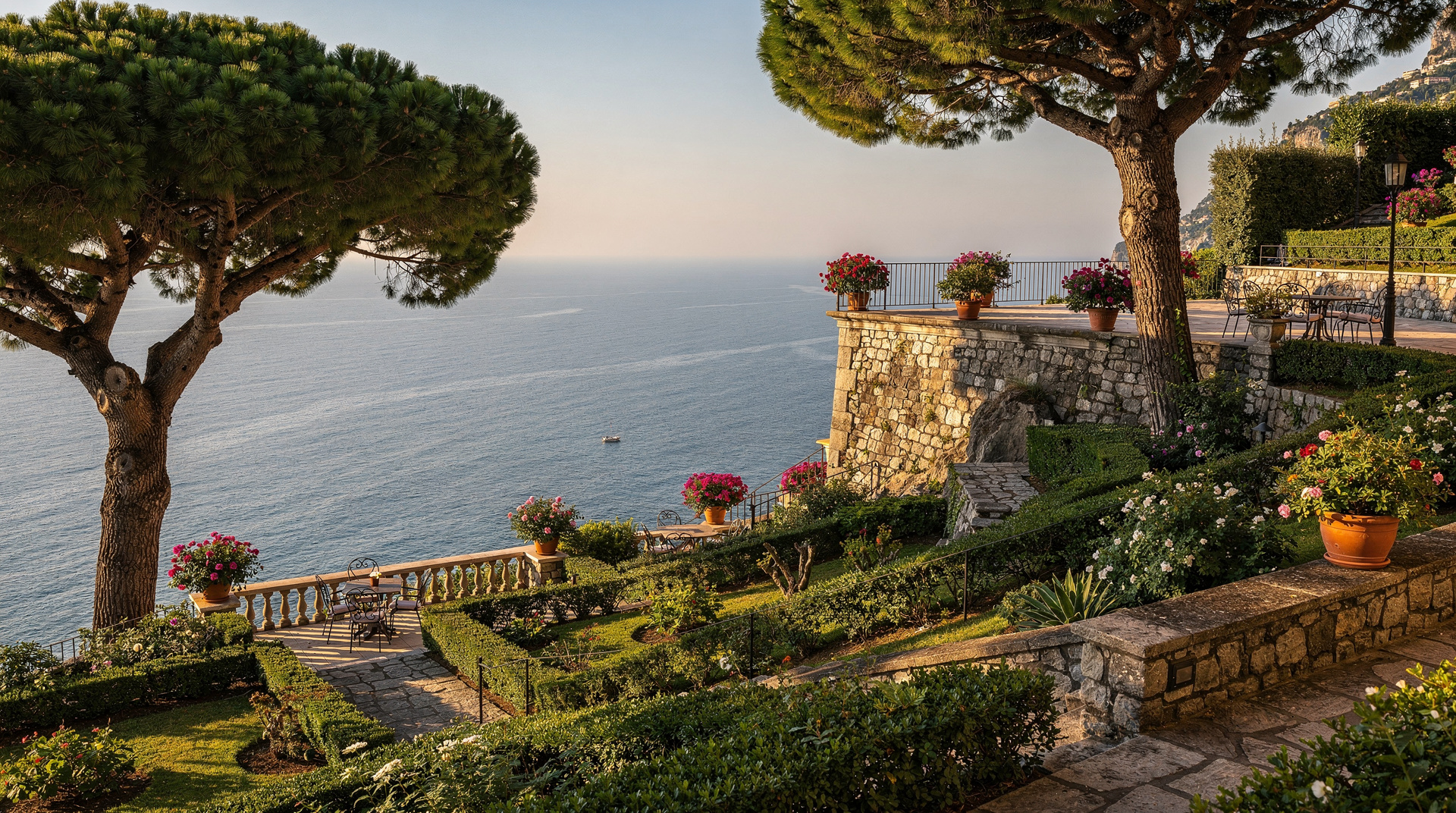
Villa Cimbrone’s Belvedere dell’Infinito in Ravello — a 180-degree panorama over the Amalfi Coast from 350 metres altitude. The Caserta cascade axis is the most impressive purely architectural garden view. Capodimonte park has the best within-Naples panoramas.
Is the Capodimonte park safe to walk in?
Yes during daylight hours. The park is used by local families, joggers, and tourists. As with any large urban park, avoid isolated sections after dark.
Can I visit the Caserta gardens without going into the palace?
The gardens have a separate ticket from the palace interior. You can buy a garden-only ticket. The electric bike hire inside the park is separate. If you want to see the palace interior (grand apartments, Farnese collection), that requires the palace ticket.
Are there notable private gardens in Campania open to visitors?
Several: Villa della Rondinaia above Ravello (Jungian analyst Irene Claremont de Castillejo’s former home), various agriturismo properties with garden tours in the Sorrentine Peninsula, and the lemon groves at several estates near Praiano. Most require advance booking; contact local tourist offices in Ravello or Sorrento.
Frequently asked questions about Gardens and parks in Naples and Campania: green spaces worth visiting
Is the Caserta Royal Palace garden worth a day trip?
What is Villa Floridiana in Naples?
What is the Capodimonte park?
Are there botanical gardens in Naples?
What are the best gardens on the Amalfi Coast?
Top experiences
Bookable activities with verified prices and instant confirmation on GetYourGuide.