Why I Skipped the Blue Grotto (And Don't Regret It)
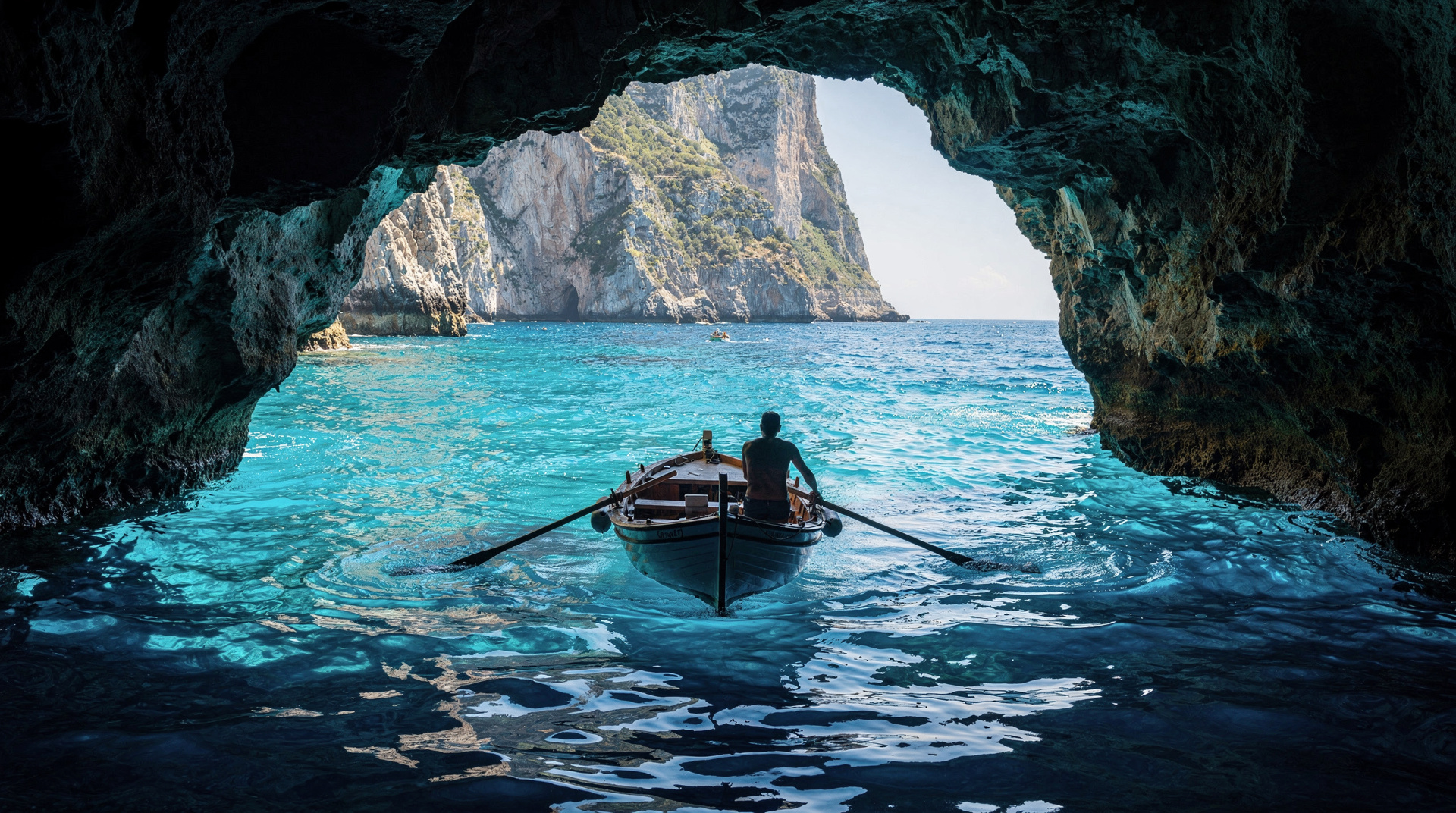
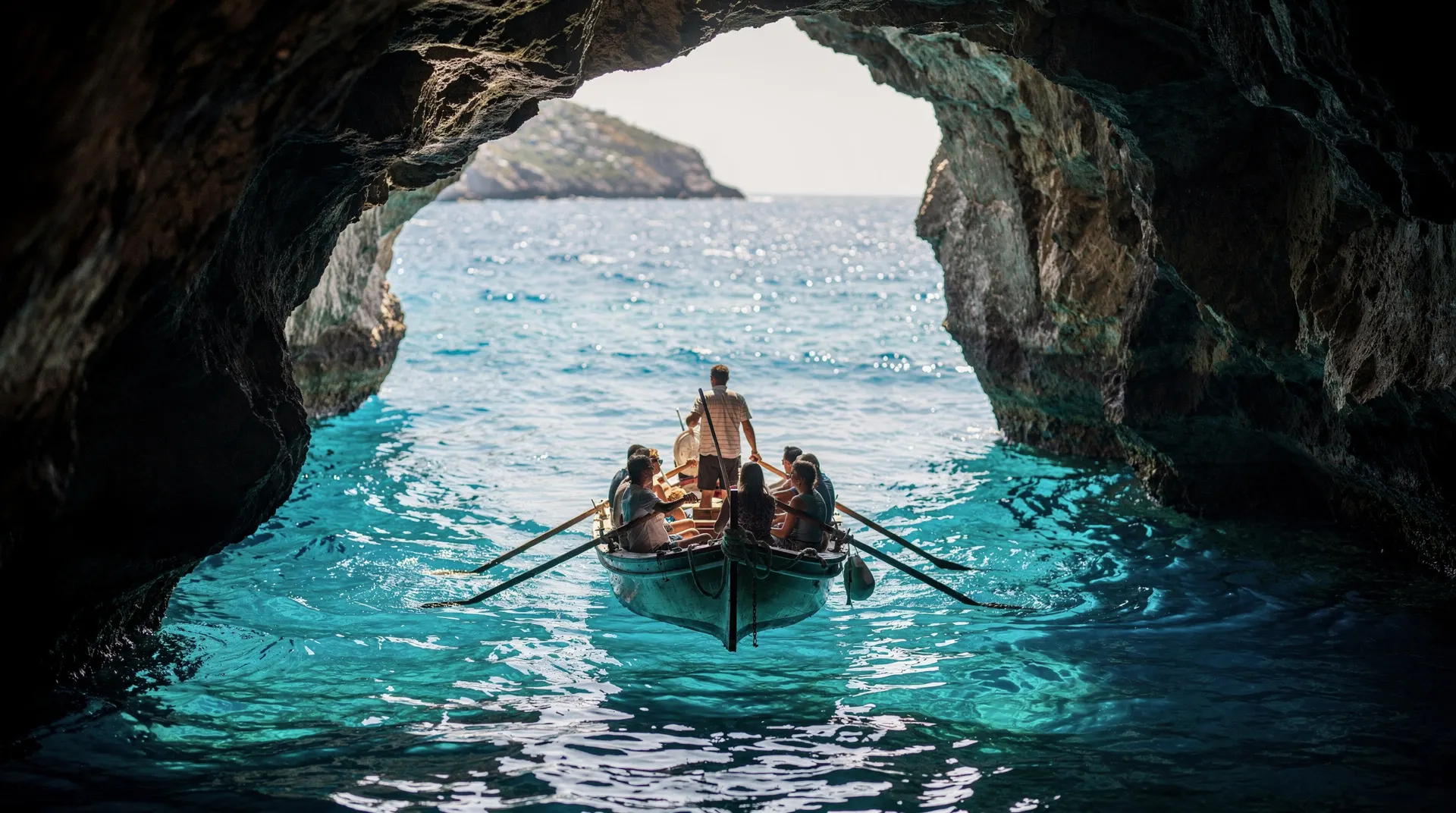
Let me start with full disclosure: I have been inside the Blue Grotto. I went seven years ago, on a clear September morning, and I spent approximately four minutes lying in the bottom of a rowboat while a man in a vest sang something operatic and rowed me through a low tunnel into a cave that was, genuinely, lit up in an extraordinary electric blue.
It was impressive. It cost about €30 on top of my existing boat tour. I thought about it for approximately twenty minutes afterwards, then got lunch.
This past trip to Capri, I skipped it entirely. Here is why, and here is what I did with the two hours I got back. For the fuller practical version of this argument, see our Blue Grotto reality check guide.
| Closure rate | Accessible roughly 60% of days, weather-dependent |
| Time inside | 5–8 minutes per boat |
| Extra cost | ~€19 (boat + admission) on top of your tour |
| Typical wait | 30–60+ minutes in a small rowing boat on busy days |
| Better free alternative | Viewpoint walk from Anacapri, no boat needed |
The Grotto Is Closed More Often Than Anyone Admits
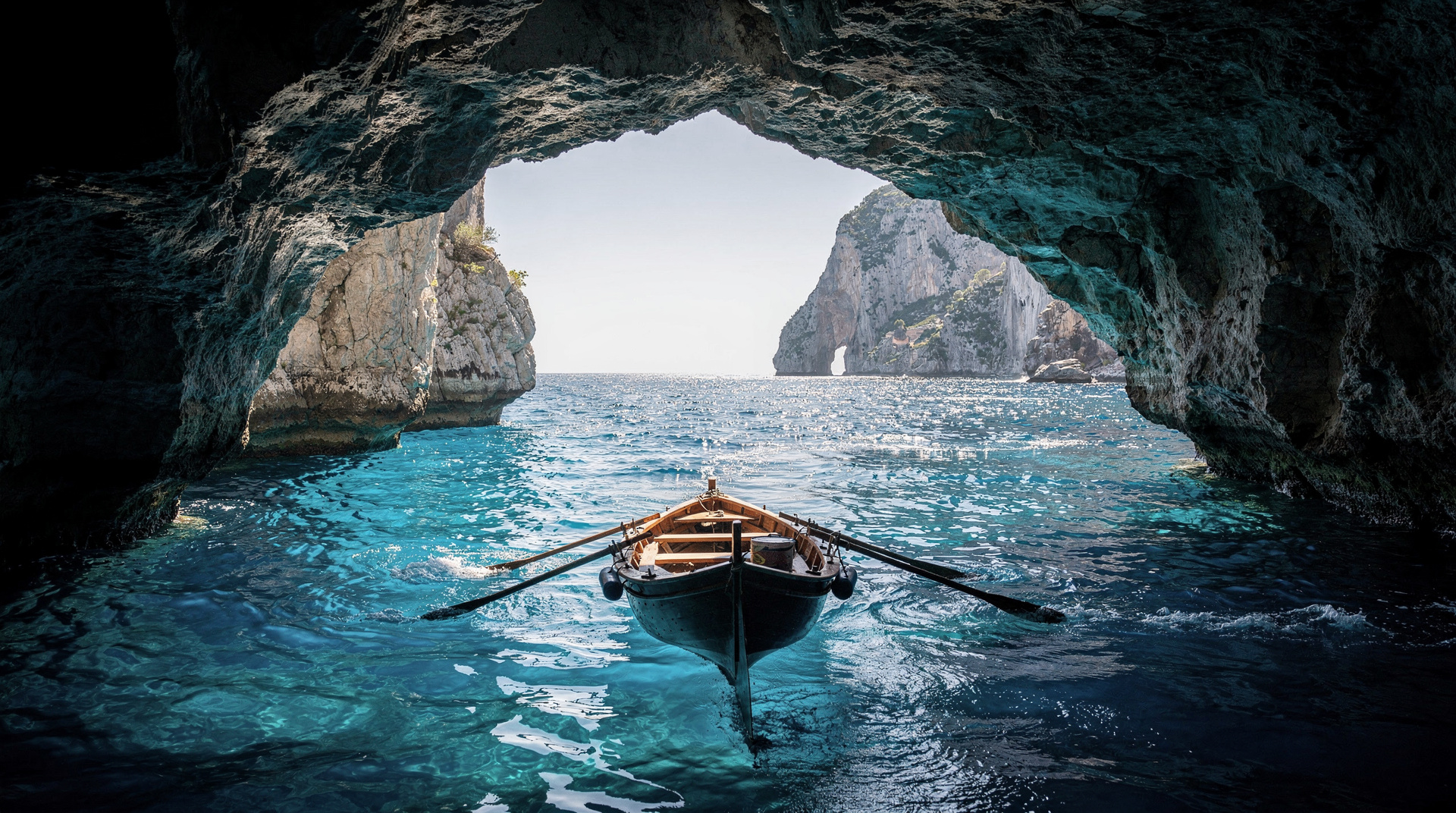
The Blue Grotto (Grotta Azzurra) closes whenever sea conditions aren’t right, which means whenever there’s any swell. The entrance is a low tunnel, about one metre above waterline, and if the sea is even slightly choppy, the boats can’t safely pass through. Closures are not announced in advance. You can book a tour from Naples that includes the Grotto, take the boat to Capri, take another boat to the Grotto entrance, queue in the water with twenty other boats for forty minutes, and then be told it’s closed.
This happens a lot. In spring and autumn — the seasons when most people visit to avoid summer prices — closure rates are high. I’ve seen figures suggesting the Grotto is accessible barely 60% of the time on any given day. The tour operators are not lying when they include it as a potential highlight; they’re just not volunteering the full picture. Our Blue Grotto Capri guide has month-by-month closure patterns if you want to time a visit around the best odds.
The Queue and the Maths
On a normal summer day when it is open, the queue works like this: your boat (a larger ferry or tour boat) anchors outside. You transfer into a small rowing boat — perhaps four passengers per boat — and join a floating queue of other rowing boats. Each boat takes about five minutes inside. Work out how many boats are ahead of you, multiply by five minutes, and you’ll know how long you’re waiting in the sun on a small wooden boat with no shade.
On busy days, this wait is an hour. It can be longer.
Once inside: yes, the blue is extraordinary. The light enters through an underwater cavity and scatters in a way that makes the water glow from below. It is genuinely beautiful. You have, from the moment you enter to the moment you’re rowed back out, maybe five to eight minutes to experience it. Then it’s done.
The additional cost at the entrance — on top of whatever you paid for your tour — runs to about €14 for the boat, plus the Grotto admission fee of €5. So roughly €19 extra, in a small boat, for under ten minutes, after a potentially long wait.
I’m not saying it’s not worth it to some people. I’m saying the value calculation is personal, and for me, on this trip, it didn’t add up. It’s a pattern worth recognising elsewhere too — our overrated things in Naples guide covers a few other attractions where the reputation has outpaced the actual on-the-day experience.
What I Did Instead
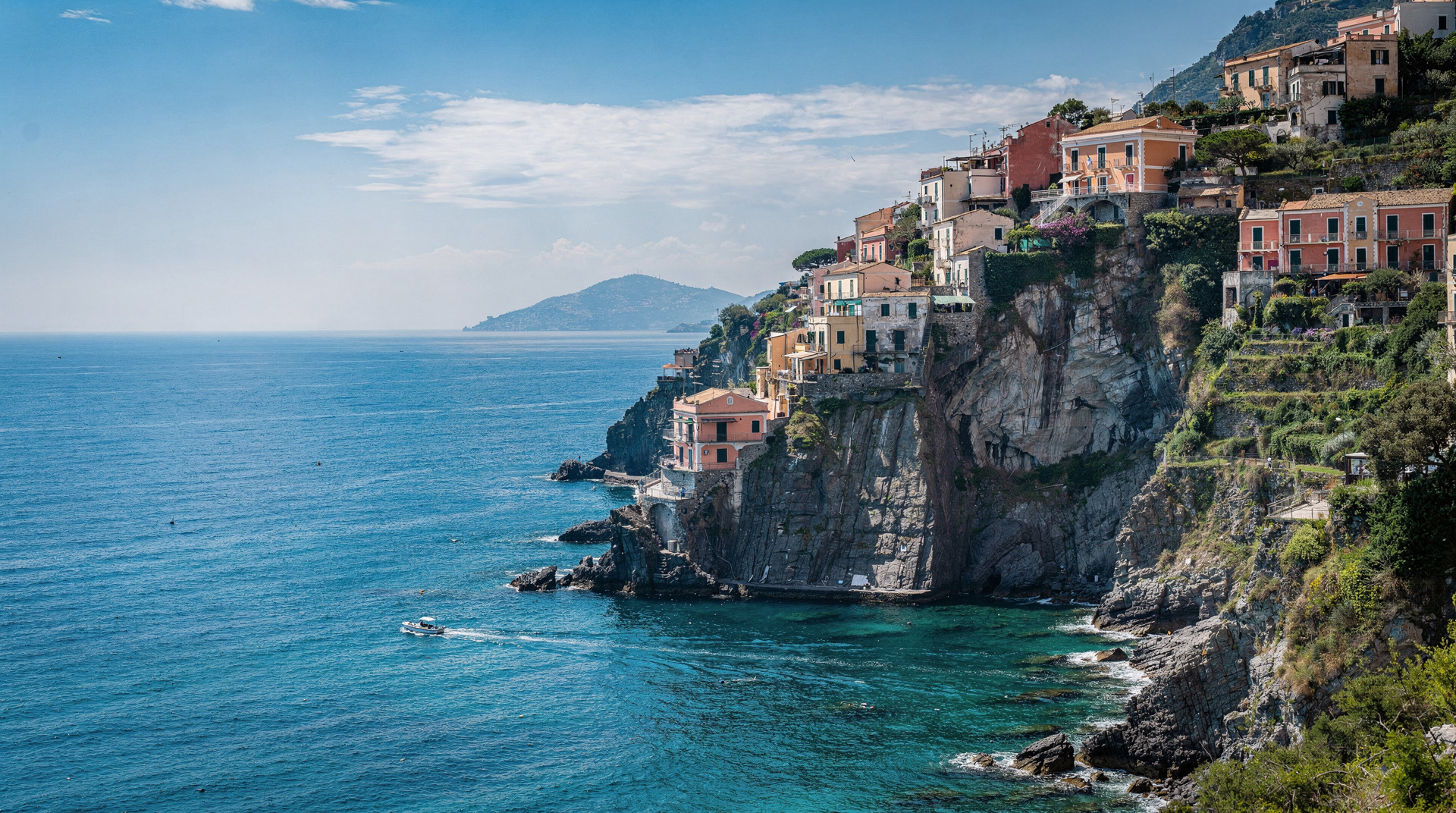
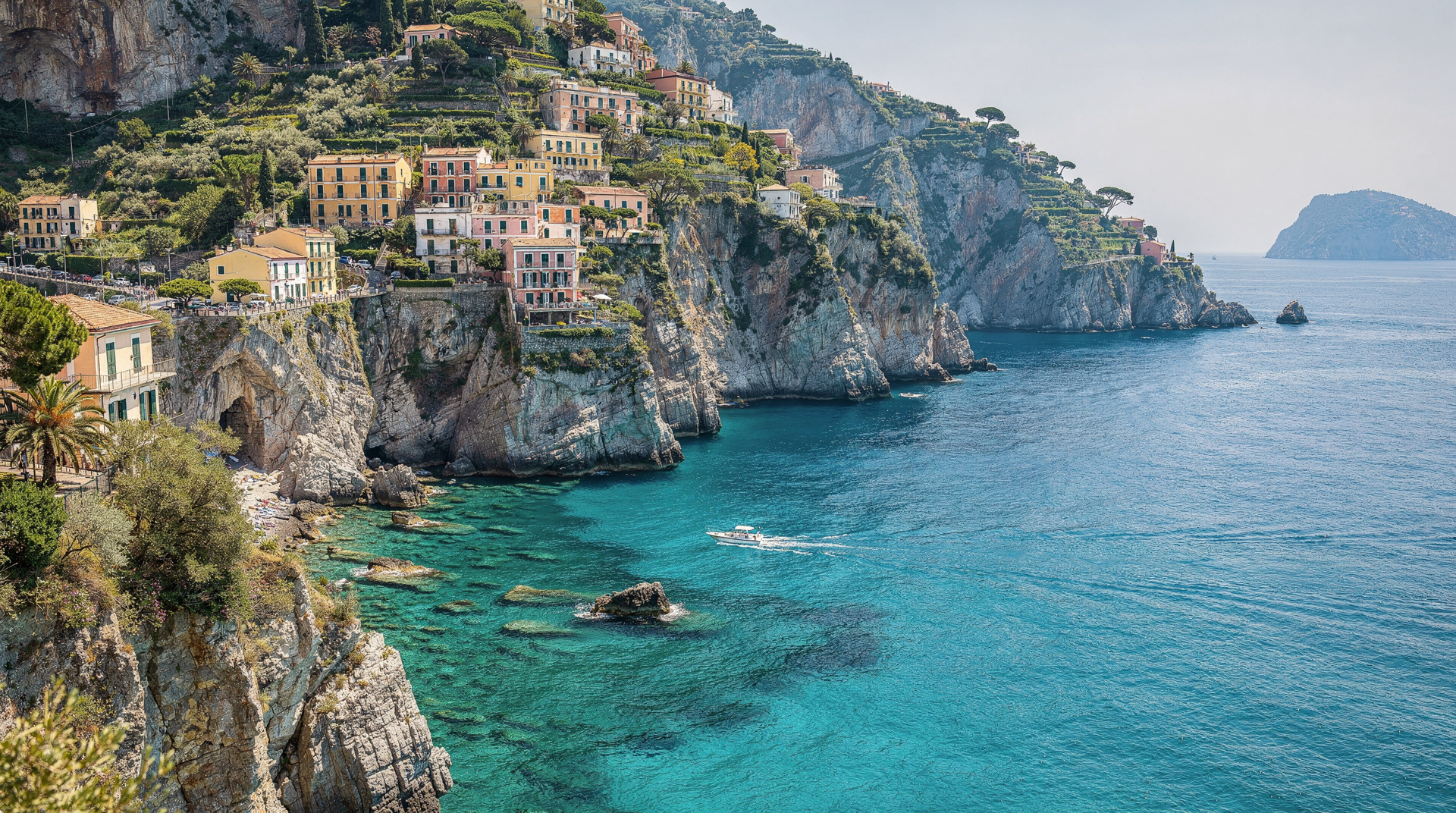
The morning I’d allocated for the Grotto, I spent on the water instead, circumnavigating the island’s western coast. The Faraglioni sea stacks, seen from sea level, are as visually striking as anything the Grotto offers — arguably more so, because you can photograph them, which you cannot do inside the cave.
The walk from Anacapri down to the Blue Grotto viewpoint (above the entrance, not inside it) is a forty-minute descent with views that would cost €300 in a hotel room. The water below the viewpoint is a clear, specific blue even from above.
For Capri day trips from Naples, the full-day Capri tour including the Blue Grotto option is the most popular route — it gives you the flexibility to attempt the Grotto but isn’t ruined if conditions don’t cooperate. Worth booking if seeing the Grotto matters to you, but go in with realistic expectations about what happens when it’s closed.
Alternatively, the Capri day trip with lunch from Naples prioritises the island itself — the Gardens of Augustus, the Piazzetta, the walk to Villa Jovis — and includes a proper sit-down meal. A different kind of day, and arguably a fuller one.
The Honest Case for Going
I want to be fair here. If you’ve never seen the Blue Grotto, if it’s on your list, if the idea of lying in a small boat in a luminescent cave sounds like something you want to have experienced — go. The conditions might be perfect. The queue might be short. The five minutes inside might be exactly what you wanted. People have extraordinary experiences there.
The case for skipping it is really a case against building your entire Capri day around a single attraction that may or may not be available, when the island offers a great deal else that is consistently accessible, consistently beautiful, and free.
A Better Use of Your Capri Hours
The Gardens of Augustus cost €1. The view from them — the Faraglioni to the east, Marina Piccola below, the coast of the mainland on the horizon — is among the best in Campania. Villa Jovis, at the island’s far eastern point, is an hour’s walk from the Piazzetta and a genuine Roman ruin on a cliff edge, with entrance at €4. The path between them passes through the interior of the island, quiet even in season.
The Piazzetta itself — overpriced, yes, but atmospheric — is best at 8 a.m. with a coffee, before the day-trippers arrive from Naples.
Weighing It Against a Full Capri Day
If you’re planning the whole Capri day rather than just the Grotto question, our is a Capri day trip worth it guide and Capri day trip guide cover the island end to end — ferries, the chairlift to Monte Solaro, where to eat away from the Piazzetta markup, and how much time each part genuinely needs. The short version: build your day around Anacapri and the Gardens of Augustus, and treat the Grotto as a bonus if conditions cooperate, not the anchor of the day.
Capri is worth your day. The Blue Grotto may or may not be worth your morning. Knowing the difference, and planning accordingly, is what separates the visitors who leave satisfied from the ones who spend the ferry back complaining about the queue.