Accessible Naples: what to know for visitors with reduced mobility
Naples: Wheelchair Accessible City Tour
Is Naples accessible for wheelchair users and visitors with reduced mobility?
Naples is a challenging destination for wheelchair users — the centro storico has heavy cobblestones and steep terrain, and many older buildings lack lifts. That said, specific attractions like Pompeii (partially), the MANN, and Castel dell'Ovo have accessible facilities. Planning ahead and focusing on accessible areas makes a visit feasible and rewarding.
Quick answer: Naples is challenging but not impossible for wheelchair users. The Lungomare and Chiaia are the most accessible areas; the centro storico cobblestones are the main obstacle. Pompeii and the MANN both have accessible facilities. Plan carefully and focus on what is achievable.
| Most accessible area | Lungomare / Chiaia (flat, paved) |
| Hardest area | Centro storico (basalt cobblestones) |
| Best accessible museum | MANN (lifts throughout, ground-floor collections) |
| Best accessible day trip | Pompeii (free wheelchair loan, accessible route) |
| Metro | Linea 1, partial lift coverage — check before travelling |
| Recommend booking ahead | Sala Blu train assistance, accessible taxis, private tours |
Honest accessibility assessment
It would be dishonest to describe Naples as a fully accessible city — the historic centre’s basalt cobblestones, uneven surfaces, narrow alleys, and hilly terrain create significant barriers for wheelchair users and people with reduced mobility. These are ancient street surfaces that the city cannot simply replace.
However, several major attractions have made genuine accessibility improvements, and strategic planning can enable visitors with reduced mobility to have a meaningful experience in Naples. This guide aims to be accurate rather than optimistic.
Getting to Naples
By train: Napoli Centrale (the main station) has accessible platforms, lift access between levels, and assistance services. Trenitalia’s accessibility booking service (Sala Blu) provides staff assistance at major stations — book at least 24 hours in advance via their website or phone line.
By air: Naples Capodichino airport is a single-terminal airport with standard EU airport accessibility requirements — step-free access throughout, accessible toilets, dedicated assistance on request from your airline.
By ship / cruise: The cruise terminal at Stazione Marittima is accessible. The Molo Beverello ferry terminal for island services has some surface irregularities but is generally navigable in a wheelchair.
Getting around Naples
See the getting around Naples guide for the general transport picture; this section focuses only on accessibility.
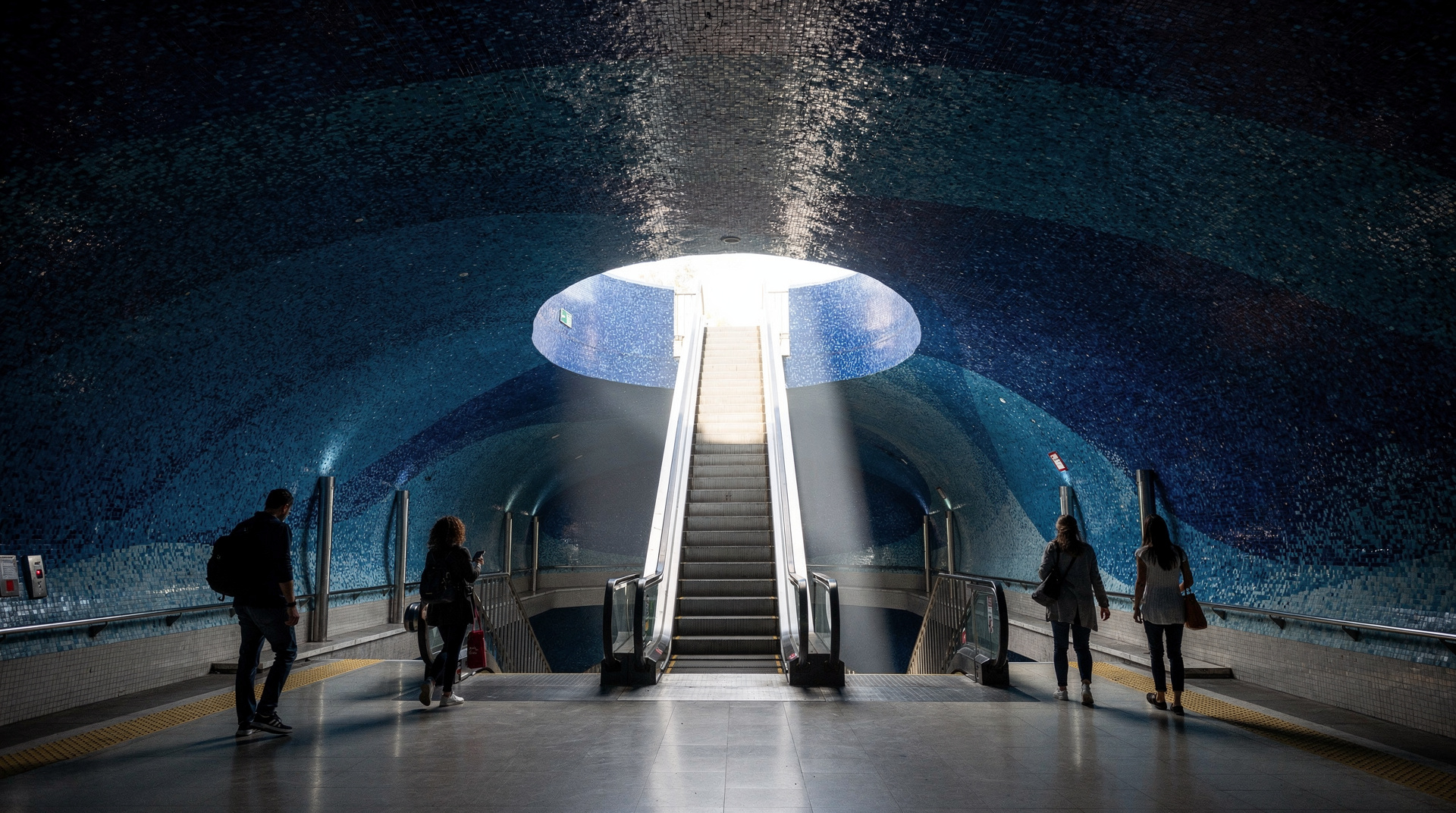
Metro Linea 1: This is the primary public transport option — some of its stations are also art installations worth a look in their own right, covered in the Naples metro art stations guide. Accessible stations (as of 2026) include:
- Toledo
- Dante
- Museo
- Università
- Municipio
- Garibaldi (main station)
- Vanvitelli
- Quattro Giornate
Stations without full lift access: Materdei, Salvator Rosa, Rione Alto (partially accessible). Check current lift status before travelling — lifts in Naples metro stations have a history of being temporarily out of service. The ANM Infomobilità service (accessible via their app) shows real-time lift availability.
Buses: ANM buses are officially low-floor accessible vehicles, but the crowded conditions and frequent stops with irregular kerb heights make them less reliable for wheelchair users in practice.
Funiculars: Naples has four funicular lines and their accessibility varies considerably station to station — see the Naples funiculars guide for a full line-by-line breakdown before relying on one to reach Vomero.
Taxis: Standard taxis accommodate folding wheelchairs in the boot. For larger power wheelchairs, a minivan taxi is required — available from the Radiotaxi service or Itaxi app with advance notice.
Private accessible tours: A wheelchair-adapted vehicle tour is often the most practical way to cover the main sights in Naples. These are bookable via GetYourGuide and local operators; the naples-wheelchair-citytour option covers the main viewpoints and a selection of accessible interiors.
Naples: Wheelchair Accessible City TourAccessible areas of the city
Lungomare waterfront: The best accessible area in Naples. The promenade from Castel dell’Ovo west to Mergellina is flat, wide, and paved. This is a genuinely pleasant long walk or roll, with views of Vesuvius, the bay, and the islands. Villa Comunale (the public garden along the Lungomare) is accessible.
Via Toledo and Piazza del Plebiscito: The main shopping street is mostly paved, though with some cobbled sections near the bottom. Piazza del Plebiscito itself is flat and wide. From Toledo metro station to Piazza Plebiscito is manageable.
Chiaia: The upmarket waterfront neighbourhood has better pavement conditions than the centro storico. The main commercial streets of Chiaia are mostly paved. Less suitable: the steep streets that climb up from Chiaia toward Vomero.
Centro storico (Spaccanapoli / Via dei Tribunali): The most challenging area. The principal streets (Spaccanapoli, Via dei Tribunali) are paved with basalt cobblestones — uneven, uncomfortable for wheelchairs, and tiring even for walking visitors. Many churches have step entrances. This area requires careful navigation and advance scouting.
Accessible attractions
MANN (National Archaeological Museum): Excellent accessibility. The museum has lifts throughout, accessible toilets, and wide gallery corridors. The ground floor Pompeii mosaic collection, sculpture halls, and main archaeological collections are all accessible. The MANN is probably the single best accessible attraction in central Naples. Allow 2–3 hours — the MANN guide covers what to prioritise if your visit is time-limited.
Pompeii: The archaeological site has invested significantly in accessibility. Key features:
- Wheelchair loan service at the main Porta Marina entrance (free, reservation recommended — contact the Pompeii ticketing office in advance)
- A designated accessible route covering the Forum, Basilica, Temple of Jupiter, Via dell’Abbondanza, and several major frescoed houses
- The route uses compacted gravel and some paved sections
- Electric vehicle tours of the site are available for visitors who cannot walk long distances
Not accessible within the site: many of the elevated thresholds of individual houses, uneven terrain in outlying areas, and the Via dei Sepolcri section.
Herculaneum: More compact than Pompeii but also more challenging for accessibility — the site is excavated below the modern city level, reached by ramps. Parts of the site are accessible by wheelchair; the entrance ramp is manageable. The overall experience is limited compared to Pompeii’s accessible route but still worthwhile for some key structures.
Castel dell’Ovo: The castle on the waterfront is accessible at ground level; the upper ramparts involve stairs. The exterior courtyard and lower areas are accessible. Good views from the accessible areas.
Capodimonte Museum: The museum building has lifts and is generally accessible. It is further from the city centre (on a hill), most easily reached by the ANM Shuttle Capodimonte bus service. The gardens surrounding it are large, partly paved, partly steep.
Certosa di San Martino: Located in Vomero, accessible from Vanvitelli metro station (lift access). The main museum areas within the Certosa are accessible; some courtyard and terrace sections involve steps. Good terrace view over the city.
Accessible accommodation
Modern and recently renovated hotels in Naples are required by Italian law to meet accessibility standards. When booking:
- Specify “accessible room with roll-in shower” (camera accessibile con doccia a raso)
- Confirm lift access to your floor
- Ask about the street outside the hotel entrance (some central hotels have a cobblestone approach)
- Chiaia and the Lungomare waterfront hotels generally have better immediate street accessibility than centro storico hotels
Amalfi Coast accessibility note
The Amalfi Coast is one of the least accessible areas in Italy for wheelchair users and visitors with reduced mobility. The SS163 coastal road has narrow pavements and steps; most of the historic towns (Positano, Ravello) are built on steep hillsides with many steps and no alternative routes. A private driver can take you along the coastal road for the scenery, but physical exploration of the towns is very limited.
Assistance services and planning resources
Trenitalia Sala Blu: Book at least 24 hours ahead via the Trenitalia website or by phone for staff-assisted boarding and connections at Napoli Centrale and other major stations — essential if you plan day trips by train.
Airport assistance: Naples Capodichino requires pre-notification through your airline (usually at least 48 hours ahead) for wheelchair assistance from check-in to the gate.
Accessible attraction combos: If you are planning limited energy across a short stay, pairing the MANN with Capodimonte Museum (also lift-accessible, though the surrounding park is steeper) or the Castel dell’Ovo waterfront makes an achievable, low-cobblestone day. Our first-time Naples guide and general travel tips cover the wider planning picture, and the trip cost and budget guide is useful for pricing private accessible transport, which typically costs more than standard public transport but saves considerable stress.
Naples-based accessibility specialists and disabled-access forums are also worth searching for current, street-level advice — conditions change (a lift repaired, a pavement resurfaced) faster than any guide can track.
Naples Royal Palace self-guided audio tour is a good lower-energy option — the palace is largely flat and lift-accessible, and an audio tour lets you set your own pace without a walking group.
Frequently asked questions about accessible Naples
Can wheelchair users visit Pompeii?
Yes, with planning. The accessible route covers the most important areas including the Forum and several frescoed houses. Wheelchairs can be borrowed at the entrance for free (reserve in advance). Some parts of the site remain inaccessible. See pompeii-with-kids for additional practical tips that apply to any visitor needing extra planning.
Is the Naples hop-on hop-off bus accessible?
Check with the specific operator. Some hop-on hop-off buses in Naples have low-floor or ramp-access options; others do not. Book in advance and specifically request accessibility information from the operator.
Are Naples taxis accessible?
Standard taxis accommodate folding wheelchairs. For electric/power wheelchairs, request a minivan through Radiotaxi (tel: 081 88 88) or the Itaxi app with advance notice (ideally the day before). All official white taxis in Naples are licensed by the municipality.
What is the easiest accessible day trip from Naples?
The MANN and Castel dell’Ovo are the most accessible within Naples. For a day trip, Pompeii has the best accessibility infrastructure, particularly with the wheelchair loan service and designated accessible route. Herculaneum is smaller and partially accessible. The Amalfi Coast and islands are largely inaccessible for wheelchair users.
Are there accessible boat tours?
Some boat tours from the port (Molo Beverello) offer accessible boarding and deck areas. Check specifically with the operator before booking. The Castel dell’Ovo area has some small accessible boat excursions that are worth inquiring about locally.
Is travelling to Naples worthwhile for visitors with limited mobility?
For visitors who can navigate with a cane, walker, or who have partial but not severe mobility limitations, Naples rewards the effort. For full wheelchair users, a planned visit focusing on the Lungomare, MANN, Pompeii accessible route, and Castel dell’Ovo provides a genuinely substantive experience — just not the full walking-city experience. Managing expectations honestly is the best starting point.