Bourbon Naples: palaces, opera and the kingdom that shaped modern Naples
Caserta: Royal Palace of Caserta Guided Tour
What did the Bourbon dynasty do for Naples?
The Bourbon kings ruled Naples from 1734 to 1861 and transformed it from a Spanish viceroyalty into an independent European capital. They built the Royal Palace of Caserta, expanded the Royal Palace in Naples, built the San Carlo opera house, established the Capodimonte museum, and sponsored the excavations of Pompeii and Herculaneum. The period also produced the Galleria Borbonica escape tunnel and the infrastructure of the modern city.
In 1734, a 17-year-old Spanish prince named Charles of Bourbon rode into Naples at the head of a Spanish army and ended 200 years of direct Habsburg rule over the kingdom. He was crowned Charles VII of Naples and Sicily in the city’s ancient Castel Nuovo. Within weeks, he had begun transforming a provincial Spanish viceroyalty into what would become one of Europe’s most significant 18th-century royal courts.
The Bourbon period (1734–1861) left the most architecturally visible legacy in modern Naples. The Royal Palace was substantially rebuilt and expanded. The largest royal palace in the world by floor area was built from scratch on the plain near Caserta. The San Carlo opera house was constructed in 14 months and opened in 1737. The collections of Pompeii and Herculaneum material that would become the National Archaeological Museum (MANN) were assembled. The underground escape tunnel — the Galleria Borbonica — was completed just in time to become useless.
| Period | 1734–1861, 127 years |
| Key monuments | Royal Palace Naples, Caserta, San Carlo, Capodimonte |
| Best day trip | Caserta Royal Palace, around 45 min by train |
| Free to see | Piazza del Plebiscito, San Carlo exterior |
| Deepest dive | Naples history guide for the full timeline |
Charles III: the builder king
Charles III was the most capable of the Bourbon monarchs who ruled Naples, and the one who established the dynasty’s character. Born in Madrid in 1716, he was the son of Philip V of Spain and the formidably ambitious Elisabeth Farnese — a woman who had spent decades maneuvering to secure Italian thrones for her sons from the rival claims of Habsburg Austria. When the War of Polish Succession created a diplomatic opportunity, she struck: Charles marched south and took the kingdom in a matter of months.
The new king found a city of approximately 300,000 people — one of the largest in Europe — governed for two centuries as a colony of Spain, its resources systematically extracted for the Spanish crown, its nobility stratified and self-serving, its infrastructure in chronic disrepair. Charles understood that establishing legitimacy required visible expenditure on the city and its culture.
Caserta. The grandest project was the Royal Palace of Caserta — a decision that baffled contemporaries and makes architectural sense only when you understand the site. Charles chose a new location rather than building in Naples partly for strategic reasons (Caserta is 30km from the coast, defensible against naval assault) and partly for symbolic ones: a new dynasty needed a new palace.
Luigi Vanvitelli — the leading Italian architect of the mid-18th century — designed a building of approximately 47,000 square metres, with 1,200 rooms organised around four internal courtyards, and a formal garden extending 3 kilometres up a hillside to an artificial cascade. Construction began in 1752 and continued for decades. The result is a statement of dynastic ambition comparable to Versailles, technically superior in several respects, and still largely intact.
San Carlo. The Teatro di San Carlo was built in 1737 as the royal opera house, replacing an older theatre that Charles found inadequate. It was completed in 14 months — astonishing for the scale of the project — and opened on Charles’s name-day, 4 November 1737. The original theatre burned down in 1816 and was rebuilt in the same year (achieving in nine months what other European houses took years to accomplish). The San Carlo predates Milan’s La Scala by 41 years and Vienna’s Burgtheater by decades, and holds the distinction of being the oldest continuously operating major opera house in Europe.
Capodimonte. The hunting lodge that Charles began building on the Capodimonte hill north of Naples evolved into a substantial palace — the Palazzo di Capodimonte — housing the Farnese collection of art that Charles had inherited through his mother Elisabeth Farnese. The collection included works by Titian, Raphael, Caravaggio, El Greco, and others accumulated by the Farnese family over 200 years of cardinal patronage. The palace is now the Museo di Capodimonte.
The Pompeii excavations: the Bourbons’ most lasting legacy
If the buildings of Bourbon Naples are impressive, the Bourbons’ most consequential cultural contribution was stumbling over Herculaneum in 1738 and Pompeii in 1748.
The discovery was partly accidental. Workers digging a new royal palace at Portici (on the slopes of Vesuvius south of Naples) struck ancient structures in 1738 — Herculaneum, buried by the eruption of 79 AD. Organised excavation began immediately under Charles III’s direct patronage. Pompeii was located a decade later by a different team excavating in the area of Civita.
The material that emerged from these sites — intact Roman houses, mosaics, frescoes, household objects frozen in the volcanic ash — shocked European intellectual culture. The neoclassical movement in art and architecture was directly stimulated by the Pompeii finds: the visual vocabulary of Roman domestic life that had been theoretical suddenly became tangible. The excavated objects were initially housed in the royal museum at Portici, then moved to Naples — the nucleus of what became the MANN collection.
Charles III left Naples in 1759 to inherit the Spanish throne, but the excavations continued under his son Ferdinand IV and successive Bourbon monarchs. The Bourbons also imposed strict controls on access to the sites and export of finds — the beginnings of Italian cultural heritage protection law.
Ferdinand IV and the Neoclassical city
Charles’s son Ferdinand IV ruled for the longest period in Bourbon history — from 1759 (when he was a child, governed initially by a regent) through 1825, with a brief interruption during the Napoleonic period. Ferdinand IV was a less sophisticated figure than his father — contemporary accounts describe him as crude, populist, obsessively fond of hunting — but his reign continued the major construction projects and produced some of the Bourbon period’s most significant urban planning.
The Piazza del Plebiscito — the great semicircular square in front of the Royal Palace — was substantially restructured in the late 18th century under Bourbon patronage. The Basilica di San Francesco di Paola, modelled on the Pantheon, was added in the early 19th century during the brief Napoleonic interruption, when the square was known as the Foro Giuseppe Napoleone. When the Bourbons returned in 1815, they completed the square in its current form.
Ferdinand IV also commissioned the Villa Floridiana in the Vomero hill — a neoclassical villa and gardens now partially open as a decorative arts museum — and various infrastructure works in the port area.
The Napoleonic interruption (1806–1815)
The Napoleonic Wars forced two major interruptions in Bourbon rule. Napoleon occupied Naples in 1806 and installed his brother Joseph Bonaparte as king; when Joseph was transferred to Spain in 1808, Napoleon’s brother-in-law Joachim Murat took the throne.
The Murat period was surprisingly productive for Naples. Joachim Murat and his wife Caroline Bonaparte were energetic administrators who introduced legal reforms based on the Napoleonic Code, began rationalising Naples’ chaotic street naming and numbering, continued the Pompeii excavations with greater rigour than the Bourbons, and initiated the construction of the Via Vittorio Emanuele and other urban improvements.
The Bourbons returned in 1815 following Murat’s defeat. They brought back their conservative social policies but also retained some of the administrative reforms — the Napoleonic period left a more lasting mark on Neapolitan governance than the Bourbons liked to acknowledge.
Ferdinand II and the paranoid tunnel
The last capable Bourbon king of Naples was Ferdinand II, who ruled from 1830 to 1859. Ferdinand II is remembered for two things: suppressing the 1848 constitutional uprising with brutal efficiency (earning him the nickname Re Bomba — “King Bomb” — for bombarding his own cities), and commissioning the Galleria Borbonica escape tunnel.
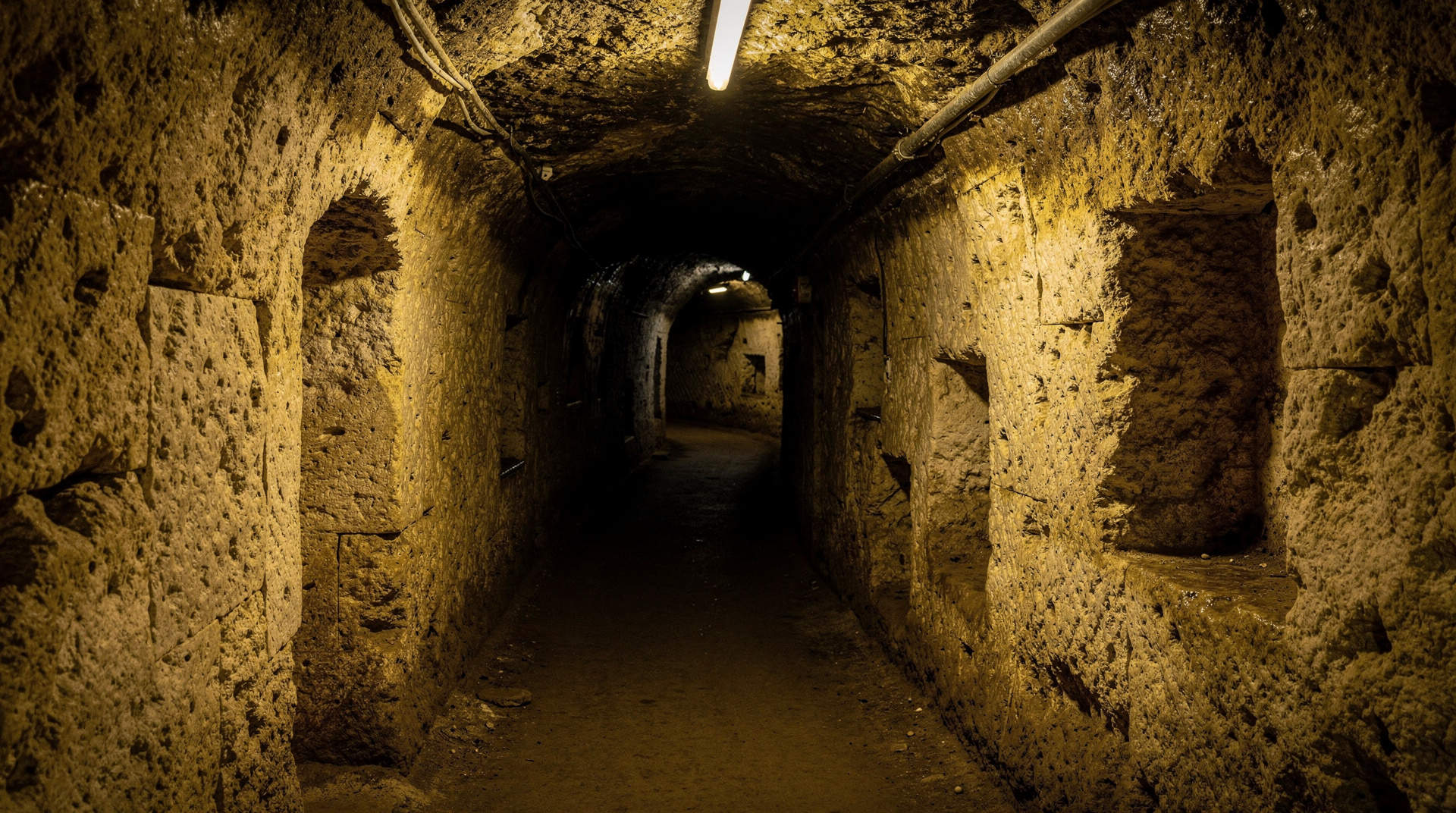
The tunnel was rational from a certain perspective: Ferdinand II had survived an assassination attempt in 1856 and was acutely aware that his dynasty faced genuine popular opposition. An underground route from the Royal Palace to military barracks and the port gave the royal family an escape option that did not require crossing open streets where crowds might gather.
Construction began in 1853 under engineer Errico Alvino. The tunnel was wide enough for a horse-drawn carriage — a genuine road, not a footpath. It was completed in 1861. Ferdinand II had died in 1859; his son Francis II had already fled Naples in September 1860. The tunnel was never used for its intended purpose.
The fall of the dynasty: Garibaldi, 1860
The speed of the Bourbon collapse in 1860 is one of the more remarkable political collapses in modern European history. Giuseppe Garibaldi landed in Sicily in May 1860 with approximately 1,000 volunteers. Within three months, Sicily was conquered. In August, Garibaldi crossed the Strait of Messina to the mainland. The Bourbon army — 50,000 strong on paper — fought poorly and sometimes not at all. City after city surrendered or negotiated.
Francis II fled Naples by ship on 6 September 1860. Garibaldi entered the city on 7 September by train, alone, to public celebration. The formal annexation plebiscite in October 1860 recorded an overwhelming majority for unification with Piedmont-Sardinia, though the results were managed by Garibaldian government officials and the voting procedures were irregular by any standard.
The Kingdom of the Two Sicilies was incorporated into the new Kingdom of Italy, formally proclaimed in March 1861. A 127-year dynasty ended with a 17-year-old king boarding a ship.
The Bourbon legacy in modern Naples
The buildings are the most visible legacy. The Royal Palace, the San Carlo opera house, Caserta, and the Capodimonte museum are all Bourbon-era monuments in daily use. The MANN collection exists because Bourbon patronage funded the Pompeii and Herculaneum excavations.
Less positively: the Bourbon period left Naples with an underdeveloped industrial base, a landed aristocracy resistant to economic modernisation, and a government bureaucracy built around royal patronage rather than productive capacity. When these structural weaknesses met the fiscal policies of unified Italy — which favoured northern industry — the economic result was the chronic disadvantage that defines the Southern Question.
The Bourbon dynasty is a complex historical inheritance. Its architecture is magnificent; its economic and social legacy is more ambiguous.
What to visit to understand Bourbon Naples
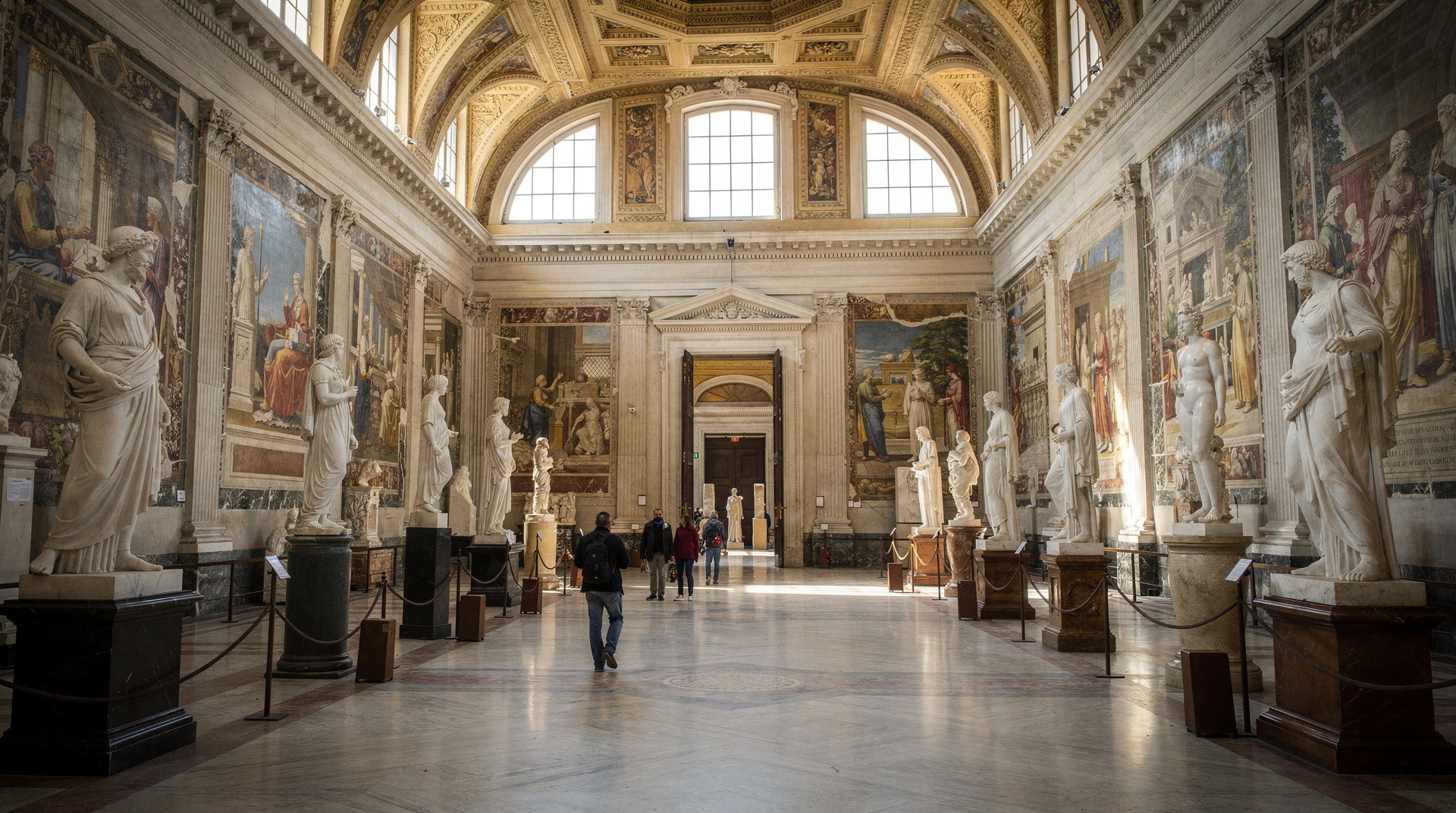
Royal Palace (Palazzo Reale), Naples. The throne rooms, royal apartments, and historic library open daily (closed Wednesday). The palace occupies the east side of Piazza del Plebiscito.
San Carlo opera house. Tours of the auditorium and backstage run throughout the year; the opera season provides the best performance experience.
Caserta Royal Palace. A day trip from Naples (45 minutes by Frecciarossa from Napoli Centrale). The palace interiors and the 3-kilometre formal garden are both extraordinary. See the Caserta Royal Palace day trip guide for logistics, ticket options, and how much time to budget for the gardens versus the state apartments.
Guided tour of the Royal Palace of Caserta from NaplesCapodimonte Museum. The Bourbon art collection (Farnese paintings, porcelain, decorative arts) alongside later acquisitions. Located on the Capodimonte hill north of the centre.
Galleria Borbonica. The underground escape tunnel, complete with abandoned vehicles and wartime shelter equipment.
For the broader history, the Naples history guide covers the full timeline from Greek colony to modern city.
Bourbon Naples versus the Aragonese and Habsburg periods before it
Naples had been ruled from abroad for centuries before Charles III arrived, and understanding why the Bourbon period reads so differently in the city’s fabric requires the contrast. Under the earlier Aragonese kings (15th century) and the two centuries of Spanish Habsburg viceroyalty that followed, Naples was administered as a resource to be extracted rather than a capital to be built up — tax revenue flowed largely outward, and major building projects were comparatively rare and defensive in character, exemplified by Castel Nuovo, itself an earlier Aragonese-era statement of power rather than a Bourbon one.
The Bourbons, by contrast, needed to establish an independent kingdom’s legitimacy from a standing start in 1734, and visible architectural investment was the fastest way to do it. That difference in intent — extraction versus legitimation — explains why the 127 Bourbon years produced more of the monumental fabric that visitors see today than the roughly 230 preceding years of Aragonese and Spanish rule combined. The Certosa di San Martino, though founded earlier under Angevin patronage, was substantially reworked in the Baroque style during the 17th and 18th centuries and shows the same pattern of accretion — each ruling power leaving its mark on structures inherited from the one before.
Frequently asked questions about Bourbon Naples
Were the Bourbons of Naples related to the current Spanish royal family?
Yes. The Bourbon dynasty of Naples (the House of Bourbon-Two Sicilies) is a cadet branch of the Spanish Bourbons, who are themselves a cadet branch of the French Bourbons. The current Spanish king Felipe VI is a descendant of the same Bourbon lineage. There are still members of the House of Bourbon-Two Sicilies alive today.
Did the Bourbons speak Italian?
Charles III was Spanish; his court initially spoke Spanish and French. Italian — specifically Neapolitan Italian — gradually became the working language of the court over the 18th century, and Ferdinand IV was famous for his use of the Neapolitan dialect. By the early 19th century, the dynasty was culturally Neapolitan in many respects despite its Spanish dynastic origin.
Is there a connection between the Bourbon dynasty and the French Bourbons?
Yes. The Bourbon-Two Sicilies is a cadet branch — a subsidiary line — of the French Bourbon dynasty. Charles III’s father was Philip V of Spain, himself a grandson of Louis XIV of France. The family connection meant that Bourbon Naples often had close diplomatic alignment with France, and Bourbon-era Naples was culturally influenced by French fashion, arts, and intellectual life.
How much of Bourbon Naples can be seen in a single day?
A realistic single day covers the Royal Palace and Piazza del Plebiscito in the morning, then either the San Carlo opera house tour or the Capodimonte museum in the afternoon — Caserta is too far and too large to combine with the city sights on the same day and deserves its own dedicated trip. If Bourbon history specifically is your focus rather than a general Naples visit, allow two days: one for the city-centre monuments, one for Caserta.